Musk's Twitter Obsession: A 25-Year Unresolved Grudge

比推Publicado a 2026-01-15Actualizado a 2026-01-15

Resumen

Elon Musk's 25-year obsession with his original vision for X.com, an ambitious online financial platform he founded in 1999, ultimately drove his acquisition and transformation of Twitter. After being ousted from the merged company that became PayPal, Musk never abandoned his dream of creating an all-in-one financial and social super-app. In 2022, he acquired Twitter, systematically rebranding it to X and gradually introducing features like long-form content, video, and creator monetization to condition users for a financial ecosystem. By 2026, X introduced features like Smart Cashtags, allowing users to view and potentially trade assets directly within posts. Musk's strategy mirrors the success of Chinese super-apps like WeChat, fulfilling his original X.com vision of integrating social interaction, information, and financial transactions into a single platform. This move represents not just a business expansion but a personal mission to reclaim his initial ambition and control the global flow of information and capital.

Written by: Niusike, Deep Tide TechFlow

Some dreams never die; they just wait for the right moment.

Original Title: What Musk Bought Was Not Twitter, But a 25-Year Unresolved Grudge


The Premature Birth of 1999

In March 1999, in Palo Alto, 27-year-old Elon Musk made a decision that seemed almost absurd at the time.

He invested all the $22 million he earned from selling Zip2 into a website called X.com.

At that time, Silicon Valley was still dominated by Yahoo and AOL, and the internet was synonymous with portal websites. Proposing the concept of an "online bank" at this point was like selling rockets in the era of horse-drawn carriages. But Musk envisioned X.com not just as an online bank; he wanted to create an online financial operating system: a single platform for all financial services, including transfers, investments, loans, insurance, and even daily expenses.

Silicon Valley at the time thought this young man from South Africa was crazy.

It was the era of dial-up internet, where opening a webpage sometimes took half a minute amid the screeching sound of modems. Asking users to transfer money on a 28.8K snail-paced network? It sounded like a joke.

His ambition was immense, but reality hit back harder.

A year later, X.com merged with Peter Thiel's Confinity (the predecessor of PayPal). What should have been a "genius alliance" turned into a Silicon Valley version of "Game of Thrones." Thiel and his Stanford elite crowd couldn't stand Musk's chaotic radicalism, viewing this engineer-turned-CEO as a dangerous madman.

In September 2000, the collapse came. Musk flew to Australia for his honeymoon. Just as his flight landed in Sydney, before he could even leave the airport, the board called: You're out.

Peter Thiel took over everything. A few months later, the X.com sign that Musk loved was taken down, and the company was renamed PayPal.

The foundation of the "financial empire" that Musk had spent a year building was bulldozed by a group of investment bankers in Brioni custom suits, leaving only the simplest function: payment.

In 2002, eBay acquired PayPal, and Musk received $180 million. Financially, he won, but at that moment, he was like a child whose favorite toy had been taken away. A fishbone was deeply lodged in his heart.

For the next twenty years, he built the best electric cars, sent rockets into space, and vowed to die on Mars. But whenever someone mentioned PayPal, he couldn't hide his disappointment.

X.com remained his inner demon.

Bringing the "Sink" to Wall Street

On October 27, 2022, Musk walked into Twitter headquarters carrying a sink.
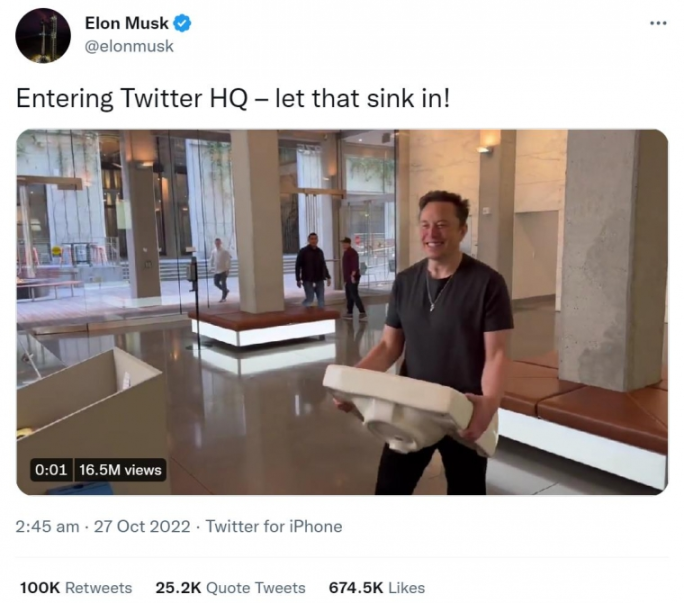
This detail was later widely reported by the media, but the real signal was the phrase in his tweet: "Let that sink in."

A pun. Let the sink in, and let it all sink in.

The outside world thought he bought Twitter for free speech or to defend Trump. They were wrong. Musk wanted revenge, revenge for the betrayal 25 years ago.

The first step was renaming.

X. A single letter, carrying all his anger and ambition. Those who mocked X.com for being too ahead of its time would now witness its resurrection on this platform.

But Musk was smart. He knew he couldn't go all out at once; turning Twitter directly into a bank would scare users away. So he chose a gradual transformation.

In early 2023, X was still primarily a lightweight social platform with a 140-character limit. Musk first adjusted the content strategy, encouraging more original content and real-time discussions. Then came paid subscriptions, getting users accustomed to spending money on the platform.

By mid-year, the long-tweet feature was launched. Users could post longer, more in-depth content, and the platform began shifting from a short-message square to an information hub.

Next came a significant enhancement of video features. Musk wanted X to become a one-stop platform for information consumption, eliminating the need for users to jump to YouTube or other video sites.

By the end of 2023, the creator revenue-sharing plan was officially introduced. The platform began to develop an economic ecosystem, allowing users to earn income through content creation. This was a crucial step; Musk was cultivating users' transaction habits.

Then came the big moves in 2024.

Financial license applications, payment system construction... Musk no longer hid his intentions; he wanted to turn X into a financial platform.

In January 2026, X product lead Nikita Bier stated that the platform was developing Smart Cashtags, allowing users to precisely point to specific assets or smart contracts when posting ticker symbols.
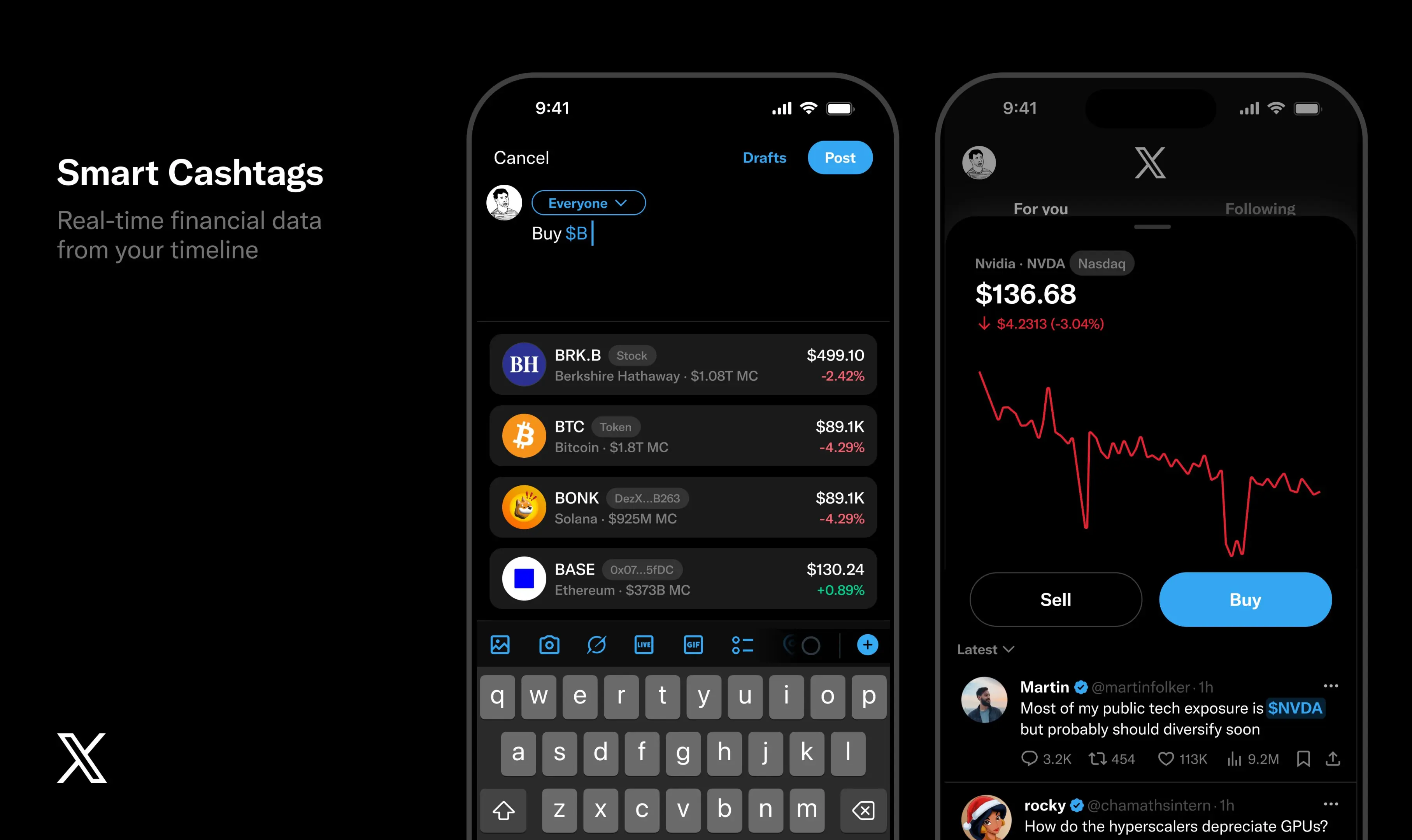
Users could embed tags like $TSLA in tweets to display stock prices in real-time. It seemed like just an information display feature, but it was actually the final piece of the financialization puzzle.

Imagine: You see a tweet about NVIDIA's new chip, and the stock price immediately jumps 5%. You then click the $NVDA tag to buy shares directly.

Social, information, and trading—all integrated. This was the vision Musk had for X.com back in 1999.

From a town square to an information hub, and then to a trading floor. Musk spent two years gradually guiding users to accept X's transformation.

To alleviate user concerns, Musk made an unprecedented decision: open-sourcing all algorithms.

On January 10, 2026, Musk announced on X that the platform would officially open-source its latest content recommendation algorithm within a week, covering code for both organic and ad content, with updates every four weeks along with developer explanations.

The recommendation algorithms of Facebook, YouTube, and TikTok are black boxes; no one knows why they see certain content. When financial services are involved, this lack of transparency becomes a fatal flaw.

Musk broke the black box with open source. Users can inspect the code, developers can audit security, and regulators can supervise compliance.

All to pave the way for financialization.

Belated Validation

X.com of 1999 died because it was "ahead of its time." The internet was still in the dial-up era, with broadband penetration below 10%. Online payments required dozens of security verifications, and users were terrified of putting their money online.

More importantly, the regulatory environment was extremely strict. Banking regulators viewed online finance as a menace, and governments were feeling their way forward. Musk's radical strategy was too risky in that conservative era.

But history proved his judgment right.

It's just that the validation came too late, and from an unexpected place: China.

In 2011, WeChat launched. Initially just a messaging app, it quickly evolved into the super app Musk had envisioned. Chatting, payments, ride-hailing, food delivery,理财—it could do everything. Alipay also developed from a simple third-party payment tool into a comprehensive financial platform.

Musk watched, anxious and impatient.

In June 2022, at his first all-hands meeting with Twitter employees, he publicly stated: "In China, people basically live on WeChat because it's so useful and helpful for daily life. I think if we can achieve that, or even come close to that, on Twitter, it would be a huge success."

This sounded like praise for WeChat, but also regret for his own failure 25 years ago. The Chinese had achieved in a decade what he had wanted to do in 1999.

Now it was his turn.

Mobile payments had rewritten global consumer habits, cryptocurrencies had evolved from geek toys to pension fund investments, and blockchain technology had made decentralized finance a reality. Regulators were also embracing innovation.

The U.S. SEC approved Bitcoin ETF, the EU launched a digital euro plan, and the People's Bank of China was piloting the digital yuan.

Musk waited 25 years for this moment.

With this context, when you look at Smart Cashtags, you realize Musk's opponent was never Zuckerberg.

Meta controls social relationships, Google controls information indexing, and Apple controls hardware access. But so far, no tech giant truly controls the global "flow of funds."

This is X's endgame. Finance is the underlying protocol of the commercial world. Whoever controls the flow of funds holds the throat of the digital economy. This is more lethal than building a search engine or selling phones.

Musk is reshaping an ultra-fast chain from "information" to "decision" to "action." Imagine: Musk tweets about a new Tesla technology. Within seconds, hundreds of thousands of people click the $TSLA tag. The algorithm predicts trends based on sentiment analysis, automatically pushes trading suggestions, and users place orders with one click. Influence is transformed into trading volume instantly.

This is the financialization of social media. The traditional Wall Street model—analysts writing reports, brokers making calls—will seem clumsy and expensive in the face of algorithms.

Back to the initial question: Why did Musk acquire Twitter?

The answer was already public. On October 5, 2022, Musk tweeted that acquiring Twitter accelerated the creation of the super app "X."

It's just that now, everyone truly understands this statement.

Dreaming back to 1999, the ghost of X.com finally found its moment to resurrect. This time, no one can stop him. He is no longer the 27-year-old entrepreneur at others' mercy but the world's richest man with absolute authority.

Welcome to the X Universe

If we zoom out, beyond Wall Street's fluctuations and Silicon Valley's grudges, you'll discover an even more chilling pattern.

Musk's obsession with the letter "X" has long transcended commercial branding, becoming an almost pathological totem worship.

Look at what he's done over the past two decades: When he tried to send humans to Mars, he named the company SpaceX; when he wanted to build a flagship SUV defining Tesla's future, he insisted on calling it Model X despite resistance; when he left OpenAI to develop his own AI model, he named it xAI.

He even named his most beloved son X Æ A-12, and in daily life, he calls him "Little X."
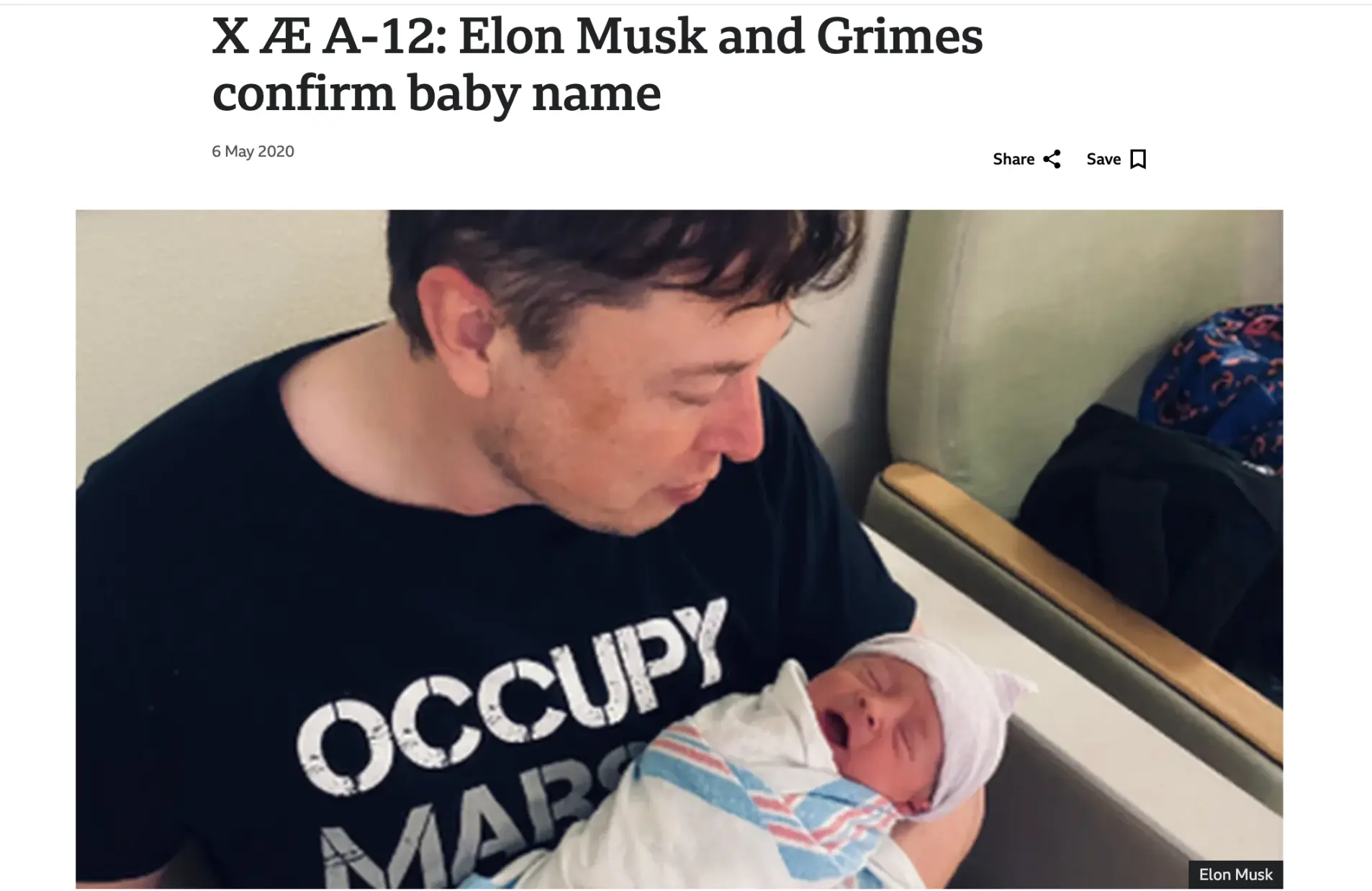
In mathematics, X represents the unknown, representing infinite possibilities. But in Musk's life script, X is the only constant.

25 years ago, that young man kicked out by the PayPal board lost his X. 25 years later, the billionaire with rockets, cars, AI, and the world's largest court of public opinion has finally picked up that piece of the puzzle.

Everything, everything, is to make X happen.

Welcome to Musk's X Universe.


Twitter:https://twitter.com/BitpushNewsCN

Bitpush TG Group:https://t.me/BitPushCommunity

Bitpush TG Subscription: https://t.me/bitpush

Original link:https://www.bitpush.news/articles/7603025

Criptos en tendencia

Preguntas relacionadas

QWhat was the original vision for X.com that Elon Musk founded in 1999?

AElon Musk's original vision for X.com was to create an online financial operating system where all financial services—transfers, investments, loans, insurance, and even daily consumption—could be integrated into a single platform.

QWhy was Musk removed as CEO of X.com in 2000?

AMusk was ousted by the board of directors while he was on his honeymoon in Australia. The Stanford-educated executives from Confinity, which had merged with X.com, viewed his aggressive and unconventional engineering-led approach as too risky and disruptive.

QWhat major strategic shift did Musk initiate after acquiring Twitter (renamed X) in 2022?

AAfter acquiring Twitter, Musk initiated a gradual transformation of the platform from a short-message social network into an all-in-one information and financial hub. This included introducing long-form content, video features, a creator monetization program, and ultimately, financial services like payment systems and stock trading integration through features like Smart Cashtags.

QHow did Musk use the concept of open source to support X's financialization goals?

AMusk announced the open-sourcing of X's content recommendation algorithm to ensure transparency, build user trust, and facilitate regulatory compliance. This move was critical for a platform handling financial transactions, as it allowed users, developers, and regulators to audit the code for security and fairness.

QWhat does the 'X' symbol represent to Elon Musk across his various ventures?

AFor Elon Musk, 'X' is a symbolic constant representing infinite possibility and the unknown. It is a personal and professional motif seen in his companies (SpaceX, xAI), products (Tesla Model X), and even his son's name, reflecting his long-standing ambition to create an integrated financial and technological ecosystem, originally conceived with X.com.

Lecturas Relacionadas

My Coding Betting Dashboard is Profiting, but Polymarket is Truly Not a Good Place for 'Arbitrage'

The author built a custom monitoring dashboard for Polymarket, a prediction market platform, and tested it with $1,600, achieving over 30% returns. However, the core argument is that Polymarket is not a good venue for traditional arbitrage. The dashboard has two main sections: a "Portfolio Dashboard" for tracking active positions with key metrics like total capital, P&L, and a risk-control module using a tier system (T1, T2, T3), and an "Opportunity Watchlist" for monitoring markets. The article details a critical structural trap in binary markets: a bet with a high perceived probability of success still carries a 100% loss risk if wrong. The author's T1/T2/T3 system is designed to manage this by limiting position sizes based on conviction and time horizon, emphasizing that high confidence should not equal high concentration. A key insight is the danger of "pseudo-diversification"—betting on different markets driven by the same underlying variable. The author concludes that Polymarket offers few true low-risk, arbitrage opportunities. It is instead a high-risk environment where wins can create a false sense of mastery, leading to large losses. The platform is better viewed as a training ground for honing judgment through disciplined, framework-driven betting rather than a reliable income source. The tools help transform intuition into structured, rule-based decisions to mitigate the risk of catastrophic errors.

marsbitHace 6 min(s)

My Coding Betting Dashboard is Profiting, but Polymarket is Truly Not a Good Place for 'Arbitrage'

marsbitHace 6 min(s)

WeChat AI Card Hands-On Guide: Has the AI Shopping Era Arrived?

**"WeChat AI Card" Practical Test Guide: Has the Era of AI Shopping Arrived?** WeChat has officially launched the "AI Exclusive Card," a feature integrated into its Workbuddy AI assistant. This card is designed to handle payments for AI-initiated purchases. Our hands-on test reveals it's not yet a tool for fully autonomous AI shopping, but rather a controlled payment layer for AI agents. The AI Card functions as an isolated sub-wallet within WeChat Pay. Users must bind the card and transfer funds into it from their main wallet. Crucially, every transaction requires explicit user confirmation via smartphone scan; AI cannot spend autonomously. Currently accessible through the Workbuddy agent, the card targets specific digital consumption scenarios: purchasing paid content (reports, data), calling paid APIs/tools, and subscribing to services. Its design prioritizes security and control by separating funds and mandating approval for each payment. We tested a real-world scenario: ordering bubble tea via Workbuddy using a "Meituan Life Assistant" skill. The process encountered multiple hurdles: high "skill" usage costs (exceeding daily free credits), and most importantly, while a payment was successfully initiated, the AI purchased an incorrect product (a mismatched group-buy coupon instead of the desired drink). This highlights the current limitation: the **AI Card only solves the payment step**. The broader challenge lies in the **AI agent's execution chain**—accurately understanding intent, navigating third-party platforms, selecting the right product, and ensuring proper fulfillment. The payment succeeded, but the purchase failed to meet the user's need. In conclusion, the WeChat AI Exclusive Card is a cautious, early-step experiment in AI commerce. It provides a secure, user-controlled payment method for agent interactions but is not yet capable of reliable, end-to-end complex purchases. For now, it's best used for low-value, low-risk digital services with careful user verification at each step. The vision of AI handling complete shopping tasks remains a work in progress.

marsbitHace 2 hora(s)

WeChat AI Card Hands-On Guide: Has the AI Shopping Era Arrived?

marsbitHace 2 hora(s)

Deconstructing Notion's Growth: From a Note-taking Tool to 100 Million Users—How Notion Built a Triple Growth Flywheel Through Product, Templates, and Community

Notion's growth from a niche note-taking tool to a platform with 100 million users is powered by three interconnected flywheels: Product-Led Growth (PLG), a Template Economy, and Community-Driven Growth. First, Notion's PLG strategy relies on a highly flexible, "plastic" product that users can adapt to countless personal and team workflows. Its freemium model lowers the barrier to entry, while features like page sharing and collaboration drive organic, usage-based viral growth as users naturally invite others. Second, the Template Economy solves the "blank page" problem. Templates, created by both Notion and its community, transform abstract product capabilities into concrete, copyable solutions for specific scenarios (e.g., project management, content calendars). This dramatically lowers activation costs for new users and fuels SEO-driven discovery. Third, a vibrant Community acts as a distributed growth engine. Users and official Ambassadors create tutorials, share use cases, and host local events. This community not only educates users but also fosters a sense of identity around pursuing "better ways of working," strengthening loyalty and enabling global, low-cost expansion. Together, these flywheels create a self-reinforcing ecosystem: a great product attracts users who create templates and community content, which in turn attracts more users and deepens engagement. This system allowed Notion to scale from individuals to teams and enterprises through a bottom-up adoption path. Looking ahead, AI integration promises to accelerate these flywheels further by making templates smarter and the platform a potential AI-native work operating system. Ultimately, Notion's defensible advantage is not just its features, but this deeply entrenched network of user assets, creators, and community trust.

marsbitHace 2 hora(s)

Deconstructing Notion's Growth: From a Note-taking Tool to 100 Million Users—How Notion Built a Triple Growth Flywheel Through Product, Templates, and Community

marsbitHace 2 hora(s)

$10 Billion, Qualcomm to Acquire Chip Legend Jim Keller's Company

Global mobile chip giant Qualcomm is in advanced talks to acquire AI chip startup Tenstorrent in a deal valued between $8-10 billion, according to media reports. This potential acquisition would be one of the largest in the AI chip sector in recent years. Tenstorrent, led by legendary chip architect Jim Keller, has gained prominence for its RISC-V architecture and AI accelerator designs. The move highlights Qualcomm's strategic push to diversify beyond its core smartphone chip business. As the smartphone market matures, Qualcomm is aggressively targeting growth in automotive, data center, and cloud AI. Acquiring Tenstorrent would allow Qualcomm to rapidly enter the high-end AI computing market, bypassing lengthy in-house development cycles. Tenstorrent's cost-effective system architecture, which avoids expensive HBM memory and relies on standard Ethernet for clustering, offers a potential alternative to Nvidia's costly solutions. Furthermore, Tenstorrent's high-performance RISC-V CPU technology and its focus on the automotive and edge computing segments align with Qualcomm's strategic goals, including its "Snapdragon Digital Chassis" platform. Despite the strategic rationale, the high valuation has sparked some investor caution. The successful integration of Tenstorrent's open-source culture and independent team into Qualcomm's organization, along with the commercialization of its technology, remains a key challenge.

marsbitHace 3 hora(s)

$10 Billion, Qualcomm to Acquire Chip Legend Jim Keller's Company

marsbitHace 3 hora(s)

CARDS' Brutal Truth of $535M FDV: Only $43M Net Revenue, Profit Margin Halved

The article deconstructs Collector Crypt (CC), a blockchain-based platform for trading tokenized collectible cards, revealing a significant disparity between its high volume and actual business fundamentals. Key findings include: * CC's cumulative revenue of $635M is misleading; 90.6% is instantly returned to users via card buybacks, leaving only $43M in net revenue (6.7% retention). * Trading activity is minimal, with real secondary market trading below $5M. eBay sales as a percentage of volume have declined for six consecutive quarters. * The platform's user base is highly concentrated, with a few dozen high-frequency wallets driving most of the volume, resembling a "casino" with ~420 daily active players. * As volume shifts to higher-priced card packs, the net profit margin has halved from 11.2% to 5.8%. * Token value capture (via burns and buybacks) totals only $1.4M, just 3.4% of net revenue. Meanwhile, operational wallets have off-ramped $45.7M in USDC. * With a Fully Diluted Valuation (FDV) of ~$535M, the token trades at 7.3x net revenue. The float is only 20.5%, with 72% of the supply allocated to insiders and locked until November 2027. The analysis concludes that while CC has found product-market fit as a high-speed gacha machine, it shows little evidence of evolving into a sustainable collector's marketplace, with minimal value accruing to its CARDS token.

marsbitHace 3 hora(s)

CARDS' Brutal Truth of $535M FDV: Only $43M Net Revenue, Profit Margin Halved

marsbitHace 3 hora(s)

Trading

Spot
Futuros

Artículos destacados

Qué es $S$

Entendiendo SPERO: Una Visión General Completa Introducción a SPERO A medida que el panorama de la innovación continúa evolucionando, la aparición de tecnologías web3 y proyectos de criptomonedas juega un papel fundamental en la configuración del futuro digital. Un proyecto que ha atraído la atención en este campo dinámico es SPERO, denotado como SPERO,$$s$. Este artículo tiene como objetivo reunir y presentar información detallada sobre SPERO, para ayudar a entusiastas e inversores a comprender sus fundamentos, objetivos e innovaciones dentro de los dominios web3 y cripto. ¿Qué es SPERO,$$s$? SPERO,$$s$ es un proyecto único dentro del espacio cripto que busca aprovechar los principios de descentralización y tecnología blockchain para crear un ecosistema que promueva la participación, la utilidad y la inclusión financiera. El proyecto está diseñado para facilitar interacciones de igual a igual de nuevas maneras, proporcionando a los usuarios soluciones y servicios financieros innovadores. En su esencia, SPERO,$$s$ tiene como objetivo empoderar a los individuos al proporcionar herramientas y plataformas que mejoren la experiencia del usuario en el espacio de las criptomonedas. Esto incluye habilitar métodos de transacción más flexibles, fomentar iniciativas impulsadas por la comunidad y crear caminos para oportunidades financieras a través de aplicaciones descentralizadas (dApps). La visión subyacente de SPERO,$$s$ gira en torno a la inclusividad, buscando cerrar brechas dentro de las finanzas tradicionales mientras aprovecha los beneficios de la tecnología blockchain. ¿Quién es el Creador de SPERO,$$s$? La identidad del creador de SPERO,$$s$ sigue siendo algo oscura, ya que hay recursos públicos limitados que proporcionan información de fondo detallada sobre su(s) fundador(es). Esta falta de transparencia puede derivarse del compromiso del proyecto con la descentralización, una ética que muchos proyectos web3 comparten, priorizando las contribuciones colectivas sobre el reconocimiento individual. Al centrar las discusiones en torno a la comunidad y sus objetivos colectivos, SPERO,$$s$ encarna la esencia del empoderamiento sin señalar a individuos específicos. Como tal, comprender la ética y la misión de SPERO sigue siendo más importante que identificar a un creador singular. ¿Quiénes son los Inversores de SPERO,$$s$? SPERO,$$s$ cuenta con el apoyo de una diversa gama de inversores que van desde capitalistas de riesgo hasta inversores ángeles dedicados a fomentar la innovación en el sector cripto. El enfoque de estos inversores generalmente se alinea con la misión de SPERO, priorizando proyectos que prometen avances tecnológicos sociales, inclusión financiera y gobernanza descentralizada. Estas fundaciones de inversores suelen estar interesadas en proyectos que no solo ofrecen productos innovadores, sino que también contribuyen positivamente a la comunidad blockchain y sus ecosistemas. El respaldo de estos inversores refuerza a SPERO,$$s$ como un contendiente notable en el dominio de proyectos cripto que evoluciona rápidamente. ¿Cómo Funciona SPERO,$$s$? SPERO,$$s$ emplea un marco multifacético que lo distingue de los proyectos de criptomonedas convencionales. Aquí hay algunas de las características clave que subrayan su singularidad e innovación: Gobernanza Descentralizada: SPERO,$$s$ integra modelos de gobernanza descentralizada, empoderando a los usuarios para participar activamente en los procesos de toma de decisiones sobre el futuro del proyecto. Este enfoque fomenta un sentido de propiedad y responsabilidad entre los miembros de la comunidad. Utilidad del Token: SPERO,$$s$ utiliza su propio token de criptomoneda, diseñado para servir diversas funciones dentro del ecosistema. Estos tokens permiten transacciones, recompensas y la facilitación de servicios ofrecidos en la plataforma, mejorando la participación y la utilidad general. Arquitectura en Capas: La arquitectura técnica de SPERO,$$s$ apoya la modularidad y escalabilidad, permitiendo la integración fluida de características y aplicaciones adicionales a medida que el proyecto evoluciona. Esta adaptabilidad es fundamental para mantener la relevancia en el cambiante paisaje cripto. Participación de la Comunidad: El proyecto enfatiza iniciativas impulsadas por la comunidad, empleando mecanismos que incentivan la colaboración y la retroalimentación. Al nutrir una comunidad sólida, SPERO,$$s$ puede abordar mejor las necesidades de los usuarios y adaptarse a las tendencias del mercado. Enfoque en la Inclusión: Al ofrecer tarifas de transacción bajas e interfaces amigables para el usuario, SPERO,$$s$ busca atraer a una base de usuarios diversa, incluyendo a individuos que anteriormente pueden no haber participado en el espacio cripto. Este compromiso con la inclusión se alinea con su misión general de empoderamiento a través de la accesibilidad. Cronología de SPERO,$$s$ Entender la historia de un proyecto proporciona información crucial sobre su trayectoria de desarrollo y hitos. A continuación se presenta una cronología sugerida que mapea eventos significativos en la evolución de SPERO,$$s$: Fase de Conceptualización e Ideación: Las ideas iniciales que forman la base de SPERO,$$s$ fueron concebidas, alineándose estrechamente con los principios de descentralización y enfoque comunitario dentro de la industria blockchain. Lanzamiento del Whitepaper del Proyecto: Tras la fase conceptual, se lanzó un whitepaper completo que detalla la visión, los objetivos y la infraestructura tecnológica de SPERO,$$s$ para generar interés y retroalimentación de la comunidad. Construcción de Comunidad y Primeras Interacciones: Se realizaron esfuerzos de divulgación activa para construir una comunidad de primeros adoptantes y posibles inversores, facilitando discusiones en torno a los objetivos del proyecto y obteniendo apoyo. Evento de Generación de Tokens: SPERO,$$s$ llevó a cabo un evento de generación de tokens (TGE) para distribuir sus tokens nativos a los primeros seguidores y establecer liquidez inicial dentro del ecosistema. Lanzamiento de la dApp Inicial: La primera aplicación descentralizada (dApp) asociada con SPERO,$$s$ se puso en marcha, permitiendo a los usuarios interactuar con las funcionalidades centrales de la plataforma. Desarrollo Continuo y Alianzas: Actualizaciones y mejoras continuas a las ofertas del proyecto, incluyendo alianzas estratégicas con otros actores en el espacio blockchain, han moldeado a SPERO,$$s$ en un jugador competitivo y en evolución en el mercado cripto. Conclusión SPERO,$$s$ se erige como un testimonio del potencial de web3 y las criptomonedas para revolucionar los sistemas financieros y empoderar a los individuos. Con un compromiso con la gobernanza descentralizada, la participación comunitaria y funcionalidades diseñadas de manera innovadora, allana el camino hacia un paisaje financiero más inclusivo. Como con cualquier inversión en el espacio cripto que evoluciona rápidamente, se anima a los posibles inversores y usuarios a investigar a fondo y participar de manera reflexiva con los desarrollos en curso dentro de SPERO,$$s$. El proyecto muestra el espíritu innovador de la industria cripto, invitando a una mayor exploración de sus innumerables posibilidades. Mientras el viaje de SPERO,$$s$ aún se desarrolla, sus principios fundamentales pueden, de hecho, influir en el futuro de cómo interactuamos con la tecnología, las finanzas y entre nosotros en ecosistemas digitales interconectados.

78 Vistas totalesPublicado en 2024.12.17Actualizado en 2024.12.17

Qué es $S$

Qué es AGENT S

Agent S: El Futuro de la Interacción Autónoma en Web3 Introducción En el paisaje en constante evolución de Web3 y las criptomonedas, las innovaciones están redefiniendo constantemente cómo los individuos interactúan con las plataformas digitales. Uno de estos proyectos pioneros, Agent S, promete revolucionar la interacción humano-computadora a través de su marco agente abierto. Al allanar el camino para interacciones autónomas, Agent S busca simplificar tareas complejas, ofreciendo aplicaciones transformadoras en inteligencia artificial (IA). Esta exploración detallada profundizará en las complejidades del proyecto, sus características únicas y las implicaciones para el dominio de las criptomonedas. ¿Qué es Agent S? Agent S se presenta como un marco agente abierto innovador, diseñado específicamente para abordar tres desafíos fundamentales en la automatización de tareas informáticas: Adquisición de Conocimiento Específico del Dominio: El marco aprende inteligentemente de diversas fuentes de conocimiento externas y experiencias internas. Este enfoque dual le permite construir un rico repositorio de conocimiento específico del dominio, mejorando su rendimiento en la ejecución de tareas. Planificación a Largo Plazo de Tareas: Agent S emplea planificación jerárquica aumentada por la experiencia, un enfoque estratégico que facilita la descomposición y ejecución eficiente de tareas complejas. Esta característica mejora significativamente su capacidad para gestionar múltiples subtareas de manera eficiente y efectiva. Manejo de Interfaces Dinámicas y No Uniformes: El proyecto introduce la Interfaz Agente-Computadora (ACI), una solución innovadora que mejora la interacción entre agentes y usuarios. Utilizando Modelos de Lenguaje Multimodal de Gran Escala (MLLMs), Agent S puede navegar y manipular diversas interfaces gráficas de usuario sin problemas. A través de estas características pioneras, Agent S proporciona un marco robusto que aborda las complejidades involucradas en la automatización de la interacción humana con las máquinas, preparando el terreno para una multitud de aplicaciones en IA y más allá. ¿Quién es el Creador de Agent S? Si bien el concepto de Agent S es fundamentalmente innovador, la información específica sobre su creador sigue siendo elusiva. El creador es actualmente desconocido, lo que resalta ya sea la etapa incipiente del proyecto o la elección estratégica de mantener a los miembros fundadores en el anonimato. Independientemente de la anonimidad, el enfoque sigue siendo en las capacidades y el potencial del marco. ¿Quiénes son los Inversores de Agent S? Dado que Agent S es relativamente nuevo en el ecosistema criptográfico, la información detallada sobre sus inversores y patrocinadores financieros no está documentada explícitamente. La falta de información disponible públicamente sobre las bases de inversión u organizaciones que apoyan el proyecto plantea preguntas sobre su estructura de financiamiento y hoja de ruta de desarrollo. Comprender el respaldo es crucial para evaluar la sostenibilidad del proyecto y su posible impacto en el mercado. ¿Cómo Funciona Agent S? En el núcleo de Agent S se encuentra una tecnología de vanguardia que le permite funcionar de manera efectiva en diversos entornos. Su modelo operativo se basa en varias características clave: Interacción Humano-Computadora Similar a la Humana: El marco ofrece planificación avanzada de IA, esforzándose por hacer que las interacciones con las computadoras sean más intuitivas. Al imitar el comportamiento humano en la ejecución de tareas, promete elevar las experiencias de los usuarios. Memoria Narrativa: Empleada para aprovechar experiencias de alto nivel, Agent S utiliza memoria narrativa para hacer un seguimiento de las historias de tareas, mejorando así sus procesos de toma de decisiones. Memoria Episódica: Esta característica proporciona a los usuarios una guía paso a paso, permitiendo que el marco ofrezca apoyo contextual a medida que se desarrollan las tareas. Soporte para OpenACI: Con la capacidad de ejecutarse localmente, Agent S permite a los usuarios mantener el control sobre sus interacciones y flujos de trabajo, alineándose con la ética descentralizada de Web3. Fácil Integración con APIs Externas: Su versatilidad y compatibilidad con varias plataformas de IA aseguran que Agent S pueda encajar sin problemas en ecosistemas tecnológicos existentes, convirtiéndolo en una opción atractiva para desarrolladores y organizaciones. Estas funcionalidades contribuyen colectivamente a la posición única de Agent S dentro del espacio cripto, ya que automatiza tareas complejas y de múltiples pasos con una intervención humana mínima. A medida que el proyecto evoluciona, sus posibles aplicaciones en Web3 podrían redefinir cómo se desarrollan las interacciones digitales. Cronología de Agent S El desarrollo y los hitos de Agent S pueden encapsularse en una cronología que resalta sus eventos significativos: 27 de septiembre de 2024: El concepto de Agent S fue lanzado en un documento de investigación integral titulado “Un Marco Agente Abierto que Usa Computadoras Como un Humano”, mostrando las bases del proyecto. 10 de octubre de 2024: El documento de investigación fue puesto a disposición del público en arXiv, ofreciendo una exploración profunda del marco y su evaluación de rendimiento basada en el benchmark OSWorld. 12 de octubre de 2024: Se lanzó una presentación en video, proporcionando una visión visual de las capacidades y características de Agent S, involucrando aún más a posibles usuarios e inversores. Estos marcadores en la cronología no solo ilustran el progreso de Agent S, sino que también indican su compromiso con la transparencia y la participación comunitaria. Puntos Clave Sobre Agent S A medida que el marco Agent S continúa evolucionando, varios atributos clave destacan, subrayando su naturaleza innovadora y potencial: Marco Innovador: Diseñado para proporcionar un uso intuitivo de las computadoras similar a la interacción humana, Agent S aporta un enfoque novedoso a la automatización de tareas. Interacción Autónoma: La capacidad de interactuar de manera autónoma con las computadoras a través de GUI significa un salto hacia soluciones informáticas más inteligentes y eficientes. Automatización de Tareas Complejas: Con su metodología robusta, puede automatizar tareas complejas y de múltiples pasos, haciendo que los procesos sean más rápidos y menos propensos a errores. Mejora Continua: Los mecanismos de aprendizaje permiten a Agent S mejorar a partir de experiencias pasadas, mejorando continuamente su rendimiento y eficacia. Versatilidad: Su adaptabilidad en diferentes entornos operativos como OSWorld y WindowsAgentArena asegura que pueda servir a una amplia gama de aplicaciones. A medida que Agent S se posiciona en el paisaje de Web3 y criptomonedas, su potencial para mejorar las capacidades de interacción y automatizar procesos significa un avance significativo en las tecnologías de IA. A través de su marco innovador, Agent S ejemplifica el futuro de las interacciones digitales, prometiendo una experiencia más fluida y eficiente para los usuarios en diversas industrias. Conclusión Agent S representa un audaz avance en la unión de la IA y Web3, con la capacidad de redefinir cómo interactuamos con la tecnología. Aunque aún se encuentra en sus primeras etapas, las posibilidades para su aplicación son vastas y atractivas. A través de su marco integral que aborda desafíos críticos, Agent S busca llevar las interacciones autónomas al primer plano de la experiencia digital. A medida que nos adentramos más en los reinos de las criptomonedas y la descentralización, proyectos como Agent S sin duda desempeñarán un papel crucial en la configuración del futuro de la tecnología y la colaboración humano-computadora.

488 Vistas totalesPublicado en 2025.01.14Actualizado en 2025.01.14

Qué es AGENT S

Cómo comprar S

¡Bienvenido a HTX.com! Hemos hecho que comprar Sonic (S) sea simple y conveniente. Sigue nuestra guía paso a paso para iniciar tu viaje de criptos.Paso 1: crea tu cuenta HTXUtiliza tu correo electrónico o número de teléfono para registrarte y obtener una cuenta gratuita en HTX. Experimenta un proceso de registro sin complicaciones y desbloquea todas las funciones.Obtener mi cuentaPaso 2: ve a Comprar cripto y elige tu método de pagoTarjeta de crédito/débito: usa tu Visa o Mastercard para comprar Sonic (S) al instante.Saldo: utiliza fondos del saldo de tu cuenta HTX para tradear sin problemas.Terceros: hemos agregado métodos de pago populares como Google Pay y Apple Pay para mejorar la comodidad.P2P: tradear directamente con otros usuarios en HTX.Over-the-Counter (OTC): ofrecemos servicios personalizados y tipos de cambio competitivos para los traders.Paso 3: guarda tu Sonic (S)Después de comprar tu Sonic (S), guárdalo en tu cuenta HTX. Alternativamente, puedes enviarlo a otro lugar mediante transferencia blockchain o utilizarlo para tradear otras criptomonedas.Paso 4: tradear Sonic (S)Tradear fácilmente con Sonic (S) en HTX's mercado spot. Simplemente accede a tu cuenta, selecciona tu par de trading, ejecuta tus trades y monitorea en tiempo real. Ofrecemos una experiencia fácil de usar tanto para principiantes como para traders experimentados.

1.0k Vistas totalesPublicado en 2025.01.15Actualizado en 2026.06.02

Cómo comprar S

Discusiones

Bienvenido a la comunidad de HTX. Aquí puedes mantenerte informado sobre los últimos desarrollos de la plataforma y acceder a análisis profesionales del mercado. A continuación se presentan las opiniones de los usuarios sobre el precio de S (S).

活动图片