Multicoin Co-founder: Is Decentralization Always Slower Than Centralization? PropAMM Is Breaking This Bias

marsbitPublicado a 2026-03-13Actualizado a 2026-03-13

Resumen

In a recent article, Multicoin Capital co-founder Kyle Samani argues that PropAMM (Proactive Automated Market Maker) on Solana represents one of the most significant innovations in market microstructure in decades. It challenges the long-held belief that decentralized systems are inherently slower than centralized ones due to global node communication. In traditional centralized exchanges (CEXs), market makers co-locate servers and engage in constant bidirectional communication with the exchange to update orders, resulting in latency. In contrast, PropAMM runs market-making algorithms directly on the Solana blockchain, eliminating the need for inter-server messaging. Price updates occur within the same physical silicon, drastically reducing latency. PropAMM already offers narrower spreads for SOL-USDC spot trading than major CEXs. Samani predicts it will dominate on-chain trading across spots, perpetuals, and prediction markets in 2024. Current challenges include non-deterministic routing and lack of guaranteed best execution for takers, but solutions from aggregators like Jupiter and dFlow are expected. Upcoming Solana upgrades—such as higher compute limits, reduced slot times, and lower network latency—will further enhance PropAMM performance, solidifying its advantage over traditional systems.

Author: Kyle Samani, Multicoin Co-founder

Compiled by: Azuma, Odaily Planet Daily

Editor's Note: The man who knows how to hype Solana best, Multicoin Capital's former co-founder Kyle Samani, who recently made a high-profile exit, is back!

Last night, Kyle Samani posted a long Thread on his personal X account. In the post, Samani once again demonstrated his highly persuasive "hype" (not derogatory here) rhetoric, using "efficiency"—a weak point in the decentralization narrative—as a breakthrough. He detailed how Solana's PropAMM will catch up with or even surpass traditional centralized models in efficiency, arguing that PropAMM is one of the most important innovations in market microstructure in recent years, or even decades.

Below is the original content:

PropAMM is one of the most important innovations in market microstructure in recent years, and perhaps even one of the most significant in decades.

To help everyone grasp this conclusion, let's first look at how market makers (MMs) quote prices on traditional centralized exchanges (CEXs).

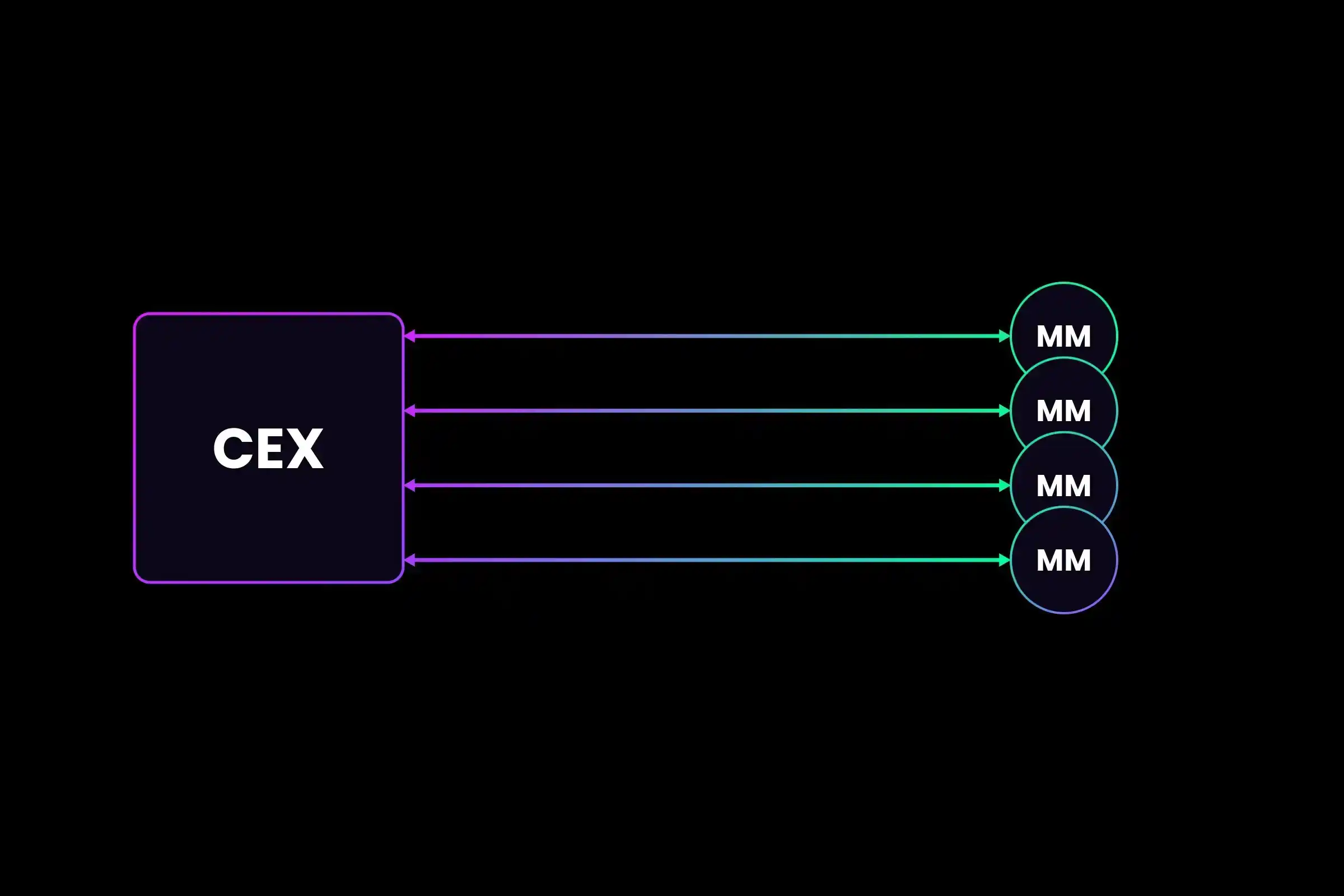
Market makers typically engage in physical co-location with the trading platform. Each market maker runs an algorithm on a server and connects to another server running the exchange's system via a network cable of uniform length (e.g., 50 meters).

A massive stream of data is constantly exchanged between market makers and the trading platform. Whenever a market maker sends an order to the exchange—whether it's a limit order, cancellation, or market order—the exchange must broadcast this information to all other market makers; then, other market makers resend their orders based on the new information; this cycle repeats indefinitely.

Here is a simple diagram.
Now let's look at how PropAMM works on the Solana mainnet.

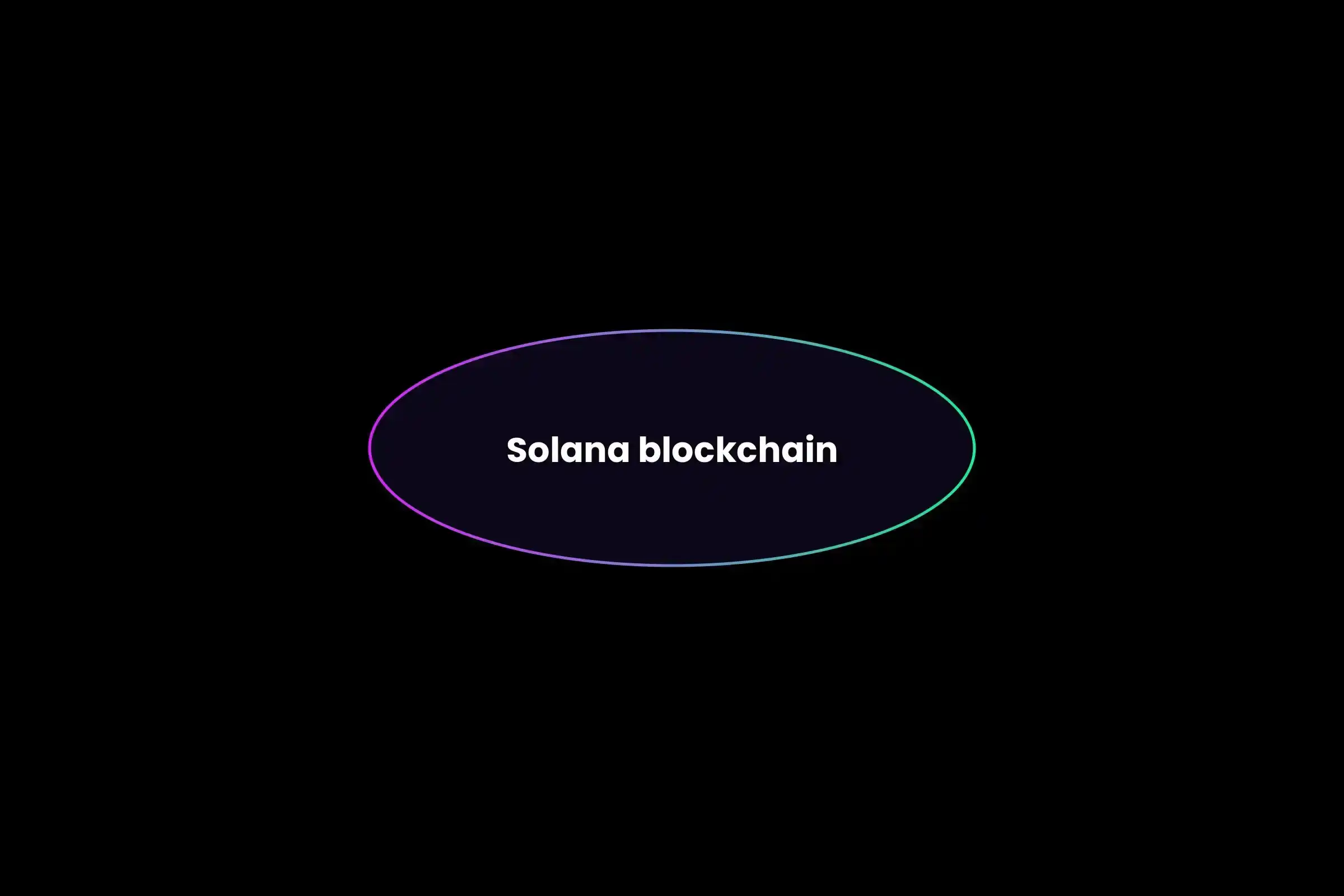
The beauty of PropAMM on Solana is that the blockchain itself directly "hosts" the market maker algorithms. This means the system no longer needs to send billions of messages back and forth between market makers and the exchange; the market-making algorithms will run directly on the same physical machine as the exchange.

Here is the new diagram. (That's right, only the Solana blockchain is needed!)
There has long been a common view in the cryptocurrency industry that decentralized systems must be slower (with higher latency) than centralized systems because they require communication between global nodes.

But if you reframe the issue, on-chain hosted algorithms could actually have lower latency than traditional centralized financial exchanges.

Why is that? The reason is that the latency required for PropAMM to update prices only involves electrons moving within the same physical silicon chip. For example, if the last market order causes a change in the SOL-USD price, this information is immediately visible to all PropAMMs and used to price the next market order. Everything happens within the same silicon chip; there is no longer a need for two-way communication between servers.

It's worth noting that PropAMM does require frequent oracle updates, but this is not a problem and does not change the overall fact described above.

The most critical point remains that when the trading platform—in this case, the Solana blockchain—directly hosts the PropAMM algorithms, the market makers' pricing changes in real-time within the same physical silicon chip.

PropAMM has already become the dominant mechanism for SOL-USDC spot quotes on Solana, with narrower spreads than all major CEXs. I expect this market structure to become the dominant model for on-chain trading this year, including spot, perpetual contracts (perps), and even prediction markets.

The biggest challenge for PropAMM is that there is currently no way to ensure that takers always get the best execution, because:

· The algorithms of all PropAMMs are not public (which is reasonable, as traditional market-making algorithms are also proprietary);

· When routing trades between multiple PropAMMs, the results are non-deterministic.

However, this problem can be solved. I expect all relevant aggregator teams to launch solutions this year, such as Jupiter and dFlow for spot, and Phoenix for contracts.

Current PropAMMs are still under-optimized and constrained by various limitations of the Solana blockchain itself. This year, Solana will roll out a series of major upgrades that will significantly enhance PropAMM performance, including:

1. Higher CU (Compute Unit) limits per transaction and larger transaction sizes;

2. Higher CU limits per block;

3. Alpenglow: Reducing slot time from 400ms to 100–150ms;

4. DoubleZero: Reducing global network latency;

5. Application-controlled execution;

6. Multiple concurrent leaders.

If PropAMMs on the Solana mainnet can already offer narrower quotes than all CEXs without these upgrades, imagine how powerful they will become as these upgrades are gradually implemented.

Related reading: The Turnaround of Kyle Samani, the "Best Crypto Investor in History," and a Mirror of a Decade Ago


Preguntas relacionadas

QWhat is PropAMM and why is it considered a major innovation in market microstructure?

APropAMM is a mechanism on Solana where market maker algorithms are hosted directly on the blockchain, eliminating the need for constant communication between market makers and exchanges. It is considered a major innovation because it reduces latency by running algorithms on the same physical hardware as the exchange, potentially outperforming traditional centralized systems in efficiency.

QHow does PropAMM achieve lower latency compared to traditional centralized exchanges?

APropAMM achieves lower latency by hosting market maker algorithms directly on the Solana blockchain, allowing price updates to occur within the same physical silicon. This eliminates the bidirectional communication delays between market makers and exchanges in traditional systems, as all operations happen internally on the same hardware.

QWhat are the current challenges faced by PropAMM in ensuring best execution for takers?

AThe main challenges are that PropAMM algorithms are not publicly disclosed (similar to traditional market makers), and trading routing across multiple PropAMMs is non-deterministic, making it difficult to guarantee the best execution for takers automatically.

QWhich Solana upgrades are expected to enhance PropAMM performance in the future?

AKey Solana upgrades include higher CU limits per transaction, larger transaction sizes, increased CU per block, Alpenglow (reducing slot time to 100-150ms), DoubleZero (reducing global network latency), application-controlled execution, and multiple concurrent leaders.

QHow has PropAMM already demonstrated its effectiveness on Solana's mainnet?

APropAMM has become the dominant mechanism for SOL-USDC spot quotes on Solana, offering narrower spreads than all major centralized exchanges (CEXs), showcasing its efficiency and potential to lead on-chain trading in spots, perpetuals, and prediction markets.

Lecturas Relacionadas

Bank of Japan Signals Interest Rate Hike Despite Keeping Them at 1%

The Bank of Japan (BOJ) kept its benchmark interest rate at 1% on July 31, as widely expected, following a June hike to a 31-year high. The decision passed with an 8-1 vote, with board member Hajime Takata again dissenting in favor of a hike to 1.25%. Despite holding rates steady, the BOJ signaled a hawkish tilt, warning that underlying inflation is likely to accelerate and exceed 2% from the latter half of the fiscal year. While it slightly lowered its core inflation forecast for FY2026, officials expressed stronger confidence that an overshoot will occur later, driven by yen weakness, corporate pricing behavior, and lingering energy shock effects. Markets were focused on the BOJ's forward guidance. Analysts noted the central bank appeared to balance short-term caution with a long-term warning of tighter policy. Governor Kazuo Ueda faces the challenge of reconciling a government reluctant to tighten further with bond markets already pricing in additional hikes, with the timing of the next move debated. Adding complexity, the BOJ reportedly intervened in currency markets hours before the rate decision, buying yen to support the currency which had fallen to 40-year lows against the dollar. Yen weakness stems from the wide U.S.-Japan interest rate gap, high fuel prices, and market skepticism about the pace of BOJ policy normalization. The yield on Japan's 10-year government bonds fell to 2.8%, indicating investor expectations for future monetary tightening.

cryptonews.ruHace 8 min(s)

Bank of Japan Signals Interest Rate Hike Despite Keeping Them at 1%

cryptonews.ruHace 8 min(s)

Why Are Leveraged ETFs like 7709 Inherently Negative EV Products?

This article argues that the SK H力士 2x Leveraged ETF (7709) is fundamentally a negative expected value (EV) product, rather than simply a "double SK H力士" investment. Its core issue stems from its daily rebalancing mechanism to maintain a 2x leverage target. After a price move, the fund must buy more after a rise or sell after a fall to readjust its leverage, creating a systematic pattern of buying high and selling low. This introduces a "delay loss": it always reacts to past price changes, missing potential gains from adjusting earlier during an uptrend and suffering greater losses from adjusting later during a downtrend. While more frequent intraday rebalancing would improve returns in strong, smooth trending markets by reinvesting profits or cutting losses sooner, it also dramatically increases volatility drag (frictional losses) during choppy, oscillating markets due to more frequent high-buy/low-sell trades. The author draws a parallel to an option seller who delta hedges (short gamma), which involves similar "buy high, sell low" dynamic hedging. However, unlike an option seller who receives upfront premium (IV and theta) as compensation for this risk, the leveraged ETF investor receives no such compensation. Instead, they bear all the path-dependent volatility decay, plus additional costs like swap/derivatives financing, management fees, and trading slippage. Thus, the product's return profile can be framed as: 2x directional return minus realized variance drag minus financing costs minus derivatives costs minus management fees minus transaction costs. For the investor to profit, SK H力士's price must not only rise significantly but do so in a strong, sustained, and smooth trend to overcome these inherent structural costs. High volatility and frequent price reversals are particularly damaging. The article also notes that while the ETF has no explicit liquidation line like perpetual futures, avoiding a sudden "blow-up," its net asset value can still decay towards zero over time through this combination of volatility drag and fees. For experienced traders, directly managing leverage via perpetual contracts may offer more control and potentially lower costs than this packaged, mechanistic product.

marsbitHace 15 min(s)

Why Are Leveraged ETFs like 7709 Inherently Negative EV Products?

marsbitHace 15 min(s)

'Backstabbing' or 'Win-Win'? How Likely Is TradeXYZ to Break Away from Hyperliquid and Go Solo?

The article discusses the growing debate over whether TradeXYZ, which dominates Hyperliquid's HIP-3 market with over 90% of its volume, might break away to build its own independent trading platform. This possibility is fueled by TradeXYZ's immense market influence and the common industry trend of successful projects seeking more control and profit capture. Key arguments for a potential split include TradeXYZ's overwhelming contribution to Hyperliquid's metrics and the financial incentive to retain all transaction fees, as it currently splits them 50/50 with Hyperliquid. The piece draws parallels to other cases, like Anthropic's "Claude Code" competing with its former partner Cursor, suggesting "betrayal" can occur when business leverage shifts. However, strong counterarguments suggest a split is unlikely or would be detrimental. TradeXYZ relies on Hyperliquid's high-performance infrastructure and its platform as a primary user acquisition channel. Building a comparable system would be challenging. Furthermore, the founders of both projects share a history of trust and mutual admiration. The analysis concludes that a separation would likely be a lose-lose scenario: Hyperliquid would lose a major growth narrative and trading volume, while TradeXYZ would face technical hurdles, user migration issues, and reputational damage, potentially allowing competitors to seize market share. The most rational path is seen as continued collaboration, with TradeXYZ potentially negotiating better terms while leveraging Hyperliquid's established strengths.

marsbitHace 25 min(s)

'Backstabbing' or 'Win-Win'? How Likely Is TradeXYZ to Break Away from Hyperliquid and Go Solo?

marsbitHace 25 min(s)

Trading

Spot
活动图片