Morning Post | Michael Saylor Says This Week's Buy Was Bonds, Not Bitcoin; StablR Suffers Attack Losing Approximately $2.8 Million; US Congress Reintroduces Bitcoin Reserve Bill

链捕手Publicado a 2026-05-25Actualizado a 2026-05-25

Resumen

This cryptocurrency industry digest covers key developments from May 25. MicroStrategy's Michael Saylor clarified the company purchased bonds, not Bitcoin, this week. In regulatory news, the US Congress reintroduced a Bitcoin reserve bill, with Republican backing aiming to accumulate 5% of global supply. The legal and audit firms for the collapsed FTX agreed to a $66 million settlement over fraud allegations. Several CFTC officials skeptical of prediction market oversight were reportedly suspended and forced out. On the security front, the StablR stablecoin was attacked and de-pegged, resulting in an estimated $2.8 million loss for the attacker. The Ethereum Foundation faced criticism, though a researcher defended its core protocol-building mission over influencing ETH's price. Market data from GMGN showed the top 24-hour trending meme tokens on ETH were HEX, SHIB, LINK, PEPE, and mUSD. On Solana, leaders were TROLL, neet, WORLDCUP, HANTA, and Buttcoin. Base chain's top tokens included TOSHI, KEYCAT, BRETT, CLANKER, and LUNA. Featured articles included an a16z analysis arguing tokenization, or real-world assets (RWA), is fundamentally transforming asset nature and financial systems, with the market growing tenfold to ~$34 billion in two years. Another piece deconstructed Hyperliquid's success through a five-layer financial stack framework, emphasizing the critical importance of building from a robust settlement layer upward.

Compiled by: ChainCatcher


Key News:

  • Former FTX Law Firm and Auditor Agree to Pay $66 Million to Settle Fraud Allegations
  • StablR Stablecoin Depegs After Attack, Attacker Profited Approximately $2.8 Million
  • Ethereum Foundation Frequently Criticized, Researcher Defends Its Mission is to Build Protocol, Not Pump ETH
  • Multiple CFTC Officials Who Questioned Prediction Market Regulation Suspended and Forced to Resign
  • US Congress Reintroduces Bitcoin Reserve Bill, Republicans Plan to Push for Accumulating 5% of Global Bitcoin
  • Michael Saylor: This Week's Buy Was Bonds, Not Bitcoin

What Happened in the Past 24 Hours?

US Congress Reintroduces Bitcoin Reserve Bill, Republicans Plan to Push for Accumulating 5% of Global Bitcoin

Meme Top Charts

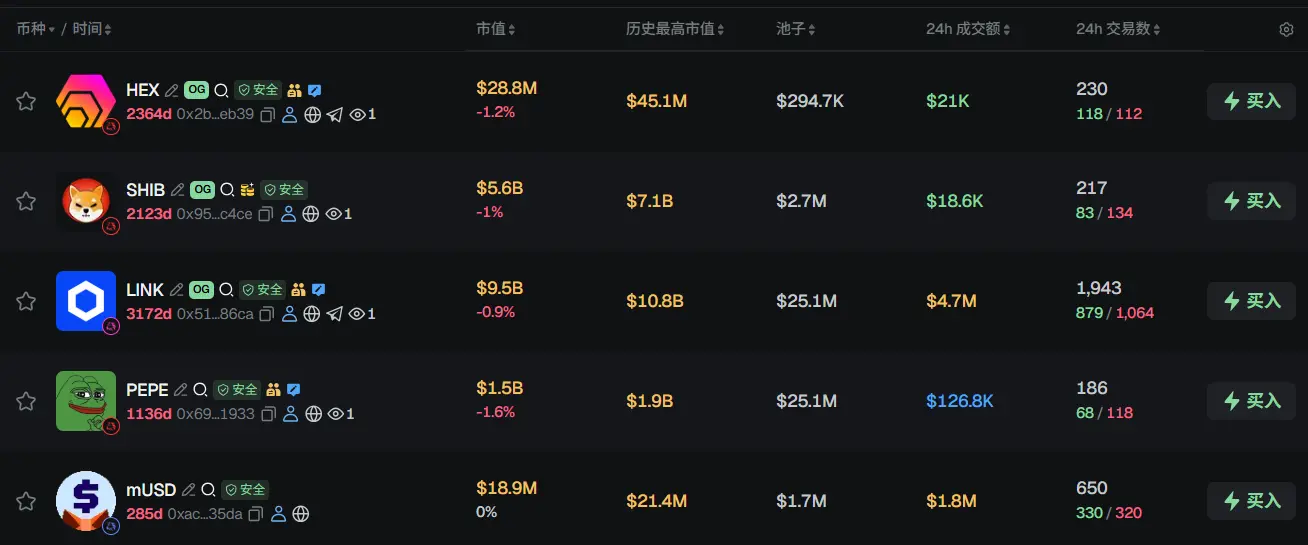
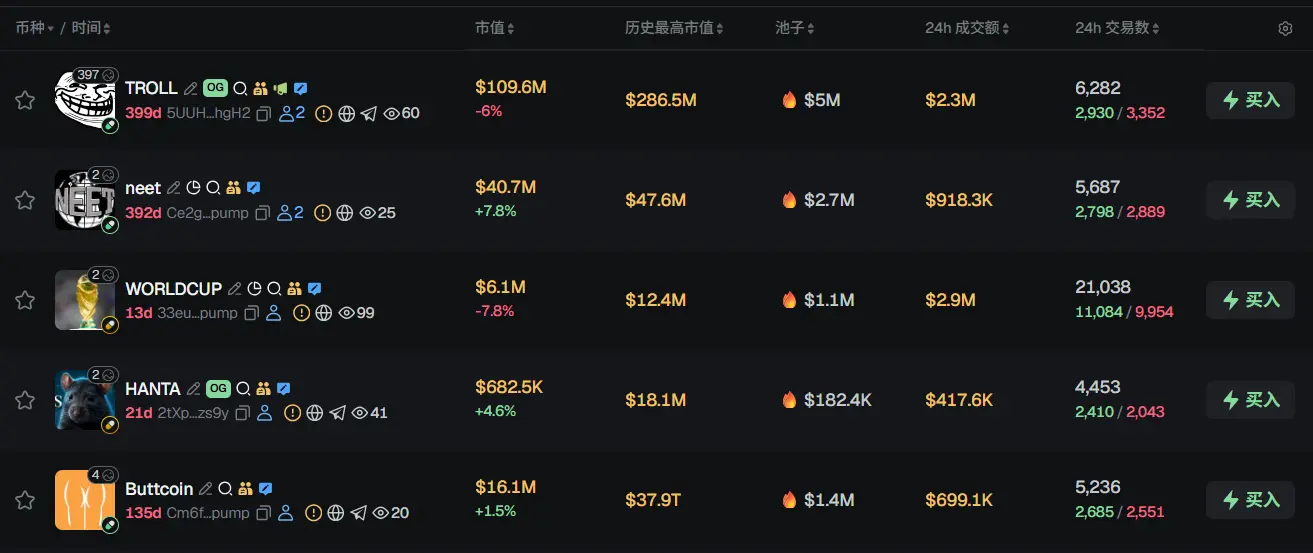
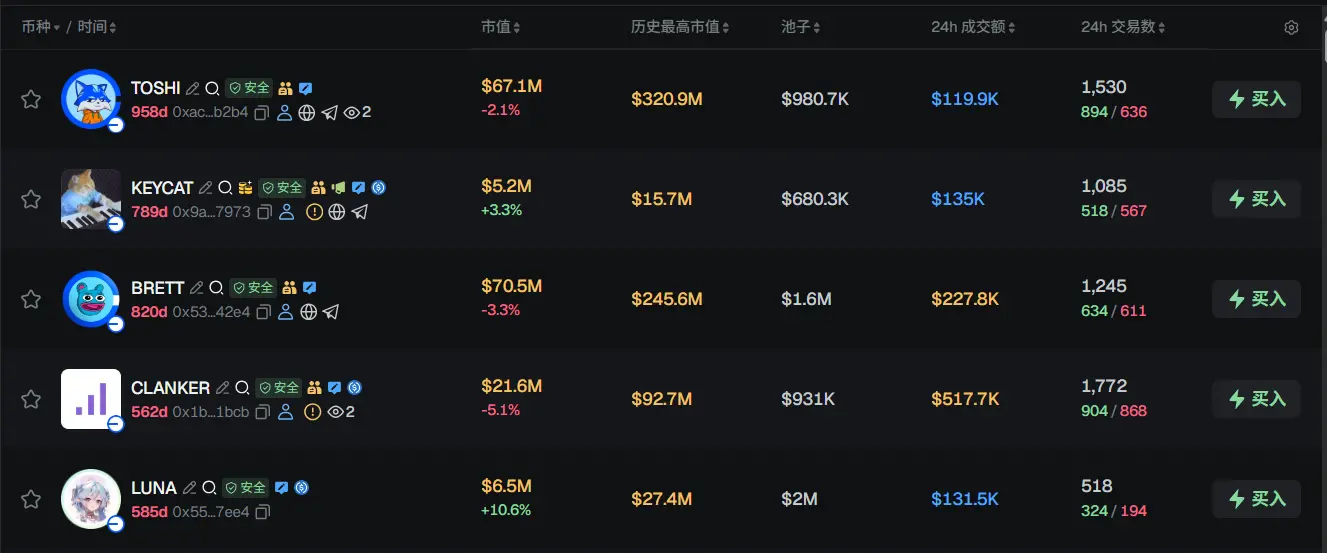
According to meme token tracking and analysis platform GMGN market data, as of May 25th, 09:00,

Top 5 popular ETH tokens in the past 24h are: HEX, SHIB, LINK, PEPE, mUSD
Top 5 popular Solana tokens in the past 24h are: TROLL, neet, WORLDCUP, HANTA, Buttcoin
Top 5 popular Base tokens in the past 24h are: TOSHI, KEYCAT, BRETT, CLANKER, LUNA
What are the Must-Read Articles in the Past 24 Hours?

a16z: 7 Charts to Understand How Tokenization Changes the Nature of Assets

Tokenized Assets, also known as 'Real World Assets (RWA)', are changing the form of assets, how they flow, and how the financial system is built.

Just last month, the tokenized asset market size surpassed $30 billion, currently hovering around $34 billion (excluding stablecoins). This scale is roughly equivalent to a regional bank or a top-tier university endowment fund. While still very small compared to the global financial system, it is already large enough to have real impact.

Just two years ago, the tokenized asset market was less than $3 billion, but then the market underwent dramatic changes: the US GENIUS Act brought a clearer regulatory framework for stablecoins, institutional-grade on-chain infrastructure matured, and a large number of financial institutions began deploying blockchain technology almost simultaneously. It was under the push of these factors that the tokenized asset market grew 10-fold in less than two years.

Decoding the Secret to Hyperliquid's Success Through a Five-Layer Financial Stack

The construction of institutional-grade financial infrastructure often follows a pattern. You don't start with the most expressive product and then work backwards.

You start with the settlement layer, prove it works under stress, and then unlock all the features that depend on it.

The New York Stock Exchange didn't add derivatives before it had a well-functioning stock market. The Chicago Mercantile Exchange didn't launch options before it launched futures.

This order is not arbitrary. The order of the foundational layers determines the possibilities of the superstructure.

Hyperliquid understands this well.

Preguntas relacionadas

QWhat is Michael Saylor's recent purchase, according to the title and the 'Important News' section of the article?

AAccording to the article, Michael Saylor stated that the purchase made this week was bonds, not Bitcoin.

QWhat is the reported loss from the StablR attack mentioned in the article?

AThe StablR stablecoin project suffered an attack resulting in a loss of approximately 2.8 million USD.

QWhat legislation related to Bitcoin is being promoted again by the US Congress, as per the article?

AThe US Congress is once again promoting a Bitcoin reserve bill. Specifically, Republicans are reportedly pushing a plan to accumulate 5% of the world's Bitcoin.

QWhich two companies related to FTX agreed to a settlement over fraud allegations, and for what amount?

AFTX's former law firm and auditing agency agreed to pay 66 million USD to settle fraud allegations.

QWhat is the core argument made by the Ethereum Foundation researcher mentioned in the 'Important News' section?

AThe researcher defended the Ethereum Foundation, stating that its mission is to build the protocol, not to pump the price of ETH.

Lecturas Relacionadas

An AI Read SpaceX's Prospectus and Wrote This Investment Memo in 12 Minutes

An AI agent autonomously analyzed SpaceX's 226MB S-1 filing, purchased real-time market data on-chain for $1.87, and generated a comprehensive investment memo in 12 minutes. The memo concludes a "Hold" recommendation. Bull Thesis: SpaceX holds a near-monopoly in commercial launch (80% of global orbital mass since 2023), operates the profitable Starlink business (10.3M subscribers, $7.2B adj. EBITDA), and is vertically integrated from rockets to AI via the xAI acquisition. Starlink alone is a standout, high-margin business. Bear Thesis: The AI division is a massive cash burn ($6.4B operating loss on $3.2B revenue in 2025). True debt obligations approach ~$42B, not the headline $29B, due to bridge loans and X-related debt. Significant contingent liabilities exist, including a potential $10B fee from a Cursor option agreement. The company faces concentrated counterparty risk (e.g., a $45B Anthropic contract), slowing revenue growth, and complex governance as a controlled company with four share classes. Valuation anchors Starlink's standalone value at ~$84B (applying Iridium's 7.4x sales multiple), suggesting the current ~$500B+ IPO target prices in immense future execution risk for Starship and AI. Key risks include Starship delays, accelerating AI losses, and underwriter conflicts (the IPO's lead banks are also lenders on the $20B bridge loan it aims to refinance). Investment triggers: upgrade to "Overweight" if priced ≤$350B and Starship meets milestones; downgrade to "Pass" if priced >$510B or key risks materialize.

marsbitHace 7 min(s)

An AI Read SpaceX's Prospectus and Wrote This Investment Memo in 12 Minutes

marsbitHace 7 min(s)

MLCC Capacitor Price Increase: A Comprehensive Overview of Beneficiary Companies

Recent teardown reports of Nvidia's next-generation AI chips have reignited investor interest in the MLCC (Multi-Layer Ceramic Capacitor) sector. Analysis of the Rubin architecture VR200 server reveals a 30% increase in MLCC count and a 182% surge in component value per rack compared to the previous generation, with GPU board usage nearly doubling. High-power, high-voltage hardware designs are driving massive adoption of high-end, high-withstand-voltage, and large-capacity MLCCs, exacerbating supply shortages. The global MLCC supply-demand balance remains tight. Leading Japanese and Korean manufacturers have successively raised prices across series, compounded by overseas capacity constraints and long-term customer order locks at major factories. Delivery lead times for high-end products now exceed 20 weeks, with capacity struggling to keep pace with surging orders. Demand drivers include AI servers, automotive electronics, and recovering consumer electronics, leading to both volume and price increases for MLCCs. The industry chain beneficiaries are outlined as follows: **1. MLCC Product Manufacturers:** Direct beneficiaries of price hikes. Key Chinese companies include Fenghua Advanced Technology (leading domestic player), Sanhuan Group (vertical integration from materials to products), and others like Hongyuan Electronics (military focus) and Torch Electron (specialty ceramics). **2. MLCC Raw Materials & Components:** The foundation of the supply chain. * **Release Film:** A critical consumable in production. Companies include Jiemei Technology (domestic leader), Shuangxing New Materials, and Sidike. * **Metal Powders (Ni/Cu):** Core materials for internal electrodes. Key suppliers are Boqian New Materials, Yuean New Materials, and Gripm Advanced Materials. * **Dielectric Ceramic Powder:** The core material determining MLCC performance. Sinocera Advanced Materials is a global leader, while Sanhuan Group and Fenghua Advanced Technology also have significant in-house capabilities. The report highlights that rising AI server power is significantly increasing requirements for chip capacitors and inductors, forecasting explosive industry growth aligned with projected GPU/TPU shipments through 2027-2028.

marsbitHace 1 hora(s)

MLCC Capacitor Price Increase: A Comprehensive Overview of Beneficiary Companies

marsbitHace 1 hora(s)

Trading

Spot
Futuros

Artículos destacados

Cómo comprar BILL

¡Bienvenido a HTX.com! Hemos hecho que comprar Billions Network (BILL) sea simple y conveniente. Sigue nuestra guía paso a paso para iniciar tu viaje de criptos.Paso 1: crea tu cuenta HTXUtiliza tu correo electrónico o número de teléfono para registrarte y obtener una cuenta gratuita en HTX. Experimenta un proceso de registro sin complicaciones y desbloquea todas las funciones.Obtener mi cuentaPaso 2: ve a Comprar cripto y elige tu método de pagoTarjeta de crédito/débito: usa tu Visa o Mastercard para comprar Billions Network (BILL) al instante.Saldo: utiliza fondos del saldo de tu cuenta HTX para tradear sin problemas.Terceros: hemos agregado métodos de pago populares como Google Pay y Apple Pay para mejorar la comodidad.P2P: tradear directamente con otros usuarios en HTX.Over-the-Counter (OTC): ofrecemos servicios personalizados y tipos de cambio competitivos para los traders.Paso 3: guarda tu Billions Network (BILL)Después de comprar tu Billions Network (BILL), guárdalo en tu cuenta HTX. Alternativamente, puedes enviarlo a otro lugar mediante transferencia blockchain o utilizarlo para tradear otras criptomonedas.Paso 4: tradear Billions Network (BILL)Tradear fácilmente con Billions Network (BILL) en HTX's mercado spot. Simplemente accede a tu cuenta, selecciona tu par de trading, ejecuta tus trades y monitorea en tiempo real. Ofrecemos una experiencia fácil de usar tanto para principiantes como para traders experimentados.

82 Vistas totalesPublicado en 2026.05.07Actualizado en 2026.05.12

Cómo comprar BILL

Discusiones

Bienvenido a la comunidad de HTX. Aquí puedes mantenerte informado sobre los últimos desarrollos de la plataforma y acceder a análisis profesionales del mercado. A continuación se presentan las opiniones de los usuarios sobre el precio de BILL (BILL).

活动图片













