Morning Post | Hyperliquid Launches Off-chain Event Prediction Market Contract; Strategy Completes $1.5 Billion Debt Buyback; Kelp DAO Announces rsETH Fully Restored

链捕手Publicado a 2026-05-27Actualizado a 2026-05-27

Resumen

Crypto Market Digest (May 27, 2026) Ondo Finance's founder Nathan Allman has passed away, with President Ian De Bode taking over as CEO. In regulatory news, Hong Kong authorities concluded a consultation on virtual asset service provider licensing, aiming to align rules with traditional finance. Kelp DAO announced its rsETH token has fully recovered five weeks after a $293 million hack by Lazarus Group, though the incident caused significant damage to DeFi lending protocols like Aave. Key industry developments include Hyperliquid launching off-chain event prediction market contracts, and the CME introducing futures for Avalanche and Sui. A report highlights the rise of AI Agent payments, with over $73 million settled on-chain in a year, predominantly using USDC. Meanwhile, blockchain detective ZachXBT exposed market manipulation involving several BSC tokens. In investment news, a firm referred to as "Strategy" completed a $1.5 billion debt buyback. Political contributions from the crypto sector for the 2026 U.S. elections have surpassed $500 million, heavily favoring Republican candidates. BitMEX founder Arthur Hayes revealed Zcash is his second-largest holding, citing the growing necessity for monetary privacy. The digest concludes with trending memecoins on Ethereum, Solana, and Base networks, and highlights in-depth articles covering the impending SpaceX IPO, Polymarket's regulatory challenges, and an analysis of the on-chain treasury landscape.

Compiled by: ChainCatcher


Key Information:

  • Ondo Finance founder Nathan Allman passed away unexpectedly, with President Ian De Bode taking over as CEO.
  • Hyperliquid announced the launch of off-chain event prediction market contracts.
  • Kelp DAO announced that rsETH has been fully restored after five weeks of repairs, following a $293 million hack.
  • Strategy completed a $1.5 billion debt buyback, with BTC yielding 13.3% year-to-date.
  • CME launched Avalanche and Sui futures contracts.
  • Report: AI Agents have completed over $73 million in on-chain payments, with USDC becoming the default settlement asset.

What important events happened in the past 24 hours?

Strategy completed a $1.5 billion debt buyback, with BTC yielding 13.3% year-to-date.

Hong Kong's Financial Services and Treasury Bureau and SFC release consultation conclusion on virtual asset regulatory regime.

ChainCatcher news, according to a Jinshi report, the Hong Kong Financial Services and Treasury Bureau and the Securities and Futures Commission published a consultation conclusion on the regulatory regime for virtual asset advice and management services. The proposed licensing regime for virtual asset advice and management received broad market support during the consultation period.

The new licensing regime will follow the principle of "same business, same risks, same rules," aligning its scope with the relevant regulated activities under the Securities and Futures Ordinance. This new series of regimes will enhance participation in Hong Kong's digital asset market and help build a robust and secure ecosystem.

Report: AI Agents have completed over $73 million in on-chain payments, with USDC becoming the default settlement asset.

ChainCatcher news, a report titled "Who Pays the Agent?" released by crypto market maker Keyrock, in collaboration with Coinbase, Tempo, and Virtuals Protocol, states that AI Agents are rapidly becoming key participants in the on-chain economy. Data shows that between May 2025 and April 2026, AI Agents have cumulatively completed approximately 176 million on-chain transactions, with a total settlement amount exceeding $73 million. The report notes that the average single payment amount for AI Agents is only $0.31 to $0.48, indicating the formation of a machine-native micropayment economy. About 76% of transaction amounts are below the $0.30 fixed fee threshold of Visa, showing that traditional card and bank payment systems are increasingly ill-suited for AI's high-frequency, small-amount, autonomous payment demands.

Data shows that 98.6% of AI Agent payments are settled using USDC. As of Q1 2026, over 104,000 AI Agents have completed registration. The report states that on the Base network, the cost of a USDC transfer is about $0.0001, accounting for only about 0.03% of a $0.31 transaction amount, demonstrating significant cost advantages over traditional payment systems. The report believes that stablecoins are gradually becoming the "default monetary infrastructure" for economic activities between AIs and machines. However, Keyrock also warns that the current high dependency of the AI payment ecosystem on USDC poses centralization risks, meaning this emerging AI payment system relies heavily on the regulatory and infrastructure stability of a single stablecoin issuer.

Furthermore, several tech and payment companies have begun building AI Agent payment infrastructure, including Coinbase's x402 protocol, Stripe and Tempo's Machine Payments Protocol (MPP), Google's AP2 delegated payment system, and Visa's extended tokenized payment credential services. The report also points out that current regulatory frameworks, including Europe's MiCA regulation, the US GENIUS Act, and the EU AI Act, still lack comprehensive regulatory standards for AI autonomous financial transactions and inter-machine payments.

ZachXBT: Same entity linked to multiple BSC token manipulations, ESPORTS plunges 93% in a day.

ChainCatcher news, on-chain detective ZachXBT posted on a personal channel stating that a certain entity previously received ESPORTS, RIVER, and LIGHT tokens via Sablier vesting contracts and is directly linked to three multisig wallet signers of the LAB multisig. These BSC tokens have all experienced market manipulation incidents on centralized exchanges.

ZachXBT had previously flagged anomalies with LAB and RIVER, and now the ESPORTS token has experienced a flash crash, plummeting 93% briefly. The CEX deposit addresses linked to this entity and the LAB signer addresses have been publicly disclosed.

Crypto industry invests over $500 million in 2026 US elections, with Republicans receiving far more funding than Democrats.

ChainCatcher news, according to a Cointelegraph report, crypto-related political action committees (PACs) and industry executives have invested over $500 million in the 2026 US elections.

Data from Follow the Crypto shows that crypto industry companies and related individuals have contributed over $320 million, while crypto-related PACs still hold more than $245 million in cash; Republican-related candidates/committees received approximately $127 million in support, significantly higher than the approximately $11.5 million for Democrats.

Arthur Hayes: Monetary privacy will be "very necessary," therefore holds Zcash as second-largest position.

ChainCatcher news, Arthur Hayes stated that as large tech companies, governments, and AI expand their surveillance scope, monetary privacy will "become very necessary" in the future.

Arthur Hayes said this is why he holds the privacy coin Zcash (ZEC) as his second-largest personal asset position.

Kelp DAO announces rsETH fully restored after five weeks of repairs, following $293 million hack.

ChainCatcher news, Kelp DAO announced on Monday that rsETH has been fully restored after five weeks of repairs following the April 18 attack by North Korea's Lazarus Group, which resulted in a $293 million loss. Kelp DAO stated that the final batch of 20,373.7 rsETH has been sent to the LayerZero smart contract responsible for cross-chain transfers, officially concluding the operational phase of the rsETH recovery plan.

Multiple crypto protocols contributed funds to support the restoration of rsETH through the DeFi United initiative. The first batch of 25,000 rsETH was transferred on May 13, with withdrawals reopening the following day; currently, minting, redemption, and reward operations are all functioning normally. The attack caused a chain reaction in the DeFi lending market, with the attacker using a large amount of stolen rsETH as collateral on Aave to borrow WETH, resulting in $190 million in bad debt for Aave and causing its TVL to drop from $26.4 billion to below $14 billion, where it remains, fluctuating between $13.9 billion and $15.1 billion without recovery. There were 25 crypto hack incidents in April, with total losses of $630 million.

Meme Popularity Ranking

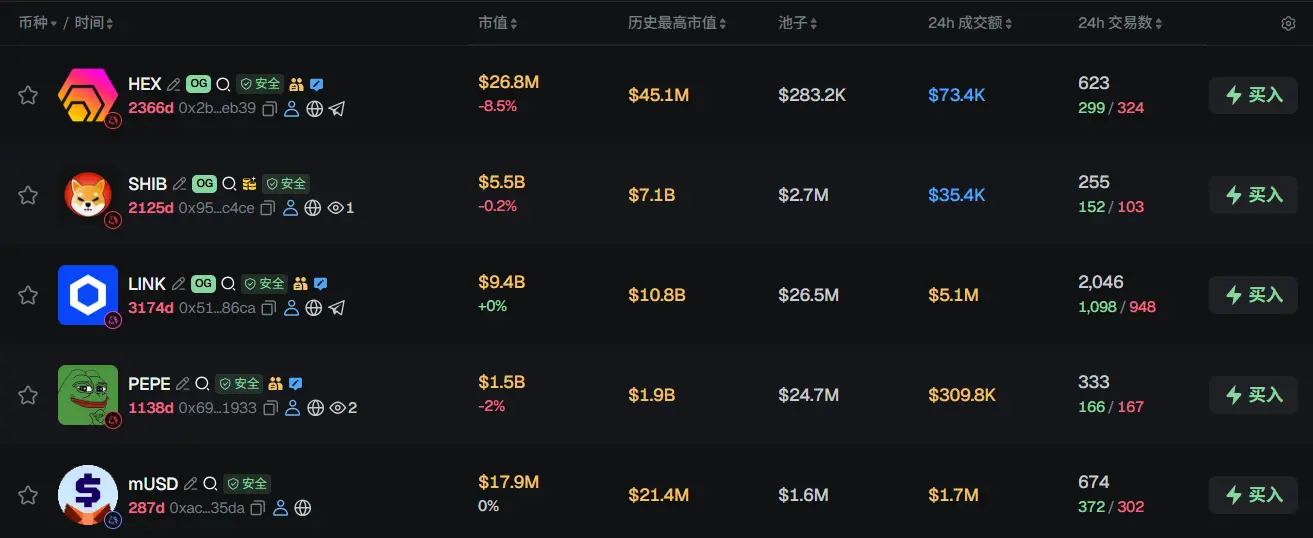
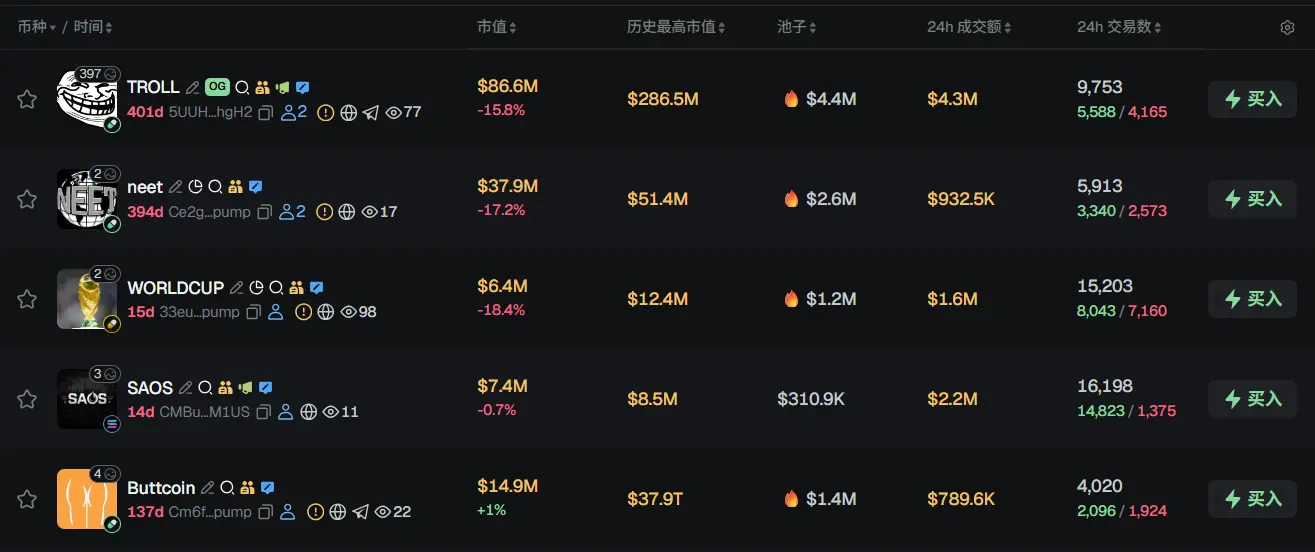
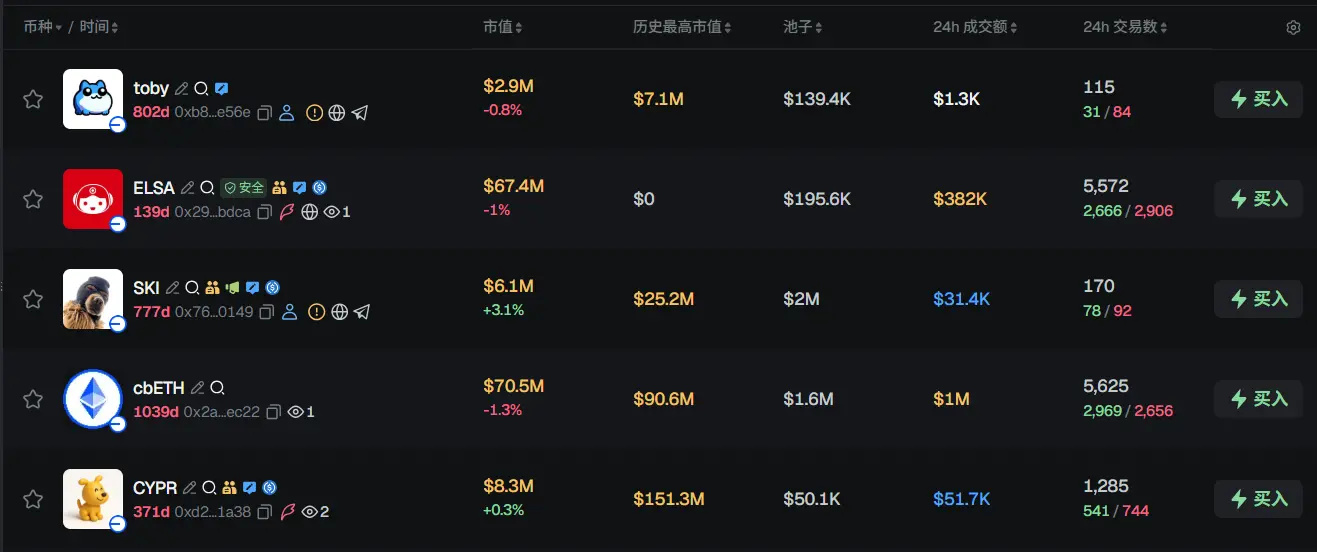
According to data from the meme token tracking and analysis platform GMGN, as of 09:00 on May 27,

The top five popular ETH-based tokens in the past 24h are: HEX, SHIB, LINK, PEPE, mUSD
The top five popular Solana-based tokens in the past 24h are: TROLL, neet, WORLDCUP, SAOS, Buttcoin
The top five popular Base-based tokens in the past 24h are: toby, ELSA, SKI, cbETH, CYPR
Which noteworthy articles are worth reading from the past 24 hours?

Those Betting on Musk in the Inner Circle Are Reaping "Historic-Level Returns"

The largest initial public offering (IPO) in global history has entered the countdown phase. Elon Musk's SpaceX is expected to price its IPO on June 12 and begin trading the next day.

Investors are eyeing a valuation of around $2 trillion. At that level, Musk himself would directly become the world's first trillionaire. But the real drama of this deal is that the wealth won't flow only to Musk. With the disclosure of the prospectus, the value of the holdings of a group of long-time loyal lieutenants and early allies who have remained in Musk's shadow has surfaced for the first time.

Their "loyalty" and patience are being rewarded with one of the most substantial payouts in history.

Easy to Conquer, Hard to Rule: Polymarket Must Humble Itself Everywhere to Plant Its Flag Globally

Last week, the prediction market went dark in India. Users connecting to polymarket.com only saw an "This site can't be reached" error message. India's Ministry of Electronics and Information Technology (MeitY) had issued a blocking order, requiring domestic internet service providers to cut off access, on the grounds that India had classified the platform as "online money gambling," a category that is completely prohibited.

Moreover, on the same day, Bloomberg cited informed sources revealing that Polymarket has appointed a local representative in Japan and is preparing to lobby for the "legalization of prediction markets," aiming to obtain Japanese government approval before 2030.

This simultaneous advance and retreat accurately describes Polymarket's situation: while the prediction market continues to grow in scale, regulatory hurdles in various countries are making progress difficult.

Deconstructing On-Chain Vaults in 10,000 Words: Eight Tracks, Who Is Rising and Who Is Declining?

This section of the report provides a quantitative analysis of the vault landscape to offer a comprehensive picture of the field and its evolution. We analyze the ecosystem by category, tracking TVL shifts across different vaults and curators.

We dissect the concentration of curators and provide an outlook on major capital flows, placing the structural shifts defining this year's vault landscape into specific context.

Vaults should not be viewed as a single, all-encompassing market but should be assessed based on their different implementations, each with distinct parameters, risk vectors, and responses to stress tests. Aggregate data only provides a partial picture; a more nuanced analytical perspective is urgently needed.

Before beginning the analysis, it's important to define the term "vault" as the foundation of our methodology.


Preguntas relacionadas

QWhat major incident occurred to Kelp DAO, and what is the current status of rsETH?

AKelp DAO suffered a $293 million hack by the Lazarus Group in mid-April 2026. After five weeks of restoration efforts, the protocol has announced that its liquid restaking token, rsETH, is now fully restored. The final batch of over 20,000 rsETH tokens has been transferred to the LayerZero smart contract for cross-chain operations, marking the completion of the recovery plan's operational phase. Minting, redeeming, and reward operations have all returned to normal.

QAccording to the report mentioned, what are the key findings about AI Agent payments on-chain?

AA report titled 'Who Pays the Agent?' by Keyrock, Coinbase, Tempo, and Virtuals Protocol found that AI Agents are rapidly becoming significant participants in the on-chain economy. From May 2025 to April 2026, AI Agents completed approximately 176 million on-chain transactions, with a total settlement value exceeding $73 million. The average transaction amount is very small, between $0.31 and $0.48, indicating a nascent machine-native micro-payment economy. Notably, 98.6% of these payments are settled using USDC, making it the default settlement asset. The report warns of centralization risks due to this heavy reliance on a single stablecoin.

QWhat significant regulatory development was announced in Hong Kong regarding virtual assets?

AThe Hong Kong Financial Services and the Treasury Bureau (FSTB) and the Securities and Futures Commission (SFC) jointly published a consultation conclusion on a new regulatory regime for virtual asset advisory and management services. The proposed licensing regime received broad market support during the consultation. It will follow the principle of 'same business, same risks, same rules,' aligning its scope with regulated activities under the existing Securities and Futures Ordinance. The new framework aims to enhance participation in Hong Kong's digital asset market and help build a robust and secure ecosystem.

QWhy did Arthur Hayes state that monetary privacy will be 'very necessary,' and what action did he take as a result?

AArthur Hayes argued that as large tech companies, governments, and AI expand their surveillance capabilities, monetary privacy will become 'very necessary' in the future. Citing this belief in the growing importance of financial privacy, he disclosed that he holds the privacy-focused cryptocurrency Zcash (ZEC) as his second-largest personal investment.

QWhat issue did ZachXBT identify regarding several BSC tokens, and which token experienced a sharp price drop?

AOn-chain investigator ZachXBT identified market manipulation involving several Binance Smart Chain (BSC) tokens—ESPORTS, RIVER, and LIGHT. He linked these tokens to a single entity that received them via a Sablier vesting contract, which was directly connected to three multisig signers of the LAB project's multisig wallet. ZachXBT had previously flagged anomalies with LAB and RIVER. Following his disclosure, the ESPORTS token experienced a flash crash, plummeting 93% in a short period.

Lecturas Relacionadas

A Nation Blocks Chips, a Giant Buys a Nuclear Power Plant: Why It's Time to Seriously Consider DeAI

**Title: Great Powers Blockade Chips, Giants Buy Nuclear Plants: Why It's Time to Seriously Consider DeAI** In May 2026, the US closed loopholes for Chinese firms to acquire advanced NVIDIA chips via overseas subsidiaries. That same month, Kenya halted a $1B geothermal data center project involving Microsoft, fearing its immense energy consumption. Meanwhile, Huawei announced mass production of its Ascend AI chip. These disparate events underscore a new reality: the competition for computing power ("compute") has escalated beyond the tech industry, becoming a geopolitical and infrastructural battleground. A new era of oligopoly is forming, with control over the AI stack—from GPU chips (NVIDIA) and cloud platforms (AWS, Azure, Google Cloud) to foundational models (OpenAI, Anthropic)—concentrating in a few Western "AI Octopus" corporations. This centralization creates systemic risks: pricing power and platform lock-in for users, infrastructure fragility, and a widening "compute divide" that threatens to marginalize nations without independent AI capacity. An "AI Iron Curtain" is deepening through export controls. In response, some nations like Saudi Arabia and the UAE are investing heavily to buy compute power, aiming to transition from oil to AI economies. The EU seeks to triple its compute capacity by 2030 to reduce dependency. However, the spending gap is vast, with four US tech giants alone planning ~$750B in AI capex for 2026. The race is increasingly constrained by energy, with AI tasks consuming up to 1000x more power than web searches, pushing firms to even acquire nuclear plants. This landscape is fueling interest in Decentralized AI (DeAI). It proposes a third way: using open protocols to coordinate a global network of idle GPUs, independent developers, and data centers, creating an AI infrastructure without a single controlling entity. Leveraging blockchain and cryptographic verification, DeAI aims to break market concentration, disperse energy demands, reduce geopolitical dependencies, and enhance transparency. While still nascent in performance and stability, DeAI's core promise is not immediate superiority but providing a crucial alternative architecture to resist monopoly, censorship, and centralized power. As specialized AI hardware costs fall and open-source models flourish, the window to build this foundation is open. The very existence of such competition serves as a vital check against the inevitable abuse of concentrated power.

marsbitHace 32 min(s)

A Nation Blocks Chips, a Giant Buys a Nuclear Power Plant: Why It's Time to Seriously Consider DeAI

marsbitHace 32 min(s)

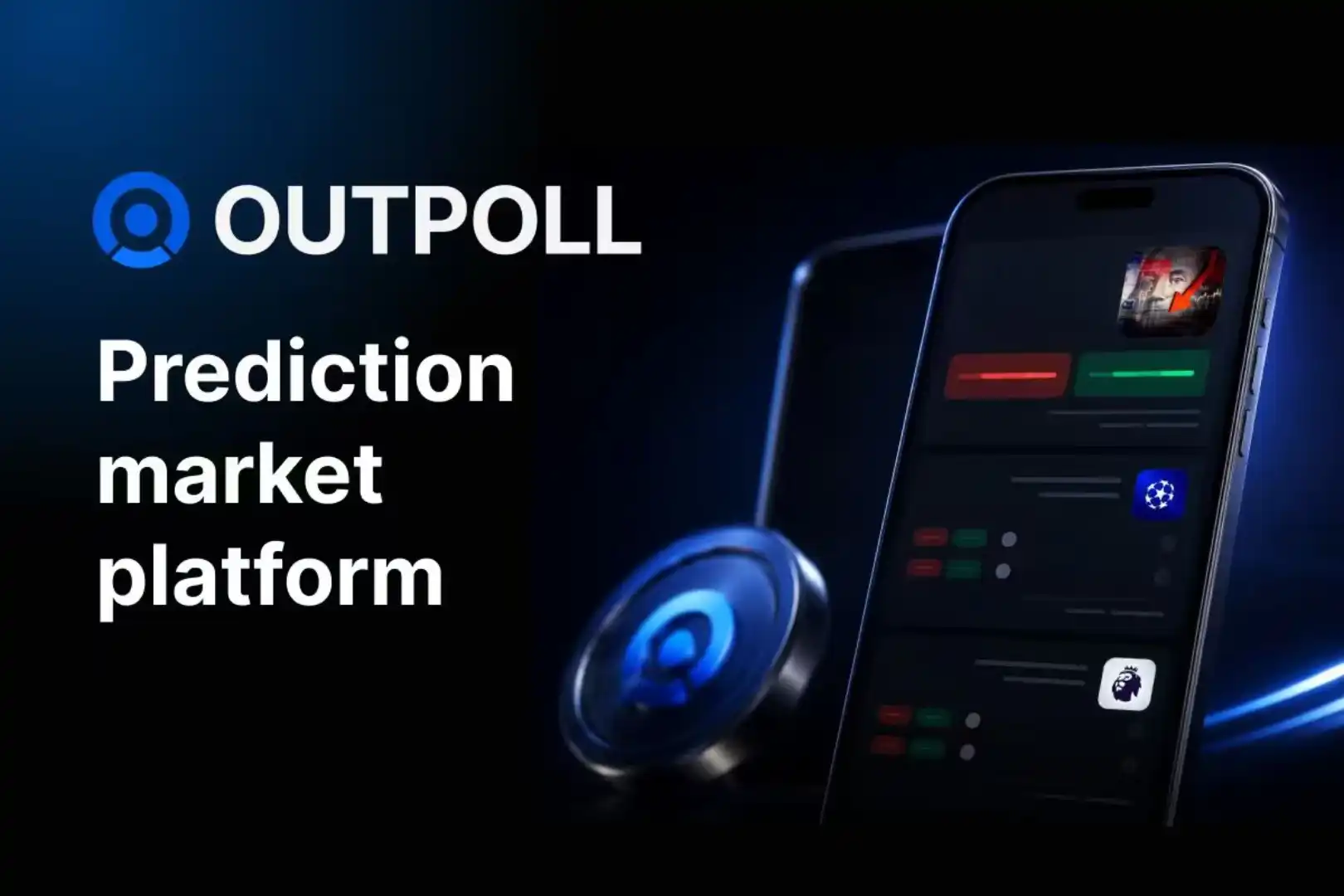
Outpoll Review: A Prediction Market Platform Built for Active Traders

Outpoll Review: A Prediction Market Platform Built for Active Traders In recent years, prediction markets have grown from a niche sector to a mainstream arena, attracting billions in trading volume and institutional capital. However, the user experience and tools for traders have not kept pace. Outpoll, a new global prediction market platform, aims to fill this gap by providing enhanced trading infrastructure for active and professional traders. Built on standard prediction market principles, Outpoll allows users to trade on the outcome of specific events. It uses fully collateralized contracts with USDC settlement, charges a competitive 0.1% fee per trade, and provides clear settlement rules upfront to minimize disputes. A key focus for Outpoll is its professional-grade trading tools. The platform supports limit and market orders, as well as take-profit and stop-loss orders for open positions—features uncommon in prediction markets. For automated trading, Outpoll offers comprehensive REST and WebSocket APIs, enabling portfolio management, price arbitrage, and integration with existing tools. The platform also features a creator-led market model, where approved experts and community leaders can create and manage markets for niche topics under platform supervision. Its integrated interface combines news feeds directly with trading functions, allowing users to monitor events and manage positions seamlessly. Outpoll launched with a native Android app (available on Google Play) and plans an iOS version later this year. In summary, Outpoll distinguishes itself with trader-focused tools, practical APIs, transparent and collateralized markets, integrated news, and an expanding creator program. For active traders, its advanced order types and API access alone make it a platform worth watching. Outpoll is now globally accessible via outpoll.com and Google Play.

marsbitHace 40 min(s)

Outpoll Review: A Prediction Market Platform Built for Active Traders

marsbitHace 40 min(s)

Bitwise: Crypto Becomes a Contrarian Investment, Three Logics to Understand the Current Market

**Summary** Matt Hougan, Bitwise's CIO, analyzes the current crypto market through three key lenses, arguing it has shifted from a momentum-driven to a contrarian investment. **1) Crypto Becomes a Contrarian Play:** The market is weak, with major assets like Bitcoin and Ethereum down significantly. Capital has moved to hot sectors like AI, leaving crypto as an "unloved" asset class. This transforms crypto investing from trend-following to a test of patience and fundamental analysis. Investors now favor projects with solid fundamentals (e.g., Hyperliquid) over speculative ones. **2) Regulatory Overhang:** The uncertain fate of the U.S. CLARITY Act, a major crypto regulatory framework, is a key headwind. With its passage in 2024 seen as far from guaranteed (estimates range from 30-55%), institutional capital remains on the sidelines, choosing less risky alternatives like AI stocks. The market needs clarity—whether the bill passes or fails—more than any specific outcome to move decisively. **3) Capital Rotates to New Fundamentals:** This cycle differs from past bear markets where money fled to Bitcoin. Now, capital seeks smaller assets with strong use cases. While major cryptos fell in May 2024, tokens like Hyperliquid (+72%), Zcash (+50%), and XLM (+44%) rallied on their specific fundamentals. This rotation confirms the new contrarian, fundamentals-driven logic and signals the bear market may be in its later stages. **Conclusion:** Short-term pressure persists due to regulatory uncertainty and competition from AI narratives. Investing in crypto now requires a contrarian mindset—acting against the crowd and focusing on fundamental value. Patience and targeting high-quality projects based on their merits are essential for capturing long-term gains.

marsbitHace 1 hora(s)

Bitwise: Crypto Becomes a Contrarian Investment, Three Logics to Understand the Current Market

marsbitHace 1 hora(s)

ChatGPT Might Be Disappearing Soon

OpenAI announced at its "Intelligence at Work" event that its coding assistant, Codex, will be fully integrated into the ChatGPT app within weeks. This move marks a strategic shift from a conversational AI (Chat) towards a unified "agentic" platform capable of execution. Codex, originally launched to compete with Anthropic's Claude Code, has grown rapidly to 5 million weekly active users, with 20% being non-developers like analysts and designers. Its enterprise revenue now constitutes 40% of OpenAI's total. The integration is the first step in creating a super-app combining ChatGPT (interface), Codex (execution engine), and the Atlas browser (web access). OpenAI also unveiled new Codex features: specialized Agent plugins for six professional roles, an "Annotations" tool for direct document editing, and a "Sites" function to turn work into shareable web apps. Internally, this reflects a power shift; the Codex team now leads core product strategy. While the ChatGPT brand remains for its vast user base, the platform's future is focused on autonomous agents that perform tasks, not just chat. The article notes that competition with Claude Code pushed OpenAI's development, with Codex competing on cost-effectiveness and accessibility rather than raw coding quality. It concludes that the essence of "ChatGPT" is evolving from a chatbot into an AI agent platform, with the name potentially becoming a legacy symbol of its original function.

marsbitHace 1 hora(s)

ChatGPT Might Be Disappearing Soon

marsbitHace 1 hora(s)

Trading

Spot
Futuros

Artículos destacados

Cómo comprar ONDO

¡Bienvenido a HTX.com! Hemos hecho que comprar OndoFinance (ONDO) sea simple y conveniente. Sigue nuestra guía paso a paso para iniciar tu viaje de criptos.Paso 1: crea tu cuenta HTXUtiliza tu correo electrónico o número de teléfono para registrarte y obtener una cuenta gratuita en HTX. Experimenta un proceso de registro sin complicaciones y desbloquea todas las funciones.Obtener mi cuentaPaso 2: ve a Comprar cripto y elige tu método de pagoTarjeta de crédito/débito: usa tu Visa o Mastercard para comprar OndoFinance (ONDO) al instante.Saldo: utiliza fondos del saldo de tu cuenta HTX para tradear sin problemas.Terceros: hemos agregado métodos de pago populares como Google Pay y Apple Pay para mejorar la comodidad.P2P: tradear directamente con otros usuarios en HTX.Over-the-Counter (OTC): ofrecemos servicios personalizados y tipos de cambio competitivos para los traders.Paso 3: guarda tu OndoFinance (ONDO)Después de comprar tu OndoFinance (ONDO), guárdalo en tu cuenta HTX. Alternativamente, puedes enviarlo a otro lugar mediante transferencia blockchain o utilizarlo para tradear otras criptomonedas.Paso 4: tradear OndoFinance (ONDO)Tradear fácilmente con OndoFinance (ONDO) en HTX's mercado spot. Simplemente accede a tu cuenta, selecciona tu par de trading, ejecuta tus trades y monitorea en tiempo real. Ofrecemos una experiencia fácil de usar tanto para principiantes como para traders experimentados.

248 Vistas totalesPublicado en 2024.12.12Actualizado en 2026.06.02

Cómo comprar ONDO

Discusiones

Bienvenido a la comunidad de HTX. Aquí puedes mantenerte informado sobre los últimos desarrollos de la plataforma y acceder a análisis profesionales del mercado. A continuación se presentan las opiniones de los usuarios sobre el precio de ONDO (ONDO).

活动图片