Morning Post | Digital Bank Fasset Completes $51M Series B Funding; Jane Street Increases Holdings in Ethereum ETFs and Galaxy Digital in Q1; SATA to Pay Cash Dividend Starting June 16

链捕手Publicado a 2026-05-15Actualizado a 2026-05-15

Resumen

"ChainCatcher" News Summary: **Key Developments:** - **Jane Street**: Q1 saw significant reductions in Bitcoin ETF holdings alongside increased positions in Ethereum ETFs and Galaxy Digital. - **Morgan Stanley**: Substantially boosted Bitcoin ETF exposure in Q1, with holdings in BlackRock's IBIT surging 174%. The bank also initiated positions in a Solana ETF and increased Ethereum ETF holdings while exiting XRP ETF positions. - **CME Group**: Plans to launch Nasdaq CME Cryptocurrency Index Futures (subject to regulatory review) on June 8th, offering exposure to a basket of top cryptocurrencies. - **Fasset**: The stablecoin-focused digital bank completed a $51 million Series B round with investors including SBI Group. It facilitates over $32 billion in annual transactions across 125 countries. - **SATA Dividend**: Strive's perpetual preferred stock (SATA) will begin paying cash dividends daily starting June 16th, a first for a U.S.-listed security, offering an effective annualized yield of ~13.88%. - **Consensys**: Has delayed potential IPO plans until autumn due to unfavorable market conditions. - **CLARITY Act**: Bipartisan negotiations stalled, with Democrats remaining divided over specific provisions. **Market Trends:** - **Meme Tokens**: GMGN data shows top-traded tokens on ETH, Solana, and Base chains over the past 24 hours, including HEX, SHIB, PEPE, TROLL, and others. **Featured Analysis:** Articles explore Kraken's acquisition of payment infrastructure company Reap...

Compiled by: ChainCatcher


Important Updates:

  • Jane Street Significantly Reduced Bitcoin ETF Holdings in Q1, While Increasing Holdings in Ethereum ETFs and Galaxy Digital
  • Consensys Delays Potential IPO Plans Until Fall Due to Unfavorable Market Conditions
  • Bipartisan Negotiations on the 'CLARITY Act' Fail to Reach Agreement, Democrats Remain Divided Over BRCA Clause
  • Stablecoin-Focused Digital Bank Fasset Completes $51M Series B Funding Round with Participation from SBI, etc.
  • CME Group to Launch Nasdaq Crypto Index Futures
  • JPMorgan Chase Significantly Increased Bitcoin ETF Holdings in Q1, IBIT Holdings Surge 174%
  • Strive's Perpetual Preferred Stock SATA to Pay Daily Cash Dividends Starting June 16, a First in US Stock Market History

What major events happened in the past 24 hours?

Strive's Perpetual Preferred Stock SATA to Pay Daily Cash Dividends Starting June 16, a First in US Stock Market History

ChainCatcher News: According to CoinDesk, Bitcoin treasury company Strive announced that its perpetual preferred stock SATA will pay cash dividends every trading day starting June 16, becoming the first listed security in US capital market history to achieve daily dividend payments.

Strive CEO Matthew Cole described this move as "a zero-to-one innovation." SATA has an annualized dividend rate of 13%. After switching to daily payments, the effective annualized yield increases to approximately 13.88%. Currently, Strive has cleared all its debt, holds 15,009 bitcoins, and ranks ninth among global listed companies in Bitcoin reserves.

JPMorgan Chase Significantly Increased Bitcoin ETF Holdings in Q1, IBIT Holdings Surge 174%

ChainCatcher News: According to Cointelegraph, 13F filings show that JPMorgan Chase substantially increased its Bitcoin ETF holdings in the first quarter, with holdings in BlackRock iShares Bitcoin Trust (IBIT) rising from approximately 3 million shares to 8.3 million shares, an increase of 174%.

Additionally, JPMorgan also significantly increased holdings in other Bitcoin spot ETFs like Fidelity FBTC and Bitwise BITB, and slightly increased holdings in MicroStrategy (MSTR).

Regarding altcoin ETFs, JPMorgan's moves varied: it initiated a purchase of Bitwise Solana Staking ETF (BSOL), increased holdings in Ethereum-related ETFs, while completely selling off its XRP ETF holdings.

CME Group to Launch Nasdaq Crypto Index Futures

ChainCatcher News: CME Group announced plans to launch Nasdaq CME Cryptocurrency Index Futures on June 8, pending regulatory review. The Nasdaq CME Cryptocurrency Index Futures will be the company's first market-cap-weighted futures contracts, offered in both micro and standard contract sizes.

These contracts will provide market participants with a capital-efficient way to gain exposure to top cryptocurrencies through a single, financially-settled futures contract. At expiration, the Nasdaq CME Cryptocurrency Index Futures will be settled based on the value of the Nasdaq CME Cryptocurrency Settlement Price Index, which measures the performance of the highest-volume, most actively traded cryptocurrencies, currently (as of May 14) including Bitcoin, Ethereum, SOL, XRP, ADA, LINK, and lumens (XLM).

Stablecoin-Focused Digital Bank Fasset Completes $51M Series B Funding Round with Participation from SBI, etc.

ChainCatcher News: According to CoinDesk, Los Angeles-based stablecoin-focused digital bank Fasset announced the completion of a $51 million Series B funding round. Investors include Japan's SBI Group, Investcorp, and Turkish asset management firm Arz Portföy. The valuation for this round was not disclosed.

Fasset covers over 50 payment channels across Asia, Africa, and the Middle East using stablecoin technology, serving over 1,000 SMEs in 125 countries with an annualized transaction volume exceeding $32 billion. The company plans to use the funds to expand into new markets, develop lending and trade finance products, and expand its proprietary stablecoin payment and custody infrastructure, the "Own Network." Furthermore, Fasset recently partnered with Tether, the issuer of USDT, to launch a gold-backed digital payment card.

Fintech Company Stitch Completes $25M Series A Funding Led by a16z

Meme Token Hot List

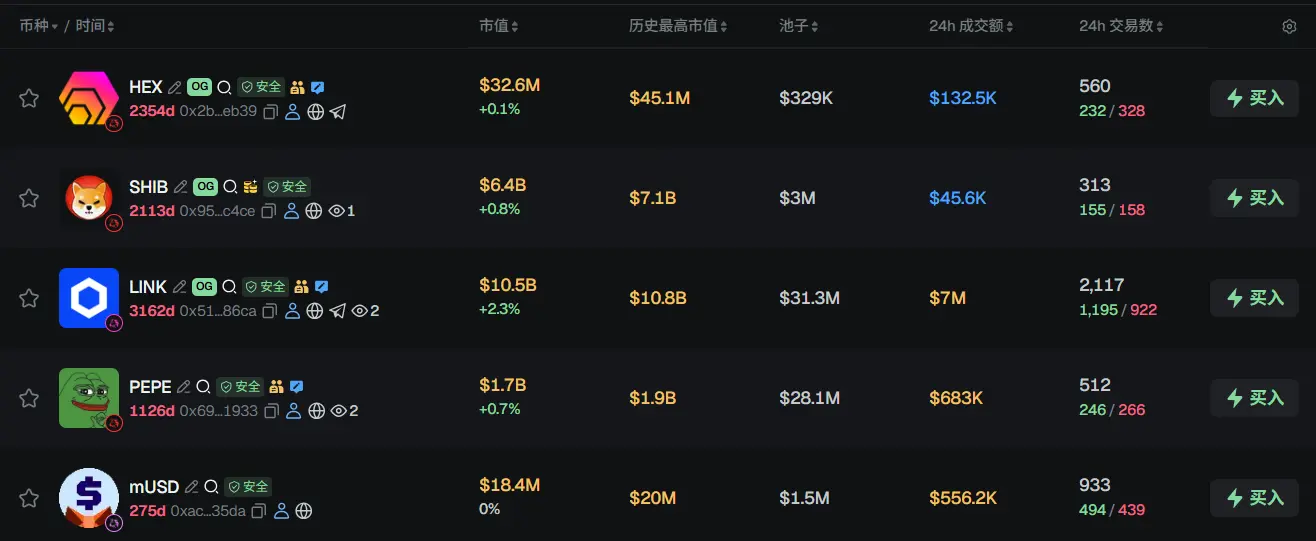
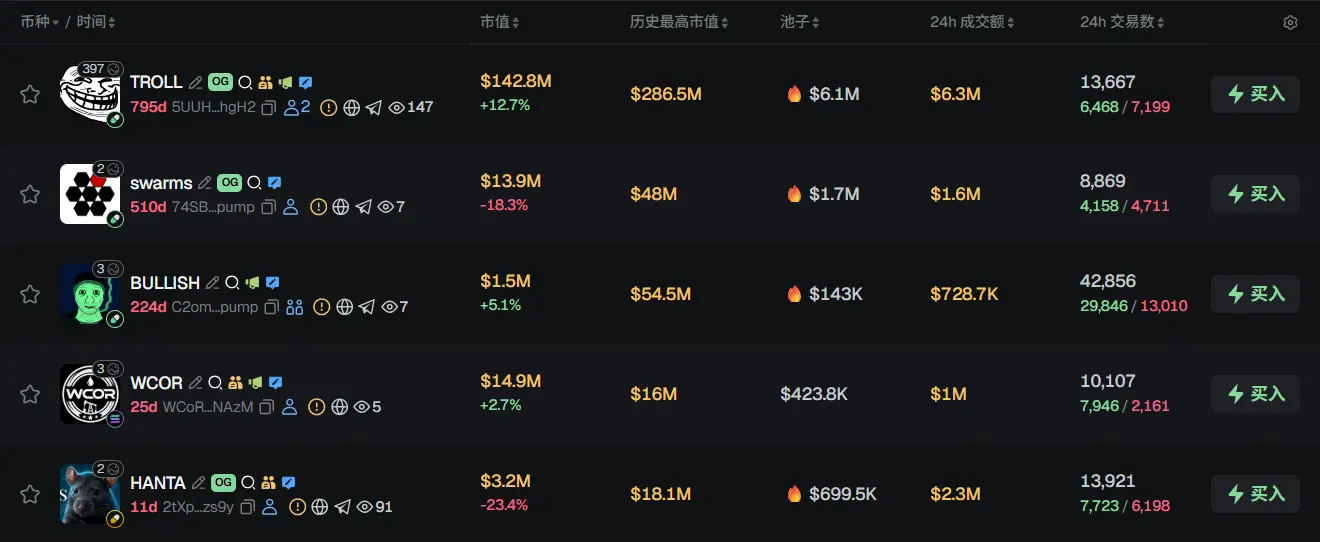
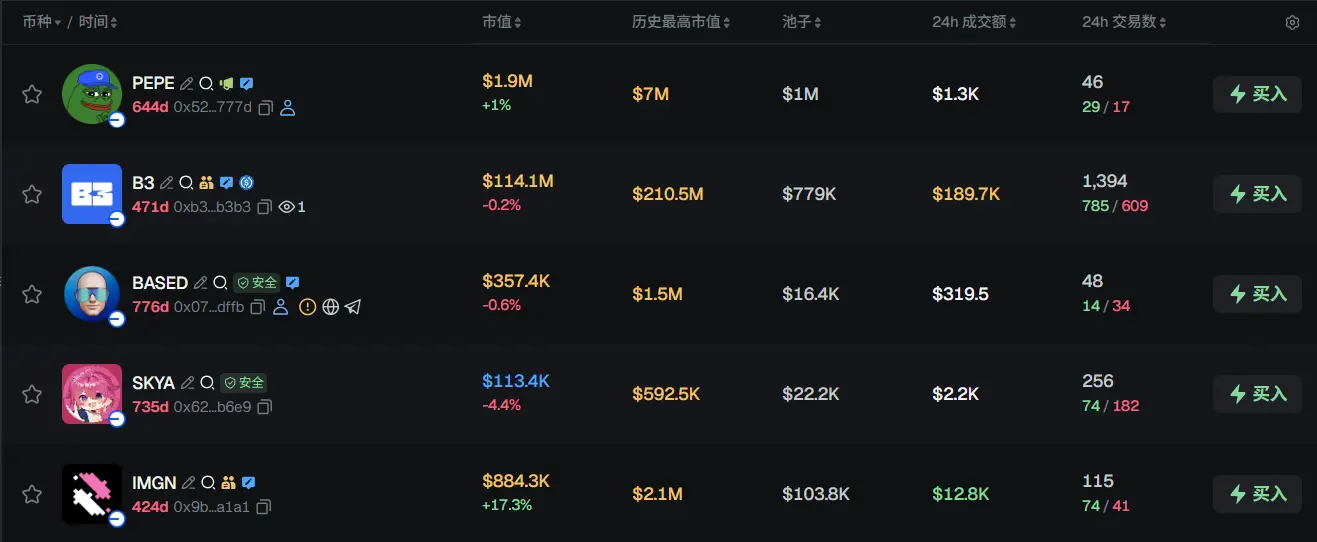
According to data from the Meme token tracking and analytics platform GMGN as of 09:00 on May 15,

The top five trending tokens on ETH in the past 24h were: HEX, SHIB, LINK, PEPE, mUSD
The top five trending tokens on Solana in the past 24h were: TROLL, swarms, BULLISH, WOCR, HANTA
The top five trending tokens on Base in the past 24h were: PEPE, B3, BASED, SKYA, IMGA
What interesting articles are worth reading from the past 24 hours?

Why Did Kraken Buy Reap, Instead of Just Buying a U Card?

Kraken's parent company Payward intends to acquire Reap for up to $600 million, a deal that serves as a good entry point to understanding stablecoin payments. According to official announcements from Payward and Reap, Reap is defined as a stablecoin-native, card issuing and payments infrastructure company. After the transaction closes, Reap's capabilities will be integrated into Payward Services to support card issuance, cross-border payments, and stablecoin treasury services.

The 'CLARITY Act' Released: Why is Ethereum the Biggest Winner?

The Senate Banking Committee released the full 309-page revised text of the "Digital Asset Market Clarity Act" on May 12.

Much of the coverage will focus on which tokens failed the new decentralization test, which issuers will face new disclosure burdens, and which projects need to restructure within the four-year transitional certification window. This coverage is not wrong, but it is incomplete.

The more important story is the impact the bill has on the one asset that passed every criterion of the test, and which happens to be the only asset with a programmable smart contract platform.

Once this framework becomes law, Ethereum will occupy a regulatory category within the US legal system with only itself as a member. The two dominant bearish ETH narratives of the past five years will simultaneously collapse, and the market has yet to price this in.

Anthropic Valued at $900 Billion: How Was Its Founder Forged?

Anthropic is in talks for its latest funding round, with rumors of a valuation nearing $900 billion—surpassing OpenAI.

In the secondary market, the implied valuation of Anthropic's equity is approaching $1 trillion, with even higher quotes on some tokenization platforms.

Nine months ago, that number was $61 billion.

Around the same time, founder and CEO Dario Amodei said at the Code with Claude developer conference on May 6 that the company's revenue in Q1 2026 grew 80 times year-over-year.

"We were planning for 10x," he said. "It was 80x."

Circle's Second Growth Curve: After Arc's $222M Funding, CRCL or ARC?

On May 11, while releasing its Q1 2026 earnings, Circle announced that the native token ARC of its public blockchain Arc had completed a $222 million pre-sale, with a fully diluted network valuation of $3 billion.

The round was led by a16z crypto with a $75 million investment, followed by top-tier institutions including BlackRock, Apollo, ICE (parent company of the NYSE), SBI Group, Standard Chartered Ventures, ARK Invest, and others.

CRCL's stock price surged nearly 16% that day, with its market cap rebounding above $30 billion.

This raises a core question for the market: Circle is already a public company. If one is bullish on its future, one can simply hold CRCL stock. Why issue the ARC token? Both are capturing the value of the Arc network, but what is each worth?


Criptos en tendencia

Preguntas relacionadas

QWhat significant action did Strive take with its perpetual preferred stock SATA, and why is it historically notable?

AStrive announced that its perpetual preferred stock, SATA, will begin paying cash dividends on every trading day starting June 16. This makes it the first listed security in the history of the US capital markets to implement daily dividend payments, an innovation its CEO called 'zero to one.'

QHow did JPMorgan's investment in Bitcoin ETFs change in Q1, and what did it do regarding XRP ETF?

AIn Q1, JPMorgan significantly increased its holdings in Bitcoin ETFs. Its position in BlackRock's iShares Bitcoin Trust (IBIT) surged by 174%. It also increased stakes in other Bitcoin ETFs like FBTC and BITB. Conversely, regarding altcoin ETFs, JPMorgan completely liquidated its holdings in the XRP ETF.

QWhat new financial product is the CME Group planning to launch, and what is its key feature?

ACME Group plans to launch Nasdaq CME Cryptocurrency Index futures, pending regulatory review. A key feature is that they will be the firm's first market-cap-weighted futures contracts, allowing investment in top cryptocurrencies through a single, financially-settled futures contract.

QWhat was the outcome of the Fasset B round funding, and what are the company's plans for the capital?

AFasset, a stablecoin-driven digital bank, completed a $51 million Series B funding round with investors including SBI Group and Investcorp. The company plans to use the funds to expand into new markets, develop loan and trade finance products, and build out its proprietary stablecoin payment and custody infrastructure called 'Own Network.'

QAccording to the article, why might Ethereum become the biggest winner under the proposed CLARITY Act in the US?

AThe article argues that the CLARITY Act creates a unique regulatory category which, based on its proposed decentralization test, only Ethereum qualifies for. This would dismantle two major bearish narratives against ETH from the past five years, granting it a singular legal status that no other digital asset with programmable smart contracts currently holds in the US framework.

Lecturas Relacionadas

Why Do We Need an AI Content Perspective Today?

The article "Why Do We Need an AI Content Perspective Today?" explores the complex and often contentious integration of AI into the cultural and creative industries, particularly film and television. It begins with the cancellation of Amazon's AI-generated animation "Punky Duck," highlighting the ethical debates surrounding AI content. AI's rapid advancement is transforming video production, enabling cost-effective, full-length AI films (e.g., "RAPHAEL," "Dreams of Violets") while sparking industry resistance over issues like "synthetic actors." The core debate has shifted from whether to use AI to how to use it responsibly. The article analyzes why AI's entry into film is uniquely unsettling. It distinguishes between "cultural fast food" (short-form, fast-paced content like micro-dramas) and "cultural main courses" (traditional, long-form film/TV). AI currently excels at the former, matching its fragmented narratives, shallow emotional needs, and free-to-consumer models. However, venturing into the latter challenges the human-centric essence of storytelling—creativity, emotional depth, and the unique value of human labor and experience. While AI can generate massive volumes of content and lower costs, it risks devaluing human creativity, leading to homogenized output, and creating unfair competition through potential intellectual property infringement. Its efficiency also amplifies content safety risks, making preemptive governance crucial. To counter these risks, the article proposes establishing clear boundaries guided by a human-centered AI content perspective. It outlines four principles: 1) Amplify, rather than displace, human creative space; 2) Respect and protect human creative output; 3) Ensure human creative control and responsibility remain paramount; and 4) Guarantee transparency and traceability in AI creation. The conclusion emphasizes that humans must act as the "helmsmen" of technology, steering AI development to enhance, not replace, the core human values at the heart of cultural expression.

marsbitHace 26 min(s)

Why Do We Need an AI Content Perspective Today?

marsbitHace 26 min(s)

Planck Retracted? The Father of Quantum Tripped by an Algorithm

The recent discovery that two articles (published in 1940 and 1942) by Max Planck, the Nobel laureate and founder of quantum theory, are marked as "retracted" on Springer's digital platform highlights a curious clash between historical publishing practices and modern automated systems. An investigation suggests these retractions are algorithmic errors, not due to fraud or misconduct. The papers, philosophical reflections on science published in *Die Naturwissenschaften*, were likely flagged by the platform's systems. One article, a republished lecture, may have been mistaken for duplicate publication. Another, sharing a title with a prior article by a different author (a common practice for continuing debates at the time), may have triggered a similar automated check. The digital versions have even been replaced with blank pages, contrary to normal practice of preserving retracted texts. This incident underscores how contemporary digital infrastructure, built around concepts like "self-plagiarism" and strict copyright, can misclassify and obscure legitimate historical scholarly communication. It serves as a warning that digital archives are not neutral mirrors of the past but are filtered by platform rules, potentially distorting the scientific record. As AI systems increasingly rely on such databases, such erroneous metadata could propagate, affecting how future tools interpret and access historical knowledge.

marsbitHace 29 min(s)

Planck Retracted? The Father of Quantum Tripped by an Algorithm

marsbitHace 29 min(s)

Refunds! Claude 4.8 Sees Overnight Major 'Dumb-Down', GPT-5.6's Computational Power Reportedly 'Halved'

The AI community is currently alarmed by widespread reports of significant performance degradation in two leading models. This article details a "mass self-testing frenzy" triggered by a mysterious prompt designed to detect a hidden "Juice" value, representing a model's reasoning compute budget. On OpenAI's side, users suspect a covert, limited test of a "GPT-5.6-sol" model is underway. When using a specific XML prompt on the Codex platform, a normal "gpt-5.5 xhigh" model reportedly returns a Juice value of 768. However, some users routed to the suspected GPT-5.6 test receive a drastically reduced value of 128—a six-fold decrease. This has sparked debate on whether it signifies a major efficiency leap or a "watered-down, low-cost version" achieved by slashing reasoning depth to save computational expenses. Simultaneously, Anthropic's Claude models, particularly the flagship Opus 4.8 Max, are facing intense user backlash for a perceived "physical brain cut." Users on platforms like Reddit report a dramatic decline in the model's once-impressive reasoning, with complaints of it becoming "absurdly" weakened, performing worse than older, lighter models like Haiku. Specific criticisms include: losing long-context memory, refusing to think deeply even in high-reasoning modes, providing instant incorrect answers, and engaging in unhelpful, argumentative, or "gaslighting" behavior where it contradicts users unnecessarily. The article speculates these "stealth downgrades" might be a calculated corporate strategy. Companies could initially release models with temporarily boosted compute to create an illusion of a major breakthrough, then silently scale back parameters later to manage unsustainable inference costs. A proposed underlying cause is a tightened funding environment, potentially exacerbated by SpaceX's massive IPO soaking up market liquidity, which could delay AI company IPOs and force cost-cutting measures like model "nerfing." The core issue highlighted is the asymmetry of information: subscribers pay for a service that can be silently and fundamentally altered without notification or explanation. The viral "Juice test" resonates because it represents users' desire for transparency about what they are actually paying for.

marsbitHace 1 hora(s)

Refunds! Claude 4.8 Sees Overnight Major 'Dumb-Down', GPT-5.6's Computational Power Reportedly 'Halved'

marsbitHace 1 hora(s)

Trading

Spot

Artículos destacados

Qué es ETH 2.0

ETH 2.0: Una Nueva Era para Ethereum Introducción ETH 2.0, conocido ampliamente como Ethereum 2.0, marca una actualización monumental para la blockchain de Ethereum. Esta transición no es solo una mejora superficial; busca mejorar fundamentalmente la escalabilidad, seguridad y sostenibilidad de la red. Con un cambio del mecanismo de consenso intensivo en energía Prueba de Trabajo (PoW) a una Prueba de Participación (PoS) más eficiente, ETH 2.0 promete un enfoque transformador para el ecosistema blockchain. ¿Qué es ETH 2.0? ETH 2.0 es un conjunto de actualizaciones interconectadas y distintivas centradas en optimizar las capacidades y el rendimiento de Ethereum. La reestructuración está diseñada para abordar desafíos críticos que el mecanismo actual de Ethereum ha enfrentado, particularmente en lo que respecta a la velocidad de transacción y la congestión de la red. Objetivos de ETH 2.0 Los objetivos principales de ETH 2.0 giran en torno a mejorar tres aspectos clave: Escalabilidad: Con el objetivo de aumentar significativamente el número de transacciones que la red puede manejar por segundo, ETH 2.0 busca superar la limitación actual de aproximadamente 15 transacciones por segundo, potencialmente alcanzando miles. Seguridad: Las medidas de seguridad mejoradas son fundamentales para ETH 2.0, particularmente a través de una mejor resistencia contra ciberataques y la preservación del ethos descentralizado de Ethereum. Sostenibilidad: El nuevo mecanismo PoS está diseñado no solo para mejorar la eficiencia, sino también para reducir drásticamente el consumo de energía, alineando el marco operativo de Ethereum con consideraciones ambientales. ¿Quién es el Creador de ETH 2.0? La creación de ETH 2.0 se puede atribuir a la Fundación Ethereum. Esta organización sin fines de lucro, que desempeña un papel crucial en el apoyo al desarrollo de Ethereum, es liderada por el notable cofundador Vitalik Buterin. Su visión de un Ethereum más escalable y sostenible ha sido la fuerza motriz detrás de esta actualización, involucrando contribuciones de una comunidad global de desarrolladores y entusiastas dedicados a mejorar el protocolo. ¿Quiénes son los Inversores de ETH 2.0? Si bien los detalles sobre los inversores de ETH 2.0 no se han hecho públicos, se sabe que la Fundación Ethereum recibe apoyo de varias organizaciones e individuos en el ámbito de blockchain y tecnología. Estos socios incluyen firmas de capital de riesgo, compañías tecnológicas y organizaciones filantrópicas que comparten un interés mutuo en apoyar el desarrollo de tecnologías descentralizadas e infraestructura blockchain. ¿Cómo Funciona ETH 2.0? ETH 2.0 se distingue por introducir una serie de características clave que lo diferencian de su predecesor. Prueba de Participación (PoS) La transición a un mecanismo de consenso PoS es uno de los cambios más destacados de ETH 2.0. A diferencia de PoW, que se basa en la minería intensiva en energía para la verificación de transacciones, PoS permite a los usuarios validar transacciones y crear nuevos bloques de acuerdo con la cantidad de ETH que apuestan en la red. Esto conduce a una mayor eficiencia energética, reduciendo el consumo en aproximadamente un 99.95%, convirtiendo a Ethereum 2.0 en una alternativa considerablemente más verde. Cadenas Shard Las cadenas shard son otra innovación crítica de ETH 2.0. Estas cadenas más pequeñas operan en paralelo con la cadena principal de Ethereum, lo que permite que múltiples transacciones sean procesadas simultáneamente. Este enfoque mejora la capacidad general de la red, abordando las preocupaciones de escalabilidad que han afectado a Ethereum. Cadena Beacon En el núcleo de ETH 2.0 se encuentra la Cadena Beacon, que coordina la red y gestiona el protocolo PoS. Funciona como un organizador de cierta manera: supervisa a los validadores, asegura que los shards permanezcan conectados a la red y monitorea la salud general del ecosistema blockchain. Cronología de ETH 2.0 El viaje de ETH 2.0 ha estado marcado por varios hitos clave que trazan la evolución de esta importante actualización: Diciembre 2020: El lanzamiento de la Cadena Beacon marcó la introducción de PoS, preparándose para la migración hacia ETH 2.0. Septiembre 2022: La finalización de “La Fusión” representa un momento crucial en el que la red Ethereum se trasladó exitosamente de un marco PoW a uno PoS, anunciando una nueva era para Ethereum. 2023: El lanzamiento esperado de cadenas shard tiene como objetivo mejorar aún más la escalabilidad de la red Ethereum, consolidando a ETH 2.0 como una plataforma robusta para aplicaciones y servicios descentralizados. Características Clave y Beneficios Escalabilidad Mejorada Una de las ventajas más significativas de ETH 2.0 es su escalabilidad mejorada. La combinación de PoS y cadenas shard permite que la red expanda su capacidad, permitiendo acomodar un volumen mucho mayor de transacciones en comparación con el sistema heredado. Eficiencia Energética La implementación de PoS representa un gran paso hacia la eficiencia energética en la tecnología blockchain. Al reducir drásticamente el consumo de energía, ETH 2.0 no solo disminuye los costos operativos, sino que también se alinea más estrechamente con los objetivos de sostenibilidad global. Seguridad Mejorada Los mecanismos actualizados de ETH 2.0 contribuyen a mejorar la seguridad en toda la red. El despliegue de PoS, junto con las medidas de control innovadoras establecidas a través de cadenas shard y la Cadena Beacon, asegura un mayor grado de protección contra posibles amenazas. Costos Más Bajos para los Usuarios A medida que la escalabilidad mejora, los efectos sobre los costos de transacción también serán evidentes. Se espera que una mayor capacidad y una menor congestión se traduzcan en tarifas más bajas para los usuarios, haciendo que Ethereum sea más accesible para transacciones cotidianas. Conclusión ETH 2.0 marca una evolución significativa en el ecosistema blockchain de Ethereum. A medida que aborda problemas fundamentales como la escalabilidad, el consumo de energía, la eficiencia en las transacciones y la seguridad general, la importancia de esta actualización no puede ser subestimada. La transición a la Prueba de Participación, la introducción de cadenas shard y el trabajo fundamental de la Cadena Beacon son indicativos de un futuro donde Ethereum puede satisfacer las crecientes demandas del mercado descentralizado. En una industria impulsada por la innovación y el progreso, ETH 2.0 se erige como un testimonio de las capacidades de la tecnología blockchain para allanar el camino hacia una economía digital más sostenible y eficiente.

177 Vistas totalesPublicado en 2024.04.04Actualizado en 2024.12.03

Qué es ETH 2.0

Qué es ETH 3.0

ETH3.0 y $eth 3.0: Un Examen Profundo del Futuro de Ethereum Introducción En el paisaje en rápida evolución de las criptomonedas y la tecnología blockchain, ETH3.0, a menudo denotado como $eth 3.0, ha surgido como un tema de considerable interés y especulación. El término abarca dos conceptos principales que merecen aclaración: Ethereum 3.0: Esto representa una posible actualización futura destinada a aumentar las capacidades de la blockchain existente de Ethereum, enfocándose particularmente en mejorar la escalabilidad y el rendimiento. ETH3.0 Meme Token: Este proyecto de criptomoneda distinto busca aprovechar la blockchain de Ethereum para crear un ecosistema centrado en memes, promoviendo la participación dentro de la comunidad de criptomonedas. Comprender estos aspectos de ETH3.0 es esencial no solo para los entusiastas de las criptomonedas, sino también para aquellos que observan tendencias tecnológicas más amplias en el espacio digital. ¿Qué es ETH3.0? Ethereum 3.0 Ethereum 3.0 se presenta como una actualización propuesta para la red de Ethereum ya establecida, que ha sido la columna vertebral de muchas aplicaciones descentralizadas (dApps) y contratos inteligentes desde su inicio. Las mejoras previstas se concentran principalmente en la escalabilidad, integrando tecnologías avanzadas como sharding y pruebas de conocimiento cero (zk-proofs). Estas innovaciones tecnológicas tienen como objetivo facilitar un número sin precedentes de transacciones por segundo (TPS), potencialmente alcanzando millones, abordando así una de las limitaciones más significativas que enfrenta la tecnología blockchain actual. La mejora no es meramente técnica, sino también estratégica; está destinada a preparar la red de Ethereum para su adopción generalizada y utilidad en un futuro marcado por una mayor demanda de soluciones descentralizadas. ETH3.0 Meme Token En contraste con Ethereum 3.0, el ETH3.0 Meme Token se aventura en un ámbito más ligero y juguetón al combinar la cultura de memes de internet con la dinámica de las criptomonedas. Este proyecto permite a los usuarios comprar, vender e intercambiar memes en la blockchain de Ethereum, proporcionando una plataforma que fomenta la participación comunitaria a través de la creatividad y los intereses compartidos. El ETH3.0 Meme Token tiene como objetivo demostrar cómo la tecnología blockchain puede intersectarse con la cultura digital, creando casos de uso que son tanto entretenidos como financieramente viables. ¿Quién es el Creador de ETH3.0? Ethereum 3.0 La iniciativa hacia Ethereum 3.0 es impulsada principalmente por un consorcio de desarrolladores e investigadores dentro de la comunidad de Ethereum, incluyendo notablemente a Justin Drake. Conocido por sus ideas y contribuciones a la evolución de Ethereum, Drake ha sido una figura prominente en las discusiones sobre la transición de Ethereum a una nueva capa de consenso, denominada “Beam Chain.” Este enfoque colaborativo para el desarrollo significa que Ethereum 3.0 no es el producto de un creador singular, sino más bien una manifestación de ingenio colectivo centrado en avanzar la tecnología blockchain. ETH3.0 Meme Token Los detalles sobre el creador del ETH3.0 Meme Token son actualmente inidentificables. La naturaleza de los tokens de memes a menudo conduce a una estructura más descentralizada y dirigida por la comunidad, lo que podría explicar la falta de atribución específica. Esto se alinea con la ética de la comunidad cripto más amplia, donde la innovación a menudo surge de esfuerzos colaborativos en lugar de individuales. ¿Quiénes son los Inversores de ETH3.0? Ethereum 3.0 El apoyo a Ethereum 3.0 proviene principalmente de la Fundación Ethereum junto con una entusiasta comunidad de desarrolladores e inversores. Esta asociación fundamental proporciona un grado significativo de legitimidad y mejora la perspectiva de una implementación exitosa, ya que aprovecha la confianza y credibilidad construidas a lo largo de años de operaciones en la red. En el clima cambiando rápidamente de las criptomonedas, el apoyo de la comunidad juega un papel crucial en impulsar el desarrollo y la adopción, posicionando a Ethereum 3.0 como un contendiente serio para futuros avances en blockchain. ETH3.0 Meme Token Si bien las fuentes actualmente disponibles no proporcionan información explícita sobre las fundaciones o organizaciones de inversión que respaldan el ETH3.0 Meme Token, es indicativo del modelo de financiamiento típico para tokens de memes, que a menudo depende del apoyo de base y la participación comunitaria. Los inversores en tales proyectos suelen consistir en individuos motivados por el potencial de innovación impulsada por la comunidad y el espíritu de cooperación que se encuentra dentro de la comunidad cripto. ¿Cómo Funciona ETH3.0? Ethereum 3.0 Las características distintivas de Ethereum 3.0 radican en su implementación propuesta de sharding y tecnología zk-proof. Sharding es un método de particionamiento de la blockchain en piezas más pequeñas y manejables o “shards,” que pueden procesar transacciones de manera concurrente en lugar de secuencial. Esta descentralización del procesamiento ayuda a prevenir la congestión y asegura que la red permanezca receptiva incluso bajo una carga pesada. La tecnología de prueba de conocimiento cero (zk-proof) contribuye con otra capa de sofisticación al permitir la validación de transacciones sin revelar los datos subyacentes involucrados. Este aspecto no solo mejora la privacidad, sino que también aumenta la eficiencia general de la red. También se habla de incorporar una Máquina Virtual de Ethereum de conocimiento cero (zkEVM) en esta actualización, amplificando aún más las capacidades y utilidad de la red. ETH3.0 Meme Token El ETH3.0 Meme Token se distingue al capitalizar la popularidad de la cultura de memes. Establece un mercado para que los usuarios participen en el comercio de memes, no solo por entretenimiento sino también por el posible beneficio económico. Al integrar características como staking, provisión de liquidez y mecanismos de gobernanza, el proyecto fomenta un entorno que incentiva la interacción y participación de la comunidad. Al ofrecer una mezcla única de entretenimiento y oportunidad económica, el ETH3.0 Meme Token tiene como objetivo atraer a una audiencia diversa, que abarca desde entusiastas de las criptomonedas hasta conocedores casuales de memes. Línea de Tiempo de ETH3.0 Ethereum 3.0 11 de noviembre de 2024: Justin Drake insinúa la próxima actualización de ETH 3.0, centrada en mejoras de escalabilidad. Este anuncio significa el comienzo de las discusiones formales sobre la futura arquitectura de Ethereum. 12 de noviembre de 2024: Se espera que la propuesta anticipada para Ethereum 3.0 se desvele en Devcon en Bangkok, preparando el escenario para una mayor retroalimentación de la comunidad y posibles próximos pasos en el desarrollo. ETH3.0 Meme Token 21 de marzo de 2024: El ETH3.0 Meme Token se lista oficialmente en CoinMarketCap, marcando su incursión en el dominio público de las criptomonedas y mejorando la visibilidad de su ecosistema basado en memes. Puntos Clave En conclusión, Ethereum 3.0 representa una evolución significativa dentro de la red de Ethereum, enfocándose en superar las limitaciones en términos de escalabilidad y rendimiento a través de tecnologías avanzadas. Sus actualizaciones propuestas reflejan un enfoque proactivo hacia las demandas y la usabilidad futura. Por otro lado, el ETH3.0 Meme Token encapsula la esencia de la cultura impulsada por la comunidad en el espacio de las criptomonedas, aprovechando la cultura de memes para crear plataformas atractivas que fomentan la creatividad y participación del usuario. Comprender los distintos propósitos y funcionalidades de ETH3.0 y $eth 3.0 es fundamental para cualquiera interesado en los desarrollos en curso dentro del espacio cripto. Con ambas iniciativas abriendo caminos únicos, subrayan colectivamente la naturaleza dinámica y multifacética de la innovación en blockchain.

196 Vistas totalesPublicado en 2024.04.04Actualizado en 2024.12.03

Qué es ETH 3.0

Cómo comprar ETH

¡Bienvenido a HTX.com! Hemos hecho que comprar Ethereum (ETH) sea simple y conveniente. Sigue nuestra guía paso a paso para iniciar tu viaje de criptos.Paso 1: crea tu cuenta HTXUtiliza tu correo electrónico o número de teléfono para registrarte y obtener una cuenta gratuita en HTX. Experimenta un proceso de registro sin complicaciones y desbloquea todas las funciones.Obtener mi cuentaPaso 2: ve a Comprar cripto y elige tu método de pagoTarjeta de crédito/débito: usa tu Visa o Mastercard para comprar Ethereum (ETH) al instante.Saldo: utiliza fondos del saldo de tu cuenta HTX para tradear sin problemas.Terceros: hemos agregado métodos de pago populares como Google Pay y Apple Pay para mejorar la comodidad.P2P: tradear directamente con otros usuarios en HTX.Over-the-Counter (OTC): ofrecemos servicios personalizados y tipos de cambio competitivos para los traders.Paso 3: guarda tu Ethereum (ETH)Después de comprar tu Ethereum (ETH), guárdalo en tu cuenta HTX. Alternativamente, puedes enviarlo a otro lugar mediante transferencia blockchain o utilizarlo para tradear otras criptomonedas.Paso 4: tradear Ethereum (ETH)Tradear fácilmente con Ethereum (ETH) en HTX's mercado spot. Simplemente accede a tu cuenta, selecciona tu par de trading, ejecuta tus trades y monitorea en tiempo real. Ofrecemos una experiencia fácil de usar tanto para principiantes como para traders experimentados.

4.2k Vistas totalesPublicado en 2024.12.10Actualizado en 2026.06.02

Cómo comprar ETH

Discusiones

Bienvenido a la comunidad de HTX. Aquí puedes mantenerte informado sobre los últimos desarrollos de la plataforma y acceder a análisis profesionales del mercado. A continuación se presentan las opiniones de los usuarios sobre el precio de ETH (ETH).

活动图片