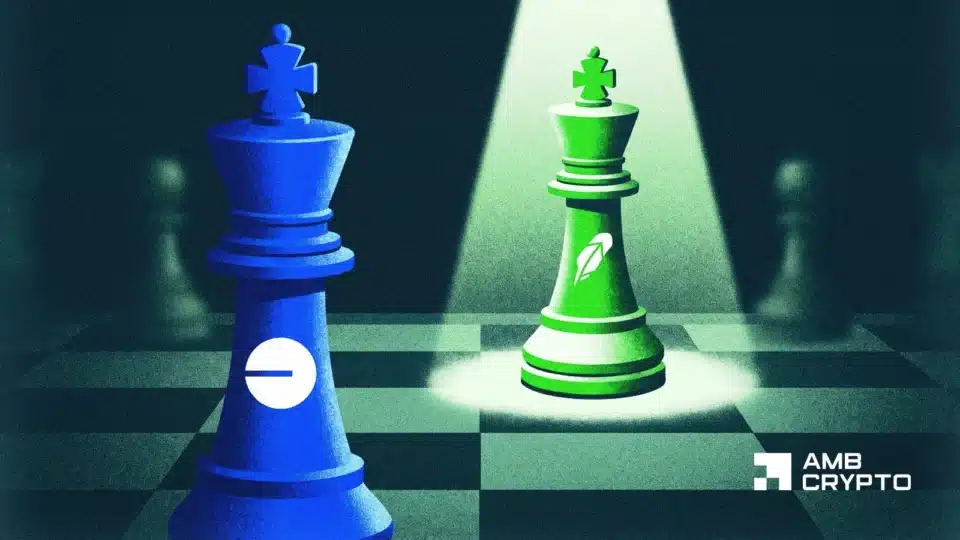
Monarq, Flare & Upshift Launch MXRPY XRP Yield Vault on Flare

TheNewsCryptoPublicado a 2026-05-17Actualizado a 2026-05-17

Resumen

Monarq Asset Management, Flare, and Upshift have launched the Monarq XRP Yield Vault (MXRPY), a managed multi-strategy yield product for XRP holders on the Flare network. Users can deposit FXRP (XRP's representation on Flare) into the vault, which allocates capital across three strategy categories: options trading, basis and funding rate arbitrage, and onchain XRPFi deployment. The vault targets an annual percentage yield (APY) of 3-4%, with yields dependent on market conditions and strategy performance. MXRPY aims to expand XRPFi offerings beyond basic lending and staking by combining onchain and offchain execution. Depositors receive MXRPY receipt tokens representing their capital and accrued yield, with weekly redemptions and a fee-based fast redemption option. The launch reflects growth in Flare's XRPFi ecosystem, with plans for a future standalone app for direct XRPL wallet connections. The vault is built on Upshift's institutional infrastructure and managed by Monarq. It utilizes four return engines, including using XRP as collateral for options strategies and deploying capital into Flare-native DeFi applications. The firms note that yields are variable and users remain exposed to market, counterparty, and smart contract risks.

Monarq, Flare, and Upshift have recently made the announcement that they have launched MXRPY, which is a managed multi-strategy XRP yield vault based on Flare. This vault is designed for XRP holders who are looking for varied yield prospects via a single offering.

The Monarq XRP Yield Vault (MXRPY) gives customers the ability to deposit FXRP, which is the representation of XRP on Flare, into a vault that is managed by professionals and distributes capital across three unique strategy categories. These categories include options trading, basis and funding rate arbitrage, and onchain XRPFi deployment. Upshift’s institutional vault infrastructure serve as the foundation for the vault, which is driven by Monarq Asset Management.

Beginning today, holders of XRP will be able to access MXRPY via Upshift, with a maximum initial deposit of 500,000 FXRP at their disposal. Current goal yield range for the vault is about three percent to four percent annual percentage yield (APY), with actual yield dispersed over time dependent on the effectiveness of the strategy and the circumstances of the market.

By delivering a managed product that mixes onchain and offchain execution, MXRPY broadens the scope of XRPFi on Flare beyond entirely onchain lending, liquidity provision, and staking methods. This is accomplished by establishing a managed product. The structure is intended to offer holders of XRP with a wider access to a variety of income options inside the Flare ecosystem while still retaining their exposure to the Flare ecosystem.

“A real financial system needs a broader menu of options,” said Shiliang Tang, managing partner at Monarq Asset Management. “MXRPY is built to be one of those options for XRP holders.”

Four major return engines are used to distribute the FXRP that is stored in the vault. In the first scenario, XRP is used as collateral using the FalconX infrastructure in order to fund options strategies that are implemented across several venues, such as Deribit and OTC Structured Products. The second strategy implements market-neutral basis and financing rate solutions across key cryptocurrency marketplaces by using stablecoins that have been borrowed beforehand. Capital is allocated directly into Flare-native XRPFi possibilities, including as lending markets, liquidity strategies, and other FXRP-based DeFi applications. This is the third method.

The MXRPY receipt tokens that users get after depositing FXRP into the vault are a representation of the capital they have placed and the yield they have accumulated. The processing of withdrawals occurs on a weekly redemption cycle, which occurs every Friday. Additionally, a quick redemption mechanism that is fee-based is available as an alternative.

“The Clearstar EarnXRP vault showed that there is real demand for XRP-denominated vaults on Flare,” said Ethan, growth lead at Upshift. “Upshift provided the infrastructure behind that launch, and we’re now expanding the model with Monarq, a second XRP vault with a different strategy profile and a broader set of yield sources.”

As infrastructure providers and asset managers create new product categories and strategy categories for XRP holders, the introduction is a reflection of the larger expansion that has occurred inside Flare’s XRPFi ecosystem. Applications for lending, liquidity, and staking are examples of existing protocols that are used across the ecosystem. These applications are driven by FXRP and Flare’s interoperability architecture.

The firms have said that they want to create a standalone application in the near future. This application will enable users to connect directly via XRPL wallets and distribute capital through the use of a single signature flow that is driven by Flare Smart Accounts.

According to the firms, yield and performance may be subject to change depending on the circumstances of the market, the execution of the plan, and the timing of the deployment. Users continue to be subject to counterparty, smart contract, oracle, and infrastructure-related risks connected with both onchain and offchain markets, despite the fact that diversification across different return engines may minimize the risk of concentration. Today marks the commencement of the availability of MXRPY via Upshift.

The digital asset manager Monarq Asset Management is backed by FalconX. The company is responsible for the development and management of institutional-grade digital asset strategies that include derivatives, basis trading, and structured crypto solutions. Through the implementation of a diversified strategy across both centralized and decentralized venues, the company focuses on risk-managed exposure to digital asset markets. Monarq offers solutions for portfolio management and infrastructure that are tailored to meet the needs of institutional and professional players in the digital asset market.

As the blockchain for data, Flare gives developers decentralized access to high-integrity data from other chains and the internet. Flare is the blockchain for data. By using its FAssets mechanism, non-smart-contract tokens like as XRP and BTC may be used in a trustless manner inside DeFi apps that are hosted on Flare.

For the purpose of digital asset strategies and onchain yield products, Upshift offers a vault architecture that is compatible with institutional standards. The platform makes it possible for asset managers, protocols, and ecosystems to develop structured vault products that include integrated tools for custody, redemption, and capital allocation. The infrastructure that Upshift provides enables the implementation of managed onchain investing strategies across numerous blockchain ecosystems in a manner that is scalable.


TagsAltcoinBlockchain

Preguntas relacionadas

QWhat is the Monarq XRP Yield Vault (MXRPY), and which companies launched it?

AThe Monarq XRP Yield Vault (MXRPY) is a managed multi-strategy XRP yield vault on the Flare network. It was launched by Monarq (specifically Monarq Asset Management), Flare, and Upshift.

QWhat is the primary function of the MXRPY vault for XRP holders?

AThe primary function of the MXRPY vault is to provide XRP holders access to varied yield prospects through a single managed offering. It allows them to deposit FXRP (a representation of XRP on Flare) to gain exposure to multiple yield-generating strategies.

QWhat are the three main strategy categories that the MXRPY vault distributes capital across?

AThe MXRPY vault distributes capital across three strategy categories: 1) Options trading, 2) Basis and funding rate arbitrage, and 3) Onchain XRPFi deployment, which includes lending markets and other FXRP-based DeFi applications.

QWhat is the stated target Annual Percentage Yield (APY) range for the MXRPY vault, and what factors can affect the actual yield?

AThe stated target yield range for the MXRPY vault is approximately 3% to 4% APY. The actual yield dispersed over time depends on the effectiveness of the strategy and market circumstances.

QHow does Flare's technology, specifically its FAssets mechanism, contribute to products like MXRPY?

AFlare's FAssets mechanism allows non-smart-contract tokens like XRP and BTC to be used in a trustless manner within DeFi applications on Flare. This enables XRP to be represented as FXRP on Flare, which can then be deployed in managed yield products like the MXRPY vault.

Lecturas Relacionadas

SpaceX, OpenAI, Anthropic: The Three AI Giants Racing for IPO, Which One Is Worth Betting On?

SpaceX, OpenAI, and Anthropic are poised for historic IPOs within weeks, potentially raising a combined $180 billion—a sum exceeding the entire internet bubble's fundraising. The hosts of the Limitless Podcast argue this isn't just individual company financing but an unprecedented capital concentration for AI infrastructure, driven by an insatiable need for compute, data centers, power, and chips. SpaceX's IPO is notable for reportedly changing market index rules to allow faster inclusion, potentially funneling trillions in passive retirement funds into its stock, despite its unproven space-based data center business model. In contrast, Anthropic demonstrates explosive growth, with ARR reportedly hitting $45 billion and approaching profitability, fueled by strong enterprise adoption of products like Claude Code. Google's separate $80 billion raise highlights the immense capital pressure, even for giants. The discussion acknowledges bubble risks but leans optimistic. The hosts contend the massive spending is building essential physical infrastructure for the next technological era. A key bottleneck isn't capital but the real-world limits of chip manufacturing and construction speed. As long as demand for AI compute outstrips supply, this investment cycle represents a foundational build-out rather than a purely financial bubble. All three companies are seen as foundational bets on the future, with Anthropic often cited as the most immediately compelling due to its proven revenue trajectory.

marsbitHace 21 min(s)

SpaceX, OpenAI, Anthropic: The Three AI Giants Racing for IPO, Which One Is Worth Betting On?

marsbitHace 21 min(s)

From 'Old Guys' to 'New Favorites': How AI Is Revaluing Old Infrastructure from Dell to Nokia?

From "Vintage Tech" to "New AI Darlings": How AI Revalues Old Infrastructure One year ago, tech giants like Dell, Nokia, Cisco, and Western Data were seen as slow-growth, low-valuation stories, far from the AI spotlight dominated by players like Nvidia. Now, these legacy tech stocks are gaining market attention, sparking debate on whether this is genuine industry revaluation or a temporary narrative. As AI moves from model parameters to real-world data centers, the market is recognizing companies with proven delivery and infrastructure capabilities. This shift marks a change in the AI investment thesis: from pure model and GPU focus to the complex systems engineering required for deployment. Companies like Dell, HPE, and Corning are being revalued not for being "sexy" AI innovators, but for their decades of accumulated expertise in supply chains, enterprise delivery, and infrastructure—assets that have become critical in the AI buildout phase. The revaluation is unfolding across three key infrastructure lines: 1. **Servers & System Integration:** Dell and HPE are emerging as crucial system integrators or "general contractors" for AI data centers, translating GPU orders into complete, deployable server racks integrated with power, cooling, and networking. 2. **Networking & Connectivity:** AI's scale demands robust high-speed connections. Corning (fiber optics), Nokia (AI-RAN, 6G), and Cisco (data center switches) are gaining importance for enabling efficient data transfer within and between AI clusters. 3. **Storage:** Beyond high-speed memory (HBM/DRAM), the AI data explosion is driving demand for high-capacity hard drives (HDDs) from companies like Western Digital and Seagate to handle training data, logs, and cold storage cost-effectively. For this revaluation to be substantive and not just a narrative, three criteria are key: 1) Concrete AI-related order and revenue growth (e.g., Dell's AI server sales), 2) Upward revisions to company financial guidance, and 3) Sustainable improvements in profit quality, not just top-line revenue spikes. In essence, AI's transition to a real construction phase is re-pricing "old assets" against "new demand." The opportunity, however, is selective. Only those legacy firms that are demonstrably integrated into the capital expenditure chains of data center and enterprise AI deployment are likely to experience a true "logic re-rating" rather than just a temporary valuation bounce.

marsbitHace 27 min(s)

From 'Old Guys' to 'New Favorites': How AI Is Revaluing Old Infrastructure from Dell to Nokia?

marsbitHace 27 min(s)

The Merger of Codex and ChatGPT Marks the Beginning of a Major Reshuffle in Programming Tools

OpenAI is shifting its strategic focus from ChatGPT to Codex, merging them along with the browser tool Atlas into a unified desktop super-app. This move signals an internal belief that Codex, originally a programming tool, represents the next evolution of AI more than conversational models like ChatGPT. Over the past year, Codex's weekly active users have surged past 5 million. The key distinction is that while ChatGPT answers questions, Codex executes tasks. Enterprises increasingly value this ability to get work done over simply receiving advice. Consequently, Codex is attracting professionals beyond developers, including analysts, bankers, marketers, and product managers. OpenAI's reorganization and increased investment in Codex stem from recognizing that the future of AI competition lies in execution capabilities, not just conversation. The company is launching role-specific plugins (e.g., for data analysis, sales, design) to transform Codex into a broad knowledge work platform that automates and redefines white-collar workflows. Beyond being a tool, Codex reflects OpenAI's ambition to redefine software. New features like "Sites"—which generates interactive websites from documents—and collaborative "Annotations" aim to create a paradigm where the AI understands the goal and handles the tools and steps, functioning more like a digital colleague than traditional software. The ultimate goal is a unified experience where the user cares only about the completed task.

marsbitHace 36 min(s)

The Merger of Codex and ChatGPT Marks the Beginning of a Major Reshuffle in Programming Tools

marsbitHace 36 min(s)

Interpreting Investment Opportunities in the Age of Great Navigation, Invesco Great Wall Fund Releases '2026 Report on Chinese Enterprises Going Global'

Invesco Great Wall Fund has released its "2026 China Corporate Globalization Report," titled "The 'Great Navigation Era' of Chinese Enterprises." The report analyzes the new trends and investment opportunities as Chinese companies expand globally, moving from simple product exports to comprehensive overseas operations involving services, branding, and local production. Driven by factors like trade friction, the pursuit of higher profit margins abroad, and policy support, globalization is becoming essential for Chinese companies. The report outlines an evolution: from early product export ("Globalization 1.0") to the current "Globalization 2.0," characterized by overseas capacity, capital goods investment, consumer brand expansion, and service exports. Chinese firms' competitive advantages are highlighted, including a vast engineer talent pool, low-cost and robust infrastructure, and complete industrial clusters. Specific sectors with significant出海 potential are identified: * **Capital Goods** (e.g., engineering machinery, power equipment): Benefiting from global demand, especially in Belt & Road markets and the AI-driven power grid upgrade cycle. * **Consumer Brands**: Transitioning from cost to brand advantage, leveraging供应链 efficiency. * **Technology & Innovation**: Including AI applications, optical modules within global tech supply chains, and new energy vehicles focusing on local production. * **Pharmaceuticals**: Chinese biotech firms are becoming preferred partners for global pharma, with potential for breakthrough drugs in areas like oncology and weight loss. The report concludes that corporate globalization represents a sustained, core theme for China's capital markets, though companies must navigate challenges like geopolitics and localization.

marsbitHace 48 min(s)

Interpreting Investment Opportunities in the Age of Great Navigation, Invesco Great Wall Fund Releases '2026 Report on Chinese Enterprises Going Global'

marsbitHace 48 min(s)

Trading

Spot
Futuros

Artículos destacados

Qué es XRP 2.0

XRP 2.0: Una Nueva Frontera en el Panorama de las Criptomonedas Introducción a XRP 2.0 En el siempre cambiante ámbito de las criptomonedas, nuevos proyectos surgen continuamente, compitiendo por atención y adopción. Una de estas iniciativas prometedoras es XRP 2.0, un nuevo proyecto de criptomoneda diseñado para aprovechar la tecnología blockchain avanzada y metodologías de encriptación robustas. Aunque el nombre establece paralelismos con el XRP de Ripple, es crucial señalar que XRP 2.0 opera de manera independiente, enfocándose en mejorar la seguridad de las transacciones, la privacidad y la escalabilidad. A medida que el panorama financiero digital abraza cada vez más soluciones descentralizadas, XRP 2.0 busca contribuir de manera significativa a web3 y a la expansión general de los proyectos de criptomonedas. ¿Qué es XRP 2.0? En esencia, XRP 2.0 es un proyecto de criptomoneda que busca crear un ecosistema de moneda digital seguro y descentralizado. Su tecnología fundamental integra principios avanzados de blockchain con técnicas de encriptación de vanguardia. El objetivo principal de XRP 2.0 es establecerse como una plataforma confiable y eficiente que permita la ejecución rápida de transacciones mientras prioriza la protección de la privacidad de sus usuarios. El proyecto se promociona como una solución a muchas limitaciones enfrentadas por las criptomonedas existentes, proponiendo un sistema que puede manejar un mayor volumen de transacciones con mejor velocidad y privacidad. Esta versatilidad posiciona a XRP 2.0 como un competidor significativo en un mercado plagado de diversas monedas digitales. ¿Quién es el Creador de XRP 2.0? La identidad del creador detrás de XRP 2.0 ha sido señalada como 'Wilbur.' Sin embargo, los detalles completos sobre Wilbur o su entidad asociada siguen siendo elusivos. La anonimidad de muchos creadores de criptomonedas no es un fenómeno poco común en la industria, a menudo diseñado para mantener un grado de privacidad y seguridad. ¿Quiénes son los Inversores de XRP 2.0? Hasta ahora, la información específica relacionada con las fundaciones o organizaciones de inversión que apoyan a XRP 2.0 no está disponible públicamente. En el sector de las criptomonedas, el respaldo de inversores respetables puede influir significativamente en la credibilidad y el éxito de un proyecto, sin embargo, la transparencia sobre los patrocinadores financieros de XRP 2.0 no se ha establecido. ¿Cómo Funciona XRP 2.0? XRP 2.0 se destaca al emplear una combinación de tecnología blockchain y algoritmos de encriptación avanzados que aseguran transacciones seguras y descentralizadas. Su estructura innovadora incluye características únicas diseñadas para fomentar el compromiso del usuario y ampliar las funcionalidades más allá de las transacciones convencionales de criptomonedas. Entre estas características, XRP 2.0 incorpora capacidades impulsadas por IA, como funcionalidades de texto a imagen y de texto a voz. Estas adiciones están diseñadas para mejorar la experiencia interactiva de los usuarios, promoviendo una mayor aplicabilidad en diversos sectores. Al unir avances tecnológicos con un diseño centrado en el usuario, XRP 2.0 busca captar la atención de una amplia gama de individuos y empresas que buscan integrar soluciones de criptomonedas en sus marcos operativos. Cronología de XRP 2.0 Entender XRP 2.0 requiere examinar los hitos que han definido su viaje hasta ahora: 23 de julio de 2023: Se presenta XRP 2.0 como un nuevo proyecto de criptomonedas, con el objetivo de revolucionar las capacidades de transacciones seguras y descentralizadas en el ámbito de blockchain. 8 de septiembre de 2023: Se lanza otro proyecto, XRP20, marcando la aparición de un token ERC-20 en la blockchain de Ethereum que no guarda relación con XRP 2.0. 13 de noviembre de 2023: El Libro Mayor de XRP experimenta una actualización significativa con el lanzamiento de la versión 2.0.0 del software del servidor rippled. Es esencial señalar que este desarrollo está desconectado del proyecto de criptomonedas XRP 2.0. Puntos Clave sobre XRP 2.0 Para destilar la esencia de XRP 2.0, surgen varios factores críticos: Características Únicas: La inclusión de características como texto a imagen y texto a voz impulsadas por IA diversifica aún más las aplicaciones potenciales de XRP 2.0. Tecnología Blockchain: El marco utiliza mecanismos avanzados de blockchain y protocolos de encriptación, asegurando un entorno seguro y descentralizado para las transacciones. Escalabilidad y Privacidad: XRP 2.0 prioriza la protección mejorada de la privacidad en los procesos de transacción y la escalabilidad necesaria para acomodar una base de usuarios creciente. No Afiliación con Ripple: Es importante destacar que, a pesar de su nombre, XRP 2.0 no tiene ninguna lealtad ni colaboración con el XRP de Ripple, diferenciando su marco operativo y objetivos dentro del ecosistema de criptomonedas. Conclusión XRP 2.0 representa una ambiciosa aventura en la esfera de las criptomonedas, buscando ofrecer una combinación de seguridad, privacidad y eficiencia en las transacciones digitales. Al integrar tecnologías sofisticadas y características amigables para el usuario, el proyecto se propone ampliar los horizontes de lo que la criptomoneda puede lograr en la economía digital de hoy. Si bien la anonimidad de su creador y la falta de inversores revelados pueden generar cuestionamientos para algunos, el enfoque de XRP 2.0 en funcionalidades avanzadas y descentralización realza su atractivo en un mercado de criptomonedas cada vez más abarrotado. A medida que el paisaje de las criptomonedas sigue evolucionando, XRP 2.0 podría emerger como un jugador crucial en la expansión de soluciones blockchain seguras y escalables.

174 Vistas totalesPublicado en 2024.04.05Actualizado en 2024.12.03

Qué es XRP 2.0

Cómo comprar XRP

¡Bienvenido a HTX.com! Hemos hecho que comprar XRP (XRP) sea simple y conveniente. Sigue nuestra guía paso a paso para iniciar tu viaje de criptos.Paso 1: crea tu cuenta HTXUtiliza tu correo electrónico o número de teléfono para registrarte y obtener una cuenta gratuita en HTX. Experimenta un proceso de registro sin complicaciones y desbloquea todas las funciones.Obtener mi cuentaPaso 2: ve a Comprar cripto y elige tu método de pagoTarjeta de crédito/débito: usa tu Visa o Mastercard para comprar XRP (XRP) al instante.Saldo: utiliza fondos del saldo de tu cuenta HTX para tradear sin problemas.Terceros: hemos agregado métodos de pago populares como Google Pay y Apple Pay para mejorar la comodidad.P2P: tradear directamente con otros usuarios en HTX.Over-the-Counter (OTC): ofrecemos servicios personalizados y tipos de cambio competitivos para los traders.Paso 3: guarda tu XRP (XRP)Después de comprar tu XRP (XRP), guárdalo en tu cuenta HTX. Alternativamente, puedes enviarlo a otro lugar mediante transferencia blockchain o utilizarlo para tradear otras criptomonedas.Paso 4: tradear XRP (XRP)Tradear fácilmente con XRP (XRP) en HTX's mercado spot. Simplemente accede a tu cuenta, selecciona tu par de trading, ejecuta tus trades y monitorea en tiempo real. Ofrecemos una experiencia fácil de usar tanto para principiantes como para traders experimentados.

1.4k Vistas totalesPublicado en 2024.12.10Actualizado en 2026.06.02

Cómo comprar XRP

Discusiones

Bienvenido a la comunidad de HTX. Aquí puedes mantenerte informado sobre los últimos desarrollos de la plataforma y acceder a análisis profesionales del mercado. A continuación se presentan las opiniones de los usuarios sobre el precio de XRP (XRP).

活动图片