MicroStrategy Sells BTC Without a Price Drop, Is STRC's Rebound Truly Good News?

marsbitPublicado a 2026-08-13Actualizado a 2026-08-13

Resumen

The cryptocurrency market is currently experiencing extreme quiet, with BTC weekly trading volume at its lowest since 2023 and implied volatility hitting bottom. Liquidity is thin, as evidenced by a muted price reaction to CPI data. The market's primary issue is a lack of active participants, not just news. Options data shows traders are pricing in higher short-term downside risks. Market makers' gamma positioning suggests a critical support zone between $61,000 and $60,000; a break below could accelerate a downturn. Two developments are being interpreted bullishly: MicroStrategy (MSTR) selling a small portion of its BTC without causing a price crash, and the rebound of its preferred shares (STRC) from lows near $73 to over $95. However, an alternative bearish interpretation exists. The low liquidity means large entities cannot exit sizable positions easily. A STRK recovery towards $100 could provide the buying pressure these sellers need to finally offload BTC, making the apparent利好 (positive news) actually improve selling conditions. STRC faces a structural ceiling at $100 because MSTR has signaled it will issue new shares around that price, capping upside and inviting short sellers. While recent buybacks boosted the price, they haven't solved this core problem. If STRK cannot sustainably break $100, concerns will grow about MSTR needing to sell BTC for funding. Finally, the Bitfinex Long positions indicator, which typically moves inversely to BTC price, has become inef...

The silence of the market is frightening.
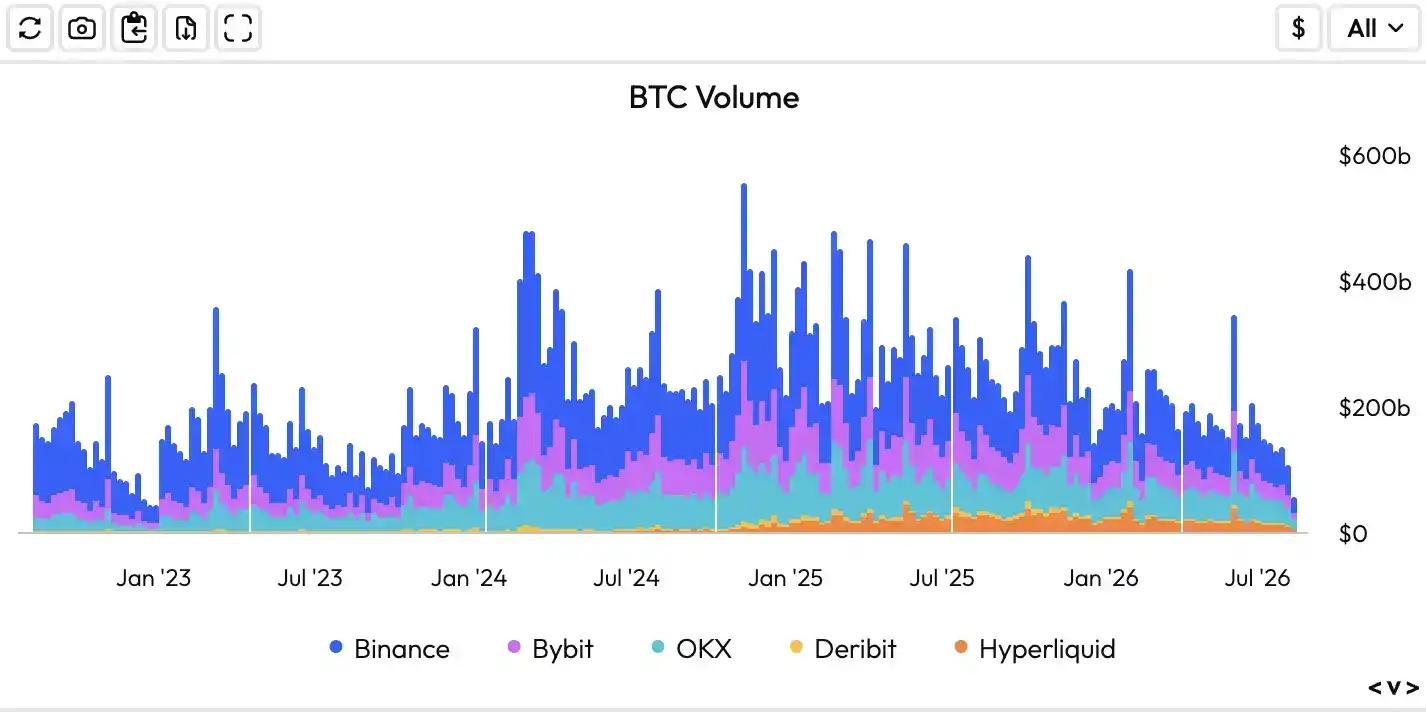
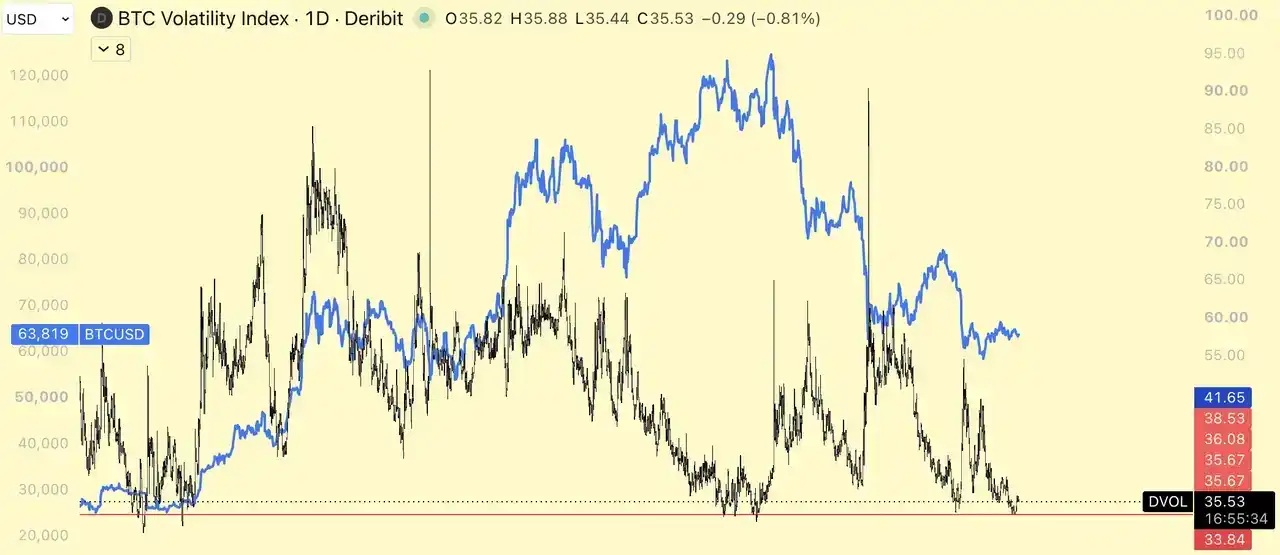
BTC weekly trading volume has fallen to its lowest level since 2023. Deribit's BTC volatility index DVOL also bottomed last week.
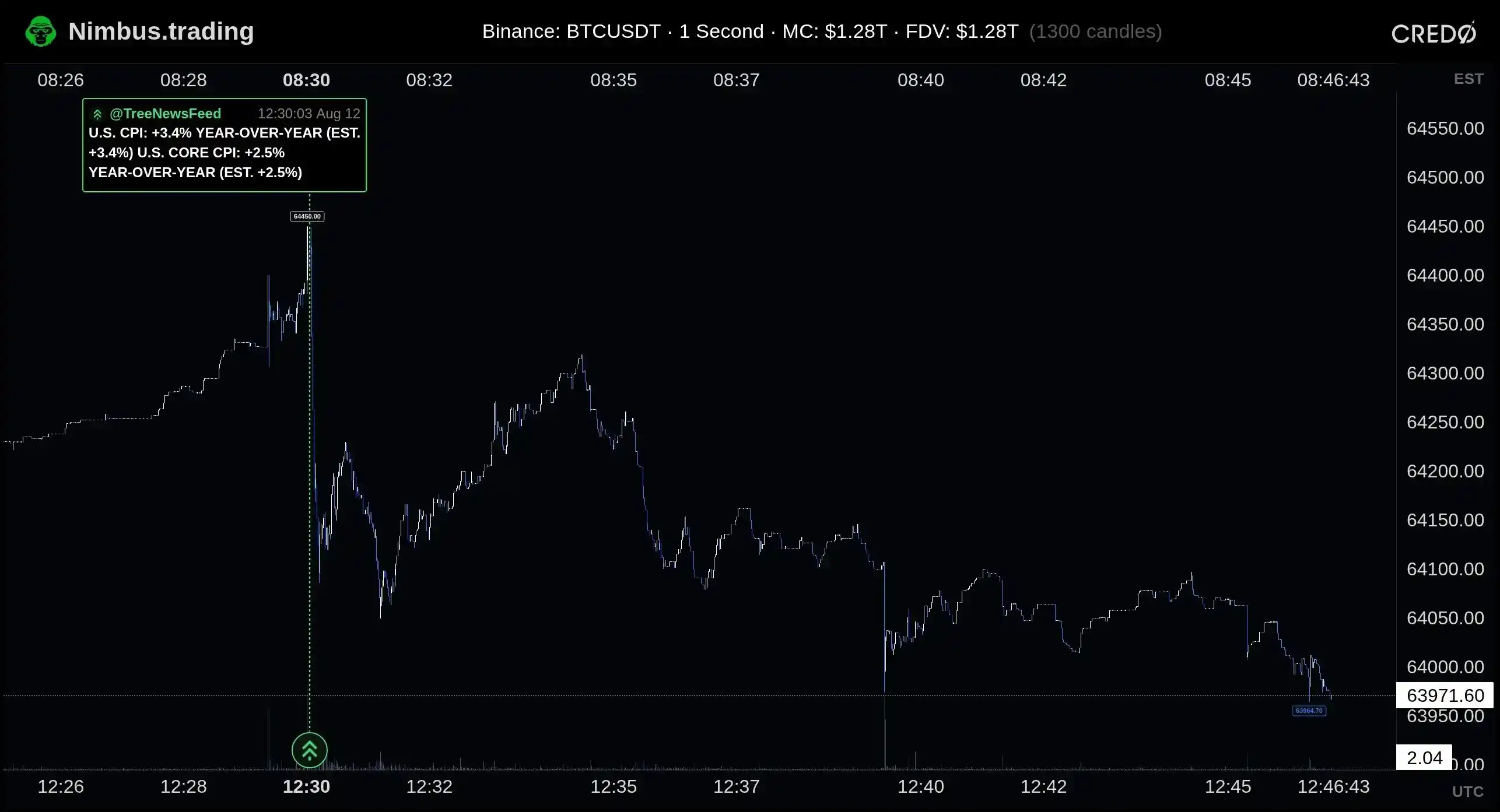
Liquidity is equally scarce. Last night at 20:30, CPI data was released. At the moment of the CPI announcement, BTC quickly fell from $64,450 to around $64,100, then rebounded to near $64,300 before declining again.
An hour later, when US stocks opened, BTC saw few participants. Apart from short-lived capital flows from cross-market arbitrage, the market failed to establish a new direction. BTC prices are easily moved now, but there aren't enough traders willing to follow through and extend the trend.
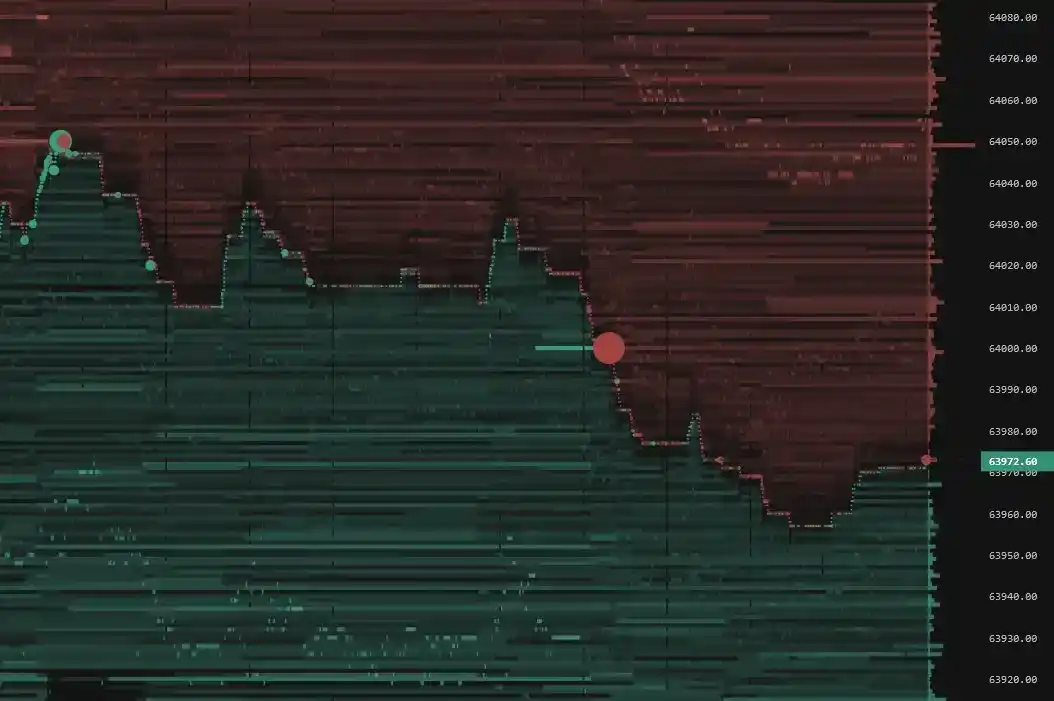
The market lacks more than just a single piece of good or bad news.

It lacks participants.

Options Market

Let's look at the options data.

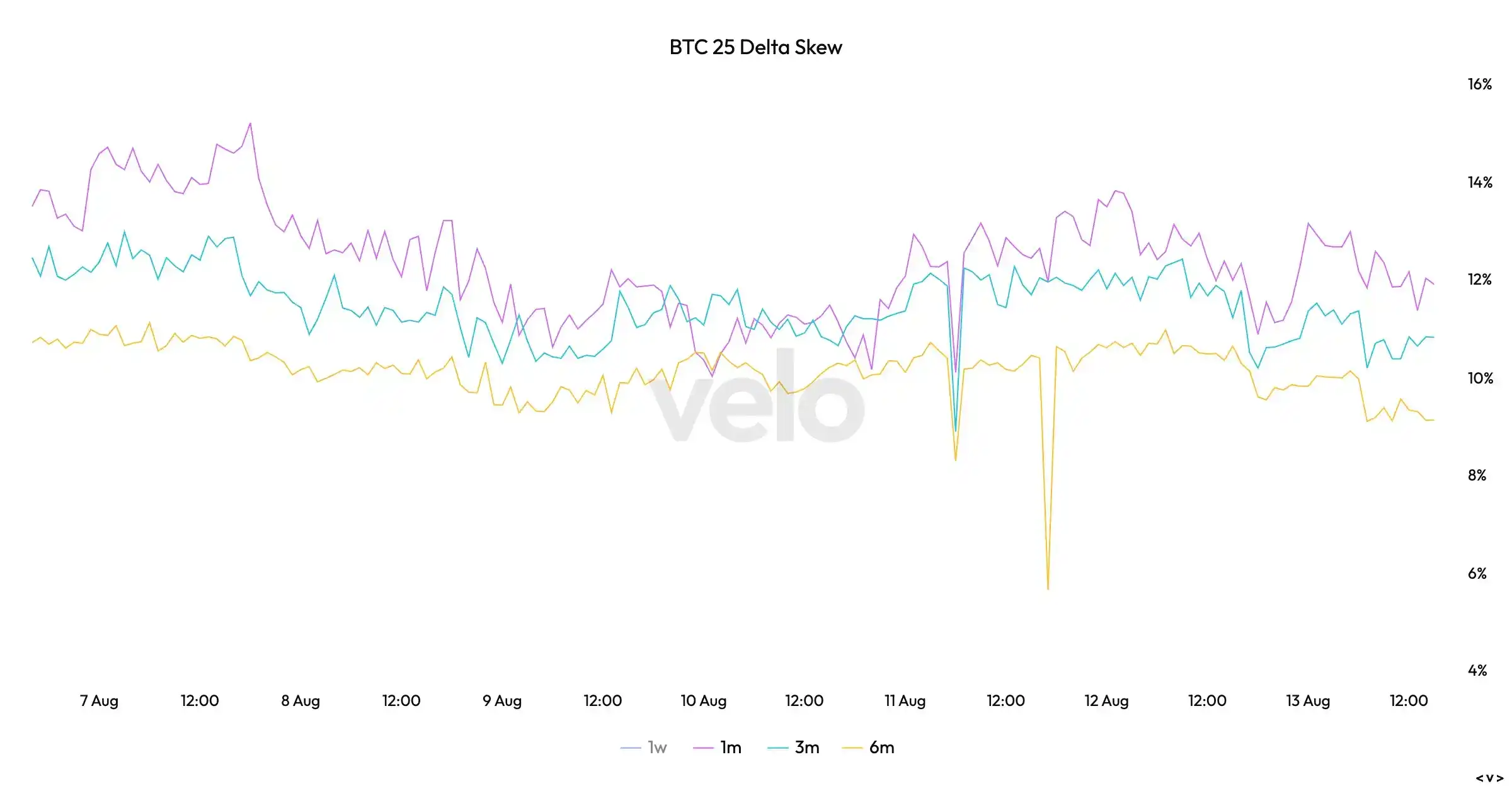
BTC 25 Delta Skew measures the implied volatility difference between put and call options with similar deltas. The curves for one-month, three-month, and six-month tenors in the chart are all in positive territory, approximately 12%, 10.7%, and 9.1% respectively. Shorter tenors show higher skew. Traders' demand for short-term downside protection is significantly higher than their pricing for long-term risks.
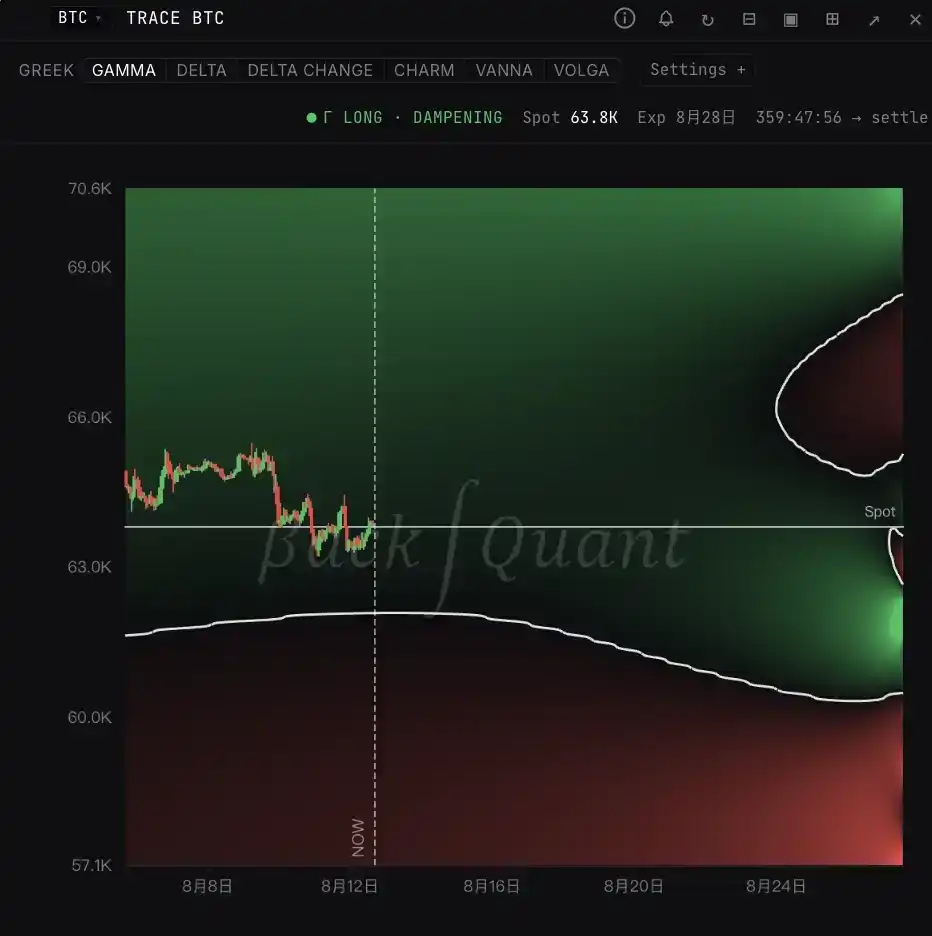
The aggregate Gamma heatmap for the end of the month provides more specific price boundaries. Currently, the market remains in a long gamma, volatility-suppressing zone. Market makers buy on price dips and sell on rallies; their hedging actions pull prices back into the range. The gamma flip zone is located near $61,000 to $60,000. As long as BTC stays above this boundary, market maker hedging absorbs volatility; if the price falls below the boundary, positions shift to short gamma, forcing market makers to continue selling during declines—their hedging behavior switches from a stabilizer to an accelerator.
If You Don't Buy, Who Do We Sell To?

Many traders are citing two changes to support a bullish view. Saylor sold several hundred million dollars worth of BTC in batches over the past month, about 0.13% of MicroStrategy's holdings, yet the BTC price remained roughly flat. Meanwhile, STRC rebounded from lows around $73 to $95.45, just a step away from $100. Saylor sells BTC without causing a sell-off, and STRC recovers most of its losses—the market naturally interprets this as bad news already being digested.

The problem is, given the current low-liquidity, low-volatility market conditions, an alternative explanation exists for the above phenomena.

Large entities still have spot holdings to exit, but the current trading volume cannot absorb large sell orders. They have temporarily paused selling simply because the order book is too thin. When STRC returns to $100, potentially bringing fresh buying interest for BTC, it might offer these entities what could be their last exit opportunity.

Good news can improve selling conditions.

This path explains why BTC consolidated during Saylor's minor selling spree and also suggests why pressure risks remain even after Saylor resumes buying. The variable determining the price is how MicroStrategy's orders compare to the entire market's potential selling pressure. Looking solely at Saylor's buys or sells doesn't provide a complete answer.

A reasonable counterargument is: large entities have previously faced volatile events and MicroStrategy's buying support, so why haven't they completed their exit? The historical trend offers a rather pessimistic answer. After the previous round of STRC restoring fund flows and MicroStrategy providing spot demand, BTC subsequently experienced a rapid decline, settling near $59,000 and entering a prolonged consolidation.

Furthermore, option positions have set $61,000 to $60,000 as the volatility amplification zone. Once large spot sell orders push the price into the negative gamma region, the next bottom is likely to form.

The Dilemma of STRC

MicroStrategy recently increased its dollar reserves by $650 million and repurchased $109 million worth of STRC. The company disclosed that these actions extended the dollar reserve coverage period by 143 days to 2.7 years and narrowed STRC's Bitcoin credit spread by 10 basis points. Including operations from the previous week, the two-week repurchase scale is approximately $190 million.

This money pulled STRC back to $95 but did not solve the most critical problem.
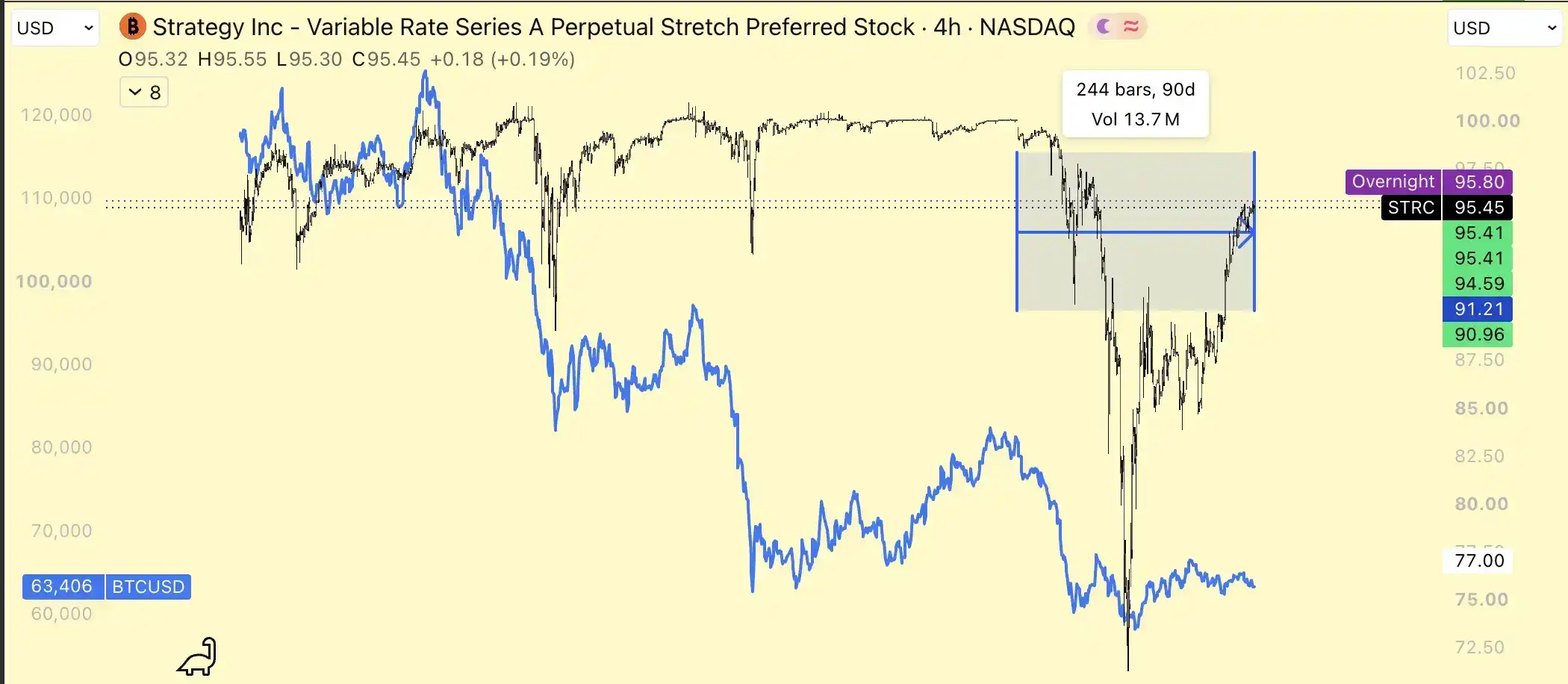
STRC must return to $100.

MicroStrategy issues additional STRC shares at-market near $100. This essentially tells the market that whenever the share price approaches $100, the company will issue more new shares. Consequently, all holders who bought below $100 will sell near $99.9. Even if the STRC price reaches $100, it will immediately be sold back below $100 by these sellers. Short sellers can also sell borrowed shares near $99.9, wait for the price to drop back to $95, buy them back to cover, and earn roughly a $5 per share profit.

The biggest risk in this trade is STRC breaking above $100 and continuing to rise, forcing short sellers to cover at higher prices. However, MicroStrategy itself adding supply near $100 actively caps that upside potential. The more the market believes the company will issue shares at $100, the more willing traders are to sell early at $99.9, making it harder for STRC to truly sustain above $100.

As long as this rule remains unchanged, if the roughly $190 million repurchase still cannot help STRC reclaim $100, the market will continue to question where the next funds to buy STRC will come from, and concerns about BTC liquidation will rise accordingly. MicroStrategy's actions of replenishing dollar reserves while repurchasing STRC already indicate the company's current priority is repairing the financing side; resuming net purchases of BTC is still secondary.

Shorting is not a free trade either. Short sellers need to borrow STRC first, then sell it on the market. During the holding period, they must pay an annualized securities lending rate exceeding 50% and compensate for a dividend yield of about 12%, resulting in a combined annualized cost of over 60%. The longer the stock price remains stuck near $100, the more these fees eat into profits.

Because STRC issuance dilutes upside potential, short sellers rarely face the risk of sustained price increases. If MicroStrategy stopped issuing STRC at $100, and STRC rose from $99.9 to $102-$105, short sellers would immediately face a paper loss of $2.1 to $5.1 per share. Some shorts, forced to cut losses, would have to buy back STRC, and their buying would further push up the price, triggering a short squeeze.

The securities lending fee determines how long shorts can hold, and MicroStrategy's issuance rule determines whether they need to cut losses early. As long as issuance starts at $100, it will attract short sellers.

The capital allocation contradiction hasn't disappeared either. When MSTR's mNAV is below 1, continuing to sell common stock dilutes the per-share value for common shareholders. Repurchasing STRC without raising dividends or repurchasing MSTR provides more direct protection for preferred shareholders. The company sees a longer dollar reserve coverage period and a narrower Bitcoin credit spread, while common shareholders calculate who bears the cost of this repair.

Bitfinex Long

Bitfinex Long positions typically exhibit an inverse relationship with BTC price. When BTC falls, large long positions on Bitfinex often increase; when BTC rises, these long positions gradually decrease. The market is accustomed to using this inverse relationship as a positioning indicator to observe whether large funds are accumulating BTC during price weakness.
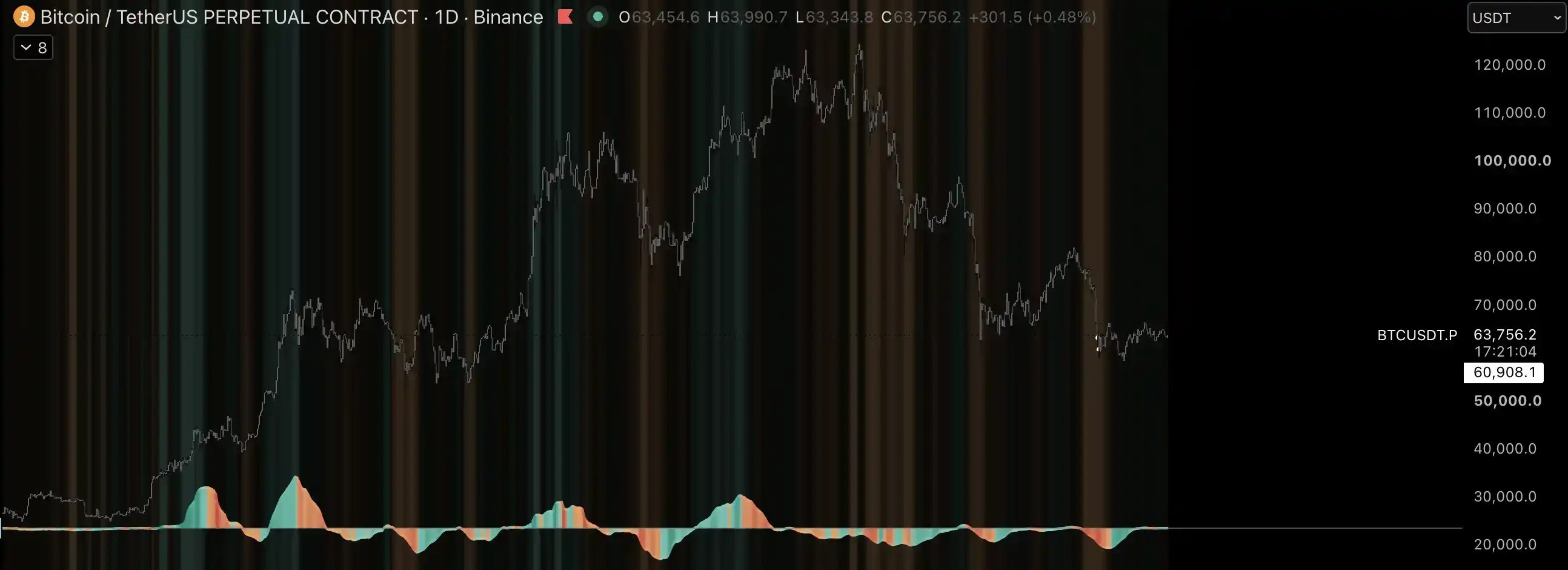
Bitfinex Long Rate of Change (Inverted) Indicator

Recently, this indicator has failed. The rate of change for Bitfinex Long has dropped to its lowest level since the end of the 2022 bear market. While BTC consolidates around the $60,000s, Bitfinex long positions have neither increased nor decreased significantly, offering no directional signal for the next price move.

BTC's "savior" has turned into "Satan."

Criptos en tendencia

Preguntas relacionadas

QAccording to the article, what does the low transaction volume and stagnant BTC price indicate about the current market?

AThe low transaction volume and stagnant BTC price indicate a severe lack of market participants and liquidity, making the market susceptible to being moved by small trades but lacking the sustained momentum to establish a clear new direction.

QWhat is the significance of the 61,000 to 60,000 USD price level for BTC according to the options market data mentioned?

AThe 61,000 to 60,000 USD price level is identified as the gamma flip zone in the options market. Below this level, market makers' hedging behavior would switch from absorbing volatility (long gamma) to amplifying sell-side pressure (short gamma), potentially accelerating a price decline.

QWhy does the article suggest that STRK's rebound to near 100 USD might not be a genuine bullish signal for BTC?

AThe article suggests the rebound might not be bullish because it could provide large entities holding BTC an improved exit opportunity in a thin market. Furthermore, STRK's own structure, where Strategy issues new shares near 100 USD, creates a selling wall that caps its price, limiting its ability to sustainably drive positive sentiment for BTC.

QWhat is the core dilemma facing STRK's price action as explained in the article?

AThe core dilemma is that Strategy's rule of issuing new STRK shares at or near 100 USD creates a self-imposed price ceiling. It encourages selling just below that level (e.g., at 99.9 USD) by both holders and short sellers, making it extremely difficult for the price to sustainably break above and hold 100 USD.

QWhat does the recent behavior of the 'Bitfinex Long' indicator imply, according to the article?

AThe recent behavior implies the 'Bitfinex Long' indicator has become ineffective. Its change rate has fallen to multi-year lows and shows no clear correlation with BTC price movements, failing to provide the usual signal about whether large capital is accumulating or distributing during price weakness.

Lecturas Relacionadas

Chip Giant with 700 Billion Market Cap Sees Soaring Inventory

"Chips Giant with 700 Billion Market Cap Sees Inventory Soar" In its 2026 first-half financial report, Cambricon, a leading Chinese AI chip design company, reported significant growth in both revenue and profit. Revenue reached 59.96 billion yuan, up 108.13% year-on-year, while net profit grew 122.61% to 23.11 billion yuan. However, a major point of investor focus was the sharp rise in the company's inventory, which surged 66.83% from the end of the previous year to 82.48 billion yuan. This inventory now represents 45.32% of its total assets. The increase is primarily attributed to a substantial growth in raw materials (up 77.95% to 52.78 billion yuan) and work-in-process with contract manufacturers (up 61.85% to 24.18 billion yuan). Cambricon management explained that the inventory build-up was due to increased purchases of raw materials and outsourced processing. The company acknowledged the risk of inventory impairment should market conditions change. Industry analysts noted that as a fabless chip designer, such inventory accumulation is a strategic move to secure wafer capacity. However, it carries significant risk due to the industry's rapid technological iteration. If downstream demand slows, the company could face substantial inventory write-downs. Additionally, Cambricon's prepayments soared nearly threefold to 29.14 billion yuan. Brokerage analyses interpret the concurrent rise in prepayments and inventory as a positive indicator, suggesting strong future order fulfillment and pointing towards significant revenue growth in the third quarter. Despite strong operational metrics, the company's cash and cash equivalents have shown a declining trend over the past three years, dropping to 6.26 billion yuan by mid-2026. Cambricon's stock price hit a historic high of 1,620 yuan per share in June, briefly pushing its market capitalization above one trillion yuan. As of August 13th, its share price was 1,105.5 yuan, with a total market cap of approximately 694.6 billion yuan.

marsbitHace 37 min(s)

Chip Giant with 700 Billion Market Cap Sees Soaring Inventory

marsbitHace 37 min(s)

Securitize's First Post-IPO Financial Report Disappoints, Has the 'Compliant Tokenization' Narrative Lost Its Luster?

Securitize, a leading tokenization platform, released its first quarterly earnings report since going public in July 2026, disappointing investors. Q2 2026 revenue was $14.43 million, down 5% year-over-year and 26% sequentially, missing analyst estimates. The net loss widened to $21.68 million. While tokenized assets under management grew 9% to a record $4.3 billion and platform trading volume surged 147% to $5.3 billion, total assets under administration fell 20% to $24.3 billion. The divergence between soaring volume and declining revenue raised concerns about its fee structure and business model viability. The report highlights Securitize's continued focus on regulatory compliance, including partnerships with major transfer agents and approvals from FINRA and Dubai's VARA. It also registered an investment advisor subsidiary with the SEC. However, tangible progress in its new tokenized public securities business was limited. Apart from tokenizing its own stock (SECZ) at its IPO, no other public company stock has been tokenized on its platform in over a month. Analysts note that SECZ's on-chain market value is misleading as it was issued to existing shareholders, not driven by secondary market demand. Post-earnings, Securitize's stock fell over 20%, bringing its total decline since its IPO to approximately 36%. The market reaction underscores investor concern over shrinking revenue and the slow pace of commercializing its tokenized equities narrative, shifting focus from regulatory milestones to real-market metrics like market share and user adoption.

marsbitHace 40 min(s)

Securitize's First Post-IPO Financial Report Disappoints, Has the 'Compliant Tokenization' Narrative Lost Its Luster?

marsbitHace 40 min(s)

Crypto Bear Market: Which Crypto Concept Stocks Are Institutional Giants Accumulating?

Despite a bearish crypto market, major institutional investors are increasing their positions in key crypto-related stocks, as revealed in recent 13F filings. European asset management giant Amundi significantly boosted its stake in MicroStrategy (MSTR) by 148%. Other institutions like Vanguard, State Street, and Capital Group also added to their MSTR holdings. While price performance has been weak, banks and public pension funds, including those from Michigan and Louisiana, are also expanding their exposure, signaling growing acceptance. In the mining sector, Bitmine (BMNR) saw inflows from passive index funds following its inclusion in the Russell index, with BlackRock as a major holder. For Circle (CRCL), active buyers included the Norwegian Sovereign Wealth Fund, the Swiss National Bank, and ARK Invest, which has been actively trading the stock. Regarding Coinbase (COIN), large positions from Vanguard and BlackRock are primarily passive, tied to index inclusions. ARK Invest engages in more active, tactical buying. Robinhood (HOOD) shows high institutional ownership (over 93%), with various pension funds making smaller, scattered additions. ARK Invest leads in active trading for stocks like Block (XYZ) and Bullish (BLSH), while traditional asset managers' moves are often passive. The trend indicates institutions are strategically accumulating sector leaders during the downturn, with conservative funds slowly adding crypto equities to their portfolios. However, due to the 45-day reporting lag, 13F data should be used for reference, not for direct copy-trading.

marsbitHace 41 min(s)

Crypto Bear Market: Which Crypto Concept Stocks Are Institutional Giants Accumulating?

marsbitHace 41 min(s)

Securitize's First Post-IPO Financial Report Bombshell: Is the 'Compliant Tokenization' Narrative Failing to Sell?

Securitize, a tokenization platform, released its first earnings report since going public in July 2026, revealing disappointing Q2 results. Revenue fell 5% year-over-year to $14.43 million, missing estimates, while the net loss widened significantly to $21.68 million. Despite achieving record tokenized assets under management of $4.3 billion and a 147% surge in platform trading volume, overall assets under administration declined by 20%. The company's stock (SECZ) dropped over 20% in after-hours trading following the report. The article highlights a key concern: Securitize's revenue declined despite substantial trading growth, suggesting either compressed fees or an unclear business model. While Securitize maintains its focus on regulatory compliance—securing key partnerships with entities like Computershare and NYSE, and obtaining an SEC investment advisor registration—its tangible progress in the new tokenized stock business has been slow. Apart from tokenizing its own stock (SECZ) upon listing, it has not launched other tokenized equities. Analysts note that SECZ's high on-chain market capitalization is misleading, as it resulted from a one-time distribution to shareholders rather than organic investor demand. The market's patience is waning as investors prioritize real business metrics like market share and user adoption over the "compliant tokenization" narrative. Securitize's market value has fallen 36% from its debut, reflecting growing concerns over its shrinking revenue and the delayed execution of its tokenized stock initiatives.

Odaily星球日报Hace 56 min(s)

Securitize's First Post-IPO Financial Report Bombshell: Is the 'Compliant Tokenization' Narrative Failing to Sell?

Odaily星球日报Hace 56 min(s)

Trading

Spot

Artículos destacados

Qué es BITCOIN

Entendiendo HarryPotterObamaSonic10Inu (ERC-20) y Su Posición en el Espacio Cripto En los últimos años, el mercado de criptomonedas ha sido testigo de un aumento en la popularidad de las monedas meme, capturando el interés no solo de los comerciantes, sino también de aquellos que buscan compromiso comunitario y valor de entretenimiento. Entre estos tokens únicos se encuentra HarryPotterObamaSonic10Inu (ERC-20), un proyecto intrigante que mezcla referencias culturales en el tejido de las criptomonedas. Este artículo profundiza en los aspectos clave de HarryPotterObamaSonic10Inu, explorando sus mecanismos, ethos impulsado por la comunidad y su relación con el paisaje cripto más amplio. ¿Qué es HarryPotterObamaSonic10Inu (ERC-20)? Como su nombre sugiere, HarryPotterObamaSonic10Inu es una moneda meme construida sobre la blockchain de Ethereum, clasificada bajo el estándar ERC-20. A diferencia de las criptomonedas tradicionales que pueden enfatizar la utilidad práctica o el potencial de inversión, este token prospera en el valor de entretenimiento y la fuerza de su comunidad. El proyecto tiene como objetivo fomentar un entorno donde los usuarios comprometidos puedan reunirse, compartir ideas y participar en actividades inspiradas por diversos fenómenos culturales. Una característica notable de HarryPotterObamaSonic10Inu es su cero impuestos en las transacciones. Este atractivo elemento tiene como objetivo incentivar el comercio y la participación comunitaria, sin cargos adicionales que puedan disuadir a los comerciantes de pequeña escala. El suministro total de la moneda está establecido en mil millones de tokens, una cifra que marca su intención de mantener una circulación sustancial dentro de la comunidad. Creador de HarryPotterObamaSonic10Inu (ERC-20) Los orígenes de HarryPotterObamaSonic10Inu están algo envueltos en misterio; los detalles sobre el creador siguen siendo desconocidos. El desarrollo de este token carece de un equipo identificable o de un plan explícito, lo cual no es inusual dentro del sector de monedas meme. En cambio, el proyecto ha surgido de manera orgánica, con su progreso muy dependiente del entusiasmo y la participación de su comunidad. Inversores de HarryPotterObamaSonic10Inu (ERC-20) En cuanto a inversiones externas y respaldo, HarryPotterObamaSonic10Inu también sigue siendo ambiguo. El token no lista ninguna fundación de inversión conocida o apoyo organizacional significativo. En cambio, la savia del proyecto es su comunidad de base, que informa su crecimiento y sostenibilidad a través de la acción colectiva y el compromiso en el espacio cripto. ¿Cómo Funciona HarryPotterObamaSonic10Inu (ERC-20)? Como una moneda meme, HarryPotterObamaSonic10Inu opera principalmente fuera de los marcos tradicionales que a menudo rigen el valor de los activos. Hay varios aspectos distintivos que definen cómo funciona el proyecto: Transacciones Sin Impuestos: Sin tarifas impositivas en las transacciones, los usuarios pueden comprar y vender el token libremente sin preocuparse por costos ocultos. Compromiso Comunitario: El proyecto prospera en la interacción comunitaria, aprovechando plataformas de redes sociales para crear entusiasmo y facilitar la participación. Las discusiones, el intercambio de contenido y el compromiso son elementos cruciales que ayudan a expandir su alcance y fomentar la lealtad entre los seguidores. Sin Utilidad Práctica: Cabe señalar que HarryPotterObamaSonic10Inu no ofrece utilidad concreta dentro del ecosistema financiero. Más bien, se clasifica como un token principalmente para actividades de entretenimiento y comunitarias. Referencia Cultural: El token incorpora astutamente elementos de la cultura popular para atraer interés, conectando con entusiastas de los memes y seguidores de las criptomonedas por igual. HarryPotterObamaSonic10Inu ejemplifica cómo las monedas meme operan de manera diferente a los proyectos de criptomonedas más tradicionales, ingresando al mercado como construcciones sociales innovadoras en lugar de activos utilitarios. Cronología de HarryPotterObamaSonic10Inu (ERC-20) La historia de HarryPotterObamaSonic10Inu está marcada por varios hitos notables: Creación: El token surgió de un meme viral, capturando la imaginación de muchos entusiastas de las criptomonedas. Las fechas específicas de creación no están disponibles, subrayando su ascenso orgánico. Listado en Exchanges: HarryPotterObamaSonic10Inu ha llegado a varios exchanges, permitiendo un acceso y comercio más fácil por parte de la comunidad. Iniciativas de Compromiso Comunitario: Actividades continuas destinadas a mejorar la interacción comunitaria, incluyendo concursos, campañas en redes sociales y generación de contenido por parte de fanáticos y defensores. Planes de Expansión Futuros: La hoja de ruta del proyecto incluye el lanzamiento de una colección de NFT, mercancía y un sitio de comercio electrónico relacionado con sus temas culturales, involucrando aún más a la comunidad e intentando añadir más dimensiones a su ecosistema. Puntos Clave Sobre HarryPotterObamaSonic10Inu (ERC-20) Naturaleza Impulsada por la Comunidad: El proyecto prioriza la participación colectiva y la creatividad, asegurando que la involucración de los usuarios esté a la vanguardia de su desarrollo. Clasificación como Moneda Meme: Representa la epítome de las criptomonedas basadas en el entretenimiento, diferenciándose de los vehículos de inversión tradicionales. Sin Afiliación Directa con Bitcoin: A pesar de la similitud en el nombre del ticker, HarryPotterObamaSonic10Inu es distinto y no tiene relación con Bitcoin u otras criptomonedas establecidas. Enfoque en la Colaboración: HarryPotterObamaSonic10Inu está diseñado para crear un espacio para la colaboración y el intercambio de historias entre sus poseedores, proporcionando una vía para la creatividad y el vínculo comunitario. Perspectivas Futuras: La ambición de expandirse más allá de su premisa inicial hacia NFTs y mercancías describe un camino para que el proyecto potencialmente ingrese a avenidas más tradicionales dentro de la cultura digital. A medida que las monedas meme continúan capturando la imaginación de la comunidad de criptomonedas, HarryPotterObamaSonic10Inu (ERC-20) se destaca debido a sus lazos culturales y su enfoque centrado en la comunidad. Si bien puede no encajar en el molde típico de un token impulsado por la utilidad, su esencia radica en la alegría y la camaradería fomentadas entre sus seguidores, destacando la naturaleza en evolución de las criptomonedas en una era cada vez más digital. A medida que el proyecto continúa desarrollándose, será importante observar cómo las dinámicas comunitarias influyen en su trayectoria en el cambiante paisaje de la tecnología blockchain.

2.8k Vistas totalesPublicado en 2024.04.01Actualizado en 2024.12.03

Qué es BITCOIN

Cómo comprar BTC

¡Bienvenido a HTX.com! Hemos hecho que comprar Bitcoin (BTC) sea simple y conveniente. Sigue nuestra guía paso a paso para iniciar tu viaje de criptos.Paso 1: crea tu cuenta HTXUtiliza tu correo electrónico o número de teléfono para registrarte y obtener una cuenta gratuita en HTX. Experimenta un proceso de registro sin complicaciones y desbloquea todas las funciones.Obtener mi cuentaPaso 2: ve a Comprar cripto y elige tu método de pagoTarjeta de crédito/débito: usa tu Visa o Mastercard para comprar Bitcoin (BTC) al instante.Saldo: utiliza fondos del saldo de tu cuenta HTX para tradear sin problemas.Terceros: hemos agregado métodos de pago populares como Google Pay y Apple Pay para mejorar la comodidad.P2P: tradear directamente con otros usuarios en HTX.Over-the-Counter (OTC): ofrecemos servicios personalizados y tipos de cambio competitivos para los traders.Paso 3: guarda tu Bitcoin (BTC)Después de comprar tu Bitcoin (BTC), guárdalo en tu cuenta HTX. Alternativamente, puedes enviarlo a otro lugar mediante transferencia blockchain o utilizarlo para tradear otras criptomonedas.Paso 4: tradear Bitcoin (BTC)Tradear fácilmente con Bitcoin (BTC) en HTX's mercado spot. Simplemente accede a tu cuenta, selecciona tu par de trading, ejecuta tus trades y monitorea en tiempo real. Ofrecemos una experiencia fácil de usar tanto para principiantes como para traders experimentados.

6.0k Vistas totalesPublicado en 2024.12.12Actualizado en 2026.06.02

Cómo comprar BTC

Qué es $BITCOIN

ORO DIGITAL ($BITCOIN): Un Análisis Integral Introducción al ORO DIGITAL ($BITCOIN) ORO DIGITAL ($BITCOIN) es un proyecto basado en blockchain que opera en la red Solana, cuyo objetivo es combinar las características de los metales preciosos tradicionales con la innovación de las tecnologías descentralizadas. Aunque comparte un nombre con Bitcoin, a menudo referido como “oro digital” debido a su percepción como un refugio de valor, ORO DIGITAL es un token separado diseñado para crear un ecosistema único dentro del paisaje Web3. Su meta es posicionarse como un activo digital alternativo viable, aunque los detalles sobre sus aplicaciones y funcionalidades aún están en desarrollo. ¿Qué es ORO DIGITAL ($BITCOIN)? ORO DIGITAL ($BITCOIN) es un token de criptomoneda diseñado explícitamente para su uso en la blockchain de Solana. A diferencia de Bitcoin, que proporciona un papel de almacenamiento de valor ampliamente reconocido, este token parece centrarse en aplicaciones y características más amplias. Aspectos notables incluyen: Infraestructura Blockchain: El token está construido sobre la blockchain de Solana, conocida por su capacidad para manejar transacciones de alta velocidad y bajo costo. Dinámicas de Suministro: ORO DIGITAL tiene un suministro máximo limitado a 100 cuatrillones de tokens (100P $BITCOIN), aunque los detalles sobre su suministro circulante no se han divulgado actualmente. Utilidad: Si bien las funcionalidades precisas no están delineadas explícitamente, hay indicios de que el token podría ser utilizado para diversas aplicaciones, potencialmente involucrando aplicaciones descentralizadas (dApps) o estrategias de tokenización de activos. ¿Quién es el Creador de ORO DIGITAL ($BITCOIN)? En la actualidad, la identidad de los creadores y el equipo de desarrollo detrás de ORO DIGITAL ($BITCOIN) sigue siendo desconocida. Esta situación es típica entre muchos proyectos innovadores dentro del espacio blockchain, particularmente aquellos alineados con las finanzas descentralizadas y fenómenos de monedas meme. Si bien tal anonimato puede fomentar una cultura impulsada por la comunidad, intensifica las preocupaciones sobre la gobernanza y la responsabilidad. ¿Quiénes son los Inversores de ORO DIGITAL ($BITCOIN)? La información disponible indica que ORO DIGITAL ($BITCOIN) no tiene patrocinadores institucionales conocidos ni inversiones destacadas de capital de riesgo. El proyecto parece operar en un modelo de peer-to-peer centrado en el apoyo y la adopción de la comunidad en lugar de rutas de financiamiento tradicionales. Su actividad y liquidez se sitúan principalmente en intercambios descentralizados (DEX), como PumpSwap, en lugar de plataformas de trading centralizadas establecidas, lo que resalta aún más su enfoque de base. Cómo Funciona ORO DIGITAL ($BITCOIN) Los mecanismos operativos de ORO DIGITAL ($BITCOIN) pueden elaborarse en función de su diseño blockchain y atributos de red: Mecanismo de Consenso: Al aprovechar el único proof-of-history (PoH) de Solana combinado con un modelo de proof-of-stake (PoS), el proyecto asegura una validación de transacciones eficiente que contribuye al alto rendimiento de la red. Tokenómica: Si bien los mecanismos deflacionarios específicos no se han detallado extensamente, el vasto suministro máximo de tokens implica que podría atender microtransacciones o casos de uso nicho que aún están por definirse. Interoperabilidad: Existe el potencial de integración con el ecosistema más amplio de Solana, incluyendo varias plataformas de finanzas descentralizadas (DeFi). Sin embargo, los detalles sobre integraciones específicas permanecen no especificados. Cronología de Eventos Clave Aquí hay una cronología que destaca hitos significativos relacionados con ORO DIGITAL ($BITCOIN): 2023: El despliegue inicial del token ocurre en la blockchain de Solana, marcado por su dirección de contrato. 2024: ORO DIGITAL gana visibilidad al estar disponible para trading en intercambios descentralizados como PumpSwap, permitiendo a los usuarios comerciar contra SOL. 2025: El proyecto presencia actividad de trading esporádica y potencial interés en compromisos liderados por la comunidad, aunque no se han documentado asociaciones notables o avances técnicos hasta el momento. Análisis Crítico Fortalezas Escalabilidad: La infraestructura subyacente de Solana soporta altos volúmenes de transacciones, lo que podría mejorar la utilidad de $BITCOIN en varios escenarios de transacción. Accesibilidad: El potencial bajo precio de trading por token podría atraer a inversores minoristas, facilitando una participación más amplia debido a oportunidades de propiedad fraccionada. Riesgos Falta de Transparencia: La ausencia de patrocinadores, desarrolladores o un proceso de auditoría conocidos públicamente puede generar escepticismo sobre la sostenibilidad y confiabilidad del proyecto. Volatilidad del Mercado: La actividad de trading depende en gran medida del comportamiento especulativo, lo que puede resultar en una volatilidad de precios significativa y en incertidumbre para los inversores. Conclusión ORO DIGITAL ($BITCOIN) surge como un proyecto intrigante pero ambiguo dentro del ecosistema de Solana en rápida evolución. Si bien intenta aprovechar la narrativa del “oro digital”, su alejamiento del papel establecido de Bitcoin como refugio de valor subraya la necesidad de una diferenciación más clara de su utilidad y estructura de gobernanza previstas. La aceptación y adopción futura dependerán probablemente de abordar la actual opacidad y de definir sus estrategias operativas y económicas de manera más explícita. Nota: Este informe abarca información sintetizada disponible hasta octubre de 2023, y pueden haber ocurrido desarrollos más allá del período de investigación.

543 Vistas totalesPublicado en 2025.05.13Actualizado en 2025.05.13

Qué es $BITCOIN

Discusiones

Bienvenido a la comunidad de HTX. Aquí puedes mantenerte informado sobre los últimos desarrollos de la plataforma y acceder a análisis profesionales del mercado. A continuación se presentan las opiniones de los usuarios sobre el precio de BTC (BTC).

活动图片