Michael Burry Warns Bitcoin Price Drop Below $70K Could Lead to ‘Sickening Scenarios’ and Firm Bankruptcies — Here’s Why

ccn.comPublicado a 2026-02-04Actualizado a 2026-02-04

Resumen

Michael Burry warns that a Bitcoin price drop below $70,000 could trigger severe market instability. He identifies three critical thresholds: at $70,000, large corporate holders like MicroStrategy may face deepening paper losses and tighter financing conditions; at $60,000, reflexive selling could create a "death spiral" as falling prices weaken confidence and force defensive actions; at $50,000, miners risk insolvency due to high operational costs, potentially leading to disorderly selling. Burry also links crypto stress to precious metals liquidations, noting that forced selling can disrupt correlations. His analysis highlights structural vulnerabilities in corporate treasuries and mining operations under market pressure.

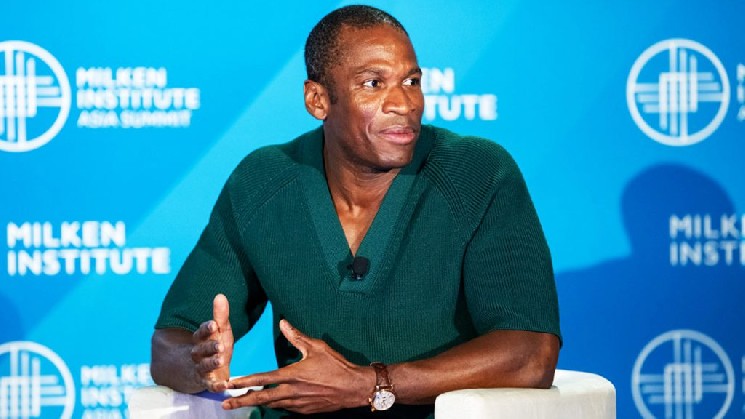
Michael Burry, the investor known for betting against the U.S. housing market ahead of the 2008 crisis, warned that a deeper slide in Bitcoin (BTC) could set off what he called “sickening scenarios,” including forced selling and failures at crypto-linked firms.

In a Feb. 2 post on his Substack, Burry laid out a set of downside thresholds — $70,000, $60,000, and $50,000 — that he argued could tighten financing conditions for big corporate holders and push weaker miners toward insolvency.

Try Our Recommended Crypto Exchanges
Sponsored
Disclosure
We sometimes use affiliate links in our content, when clicking on those we might receive a commission at no extra cost to you. By using this website you agree to our terms and conditions and privacy policy.
"}' data-trk="67adf8d4f12aaec7e4808bf5" href="https://links.ccn.com/links?code=693291aa4a5bcb62319448b2" rel="nofollow" target="_blank">
Bitget<\/h3>"}' data-trk="67adf8d4f12aaec7e4808bf5" href="https://links.ccn.com/links?code=693291aa4a5bcb62319448b2" rel="nofollow" target="_blank">

Bitget

promotions
New user rewards up to 6,200 USDT.<\/strong>"}' data-trk="67adf8d4f12aaec7e4808bf5" href="https://links.ccn.com/links?code=693291aa4a5bcb62319448b2" rel="nofollow" target="_blank"> New user rewards up to 6,200 USDT.
Coins
89
Claim Offer
"}' data-trk="6899b9831836d97539c51aa6" href="https://links.ccn.com/links?code=693293fa4a5bcb6231949c97" rel="nofollow" target="_blank">
Bitunix<\/h3>"}' data-trk="6899b9831836d97539c51aa6" href="https://links.ccn.com/links?code=693293fa4a5bcb6231949c97" rel="nofollow" target="_blank">

Bitunix

promotions
Receive up to $100,000 worth of exclusive gifts for newcomers upon registration.<\/strong>"}' data-trk="6899b9831836d97539c51aa6" href="https://links.ccn.com/links?code=693293fa4a5bcb6231949c97" rel="nofollow" target="_blank"> Receive up to $100,000 worth of exclusive gifts for newcomers upon registration.
Coins
151
Claim Offer
"}' data-trk="68f8c175c334f42ea614a1a4" href="https://links.ccn.com/links?code=693294144a5bcb623194a054" rel="nofollow" target="_blank">
BTCC<\/h3>"}' data-trk="68f8c175c334f42ea614a1a4" href="https://links.ccn.com/links?code=693294144a5bcb623194a054" rel="nofollow" target="_blank">

BTCC

promotions
Get up to 10,055 USDT when you register, verify, and make the first deposit and the first trades.<\/strong>"}' data-trk="68f8c175c334f42ea614a1a4" href="https://links.ccn.com/links?code=693294144a5bcb623194a054" rel="nofollow" target="_blank"> Get up to 10,055 USDT when you register, verify, and make the first deposit and the first trades.
Coins
162
Claim Offer
Explore All Offers

Why Bitcoin at $70,000 Is the First Danger Line

Burry’s starting point is that price declines can become funding problems.

He said a move below roughly $70,000 could deepen paper losses for large corporate holders and make capital harder, or more expensive, to raise as investor confidence erodes.

Strategy (formerly MicroStrategy), whose equity is closely tied to Bitcoin accumulation, is a central example in his framework.

The risk, in his telling, is less about accounting marks and more about access to financing.

If markets begin treating Bitcoin-heavy balance sheets as structurally fragile, the cost of capital rises and refinancing windows narrow — conditions that can force defensive behavior even from “long-term” holders.

At $60,000, Bitcoin’s Reflexive Selling Risk Rises

Burry framed the next level, around $60,000, as a more acute stress point for Bitcoin treasury strategies.

The risk, as he outlined it, is reflexive:

  • Falling prices weaken balance sheets and market confidence,
  • which tightens financing conditions,
  • which can increase the probability of selling,
  • which then pressures prices further.

Bloomberg described the dynamic as a potential “death spiral” for firms that spent the past year stockpiling bitcoin.

That’s the “what if” at the center of Burry’s warning: not that every corporate holder must sell, but that the market begins pricing in the chance of forced selling, and that expectation itself becomes destabilizing.

At $50,000, Bitcoin Miners Face Insolvency Pressure

Burry’s third threshold was $50,000, where he argued miners could be pushed into bankruptcy, potentially leading to additional selling pressure if distressed operators are forced to liquidate Bitcoin holdings or unwind positions to cover costs.

Mining is particularly sensitive to price because revenue is paid in the underlying asset, while costs are largely in fiat terms (energy, equipment, labor, financing).

When prices fall, weaker balance sheets can crack quickly, especially if leverage is involved or if hedges roll off.

Burry’s point was that a wave of miner failures could shift the market from orderly selling to disorderly selling.

Metals Spillover: Liquidation Mechanics, Not a Hedge Thesis

Burry also linked crypto stress to moves in precious metals, arguing that selling pressure tied to crypto losses may have contributed to end-of-month liquidation flows in metals-related products.

Bloomberg reported that Burry cited as much as $1 billion in precious metals being liquidated at month-end.

That’s a different claim than “Bitcoin trades like gold.” It’s a balance-sheet and risk-management claim.

When portfolios face pressure, they often sell what they can, not just what they want. Burry warned that forced selling can scramble correlations, at least temporarily.

Bottom line

Burry’s post is a warning about market structure under stress: corporate treasury concentration, miner fragility, and reflexive selloffs.

His thresholds are not predictions carved into stone. They are, in his framing, levels where funding, solvency, and forced-liquidation risks could rise sharply.

Top Trending Crypto Articles
  • Best Exchanges Check Out Our Recommended Exchanges Here
  • Buy Crypto Fast How To Buy Crypto with a Credit Card Now
  • Safe Crypto Gambling See Our Picks for the Best Crypto Gambling Sites

Preguntas relacionadas

QWhat are the three Bitcoin price thresholds that Michael Burry warns could trigger negative scenarios?

AMichael Burry warns that Bitcoin prices falling below $70,000, $60,000, and $50,000 could trigger negative scenarios including tightened financing for corporate holders, forced selling, and miner insolvencies.

QAccording to Burry, what specific risk does a drop below $70,000 pose to large corporate Bitcoin investors like MicroStrategy?

AA drop below $70,000 could deepen paper losses for large corporate holders like MicroStrategy, erode investor confidence, and make capital more expensive or harder to raise, potentially forcing defensive behavior.

QHow does Burry describe the potential 'death spiral' dynamic at the $60,000 Bitcoin price level?

AAt around $60,000, Burry warns of a reflexive 'death spiral' where falling prices weaken balance sheets and market confidence, which tightens financing conditions, increases the probability of selling, and further pressures prices downward.

QWhy are Bitcoin miners particularly vulnerable if prices fall to $50,000 according to Burry's analysis?

AMiners are vulnerable at $50,000 because their revenue is in Bitcoin while costs are in fiat currency. Price declines can quickly crack weaker balance sheets, potentially leading to bankruptcies and disorderly selling of Bitcoin holdings.

QHow does Burry link crypto market stress to precious metals liquidations?

ABurry links crypto stress to precious metals by suggesting that selling pressure from crypto losses may have contributed to end-of-month liquidation flows in metals-related products, with up to $1 billion in precious metals being liquidated, as forced selling can scramble correlations.

Lecturas Relacionadas

When Doing Cryptocurrency Payment, the First Thing is Licenses, What is the Second?

When launching a crypto payment business, obtaining the necessary licenses is the crucial first step. However, the second, and arguably more critical, step is designing a comprehensive operational framework that forms a coherent business loop. This loop must be clearly understood and executable by all stakeholders: banks, payment partners, exchanges, on-chain analytics providers, regulators, and your internal team. Many projects mistakenly believe a single license permits all operations. Licenses merely grant entry; they don't define how the specific business functions. The real challenge lies in detailing every aspect of the workflow. This involves clarifying the customer base, the flow of fiat and crypto assets, the settlement process, and establishing clear lines of responsibility for risks like AML compliance, sanctions screening, chargebacks, and regulatory inquiries. A robust framework must answer seven core questions: Who are the clients and merchants? Who collects fiat and crypto? Who handles conversion and custody? And who is ultimately accountable for compliance and risk management? Projects often fail not from a lack of licensing, but during due diligence when they cannot convincingly explain these operational details. Therefore, beyond securing licenses, the priority must be constructing a closed-loop system. This system ensures the business model is transparent, risks are managed, responsibilities are delineated, contracts are aligned, and the entire process is comprehensible to partners and regulators. The true competitive edge in crypto payments lies not in acquiring a license quickly, but in integrating licensing, banking, compliance, and operations into a sustainable and executable whole.

marsbitHace 48 min(s)

When Doing Cryptocurrency Payment, the First Thing is Licenses, What is the Second?

marsbitHace 48 min(s)

Arthur Hayes Analysis: AI Bubble Nears Burst, Crypto Market Faces Short-Term Pressure

Arthur Hayes argues that the current AI market is a bubble poised to burst, which will exert downward pressure on the crypto market in the near term. The core trigger is rising oil prices due to the US-Iran conflict and a blockade of the Strait of Hormuz. Higher energy costs directly increase the operational expenses of AI data centers, squeezing profit margins for companies like Google, Anthropic, and OpenAI. Hayes predicts that persistent inflation from high oil prices will force Trump, in a bid to win the November election, to turn public sentiment against the AI industry. He may propose regulations and taxes on data centers and AI companies to appeal to voters concerned about costs and job displacement. Such political rhetoric could shatter market confidence. Furthermore, the market is unlikely to healthily absorb the massive concurrent IPOs of SpaceX, Anthropic, and OpenAI, which together seek valuations in the trillions. The combination of soaring energy costs, overwhelming equity supply, and negative political pressure will puncture the AI bubble. Hayes notes that nearly all new USD liquidity since 2022 has flowed into AI, leaving crypto like Bitcoin behind. When the AI bubble bursts, liquidity will contract sharply, pulling down all risk assets, including cryptocurrencies. In response, Hayes's fund, Maelstrom, has sold all AI-related stocks and non-core cryptocurrencies. It maintains core positions in Bitcoin and Ethereum while increasing exposure to energy sector equities, betting on rising oil and gas prices. He expects Bitcoin to bottom after the AI-led market decline, before rallying again with future monetary easing.

Foresight NewsHace 1 hora(s)

Arthur Hayes Analysis: AI Bubble Nears Burst, Crypto Market Faces Short-Term Pressure

Foresight NewsHace 1 hora(s)

To C, To B, and the Next Big Thing Called To A

After To C and To B, the Next Wave is To A: Serving AI Agents In a recent quarterly earnings call, Meituan's Wang Xing introduced a new concept: To A (To Agent), signifying that future business services will increasingly target AI Agents as primary clients, not just consumers or merchants. This shift implies that internet giants must now consider how to make their services more appealing for AI Agents to recommend, fundamentally altering traditional distribution logic. This "To A era" is prompting an unusual trend of alliances among major tech companies. Unlike previous competitive battles, firms like Meituan, Tencent, JD.com, Huawei, OPPO, and OpenAI are rapidly forming partnerships. The reason is strategic: as AI Agents become the primary user interface, handling tasks from a single command (e.g., "Book a Japanese restaurant for tomorrow"), the risk for platforms is being bypassed entirely. Companies are positioning themselves within this new value chain. Three primary strategies are emerging: 1. **Super-Entry Points + Service Providers:** Platforms like Tencent's Yuanbao, WeChat, and ChatGPT aim to be the first-stop Agent, integrating various services (food delivery, shopping, travel) from partners like Meituan and JD.com. 2. **Apps as Callable Services:** Companies like Meituan, JD.com, and Uber are ensuring their core services remain accessible and callable by external Agents, shifting from front-end apps to back-end capabilities. 3. **System-Level Agent Entry Points:** Smartphone makers (Huawei, Honor, OPPO) are leveraging their OS-level AI assistants to control the initial user command, redistributing it to relevant service apps. While alliances offer mutual benefit—entry points gain service capabilities, and service providers gain traffic—inherent conflicts of interest exist. A dominant Agent platform could eventually attempt to connect directly with suppliers (restaurants, hotels), bypassing current aggregators like Meituan or Ctrip. Other unresolved challenges include the potential for Agent recommendations to become a new form of paid ranking and unclear accountability for faulty recommendations. The current rush to form alliances is a defensive move by service providers to secure their position before the landscape solidifies. In this To A-driven restructuring, the greatest risk is not losing the race but failing to hear the starting gun.

marsbitHace 1 hora(s)

To C, To B, and the Next Big Thing Called To A

marsbitHace 1 hora(s)

Trading

Spot
Futuros
活动图片