Metrics Ventures Market Watch: The Brewing Storm

marsbitPublicado a 2026-05-26Actualizado a 2026-05-26

Resumen

In the past month, the market has been actively trading contrasting expectations, balancing global supply chain disruptions fueling re-inflation against both actual and anticipated (Walsh) interest rate hikes. This volatility has impacted commodities and most equities, though tech has temporarily benefited from concentrated short-term liquidity. Fundamentally, as previously analyzed regarding the Strait of Hormuz situation, the US faces deep-seated balance sheet issues beyond what any single Fed chair can resolve. Hypotheses around a figure like Walsh could only materialize if AI fundamentally reshapes production relations. Until then, most non-AI-leading nations (effectively all except the US and China) risk fiscal and monetary policy collapse, rendering the identity of the Fed chair ultimately irrelevant. For crypto assets, there is currently no clear role in these dominant narratives. The market remains strongly capped by the 200-day moving average. While trends may shift from "anything but AI" to "anything but mines," this phase is dominated by the silicon vs. carbon (AI vs. traditional) dichotomy, leaving little room for crypto—though its time will come. **Market Overview & Commentary** The crypto market lacks significant catalysts beyond hype, plagued by low volume and scarce innovation, with clear technical resistance. Currently, crypto struggles for attention as global focus lies elsewhere. Assets like gold, oil, and grains are more direct hedges against supply-cha...

1/ Over the past month, the market has been fervently trading expectations, on the one hand betting on re-inflation from damaged global supply chains, and on the other hand trading rate hikes, whether based on factual developments or on expectations surrounding Vice Chair for Supervision nominee Wash. These two forces are like fire and ice, causing commodities and most equity assets to fluctuate constantly. However, technology, which is actually impacted by both, still benefits from the concentration of short-term liquidity.

2/ On a factual level, as we previously analyzed regarding the Strait of Hormuz situation, the chronic issues with the US's bloated balance sheet have exceeded the scope of what any single Federal Reserve Chair can resolve. All of Wash's hypothetical scenarios could only become reality when AI fundamentally alters social production relations. Until that day arrives, the majority of non-AI-leading nations worldwide (almost all except China and the US) will be the first to fall into a collapse of fiscal and monetary policies. By then, who sits as the Fed Chair will no longer be of great importance.

3/ From a trading perspective, crypto assets currently see little possibility within all the narratives mentioned above. We also observe that the 200-day moving average continues to strongly suppress the price trends of these assets. Even if the "anything but AI" sentiment spreads to "anything but mines," it's unlikely to change this situation. In this current phase of silicon-based versus carbon-based competition, there is no stage for crypto, but there certainly will be in the future. Rest assured.

Review and Commentary on Overall Market Conditions and Trends

Aside from hype, there isn't much noteworthy to discuss in the crypto market. The lackluster trading volume and scarcity of innovation are old news, and technical resistance is very evident. In fact, crypto assets could potentially be good tools for hedging against global liquidity risks. At this moment, it's difficult for any major market focus to directly link to crypto. Meanwhile, inflation/stagflation caused by supply chain damage clearly has more definitive large-capacity investment targets like gold and other metals, petrochemicals, and food. Looking at token distribution, Bitcoin also needs more time to consolidate and absorb selling pressure. The development of this variable is crucial. We expect this correction to persist until at least Q4 2026.

Looking ahead, we believe three events will successively become the dominant drivers of future market volatility:

1. In the short term, the market will highly focus on whether Wash will repeat the missteps of Besant or Musk, turning his stance into the next "333" plan.

2. The market is significantly underestimating the severity of substantial damage to a large number of global supply chains and the time needed for future repair. In the medium term, the market will eventually realize that local resource shortages and price volatility will far exceed initial expectations, similar to the situation during the pandemic.

3. Nations like the UK and Japan, which represent "AI non-beneficiaries + inflation first to fall," will successively face severe fiscal and monetary policy crises. We should hope that AI substitution does not occur too rapidly; otherwise, the existing credit system and national welfare fiscal systems could collapse swiftly.

One day, the market may understand that the bursting of the AI bubble could trigger a contagious credit crisis for some sovereign nations. The monetary and fiscal responses at that time might be the ultimate ignition for Bitcoin's final major bull run.


Preguntas relacionadas

QAccording to the article, what are the two opposing forces causing volatility in commodity and equity markets over the past month?

AThe article states that markets have been trading on two opposing expectations: the re-inflation due to damaged global supply chains, and interest rate hikes, whether they are actual hikes or expectations stemming from Warsh. These two forces, likened to ice and fire, are causing significant volatility.

QWhat does the article suggest is the primary narrative or factor benefiting from current short-term liquidity concentration, despite the broader market volatility?

AThe article indicates that technology, specifically AI-related sectors, is benefiting from the concentration of short-term liquidity, even as it is simultaneously impacted by the opposing forces of supply-chain-driven re-inflation and interest rate hike expectations.

QWhat condition does the article claim must be met for all of Warsh's monetary policy assumptions to hold true, and what are the predicted consequences for most non-AI leading nations before that point?

AThe article claims that all of Warsh's assumptions can only hold true when AI fundamentally changes societal production relations. Before that day arrives, the majority of non-AI leading nations (almost all except China and the US) are predicted to fall into a collapse of fiscal and monetary policies.

QWhat is the article's main assessment of the current state of the cryptocurrency market in relation to broader global economic narratives?

AThe article's main assessment is that cryptocurrency assets currently see little possibility within the dominant global economic narratives. It notes low trading volume, a lack of innovation, clear technical resistance (like the 200-day moving average), and that market attention is focused elsewhere, such as on commodities like gold, oil, and grain as inflation hedges.

QWhat does the article identify as the potential catalyst for a future major bull run in Bitcoin?

AThe article suggests that a future contagion of sovereign credit crises, potentially triggered by an AI bubble burst, and the subsequent monetary and fiscal policy responses from governments could serve as the ultimate ignition for Bitcoin's next major bull run.

Lecturas Relacionadas

ETH Bull and Bear Views Compilation: Can Ethereum's Value Flow Back to ETH?

Titled "ETH Bull and Bear Views: Can Ethereum's Value Flow Back to ETH?", this article synthesizes the current heated debate around Ethereum's native token, ETH, following Bankless co-founder David Hoffman's decision to sell his entire ETH holdings. The **bullish case**, represented by figures like Tom Lee (BitMine CEO) and Raoul Pal, argues that ETH's core thesis remains intact. They contend Ethereum is the essential, secure, and neutral foundational layer for future finance—encompassing stablecoins, RWA, DeFi, L2s, and Agentic AI. Bulls bet on ETH's long-term revaluation as institutional adoption of on-chain finance grows, with significant buying activity from entities like BitMine and Consensys cited as evidence. Conversely, the **bearish perspective**, led by Hoffman and analysts like Markus Thielen, questions ETH's value capture mechanism. They acknowledge Ethereum's network success but argue that the value created by L2s, DeFi, and applications does not sufficiently accrue to the ETH token itself. Bears point to ETH's prolonged underperformance versus the broader crypto market, lack of traditional cash flows, weakening "ultrasound money" narrative, and apparent institutional retreat (e.g., Harvard Management Company exiting its ETH ETF position) as key concerns. The debate highlights a pivotal shift: ETH is no longer just a community belief asset. The central question is whether ETH can transition from being a "**used infrastructure**" to a "**continuously bought and held core asset**" as more value enters the Ethereum ecosystem. The market is now critically examining the direct link between network growth and ETH's value.

marsbitHace 39 min(s)

ETH Bull and Bear Views Compilation: Can Ethereum's Value Flow Back to ETH?

marsbitHace 39 min(s)

Crypto is dead, Perps are forever

The crypto industry is shifting from a focus on creating native assets (like altcoins and protocol tokens) to becoming a "global asset pipeline." Native cryptocurrencies, except for Bitcoin, are seen as failing in their value storage and utility promises, with demand driven largely by speculation. Attention and liquidity are now moving toward real-world assets (RWAs) like U.S. stocks, bonds, gold, and oil traded on-chain via perpetual contracts (Perps). Stablecoins like USDT and USDC set the precedent, proving blockchain's core strength is efficient global settlement and transfer, not inventing new monetary systems. Meanwhile, assets like Ethereum and many DeFi tokens struggle as their narratives weaken against tangible traditional assets and the rapid real-world progress of AI. Perpetual contracts have emerged as a pivotal innovation. They simplify trading by offering pure price exposure to any asset, bypassing complexities of ownership, custody, and traditional market hours. Projects like Hyperliquid gained traction by combining CEX-like efficiency with on-chain transparency, capitalizing on post-FTX distrust, macroeconomic volatility, and the surge in demand for 24/7 stock trading. In conclusion, while the era of speculative native "crypto assets" may be over, perpetual contracts persist as the industry's most potent financial instrument—transforming all assets into globally accessible, constantly tradable instruments centered on price speculation.

marsbitHace 44 min(s)

Crypto is dead, Perps are forever

marsbitHace 44 min(s)

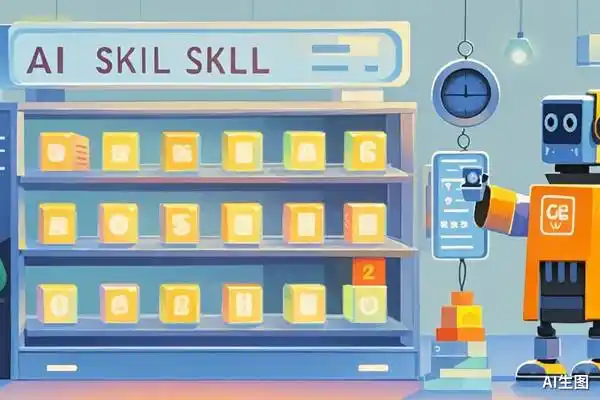
Tencent, Alibaba, ByteDance in a Battle for the Skill Store

Skill is becoming a key concept in the AI field, essentially serving as a structured "instruction manual" for AI Agents that specifies tool calls, decision logic, and output standards. This allows Agents to execute predefined tasks. As the number of Skills grows, distribution platforms have emerged. Major tech companies are swiftly entering this space. In March, Tencent, Alibaba, and ByteDance launched Skill stores within their respective Agent platforms. Subsequently, players like Zhipu AI, Meituan, and Xiaohongshu joined the fray. This competition for the "Skill store" is fundamentally a battle for the AI-era user entry point; whoever controls distribution controls the users. While ByteDance's Coze has experimented with paid Skills, most platforms offer them for free. The real value lies not in the stores themselves but in using them to attract and retain users within an ecosystem, driving revenue from services like cloud computing, model calls, or advertising. The landscape features three main player types: 1) **Internet giants** (e.g., Alibaba, ByteDance, Tencent, Meituan), leveraging Skills to drive traffic and monetize through their broader ecosystems (cloud services, transactions, ads). 2) **Large model companies** (e.g., Zhipu AI, Moonshot AI), using Skill stores to increase user engagement and monetize model API calls. 3) **Content platforms** (e.g., Xiaohongshu), treating Skills as a new content format to generate traffic and ad revenue. However, transforming Skill stores into a sustainable business faces significant hurdles. Key challenges include: the **difficulty in pricing Skills** due to inconsistent outputs across different models and contexts; **lack of cost transparency** (varying token consumption); **security risks** like Skill poisoning; and the **absence of standardized protocols** for development and evaluation. Unlike standardized mobile apps, Skills are often personalized workflows resistant to uniformity, which hinders the establishment of a reliable review and monetization system akin to the App Store. While there is genuine user demand for paid Skills—particularly in enterprise (e.g., contract review) and certain personal productivity scenarios—current platforms offer developers limited and unpredictable distribution. The future of Skill stores depends on overcoming these standardization, evaluation, and safety challenges to make acquiring a Skill as straightforward as downloading an app. For now, the stores function more as display shelves than robust marketplaces.

marsbitHace 45 min(s)

Tencent, Alibaba, ByteDance in a Battle for the Skill Store

marsbitHace 45 min(s)

The Crypto Scene Is Dead, Perpetual Swaps Are Eternal

The crypto industry is undergoing a fundamental shift. The era defined by minting novel, native digital assets (altcoins) is fading. These assets, lacking real-world cash flows or clear value, are losing relevance as attention and capital flow elsewhere. Two powerful external forces are reshaping the space. First, traditional assets like U.S. stocks, bonds, gold, and oil are being tokenized and traded on-chain. Second, the explosive growth of AI, with its tangible products, has overshadowed crypto's once-dominant "future narrative." This marks a critical pivot: crypto is transitioning from being a "factory for new assets" to becoming a "global conduit for existing assets." Its validated utility is not complex financial reinvention but efficient global settlement, transfer, and trading—the original promise of blockchain. Stablecoins like USDT and USDC exemplify this, offering faster dollar movement rather than replacing it. Consequently, native ecosystems like Ethereum face profound challenges. While still crucial infrastructure, ETH struggles to capture value as users interact with Layer 2s or trade traditional assets without needing to hold it. DeFi's grand narrative of rebuilding finance has narrowed to core needs like cheap transfers and deep liquidity. The true breakout innovation is the perpetual contract (Perp). It brilliantly bypasses the complexities of direct asset ownership (custody, compliance, dividends) by creating pure price exposure. Users can speculate on the price movement of *any* asset—NVIDIA, gold, oil—24/7, globally, and with leverage. This "price casino" model, while risky and ethically fraught, delivers unmatched liquidity and accessibility. Projects like Hyperliquid succeeded not by inventing new mechanics but by perfecting the timing and execution of this model. Key drivers included making on-chain Perps feel like centralized exchanges, post-FTX trust migration towards transparency, and rising demand to trade macro assets and equities round-the-clock. In conclusion, the crypto world's most enduring successes are the dollar (via stablecoins), Bitcoin, and trading. Its new frontier is not creating alternative assets but providing a seamless, perpetual trading layer—a new API—for the world's existing financial system. The age of native altcoins is over; the age of perpetual synthetic exposure has begun.

Odaily星球日报Hace 53 min(s)

The Crypto Scene Is Dead, Perpetual Swaps Are Eternal

Odaily星球日报Hace 53 min(s)

Trading

Spot
Futuros

Artículos destacados

Cómo comprar T

¡Bienvenido a HTX.com! Hemos hecho que comprar Threshold Network Token (T) sea simple y conveniente. Sigue nuestra guía paso a paso para iniciar tu viaje de criptos.Paso 1: crea tu cuenta HTXUtiliza tu correo electrónico o número de teléfono para registrarte y obtener una cuenta gratuita en HTX. Experimenta un proceso de registro sin complicaciones y desbloquea todas las funciones.Obtener mi cuentaPaso 2: ve a Comprar cripto y elige tu método de pagoTarjeta de crédito/débito: usa tu Visa o Mastercard para comprar Threshold Network Token (T) al instante.Saldo: utiliza fondos del saldo de tu cuenta HTX para tradear sin problemas.Terceros: hemos agregado métodos de pago populares como Google Pay y Apple Pay para mejorar la comodidad.P2P: tradear directamente con otros usuarios en HTX.Over-the-Counter (OTC): ofrecemos servicios personalizados y tipos de cambio competitivos para los traders.Paso 3: guarda tu Threshold Network Token (T)Después de comprar tu Threshold Network Token (T), guárdalo en tu cuenta HTX. Alternativamente, puedes enviarlo a otro lugar mediante transferencia blockchain o utilizarlo para tradear otras criptomonedas.Paso 4: tradear Threshold Network Token (T)Tradear fácilmente con Threshold Network Token (T) en HTX's mercado spot. Simplemente accede a tu cuenta, selecciona tu par de trading, ejecuta tus trades y monitorea en tiempo real. Ofrecemos una experiencia fácil de usar tanto para principiantes como para traders experimentados.

599 Vistas totalesPublicado en 2024.12.10Actualizado en 2026.06.02

Cómo comprar T

Discusiones

Bienvenido a la comunidad de HTX. Aquí puedes mantenerte informado sobre los últimos desarrollos de la plataforma y acceder a análisis profesionales del mercado. A continuación se presentan las opiniones de los usuarios sobre el precio de T (T).

活动图片