Memecoin Millionaires Line Up For Trump’s Exclusive Luncheon

bitcoinistPublicado a 2026-04-25Actualizado a 2026-04-25

Resumen

A crypto investor paid only $500 to attend an exclusive luncheon with former President Donald Trump at Mar-a-Lago, reflecting a significant decline in enthusiasm compared to previous events. The TRUMP memecoin has lost over 93% of its value since its peak, falling from around $45 to under $3. Despite the collapse, nearly 300 top holders are expected to attend the gathering, which critics argue is an attempt to buy access to the president. Notable attendees include key figures from the industry like Tether CEO Paolo Ardoino and Bitcoin advocate Anthony Pompliano. However, Tron founder Justin Sun, the largest holder of the token, is absent amid a lawsuit against a crypto platform co-founded by Trump’s sons. Ethics watchdogs have raised concerns about conflicts of interest and lack of financial transparency.

A crypto investor who paid just $500 got a seat at the table. That detail alone tells you something about the crowd gathering at Mar-a-Lago on Saturday.

A Token That Lost 93% Of Its Value

Morten Christensen, who attended a similar event in 2025 after a $1,200 bet on US President Donald Trump’s memecoin, scored his way back in for a fraction of that cost.

He’s candid about the mood shift. “Trump is much less liked right now than he was after inauguration,” Christensen told Bloomberg.

“With the whole year of tariffs, crypto is bleeding, his reputation within the crypto community is not as good.”

The TRUMP token, officially called Official Trump, has dropped more than 93% from its all-time high of roughly $45 to under $3.
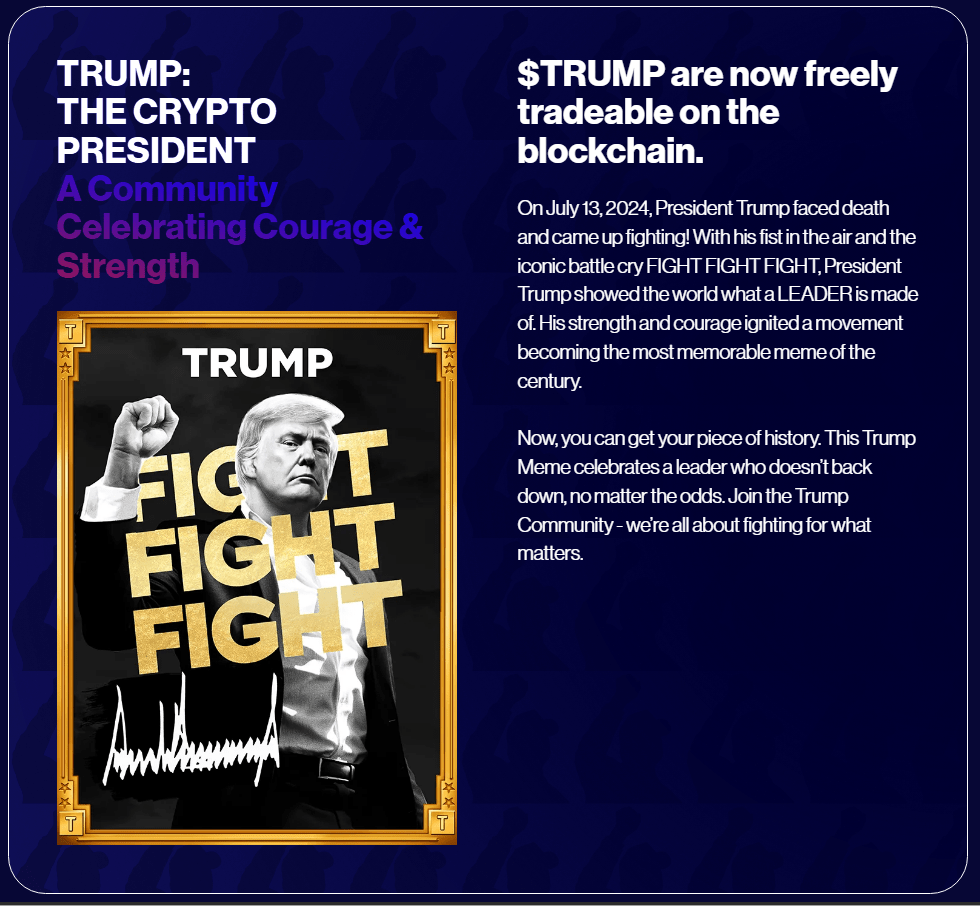
Source: gettrumpmemes.com

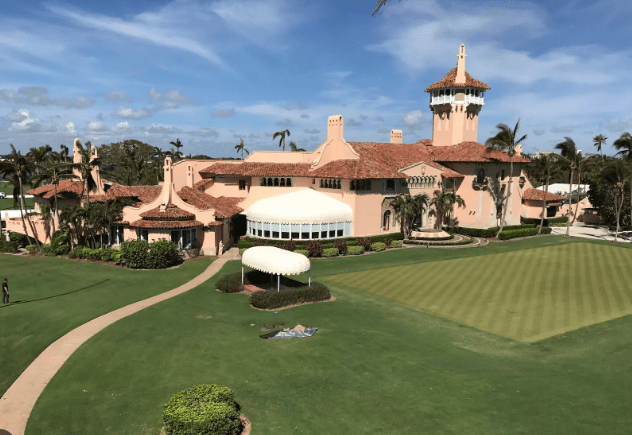
Despite that collapse, up to 297 top holders of the coin are expected to join Trump at his Florida estate for what organizers are calling the “Memecoin Millionaires Line Up for Trump’s Exclusive Luncheon” — a private gathering that critics say is really about buying face time with a sitting president.

The guest list reads like a who’s who of crypto finance: Tether CEO Paolo Ardoino, Upbit founder ChiHyung Song, Bitcoin advocate Anthony Pompliano, and Anchorage Digital CEO Nathan McCauley are all reported to be attending.

TRUMPUSDT currently trading at $2.56. Chart: TradingView

The Absent Name At The Top Of The Leaderboard

One name is conspicuously missing from the confirmed list. Tron founder Justin Sun sits atop the TRUMP memecoin leaderboard with 2.4 billion points — more than anyone else — yet no public confirmation of his attendance has been made.

That silence comes after Sun filed a lawsuit this week against World Liberty Financial, the crypto platform co-founded by Trump’s sons.
Sun alleges the platform froze his tokens and threatened to destroy them without valid reason. He described himself as an “ardent supporter” of Trump while blaming unnamed project team members for acting against the president’s values.

Ethics Watchdogs Raise Conflict Of Interest Concerns

Lawmakers and nonpartisan watchdog groups have criticized the Saturday gathering, arguing that Trump is using a financial product he personally profits from to offer access to the presidency.

The nonprofit Citizens for Responsibility and Ethics in Washington went further, pointing out in a Friday post that crypto wallets linked to the TRUMP token have moved money in ways that make it hard to trace how much the president is earning.

Featured image from Getty Images, chart from TradingView

Preguntas relacionadas

QWhat is the main reason critics are concerned about Trump's exclusive luncheon for memecoin holders?

ACritics argue that Trump is using a financial product he personally profits from to offer access to the presidency, raising conflict of interest concerns.

QHow much has the TRUMP memecoin dropped from its all-time high?

AThe TRUMP token has dropped more than 93% from its all-time high of roughly $45 to under $3.

QWhy is Justin Sun's absence from the event notable despite his large holdings?

AJustin Sun sits atop the TRUMP memecoin leaderboard with 2.4 billion points but hasn't confirmed attendance, following his lawsuit against World Liberty Financial, a crypto platform co-founded by Trump's sons.

QWhat does Morten Christensen say about Trump's current standing in the crypto community?

AChristensen states that Trump is much less liked now than after inauguration, citing tariffs, crypto market decline, and a damaged reputation within the crypto community.

QWhich prominent crypto figures are reported to be attending the luncheon?

AReported attendees include Tether CEO Paolo Ardoino, Upbit founder ChiHyung Song, Bitcoin advocate Anthony Pompliano, and Anchorage Digital CEO Nathan McCauley.

Lecturas Relacionadas

Dialogue with Jia Hang | Looking Back at Two Decades of Chinese Payment Going Global

**Summary: A Conversation with Jia Hang on Two Decades of China's Payment Globalization** Jia Hang, a veteran with over twenty years in payments, reflects on China's attempts to build a global payment network through three key phases: UnionPay (card networks), Alipay+ (digital wallets), and now, stablecoins. His journey began at UnionPay International, aiming to establish China's card network abroad. While successful in following Chinese tourists ("where Chinese go, UnionPay goes"), it struggled to achieve true global scale. The core lesson: card networks like Visa/Mastercard's unassailable advantage isn't just technical standards, but their deeply entrenched **governance and profit-sharing models** that create powerful network effects. Competing as the "same species" is nearly impossible. At Ant Group, he led Alipay+, a strategy to bypass card networks by interconnecting local e-wallets worldwide. While innovative, it faced a similar ceiling. Mobile QR payments and card swipes were essentially **the same species competing for the same pie**, lacking a disruptive value proposition for users or a sustainable new incentive model to replace the card networks' established flywheel. Today, at Singapore's DCS, Jia focuses on stablecoin-based payments. He argues stablecoins represent a fundamental shift. They are not competing with Visa for consumer payments but challenging the **traditional banking and account system for value movement**. Products like "U Cards" (stablecoin-linked payment cards) are transitional, leveraging existing card networks for acceptance while building new rails. The real potential lies in stablecoins enabling seamless, low-cost global value transfer, potentially reorganizing the financial infrastructure around **accounts rather than cards**. Jia believes stablecoin adoption for local retail payments, cross-border transactions, and as high-yield savings vehicles is becoming irreversible. This could gradually reduce reliance on traditional fiat channels, especially in regions with weak currencies or capital controls. The quest for the "next global payment network" continues, now centered on whether stablecoins can successfully bridge Web2 and Web3, establish new governance, and create compelling user value beyond mere cost reduction.

marsbitHace 9 min(s)

Dialogue with Jia Hang | Looking Back at Two Decades of Chinese Payment Going Global

marsbitHace 9 min(s)

Circle's Stock Price Plunges 76%, Hong Kong Dollar Stablecoin Set to Launch Within Two Weeks

Circle's stock price has plunged approximately 76% from its 2023 peak, reflecting a major market revaluation. Despite this, Circle President Heath Tarbert emphasized the company's focus on long-term execution and its dominant position with USDC's $73 billion circulation across 34 blockchains. The competitive landscape is intensifying. A new consortium-backed stablecoin, Open USD, is attempting to challenge incumbents by sharing reserve yields with partners. More significantly, Visa's new stablecoin platform, initially supporting Open USD while also being compatible with USDC, could erode Circle's network effects. In response, Circle is expanding into real-world payments through partnerships like the one with Japan's JCB. Separately, Tether (USDT) faces a two-year compliance window under new U.S. regulations, requiring it to adjust its reserve composition away from assets like Bitcoin and loans towards cash and U.S. Treasuries. Meanwhile, in Hong Kong, Standard Chartered-backed fintech firm Dian Dian is poised to launch a licensed HKD-pegged stablecoin (HKDAP), moving the industry into a phase where the real test is integrating licensed stablecoins into actual payment flows and corporate treasury systems. The sharp decline in Circle's stock underscores a broader shift: the stablecoin market is moving from a winner-takes-all dynamic to a multi-player competitive arena where execution, compliance, and real-world utility are becoming paramount.

marsbitHace 10 min(s)

Circle's Stock Price Plunges 76%, Hong Kong Dollar Stablecoin Set to Launch Within Two Weeks

marsbitHace 10 min(s)

Amidst Capital's Encirclement, Decentralization is the Sole Defense for Public Blockchains

In a landscape dominated by power and profit motives, the author argues that decentralization is not merely one desirable feature among many in blockchain design—it is the singular, non-negotiable defense against corporate and capital capture. The article adopts a Machiavellian, realist perspective on human institutions, positing that businesses will inevitably attempt to co-opt any valuable network to protect their profits and dominance. While external attacks like 51% forks are often discussed, the greater existential risk is internal capture—the gradual erosion of a protocol’s neutrality by vested interests, as seen historically with platforms like Visa and Google. The piece critiques permissioned chains, highly centralized “permissionless” layer-1s, and layer-2s without sufficient decentralization (e.g., single sequencers) as inherently vulnerable. These compromised systems, promoted by established financial players, are framed as delaying tactics to stifle truly open networks that threaten existing high-fee, inefficient business models. Real-world examples, such as closed enterprise consortiums that exclude competitors, illustrate how such systems cement oligopolies rather than foster innovation. The author concludes that while decentralized protocols like Ethereum are imperfect and costly to operate, they represent the only viable long-term equilibrium. In a market where value naturally flows to the most secure and neutral settlement layer, only maximally decentralized public blockchains can resist being subsumed by capital and powerful incumbents.

Foresight NewsHace 20 min(s)

Amidst Capital's Encirclement, Decentralization is the Sole Defense for Public Blockchains

Foresight NewsHace 20 min(s)

Who Decides the Rules of Bitcoin? BIP-110 Ignites Governance Debate

Bitcoin's governance is once again at the center of a heated debate, this time ignited by BIP-110, the "Reduced Data Temporary Softfork." This proposal aims to curb non-monetary data (like inscriptions and Runes) by introducing seven new consensus-layer restrictions over a year, such as limiting new output scripts to 34 bytes and restoring the OP_RETURN cap to 83 bytes. The controversy stems from BIP-110's fundamental shift: it moves the battle against "spam" from node relay and miner policies to the consensus layer, rendering currently valid transactions invalid. Supporters, arguing that default policy governance has failed (highlighted by Bitcoin Core v30's relaxation of OP_RETURN limits), see this as necessary to protect node resources and Bitcoin's monetary focus. Opponents, led by figures like Michael Saylor and Adam Back, warn it dangerously centralizes governance. Saylor listed 110 reasons against it, criticizing its low 55% miner activation threshold and potential for chain splits. Back emphasized Bitcoin's "permissionless" ethos, arguing no single group should impose value judgments via consensus rules. Further complicating matters, technical critiques suggest BIP-110 may be technically circumventable, and a "BlockSlop" vulnerability in its upgrade path poses a consensus risk. The debate has drawn in diverse stakeholders: miners (with pools like Ocean signaling support and Foundry polling clients), node operators (like Bitcoin Knots), and new players like corporate treasury holder MicroStrategy (Saylor), whose market influence adds a novel dimension. Ultimately, BIP-110 acts as a governance stress test, exposing the unresolved question: who decides Bitcoin's rules? It pits the authority of miners, node operators, developers, and capital holders against each other, with each side claiming to defend Bitcoin's core principles of neutrality and security.

marsbitHace 37 min(s)

Who Decides the Rules of Bitcoin? BIP-110 Ignites Governance Debate

marsbitHace 37 min(s)

Trading

Spot
活动图片