Today, the global mathematics and AI communities were shocked by this news—
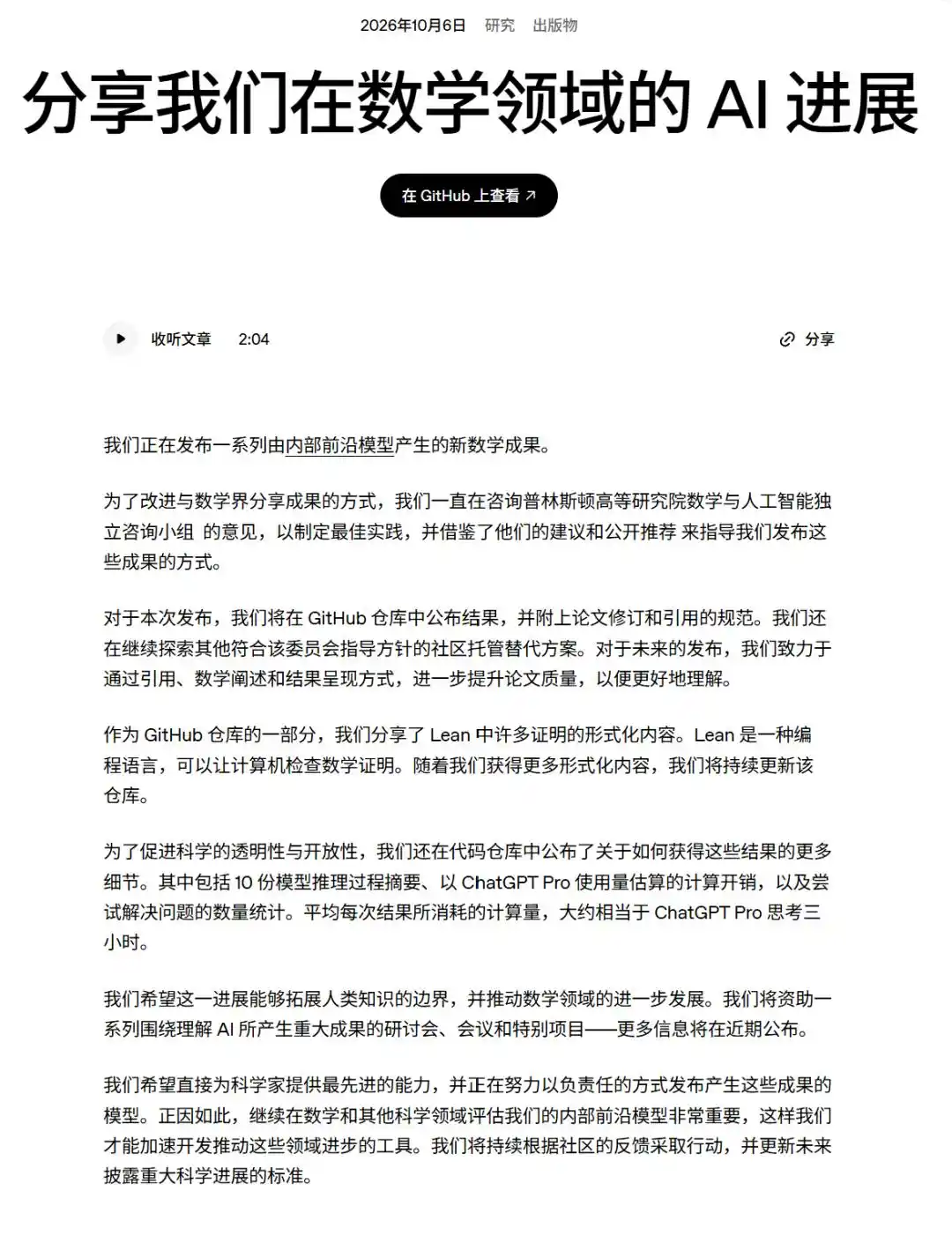
Without warning, without peer review, even disregarding the long-standing etiquette of academia, OpenAI released a series of new mathematical results produced by its internal frontier models.
They bluntly released the GitHub repository 'math'.
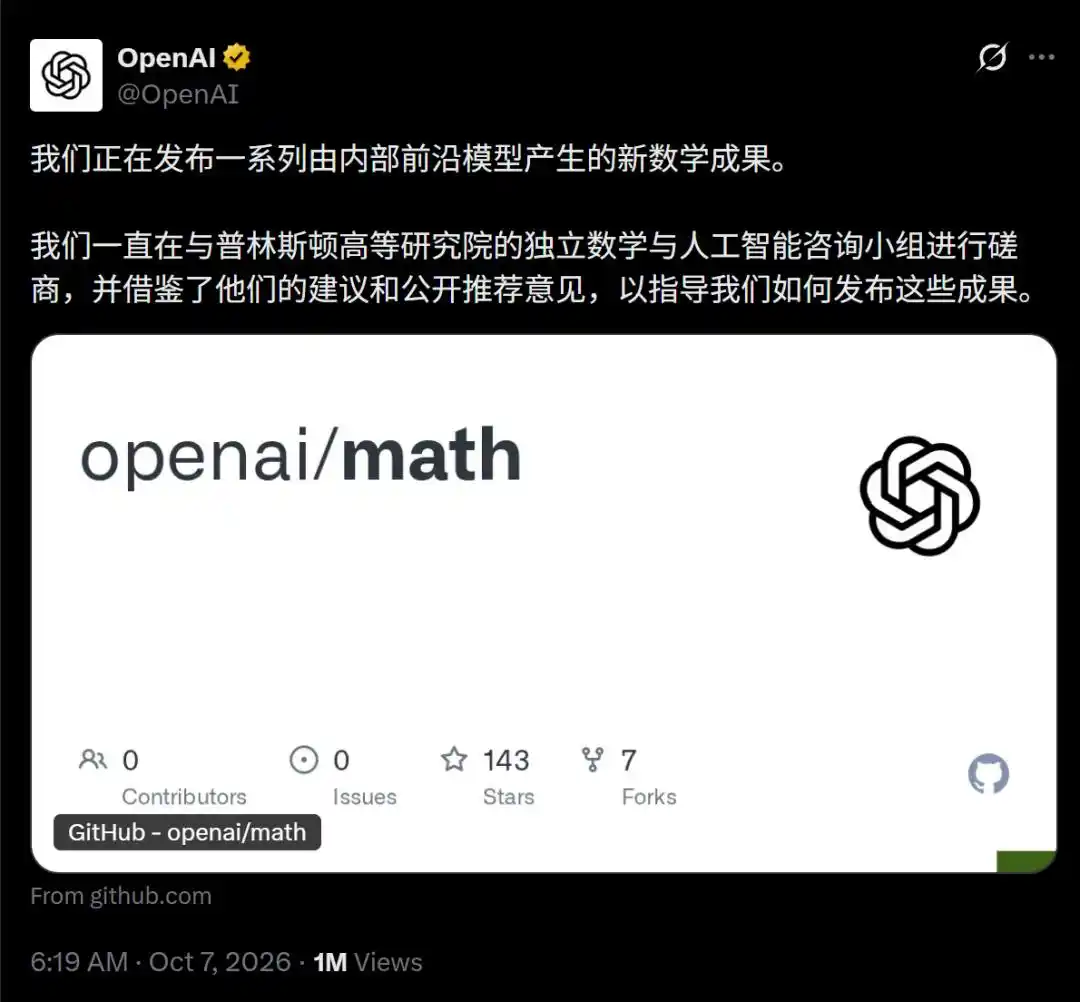
Link:https://github.com/openai/math/
It contains 722 mathematical manuscripts, covering 372 previously unresolved families of top-tier mathematical problems.
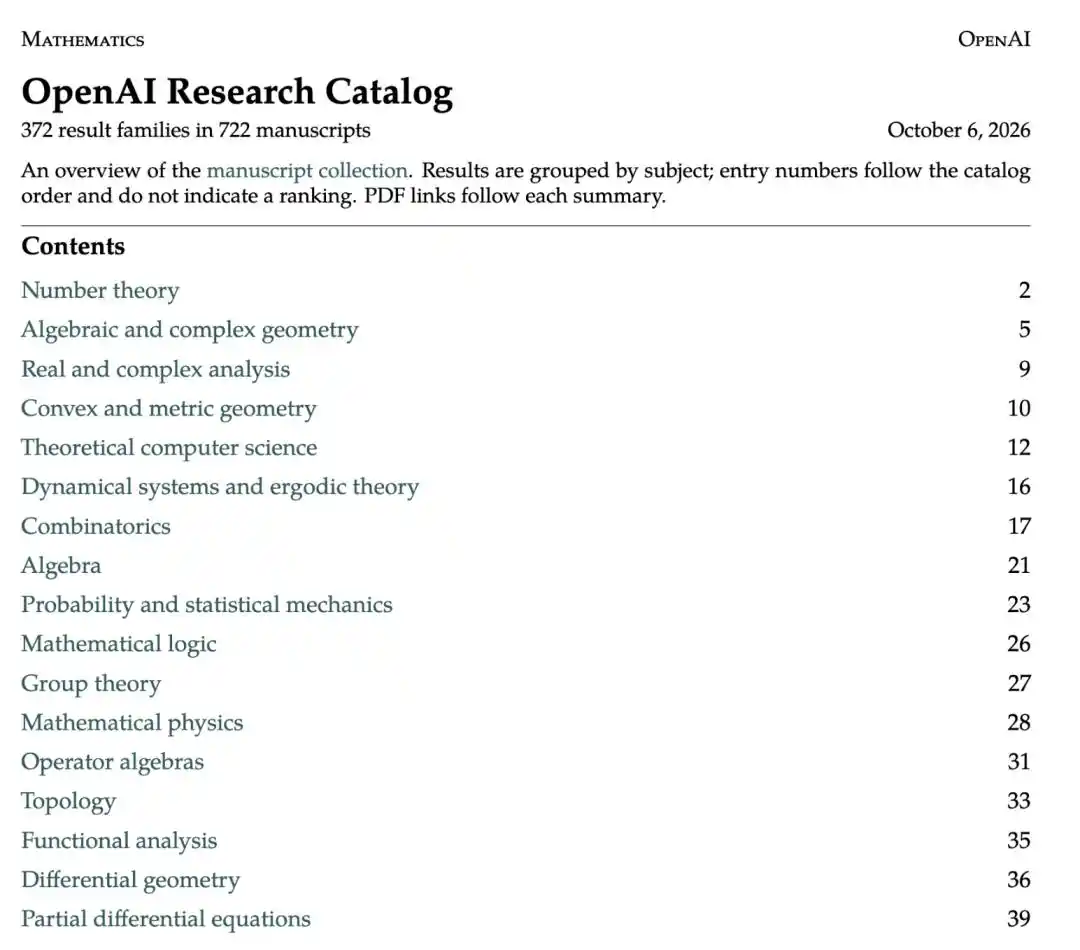
Link:https://github.com/openai/math/blob/main/overview.pdf
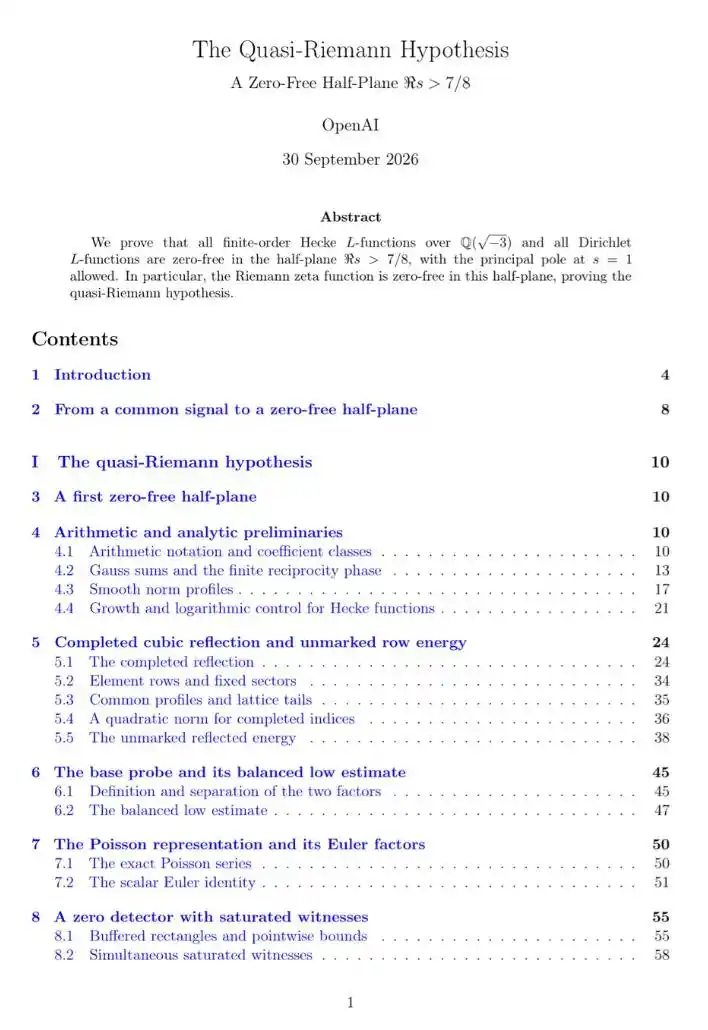
Among them, OpenAI's unreleased AI model proved the quasi-Riemann hypothesis and simultaneously released Lean formal verification. If confirmed, this would be a historic breakthrough in number theory and a milestone moment in AI development history!
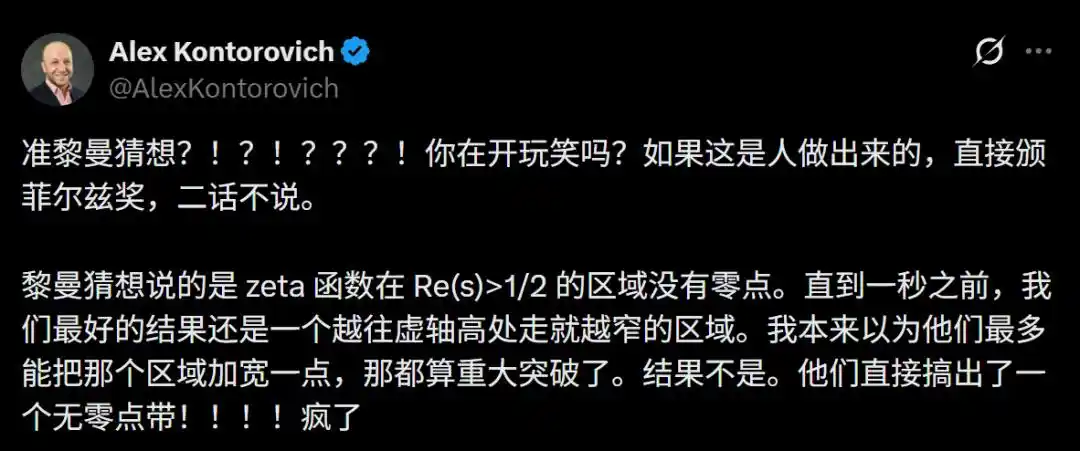
According to OpenAI's disclosure, proving the vast majority of these difficult problems required an average of just 3 hours of 'ChatGPT Pro' thinking compute from one of their unreleased internal models!
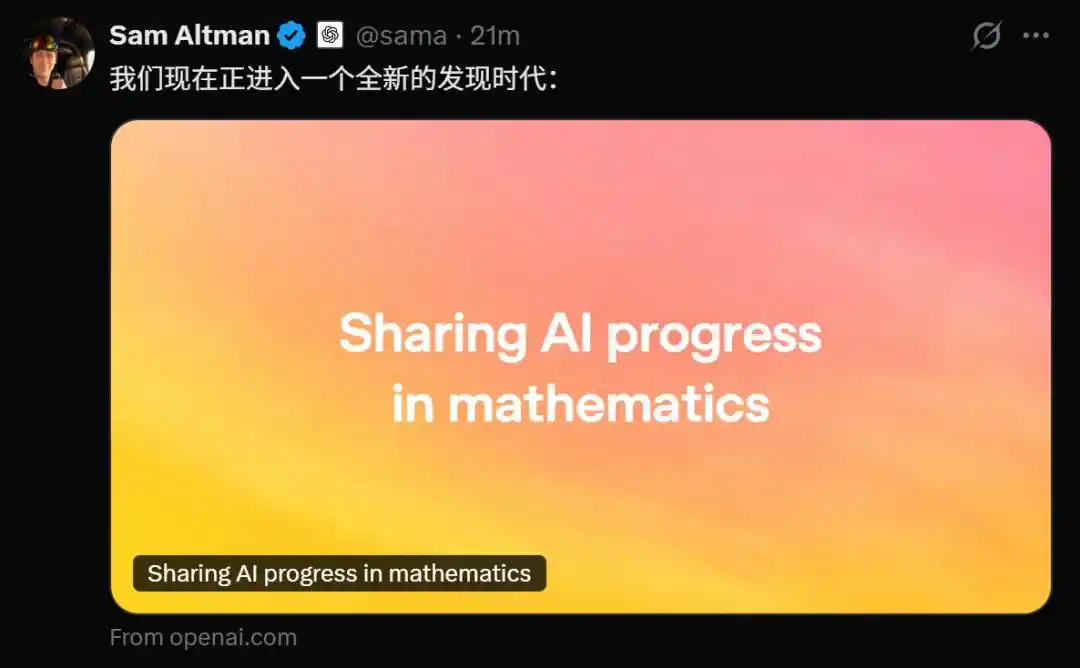
Altman posted on X saying: We are entering a whole new discovery era.
In response, mathematicians are furious.
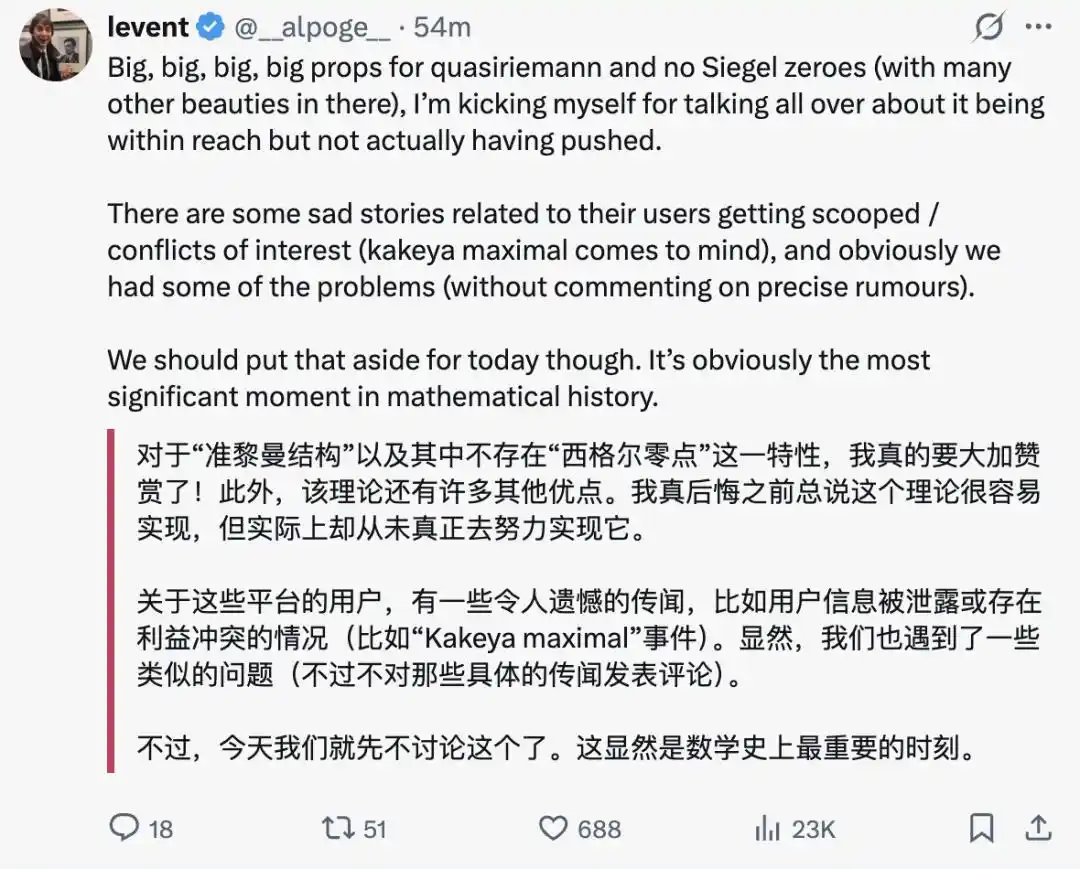
The list of solved problems is suffocating.
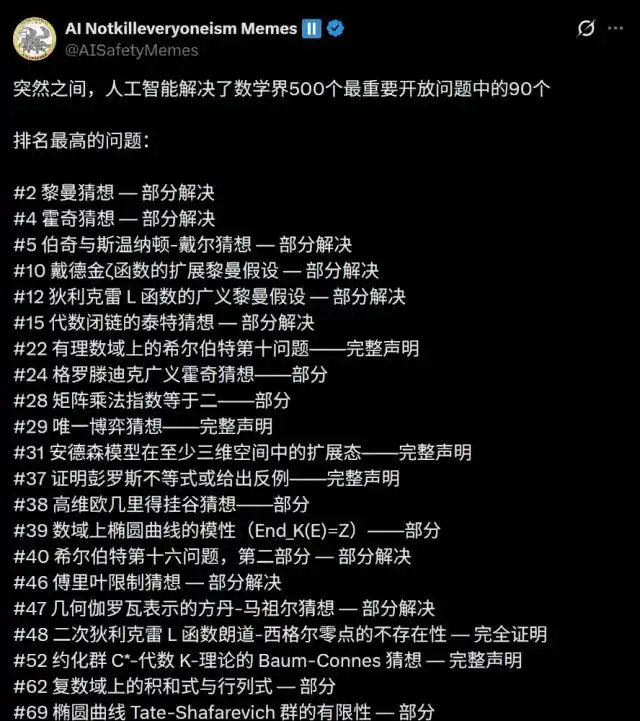
Mathematical Explosion!
Behind this 'academic massacre,' OpenAI and mathematicians have long been at each other's throats.
According to WIRED, as early as August this year, OpenAI secretly convened a closed-door meeting with 40 top global mathematicians. They raised a suffocating topic: 'If AI comprehensively surpasses humans in pure mathematics, how should we respond?'
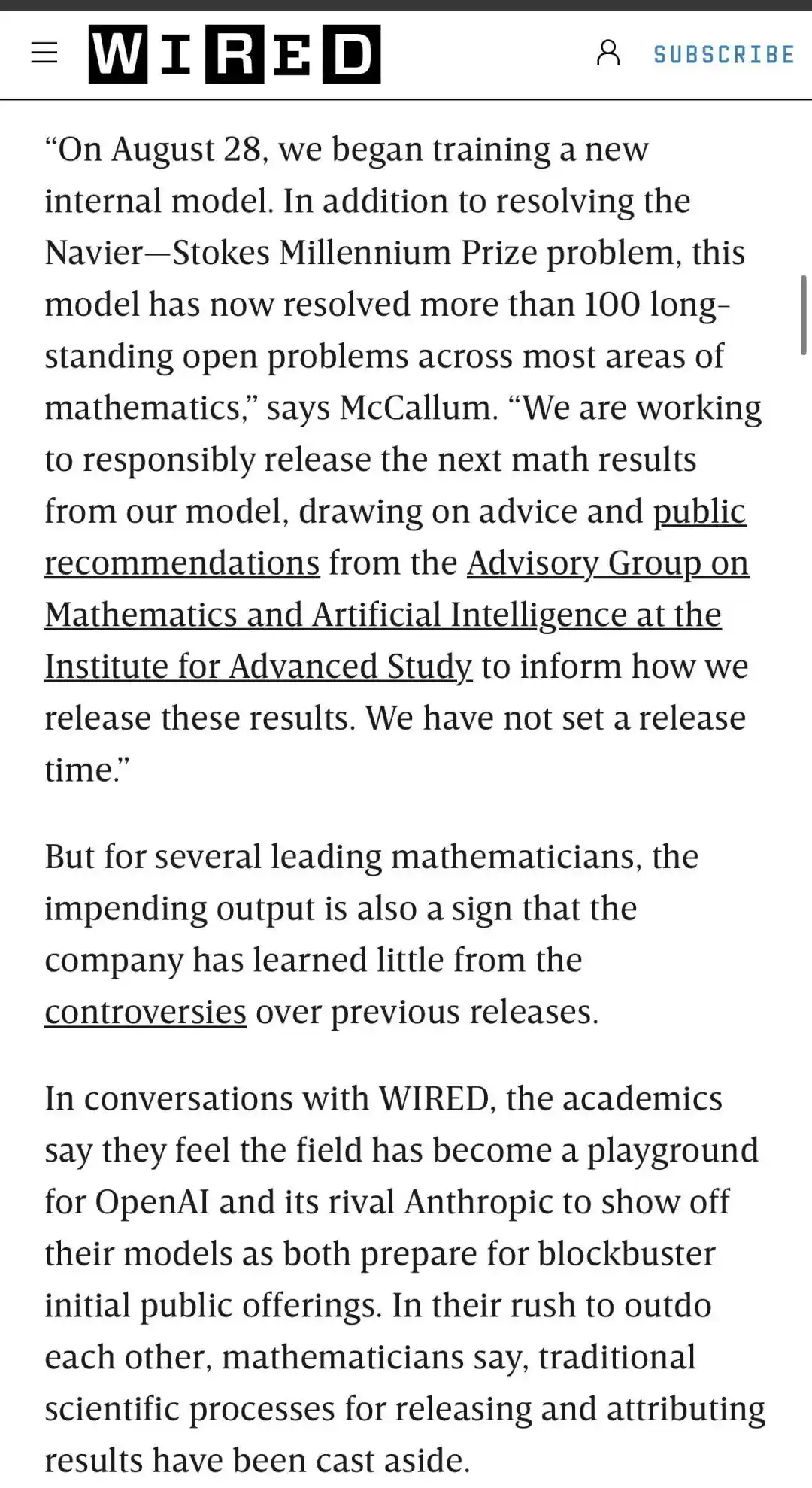
At that time, OpenAI vaguely revealed that its internal models had already broken through hundreds of unsolved cases.
Bryna Kra, a renowned mathematician from Northwestern University, recalled that the atmosphere on-site was one of 'extreme excitement and extreme fear coexisting.'
Scholars earnestly advised OpenAI: Do not just tweet or write short blogs like influencers; you must publish rigorous papers according to academic norms, giving human scholars time to digest and verify.
However, OpenAI declared sovereignty in the most brutal way, even academically preempting a breakthrough on the Navier-Stokes equations.
Nestor Guillen, a visiting professor at New York University, angrily accused—
In the eyes of mathematicians, the actions of these AI giants are just like a mafia! People are extremely panicked, not only because of AI itself but also because the highest-dimensional intellectual power of humanity is being wantonly monopolized by a tiny handful of tech oligarchs.
Some revealed that certain OpenAI engineers have privately reached a consensus: 'Classical mathematics is dead today. AI will end the careers of most professional mathematicians with an unstoppable momentum.'
Weijie Su, an alumnus of Peking University's Mathematics Department, winner of the COPSS Presidents' Award (one of the highest honors in statistics), and an OpenAI researcher, stated bluntly: This is like a beginning of a Copernican paradigm shift in the human conception of intelligence.
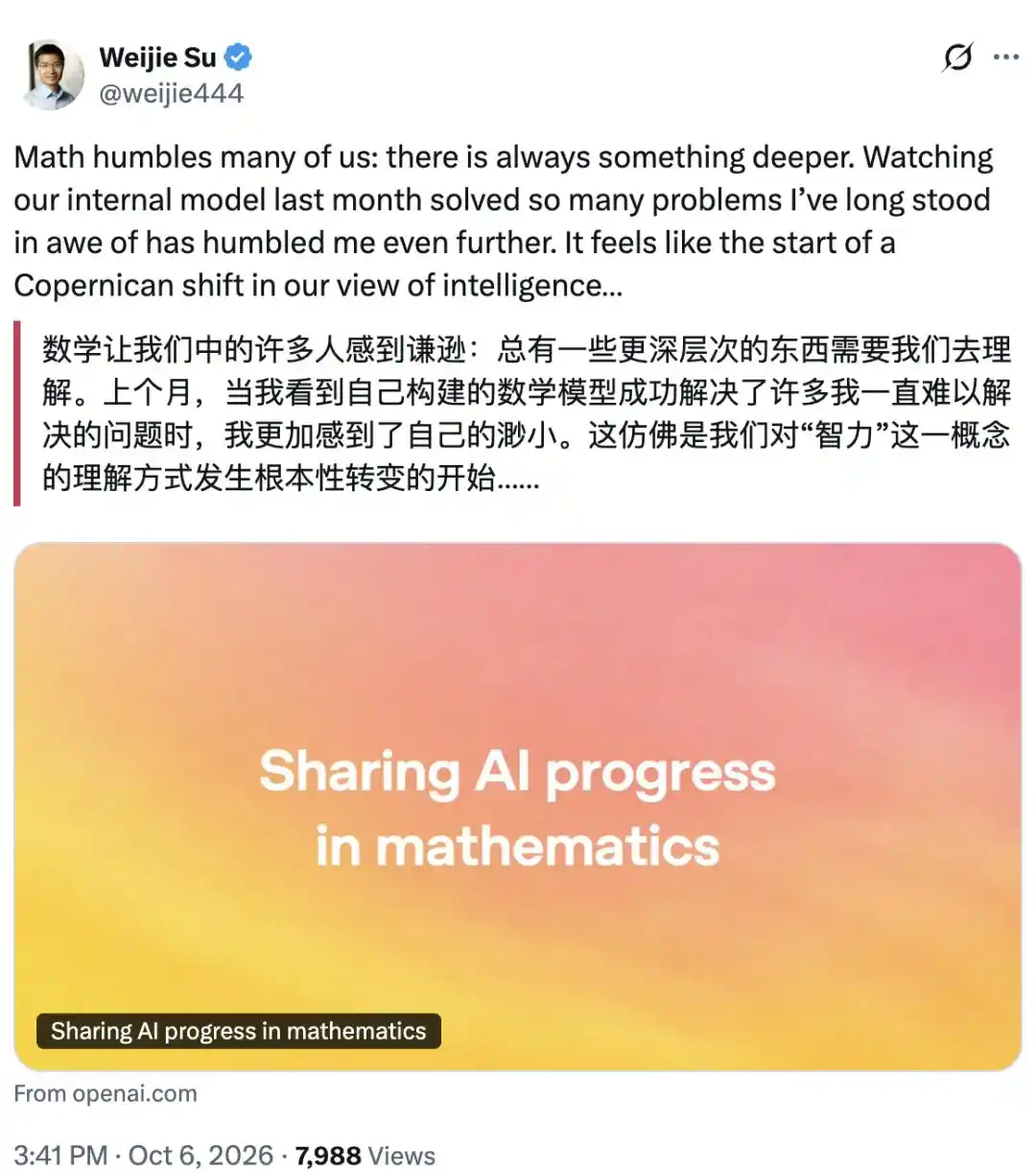
AI Nuclear-Level Achievement: Quasi-Riemann Hypothesis Conquered, with Formal Verification Standard
Among all the conquered fortresses, the first to drive the entire number theory community crazy was the super achievement numbered Result 003—it directly tore open the door to the Riemann hypothesis, the ultimate holy grail of mathematics.
The Riemann hypothesis is widely recognized as the 'jewel in the crown' of mathematics; hundreds of theorems in modern number theory are entirely built on the foundation that 'the Riemann hypothesis holds true.' It asserts that all non-trivial zeros of ζ(s) lie on the line with real part Rs=1/2. For over 160 years, humans have even struggled to exclude zeros far from the 1/2 region.
Moreover, the ghost of the 'Landau–Siegel zero' lurks—certain Dirichlet L-functions might have anomalous zeros on the real axis extremely close to 1, which hinders hope.
In the published manuscripts this time, the OpenAI model comprehensively conquered the 'quasi-Riemann hypothesis': it proved that for all Dirichlet L-functions, there are absolutely no zeros anywhere in the entire half-plane with real part Rs>7/8!
Furthermore, it completely eliminated the Landau–Siegel zero.

OpenAI frankly admitted in its GitHub description that most problems were generated automatically by the model, except for the work on the zero-free region of the Riemann Zeta function, where the research team conducted extremely meticulous manual review and readability polishing.
Although this hasn't fully reached the ultimate Rs=1/2, advancing the zero-free region to a fixed constant boundary (7/8 and 11/12) in one breath and consistently excluding Siegel zeros is an unprecedented earth-shattering leap in analytic number theory in half a century!
Peak Moment: Conquering 'Ordinary NP-Hardness of the Basic Semidefinite Threshold'
In computer science, if P vs NP is the ultimate crown, then 'ordinary NP-hardness of the basic semidefinite threshold' is the 'uncrowned king' determining the limits of human algorithms.
This is also the most subversive research (numbered Result 102) in this OpenAI repository.
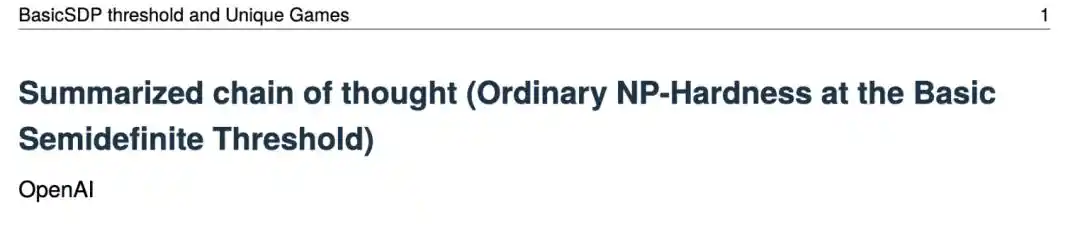
Link:https://github.com/openai/math/blob/main/reasoning_traces/basic-semidefinite-threshold-np-hardness.pdf
What is NP-Hard?
In the real world, vast numbers of large-scale optimization problems (such as chip wiring, logistics scheduling, airline planning, graph coloring) are classified as NP-Hard problems.
Humans cannot calculate the optimal solution in polynomial time and can only settle for approximate solutions. And semidefinite programming relaxation (Basic-SDP) is recognized as the most powerful approximation tool.
In 2008, computer scientist Prasad Raghavendra published a legendary paper. He proved an astonishing conclusion: For any fixed finite constraint language (Max-CSP), the approximation ratio achievable by Basic-SDP is the theoretical absolute limit for polynomial-time algorithms!
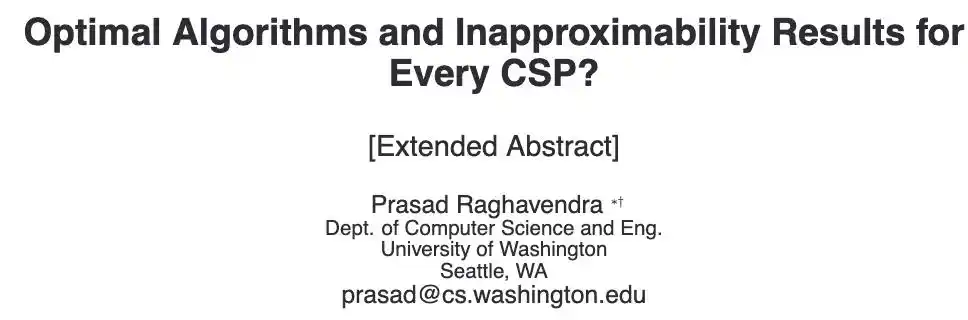
Link:https://dl.acm.org/doi/epdf/10.1145/1374376.1374414
However, this great theorem carries a fatal premise—it must be built on the foundation that the 'Unique Games Conjecture' (UGC) holds.
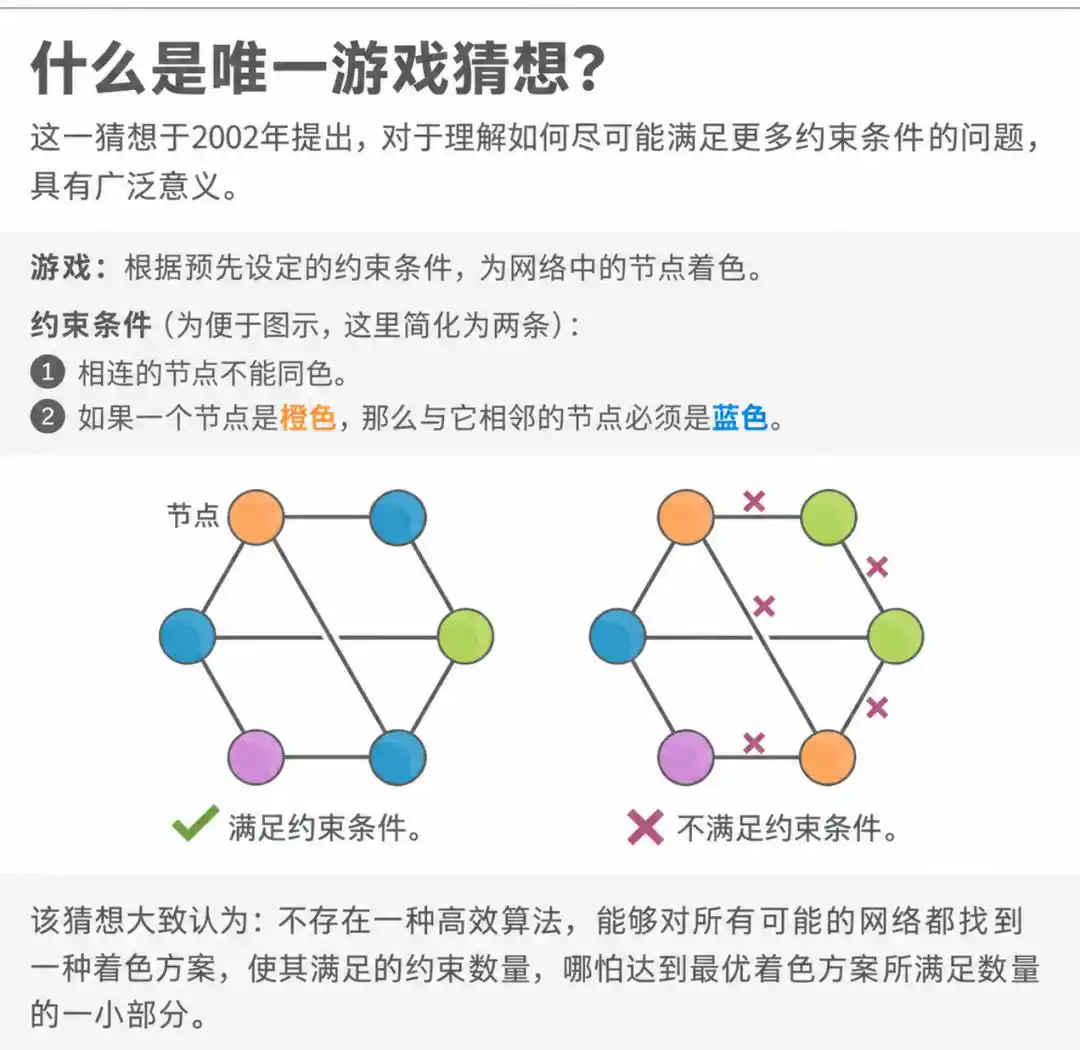
The UGC is a century-old problem proposed by Subhash Khot in 2002.
If UGC is false, Raghavendra's theoretical edifice would collapse instantly. This has been the 'Achilles' heel' of theoretical computer science for nearly 20 years.
For the past two decades, the dream goal of countless theoretical computer scientists has been: Can we break free from the UGC assumption and directly prove, within the pure, unconditional, classic framework based solely on P≠NP, that the gap problem corresponding to the Basic-SDP threshold is itself ordinary NP-Hard?
If this conclusion holds, it means: Under the pure P≠NP assumption, any polynomial-time deterministic algorithm attempting to surpass the performance of Basic-SDP is mathematically and logically impossible!
How did AI tear through this barrier head-on? Below is the solution's CoT.
Step one: AI first reviewed Raghavendra's original framework, confirming that repeated variables and local probability distributions could not provide loopholes for constructing counterexamples.
AI realized that if bypassing UGC, the core obstacle was: In classical PCP (Probabilistically Checkable Proof) constructions, tensor representation would 'leak' projection coordinates, allowing cheaters to pass easily.
To suppress information leakage without destroying completeness, AI abandoned the smooth function route and introduced an algebraic core over a finite field of characteristic 2:

Then, AI designed a nonlinear decoder with shift equivariance:

This decoder is extremely insensitive to tiny noise but can be constantly captured by high-rank linear features, thus resolving the information leakage dilemma.
Then, AI adopted projections with a probability of only
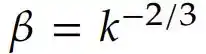
Using extremely sparse projection combined with an innovative 'Row Fiber Richness Lemma,' AI made statistical errors quickly approach zero while retaining ample decoding coordinates, completely sealing off the possibility of fraud on local slices.
Finally, AI divided the entire grand proof into two precise stages:
Step 1: Unconditionally construct Unique Games hardness with near-perfect completeness (1−ε) and arbitrarily small soundness (δ).
Step 2: Connect to the dictatorship test framework, using low-influence Gaussian variable replacement to losslessly transfer this gap to the Basic-SDP threshold of any finite constraint.
The result: For the first time, completely independent of UGC and based purely on the standard P≠NP, AI established the ordinary NP-hardness of the Basic-SDP threshold, definitively locking the theoretical physical boundary of effective human approximation algorithms!
Gap Torn in a Millennium Problem: Hodge Conjecture
In the Result 01 manuscript, AI conquered a major fortress of the Hodge Conjecture: comprehensively proving the 'rational Hodge conjecture' for abelian varieties with complex multiplication (CM) over the complex field, across all dimensions and codimensions!
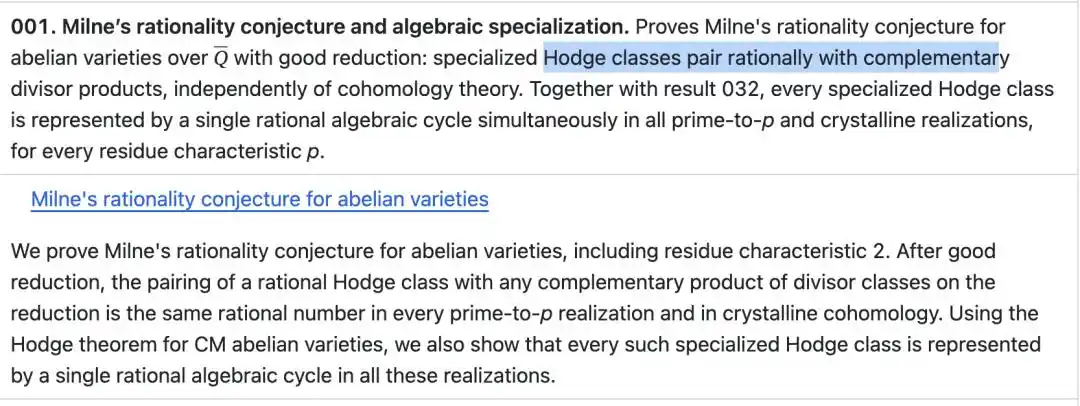
OpenAI officially noted:
Most results were automatically generated by standard models, but the proof of the Hodge conjecture for CM abelian varieties was a special key breakthrough that broke the conventional process.
Moreover, AI extended this achievement to arbitrary finite products of projective complex K3 surfaces and incidentally proved the Tate conjecture for all abelian varieties over finite fields and the Hodge standard conjecture in arbitrary characteristic.
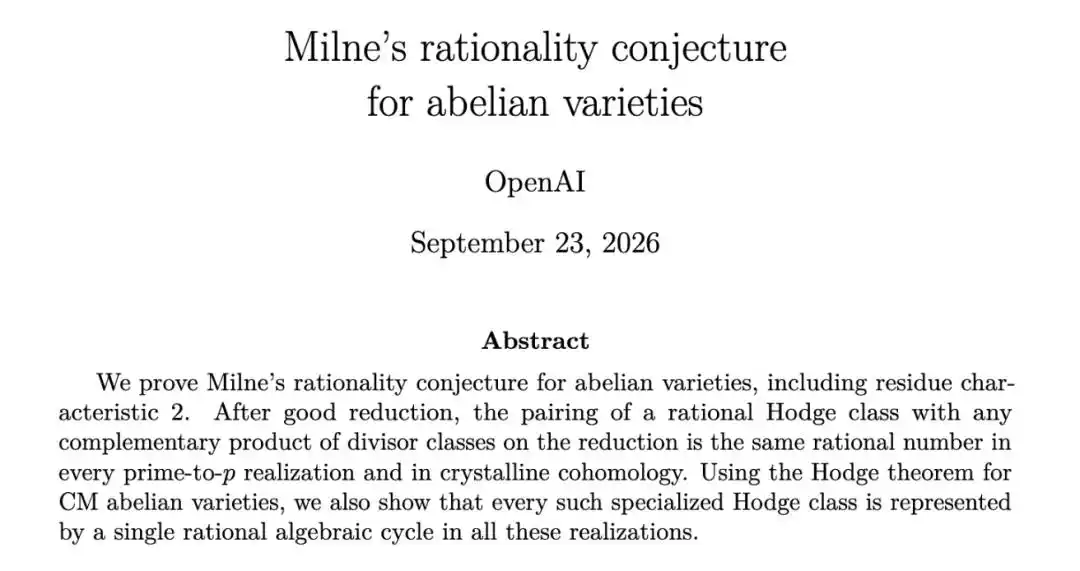
Link:https://github.com/openai/math/blob/main/preprints/Milnes-rationality-conjecture-for-abelian-varieties-September-23-2026/paper.pdf
AI's problem-solving logic is as follows:
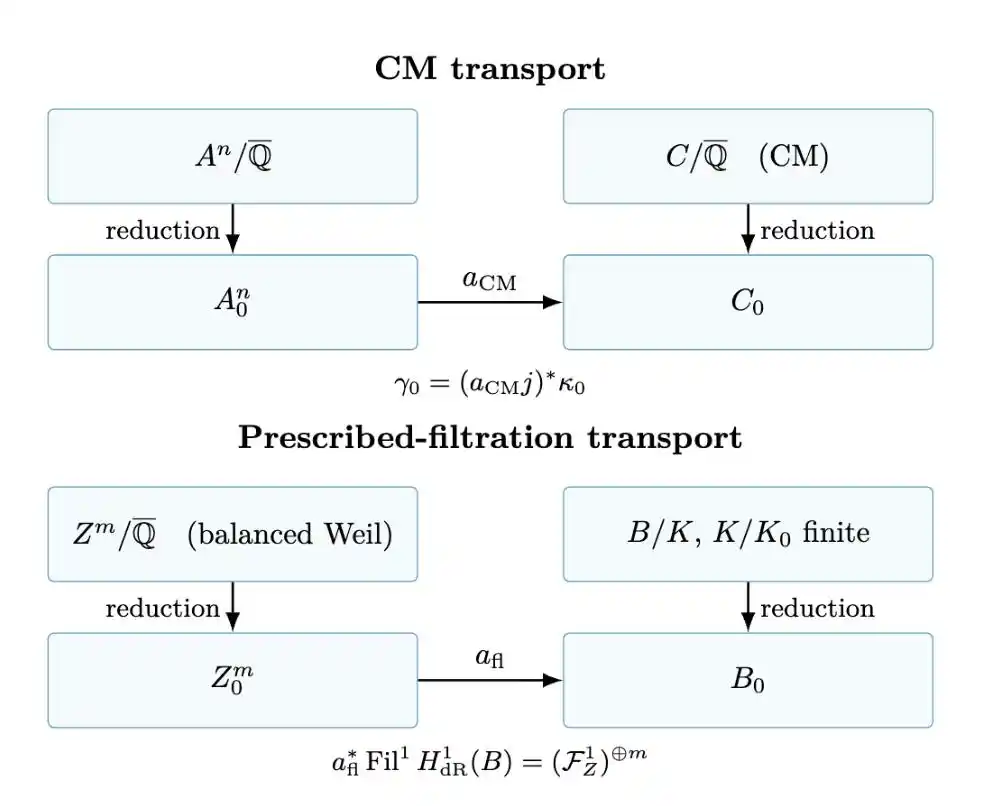
1. Transformation & Projection: The core difficulty of proving the Hodge conjecture lies in proving that abstract 'Hodge classes' are essentially 'algebraic.' Instead of directly attacking all manifolds, AI focused its gaze on highly symmetric CM abelian varieties and K3 surfaces.
2. Algebraicization of Kuga–Satake Correspondence: Using the profound Kuga–Satake correspondence, AI embedded the transcendental cohomology of K3 surfaces into the second cohomology of abelian varieties. It successfully proved that this correspondence itself is induced by a rational algebraic cycle.
3. Degeneration & Variational Extension: Subsequently, AI utilized Lie algebra symmetry and the variational rigidity of Hodge generic points to construct an algebraic path that propagates from special curve covers to overall self-power varieties, proving that these Hodge classes must be completely spanned by algebraic cycles over the rational number field.
This step is equivalent to tearing a huge gap directly in the front of the Hodge conjecture!
Other Century-Old Math Problems Broken by AI
Additionally, OpenAI's manuscripts include many earth-shattering breakthroughs in number theory, convex geometry, and analytic geometry.
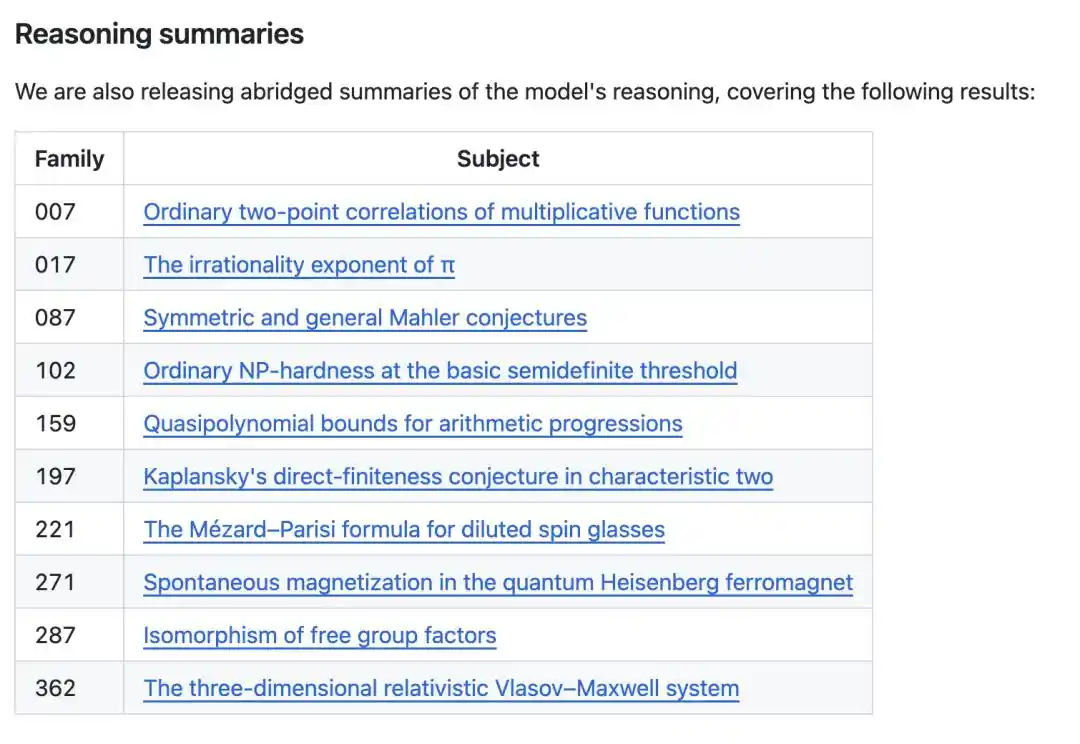
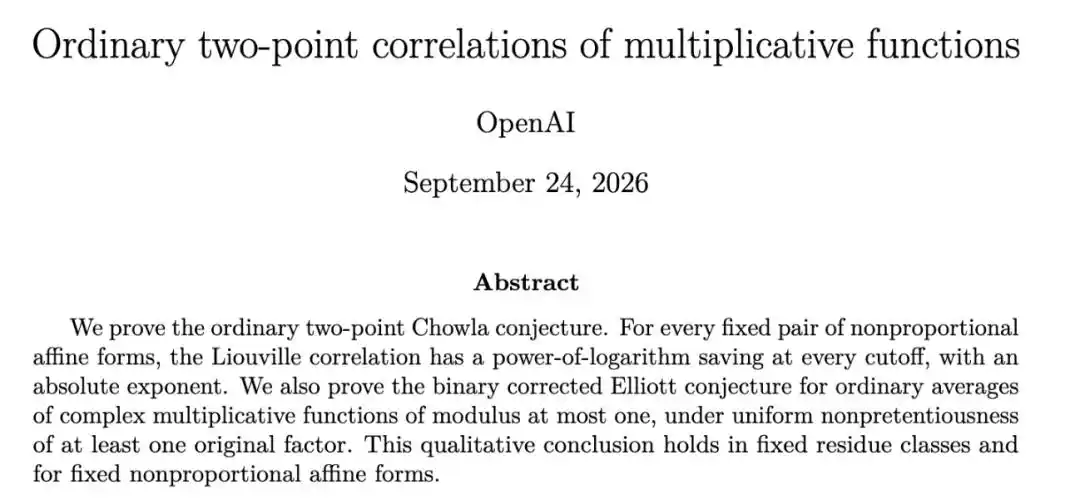
Ordinary Two-Point Correlations for Multiplicative Functions (Result 007)
This is an extremely core problem in number theory, touching on the famous Chowla conjecture and Elliott conjecture. The core is whether the average product of a bounded multiplicative function at different shifts tends to 0.
AI proved the ordinary two-point Chowla conjecture and obtained error savings on the order of logarithmic powers at every scale.
Link:https://github.com/openai/math/blob/main/reasoning_traces/ordinary-two-point-correlations.pdf
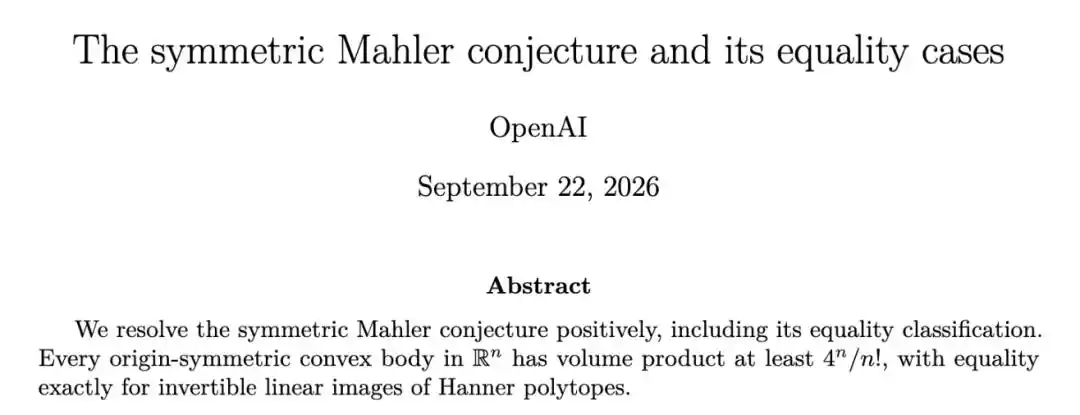
Symmetric and General Mahler Conjecture (Result 087)
The decades-old unsolved Mahler conjecture in convex geometry.
It asserts that in n-dimensional real space, the product of the volumes of a convex body and its polar body achieves its minimum at the simplex (for general convex bodies) or the cube/cross-polytope (for symmetric convex bodies).
AI simultaneously solved both symmetric and asymmetric geometric Mahler conjectures across all dimensions and gave a complete classification of equality conditions for Hanner polytopes and simplices.
Link:https://github.com/openai/math/blob/main/preprints/The-symmetric-Mahler-conjecture-and-its-equality-cases-September-22-2026/paper.pdf
Is Mathematics Dead?
After seeing all this, the mathematics community feels a deep sense of powerlessness and shock.
Before, we thought AI proving mathematics was just pattern matching within massive corpora.
But the manuscripts released today are filled with 'intuition transfers,' 'constructive counterexamples,' 'Laplace expansions,' and 'physical intuitions (like heat flow simulations, Hamiltonian systems)' that only humans can understand.
Not only has it learned the human mathematical framework, but it has also created its own mathematical intuition.
Returning to the heavy question at the beginning of the article: What should human mathematicians do in the face of models that can produce top-tier research results in just an average of 3 hours?
Bryna Kra said: 'We have to adapt in this field. This changes how we operate, but this is also a moment where we can set our sights further... This is a terrifying time, but also an absolutely incredibly exciting time.'
When the answers to these 100-plus unresolved century-old problems lie like cold data streams in a GitHub repository, perhaps the era of classical mathematics has ended.
But humanity's 'silicon-based exploration' of truth has only just begun. But in this new era with silicon-based intelligence as the engine, humanity's exploration of truth has just begun sailing towards the stars.
Tonight, the mathematics community is destined for a sleepless night.
References:
https://github.com/openai/math/tree/main
This article is from the WeChat public account 'New Zhiyuan' (ID:AI_era), Author: ASI Revelation