Market Plunge, But These Crypto OGs Are Still 'Topping Up Their Faith'

marsbitPublicado a 2026-02-06Actualizado a 2026-02-06

Resumen

Summary: On February 6, Bitcoin plunged 15.48% to $60,000, marking its largest single-day drop since the FTX collapse. The Crypto Fear & Greed Index hit 9, indicating "extreme fear" and a new low since the 2022 bear market. Despite widespread panic, several crypto veterans reaffirmed their conviction. Michael Saylor encouraged buying Bitcoin as a form of support. The founder of Base emphasized long-term commitment to building. Lily Liu, President of the Solana Foundation, argued that blockchain's core purpose is financialization, stressing the importance of protecting liquidity unity. She criticized the "Web3 narrative" as overly simplistic and called for creating new markets rather than relying on speculative narratives. Balaji expressed strong bullishness, stating that "code-based order" is rising as "rules-based order" collapses, making short-term prices irrelevant. He emphasized the need for on-chain companies and internet-native systems. The founder of Helius shared similar optimism, advocating for filtering out "tourists" to improve signal-to-noise ratio in the space. Linda Xie shared her experience of a 75% drawdown in 2018, advising against emotionally-driven decisions and emphasizing holding assets with strong fundamental belief. Crypto influencer神鱼 (Shenyu) succinctly stated: "1 BTC = 1 BTC." Overall, these leaders urge perseverance, focus on fundamentals, and long-term belief in crypto's transformative potential despite market volatility.

Editor's Note: On February 6th, Bitcoin fell to a low of $60,000, plummeting 15.48% in a single day, marking its largest single-day drop since the FTX collapse. At the same time, the Crypto Fear & Greed Index dropped to 9, indicating a state of 'Extreme Fear' in the market, hitting a new low since the 2022 bear market.

However, as pessimism spreads, many veteran Builders and thought leaders in the crypto world are voicing a different perspective. This 'Crypto Faith Topping-Up List' compiles their thoughts and perseverance amidst the storm. Perhaps it can offer you a sliver of solace and direction to move forward during this market winter.

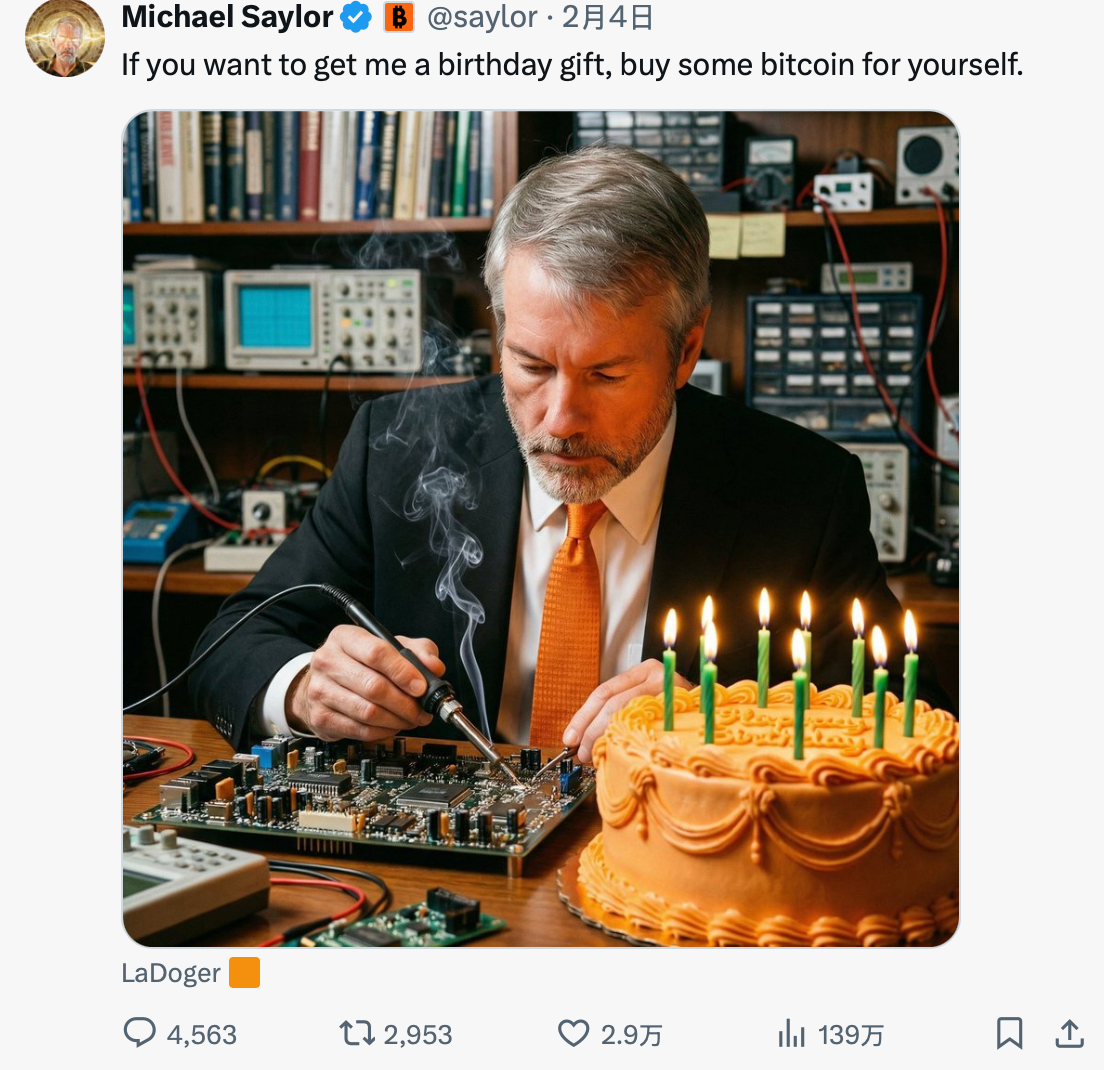
Michael Saylor:

If you want to give me a birthday present, buy yourself some Bitcoin!
Base Founder:

13 years have passed, and I'm not going anywhere.

There's still so much to build.

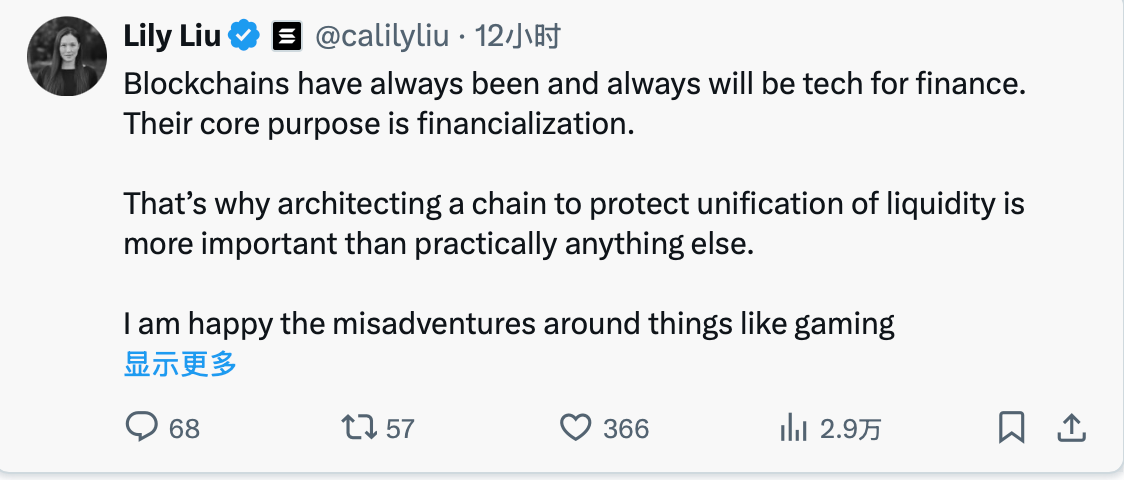
Solana Foundation President LilyLiu:

Blockchain was, is, and always will be financial technology. Their core purpose is financialization.

This is also why, when designing a chain, protecting the unity of liquidity is more important than almost anything else.

I'm glad the misguided focus on things like 'chain games' is finally over.

More broadly, the 'read write own' / 'Web3 narrative' is essentially too skeuomorphic and, to be honest, a bit intellectually lazy. New technology is never as simple as 'put something on-chain, and voilà—everything changes'; you must truly create new markets.

The old narrative was more of a fig leaf, used to justify VCs pouring money into various unnecessary infrastructures, hoping to create a private asset that could become 'magic internet money.'

The more projects try to attract prices through narrative packaging and take a share of the liquidity from the 'wild west' of the internet, the harder the 'narrative justification machine' has to work, shaping everything into the 'great third wave of applications'—'everything you do today can now earn you money.'

The reality is, the opportunities are indeed huge, far beyond what even our most creative minds can imagine, but not in the way they've been described over the past few years.

The blockchain journey has always been about finance: providing open financial infrastructure for anyone and everyone on the internet.

This enables capital formation and internet innovation to happen anywhere in the world, allowing the resulting innovation and progress to truly take root. Open finance brings greater economic freedom, and economic freedom brings individual sovereignty and autonomy.
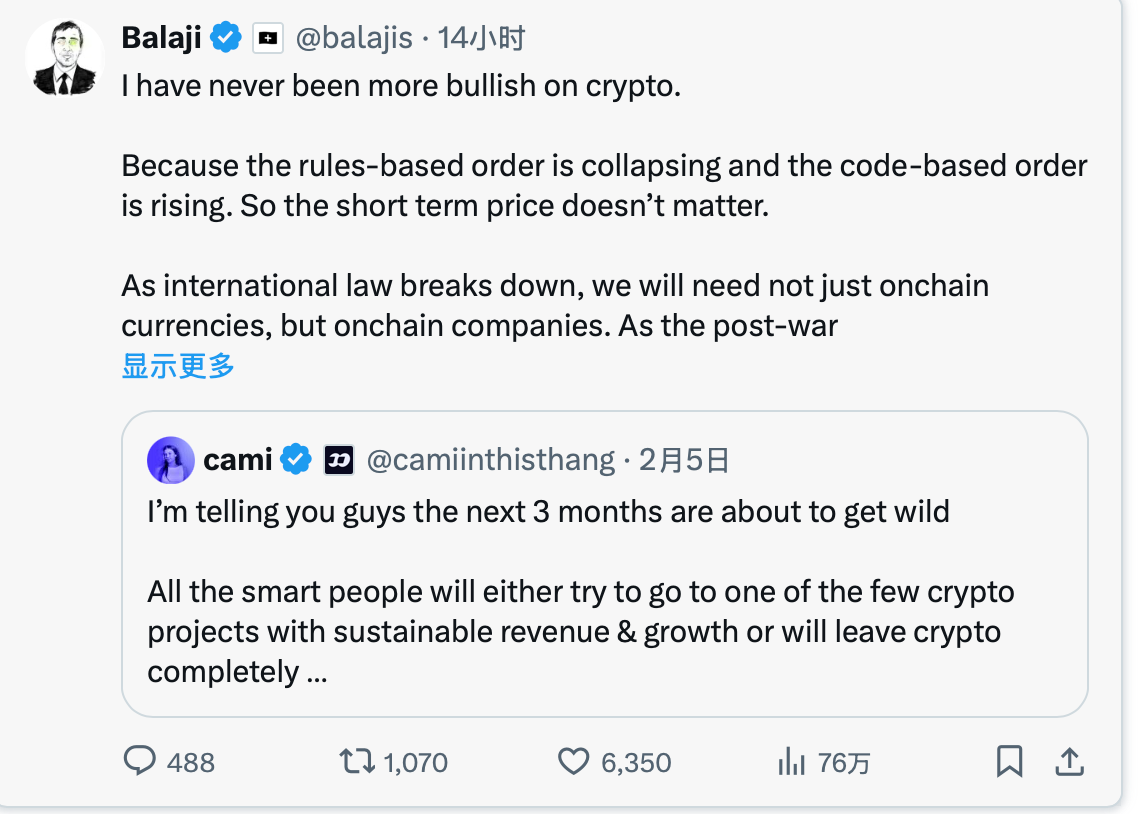
Balaji:

I have never been more bullish on cryptocurrency than I am now.

Because the 'rules-based order' is collapsing, and the 'code-based order' is rising. So short-term prices simply don't matter.

As the international legal system disintegrates, we need not only on-chain money but also on-chain companies. As the post-war order unravels, we similarly need a 'post-internet order.' Nations will fail, and networks will replace them.

We need internet capitalism, we need internet democracy, we need internet privacy.

So we need cryptocurrency.
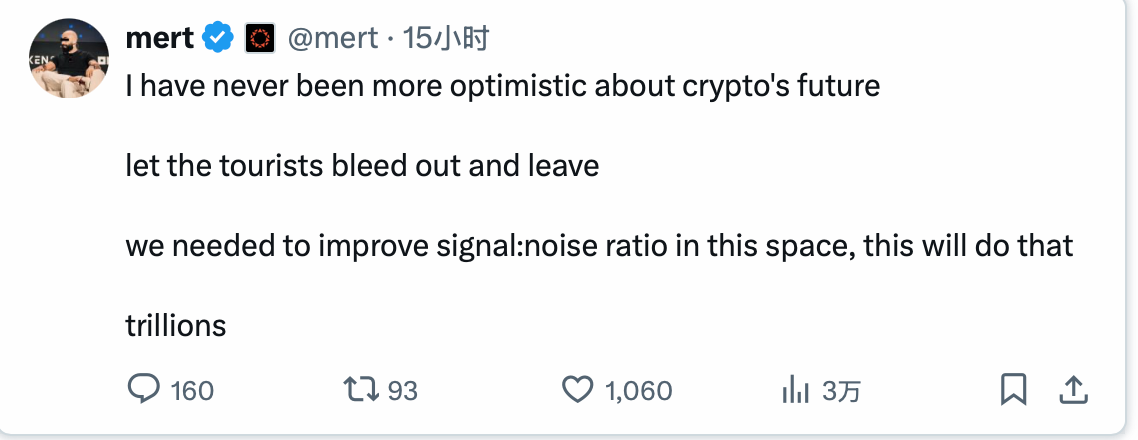
Helius Founder:

I have never been more confident about the future of cryptocurrency than I am now.

Let the tourists bleed out and leave.

We need to increase the signal-to-noise ratio in this space, and this will achieve that goal.

Trillion
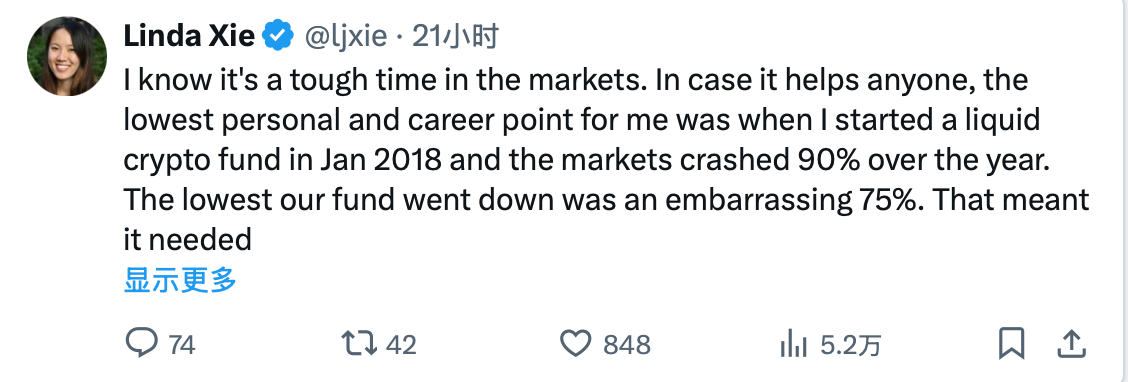
Linda Xie:

I know the current market environment is tough. I hope these experiences can be helpful to some. For me, the personal and professional low point was in January 2018, after launching a crypto liquidity fund, when the market fell 90% that year. Our fund experienced a maximum drawdown of a humiliating 75%, meaning the fund needed to quadruple just to break even.

At the time, many investors chose to trust us (this was after about 1,000 fundraising meetings), some of whom I deeply respected, and I felt I had let them down; some investors even yelled at me over the phone. I was extremely worried about what I had gotten everyone into, including employees. I had also invested almost all of my personal savings.

But we stuck to the direction we truly believed in, and it eventually paid off years later (currently delivering about 4x DPI for investors). Hold onto assets you genuinely believe in fundamentally, and don't make any extreme decisions driven by emotion.
Shenyu:

1btc = 1btc

Preguntas relacionadas

QWhat was the significance of Bitcoin's price drop to $60,000 on February 6th?

AIt marked a 15.48% single-day drop, the largest since the FTX crash, and pushed the Crypto Fear & Greed Index to 9, indicating 'extreme fear' and a new low since the 2022 bear market.

QAccording to Solana Foundation's Lily Liu, what is the core purpose of blockchains?

ABlockchains are, and always will be, financial technology. Their core purpose is financialization, providing open financial infrastructure to anyone on the internet to enable capital formation and innovation globally.

QWhat is Balaji's main argument for being extremely bullish on cryptocurrency despite short-term price movements?

AHe believes the 'rules-based order' is collapsing and a 'code-based order' is rising. As international law and the post-war order disintegrate, there is a need for on-chain money, companies, and new systems like internet capitalism and democracy, which cryptocurrency enables.

QWhat personal experience did Linda Xie share to help others during the difficult market?

AShe shared that her crypto liquidity fund launched in Jan 2018 experienced a 90% market drop and a 75% drawdown, requiring a 4x return just to break even. By sticking to their convictions and not making emotional decisions, they eventually delivered about 4x DPI (Distributed to Paid-In Capital) to investors.

QWhat common sentiment is expressed by multiple figures like Michael Saylor, the Base founder, and the Helius founder?

AThey express unwavering confidence and a long-term commitment to cryptocurrency. Saylor encourages buying Bitcoin, the Base founder states he's 'not going anywhere,' and the Helius founder says he's 'never been more confident,' suggesting that weak hands (tourists) leaving will improve the space.

Lecturas Relacionadas

Annual Salary of Millions Competing for Electricians, Meta Rushes to Open Its Own Technical School

The AI boom is facing an unexpected bottleneck: a severe shortage of skilled construction workers and electricians. As tech giants like Meta, OpenAI, and Alphabet race to build massive data centers—such as OpenAI's $16 billion "Stargate" project—they are hitting a critical labor wall. The U.S. needs an estimated 130,000 more electricians, 240,000 construction workers, and 150,000 supervisors by 2030 for AI infrastructure alone, but tens of thousands of electrician jobs go unfilled each year. While AI companies offer high premiums, with electricians earning up to $280,000 annually, worker scarcity still causes massive losses—delays on a single project can cost $14.2 million per month. The complexity of building AI data centers, which require immense power (equivalent to powering hundreds of thousands of homes), sophisticated electrical systems, and advanced liquid cooling solutions, demands highly skilled technicians who are in short supply. To combat this, companies are investing heavily in training. Meta has committed $115 million to a free training school offering tuition, housing, and stipends, targeting 5,000 new workers. OpenAI is partnering with unions to secure skilled labor. These efforts are paying off, with a significant rise in Gen Z interest in trade schools over college. However, the power demands are staggering. AI data centers are driving a rapid surge in electricity consumption, projected to account for up to 12% of U.S. power use by 2028 and raising costs for consumers. Furthermore, the construction boom is project-based, leading to a potential future glut of trained workers once building peaks, which could depress wages industry-wide. The race for AI supremacy now depends as much on skilled hands as on advanced chips.

marsbitHace 8 min(s)

Annual Salary of Millions Competing for Electricians, Meta Rushes to Open Its Own Technical School

marsbitHace 8 min(s)

OpenAI No Longer Sells Its Most Expensive Model for Profit

OpenAI is shifting its business strategy away from promoting its most expensive, flagship models for every task. Recent price cuts—80% for GPT-5.6 Luna and 20% for Terra—signal a deeper change: the company now actively advises users that many tasks don't require the most powerful model. Instead, OpenAI recommends a tiered approach: use the high-end GPT-5.6 Sol for complex planning and analysis, then delegate execution to cheaper models like Luna. This mirrors moves by Anthropic, which recently launched Claude Opus 5 at half the price of its top model, Fable 5. Both companies are de-emphasizing flagship models as primary revenue drivers, using them instead for brand prestige and technological showcases. The industry is entering a "mass-market" phase, similar to automotive, where high-volume, cost-effective models handle daily operations and drive scale. OpenAI's price reductions are partly enabled by AI models themselves optimizing underlying code and infrastructure, creating a self-reinforcing cycle of efficiency gains and cost reduction. Competition is shifting from "who is smartest" to "who offers the best value." The goal is no longer selling individual models but fostering widespread API adoption and ecosystem lock-in. By making AI calls cheap and ubiquitous, companies like OpenAI aim to become the indispensable, utility-like infrastructure powering automated workflows—the "water and electricity" of software, quietly embedded everywhere.

marsbitHace 8 min(s)

OpenAI No Longer Sells Its Most Expensive Model for Profit

marsbitHace 8 min(s)

Will the Fed Definitely Raise Interest Rates in September? How Will Crypto and U.S. Stocks Withstand the Pressure?

The market's expectation for a September Fed rate hike surged dramatically in early August, jumping from under 50% to over 80% within a week. This shift followed a contentious July FOMC meeting, where a 9-3 vote to hold rates revealed growing dissent from hawkish members advocating for an immediate hike to combat persistent inflation. The primary catalyst for this repricing is rising oil prices, driven by renewed geopolitical tensions around the Strait of Hormuz, which threaten global supply. Energy costs directly influence inflation metrics, making the upcoming July CPI report (due August 12th) a critical data point. If it shows inflation reaccelerating, the probability of a September hike will solidify. For Bitcoin and crypto assets, this is typically bearish news. Bitcoin continues to behave as a high-beta, liquidity-sensitive risk asset. A rate hike raises the opportunity cost of holding non-yielding assets and could drive capital toward money markets, pressuring crypto prices in the short term. However, historical patterns suggest that if a hike is perceived as the end of a tightening cycle rather than the start, any negative price impact may be brief. U.S. stocks, particularly crypto-linked equities like Coinbase and growth-oriented tech stocks, are also vulnerable. Higher rates increase discount rates in valuation models, putting pressure on high-multiple companies. This coincides with a pivotal tech earnings season where investor focus has shifted from massive AI capital expenditure to tangible revenue and cash flow generation. Companies with negative cash flow and weak growth narratives could face heightened volatility if borrowing costs rise in September. In summary, a September Fed hike has evolved into a mainstream market scenario. Key factors to watch are oil prices, the July CPI report, and Fed communications, which will determine the final decision and its impact on volatile crypto and equity markets.

marsbitHace 19 min(s)

Will the Fed Definitely Raise Interest Rates in September? How Will Crypto and U.S. Stocks Withstand the Pressure?

marsbitHace 19 min(s)

Trading

Spot
活动图片





