Litecoin ETF’s Slow Start Shows Altcoin Funds Still Face A Demand Test

bitcoinistPublicado a 2026-06-19Actualizado a 2026-06-19

Resumen

The Canary Capital spot Litecoin ETF (LTCC) has had a slow start, with reported inflows of around $9.3 million since launch and assets under management at a lower level. This highlights the significant gap in institutional demand compared to Bitcoin and Ethereum ETFs. While Litecoin has an established history, its more modest narrative around payments and longevity hasn't yet made it a must-own institutional product. The case demonstrates that regulatory approval alone does not guarantee strong investor allocation. For the broader altcoin ETF thesis, future products may see different demand, but Bitcoin and Ethereum are likely to remain the primary institutional channels for the foreseeable future.

Canary Capital’s LTCC fund page confirms the spot Litecoin ETF product, while flow tracking cited in market reports shows a slow demand profile compared with Bitcoin and Ethereum ETF giants.

TL;DR

  • Canary Capital’s LTCC is an early test of secondary crypto ETF demand.
  • Reported trailing inflows are around $9.3 million, while AUM is lower due to market movement and fund activity.
  • The slow start highlights how far altcoin ETF demand trails BTC and ETH products.
  • ETF approval alone does not guarantee institutional allocation.

A Slow Start For A Secondary Crypto ETF

Canary Capital’s Litecoin ETF, LTCC, has become an early test of how much investor demand exists beyond Bitcoin and Ethereum products. The official fund page confirms the product structure, while flow tracking cited by The Defiant puts trailing inflows around $9.3 million since launch. That is a small number compared with the scale of spot Bitcoin ETFs and even Ethereum products.

The contrast matters. For years, crypto investors have argued that approval of Bitcoin ETFs would open the door for a wider altcoin ETF market. LTCC gives that thesis an early real-world data point, and so far the signal looks cautious rather than explosive.

Flows And AUM Tell Slightly Different Stories

The flow picture needs careful handling. The reported $9.3 million in trailing inflows is not the same thing as current assets under management. Canary’s fund page lists net assets at a lower level, around $5.43 million in the source pack, which can reflect price movement in Litecoin, redemptions, trading activity, and the difference between cumulative flows and present fund value.

That discrepancy should not be treated as a contradiction. ETF flows and AUM often move differently, especially when the underlying asset is volatile. The point is that both numbers tell the same broad story: institutional demand for a spot Litecoin product remains limited compared with BTC and ETH.

Why Litecoin Demand Is Different

Litecoin has long been one of crypto’s most established proof-of-work assets, and it has often been discussed as a commodity-like network in regulatory conversations. But that history does not automatically translate into institutional demand. For allocators, liquidity, narrative strength, derivatives depth, custody familiarity, and portfolio fit all matter.

Bitcoin has the strongest macro store-of-value pitch. Ethereum has the smart-contract and staking economy narrative. Litecoin’s case is more modest: longevity, payments history, and a relatively clean regulatory profile. That may be enough for a niche ETF, but the early flow data suggests it has not yet become a must-own product for institutions.

What This Means For Altcoin ETFs

The LTCC numbers do not kill the altcoin ETF thesis, but they do make it more selective. Future products tied to Solana, XRP, or other larger narratives may see different demand. Still, the Litecoin example shows that approval alone is not enough. Investors need a reason to allocate.

For traders, the message is straightforward. ETF availability can improve access, but it does not create demand by itself. Until secondary crypto products show stronger flows, Bitcoin and Ethereum are likely to remain the main institutional ETF lanes, while smaller altcoin funds fight for more specialized capital.

This article was written by the News Desk and edited by Samuel Rae.

This report is based on information from Canary Capital and The Defiant. at Canary Capital

Criptos en tendencia

Preguntas relacionadas

QWhat is the LTCC ETF and what does its early performance indicate about investor demand for altcoin ETFs?

AThe LTCC ETF is Canary Capital's spot Litecoin exchange-traded fund. Its early performance, with reported trailing inflows of around $9.3 million and lower assets under management (AUM), indicates that investor demand for altcoin ETFs currently lags far behind that for Bitcoin and Ethereum ETF products. This slow start suggests the market for secondary crypto ETFs is selective and not automatically driven by regulatory approval alone.

QAccording to the article, what is the difference between the reported $9.3 million in inflows and the fund's lower AUM, and why does this discrepancy occur?

AThe reported $9.3 million represents cumulative trailing inflows since the ETF's launch. The lower Assets Under Management (AUM) figure reflects the fund's current net value. The discrepancy occurs due to factors like price movement in Litecoin, investor redemptions, trading activity, and the general volatility of the underlying asset. Both metrics, however, tell the same story of limited institutional demand relative to major crypto ETFs.

QWhat are the key factors that the article suggests explain the different demand levels for Bitcoin, Ethereum, and Litecoin ETFs?

AThe article suggests that institutional demand is driven by liquidity, narrative strength, derivatives depth, custody familiarity, and portfolio fit. Bitcoin has a strong macro store-of-value narrative. Ethereum has the smart-contract and staking economy narrative. Litecoin's case is more modest, based on its longevity, payments history, and relatively clean regulatory profile, which makes it a niche product rather than a must-own for institutions.

QWhat does the Litecoin ETF's 'slow start' imply for the broader thesis that Bitcoin ETF approval would open doors for other altcoin ETFs?

AThe Litecoin ETF's slow start implies that while Bitcoin ETF approval may open regulatory doors for other altcoin ETFs, it does not guarantee significant investor demand or institutional capital allocation. The thesis becomes more selective, indicating that future altcoin ETFs will need a strong, compelling narrative and utility to attract substantial flows, rather than relying solely on regulatory clearance.

QWhat is the key takeaway for traders regarding ETF availability and demand for altcoins like Litecoin?

AThe key takeaway for traders is that ETF availability improves access to an asset but does not create demand by itself. For secondary crypto products like the Litecoin ETF, stronger investor flows are not automatic. Bitcoin and Ethereum are likely to remain the primary institutional ETF investment channels, while smaller altcoin funds will compete for more specialized and niche capital.

Lecturas Relacionadas

The Reality of Payments in Latin America Is Not What You Think

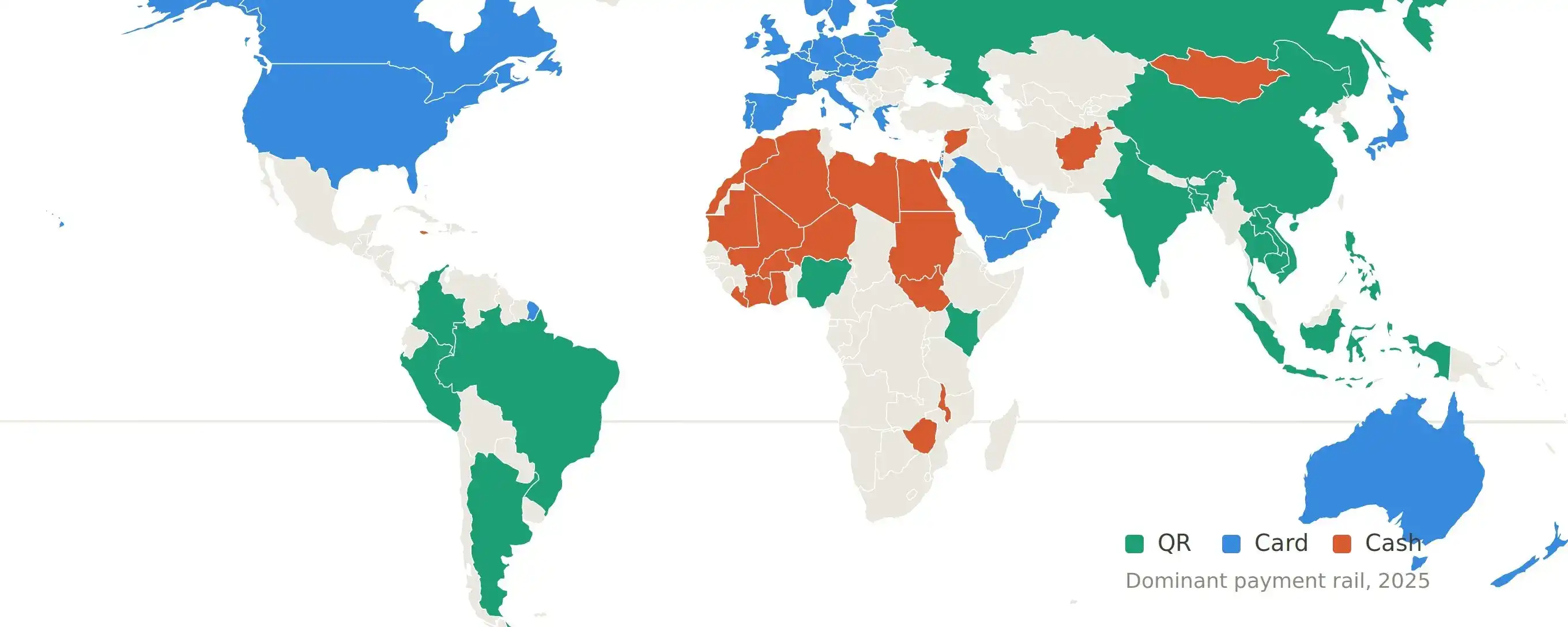
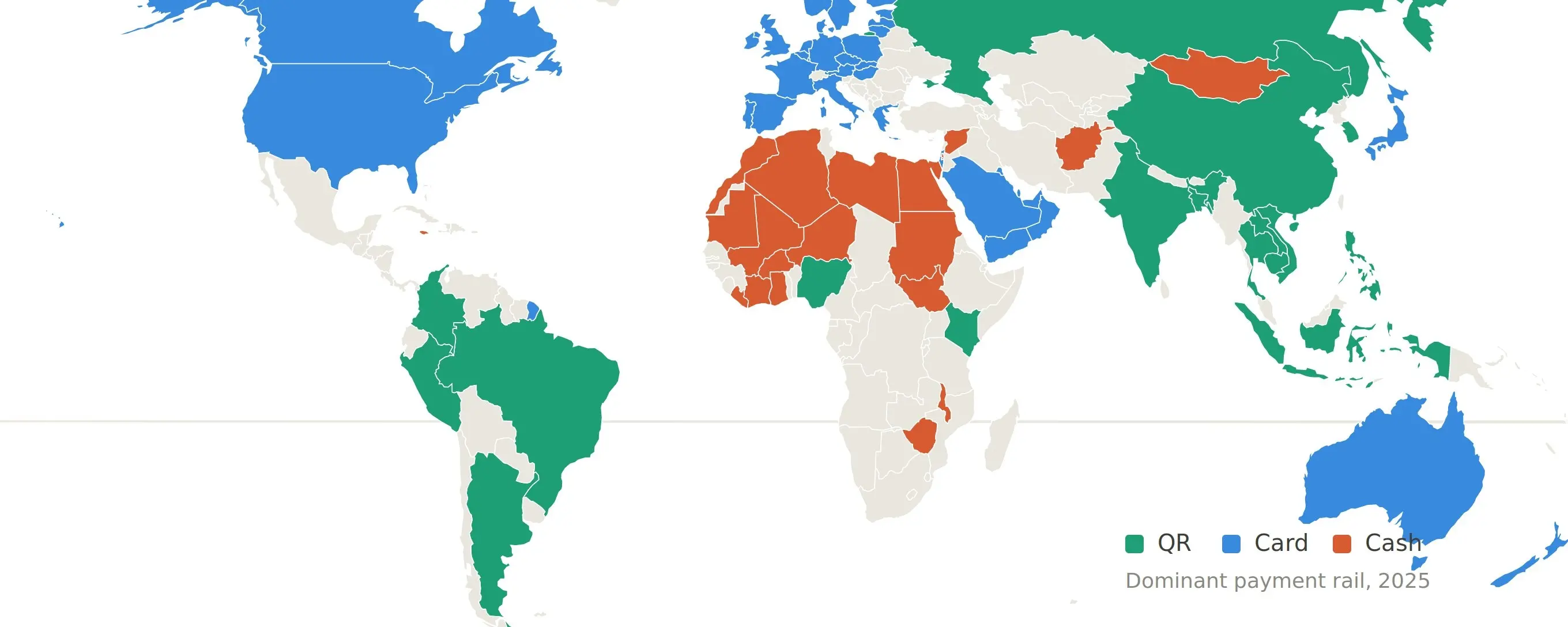
The payment landscape in Latin America is undergoing a fundamental shift, driven by on-the-ground realities that challenge common perceptions. Based on over 500 hours of field research across the region, key insights emerge. Firstly, QR code payments, like Brazil's Pix, are becoming the dominant payment method in most emerging markets, overtaking cards. However, these domestic instant payment systems lack international interoperability, creating a significant gap for cross-border users. Secondly, the narrative around crypto cards is often misunderstood; their primary volume comes from high-net-worth professionals using them for salary conversions (e.g., USDT to local currency via Pix), not retail micro-payments. Competition in payments is shifting from customer acquisition to controlling the settlement layer, leading fintechs to acquire banking licenses for efficiency. Thirdly, treating "Latin America" as a single market is a mistake. Countries like Argentina, Brazil, and Mexico have distinct economic realities, user segments, and regulatory approaches. Brazil alone has at least five distinct user segments with different financial flows. Overlooked markets like Guatemala, Honduras, and El Salvador (the "forgotten five") offer high remittance volumes with lower competitive density. Finally, regulation in Latin America is often ahead of the US, with clearer frameworks for digital assets and a pragmatic approach from regulators focused on safety rather than obstruction. The margin on stablecoin forex is rapidly compressing toward zero, meaning future winners will be those building value-added services on top of the infrastructure, not just the cheapest exchange.

marsbitHace 8 min(s)

The Reality of Payments in Latin America Is Not What You Think

marsbitHace 8 min(s)

Making Music in a Bear Market: The Survival Experiment of a Bitcoin Band

"Orange Pill Jam: A Bitcoin Band's Survival in the Bear Market" Orange Pill Jam is a musical group exploring themes of financial sovereignty and privacy, born from the Bitcoin community. Formed after singer Mermaid performed her song "Dollar Apocalypse" at a 2022 conference, the band creates music intended for both Bitcoin enthusiasts and general audiences. Their creative process involves Mermaid writing lyrics and melodies, which producer/multi-instrumentalist Michi then shapes with a precise, rhythm-focused approach, often demanding numerous retakes to achieve his unique standard of timing. Their songs, like "Cypherpunks' Manifesto" and "Fire of Freedom," tackle concepts of digital privacy, the pitfalls of "free" services, and personal sovereignty, influenced by experiences in places like El Salvador. Despite operating in a crypto bear market with a Copyleft model (offering music for free sharing/remixing and accepting optional Bitcoin donations), they face practical challenges. Their growth is slow on platforms like YouTube and Spotify, which aren't optimized for their niche content. The band also navigates the rise of AI-generated music. While acknowledging AI's efficiency for certain tasks, they believe human creativity occupies a unique space that algorithms cannot replicate—the ability to create new genres and capture intangible rhythmic feeling. For Orange Pill Jam, the core argument for both Bitcoin in a downturn and human artistry in the AI age lies in this irreplaceable, intentional, and imperfectly human creative process. Their project persists as an anti-algorithm experiment, valuing the unquantifiable impact of music over scalable metrics.

marsbitHace 14 min(s)

Making Music in a Bear Market: The Survival Experiment of a Bitcoin Band

marsbitHace 14 min(s)

Latin America's Payments Landscape Is Not What You Think It Is

This report challenges common misconceptions about Latin America's payment landscape, based on over 500 hours of firsthand research. Key findings include: 1) Crypto card transaction volume primarily comes from high-net-worth individuals receiving USDT salaries, not retail spending. 2) QR code payments (e.g., Brazil's Pix, Argentina's Mercado Pago) are the dominant payment method across most emerging markets, not cards. 3) A major untapped opportunity lies in enabling cross-border interoperability between domestic instant payment systems. 4) Payment competition is shifting from customer acquisition to owning the settlement layer (e.g., acquiring banks). 5) Latin America is not a single market; Brazil, Mexico, Argentina, and smaller "forgotten five" countries (e.g., Guatemala, Honduras) have vastly different dynamics. 6) Stablecoin-to-fiat conversion margins are collapsing toward zero, pushing companies to build value-added services on top. 7) Future payment winners will be multi-country brands, not single-corridor specialists. 8) Marketing must target specific user segments (e.g., digital nomads, unbanked immigrants) with tailored messaging, not a generic "Brazilian" audience. 9) Contrary to perception, Latin American regulators are often ahead of the US in creating frameworks for digital assets and instant payments, with clear licensing deadlines. The core takeaway is that the region's payment rules are being rewritten, moving beyond cards and stablecoin arbitrage towards integrated, cross-border QR-based solutions.

链捕手Hace 25 min(s)

Latin America's Payments Landscape Is Not What You Think It Is

链捕手Hace 25 min(s)

Trading

Spot
Futuros

Artículos destacados

Cómo comprar LTC

¡Bienvenido a HTX.com! Hemos hecho que comprar Litecoin (LTC) sea simple y conveniente. Sigue nuestra guía paso a paso para iniciar tu viaje de criptos.Paso 1: crea tu cuenta HTXUtiliza tu correo electrónico o número de teléfono para registrarte y obtener una cuenta gratuita en HTX. Experimenta un proceso de registro sin complicaciones y desbloquea todas las funciones.Obtener mi cuentaPaso 2: ve a Comprar cripto y elige tu método de pagoTarjeta de crédito/débito: usa tu Visa o Mastercard para comprar Litecoin (LTC) al instante.Saldo: utiliza fondos del saldo de tu cuenta HTX para tradear sin problemas.Terceros: hemos agregado métodos de pago populares como Google Pay y Apple Pay para mejorar la comodidad.P2P: tradear directamente con otros usuarios en HTX.Over-the-Counter (OTC): ofrecemos servicios personalizados y tipos de cambio competitivos para los traders.Paso 3: guarda tu Litecoin (LTC)Después de comprar tu Litecoin (LTC), guárdalo en tu cuenta HTX. Alternativamente, puedes enviarlo a otro lugar mediante transferencia blockchain o utilizarlo para tradear otras criptomonedas.Paso 4: tradear Litecoin (LTC)Tradear fácilmente con Litecoin (LTC) en HTX's mercado spot. Simplemente accede a tu cuenta, selecciona tu par de trading, ejecuta tus trades y monitorea en tiempo real. Ofrecemos una experiencia fácil de usar tanto para principiantes como para traders experimentados.

922 Vistas totalesPublicado en 2024.12.11Actualizado en 2026.06.02

Cómo comprar LTC

Discusiones

Bienvenido a la comunidad de HTX. Aquí puedes mantenerte informado sobre los últimos desarrollos de la plataforma y acceder a análisis profesionales del mercado. A continuación se presentan las opiniones de los usuarios sobre el precio de LTC (LTC).

活动图片