Kyle Samani Is Back: This Time, We're Outperforming CEX in Efficiency!

marsbitPublicado a 2026-03-12Actualizado a 2026-03-12

Resumen

Kyle Samani, former co-founder of Multicoin Capital, has returned to advocate for PropAMM, a breakthrough in market microstructure innovation on Solana. He argues that PropAMM could surpass traditional centralized exchanges (CEXs) in efficiency by hosting market maker algorithms directly on the blockchain, eliminating latency from bidirectional communication between exchanges and market makers. In CEXs, market makers co-locate servers and constantly exchange data with the exchange, leading to delays. In contrast, PropAMM runs algorithms on the same physical hardware as the Solana blockchain, allowing price updates to occur almost instantaneously within the same silicon chip. This reduces latency significantly compared to traditional systems. Currently, PropAMM already offers narrower spreads for SOL-USDC spot trading than major CEXs. Samani expects it to dominate on-chain trading this year, including spots, perpetuals, and prediction markets. Challenges remain in ensuring best execution for takers due to private algorithms and non-deterministic routing, but solutions from aggregators like Jupiter and dFlow are anticipated. Upcoming Solana upgrades—such as higher compute limits, reduced slot times, and lower network latency—will further enhance PropAMM performance, solidifying its advantage over CEXs.

Source:Kyle Samani

Compiled | Odaily Planet Daily (@OdailyChina); Translator | Azuma (@azuma_eth)

Editor's Note: The man who knows best how to promote Solana, former co-founder of Multicoin Capital Kyle Samani, who had loudly exited the crypto world not long ago, is back!

Last night, Kyle Samani posted a long Thread on his personal X account. In the post, Kyle Samani once again demonstrated his highly persuasive "promotion" (not derogatory here) rhetoric, using "efficiency"—a weak point in the decentralized narrative—as a breakthrough. He detailed how the PropAMM currently being promoted in the Solana ecosystem will catch up with or even surpass traditional centralized models in efficiency, arguing that PropAMM is one of the most important innovations in market microstructure in recent years, or even decades.

  • Related articles: 《The Man Who Knows Best How to Promote SOL Exits the Crypto World》; 《Is There More to Kyle Samani's Exit?》.

Below is the original content by Kyle Samani, compiled by Odaily Planet Daily.

PropAMM is one of the most important innovations in market microstructure in recent years, and perhaps even one of the most significant in decades.

To help everyone understand this conclusion, let's first look at how market makers (MM) quote prices on traditional centralized exchanges (CEX).

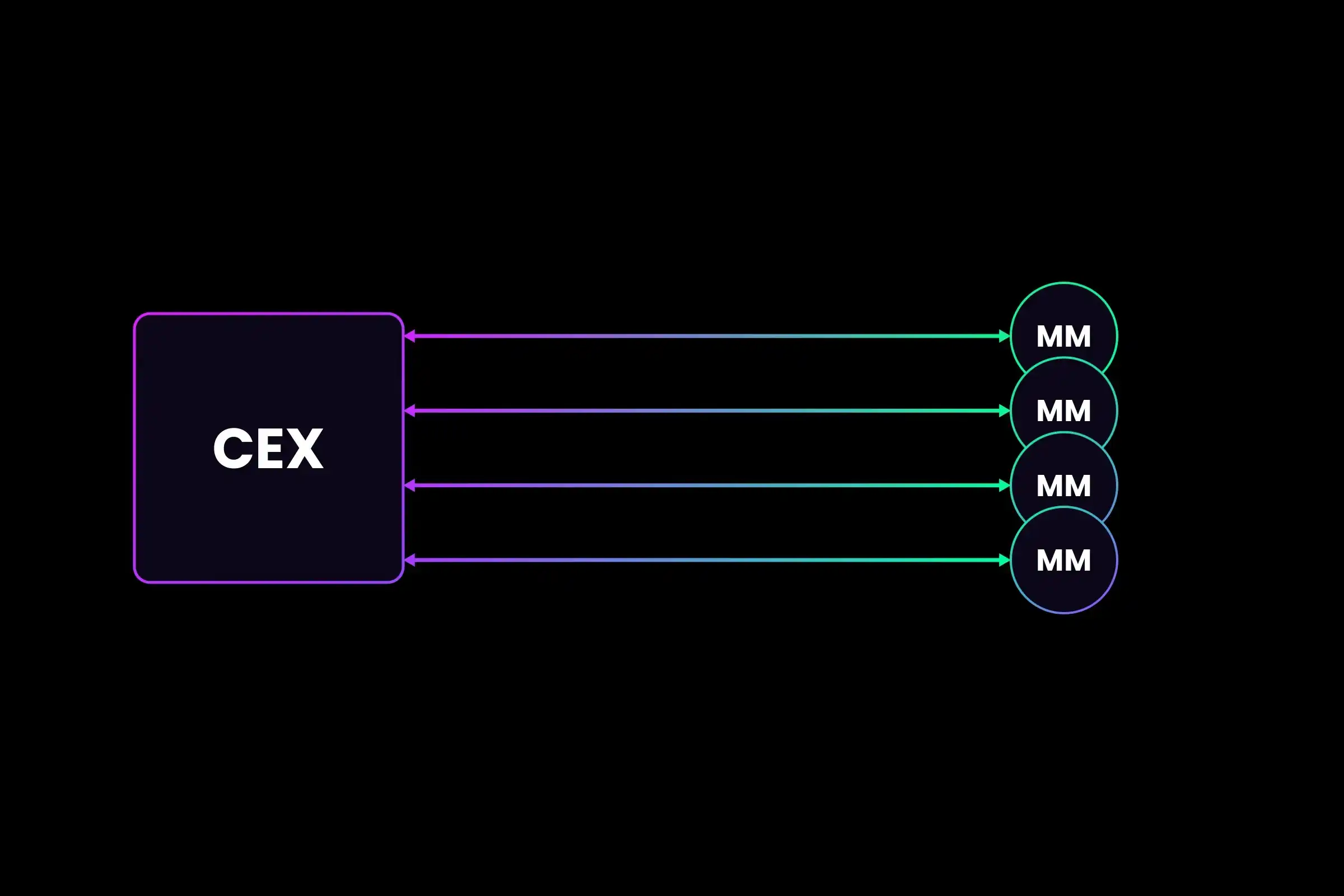
Market makers typically physically co-locate with the exchange. Each market maker runs an algorithm on a server and connects to another server running the exchange's system via a network cable of uniform length (e.g., 50 meters).

A massive stream of data is constantly sent back and forth between market makers and the exchange. Every time a market maker sends an order to the exchange—whether it's a limit order, cancellation, or market order—the exchange must broadcast this information to all other market makers; then, other market makers resend their own orders based on the new information; this cycle repeats indefinitely.

Here is a simple diagram.
Now let's look at how propAMM works on the Solana mainnet.

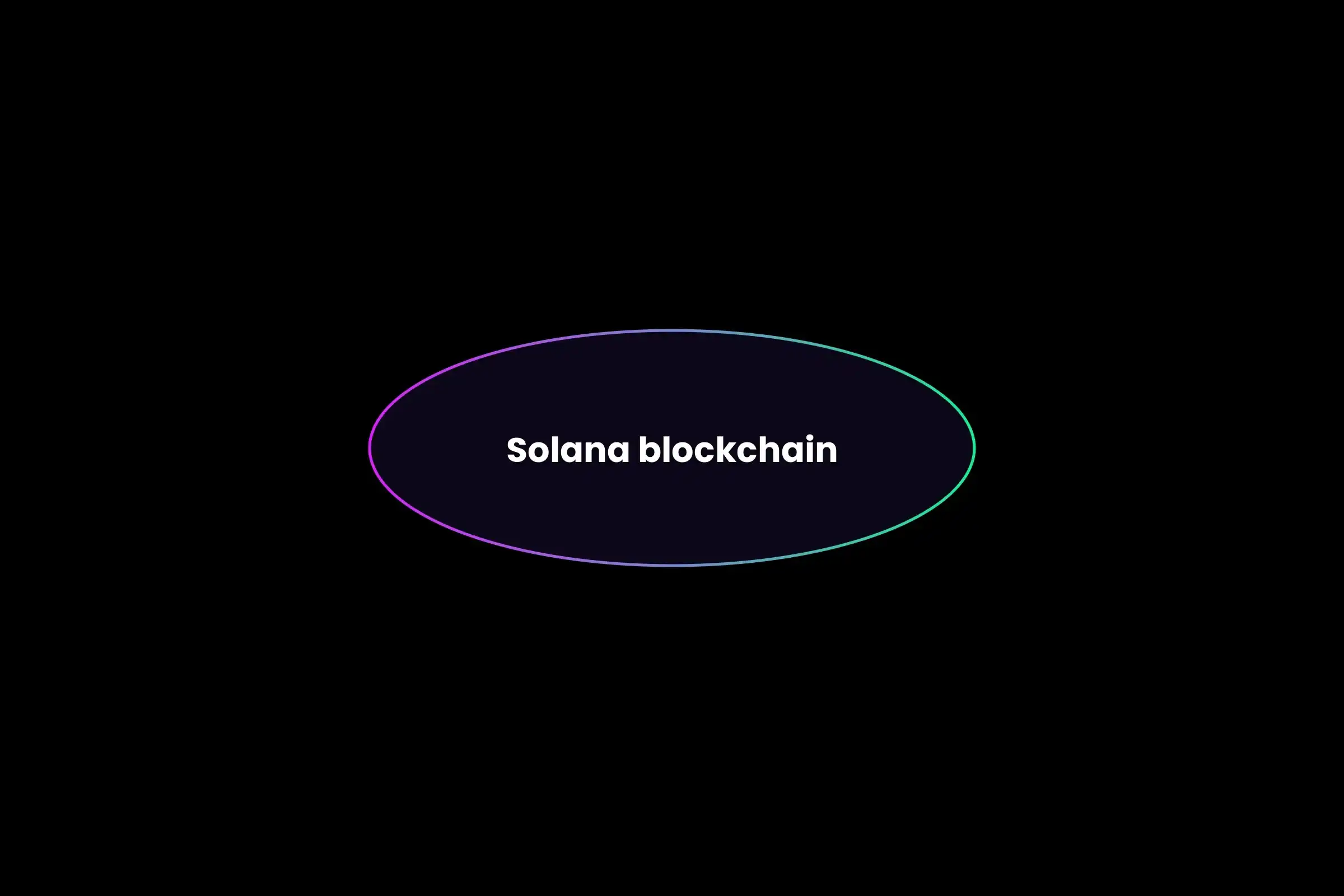
The beauty of propAMM on Solana is that the blockchain itself directly "hosts" the market maker algorithms. This means the system no longer needs to send billions of messages back and forth between market makers and the exchange; the market-making algorithms will run directly on the same physical machine as the exchange.

The new diagram is as follows. (Yes, only the Solana blockchain is needed!)
There has long been a common view in the cryptocurrency industry that decentralized systems must be slower (have higher latency) than centralized systems because they require communication between global nodes.

But if you think about it differently, on-chain hosted algorithms may actually have lower latency than traditional centralized exchanges in finance.

Why is that? The reason is that the latency required for propAMM to update prices only involves electrons moving within the same physical piece of silicon. For example, if the last market order causes a change in the SOL-USD price, this information is immediately visible to all propAMMs and used to price the next market order. Everything happens within the same piece of silicon; no bidirectional communication between servers is needed.

It's worth noting that propAMM does require frequent oracle updates, but this is not a problem and does not change the overall fact I described above.

The most critical point remains: when the exchange—in this case, the Solana blockchain—directly hosts the propAMM algorithms, the market makers' pricing changes in real-time within the same physical piece of silicon.

propAMM has already become the dominant mechanism for SOL-USDC spot quotes on Solana, with narrower spreads than all major CEXs. I expect this market structure to become the dominant model for on-chain trading this year, including spot, perpetual contracts (perps), and even prediction markets.

The biggest challenge for propAMM is that there is currently no way to ensure that the taker always gets the best execution, because:

  • All propAMM algorithms are not public (which is reasonable, as traditional market-making algorithms are also proprietary);
  • When routing trades between multiple propAMMs, the result is non-deterministic.

However, this problem can be solved. I expect all relevant aggregator teams to launch solutions this year, such as Jupiter and dFlow for spot, and Phoenix for contracts.

Current propAMM is still not fully optimized and is subject to various limitations of the Solana blockchain itself. This year, Solana will roll out a series of major upgrades that will significantly improve propAMM's performance, including:

  1. Higher CU (compute unit) limits per transaction and larger transaction sizes;
  2. Higher CU limits per block;
  3. Alpenglow: reducing slot time from 400ms to 100–150ms;
  4. DoubleZero: reducing global network latency;
  5. Application-controlled execution;
  6. Multiple concurrent leaders.

If propAMM on the Solana mainnet can already offer narrower quotes than all CEXs without these upgrades, imagine how powerful they will become as these upgrades are gradually implemented.


Preguntas relacionadas

QWhat is PropAMM and why does Kyle Samani consider it a major innovation in market microstructure?

APropAMM is a mechanism on Solana where market-making algorithms are hosted directly on the blockchain, eliminating the need for constant bidirectional communication between market makers and exchanges. Kyle Samani considers it one of the most important innovations in market microstructure in recent years, or even decades, because it significantly improves efficiency by running algorithms on the same physical hardware as the exchange, reducing latency and narrowing spreads compared to traditional CEXs.

QHow does PropAMM on Solana achieve lower latency compared to traditional centralized exchanges (CEXs)?

APropAMM achieves lower latency by hosting market-making algorithms directly on the Solana blockchain, which runs on the same physical hardware. This means price updates and order processing occur within the same silicon chip, eliminating the delay caused by network communication between separate servers in traditional CEX setups. Electronic movements within the chip are faster than inter-server data transfers.

QWhat current evidence does Kyle Samani provide to show PropAMM's effectiveness on Solana?

AKyle Samani points out that PropAMM has become the dominant mechanism for SOL-USDC spot quotes on Solana, with narrower spreads than all major centralized exchanges (CEXs). This demonstrates its superior performance in market efficiency and execution quality compared to traditional systems.

QWhat are the main challenges facing PropAMM, and how does Samani expect them to be addressed?

AThe main challenges are ensuring best execution for takers, as PropAMM algorithms are not public and routing between multiple PropAMMs is non-deterministic. Samani expects solutions to be developed by aggregator teams like Jupiter and dFlow for spot trading, and Phoenix for perpetual contracts, within the year to optimize routing and execution.

QWhat upcoming Solana upgrades does Samani mention that will further enhance PropAMM performance?

ASamani mentions several Solana upgrades: higher CU (Compute Unit) limits per transaction and larger transaction sizes, higher CU limits per block, Alpenglow (reducing slot time from 400ms to 100-150ms), DoubleZero (reducing global network latency), application-controlled execution, and multiple concurrent leaders. These will collectively boost PropAMM efficiency and performance.

Lecturas Relacionadas

North Korean Hackers Loot $500 Million in a Single Month, Becoming the Top Threat to Crypto Security

North Korean hackers, particularly the notorious Lazarus Group and its subgroup TraderTraitor, have stolen over $500 million from cryptocurrency DeFi platforms in less than three weeks, bringing their total theft for the year to over $700 million. Recent major attacks on Drift Protocol and KelpDAO, resulting in losses of approximately $286 million and $290 million respectively, highlight a strategic shift: instead of targeting core smart contracts, attackers are now exploiting vulnerabilities in peripheral infrastructure. For instance, the KelpDAO attack involved compromising downstream RPC infrastructure used by LayerZero's decentralized validation network (DVN), allowing manipulation without breaching core cryptography. This sophisticated approach mirrors advanced corporate cyber-espionage. Additionally, North Korea has systematically infiltrated the global crypto workforce, with an estimated 100 operatives using fake identities to gain employment at blockchain companies, enabling long-term access to sensitive systems and facilitating large-scale thefts. According to Chainalysis, North Korean-linked hackers stole a record $2 billion in 2025, accounting for 60% of all global crypto theft that year. Their total historical crypto theft has reached $6.75 billion. Post-theft, they employ specialized money laundering methods, heavily relying on Chinese OTC brokers and cross-chain mixing services rather than standard decentralized exchanges. Security experts, while acknowledging the increased sophistication, emphasize that many attacks still exploit fundamental weaknesses like poor access controls and centralized operational risks. Strengthening private key management, limiting privileged access, and enhancing coordination among exchanges, analysts, and law enforcement immediately after an attack are critical to improving defense and fund recovery chances. The industry's challenge now extends beyond secure smart contracts to safeguarding operational security at the infrastructure level.

marsbitHace 35 min(s)

North Korean Hackers Loot $500 Million in a Single Month, Becoming the Top Threat to Crypto Security

marsbitHace 35 min(s)

Circle CEO's Seoul Visit: No Korean Won Stablecoin Issuance, But Met All Major Korean Banks

Circle CEO Jeremy Allaire's recent activities in Seoul indicate a strategic shift for the company, moving away from issuing a Korean won-backed stablecoin and instead focusing on embedding itself as a key infrastructure provider within Korea’s financial and crypto ecosystem. Despite Korea accounting for nearly 30% of global crypto trading volume—with a market characterized by high retail participation and altcoin dominance—Circle has chosen not to compete for the role of stablecoin issuer. Instead, Allaire met with major Korean banks (including Shinhan, KB, and Woori), financial groups, leading exchanges (Upbit, Bithumb, Coinone), and tech firms like Kakao. This approach reflects a broader industry transition: the core of stablecoin competition is shifting from issuance rights to systemic positioning. With Korean regulators still debating whether banks or tech companies should issue stablecoins, Circle is avoiding regulatory uncertainty by strengthening its role as a service and technology partner. The company is deepening integration with trading platforms, building connections, and promoting stablecoin infrastructure. This positions Circle to benefit regardless of which entity eventually issues a won stablecoin. Allaire also noted the potential for a Chinese yuan stablecoin in the next 3–5 years, underscoring a regional trend of stablecoins becoming more regulated and integrated with traditional finance. Ultimately, Circle’s strategy highlights that future influence in the stablecoin market will belong not necessarily to the issuers, but to the foundational infrastructure layers that enable cross-system transactions.

marsbitHace 1 hora(s)

Circle CEO's Seoul Visit: No Korean Won Stablecoin Issuance, But Met All Major Korean Banks

marsbitHace 1 hora(s)

SpaceX Ties Up with Cursor: A High-Stakes AI Gambit of 'Lock First, Acquire Later'

SpaceX has secured an option to acquire AI programming company Cursor for $60 billion, with an alternative clause requiring a $10 billion collaboration fee if the acquisition does not proceed. This structure is not merely a potential acquisition but a strategic move to control core access points in the AI era. The deal is designed as a flexible, dual-path arrangement, allowing SpaceX to either fully acquire Cursor or maintain a binding partnership through high-cost collaboration. This "option-style" approach minimizes immediate regulatory and integration risks while ensuring long-term alignment between the two companies. At its core, the transaction exchanges critical AI-era resources: SpaceX provides its Colossus supercomputing cluster—one of the world’s most powerful AI training infrastructures—while Cursor contributes its AI-native developer environment and strong product adoption. This synergy connects compute power, models, and application layers, forming a closed-loop AI capability stack. Cursor, founded in 2022, has achieved rapid growth with over $1 billion in annual revenue and widespread enterprise adoption. Its value lies in transforming software development through AI agents capable of coding, debugging, and system design—positioning it as a gateway to future software production. For SpaceX, this move is part of a broader strategy to evolve from a aerospace company into an AI infrastructure empire, integrating xAI, supercomputing, and chip manufacturing. Controlling Cursor fills a gap in its developer tooling layer, strengthening its AI narrative ahead of a potential IPO. The deal reflects a shift in AI competition from model superiority to ecosystem and entry-point control. With programming tools as a key battleground, securing developer loyalty becomes crucial for dominating the software production landscape. Risks include questions around Cursor’s valuation, technical integration challenges, and potential regulatory scrutiny. Nevertheless, the deal underscores a strategic bet: controlling both compute and software development access may redefine power dynamics in the AI-driven future.

marsbitHace 1 hora(s)

SpaceX Ties Up with Cursor: A High-Stakes AI Gambit of 'Lock First, Acquire Later'

marsbitHace 1 hora(s)

Trading

Spot
Futuros
活动图片