KuCoin Institutional Premiere 2026 Highlights Long-Term Growth and Market Resilience

TheNewsCryptoPublicado a 2026-02-13Actualizado a 2026-02-13

Resumen

The inaugural KuCoin Institutional Premiere 2026, held in Hong Kong, emphasized long-term structural growth and institutional engagement over short-term price volatility. KuCoin CEO BC Wong and COO Ethan Cheng highlighted the importance of building credibility through discipline, transparency, and robust risk management during challenging market periods. Discussions centered on portfolio risk management, liquidity dynamics, execution efficiency, and security requirements, reflecting a shift toward structural stability and resilience. The event underscored that institutional participation in digital assets is increasingly driven by fundamentals rather than speculation, signaling the maturation of the cryptocurrency market.

A continuous focus on long-term structural growth and institutional participation was underlined during the first KuCoin Institutional Premiere 2026, which took place in Hong Kong. This event took place against the background of the recent movement of Bitcoin.

A total of over one hundred institutional customers and partners from various marketplaces across the world were present at the event. The Chief Executive Officer of KuCoin, BC Wong, and the Chief Operating Officer, Ethan Cheng, gave introductory comments in which they discussed the wider context of the current market cycle. Rather than basing conversation on short-term pricing swings, both CEOs focused on a broader fundamental question: how institutions and service providers may enhance long-term trust, governance standards, and operational resilience during times of downturn.
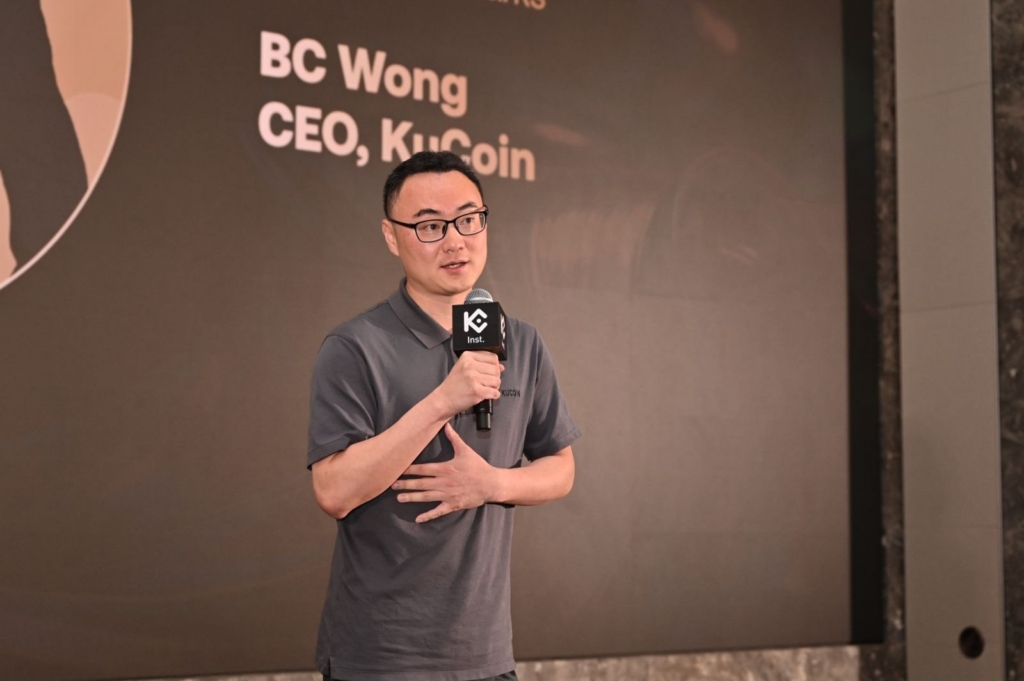
BC Wong, CEO of KuCoin, said:

“Volatility is a natural feature of digital asset markets. Long-term credibility is built not in periods of expansion, but through discipline, transparency, and robust risk management when market conditions are challenging.”

Ethan Cheng, COO of KuCoin, added:

“Institutional engagement in digital assets is increasingly driven by structural fundamentals rather than short-term price movements. Periods of volatility reinforce the importance of long-term alignment and risk-aware participation.”

This change in focus was mirrored in the conversations that took place throughout the evening. The viewpoints of the representatives of the institutions were discussed and shared about the management of portfolio risk, liquidity dynamics, execution efficiency, and security requirements. In a market climate that is more conservative, the conversation focused less on short-term success and more on how to preserve structural stability, responsiveness, and transparency in the market.

Amid the event, which was KuCoin Institutional’s first annual meeting of its sort, it acted as both a reflection on previous collaboration and an affirmation of ongoing commitment amid a period of less activity. A cautious posture was communicated to industry players during a gathering that took place in the midst of market uncertainties.

Although prices are subject to change, institutional discourse and structural development continue. The top actors in the sector have given a clear signal to the wider financial world, which is that the institutional underpinning of cryptocurrency is no longer founded on speculation, but rather on the methodical development of a mature, global market structure.


TagsexchangeKuCoin

Preguntas relacionadas

QWhat was the main focus of the KuCoin Institutional Premiere 2026 event according to the article?

AThe main focus was on long-term structural growth, institutional participation, and building long-term trust, governance standards, and operational resilience during market downturns, rather than short-term price movements.

QWhich KuCoin executives spoke at the event and what key points did they emphasize?

ACEO BC Wong emphasized that long-term credibility is built through discipline, transparency, and robust risk management during challenging market conditions. COO Ethan Cheng added that institutional engagement is increasingly driven by structural fundamentals rather than short-term price movements.

QWhat topics were discussed by institutional representatives during the event?

AThey discussed portfolio risk management, liquidity dynamics, execution efficiency, security requirements, and how to preserve structural stability, responsiveness, and transparency in the market.

QHow does the article characterize the current institutional approach to cryptocurrency markets?

AThe article states that institutional involvement is no longer primarily based on speculation but on the methodical development of a mature, global market structure, focusing on long-term alignment and risk-aware participation.

QWhere did the KuCoin Institutional Premiere 2026 take place and what was significant about this event?

AThe event took place in Hong Kong and it was KuCoin Institutional's first annual meeting of its kind, serving as both a reflection on previous collaboration and an affirmation of ongoing commitment during a period of market uncertainty.

Lecturas Relacionadas

Bitcoin Withdrawals Continue: 8 Years of Storage in a Coldcard Cold Wallet Ended in Zero

Coldcard Hardware Wallet Hacked: Losses Mount Due to Vulnerable Seed Generation A critical vulnerability in Coldcard hardware wallets has led to a continued wave of fund thefts. According to Galaxy Research, the total stolen has reached 1,367.05 BTC (approx. $88.6 million) from 4,585 addresses, a significant increase from the initial 594.5 BTC reported on July 30, 2026. Most of the stolen funds remain on the attackers' addresses. The issue is not with the current firmware, which Coinkite has updated, but with seed phrases generated on vulnerable devices between March 2021 and the release of fixed firmware versions. Due to a programmer error, devices switched from using a hardware random number generator to the software-based Yasmarang generator, which was initialized with publicly accessible data like the chip's serial number. This made the seed phrases predictable through offline brute-force attacks, meaning wallets remain at risk until funds are moved to a new wallet generated with the patched firmware. Affected devices include Mk2/Mk3 with firmware 4.0.1–4.1.9 (and up to 5.0.3), Mk4/Mk5 up to version 5.6.0, and Q models up to 1.5.0Q. The only exceptions are seeds created with a high-entropy method like at least 50 independent dice rolls or a strong unique BIP-39 passphrase. All other owners must generate a new seed on the fixed firmware and transfer their assets. A case highlighting the human impact involves a 39-year-old long-term investor who lost 2 BTC (approx. $130,000) in minutes. He had accumulated the Bitcoin over eight years through physical labor, viewing it as a financial lifeline and a retirement plan in a country suffering from hyperinflation. His story underscores that even conservative "buy and hold in cold storage" strategies can be compromised by such underlying technical flaws. From a technical perspective, this incident echoes historical failures where weak random number generators undermined cryptographic security, challenging the assumption that offline storage is automatically foolproof.

cryptonews.ruHace 5 hora(s)

Bitcoin Withdrawals Continue: 8 Years of Storage in a Coldcard Cold Wallet Ended in Zero

cryptonews.ruHace 5 hora(s)

Trading

Spot
活动图片




