KuCoin Institutional Premiere 2026 Highlights Long-Term Growth and Market Resilience

TheNewsCryptoPublicado a 2026-02-13Actualizado a 2026-02-13

Resumen

The inaugural KuCoin Institutional Premiere 2026, held in Hong Kong, emphasized long-term structural growth and institutional engagement over short-term price volatility. KuCoin CEO BC Wong and COO Ethan Cheng highlighted the importance of building credibility through discipline, transparency, and robust risk management during challenging market periods. Discussions centered on portfolio risk management, liquidity dynamics, execution efficiency, and security requirements, reflecting a shift toward structural stability and resilience. The event underscored that institutional participation in digital assets is increasingly driven by fundamentals rather than speculation, signaling the maturation of the cryptocurrency market.

A continuous focus on long-term structural growth and institutional participation was underlined during the first KuCoin Institutional Premiere 2026, which took place in Hong Kong. This event took place against the background of the recent movement of Bitcoin.

A total of over one hundred institutional customers and partners from various marketplaces across the world were present at the event. The Chief Executive Officer of KuCoin, BC Wong, and the Chief Operating Officer, Ethan Cheng, gave introductory comments in which they discussed the wider context of the current market cycle. Rather than basing conversation on short-term pricing swings, both CEOs focused on a broader fundamental question: how institutions and service providers may enhance long-term trust, governance standards, and operational resilience during times of downturn.
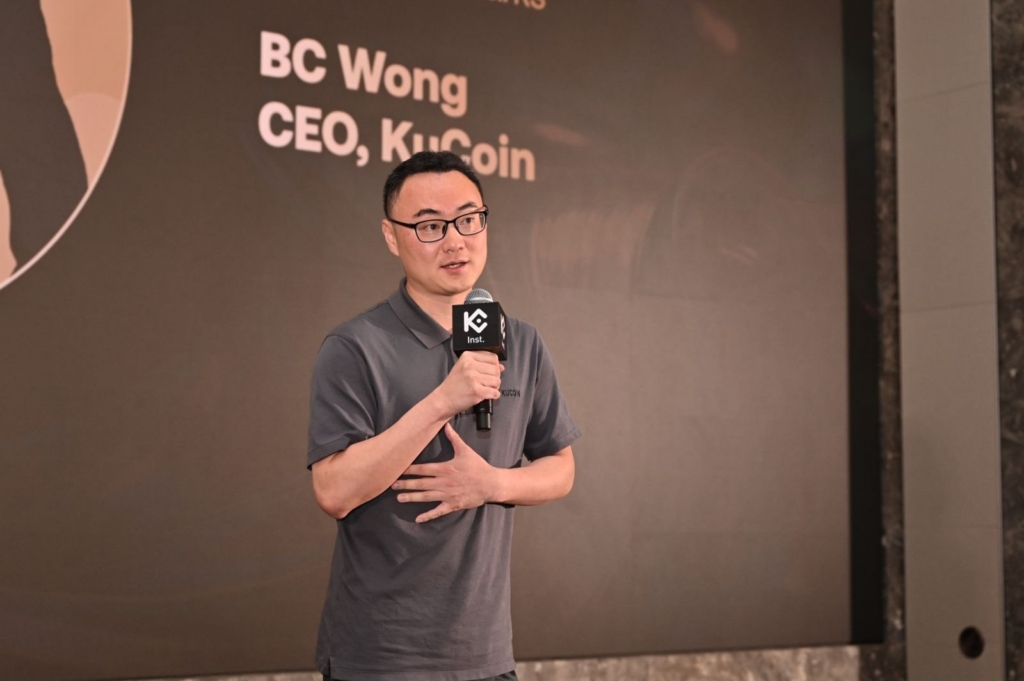
BC Wong, CEO of KuCoin, said:

“Volatility is a natural feature of digital asset markets. Long-term credibility is built not in periods of expansion, but through discipline, transparency, and robust risk management when market conditions are challenging.”

Ethan Cheng, COO of KuCoin, added:

“Institutional engagement in digital assets is increasingly driven by structural fundamentals rather than short-term price movements. Periods of volatility reinforce the importance of long-term alignment and risk-aware participation.”

This change in focus was mirrored in the conversations that took place throughout the evening. The viewpoints of the representatives of the institutions were discussed and shared about the management of portfolio risk, liquidity dynamics, execution efficiency, and security requirements. In a market climate that is more conservative, the conversation focused less on short-term success and more on how to preserve structural stability, responsiveness, and transparency in the market.

Amid the event, which was KuCoin Institutional’s first annual meeting of its sort, it acted as both a reflection on previous collaboration and an affirmation of ongoing commitment amid a period of less activity. A cautious posture was communicated to industry players during a gathering that took place in the midst of market uncertainties.

Although prices are subject to change, institutional discourse and structural development continue. The top actors in the sector have given a clear signal to the wider financial world, which is that the institutional underpinning of cryptocurrency is no longer founded on speculation, but rather on the methodical development of a mature, global market structure.


TagsexchangeKuCoin

Preguntas relacionadas

QWhat was the main focus of the KuCoin Institutional Premiere 2026 event according to the article?

AThe main focus was on long-term structural growth, institutional participation, and building long-term trust, governance standards, and operational resilience during market downturns, rather than short-term price movements.

QWhich KuCoin executives spoke at the event and what key points did they emphasize?

ACEO BC Wong emphasized that long-term credibility is built through discipline, transparency, and robust risk management during challenging market conditions. COO Ethan Cheng added that institutional engagement is increasingly driven by structural fundamentals rather than short-term price movements.

QWhat topics were discussed by institutional representatives during the event?

AThey discussed portfolio risk management, liquidity dynamics, execution efficiency, security requirements, and how to preserve structural stability, responsiveness, and transparency in the market.

QHow does the article characterize the current institutional approach to cryptocurrency markets?

AThe article states that institutional involvement is no longer primarily based on speculation but on the methodical development of a mature, global market structure, focusing on long-term alignment and risk-aware participation.

QWhere did the KuCoin Institutional Premiere 2026 take place and what was significant about this event?

AThe event took place in Hong Kong and it was KuCoin Institutional's first annual meeting of its kind, serving as both a reflection on previous collaboration and an affirmation of ongoing commitment during a period of market uncertainty.

Lecturas Relacionadas

Annual Salary of Millions Competing for Electricians, Meta Rushes to Open Its Own Technical School

The AI boom is facing an unexpected bottleneck: a severe shortage of skilled construction workers and electricians. As tech giants like Meta, OpenAI, and Alphabet race to build massive data centers—such as OpenAI's $16 billion "Stargate" project—they are hitting a critical labor wall. The U.S. needs an estimated 130,000 more electricians, 240,000 construction workers, and 150,000 supervisors by 2030 for AI infrastructure alone, but tens of thousands of electrician jobs go unfilled each year. While AI companies offer high premiums, with electricians earning up to $280,000 annually, worker scarcity still causes massive losses—delays on a single project can cost $14.2 million per month. The complexity of building AI data centers, which require immense power (equivalent to powering hundreds of thousands of homes), sophisticated electrical systems, and advanced liquid cooling solutions, demands highly skilled technicians who are in short supply. To combat this, companies are investing heavily in training. Meta has committed $115 million to a free training school offering tuition, housing, and stipends, targeting 5,000 new workers. OpenAI is partnering with unions to secure skilled labor. These efforts are paying off, with a significant rise in Gen Z interest in trade schools over college. However, the power demands are staggering. AI data centers are driving a rapid surge in electricity consumption, projected to account for up to 12% of U.S. power use by 2028 and raising costs for consumers. Furthermore, the construction boom is project-based, leading to a potential future glut of trained workers once building peaks, which could depress wages industry-wide. The race for AI supremacy now depends as much on skilled hands as on advanced chips.

marsbitHace 1 hora(s)

Annual Salary of Millions Competing for Electricians, Meta Rushes to Open Its Own Technical School

marsbitHace 1 hora(s)

OpenAI No Longer Sells Its Most Expensive Model for Profit

OpenAI is shifting its business strategy away from promoting its most expensive, flagship models for every task. Recent price cuts—80% for GPT-5.6 Luna and 20% for Terra—signal a deeper change: the company now actively advises users that many tasks don't require the most powerful model. Instead, OpenAI recommends a tiered approach: use the high-end GPT-5.6 Sol for complex planning and analysis, then delegate execution to cheaper models like Luna. This mirrors moves by Anthropic, which recently launched Claude Opus 5 at half the price of its top model, Fable 5. Both companies are de-emphasizing flagship models as primary revenue drivers, using them instead for brand prestige and technological showcases. The industry is entering a "mass-market" phase, similar to automotive, where high-volume, cost-effective models handle daily operations and drive scale. OpenAI's price reductions are partly enabled by AI models themselves optimizing underlying code and infrastructure, creating a self-reinforcing cycle of efficiency gains and cost reduction. Competition is shifting from "who is smartest" to "who offers the best value." The goal is no longer selling individual models but fostering widespread API adoption and ecosystem lock-in. By making AI calls cheap and ubiquitous, companies like OpenAI aim to become the indispensable, utility-like infrastructure powering automated workflows—the "water and electricity" of software, quietly embedded everywhere.

marsbitHace 1 hora(s)

OpenAI No Longer Sells Its Most Expensive Model for Profit

marsbitHace 1 hora(s)

Trading

Spot
活动图片




