Kraken is Also Issuing Tokens? A Comprehensive Guide to Ink Season 1 Points Program

Odaily星球日报Publicado a 2026-04-15Actualizado a 2026-04-15

Resumen

Kraken Pro, the professional trading platform of the major cryptocurrency exchange Kraken, has launched the first season of its Ink Points program. Ink is Kraken’s Ethereum Layer 2 blockchain, introduced in October 2024, designed to simplify user onboarding into DeFi by addressing common pain points like complex wallet setups and high gas fees. The article explains the differences between Kraken's three service tiers: the basic Kraken for beginners, the subscription-based Kraken+ offering fee-free tiers, and Kraken Pro for advanced traders with lower fees and professional tools. All versions share the same account and funds. A step-by-step guide is provided for interacting with Kraken Pro: users must register, complete KYC, navigate to the "Promos" section to access Ink Points, deposit funds, and start trading to earn points. Ink Points serve as a loyalty incentive within the Ink Layer 2 ecosystem. Points are earned through trading, staking, and referrals on Kraken Pro, with an affiliate program offering 10% commission on referrals. Points are calculated daily, distributed weekly, and accumulated over four-week seasons. A ranked, tiered competition system is in place, though points currently have no monetary value or tokenization capability. The program is not accessible in all regions.

Original | Odaily Planet Daily (@OdailyChina)

Author | Asher (@Asher_ 0210)
Last night, the Korean cryptocurrency exchange Kraken announced via its Kraken Pro official account that the Ink Season 1 points program is now live.
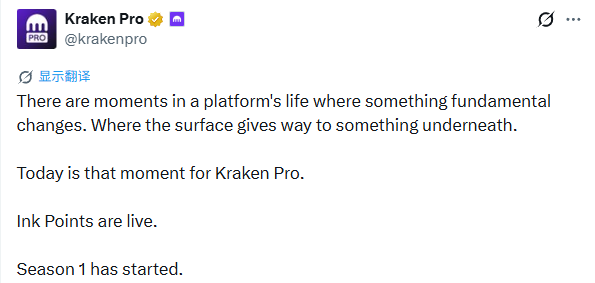
Kraken Pro officially announces the launch of the Ink points program

Kraken officially announced the launch of the Ink chain (an Ethereum Layer 2 designed to simplify user entry into DeFi) in October 2024, aiming to seamlessly bridge Kraken's over 10 million centralized exchange users to the on-chain DeFi ecosystem, addressing the pain points of traditional DeFi (such as complex wallet setup, high gas fees, fragmented liquidity, etc.). Although Ink is not the Kraken exchange itself, but an independent on-chain infrastructure, it is deeply integrated with Kraken's infrastructure (such as Kraken Wallet, zero withdrawal fee support, etc.).

At the end of last year, Kraken's valuation in the primary market once reached $20 billion. However, due to the cooling IPO environment in the crypto industry, its CEO subsequently chose to postpone the planned US listing originally scheduled for 2026. Therefore, it is more likely that Kraken will prioritize promoting the Ink chain to complete its token issuance before going public.

Below, Odaily Planet Daily provides a breakdown of the relationship between Kraken Pro and Kraken, a Kraken Pro interaction tutorial, and the Ink points rules.

Differences Between the 3 Versions of Kraken Exchange

This event takes place on Kraken Pro. Since Kraken currently has three versions, Odaily Planet Daily has compiled the differences between them as follows:

  • Kraken (Basic Version): Focuses on simplicity and ease of use, with a very intuitive interface, suitable for beginners or small-volume users with low trading frequency. Offers a standalone mobile app, low operational barrier, and leans towards a "buy-and-use" experience.
  • Kraken+ (Subscription/Membership Version): Builds upon the basic version with a subscription mechanism where users pay monthly for additional benefits. The core advantage is zero fees on the first $10,000 of trading volume per month, along with some additional perks. Suitable for users with certain trading needs looking to reduce costs.
  • Kraken Pro (Professional Version): Targets experienced traders, offering a standalone app and web interface. Features include more professional candlestick charts, a variety of order types (like limit, stop-loss, etc.), and a lower fee structure. Although it has a separate interface, it shares the same account and funds as the basic version, allowing users to switch between the regular version and Pro at any time.
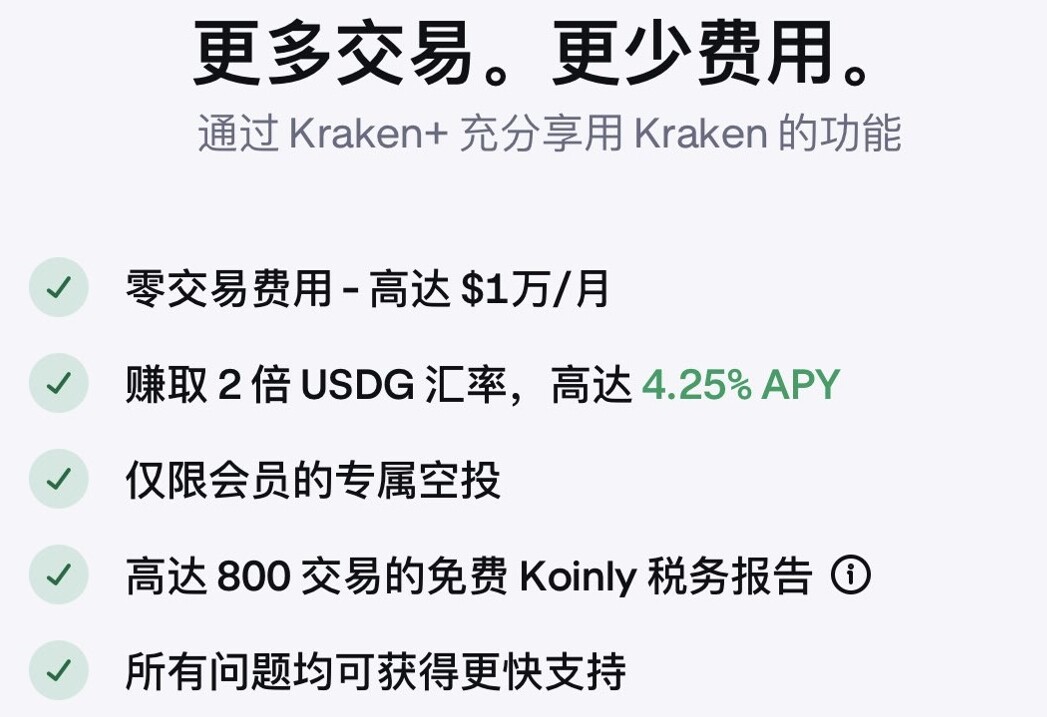
Difference between Kraken and Kraken+

Step-by-Step Guide to Interacting with Kraken Pro

STEP 1. Go to the Kraken Pro website (link: https://pro.kraken.com/) and complete account registration using your email.
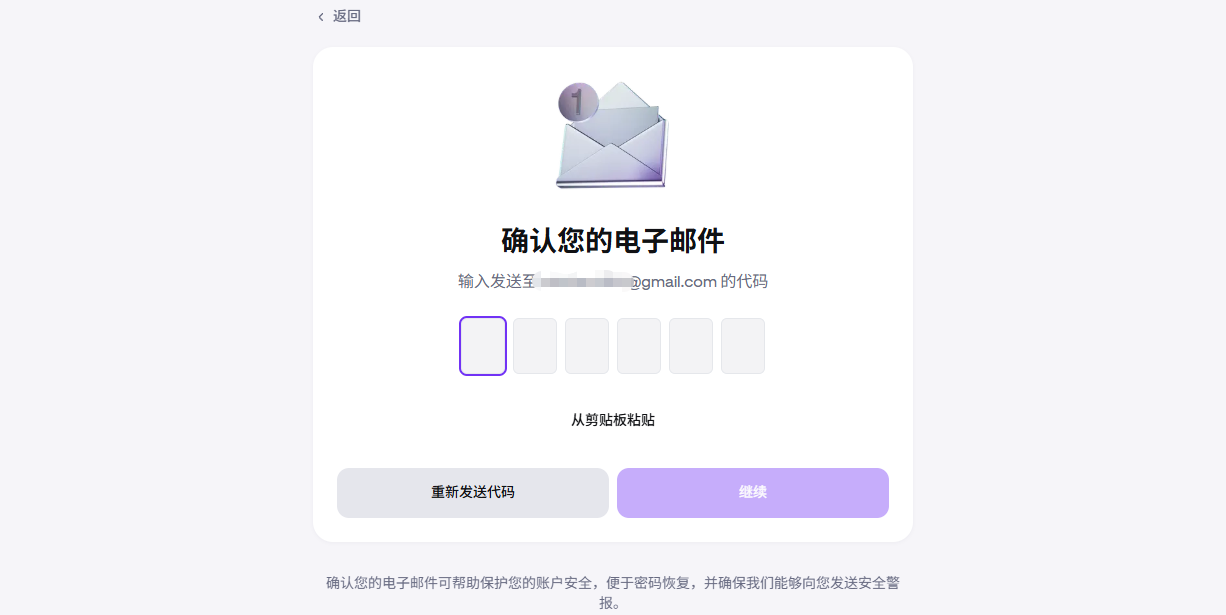
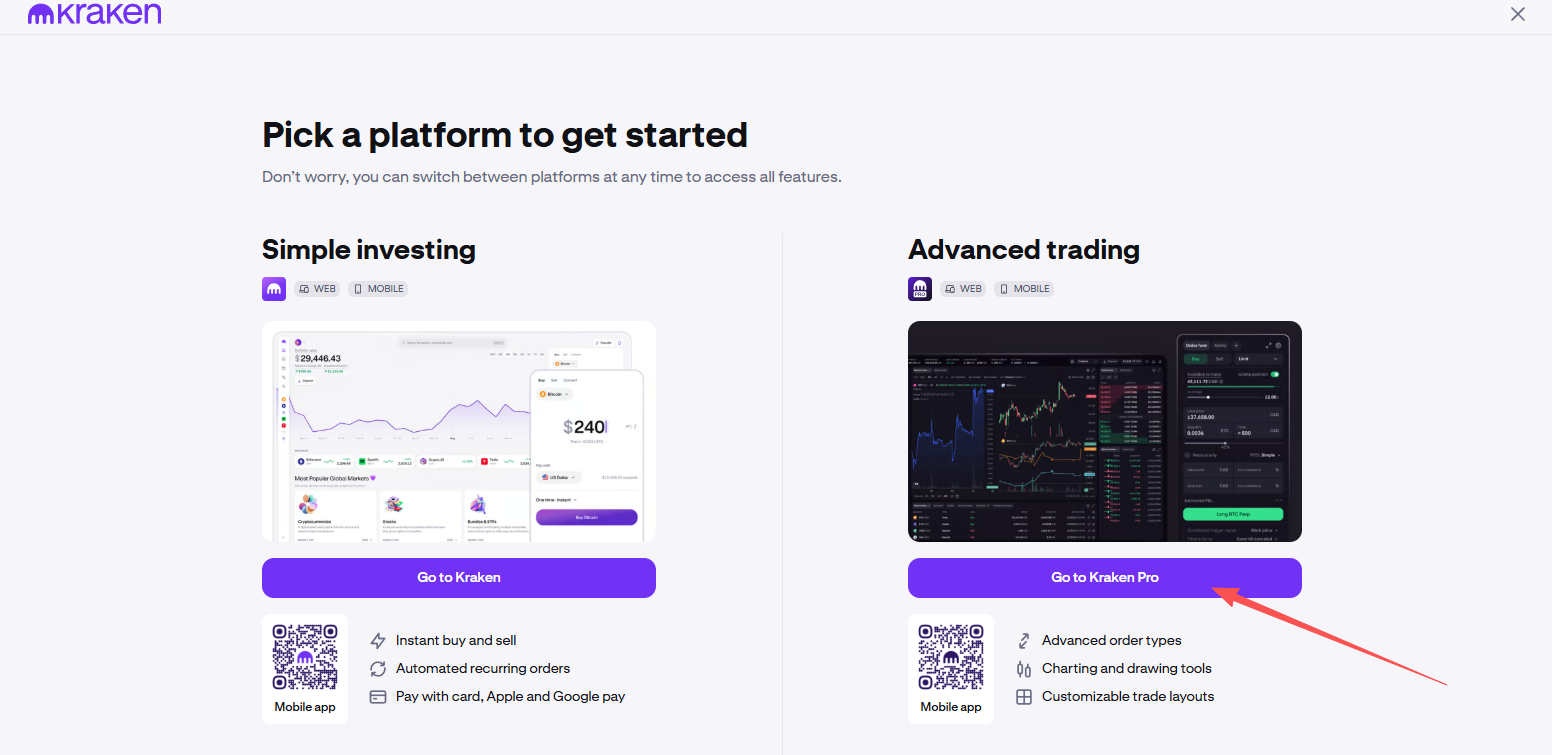
STEP 2. Select the Kraken Pro version. If using a mobile device, simply download the Kraken Pro app from your app store. Additionally, after accessing Kraken Pro, you need to complete KYC verification.
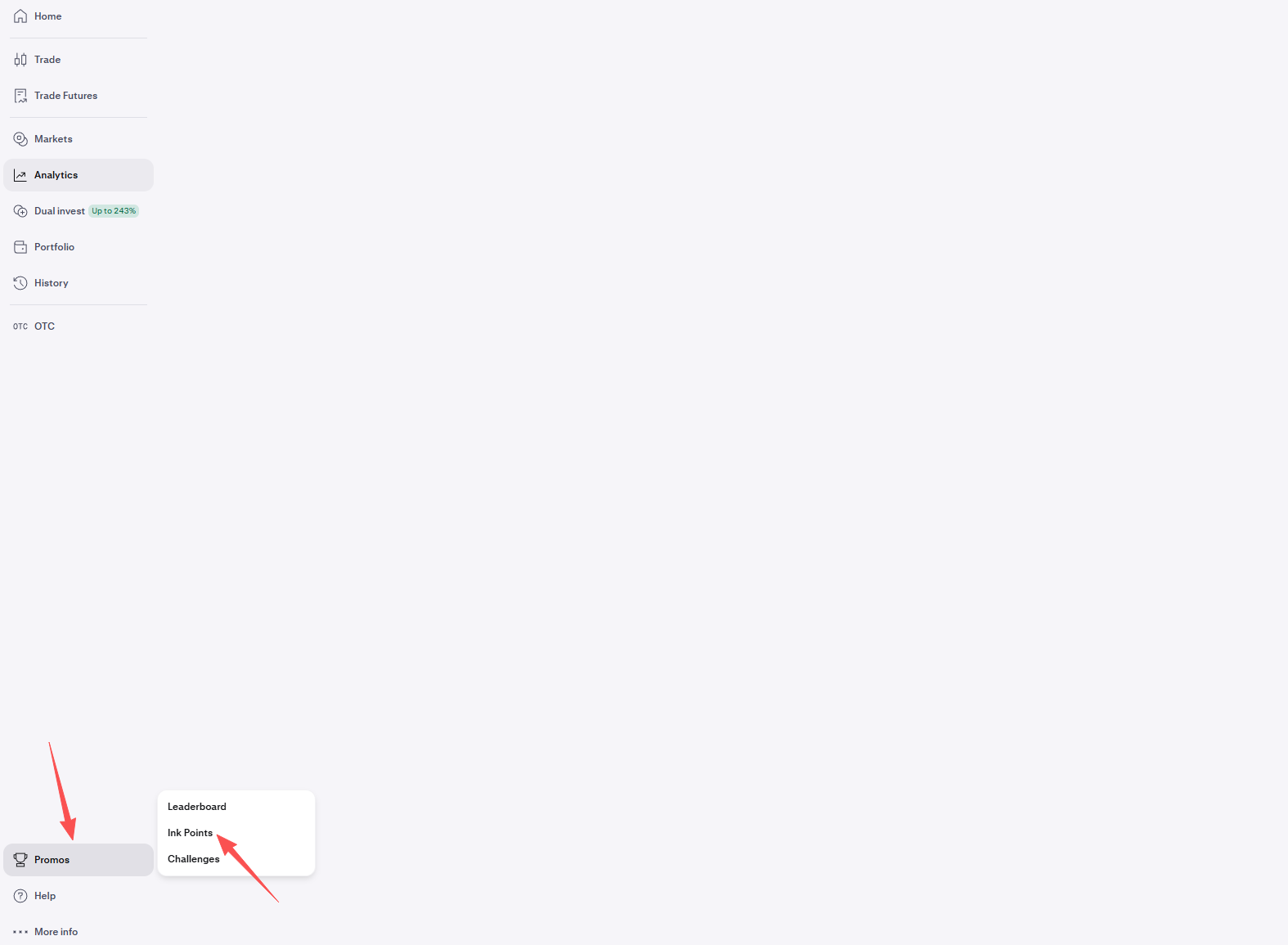
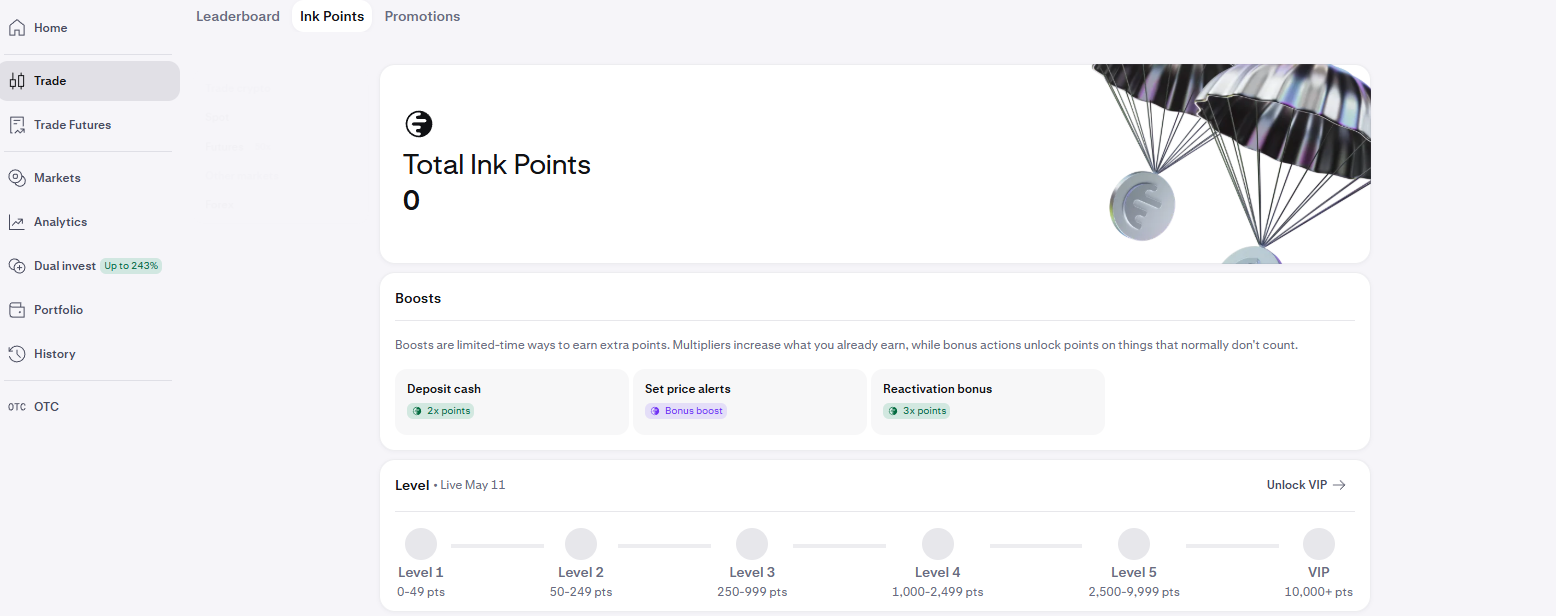
STEP 3. Click on "Promos" at the bottom and select "Ink Points" to enter the points interface.
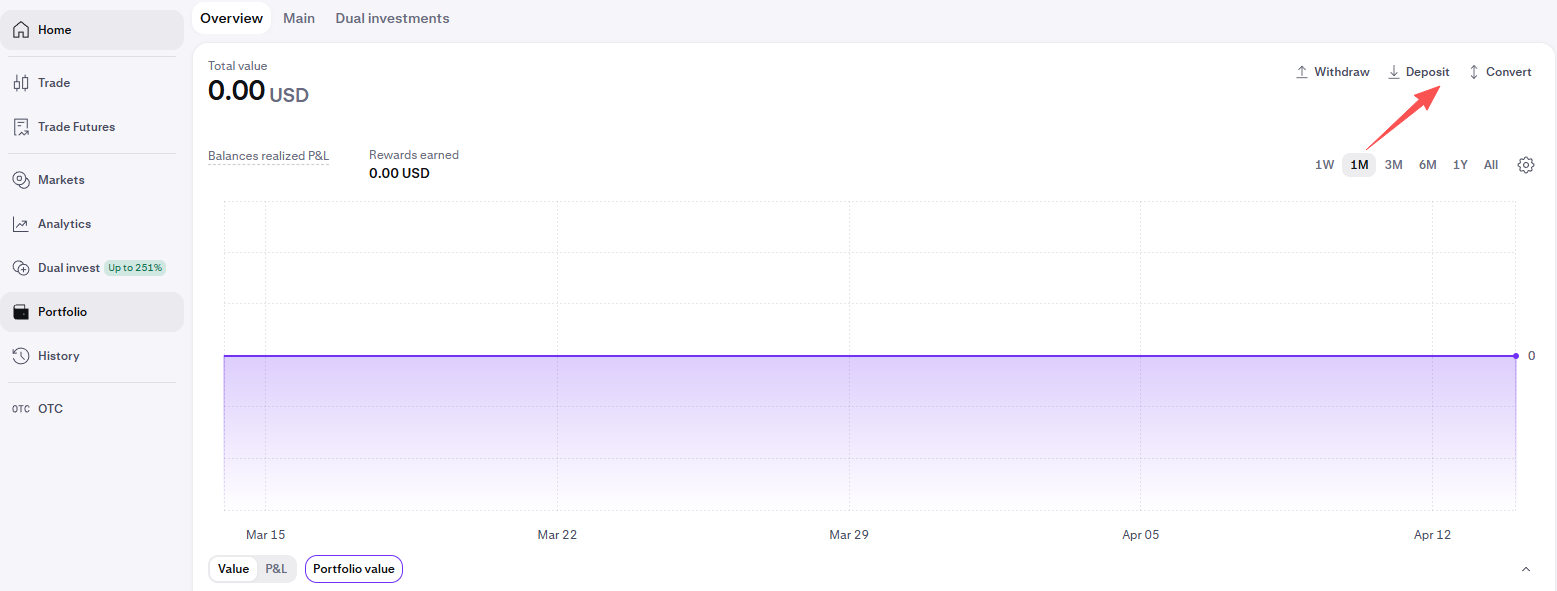
STEP 4. Click on "Portfolio" and then "Deposit" to fund your account, then you can start trading and earning points.
Detailed Explanation of Ink Points Rules

What are Ink Points

  • Ink Points are the points system for the Ink Layer2, connecting real user interactions with incentive mechanisms;
  • The Kraken Pro version will also adopt this points system as a loyalty program.

How to Earn Ink Points

  • Performing actions like trading, staking, and referring new users on Kraken Pro can earn Ink Points;
  • Joining the Kraken Alliance Program can earn a 10% Ink points rebate from referrals;

Additionally, the official encourages genuine user interaction: the earlier you start, the more active you are, and the more Kraken Pro products you use, the more points you will earn.

Ink Points Update Instructions

  • Points Calculation: Points are calculated daily, the system settles automatically every week, and points are distributed every Monday;
  • Season Structure: Every 4 weeks is a season, points for each season are calculated separately, total points are retained for life;
  • Acceleration Mechanism: Point multiplier events will be launched regularly, users should pay attention to official announcements;
  • Leaderboard + Tiers: Rankings are updated weekly, with six tiers based on current points (Tiers 1 to 5 and VIP). The exclusive "Tier System" means you compete only with traders in the same tier. Except for VIP, other tiers currently offer no additional benefits, but plans are to gradually open them up in the future.

Furthermore, the official notes that Ink Points are not tokenizable, not redeemable, have no cash value, and are temporarily unavailable in some regions.


Preguntas relacionadas

QWhat is the Ink Points program announced by Kraken Pro?

AThe Ink Points program is a loyalty and incentive system for Kraken Pro users, designed to reward activities like trading, staking, and referrals. It is part of the Ink Layer2 ecosystem and aims to encourage user engagement.

QWhat are the key differences between Kraken, Kraken+, and Kraken Pro?

AKraken is the basic version for beginners with a simple interface. Kraken+ is a subscription-based version offering benefits like zero fees on the first $10,000 in monthly trading volume. Kraken Pro is the advanced version for experienced traders, featuring professional charts, lower fees, and more order types, while sharing the same account and funds as the basic version.

QHow can users earn Ink Points on Kraken Pro?

AUsers can earn Ink Points by trading, staking, and referring new users on Kraken Pro. Additionally, joining the Kraken Alliance Program allows users to earn a 10% rebate on Ink Points from referred users.

QWhat is the relationship between Ink Chain and Kraken exchange?

AInk Chain is an independent Ethereum Layer2 infrastructure designed to simplify user entry into DeFi, but it is deeply integrated with Kraken's infrastructure, such as Kraken Wallet and zero withdrawal fees. It is not the Kraken exchange itself.

QWhat are the rules for Ink Points distribution and calculation?

AInk Points are calculated daily and distributed automatically every Monday. The program runs in 4-week seasons, with points accumulated per season but lifetime totals retained. There are six user levels (1 to 5 and VIP), and rankings are updated weekly. Points cannot be tokenized, exchanged, or cashed out.

Lecturas Relacionadas

Super-Rich Hoarded Record Cash in February, Stock Market Hit New Highs Four Months Later: Who's Getting Fooled?

In February, the total assets in US money market funds reached a record high of approximately $8.25 trillion, a trend highlighted by high-net-worth individuals increasing their cash holdings. Notably, Warren Buffett's Berkshire Hathaway amassed a $381.7 billion cash pile ahead of his 2025 retirement, while other prominent figures like Peter Thiel sold tech stocks, fueling narratives of wealthy investors seeking safety. However, by June, the trend reversed. Money market fund assets fell to around $7.87 trillion, indicating a flow of capital back into equities. Concurrently, the S&P 500 and Nasdaq reached all-time highs, with the S&P 500 surpassing 7600 points. This market surge occurred despite the earlier defensive moves, highlighting a potential opportunity cost for those who retreated to cash. Analysis shows that since early 2022, the S&P 500's total return significantly outpaced that of prime money market funds. The capital shifted from equities appears to have been partly reallocated into alternative investments like real estate, art, and private credit, especially among ultra-high-net-worth individuals. Meanwhile, major investment banks like Goldman Sachs and Morgan Stanley have raised their year-end targets for the S&P 500, citing AI-driven earnings growth, while also cautioning about risks including market concentration and economic fragility beneath the surface rally.

marsbitHace 17 min(s)

Super-Rich Hoarded Record Cash in February, Stock Market Hit New Highs Four Months Later: Who's Getting Fooled?

marsbitHace 17 min(s)

Robot Vacuums Have Been Competing for 20 Years, So Why Are 90% of Chinese Households Still Hesitant?

The article explores why over 90% of Chinese households are still hesitant to adopt robotic vacuum cleaners despite two decades of industry development, identifying a core "trust gap" as the primary barrier. The central issue is not a lack of need, but user concerns about reliability in dynamic, real-world home environments. Common anxieties include the robot dragging pet waste, colliding with transparent objects, tangling in cords, scattering cat litter, getting stuck on thresholds, missing corners under furniture, and requiring high-maintenance bases that develop odors. The industry's past focus on competing on technical specs (suction power, mopping functions) has not adequately addressed these practical usability and trust problems. The piece then examines DJI's entry into the market with its ROMO 2 model as a potential new approach. Leveraging its expertise in spatial perception and obstacle avoidance from drones, DJI's solution emphasizes "less intervention" through three key principles: less manual re-cleaning, less user rescue missions, and less maintenance. Specific ROMO 2 features highlighted include advanced obstacle recognition (handling transparent objects and small items), adaptive leg mechanisms for climbing thresholds (up to 8.5cm), an extendable arm for reaching under furniture, AI for identifying and appropriately handling different mess types (e.g., avoiding scattering dry debris), and a self-cleaning base designed to minimize user upkeep. The article argues the next phase of competition should shift from a "parameter race" to a "trust race." It draws a parallel to the iPhone's simplification of the smartphone, suggesting that focusing on a reliable, low-hassle user experience—where people feel confident leaving their floors to the machine—is what's needed to finally convince the vast majority of观望ing families. The ultimate test for products like the ROMO 2 will be long-term user adoption, retention, and口碑, not just technical specifications.

marsbitHace 17 min(s)

Robot Vacuums Have Been Competing for 20 Years, So Why Are 90% of Chinese Households Still Hesitant?

marsbitHace 17 min(s)

The Unclear American Economy: Resilient or Cooling Down?

**U.S. Economic Outlook: Resilient or Cooling Down?** This analysis examines whether the U.S. economy is heading towards a recession. While still growing, the economy shows significant signs of strain. Key data points include Q1 2026 GDP growth of 1.6% and Q1 PCE inflation at 4.5% (annualized), more than double the Fed's target. The labor market remains resilient but is softening, with unemployment at 4.3%. Critical recession indicators present a mixed picture: the yield curve has normalized after a prolonged inversion (historically a late-cycle signal), and the Conference Board's Leading Economic Index has been declining. Current recession probability for 2026 is estimated at 19%, but rises to 41% for 2027, indicating heightened delayed risks. Major pressures are building: a wall of corporate debt refinancing at higher rates, depleted consumer savings, a contracting housing sector, and an energy price shock. The economy exhibits stagflationary characteristics—high inflation alongside slowing growth—which constrains the Federal Reserve's policy options. Historical patterns show recessions are often preceded by Fed tightening and yield curve inversions. If a recession occurs, it is expected to be mild, similar to 2001 rather than 2008. For investors, a defensive portfolio shift toward staples, healthcare, and short-term high-quality bonds may be prudent, while maintaining a long-term, diversified perspective. Key developments to monitor include upcoming GDP, employment, and inflation data, as well as policy signals from the new Fed Chair.

marsbitHace 24 min(s)

The Unclear American Economy: Resilient or Cooling Down?

marsbitHace 24 min(s)

The Most Advanced Large Models Are Now Subject to Export Controls Like Enriched Uranium

In an unprecedented move mirroring the control of enriched uranium, the US Commerce Department has imposed an export control ban on Anthropic's advanced AI models, Fable 5 and Mythos 5, forcing their global shutdown. This marks the first time a purely digital entity—a set of neural network weights—has been subjected to such hardware-like strategic export restrictions, based not on physical scarcity but on its concentrated "capability density." The article draws a direct parallel to the historical control of nuclear technology, arguing that just as uranium ore becomes a controlled substance only when enriched to a critical threshold, AI capabilities become subject to regulation when compressed into a single, potent, and easily accessible interface. This "enriched AI" is seen as crossing a threshold where its aggregated power poses a potential threat. The author predicts three major consequences over the next decade. First, capability auditing will become institutionalized, with governments setting compliance checklists and thresholds for model power, triggering automatic export controls. Second, jurisdictional boundaries will blur as US export controls extend their reach globally, governing any user of American AI services regardless of location, forcing non-US entities to reconsider their AI supply chain dependencies. Third, a technological bifurcation will occur, splitting the AI landscape into a restricted, high-risk track of advanced US proprietary models and a more reliable track of open-source or locally developed alternatives, where guaranteed access may outweigh raw performance. The core crisis exposed is the lack of a legal property rights framework for AI "intelligence." While companies invest heavily in integrating these models into their production systems, legally they only purchase a service that can be revoked at any time, leaving them with no recourse for their sunk investments. The conclusion warns of a permanently fractured digital world where the most capable models may not be the most usable, and clear, unassailable ownership of technology will become paramount.

marsbitHace 37 min(s)

The Most Advanced Large Models Are Now Subject to Export Controls Like Enriched Uranium

marsbitHace 37 min(s)

Trading

Spot
Futuros
活动图片




