Justin Sun Watches $60M Vanish From WLFI Holdings as His Access Remains Locked

ccn.comPublicado a 2025-12-23Actualizado a 2025-12-23

Resumen

Justin Sun, an early and prominent backer of the WLFI token, remains unable to access his holdings, which have lost an estimated $60 million in value over three months. His wallet, along with 272 others, was frozen by the WLFI team in September over concerns of market manipulation, though no specific evidence was provided. While some wallets have since been unfrozen or migrated, Sun’s remains blacklisted without explanation. His 545 million WLFI tokens, once valued at over $130 million, are now worth around $74 million. The situation highlights the tension between WLFI’s decentralized branding and its centralized control, raising questions about governance and investor risk in crypto projects.

Key Takeaways

  • Justin Sun remains unable to access millions of WLFI tokens frozen since September.
  • The value of his locked WLFI holdings has fallen by roughly $60 million over three months.
  • WLFI’s team has provided little explanation for why Sun’s wallet remains blacklisted.

Justin Sun backed WLFI early, publicly, and at scale.

Three months later, he is still locked out of his investment and watching its value steadily erode.

The Tron founder’s WLFI holdings, frozen shortly after the token’s public debut in September, have lost an estimated $60 million in value as prices slid and access remained restricted.

Despite partial reversals affecting other wallets tied to the same freeze, Sun’s account remains blacklisted, with no clear explanation from the project team.

Earn Crypto with These Top Mining Apps
Sponsored
Disclosure
We sometimes use affiliate links in our content, when clicking on those we might receive a commission at no extra cost to you. By using this website you agree to our terms and conditions and privacy policy.
"}' data-trk="67d19e1ff74d32de176c1b03" href="https://www.miningrigrentals.com?ref=2742248" rel="nofollow" target="_blank">
Mining Rig Rentals<\/h3>"}' data-trk="67d19e1ff74d32de176c1b03" href="https://www.miningrigrentals.com?ref=2742248" rel="nofollow" target="_blank">

Mining Rig Rentals

promotions
Earn a commission on your referral\u2019s transactions.<\/strong>"}' data-trk="67d19e1ff74d32de176c1b03" href="https://www.miningrigrentals.com?ref=2742248" rel="nofollow" target="_blank"> Earn a commission on your referral’s transactions.
Coins
6
Claim Offer
"}' data-trk="67d19ee2f74d32de176c1b5f" href="https://hashing24.com/?rid=53616c7465645f5fe8657fbf16217f483baff299e53f4db4" rel="nofollow" target="_blank">
Hashing24<\/h3>"}' data-trk="67d19ee2f74d32de176c1b5f" href="https://hashing24.com/?rid=53616c7465645f5fe8657fbf16217f483baff299e53f4db4" rel="nofollow" target="_blank">

Hashing24

promotions
Earn 3-10% on referral purchases<\/strong>"}' data-trk="67d19ee2f74d32de176c1b5f" href="https://hashing24.com/?rid=53616c7465645f5fe8657fbf16217f483baff299e53f4db4" rel="nofollow" target="_blank"> Earn 3-10% on referral purchases
Coins
Claim Offer
"}' data-trk="67d1a119f74d32de176c1be1" href="https://accounts.binance.com/en/register?ref=DTDJBNX1" rel="nofollow" target="_blank">
Binance Pool<\/h3>"}' data-trk="67d1a119f74d32de176c1be1" href="https://accounts.binance.com/en/register?ref=DTDJBNX1" rel="nofollow" target="_blank">

Binance Pool

promotions
Sign up, verify, deposit 100 USDT, get 100 USDT bonus<\/strong>"}' data-trk="67d1a119f74d32de176c1be1" href="https://accounts.binance.com/en/register?ref=DTDJBNX1" rel="nofollow" target="_blank"> Sign up, verify, deposit 100 USDT, get 100 USDT bonus
Coins
5
Claim Offer

A High-Profile Bet Goes Sideways

Sun was among WLFI’s most prominent early backers.

He began investing in the Donald Trump–linked DeFi project in late 2024, initially committing around $30 million during early sales.

Additional purchases later pushed his exposure to roughly $75 million by early 2025, according to on-chain data.

At the time, Sun was not just a passive investor. He was publicly aligned with the project, named as an adviser, and closely associated with WLFI’s early momentum.

That relationship soured quickly.

Just days after WLFI began trading publicly in September, the project froze and blacklisted 273 wallets, including Sun’s.

The team cited concerns over market manipulation and unusually large fund movements across exchanges, though it did not disclose specific evidence tied to individual wallets.

Frozen as the Price Fell

While some wallets affected by the September action were later addressed, either unfrozen or migrated to new addresses, Sun’s wallet remains locked.

Over the same period, WLFI’s price has fallen sharply.

Since its public debut, the token has declined by roughly 70%, turning Sun’s inability to move his holdings into a costly problem.

His locked balance of approximately 545 million WLFI tokens is now valued at around $74 million, down from more than $130 million in late summer.

On-chain data from Arkham Intelligence indicates Sun previously held close to 3 billion WLFI tokens, with the value of those holdings dropping sharply during August and September as restrictions took effect and prices declined.

A DeFi Irony

The situation underscores a familiar tension in crypto markets: projects branded as decentralized retaining significant centralized control.

WLFI is marketed as a DeFi protocol; however, its ability to freeze individual wallets—and selectively reverse those decisions—has raised questions about governance, transparency, and accountability.

For critics, Sun’s predicament highlights the risks investors face when token control ultimately rests with a small group of operators.

Last month, WLFI transferred funds from several wallets affected by the September freeze into new addresses, signaling that at least some cases were being resolved.

That move fueled speculation that Sun’s account might be next. So far, that has not happened.

The WLFI team has not publicly clarified why Sun remains blacklisted or whether his access will be restored.

Until then, one of the project’s most visible early supporters is stuck on the sidelines, unable to sell, hedge, or exit, watching the value of his investment shrink in real time.

For an industry that often champions decentralization as a safeguard against arbitrary control, the episode serves as a reminder that, in practice, power can still be highly concentrated—even for crypto’s biggest names.

Top Trending Crypto Articles
  • Best Exchanges Check Out Our Recommended Exchanges Here
  • Buy Crypto Fast How To Buy Crypto with a Credit Card Now
  • Safe Crypto Gambling See Our Picks for the Best Crypto Gambling Sites

Preguntas relacionadas

QWhat happened to Justin Sun's investment in WLFI tokens?

AJustin Sun's WLFI tokens, worth approximately $75 million, were frozen and blacklisted shortly after the token's public debut in September. He remains unable to access his holdings, which have lost an estimated $60 million in value as the price declined.

QWhy was Justin Sun's wallet blacklisted by the WLFI project?

AThe WLFI team cited concerns over market manipulation and unusually large fund movements across exchanges as the reason for freezing 273 wallets, including Sun's. However, they did not disclose specific evidence tied to individual wallets.

QHow much has the value of Justin Sun's WLFI holdings decreased?

AThe value of Sun's locked WLFI holdings has fallen by roughly $60 million over three months, from over $130 million in late summer to around $74 million at the time of reporting.

QHas the WLFI project taken any action to address the frozen wallets?

AYes, the WLFI team partially reversed the freeze for some wallets by transferring funds to new addresses last month. However, Justin Sun's wallet remains blacklisted with no clear explanation or resolution.

QWhat does this situation reveal about decentralization in DeFi projects like WLFI?

AThe situation highlights the tension between DeFi's decentralized branding and the reality of centralized control. WLFI's ability to freeze individual wallets and selectively reverse decisions raises questions about governance, transparency, and accountability in crypto projects.

Lecturas Relacionadas

Has Hook Summer Really Arrived? sato, Lo0p, FLOOD Ignite the New Narrative of Uniswap v4

"Hook Summer" Arrives? Sato, Lo0p, FLOOD Ignite Uniswap v4 Narrative Amidst a slight market recovery, attention within the Ethereum ecosystem has shifted to Meme coins built on Uniswap v4's Hook protocol. Following ASTEROID, tokens like sato, sat1, Lo0p, and FLOOD have become market focal points, with market caps ranging from millions to tens of millions, bringing concentrated liquidity to a narrative-dry market. Uniswap v4 Hooks are "plugin smart contracts" that allow developers to inject custom logic at key points in a liquidity pool's lifecycle (initialization, adding/removing liquidity, swaps, etc.), making the AMM programmable. Recent representative projects include: * **sato**: Market cap peaked over $38M; uses a v4 curve mechanism for minting/burning, locking ETH as reserve. * **sat1**: Market cap briefly exceeded $10M, positioning as an "optimized sato," but later declined significantly. * **Lo0p**: Market cap neared $6.6M; a "lending AMM protocol" allowing users to borrow ETH against deposited LO0P tokens without immediate selling pressure. * **FLOOD**: Market cap approached $6M; channels trading reserves into Aave v3 to generate yield, which is retained in the pool. The emergence of these Hook-based tokens could drive long-term growth for the Uniswap ecosystem by attracting users and liquidity to v4 pools. Combined with Uniswap's activated fee switch (partially used to burn UNI), the long-term outlook for UNI appears positive. However, short-term UNI price appreciation is not directly guaranteed. Factors include the sustainability and lifecycle of these new tokens, their price volatility, overall market conditions, and regulatory pressures. Currently, Uniswap v4's TVL ($595M) lags behind v3 and v2, indicating Hook adoption still requires time to mature. In summary, the Hook ecosystem serves as "long-term nourishment" for UNI, but acts more as a "catalyst" than a direct "booster" in the short term. Note: These are early-stage experimental tokens and may carry unknown risks.

marsbitHace 7 min(s)

Has Hook Summer Really Arrived? sato, Lo0p, FLOOD Ignite the New Narrative of Uniswap v4

marsbitHace 7 min(s)

Has Hook Summer Truly Arrived? sato, Lo0p, FLOOD Ignite the New Uniswap v4 Narrative

With the broader market showing signs of recovery, a new wave of interest has emerged around Ethereum-based meme coins. Following ASTEROID, tokens like sato, sat1, Lo0p, and FLOOD, built upon the Uniswap v4 Hook protocol, are capturing market attention. Their market capitalizations range from millions to tens of millions of dollars, injecting much-needed focused liquidity into a market lacking narratives. This article explores whether this trend signifies an incoming "Hook Summer" and its potential impact on UNI's price. Hooks are essentially plug-in smart contracts for Uniswap v4 liquidity pools, allowing developers to inject custom logic at key points in a pool's lifecycle (like initialization, adding/removing liquidity, swaps). This transforms the AMM into programmable building blocks. Key highlighted projects include: * **sato**: Peaked over $38M market cap. It utilizes a v4 curve for minting/burning; buying locks ETH as reserve to mint new tokens, while selling redeems ETH from the reserve and burns tokens. * **sat1**: Market cap briefly exceeded $10M, promoted as an "optimized sato," but later declined significantly. * **Lo0p**: Reached nearly $6.6M. It's a lending AMM protocol where buying LO0P tokens locks them as collateral, allowing users to borrow ETH from the pool reserve at 40% LTV, aiming to improve capital efficiency for idle ETH in LPs. * **FLOOD**: Peaked near $6M. Its mechanism directs asset reserves from buys into Aave v3 to generate yield, with fees and interest retained in the pool to potentially influence the token's price long-term. In the long term, the development of the Hook ecosystem can attract users and liquidity to Uniswap v4, benefiting UNI's fundamentals—especially combined with the recent activation of the protocol fee switch, where a portion of fees is used to burn UNI. However, in the short term, these Hook-based tokens are unlikely to directly drive significant UNI price appreciation. Their impact is moderated by factors like token sustainability, price volatility, and broader market and regulatory conditions. Currently, Uniswap v4's TVL ($595M) still trails behind v2 and v3, indicating adoption and growth will take time. The article concludes that while the Hook ecosystem provides long-term "nourishment" for UNI, its short-term role is more of a "catalyst" than a "booster." Readers are cautioned that these are early-stage experimental tokens and may carry unknown risks.

Odaily星球日报Hace 20 min(s)

Has Hook Summer Truly Arrived? sato, Lo0p, FLOOD Ignite the New Uniswap v4 Narrative

Odaily星球日报Hace 20 min(s)

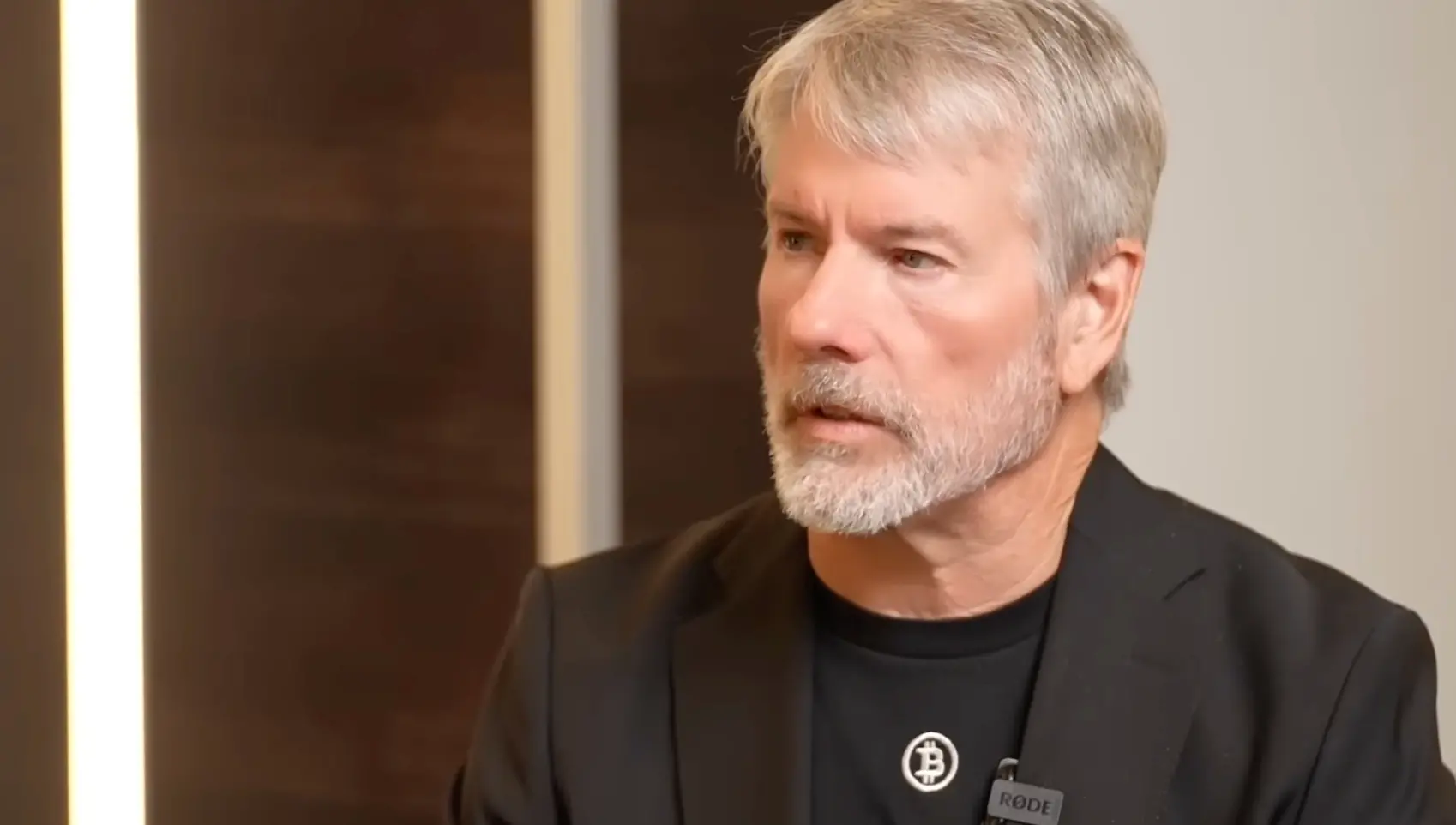
Interview with Michael Saylor: I Did Say I Would Sell Bitcoin, But Never a Net Sale

Interview with Michael Saylor: I Said We'd Sell Bitcoin, But Never Be a Net Seller In a recent podcast, MicroStrategy Executive Chairman Michael Saylor clarified the company's stance on potentially selling Bitcoin. Following MicroStrategy's earnings call statement about being prepared to sell BTC to fund dividends for its STRC (Strategic) credit product, Saylor emphasized the distinction between selling and being a "net seller." Saylor explained the core business model: MicroStrategy sells credit instruments like STRC and uses the proceeds to buy Bitcoin, which is viewed as "digital capital" expected to appreciate around 30-40% annually. A portion of these capital gains can then be used to pay the dividends on the credit products. He stressed that even if the company sells some Bitcoin for dividends, it simultaneously buys much more with new credit issuance. For example, after raising $3.2 billion from STRC sales in April, the dividend obligation was only $80-90 million, making the company a net buyer. The clarification aims to counter market narratives questioning the value of Bitcoin on MicroStrategy's balance sheet if it were never sold, and to dismiss claims of a "Ponzi scheme." Saylor reiterated his personal philosophy for investors: "Don't be a net seller of bitcoin" and ensure your Bitcoin holdings increase each year. Saylor also discussed Bitcoin's role as the foundation for "digital credit," noting that STRC has become the largest and most liquid preferred stock issue in the U.S., offering high risk-adjusted returns (Sharpe ratio). He highlighted Bitcoin's deep liquidity, stating that even large purchases by MicroStrategy do not move the market significantly, which is driven by macro factors, geopolitical tensions, and capital flows from ETFs and credit products. Finally, Saylor reflected on his early inspiration from sci-fi books, which motivated his path to MIT, and maintained his fundamental thesis on Bitcoin remains unchanged: it is superior digital capital enabling superior digital credit.

链捕手Hace 24 min(s)

Interview with Michael Saylor: I Did Say I Would Sell Bitcoin, But Never a Net Sale

链捕手Hace 24 min(s)

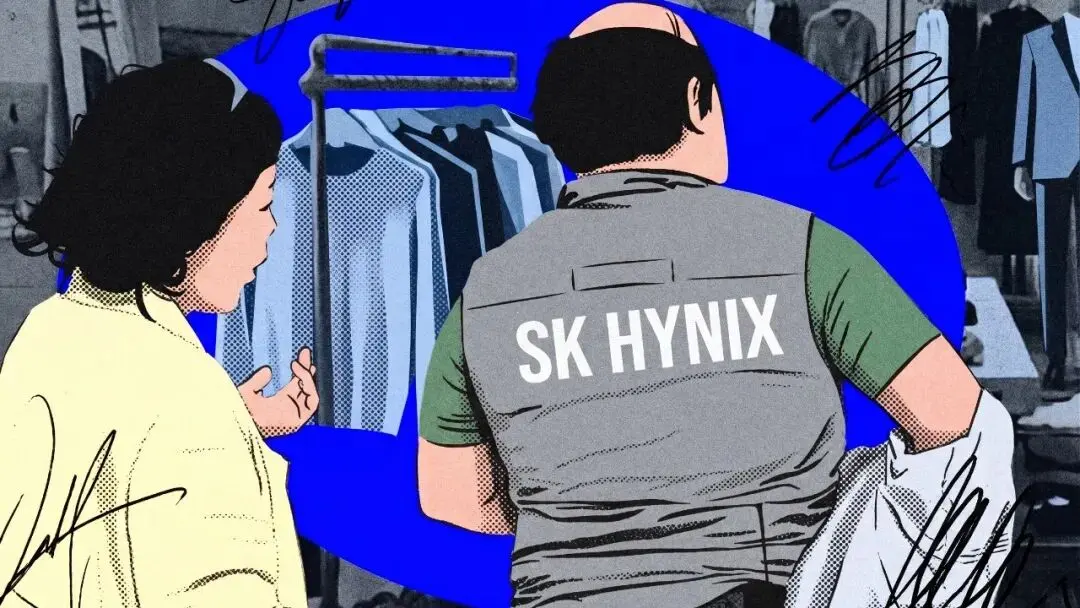
Beaten SK Hynix Employees in China: Year-end Bonus Less Than 5% of Korean Staff's

"SK Hynix Chinese Staff Hit Hard: Bonuses Less Than 5% of Korean Counterparts" Driven by the AI boom, South Korea's SK Hynix is experiencing record performance, with media reports predicting massive year-end bonuses for its employees, making them highly desirable in the matchmaking market. However, this prosperity starkly contrasts with the situation for the company's Chinese employees. According to reports, SK Hynix operates under a rule allocating 10% of operating profit for employee bonuses. While projections suggest Korean employees could receive bonuses reaching millions of RMB, a Chinese employee with over a decade of technical experience revealed the disparity: "If they get 3 million, Chinese staff get less than 5% of that." After adjustments based on KPI ratings, this employee's highest bonus was slightly over 100,000 RMB. Bonuses are paid annually in Korea but semi-annually in China. During the industry downturn in 2023-2024, Chinese employees received no bonus at all. The gap extends beyond bonuses. Recruitment posts for SK Hynix's Chinese factories (in Wuxi, Dalian, Chongqing) show engineer monthly salaries ranging from 10,000 to 35,000 RMB, with a 13th-month salary promised. Chinese employees also receive standard benefits like annual leave but lack stock incentives, which are reportedly unavailable to them. Furthermore, management positions in China are predominantly held by Korean personnel, though industry observers note a gradual increase in local middle managers over time. SK Hynix has confirmed the 10% bonus rule but cautioned that specific future bonus amounts remain unpredictable. The company forecasts strong demand for HBM and other high-value enterprise products for the next 2-3 years, driven by AI infrastructure investment. This focus on business-to-business markets may continue to constrain supply for consumer products, potentially prolonging price increases for components like memory.

链捕手Hace 37 min(s)

Beaten SK Hynix Employees in China: Year-end Bonus Less Than 5% of Korean Staff's

链捕手Hace 37 min(s)

Trading

Spot
Futuros

Artículos destacados

Cómo comprar SUN

¡Bienvenido a HTX.com! Hemos hecho que comprar SUN (SUN) sea simple y conveniente. Sigue nuestra guía paso a paso para iniciar tu viaje de criptos.Paso 1: crea tu cuenta HTXUtiliza tu correo electrónico o número de teléfono para registrarte y obtener una cuenta gratuita en HTX. Experimenta un proceso de registro sin complicaciones y desbloquea todas las funciones.Obtener mi cuentaPaso 2: ve a Comprar cripto y elige tu método de pagoTarjeta de crédito/débito: usa tu Visa o Mastercard para comprar SUN (SUN) al instante.Saldo: utiliza fondos del saldo de tu cuenta HTX para tradear sin problemas.Terceros: hemos agregado métodos de pago populares como Google Pay y Apple Pay para mejorar la comodidad.P2P: tradear directamente con otros usuarios en HTX.Over-the-Counter (OTC): ofrecemos servicios personalizados y tipos de cambio competitivos para los traders.Paso 3: guarda tu SUN (SUN)Después de comprar tu SUN (SUN), guárdalo en tu cuenta HTX. Alternativamente, puedes enviarlo a otro lugar mediante transferencia blockchain o utilizarlo para tradear otras criptomonedas.Paso 4: tradear SUN (SUN)Tradear fácilmente con SUN (SUN) en HTX's mercado spot. Simplemente accede a tu cuenta, selecciona tu par de trading, ejecuta tus trades y monitorea en tiempo real. Ofrecemos una experiencia fácil de usar tanto para principiantes como para traders experimentados.

512 Vistas totalesPublicado en 2024.12.12Actualizado en 2025.03.21

Cómo comprar SUN

Discusiones

Bienvenido a la comunidad de HTX. Aquí puedes mantenerte informado sobre los últimos desarrollos de la plataforma y acceder a análisis profesionales del mercado. A continuación se presentan las opiniones de los usuarios sobre el precio de SUN (SUN).

活动图片