Japan’s SBI Bank Expands Crypto Push With BTC, ETH, XRP Rewards Program For Depositors

bitcoinistPublicado a 2026-06-10Actualizado a 2026-06-10

Resumen

SBI Shinsei Bank, part of Japan's SBI Group, is launching a crypto rewards program this fall to expand its digital assets business. The program will reward depositors with vouchers worth 20% of their interest payments, redeemable for Bitcoin (BTC), Ethereum (ETH), or XRP. A three-month trial starts in June for deposits ranging from 300,000 to over 30 million yen. Customers must open an account with SBI's crypto exchange, VC Trade, to convert the vouchers. This initiative is part of SBI Group's broader crypto push, which includes launching a crypto-linked Visa card, developing crypto investment trusts, filing for crypto ETFs, and seeking to acquire a stake in the Bitbank exchange.

The banking arm of Japanese financial giant SBI Holdings is reportedly launching a crypto rewards program for depositors as part of a broader push to expand its digital assets business.

SBI Shinsei Launches BTC, ETH, XRP Rewards

SBI Shinsei Bank, the banking arm of Japan’s SBI Group, will reportedly launch a program this fall that rewards depositors with cryptocurrency vouchers, based on their account balances, Nikkei first reported on Monday.

According to local news outlets, depositors will receive exchange vouchers equal to 20% of their deposit interest payments, redeemable for Bitcoin (BTC), Ethereum (ETH), or XRP “within a certain period,” with conversion based on market rates at the time of execution.

The bank will hold a three-month trial campaign starting June 10. The campaign will reportedly apply to fixed-term deposits and savings accounts with maturities ranging from three months to five years.

Deposits of 300,000 yen will receive a voucher worth about 500 yen, while deposits of 30 million yen or more will earn roughly 20,000 yen in vouchers. SBI Shinsei is set to take customer feedback to shape the final structure of the service, evaluating account openings and usage before deciding on a permanent rollout this fall.

While offering digital assets as a permanent deposit product is highly unusual, the program aims to attract new customers to the group’s crypto business, SBI VC Trade, using bank deposits as the entry point.

Notably, the number of individual deposit accounts currently stands at approximately 4.33 million, the reports added, and customers will reportedly be required to open an SBI VC Trade account to exchange their vouchers.

In February, SBI Shinsei Bank and SBI VC Trade ran a campaign offering up to 20,000 yen in XRP exchange vouchers, based on the total amount deposited in Power Direct yen time deposits.

SBI Group Expands Crypto Push

SBI Group has been accelerating its crypto expansion, rolling out new products while deepening its footprint in both trading and investment services. In March, SBI VC Trade introduced a retail USDC lending service, allowing users to lend stablecoins under fixed-term agreements in exchange for returns.

In May, SBI VC Trade, APLUS, and Visa Worldwide Japan introduced the SBI Visa Crypto Card, which converts spending rewards into BTC, ETH, or XRP. The card integrates with SBI Securities’ investment services, enabling automated crypto accumulation tied to monthly investment activity.

SBI Securities, alongside Rakuten Securities, is developing crypto investment trusts for direct sale to individual investors. Meanwhile, SBI has partnered with Startale Group to build a blockchain for tokenized stocks and launched JPYSC, a yen-backed stablecoin.

The group has also moved to consolidate its position in Japan’s crypto exchange market, formally submitting a letter of intent to acquire a stake in Bitbank, one of Japan’s top regulated exchanges, to make it a consolidated subsidiary, following the integration of Bitpoint Japan into SBI VC Trade.

In addition, SBI has outlined plans to launch crypto-based exchange-traded funds (ETFs), filing for a combined Bitcoin and XRP ETF on the Tokyo Stock Exchange, targeting $32 billion in assets within three years, and a “Digital Gold Crypto” ETF that would allocate 51% to gold and 49% to digital assets.
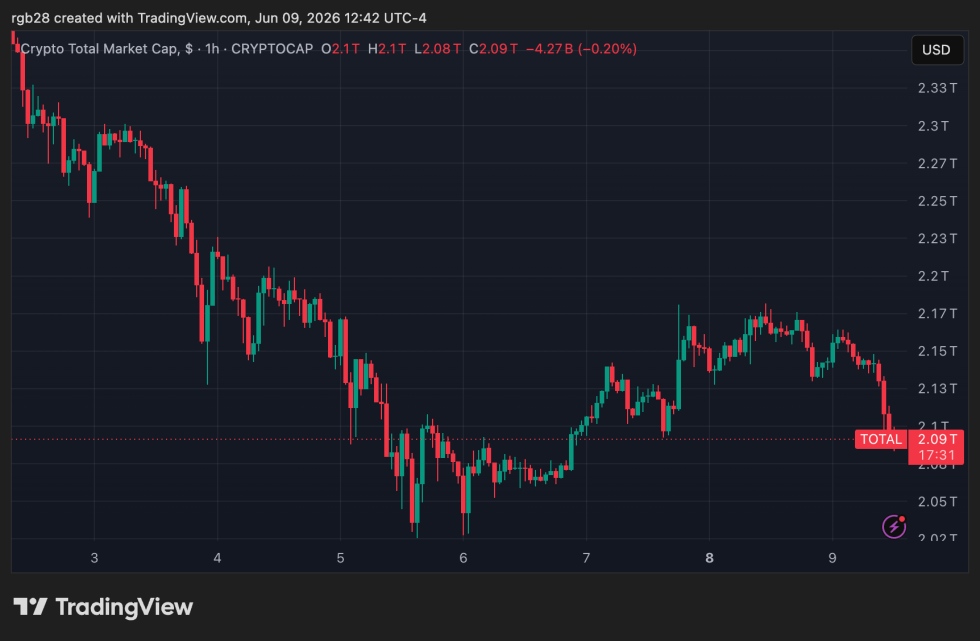
The total crypto market capitalization is at $2.09 trillion in the one-week chart. Source: TOTAL on TradingView


Criptos en tendencia

Preguntas relacionadas

QWhat is the main objective of SBI Shinsei Bank's new cryptocurrency rewards program for depositors?

AThe main objective is to attract new customers to the group's crypto business, SBI VC Trade, by using bank deposits as an entry point and offering cryptocurrency vouchers as a reward.

QHow will the crypto voucher rewards for depositors be calculated in the new program?

ADepositors will receive exchange vouchers equal to 20% of their deposit interest payments, which are redeemable for Bitcoin (BTC), Ethereum (ETH), or XRP based on market rates at the time of redemption.

QWhat is one of the other recent crypto-related products launched by an SBI Group company, as mentioned in the article?

AOne recent product is the SBI Visa Crypto Card, introduced by SBI VC Trade, APLUS, and Visa, which converts spending rewards into BTC, ETH, or XRP and integrates with SBI Securities' investment services.

QWhat strategic move is SBI Group making to strengthen its position in Japan's crypto exchange market?

ASBI Group is moving to acquire a stake in Bitbank, one of Japan's top regulated exchanges, to make it a consolidated subsidiary, following the previous integration of Bitpoint Japan.

QAccording to the article, what type of crypto-related financial product has SBI filed to launch on the Tokyo Stock Exchange?

ASBI has filed to launch crypto-based exchange-traded funds (ETFs), including a combined Bitcoin and XRP ETF and a 'Digital Gold Crypto' ETF that allocates 51% to gold and 49% to digital assets.

Lecturas Relacionadas

Can Japan Buy Growth with AI? Will the Bond Market Believe It?

Japan's cabinet has introduced the 2026 Basic Policy on Economic and Fiscal Management and Reform, shifting its primary fiscal target. The new framework moves away from the traditional annual primary balance goal and instead prioritizes a stable reduction of the debt-to-GDP ratio. This change is tied to a strategy of increased "responsible proactive fiscal" spending, aiming to boost long-term growth through investments in strategic sectors like AI, semiconductors, energy, and robotics. The government estimates total public and private investment in 62 key technologies could exceed 370 trillion yen by 2040. The market reaction has been mixed and cautious. While equity markets may respond to policy signals, bond markets are focused on fiscal credibility. Concerns center on whether the weakening of the clear primary balance anchor could lead to looser fiscal discipline. If investors doubt that these strategic investments will generate sufficient productivity gains, tax revenue, and nominal growth to outpace rising interest costs, they may demand higher yields on Japanese Government Bonds (JGBs). Recent volatility in the yen and JGB yields, with the 10-year yield briefly reaching 2.9%, reflects this skepticism. The success of this new framework hinges on two factors: whether Japan can achieve a nominal growth rate consistently higher than its long-term interest rates, and whether future budgets demonstrate disciplined control over bond issuance. The government's narrative is that strategic investment is essential to break Japan's cycle of low growth, aging, and labor shortages. However, the bond market will continuously assess the credibility of this plan, pricing the risk that it may represent fiscal expansion rather than a viable growth strategy.

marsbitHace 22 min(s)

Can Japan Buy Growth with AI? Will the Bond Market Believe It?

marsbitHace 22 min(s)

Misjudged A-Shares: Resilience, Expectations, and Confidence

China's A-share market recently faced selling pressure, especially in tech sectors, initially triggered by a global tech sell-off that began in South Korea. However, the article argues this is a case of "mistaken injury" and highlights the market's underlying resilience. This resilience stems from three main pillars: **1) Tech Sector Fundamentals:** Unlike Korea's market dominated by a few memory chip stocks, China's tech sector is diversified across computing, communications, electronics, and semiconductors, supported by dual narratives of global AI supply chains and domestic substitution. Core areas like optical modules and fiber optics continue to show strong earnings growth. **2) "National Team" Support:** State-backed institutions and large corporations have made significant market purchases and announced buybacks, providing liquidity and signaling confidence. This is seen as a stabilizing policy signal, often associated with market bottoms. **3) Broader Market Pillars:** Other major sectors are showing endogenous recovery momentum. Consumer stocks benefit from stabilizing CPI and signs of sector recovery (e.g., liquor price hikes). Cyclical sectors like aluminum have high earnings, potential price increases due to tight supply, and low valuations. The financial sector offers stable dividends and low valuations. The conclusion is that the sell-off was driven by external contagion, not a collapse in fundamentals. With strong policy support and recovering momentum across key sectors, the A-share market possesses the toughness to regain stability.

marsbitHace 53 min(s)

Misjudged A-Shares: Resilience, Expectations, and Confidence

marsbitHace 53 min(s)

Trading

Spot

Artículos destacados

Cómo comprar PUSH

¡Bienvenido a HTX.com! Hemos hecho que comprar Push Protocol (PUSH) sea simple y conveniente. Sigue nuestra guía paso a paso para iniciar tu viaje de criptos.Paso 1: crea tu cuenta HTXUtiliza tu correo electrónico o número de teléfono para registrarte y obtener una cuenta gratuita en HTX. Experimenta un proceso de registro sin complicaciones y desbloquea todas las funciones.Obtener mi cuentaPaso 2: ve a Comprar cripto y elige tu método de pagoTarjeta de crédito/débito: usa tu Visa o Mastercard para comprar Push Protocol (PUSH) al instante.Saldo: utiliza fondos del saldo de tu cuenta HTX para tradear sin problemas.Terceros: hemos agregado métodos de pago populares como Google Pay y Apple Pay para mejorar la comodidad.P2P: tradear directamente con otros usuarios en HTX.Over-the-Counter (OTC): ofrecemos servicios personalizados y tipos de cambio competitivos para los traders.Paso 3: guarda tu Push Protocol (PUSH)Después de comprar tu Push Protocol (PUSH), guárdalo en tu cuenta HTX. Alternativamente, puedes enviarlo a otro lugar mediante transferencia blockchain o utilizarlo para tradear otras criptomonedas.Paso 4: tradear Push Protocol (PUSH)Tradear fácilmente con Push Protocol (PUSH) en HTX's mercado spot. Simplemente accede a tu cuenta, selecciona tu par de trading, ejecuta tus trades y monitorea en tiempo real. Ofrecemos una experiencia fácil de usar tanto para principiantes como para traders experimentados.

238 Vistas totalesPublicado en 2024.12.13Actualizado en 2026.06.02

Cómo comprar PUSH

Discusiones

Bienvenido a la comunidad de HTX. Aquí puedes mantenerte informado sobre los últimos desarrollos de la plataforma y acceder a análisis profesionales del mercado. A continuación se presentan las opiniones de los usuarios sobre el precio de PUSH (PUSH).

活动图片












