Bitcoin is heading into a critical window as the Bank of Japan prepares what could be its most consequential policy move in decades. The central bank is widely expected to raise interest rates by 25 basis points to 0.75% at its December 18-19 meeting, a level not seen since 1995 and a clear signal that Japan is continuing its exit from ultra-loose monetary policy.
This upcoming event is causing a few conversations among crypto traders because similar policy moves from Japan have repeatedly coincided with the start of Bitcoin price crashes.
Japan’s Rate Hikes And The Repeating Bitcoin Sell-Off Pattern
Crypto market observers have been quick to highlight an uncomfortable pattern relating to Bitcoin and the BOJ. Each time the bank has raised rates since 2024, Bitcoin’s price action has experienced a deep and relatively fast correction.
For example, March 2024 saw Bitcoin fall by about 23% following Japan’s first rate hike since 2007. A similar rate spike move in July was followed by a drop of around 26%, while the January 2025 hike preceded a steeper decline of more than 30%.
Crypto analyst 0xNobler expressed concern, noting that if this historical trend repeats itself, Bitcoin could be headed below the $70,000 level shortly after the upcoming December decision. The chart he shared illustrates how each rate hike has aligned with a local market top, followed by a pronounced leg lower. The consistency of these moves has turned what might otherwise be dismissed as coincidence into a data point many traders are now taking seriously.
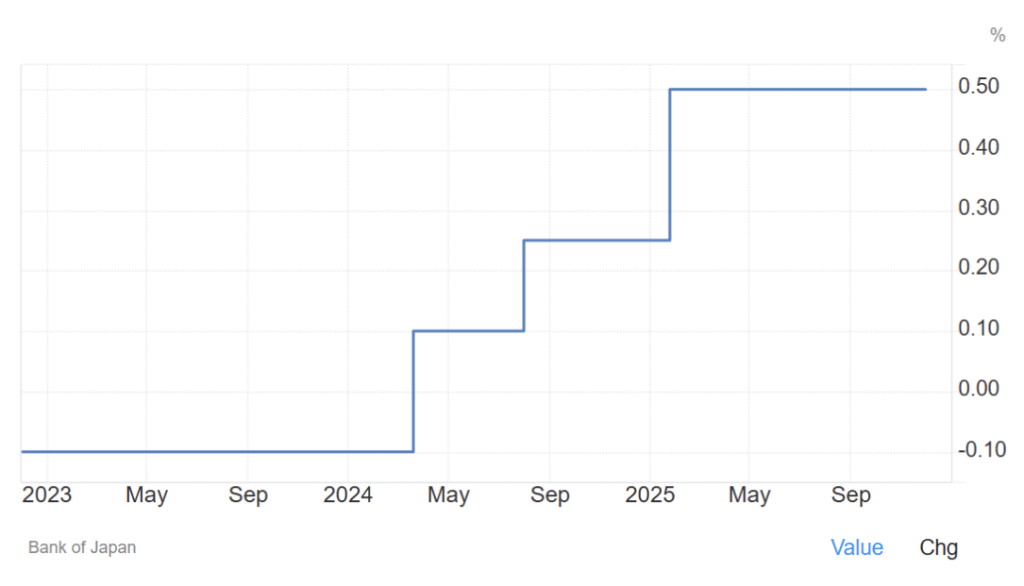
Japan’s interest rate
The pressure extends beyond reactions by the crypto industry alone. Japan is the largest foreign holder of US government debt, and any tightening from the Bank of Japan reverberates across global liquidity markets. Higher Japanese rates strengthen the yen, and this, in turn, reduces excess capital that might otherwise flow into risk assets.
Echoing this view, another crypto commentator known as AndrewBTC pointed to Bitcoin’s repeated 20% to 31% declines following each BOJ hike since 2024. He warned that another rate increase in December could produce a similar outcome and also identified $70,000 as the possible downside target if the pattern repeats itself.
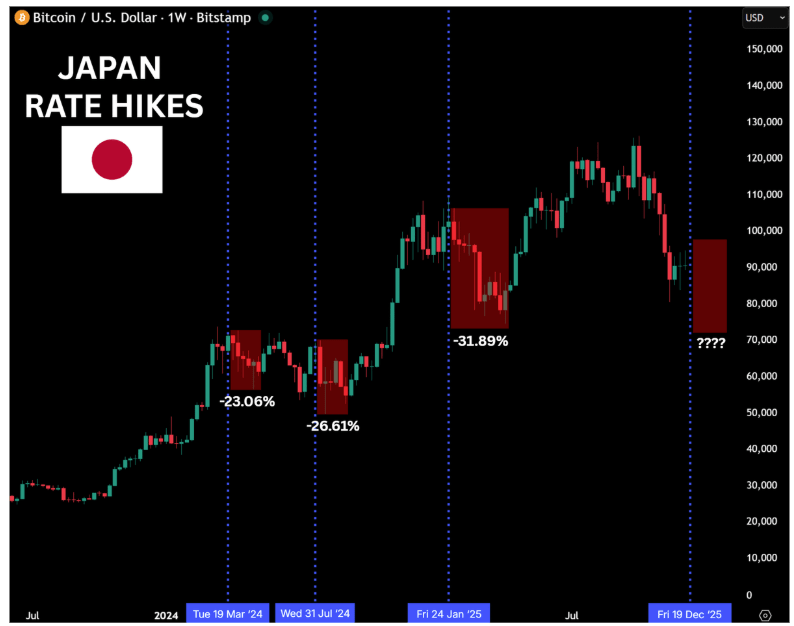
Bitcoin/US Dollar. Source: @cryptoctlt On X
Bitcoin Above Long-Term Support: Not Everyone Is Bearish
Despite the growing anxiety towards the Bank of Japan’s rate increase, the outlook for Bitcoin is not universally negative. For instance, analyst Ted Pillows pointed out that Bitcoin is currently interacting with its monthly EMA-21, a level that has always acted as a launchpad in prior cycles.

Based on this structure, Pillows predicted that Bitcoin could still surge to between the $100,000 and $105,000 range in the near term before there’s another price dump.
As the December meeting approaches, Bitcoin finds itself caught between a troubling pattern and a resilient technical support. Whether Japan’s next rate hike leads to another immediate sell-off or allows for a temporary upside push may define how Bitcoin and the rest of the crypto market close out the year.
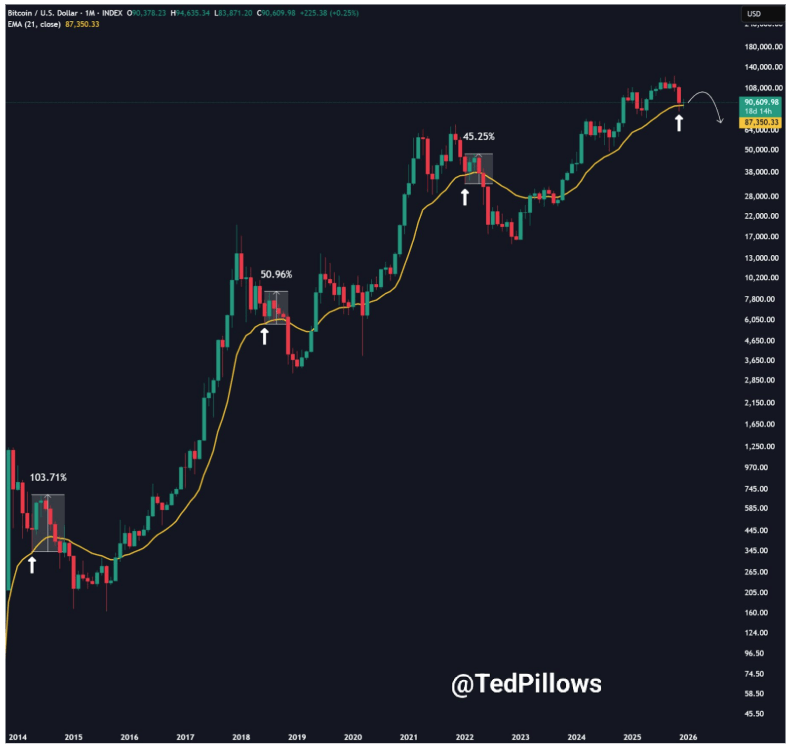
Bitcoin / U.S. Dollar. Source: @TedPillows on X
Featured image from Unsplash, chart from TradingView