Author: Zhang Yaqi
Federal Reserve Chairman Warsh's upcoming appearance at the Jackson Hole Economic Symposium is seen by the market as the most critical risk event for the current trajectory of U.S. Treasuries and the dollar. Against the backdrop of the Treasury Department increasing repurchases of long-dated bonds and sustained pressure on the dollar, whether Warsh can clearly signal a firm stance against inflation will directly determine the direction of the 30-year Treasury yield.
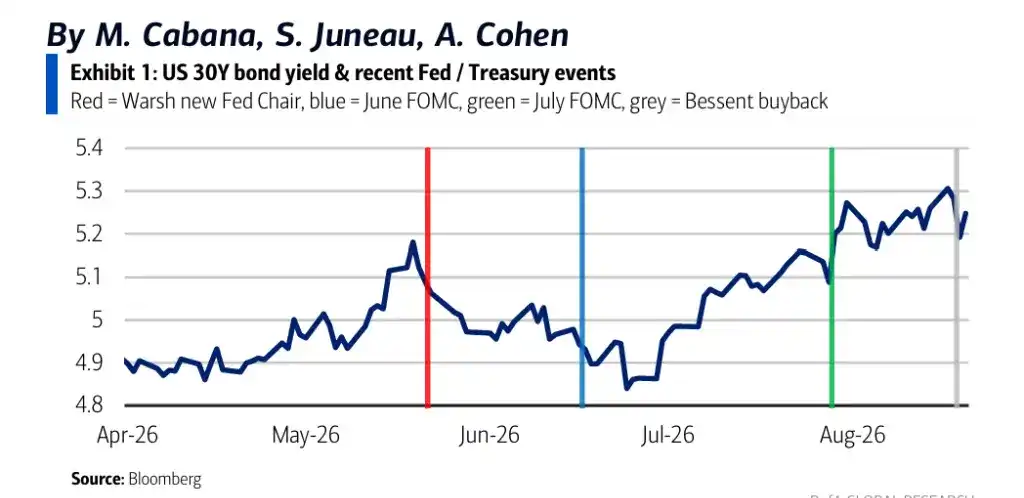
According to Chase Trade Desk reports, citing a Bank of America research note released on August 24, market expectations for Warsh's speech have quietly shifted—the continued rally in the bond market is forcing the Fed chair, who has historically resisted forward guidance, to adjust his communication strategy. BofA strategists Mark Cabana, Stephen Juneau, and Alex Cohen warn that if Warsh fails to clearly articulate the inflation outlook and the monetary policy reaction function, the 30-year Treasury yield could swiftly test 5.5% or higher, and the dollar would also face renewed downward pressure.
Barclays economists, including Marc Giannoni, noted in a report released on August 21 that although Warsh is unlikely to provide specific guidance on the interest rate path, the market will closely watch whether he explicitly states—if inflation does not improve—the Fed's willingness to restart rate hikes. Barclays believes the probability of Warsh making such a statement exceeds 50%, which would help reinforce the policy reaction function already implied in current market pricing.
Meeting Background: Bond Market and Dollar Under Pressure, Why This Time Is Different
The Jackson Hole Economic Symposium is an annual economic policy conference hosted by the Kansas City Federal Reserve Bank, gathering central bankers, policymakers, academics, and economists from around the world each year. This year's conference, taking place from August 27th to 29th, has the theme "Financial Innovation: Implications for Payments and Policy." Warsh is scheduled to speak at 10 a.m. ET on August 28th (22:00 Beijing Time on the 28th). Historically, no public Q&A session follows the speech.
BofA points out that the market pays particular attention to Jackson Hole for two reasons: First, the seven-week interval between the July and September FOMC meetings is the longest of the year, during which two sets of Non-Farm Payrolls and CPI data will be released. The market has historically viewed this as a window for the Fed to signal policy intentions in advance. Second, summer market liquidity is typically thin, meaning any statements can trigger more pronounced price volatility.
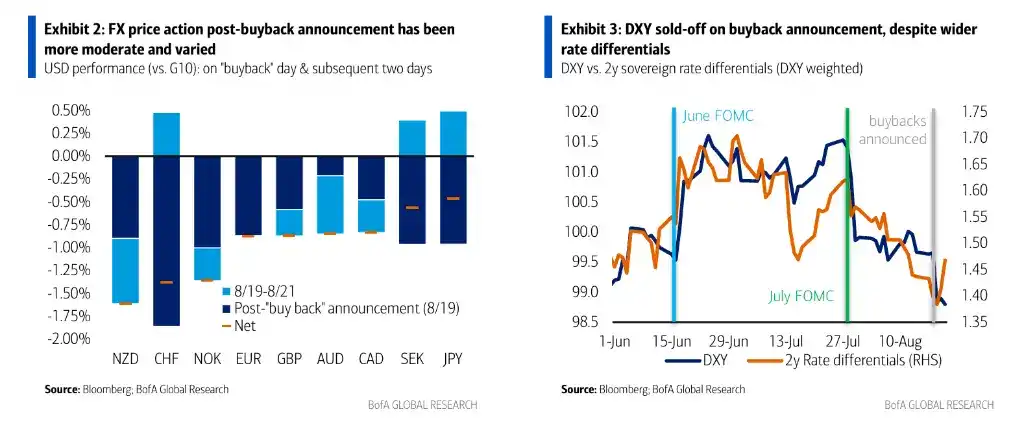
The uniqueness of this year's meeting lies in the vulnerable state of both the bond market and the dollar. The U.S. Treasury Department announced an increase in long-term bond repurchases last week, which caused the dollar to plunge sharply on the day of the announcement. BofA believes this move reflects the government's concern about the persistent rise in long-term yields. Combined with the perceived "dovish" July FOMC meeting and weaker U.S. economic data in August, the dollar has already faced multiple headwinds.
Market Expectations: Warsh Needs to "Break" with His Past Self
Warsh has long resisted forward guidance. At the July FOMC press conference, he stated that the direction of the Jackson Hole speech was yet undecided and outlined two possibilities: First, focusing on macro long-term issues like productivity, demographics, and the global economy. Second, directly addressing near-term policy direction from September to December.
BofA believes the market's "cornering" effect is changing this choice. The report cites boxing champion Mike Tyson's famous quote—"Everyone has a plan until they get punched in the mouth"—noting that the bond market's sustained "heavy punches" at Warsh have made it difficult for him to continue avoiding policy statements.
BofA strategists expect that Warsh will reference the recent communication styles of Fed officials Paulson and Cook, clarifying the policy response path under two scenarios: If recent disinflation continues, maintain the current stance; If inflation remains stubbornly high, clearly state readiness to restart rate hikes. BofA believes this framework-based communication could effectively convey the policy reaction function without providing specific path commitments.
Barclays holds a similar view, also noting that Warsh may comment on the forward guidance framework itself—he has consistently criticized forward guidance for constraining policy flexibility and leading to past policy errors, establishing a dedicated task force to evaluate it after taking office. Additionally, Warsh may provide more information on the Fed's balance sheet policy. However, against the current backdrop of already elevated long-term yields, any statements suggesting further shortening of the portfolio duration would require particular caution.
Two Scenarios: Divergent Paths for Rates, Curves, and the Dollar
Based on the content of Warsh's speech, BofA outlines two clear market scenario forecasts.
Scenario One: Warsh delivers a rate hike signal as expected. If he explicitly states willingness to restart hikes should inflation not subside, BofA expects: The probability of a rate hike at the September FOMC meeting would rise from the current pricing of about 9 basis points to 12.5 basis points (implying a 50/50 chance); The total pricing for this hiking cycle would increase from about 40 basis points to nearly 50 basis points; Nominal and real yield curves would tend to flatten; The dollar would be expected to recoup some of its recent losses.
Scenario Two: Warsh avoids a policy statement. If the speech focuses on structural narratives like productivity or AI-driven disinflation, or deliberately avoids near-term policy by citing "no forward guidance," BofA warns that the market may interpret it as a dovish signal, leading to further curve bear steepening, with the 30-year Treasury yield potentially breaking above 5.5% rapidly, and the dollar also facing a new round of selling pressure.
BofA emphasizes that the recent dollar weakness has shown an unsettling signal—the post-repurchase announcement dollar decline occurred against a backdrop of widening interest rate differentials between the U.S. and other countries, a classic feature of expanding risk premiums, reflecting underlying market concerns about "fiscal dominance" risks. If Warsh's statements further reinforce external doubts about the Fed's monetary policy independence, the "dollar depreciation" camp will gain more ammunition.
Historical Context: Jackson Hole Typically Not a Market Turning Point, But This Year Could Be an Exception
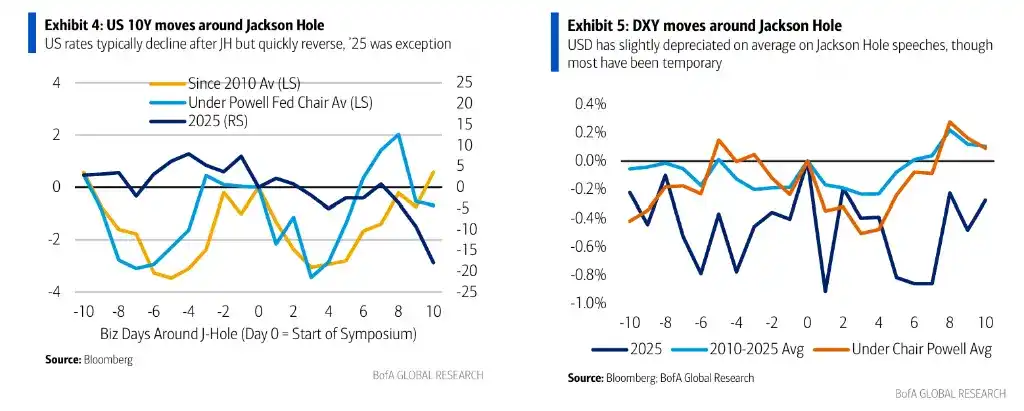
Historically, Jackson Hole's impact on the U.S. Treasury market has generally been limited. According to BofA statistics, since 2010, the 10-year Treasury yield has often edged lower after the symposium, but such moves typically reversed within ten trading days, with 2025 being an exception—that year, the Fed's emphasis on downside risks in the labor market triggered a sustained decline in yields and a noticeable weakening of the dollar.
The historical pattern is similar in the FX market: the dollar often weakens slightly around the symposium but typically recovers its losses in the following weeks. During Powell's tenure, the average reaction of the dollar to Jackson Hole was relatively larger. The most prominent recent case was 2022—when Powell delivered a strongly worded anti-inflation speech, directly triggering a sharp rise in rates and dollar strength.
BofA points out that this year's background differs from all previous Jackson Hole symposia: the Treasury Department has already acted first to intervene in long-term yields, and now the ball is in Warsh's court ("Bessent acted, Warsh now holds ball"). At this special juncture, if Warsh fails to meet the market's minimum expectations for policy credibility, this year's symposium could become the most impactful on markets in recent years.