Is Venezuela's $60 Billion Bitcoin Shadow Reserve Real or Fake?

marsbitPublicado a 2026-01-07Actualizado a 2026-01-07

Resumen

Venezuela is at the center of market speculation regarding a potential $60 billion Bitcoin shadow reserve. If true, this would position the country as one of the world's largest Bitcoin holders, with an estimated 650,000 BTC—nearly matching the holdings of major entities like MicroStrategy. The rumors suggest the reserve was accumulated over years through gold sales, oil exports settled in USDT (later converted to Bitcoin), and seizures from mining operations, all aimed at circumventing U.S. sanctions. However, verifiable on-chain data shows only 240 BTC held by the government, creating a significant gap between speculation and confirmed holdings. The news contributed to a Bitcoin price surge in early 2026, alongside strong inflows into U.S. spot Bitcoin ETFs. If the reserve exists and is seized by U.S. authorities, legal complexities and sovereign debt disputes would likely freeze the assets long-term, preventing large-scale selling. The situation raises broader questions about whether other nations are secretly accumulating Bitcoin, potentially altering market supply dynamics, and highlights the growing role of stablecoins in helping countries bypass traditional dollar-based finance. The focus now shifts to verifying the existence of these funds and their legal and market implications.

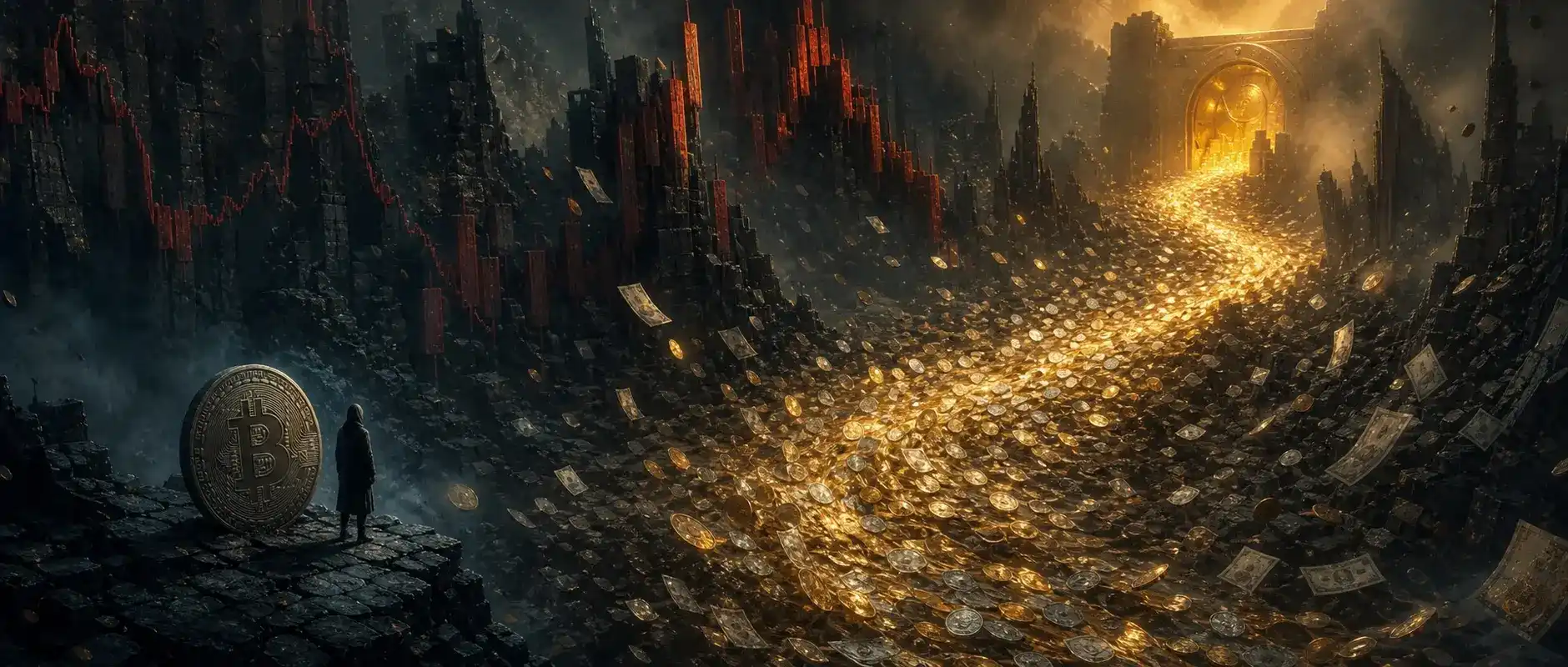
Recently, discussions about Venezuela potentially holding a shadow Bitcoin reserve as large as $60 billion have become a market focus. Market rumors suggest that Venezuela may have secretly accumulated approximately $60 billion worth of Bitcoin over many years by evading U.S. sanctions through methods such as gold trading, exchanging crude oil for USDT and then converting it to Bitcoin. If true, this scale would place Venezuela among the world's largest Bitcoin holders.

What caused the Bitcoin surge in the first week of 2026? Is this rumor true? What impact would a $60 billion Bitcoin shadow reserve have on the market? This report will take readers on an in-depth exploration.

Venezuela May Join the Ranks of the World's Largest Bitcoin Holders

If the estimate that Venezuela holds roughly $60 billion worth of Bitcoin is accurate, this would correspond to approximately 650,000 BTC at current prices. This scale would directly reshape the global Bitcoin holding landscape, representing about 3.1% of Bitcoin's theoretical total supply of 21 million coins, and close to 3.2% of the approximately 19.95 million BTC mined to date. For comparison, MicroStrategy, widely followed for its persistent large-scale Bitcoin purchases, has accumulated roughly 674,000 BTC. If Venezuela indeed holds around 650,000 BTC, its size is already close to MicroStrategy's holdings, placing both in the same league as the world's top-tier Bitcoin holders.

At the national level, El Salvador, which has actively embraced Bitcoin, has accumulated purchases of about 7,474 BTC, a figure dwarfed by the 650,000 size. The U.S. government, considered a "whale," has cumulatively seized a total of only 198,000 BTC over the past decade through law enforcement actions (such as the Silk Road and Bitfinex hack cases). Thus, the scale of 650,000 BTC already exceeds all confirmed national-level Bitcoin holding entities; if this reserve exists, Venezuela would instantly become a top Bitcoin holder at the sovereign level and join the ranks of the world's most influential Bitcoin whales.

Even in the dimension of institutional investment, this volume is highly significant. Since the approval of U.S. spot Bitcoin ETFs in 2024, institutional funds have flooded in rapidly. As of now, U.S. spot Bitcoin ETFs collectively custody about 1.3 million BTC (corresponding to an Assets Under Management (AUM) of approximately $123.5 billion). The rumored 650,000 BTC from Venezuela would be almost equivalent to half of all ETF holdings. Specifically, the largest, BlackRock's Bitcoin Trust IBIT, has seen cumulative net inflows exceeding $62.7 billion. If Venezuela indeed holds $60 billion in Bitcoin, its size could rival that of the world's largest Bitcoin fund. Setting aside special cases like Satoshi Nakamoto, among visible entities in reality, this reserve would be enough to rank in the global top five. Its potential impact not only concerns market supply and demand structure but could also spark deeper discussions about sovereign wealth covertly entering the crypto market.

Did Venezuela Really Hoard $60 Billion in Bitcoin?

Market speculation about Venezuela potentially holding around $60 billion in Bitcoin primarily stems from a comprehensive estimate of its multiple asset conversion paths under long-term sanctions.

The first part is believed to come from gold revenue monetization between 2018–2020. Under U.S. financial sanctions and foreign exchange controls, the Maduro regime obtained liquidity through gold exports and, during a period when Bitcoin prices were still low, continuously converted part of the gold proceeds into Bitcoin. Assuming an average entry price around $5,000/BTC, this batch of Bitcoin is now valued at approximately $45 to $50 billion, constituting the largest portion of the speculated $60 billion Bitcoin shadow reserve.

The second part is largely attributed to changes in oil export settlement methods. After the failure of the Petro experiment, Venezuela's state oil company PDVSA was disclosed in 2023 to require some spot crude oil exports to be settled in USDT to bypass the dollar clearing system. However, due to the address freezing risk associated with stablecoins, Venezuelan authorities subsequently converted a significant portion of the USDT into Bitcoin, thus creating a Bitcoin exposure of approximately $10 to $15 billion between 2023–2025.

The third part mainly originates from the seizure and confiscation of illegal or gray mining activities in 2023–2024, also estimated to have brought in about $500 million worth of Bitcoin. Combined, these three parts form the speculated $60 billion Bitcoin shadow reserve, but its scale, control, and authenticity remain at the speculation level.

In contrast, from verifiable on-chain data, mainstream tracking platforms currently only confirm that official Venezuelan holdings amount to approximately 240 BTC, corresponding to a value of about $22.3 million. This data reflects the gap between the currently trackable official holding size and the high estimates circulating in the market.

Did the Venezuela Incident Cause Bitcoin's New Year Surge?

In the first week of January 2026, the Bitcoin price rapidly climbed from about $87,000, briefly breaking through the $93,000 mark. Over the past five trading days, Bitcoin accumulated a gain of about 7%, with its market capitalization rising to a阶段性高位 of approximately $1.86 trillion. On January 5th, Bitcoin briefly touched near $93,000,刷新阶段新高 (setting a new阶段性新高).

This rally demonstrates Bitcoin's sensitivity to global political events. As traditional markets fluctuated due to U.S. military action against Venezuela, the tendency for investors to view Bitcoin as a hedge against geopolitical risk became increasingly apparent. A more specific driving force is that if the rumored massive Bitcoin hoard truly falls into U.S. hands and is temporarily frozen and illiquid, it would suddenly reduce the sellable supply on the market. This supply contraction expectation provided support for the price.

Simultaneously, at the beginning of 2026, U.S. spot Bitcoin ETFs saw concentrated net subscriptions. On January 5th alone, multiple products collectively recorded net inflow of approximately $697 million, hitting a阶段性高位. Notably, all 12 U.S. spot Bitcoin ETFs saw net inflows that day, with total AUM rising to a new high of about $123.5 billion. The capital inflow effect brought by ETFs, interacting with the supply tightening expectation from the Venezuela reserve rumors, jointly shaped the market sentiment driving the Bitcoin price increase.

Will the $60 Billion in Bitcoin Be Sold Off Soon?

As Maduro and his wife appear in court at the New York Federal Court, the market began to focus on how this rumored unprecedented scale of Bitcoin assets will be handled. Realistically, the possibility of a concentrated sell-off or rapid liquidation in the short term is extremely low. A more expected scenario is that these assets will be drawn into prolonged and complex judicial and sovereign disputes, remaining frozen or under custodianship for a long time.

Even if U.S. authorities eventually identify and actually control the relevant Bitcoin, its disposal will still face multiple legal constraints. On one hand, the case involves cross-border law enforcement, identification of criminal proceeds, and potential multi-party creditor claims. Any substantive disposal action would be difficult to bypass complete judicial procedures. On the other hand, Venezuela has long-standing unresolved massive sovereign debt defaults and international arbitration claims. Once the U.S. confirms control over large liquidatable assets, holders of defaulted bonds, multinational companies that have prevailed in arbitration, and other creditors will almost certainly immediately apply to the court for injunctions to freeze any disposal or transfer actions. This process is highly similar to the prolonged litigation surrounding Venezuela's overseas state assets in the past, and the related legal procedures could very likely be drawn out for many years, even over a decade.

A more critical obstacle is that the legal nature of this Bitcoin itself is highly complex and sensitive. The related charges mainly revolve around criminal activities at the personal level, rather than the direct seizure of sovereign state assets. Therefore, even if this Bitcoin is discovered and controlled, it would be difficult to simply define it as a national reserve. Within the judicial framework, it is more likely to be treated as criminal proceeds of the involved individuals, requiring processing through forfeiture and adjudication procedures. Its ultimate ownership will likely be determined only after反复博弈 (repeated博弈/contention) among the U.S. government, potentially legitimate successor entities, or various creditor claimants.

Overall, a more realistic scenario, and one more consistent with historical experience, is that this Bitcoin will be custodied long-term in accounts controlled by law enforcement agencies, frozen as case evidence or potential recovery assets. During this time, they can neither be freely used nor easily enter market trading, effectively being long-term removed from the market. Of course, the above speculation still前提 on these Bitcoin actually existing and being confirmed under control. The final disposal outcome awaits further disclosure at the law enforcement and judicial levels.

Are More Sovereign Nations Quietly Accumulating Bitcoin?

For long-term Bitcoin配置 investors, the significance of the Venezuela incident lies not in whether a specific rumored huge holding is real, but in the exposure of a previously overlooked risk dimension: the potential impact of opaque sovereign actions on Bitcoin's supply structure. Over the past few years, the market's understanding of government Bitcoin holdings has been primarily based on verifiable information. This is either government-disclosed purchasing behavior, such as El Salvador's定期公布的 (regularly announced) Bitcoin holdings, or publicly traceable confiscated assets from law enforcement cases, like the Silk Road or Bitfinex hack cases. These types of holdings have clear legal status and traceability, thus can be incorporated into mainstream supply and demand analysis frameworks.

However, the rumors related to Venezuela first steer the perspective towards a more隐蔽的 (covert) level:国家级隐性积累 (national-level隐性积累/covert accumulation). If a country under long-term sanctions and severe fiscal pressure can still gradually build a large Bitcoin position through gold swaps, energy settlement, and crypto asset channels, then theoretically, other countries with sufficient resource endowment, under sanctions, or actively seeking de-dollarization paths,同样具备 (also possess) the motivation and ability to replicate this model. This implies that within Bitcoin's actual supply, there might be a portion of隐形存量 (invisible inventory) controlled by sovereign entities but long unrecognized and unpriced by the market. This Bitcoin hardly participates in trading during normal times, but in extreme situations like regime change, war conflict, or judicial takeover, its legal attributes and circulation status could be rapidly reshaped, thus becoming an important variable affecting the market.

Simultaneously, the role of stablecoins in this chain has also triggered deeper institutional concerns. If stablecoins are widely used for energy or大宗商品 (commodity) settlement, their function is no longer confined within the crypto market but begins to touch upon the practical needs of countries to bypass the traditional dollar system. Once regulators or judicial departments initiate systematic reviews of related historical transactions, the focus will inevitably extend from individual cases to the stablecoin issuance mechanism itself and its compliance boundaries in cross-border settlement. This would challenge the market perception of stablecoins as neutral infrastructure.

Against this background, the market's focus is shifting. Compared to the political drama of the event itself, investors and the industry are more concerned about the factual层面 (aspects) that may be gradually revealed next: whether relevant wallet addresses can be identified and verified, and how global creditors will介入 (intervene) in asset disposal through legal procedures. These yet-to-be-confirmed details will ultimately determine whether the Venezuela incident is seen by history as an anomalous episode or interpreted as the starting point of a change in Bitcoin's risk structure.


Preguntas relacionadas

QWhat is the estimated value and quantity of Venezuela's alleged Bitcoin shadow reserves, and how does it compare to other major holders?

AThe market speculation suggests Venezuela may hold approximately 600 billion USD worth of Bitcoin, equating to roughly 650,000 BTC. This would place Venezuela among the largest Bitcoin holders globally, comparable to MicroStrategy's 674,000 BTC holdings and nearly half the total holdings of all U.S. spot Bitcoin ETFs combined (1.3 million BTC).

QWhat are the three primary sources speculated for Venezuela's accumulation of such a large Bitcoin reserve?

AThe three speculated sources are: 1) Conversion of gold export revenues between 2018-2020, estimated at 45-50 billion USD in Bitcoin value; 2) Conversion of USDT from oil exports (after the Petro coin failure) into Bitcoin from 2023-2025, estimated at 10-15 billion USD; 3) Seizures from illegal or gray market mining activities, estimated at around 500 million USD.

QHow did the Venezuela Bitcoin reserve rumor contribute to the Bitcoin price surge in early 2026?

AThe rumor, combined with geopolitical tensions (potential U.S. military action against Venezuela), fueled a 7% price surge in Bitcoin, pushing it from 87,000 USD to over 93,000 USD. The speculation that the reserves might be frozen by U.S. authorities reduced perceived sell-side pressure, while simultaneous large inflows into U.S. Bitcoin ETFs (697 million USD on Jan 5) further boosted demand.

QWhy is it unlikely that the alleged 60 billion USD in Bitcoin will be sold off in the short term?

AImmediate sale is highly unlikely due to complex legal and sovereign disputes. The assets would likely be frozen in lengthy judicial processes involving跨国执法, sovereign debt claims, and international arbitration. Legal battles over ownership between the U.S. government, creditors, and potential legitimate heirs could prolong the freeze for years or even decades.

QWhat broader market risk does the Venezuela事件 expose regarding sovereign Bitcoin accumulation?

AThe事件 highlights the risk of opaque, state-level Bitcoin accumulation by sanctioned or dollar-alternative-seeking nations, creating a hidden supply not priced into the market. This 'shadow' supply could suddenly become active during geopolitical or regime changes, disrupting market dynamics. It also raises concerns about stablecoins' role in bypassing traditional dollar systems for commodity settlements, potentially attracting stricter regulatory scrutiny.

Lecturas Relacionadas

You Bet on the News, the Pros Read the Rules: The True Cognitive Gap in Losing Money on Polymarket

The article explains that the key to profiting on Polymarket, a prediction market platform, lies not just predicting real-world events correctly, but in meticulously understanding the specific rules that govern how each market will be resolved. It illustrates this with examples, such as a market on Venezuela's 2026 leader, where the official rules defining "officially holds" the office overruled the intuitive answer of who was in practical control. Other examples include debates over the definition of a "token" or what constitutes an "agreement." The core argument is that a "reality vs. rules" gap creates pricing discrepancies that savvy traders ("车头" or "whales") exploit. The platform has a formal dispute resolution process managed by UMA token holders to settle ambiguous outcomes. This process involves proposal submission, a challenge window, a discussion period, and a final vote. However, the article highlights a critical flaw in this system compared to a traditional court: the lack of separation between the arbiters (UMA voters) and the interested parties (traders with financial stakes in the outcome). This conflict of interest undermines the discussion phase, leads to herd mentality, and results in opaque final decisions without explanatory rulings. Consequently, the system lacks a body of precedent, making it difficult for users to learn from past disputes. The ultimate takeaway is that success on Polymarket requires a lawyer-like scrutiny of the rules to identify and capitalize on the cognitive gap between how events appear and how they are contractually defined for settlement.

marsbitHace 1 hora(s)

You Bet on the News, the Pros Read the Rules: The True Cognitive Gap in Losing Money on Polymarket

marsbitHace 1 hora(s)

Trading

Spot
Futuros

Artículos destacados

Qué es BITCOIN

Entendiendo HarryPotterObamaSonic10Inu (ERC-20) y Su Posición en el Espacio Cripto En los últimos años, el mercado de criptomonedas ha sido testigo de un aumento en la popularidad de las monedas meme, capturando el interés no solo de los comerciantes, sino también de aquellos que buscan compromiso comunitario y valor de entretenimiento. Entre estos tokens únicos se encuentra HarryPotterObamaSonic10Inu (ERC-20), un proyecto intrigante que mezcla referencias culturales en el tejido de las criptomonedas. Este artículo profundiza en los aspectos clave de HarryPotterObamaSonic10Inu, explorando sus mecanismos, ethos impulsado por la comunidad y su relación con el paisaje cripto más amplio. ¿Qué es HarryPotterObamaSonic10Inu (ERC-20)? Como su nombre sugiere, HarryPotterObamaSonic10Inu es una moneda meme construida sobre la blockchain de Ethereum, clasificada bajo el estándar ERC-20. A diferencia de las criptomonedas tradicionales que pueden enfatizar la utilidad práctica o el potencial de inversión, este token prospera en el valor de entretenimiento y la fuerza de su comunidad. El proyecto tiene como objetivo fomentar un entorno donde los usuarios comprometidos puedan reunirse, compartir ideas y participar en actividades inspiradas por diversos fenómenos culturales. Una característica notable de HarryPotterObamaSonic10Inu es su cero impuestos en las transacciones. Este atractivo elemento tiene como objetivo incentivar el comercio y la participación comunitaria, sin cargos adicionales que puedan disuadir a los comerciantes de pequeña escala. El suministro total de la moneda está establecido en mil millones de tokens, una cifra que marca su intención de mantener una circulación sustancial dentro de la comunidad. Creador de HarryPotterObamaSonic10Inu (ERC-20) Los orígenes de HarryPotterObamaSonic10Inu están algo envueltos en misterio; los detalles sobre el creador siguen siendo desconocidos. El desarrollo de este token carece de un equipo identificable o de un plan explícito, lo cual no es inusual dentro del sector de monedas meme. En cambio, el proyecto ha surgido de manera orgánica, con su progreso muy dependiente del entusiasmo y la participación de su comunidad. Inversores de HarryPotterObamaSonic10Inu (ERC-20) En cuanto a inversiones externas y respaldo, HarryPotterObamaSonic10Inu también sigue siendo ambiguo. El token no lista ninguna fundación de inversión conocida o apoyo organizacional significativo. En cambio, la savia del proyecto es su comunidad de base, que informa su crecimiento y sostenibilidad a través de la acción colectiva y el compromiso en el espacio cripto. ¿Cómo Funciona HarryPotterObamaSonic10Inu (ERC-20)? Como una moneda meme, HarryPotterObamaSonic10Inu opera principalmente fuera de los marcos tradicionales que a menudo rigen el valor de los activos. Hay varios aspectos distintivos que definen cómo funciona el proyecto: Transacciones Sin Impuestos: Sin tarifas impositivas en las transacciones, los usuarios pueden comprar y vender el token libremente sin preocuparse por costos ocultos. Compromiso Comunitario: El proyecto prospera en la interacción comunitaria, aprovechando plataformas de redes sociales para crear entusiasmo y facilitar la participación. Las discusiones, el intercambio de contenido y el compromiso son elementos cruciales que ayudan a expandir su alcance y fomentar la lealtad entre los seguidores. Sin Utilidad Práctica: Cabe señalar que HarryPotterObamaSonic10Inu no ofrece utilidad concreta dentro del ecosistema financiero. Más bien, se clasifica como un token principalmente para actividades de entretenimiento y comunitarias. Referencia Cultural: El token incorpora astutamente elementos de la cultura popular para atraer interés, conectando con entusiastas de los memes y seguidores de las criptomonedas por igual. HarryPotterObamaSonic10Inu ejemplifica cómo las monedas meme operan de manera diferente a los proyectos de criptomonedas más tradicionales, ingresando al mercado como construcciones sociales innovadoras en lugar de activos utilitarios. Cronología de HarryPotterObamaSonic10Inu (ERC-20) La historia de HarryPotterObamaSonic10Inu está marcada por varios hitos notables: Creación: El token surgió de un meme viral, capturando la imaginación de muchos entusiastas de las criptomonedas. Las fechas específicas de creación no están disponibles, subrayando su ascenso orgánico. Listado en Exchanges: HarryPotterObamaSonic10Inu ha llegado a varios exchanges, permitiendo un acceso y comercio más fácil por parte de la comunidad. Iniciativas de Compromiso Comunitario: Actividades continuas destinadas a mejorar la interacción comunitaria, incluyendo concursos, campañas en redes sociales y generación de contenido por parte de fanáticos y defensores. Planes de Expansión Futuros: La hoja de ruta del proyecto incluye el lanzamiento de una colección de NFT, mercancía y un sitio de comercio electrónico relacionado con sus temas culturales, involucrando aún más a la comunidad e intentando añadir más dimensiones a su ecosistema. Puntos Clave Sobre HarryPotterObamaSonic10Inu (ERC-20) Naturaleza Impulsada por la Comunidad: El proyecto prioriza la participación colectiva y la creatividad, asegurando que la involucración de los usuarios esté a la vanguardia de su desarrollo. Clasificación como Moneda Meme: Representa la epítome de las criptomonedas basadas en el entretenimiento, diferenciándose de los vehículos de inversión tradicionales. Sin Afiliación Directa con Bitcoin: A pesar de la similitud en el nombre del ticker, HarryPotterObamaSonic10Inu es distinto y no tiene relación con Bitcoin u otras criptomonedas establecidas. Enfoque en la Colaboración: HarryPotterObamaSonic10Inu está diseñado para crear un espacio para la colaboración y el intercambio de historias entre sus poseedores, proporcionando una vía para la creatividad y el vínculo comunitario. Perspectivas Futuras: La ambición de expandirse más allá de su premisa inicial hacia NFTs y mercancías describe un camino para que el proyecto potencialmente ingrese a avenidas más tradicionales dentro de la cultura digital. A medida que las monedas meme continúan capturando la imaginación de la comunidad de criptomonedas, HarryPotterObamaSonic10Inu (ERC-20) se destaca debido a sus lazos culturales y su enfoque centrado en la comunidad. Si bien puede no encajar en el molde típico de un token impulsado por la utilidad, su esencia radica en la alegría y la camaradería fomentadas entre sus seguidores, destacando la naturaleza en evolución de las criptomonedas en una era cada vez más digital. A medida que el proyecto continúa desarrollándose, será importante observar cómo las dinámicas comunitarias influyen en su trayectoria en el cambiante paisaje de la tecnología blockchain.

1.3k Vistas totalesPublicado en 2024.04.01Actualizado en 2024.12.03

Qué es BITCOIN

Cómo comprar BTC

¡Bienvenido a HTX.com! Hemos hecho que comprar Bitcoin (BTC) sea simple y conveniente. Sigue nuestra guía paso a paso para iniciar tu viaje de criptos.Paso 1: crea tu cuenta HTXUtiliza tu correo electrónico o número de teléfono para registrarte y obtener una cuenta gratuita en HTX. Experimenta un proceso de registro sin complicaciones y desbloquea todas las funciones.Obtener mi cuentaPaso 2: ve a Comprar cripto y elige tu método de pagoTarjeta de crédito/débito: usa tu Visa o Mastercard para comprar Bitcoin (BTC) al instante.Saldo: utiliza fondos del saldo de tu cuenta HTX para tradear sin problemas.Terceros: hemos agregado métodos de pago populares como Google Pay y Apple Pay para mejorar la comodidad.P2P: tradear directamente con otros usuarios en HTX.Over-the-Counter (OTC): ofrecemos servicios personalizados y tipos de cambio competitivos para los traders.Paso 3: guarda tu Bitcoin (BTC)Después de comprar tu Bitcoin (BTC), guárdalo en tu cuenta HTX. Alternativamente, puedes enviarlo a otro lugar mediante transferencia blockchain o utilizarlo para tradear otras criptomonedas.Paso 4: tradear Bitcoin (BTC)Tradear fácilmente con Bitcoin (BTC) en HTX's mercado spot. Simplemente accede a tu cuenta, selecciona tu par de trading, ejecuta tus trades y monitorea en tiempo real. Ofrecemos una experiencia fácil de usar tanto para principiantes como para traders experimentados.

4.6k Vistas totalesPublicado en 2024.12.12Actualizado en 2025.03.21

Cómo comprar BTC

Qué es $BITCOIN

ORO DIGITAL ($BITCOIN): Un Análisis Integral Introducción al ORO DIGITAL ($BITCOIN) ORO DIGITAL ($BITCOIN) es un proyecto basado en blockchain que opera en la red Solana, cuyo objetivo es combinar las características de los metales preciosos tradicionales con la innovación de las tecnologías descentralizadas. Aunque comparte un nombre con Bitcoin, a menudo referido como “oro digital” debido a su percepción como un refugio de valor, ORO DIGITAL es un token separado diseñado para crear un ecosistema único dentro del paisaje Web3. Su meta es posicionarse como un activo digital alternativo viable, aunque los detalles sobre sus aplicaciones y funcionalidades aún están en desarrollo. ¿Qué es ORO DIGITAL ($BITCOIN)? ORO DIGITAL ($BITCOIN) es un token de criptomoneda diseñado explícitamente para su uso en la blockchain de Solana. A diferencia de Bitcoin, que proporciona un papel de almacenamiento de valor ampliamente reconocido, este token parece centrarse en aplicaciones y características más amplias. Aspectos notables incluyen: Infraestructura Blockchain: El token está construido sobre la blockchain de Solana, conocida por su capacidad para manejar transacciones de alta velocidad y bajo costo. Dinámicas de Suministro: ORO DIGITAL tiene un suministro máximo limitado a 100 cuatrillones de tokens (100P $BITCOIN), aunque los detalles sobre su suministro circulante no se han divulgado actualmente. Utilidad: Si bien las funcionalidades precisas no están delineadas explícitamente, hay indicios de que el token podría ser utilizado para diversas aplicaciones, potencialmente involucrando aplicaciones descentralizadas (dApps) o estrategias de tokenización de activos. ¿Quién es el Creador de ORO DIGITAL ($BITCOIN)? En la actualidad, la identidad de los creadores y el equipo de desarrollo detrás de ORO DIGITAL ($BITCOIN) sigue siendo desconocida. Esta situación es típica entre muchos proyectos innovadores dentro del espacio blockchain, particularmente aquellos alineados con las finanzas descentralizadas y fenómenos de monedas meme. Si bien tal anonimato puede fomentar una cultura impulsada por la comunidad, intensifica las preocupaciones sobre la gobernanza y la responsabilidad. ¿Quiénes son los Inversores de ORO DIGITAL ($BITCOIN)? La información disponible indica que ORO DIGITAL ($BITCOIN) no tiene patrocinadores institucionales conocidos ni inversiones destacadas de capital de riesgo. El proyecto parece operar en un modelo de peer-to-peer centrado en el apoyo y la adopción de la comunidad en lugar de rutas de financiamiento tradicionales. Su actividad y liquidez se sitúan principalmente en intercambios descentralizados (DEX), como PumpSwap, en lugar de plataformas de trading centralizadas establecidas, lo que resalta aún más su enfoque de base. Cómo Funciona ORO DIGITAL ($BITCOIN) Los mecanismos operativos de ORO DIGITAL ($BITCOIN) pueden elaborarse en función de su diseño blockchain y atributos de red: Mecanismo de Consenso: Al aprovechar el único proof-of-history (PoH) de Solana combinado con un modelo de proof-of-stake (PoS), el proyecto asegura una validación de transacciones eficiente que contribuye al alto rendimiento de la red. Tokenómica: Si bien los mecanismos deflacionarios específicos no se han detallado extensamente, el vasto suministro máximo de tokens implica que podría atender microtransacciones o casos de uso nicho que aún están por definirse. Interoperabilidad: Existe el potencial de integración con el ecosistema más amplio de Solana, incluyendo varias plataformas de finanzas descentralizadas (DeFi). Sin embargo, los detalles sobre integraciones específicas permanecen no especificados. Cronología de Eventos Clave Aquí hay una cronología que destaca hitos significativos relacionados con ORO DIGITAL ($BITCOIN): 2023: El despliegue inicial del token ocurre en la blockchain de Solana, marcado por su dirección de contrato. 2024: ORO DIGITAL gana visibilidad al estar disponible para trading en intercambios descentralizados como PumpSwap, permitiendo a los usuarios comerciar contra SOL. 2025: El proyecto presencia actividad de trading esporádica y potencial interés en compromisos liderados por la comunidad, aunque no se han documentado asociaciones notables o avances técnicos hasta el momento. Análisis Crítico Fortalezas Escalabilidad: La infraestructura subyacente de Solana soporta altos volúmenes de transacciones, lo que podría mejorar la utilidad de $BITCOIN en varios escenarios de transacción. Accesibilidad: El potencial bajo precio de trading por token podría atraer a inversores minoristas, facilitando una participación más amplia debido a oportunidades de propiedad fraccionada. Riesgos Falta de Transparencia: La ausencia de patrocinadores, desarrolladores o un proceso de auditoría conocidos públicamente puede generar escepticismo sobre la sostenibilidad y confiabilidad del proyecto. Volatilidad del Mercado: La actividad de trading depende en gran medida del comportamiento especulativo, lo que puede resultar en una volatilidad de precios significativa y en incertidumbre para los inversores. Conclusión ORO DIGITAL ($BITCOIN) surge como un proyecto intrigante pero ambiguo dentro del ecosistema de Solana en rápida evolución. Si bien intenta aprovechar la narrativa del “oro digital”, su alejamiento del papel establecido de Bitcoin como refugio de valor subraya la necesidad de una diferenciación más clara de su utilidad y estructura de gobernanza previstas. La aceptación y adopción futura dependerán probablemente de abordar la actual opacidad y de definir sus estrategias operativas y económicas de manera más explícita. Nota: Este informe abarca información sintetizada disponible hasta octubre de 2023, y pueden haber ocurrido desarrollos más allá del período de investigación.

83 Vistas totalesPublicado en 2025.05.13Actualizado en 2025.05.13

Qué es $BITCOIN

Discusiones

Bienvenido a la comunidad de HTX. Aquí puedes mantenerte informado sobre los últimos desarrollos de la plataforma y acceder a análisis profesionales del mercado. A continuación se presentan las opiniones de los usuarios sobre el precio de BTC (BTC).

活动图片