Is the AI Storage Chip Market at Its Peak Now, or Hitting a Bottom for Bargain Hunting?

marsbitPublicado a 2026-08-07Actualizado a 2026-08-07

Resumen

The article analyzes the current state of the AI memory chip sector, questioning whether it has peaked or bottomed for a potential investment entry. It highlights a market dilemma following strong Q4 earnings from SanDisk and Western Digital, where both companies reported explosive revenue and profit growth. Despite this, their stock prices fell, signaling a "sell the news" event where future growth expectations, not current profits, are being priced in. This is identified as a potential early warning sign of a sector peak—valuations may have topped out on expectations, even if fundamental metrics like revenue have not. The piece advises against immediate heavy investment ("all-in"), drawing parallels to Nvidia's historical trajectory. After its AI-driven surge, Nvidia's stock entered a prolonged consolidation phase once its毛利率 (gross margin) growth peaked. The author suggests that for memory stocks, which have seen similar dramatic runs, a true buying opportunity may only emerge later, after signals like slowing price increases, declining gross margins, or reduced cloud provider orders confirm a fundamental downturn. In conclusion, the sector is described as being in an ambiguous, high-volatility phase—too early for a major bullish bet but risky to short. The article suggests using tools like options for limited-risk exposure during this uncertain period, reserving more aggressive strategies like margin trading for after clearer bottoming signals appear. A standard invest...

Has the storage chip sector hit a bottom now, or is it at a peak?

There are currently two opposing views in the market, and both seem to make some sense. Key memory stocks like SK Hynix, SanDisk, Micron, and Western Digital, after experiencing a recent pullback, are stuck in an awkward position where their stock prices are neither here nor there—it seems there's considerable room for movement both upwards and downwards.

And the latest earnings reports from SanDisk and Western Digital released a couple of days ago might just provide the answer to this question.

1. Explosive Earnings, Yet Stock Prices Crashed: This Time, It's "Expectations" That Got Punished

First, let's see just how impressive the earnings reports themselves were.

On August 5th after the market closed, SanDisk announced its Q4 results: revenue of $8.965 billion, a staggering year-over-year increase of 372%, gross margin of 84.6%, EPS crushed market expectations, and it conveniently announced a $14 billion share buyback plan. Western Digital was equally outstanding: fourth-quarter net profit soared over 12 times year-over-year, adjusted EPS reached $3.56, comprehensively beating market expectations.

However, after such excellent results were announced, the stock prices of both companies quickly fell, dragging down the entire storage chip sector once again.

Where's the problem? A closer look at the reports reveals that while the revenue figures were excellent, the guidance disappointed the market. In short, the trigger for the decline was the lack of being "even better."

This is a classic case of punishing expectations. The market is no longer focused on whether profits are growing, but on whether profits can continue to significantly exceed expectations. Capital is already trading ahead of one thing: the rate of increase in AI storage profitability is nearing its peak.

2. The First Possible Early Warning Signal of a Peak May Have Already Appeared

And this might just be the first early warning signal of a peak for storage chips: revenue hasn't peaked yet, but the expectations reflected in various companies' earnings reports have essentially peaked.

Note the subtlety of this signal—the peak in profits hasn't been confirmed by the reports yet, but valuations have already started trading ahead of the peak. The market never waits for you to present hard evidence; it trades on changes in the slope.

After the first signal appears, there are several other warning signals worth keeping a close eye on: when will the rate of increase in memory prices start to slow, when will gross margins begin to decline, and when will cloud vendor orders start to be revised downwards. The materialization of any one of these three signals would mean the peak in fundamentals is beginning to be validated by data.

3. Can We Buy the Dip Now? First, Look at Nvidia's Past Journey

Since expectations have peaked, does that mean it's time to buy the dip instead?

If the "buying the dip" you're thinking of means going all-in, now is clearly not the time. The reason is simple: signals of a valuation peak have appeared, but signals of a fundamentals peak have not yet materialized. And if you're thinking of going all-in to catch the bottom, it's wise to learn from history by looking at the growth curve of the AI old-timer, Nvidia.

After the explosion of large AI models, a structural supply-demand imbalance for GPU compute power emerged, and Nvidia's stock price rose over tenfold in a little over a year. During this process, its gross margin soared from 43% to 78% by April 2024, then peaked. For a long year after that, Nvidia's stock price consolidated sideways—although its gross margin recovered somewhat later, it never broke to new highs, hovering around 75%. During this period, the upward slope of Nvidia's stock price clearly slowed, only slightly outperforming the broader market.

Memory stocks are now facing an almost identical situation. Over the past year, the gross margin of the memory sector has risen from 50% to 80%. With fundamental improvements combined with capital market hype, and under the effect of multiple positive factors, stock prices have increased tenfold or even several dozen fold. Hoping to replicate another round of such gains in the future is unrealistic.

So what is the real signal to position? It's waiting for gross margins to decline, expectations to be beaten back down to the bottom, and valuations to be sold off again. That's when we can start talking about buying the dip.

4. Final Thoughts: How to Trade in This Awkward Position Before the Signals Materialize?

To summarize the conclusion: the peak in expectations has appeared, the peak in fundamentals has not yet arrived, and the time for going all-in has not come. This means storage stocks are likely to see repeated back-and-forth struggles in a "neither here nor there" range going forward—every earnings report, every piece of price data, every cloud vendor order could trigger a round of sharp rises or falls, with the direction impossible to confirm before the signals materialize.

This kind of market is the most agonizing: staying out risks missing a rebound, being heavily invested risks being caught in a deep correction, and going all-in is essentially gambling your principal on a signal that hasn't yet appeared.

Faced with this situation of "unclear direction and extreme volatility," the option-buying function of the BIT brokerage happens to be the right prescription: whether betting on another leg down after earnings or gambling on an oversold rebound, you can participate with a small cost, with the maximum loss locked in at the premium the moment you place the order—before the signal is confirmed, you're exchanging a limited cost for participation rights, rather than gambling your full capital on a direction.

The margin financing function is prepared for "after the signal materializes": when gross margins decline and the real bottom signal appears, you don't have to be limited by your principal size; you can quickly amplify your position to capture the recovery rally, fully utilizing the certainty earned through waiting. While market signals remain unclear, investors should fully assess risks, carefully consider whether to participate and what trading tools to use based on their own investment goals, risk tolerance, and trading experience.

Disclaimer: The content of this article is written by an external author and represents the personal views of the author only. It does not represent the position of BIT and does not constitute any investment, legal, tax, or other professional advice. The securities, industries, and market analysis mentioned in the article are for informational sharing only and do not constitute any investment advice or guarantee of future performance. Financial markets carry risks, and investment requires caution. Investors should make independent judgments based on their own circumstances and bear investment risks themselves.

Criptos en tendencia

Preguntas relacionadas

QAccording to the article, what happened to the stock prices of SanDisk and Western Digital after they released strong quarterly earnings?

ADespite reporting excellent quarterly earnings, the stock prices of SanDisk and Western Digital fell, dragging down the entire memory chip sector.

QWhat is the 'first possible warning sign of a top' for AI memory chips mentioned in the article?

AThe first warning sign is that while revenue has not peaked, the expectations reflected in company earnings reports have essentially peaked. The market is starting to price in the expectation that the growth rate of AI memory profitability is nearing its peak.

QBased on the article's analogy with NVIDIA, what should investors wait for before considering a major 'buy the dip' opportunity in memory stocks?

AInvestors should wait for fundamental signals like a decline in gross margins, expectations being revised down to their lowest point, and valuations being sold off. The article suggests waiting for the 'real bottom signal' to appear, similar to how NVIDIA's stock entered a consolidation phase after its gross margins peaked.

QHow does the article characterize the current trading position of key memory stocks like SK Hynix and Micron?

AThe article states that their stock prices are stuck in an 'awkward position' where there seems to be significant room for movement both upwards and downwards. The overall market direction is unclear with high volatility.

QWhat two trading tool features does the article suggest for navigating the uncertain market phase for memory stocks?

AThe article mentions the usefulness of option buying for participating in market moves with limited risk (the premium) before signals are clear, and margin trading (two融) for amplifying positions once a clear bottom signal appears to fully capitalize on a recovery行情.

Lecturas Relacionadas

Google's Decade-Long AI Power Struggle Concludes, Pichai Gracefully Consolidates Control

A decade of internal AI rivalry at Google has concluded with CEO Sundar Pichai consolidating power through a masterful, bloodless reorganization. The key moves saw Demis Hassabis, DeepMind's visionary founder, step down as CEO of Google DeepMind to become Alphabet's Chief Scientist, focusing on long-term AGI. Concurrently, Google's legendary technical leader Jeff Dean departed with his team to start a new venture, in which Google invested. This restructuring marks the end of a long-standing divide between the research-focused DeepMind and the product-oriented Google Brain. Pichai's strategy, beginning with their 2023 merger under Hassabis, gradually centralized control. While Hassabis gained public acclaim for Gemini's progress and a Nobel Prize, Pichai quietly elevated Koray Kavukcuoglu, a pragmatic engineering veteran, to oversee daily operations. The catalyst was mounting pressure in 2026 as Gemini's development timelines slipped, causing stock declines. Hassabis, more passionate about pure research and his AI drug discovery company Isomorphic Labs, grew weary of the commercial grind. His graceful "promotion" effectively removed him from operational control. Pichai handled both transitions with characteristic finesse: granting Hassabis a prestigious, future-focused role to prevent a defection to rivals (as happened with former DeepMind co-founder Mustafa Suleyman), and investing in Dean's new company to keep his pioneering work within Google's orbit. The outcome is a fundamental shift: control of Google's AI future has passed from brilliant scientist-visionaries to professional managers and engineers like Kavukcuoglu and Pichai himself. It signals Pichai's bet that the AI race has entered an industrial phase won by systemic execution, organizational efficiency, and stable delivery, rather than lone genius. The era of scientists directly managing core AI is over at Google, replaced by a machine-like division of labor where the CEO decides who decides.

marsbitHace 1 hora(s)

Google's Decade-Long AI Power Struggle Concludes, Pichai Gracefully Consolidates Control

marsbitHace 1 hora(s)

OpenAI Executive: Tools Like Codex, Only Two Months Left to Shine

In a candid statement, OpenAI's product and platform lead, Thibault Sottiaux, predicts that tools like Codex will become "primitive" within 2-3 months. He highlights that the current paradigm of running AI agents (Harness frameworks) locally on laptops is hitting fundamental limits as next-generation models demand more from their environments. The core limitations are threefold: 1) Local hardware constraints on compute and memory when agents handle concurrent subtasks; 2) The impracticality of requiring machines to stay online for long-duration tasks; and 3) The inability of lightweight local setups to manage the massive parallel context and toolchains of advanced models. The solution, Sottiaux suggests, is a shift towards "cloud-native infrastructure." The future lies in "light local command, heavy cloud execution," where developers use their devices as control panels. Complex tasks like code refactoring, testing, and automation will be offloaded to dynamic, parallel cloud clusters (e.g., isolated sandbox containers), with results streamed back. This evolution is already underway, with examples like Anthropic orchestrating 16 Claude instances across 2000 cloud sessions to build a C compiler. The competition will thus move from raw model capability to which platform can most effectively unlock a model's full potential through sophisticated, system-level Harness engineering.

marsbitHace 2 hora(s)

OpenAI Executive: Tools Like Codex, Only Two Months Left to Shine

marsbitHace 2 hora(s)

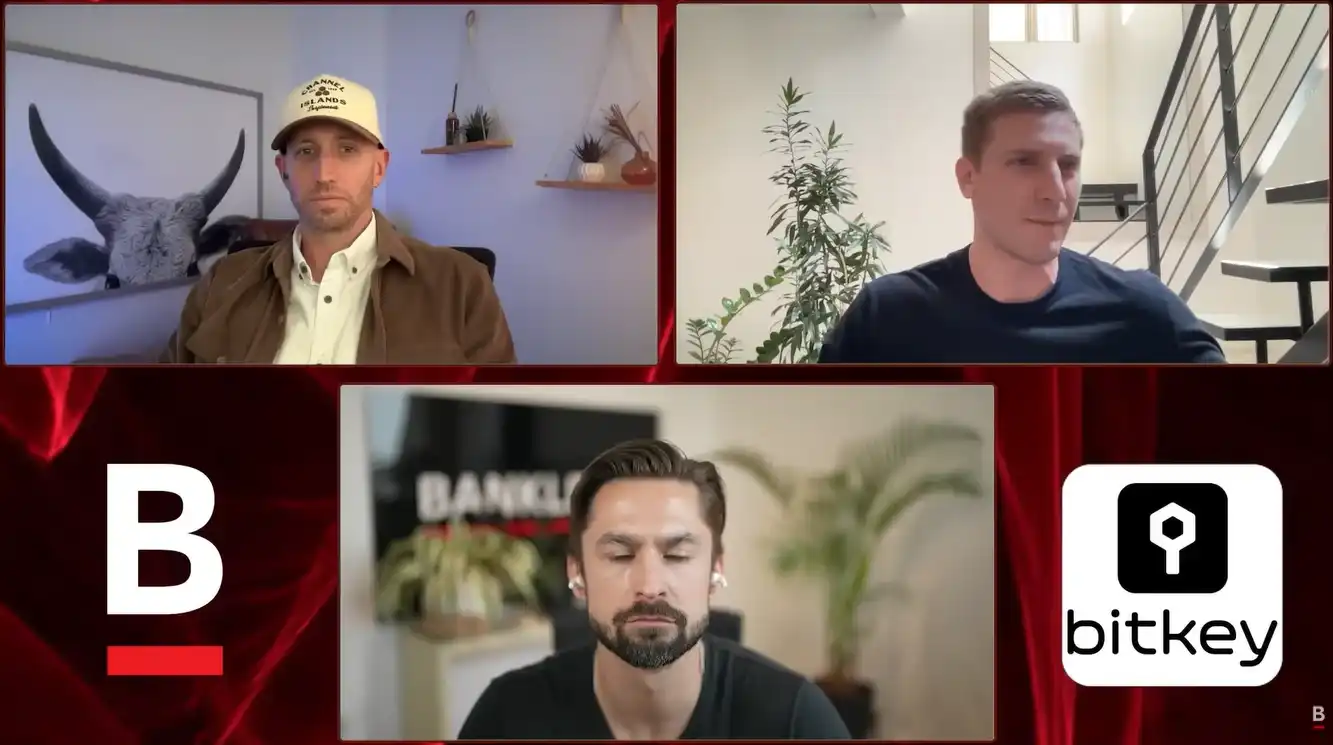
Conversation with Blockchain Capital Partners: The Next Bull Market May Be Right in Front of Us

In a recent Bankless podcast, Blockchain Capital partners Aleks Larsen and Spencer Bogart discussed the crypto market's evolution from infrastructure to applications. They noted that widespread stablecoin adoption has built significant on-chain liquidity, boosting revenues for lending and trading protocols. The partners defended the "buyback and burn" token model, explaining its current effectiveness in aligning incentives and establishing credibility with holders, despite past debates on capital efficiency. Addressing the sentiment divide in crypto, they highlighted positive catalysts like regulatory clarity and institutional entry, even during the bear market. Aleks compared the industry's current state to the 2003-2004 internet era—post-"broadband transition" with cheap block space, awaiting mainstream adoption through applications like stablecoins and prediction markets. They observed a shift from "fat protocol" to "fat application," where value now accrues more at the application layer than the base infrastructure, a sign of a maturing ecosystem. Drawing parallels to AI, they noted similarities in early hype cycles but emphasized crypto's transparent, token-driven market corrections versus AI's private market adjustments. On Real World Assets (RWA), Spencer projected stablecoin market cap to reach trillions by 2030, detailing its multiplier effect on on-chain economic activity. For stock tokenization, he outlined two approaches: permissionless but legally indirect models and compliant, direct ownership channels, suggesting they can coexist in "sidecar" models alongside pure DeFi. The conversation concluded that while the industry's ethos evolves with institutional adoption, crypto's core promise of upgrading global financial infrastructure for greater efficiency remains intact and is steadily progressing.

marsbitHace 3 hora(s)

Conversation with Blockchain Capital Partners: The Next Bull Market May Be Right in Front of Us

marsbitHace 3 hora(s)

Trading

Spot

Artículos destacados

Cómo comprar CHIP

¡Bienvenido a HTX.com! Hemos hecho que comprar USD.AI (CHIP) sea simple y conveniente. Sigue nuestra guía paso a paso para iniciar tu viaje de criptos.Paso 1: crea tu cuenta HTXUtiliza tu correo electrónico o número de teléfono para registrarte y obtener una cuenta gratuita en HTX. Experimenta un proceso de registro sin complicaciones y desbloquea todas las funciones.Obtener mi cuentaPaso 2: ve a Comprar cripto y elige tu método de pagoTarjeta de crédito/débito: usa tu Visa o Mastercard para comprar USD.AI (CHIP) al instante.Saldo: utiliza fondos del saldo de tu cuenta HTX para tradear sin problemas.Terceros: hemos agregado métodos de pago populares como Google Pay y Apple Pay para mejorar la comodidad.P2P: tradear directamente con otros usuarios en HTX.Over-the-Counter (OTC): ofrecemos servicios personalizados y tipos de cambio competitivos para los traders.Paso 3: guarda tu USD.AI (CHIP)Después de comprar tu USD.AI (CHIP), guárdalo en tu cuenta HTX. Alternativamente, puedes enviarlo a otro lugar mediante transferencia blockchain o utilizarlo para tradear otras criptomonedas.Paso 4: tradear USD.AI (CHIP)Tradear fácilmente con USD.AI (CHIP) en HTX's mercado spot. Simplemente accede a tu cuenta, selecciona tu par de trading, ejecuta tus trades y monitorea en tiempo real. Ofrecemos una experiencia fácil de usar tanto para principiantes como para traders experimentados.

556 Vistas totalesPublicado en 2026.04.21Actualizado en 2026.06.02

Cómo comprar CHIP

Discusiones

Bienvenido a la comunidad de HTX. Aquí puedes mantenerte informado sobre los últimos desarrollos de la plataforma y acceder a análisis profesionales del mercado. A continuación se presentan las opiniones de los usuarios sobre el precio de CHIP (CHIP).

活动图片