Is finance crypto’s first chapter or its final form? VCs weigh in…

ambcryptoPublicado a 2026-02-10Actualizado a 2026-02-10

Resumen

The article explores whether finance represents crypto's foundational use case or its ultimate application, featuring perspectives from venture capitalists. Chris Dixon of a16z Crypto argues that non-financial applications are still emerging, with finance developing first due to infrastructure needs. Haseeb Qureshi of Dragonfly counters that consumer crypto failed due to weak demand and poor products, not regulation, asserting finance is crypto's only proven product-market fit. Capital flows in 2025 support this, with venture funding exceeding $20 billion, heavily focused on DeFi and infrastructure. TVL recovered to ~$99 billion, and stablecoin supply surpassed $307 billion, demonstrating finance's dominance. Revenue data further reinforces this: top DeFi protocols like PancakeSwap and Aave generated significant fees, while non-financial sectors like gaming struggled with thin revenue and low user monetization. The conclusion is that finance remains crypto's primary value layer, with strong capital and payment flows, whereas utility sectors face challenges in converting engagement into sustainable revenue.

Has the future of cryptocurrency in finance been firmly established, or is the potential for non-financial applications only beginning to unfold?

Chris Dixon, Managing Partner at a16z Crypto, rejected the narrative, stating,

“It’s fashionable right now to declare that non-financial use cases of crypto are dead.”

He explained that blockchains introduced a coordination primitive, with finance emerging first because infrastructure had to develop before other sectors.

Haseeb Qureshi, Managing Partner at Dragonfly, responded directly by challenging the idea that regulation was to blame. He asked why finance thrived despite facing even stricter scrutiny.

In his view, consumer crypto failed because of weak demand rather than policy barriers, arguing that the products themselves were poor and ultimately failed the market test.

Dixon pointed to internet-era sequencing and supportive policy shifts, while Qureshi cites adoption history, concluding finance remains crypto’s only proven product-market fit.

Capital flows reveal crypto’s true product-market fit

Venture funding rose sharply in 2025, surpassing $20 billion, the highest level since 2022 and more than double 2023 totals. Growth accelerated into Q4, where $8.5 billion flowed across 425 deals, up 84% quarter over quarter.

Capital focused on later-stage rounds, infrastructure, and DeFi, signaling institutional conviction rather than retail hype. This expansion aligned with DeFi’s stabilization phase.

Total value locked recovered to about $99.07 billion, rebounding from the $50 billion bear-market floor, while stablecoin supply exceeded $307 billion.

Lending platforms such as Morpho maintained deep liquidity, reinforcing finance as crypto’s product-market fit layer. Meanwhile, stablecoin settlement reached trillions annually, with adjusted volumes rivaling traditional rails in throughput.

Together, funding inflows and payment growth supported finance-led adoption, validating Haseeb’s demand view while still reflecting Dixon’s sequencing logic.

Revenue density is still anchored

Earnings concentration across top protocols reinforces the value-accrual divide.

Financial platforms led profitability through the year, with PancakeSwap [CAKE] generating about $15.8 million in 30-day earnings and Aave [AAVE] $10.4 million, signaling fee-driven sustainability.

As emissions declined, retained value strengthened through burns and staking, which supported net profitability. In contrast, non-financial sectors relied heavily on token rewards to drive usage. Gaming and social activity spiked during airdrops and play-to-earn phases; however, retention weakened once subsidies faded.

Revenue density remained thin, with top blockchain games producing roughly $4.2 million daily and ARPU often below $10–$30. Thus, the utility attracted users but struggled to convert engagement into a durable cash flow.

All this together, from a revenue and venture‐returns perspective, Haseeb’s demand argument appears stronger, while Dixon’s view remains structurally long‐term.


Final Thoughts

  • Finance remains crypto’s dominant value-accrual layer, with capital, revenue, and payment flows consolidating around DeFi and stablecoin rails.
  • Utility sectors drive engagement but fail to convert usage into durable cash flow, reinforcing venture skepticism despite long-term expansion potential.

Preguntas relacionadas

QAccording to the article, what is the main point of disagreement between Chris Dixon and Haseeb Qureshi regarding non-financial crypto applications?

AChris Dixon believes that non-financial use cases are not dead and that finance emerged first due to necessary infrastructure development, while Haseeb Qureshi argues that consumer crypto failed primarily due to weak demand and poor product quality, not regulatory barriers.

QWhat do the 2025 venture funding trends, as cited in the article, indicate about the crypto market's focus?

AThe 2025 venture funding, which surpassed $20 billion and saw an 84% quarter-over-quarter increase in Q4, was focused on later-stage rounds, infrastructure, and DeFi, signaling strong institutional conviction in financial applications rather than retail hype.

QHow does the revenue performance of financial DeFi protocols like PancakeSwap compare to non-financial sectors like gaming?

AFinancial protocols like PancakeSwap generated significant earnings ($15.8 million in 30 days) demonstrating fee-driven sustainability, while non-financial sectors like gaming produced much lower revenue (roughly $4.2 million daily) and struggled to convert user engagement into durable cash flow.

QWhat key metric is used to show the recovery and strength of the DeFi ecosystem in the article?

AThe article cites the recovery of the Total Value Locked (TVL) to about $99.07 billion, rebounding from a bear-market low of $50 billion, and the growth of stablecoin supply exceeding $307 billion as key metrics demonstrating DeFi's strength and stabilization.

QWhat is the article's final conclusion regarding crypto's product-market fit?

AThe article concludes that finance remains crypto's dominant value-accrual layer, with capital, revenue, and payment flows consolidating around DeFi and stablecoins, while non-financial utility sectors drive engagement but fail to create sustainable revenue models.

Lecturas Relacionadas

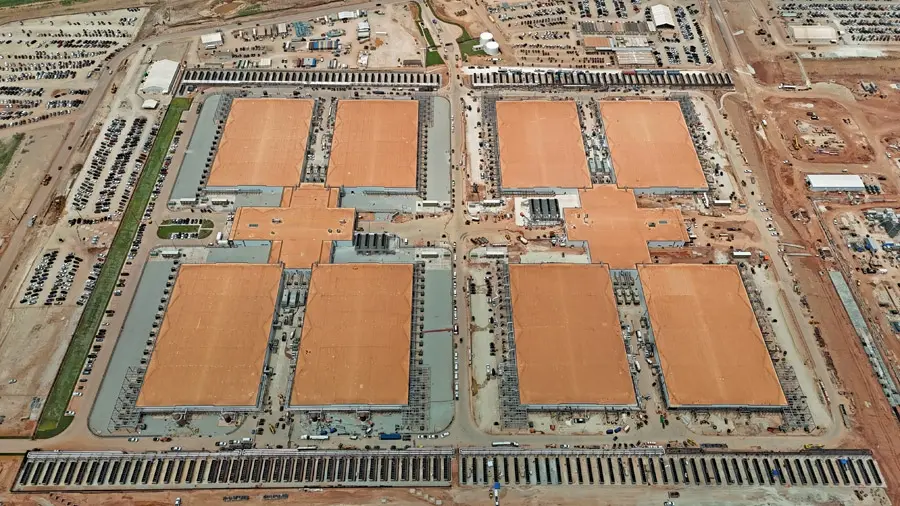
Bitcoin Mining Farms Are Becoming AI Factories

Bitcoin mines are transforming into AI factories. This shift is driven by the convergence of three key assets from the previous crypto cycle: infrastructure, talent, and capital. Crypto mining companies like Crusoe, CoreWeave, and Bitdeer are repurposing their core competency—securing power, land, and grid connections in remote locations—to build data centers for AI clients. These firms are signing multi-billion dollar, long-term contracts with companies like Anthropic, AWS, and Microsoft, as AI's demand for reliable, high-capacity compute surpasses the profitability of Bitcoin mining. Simultaneously, crypto entrepreneurs and engineers are applying their skills to new AI ventures. Examples include OpenSea's co-founder launching OpenRouter (an AI model aggregator), and former Coinbase engineers building Fal.ai (a generative media infrastructure platform). Their experience in building scalable, global software networks translates effectively to the AI space. Furthermore, capital accumulated during the crypto boom is now fueling AI. Figures like Jed McCaleb (co-founder of Ripple) funded Voltage Park, a large-scale GPU cloud provider. Notably, some crypto investments, like FTX's early bets on Anthropic and Cursor, have generated astronomical paper returns, demonstrating how high-risk crypto capital flowed into AI before it became mainstream. The transition is not just about repurposing hardware, but about redirecting critical resources—power infrastructure, distributed systems expertise, and venture funding—to the next technological frontier: artificial intelligence.

链捕手Hace 1 hora(s)

Bitcoin Mining Farms Are Becoming AI Factories

链捕手Hace 1 hora(s)

Morpho Launches Fixed-Rate Product Midnight: Lenders and Borrowers Set Their Own Rates, Ending the Era of Interest Rate Models

Morpho Launches Fixed-Rate Product Midnight: Lenders and Borrowers Set Their Own Rates, Ending the Era of Algorithmic Interest Models On-chain lending has grown to $60 billion but remains minuscule compared to traditional finance's $200 trillion annual credit volume. Morpho identifies the lack of fixed rates and maturity dates as key bottlenecks. Institutions need predictability, not the passive floating rates set by algorithmic models. Midnight allows lenders and borrowers to directly quote rates, set terms, and become price makers, not takers. Fixed-rate lending is now viable due to cheaper, faster blockchains and the entry of institutions demanding control and certainty over returns, costs, and duration. Morpho Blue previously gave users control over risk; Midnight adds control over interest rates. Past attempts at on-chain fixed-rate lending failed primarily because they were built on top of floating-rate pools (creating unpredictability) or lacked sufficient active participants. Midnight avoids these pitfalls as a standalone primitive with fixed rates at its core, built upon Morpho Blue's existing large and active user base. Midnight offers distinct value: institutions gain predictable term structures and full control; fintech companies can offer tailored fixed-rate products; lenders/borrowers achieve predictability and efficiency; and curators can now differentiate by configuring both risk and interest rates. Morpho Midnight is not a replacement for Morpho Blue. The Morpho network will now feature two complementary market structures: floating-rate/open-term (Blue) for flexibility and fixed-rate/fixed-term (Midnight) for predictability. Liquidity can flow between them. The launch will be gradual, prioritizing security. Initially, it will support direct lending on Base network with one trading pair (cbBTC/USDC) and limited maturity dates. Advanced features like auto-rollovers will be introduced later.

marsbitHace 1 hora(s)

Morpho Launches Fixed-Rate Product Midnight: Lenders and Borrowers Set Their Own Rates, Ending the Era of Interest Rate Models

marsbitHace 1 hora(s)

Trading

Spot
活动图片