Is Donald Trump’s ‘15% growth’ forecast enough to save crypto in 2026?

ambcryptoPublicado a 2026-02-11Actualizado a 2026-02-11

So far in 2026, the crypto market has surprised many by rallying against expectations. What analysts had pegged as a year defined by regulatory clarity and a fundamental growth cycle has already started to shift.

After back-to-back red weekly sessions, most high-cap risk assets have retraced to pre-election levels, showing that confidence in the U.S. President Donald Trump’s pro-crypto stance is fading as investors face big losses.

Against this backdrop, Trump’s projection of 15% annual growth for 2026, ahead of Kevin Warsh’s Federal Reserve nomination, has split the market. The question now: Will this projection move the market, or is it just hype?

Crypto market on edge as 15% projection divides analysts

Market divergence is clear in how investors are reacting to the President.

A few months ago, even a single pro-crypto headline from President Trump could easily trigger a rally. This time, however, despite his bullish 15% growth projection, the total crypto market is still down 1.44% intraday.

For context, in a recent media interview, President Trump forecasted 15% annual U.S. economic growth. The key takeaway? His projection hinges on his Federal Reserve nominee, whom he sees as supportive of rate cuts.

The market reaction is split. Some analysts view this as a bullish signal for the Q4 crypto market cycle, seeing potential rate cuts as a boost ahead of the midterm elections and a base case for risk assets to finish 2026 strong.

Others are skeptical, noting that given current macro conditions, inflation could undermine the rate-cut thesis, making the 15% projection look “overly optimistic.” In short, a straight-line crypto rally is far from certain.

Naturally, the key question now: Will real data outpace the “hype” around President Trump’s Federal Reserve move, further shaking confidence in his pro-crypto stance and leaving the crypto market to close 2026 in the red?

Trump’s rate-cut optimism faces crypto reality

Bloomberg is drawing a sharp line between optimism and reality.

In a recent report, it pointed out that the U.S. debt-to-GDP ratio, at 120%, mirrors the post-World War II era, when the Federal Reserve bought back Treasuries to control yields, followed by a 20% rate hike to tackle inflation.

Against this backdrop, analysts view President Trump’s nomination of a new Fed Chair as largely inconsequential for markets. In short, the hard data runs counter to expectations of a bullish crypto market in 2026.

From late 2025 into 2026, the crypto market has shown what happens when expectations are missed. Massive green wicks (over $1 billion in daily long liquidations) have slammed the market, rattling investor confidence.

The result? Nearly $1 trillion wiped out in just a month, pushing risk assets back to pre-election levels as the market strayed from expectations of a bullish Q1 driven by regulatory clarity and following 2025’s 7% market dip.

According to AMBCrypto, this highlights why the debate around President Trump’s 15% growth projection matters. With data clearly working against this move, the crypto market now risks another wave of liquidations.

In turn, this puts the market’s 2026 rally on a more bearish footing.


Final Thoughts

  • President Trump’s 15% growth projection splits the crypto market as some see it as bullish for Q4, while others call it overly optimistic.
  • The crypto market faces downside risks, as data and liquidation pressure put the 2026 crypto rally on shaky footing.

Lecturas Relacionadas

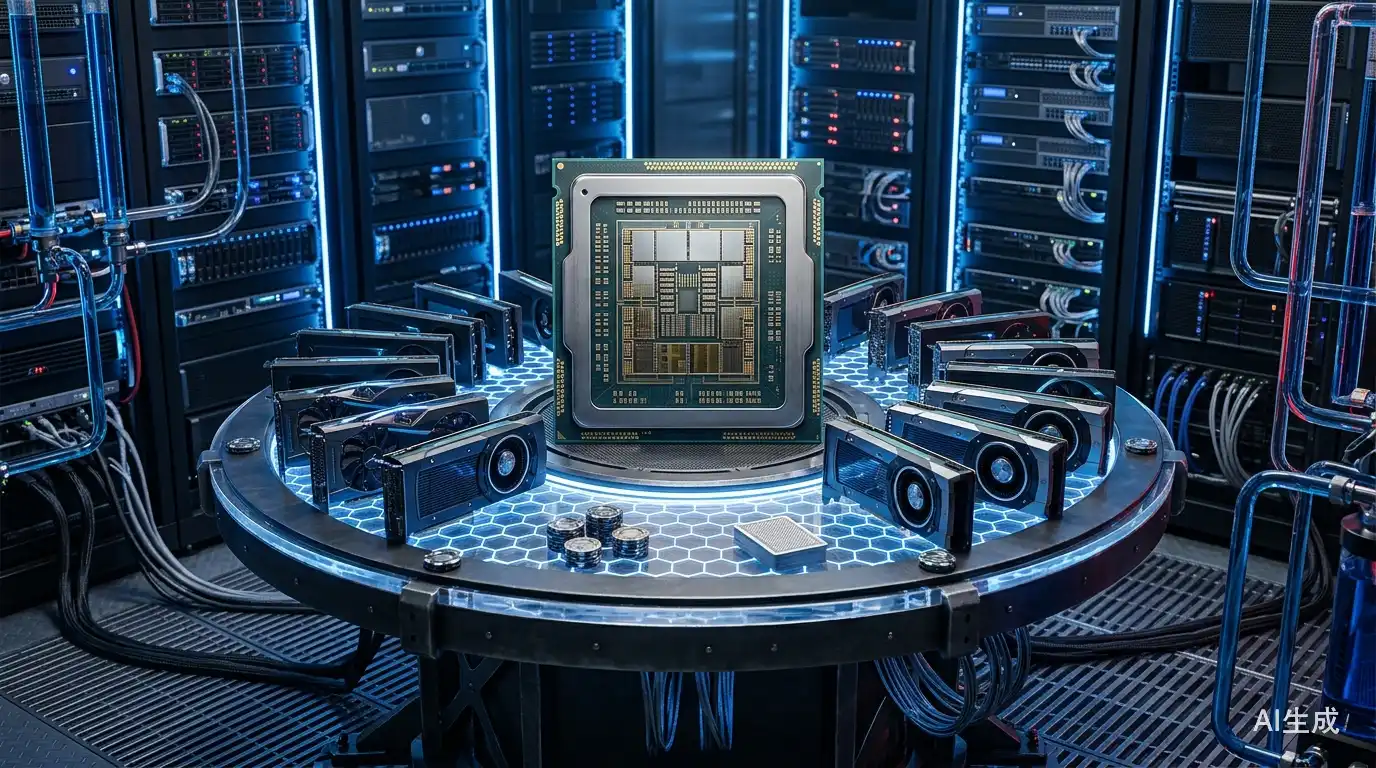
CPU Makes a Comeback to the Table, A $170 Billion "Power Seizure" Drama Begins

A new era is dawning for the server CPU (Central Processing Unit), driven by the shift from AI model training to large-scale reasoning and the rise of Agentic AI. This article explores how the CPU is reclaiming a central role in the AI data center. For years, the focus has been on the GPU (Graphics Processing Unit) for AI training. However, as AI moves to the inference and Agent phase—where tasks involve complex, multi-step reasoning, tool calls, and data management—the workload balance is flipping. Studies show CPUs now handle over 70% of the workload in Agentic AI, up from 10-30% in training. This is because Agent tasks generate massive intermediate data (KV Cache) that exceeds GPU memory, forcing it to be offloaded to the CPU's larger, more scalable memory pools. This increased importance is translating into market changes. Major players are taking note: NVIDIA launched its first standalone CPU line, Vera, based on ARM architecture and optimized for Agent performance. AMD doubled its server CPU market forecast to over $1200 billion by 2030. Analyst reports project the total server CPU market could reach $1700 billion by 2030, with AI-driven demand being a primary driver. Furthermore, the classic ratio of CPUs to GPUs in AI servers is rapidly changing, converging from 1:8 toward 1:1 for Agent deployments. This surge in demand has led to a rare industry-wide price increase of 10-15% for server CPUs from Intel and AMD, breaking a decade-long trend of "more performance for the same price." Demand is bifurcating into high-core-count CPUs for in-rack GPU support and moderate-core CPUs for standalone Agent task orchestration. In China, this global trend presents an opportunity for domestic CPU manufacturers like Hygon (海光信息) and Huawei Kunpeng, who are bolstered by both growing AI infrastructure needs and national policies promoting technological self-reliance ("xin chuang"). The maturity of their software ecosystems is also accelerating, evidenced by faster adaptation to new AI models. In conclusion, the narrative is shifting from a GPU-centric view to one where CPU-GPU synergy is critical. The CPU is no longer a peripheral component but a performance-defining bottleneck and a key growth driver in the AI hardware stack, opening a massive new market estimated in the hundreds of billions of dollars.

marsbitHace 43 min(s)

CPU Makes a Comeback to the Table, A $170 Billion "Power Seizure" Drama Begins

marsbitHace 43 min(s)

TechFlow Intelligence: AMD AI Director Publicly Criticizes Claude Code for "Becoming Dumber and Lazier", Trump Claims Full Ceasefire in Hormuz But Strait Still Has 80 Unexploded Mines

TechFlow Intelligence Report: This daily digest covers key developments in AI, crypto, hardware, and geopolitics. In AI, SK Telecom faces US export control scrutiny over its partnership with Anthropic, while a Gemini user reports being misled in a scam scenario, sparking safety debates. China's Z.AI launches the GLM-5.2 model, rivaling Claude Opus without NVIDIA chips. In crypto, Bithumb lists ReProtocol, and Upbit delists KernelDAO. On the hardware front, MIT researchers build a custom OS to study chips, ASML denies US claims its advanced lithography machines are in China, and Amazon considers selling its in-house AI chips. Apple's future A21 Pro chip may use TSMC's latest N2P process. Major tech issues include 10,000 GitHub repositories distributing malware and Apple patching a critical eavesdropping flaw in Beats earbuds. US stocks rise, led by semiconductors, with Intel surging 10.6%, while SpaceX falls 3.5%. Geopolitically, despite a US-Iran deal, the Strait of Hormuz remains risky with ~80 uncleared mines, stalling 80M barrels of oil on standby tankers. Iran postpones Switzerland talks, and Trump calls the agreement an "unconditional surrender." The report highlights a contrast: temporary geopolitical calm versus the ongoing, fundamental restructuring of tech supply chains and chip independence.

marsbitHace 44 min(s)

TechFlow Intelligence: AMD AI Director Publicly Criticizes Claude Code for "Becoming Dumber and Lazier", Trump Claims Full Ceasefire in Hormuz But Strait Still Has 80 Unexploded Mines

marsbitHace 44 min(s)

Trading

Spot
Futuros
活动图片