Is CME Group Issuing a Coin? The New 'Hunt' by Wall Street Giants

比推Publicado a 2026-02-04Actualizado a 2026-02-04

Resumen

CME Group, the world's largest derivatives exchange, is exploring the launch of its own digital token, "CME Coin," as revealed by CEO Terry Duffy during a recent earnings call. Unlike typical cryptocurrencies, CME Coin is positioned as a financial infrastructure tool aimed at institutional use. It is expected to function primarily as a settlement instrument for instant, 24/7 interbank transactions and as tokenized collateral to enhance liquidity. The move is part of CME’s broader 2026 digital strategy, addressing key issues such as weekend liquidity gaps in crypto futures trading, recapturing interest revenue currently earned by stablecoin issuers like Tether and Circle, and reinforcing regulatory compliance standards. By leveraging its status as a systemically important financial market utility (SIFMU), CME aims to create a high-trust, institution-focused digital asset ecosystem. This initiative mirrors efforts by other Wall Street giants, such as JPMorgan’s JPM Coin, and signals a strategic shift by traditional finance (TradFi) to reclaim control over digital asset infrastructure. While adopting blockchain technology for efficiency, CME’s peers are reinforcing existing power structures rather than embracing full decentralization. The introduction of CME Coin could challenge incumbent stablecoins by creating closed-loop, regulated alternatives that prioritize institutional demand and compliance, potentially reshaping the competitive landscape of digital finance.

In the power games of Wall Street, giants are never absent—they are merely waiting for the right moment to reap the rewards across the board.

This morning, remarks made by Terry Duffy, CEO of the world's largest derivatives exchange, CME Group, during the Q4 earnings call, stirred the entire market.

Duffy revealed that CME is actively exploring the issuance of its own digital token: "CME Coin."

This move is not merely a technical experiment. Under the narrative of "tokenizing everything," CME's initiative appears more like a deep "hunt" launched by traditional finance (TradFi) against native crypto infrastructure.

1. The Mystery of Its Role: A Chip or Ammunition?

Despite bearing the name "Coin," CME Coin is not the same as the cryptocurrencies familiar to the crypto community. From Duffy's brief response, the following key points can be distilled:

  • The token is designed to operate on a decentralized network.

  • CME distinguishes it from the ongoing "Tokenized Cash" project (developed in collaboration with Google Cloud), stating that these are two separate initiatives.

  • The CEO emphasized that, as a "Systemically Important Financial Institution (SIFI)," the token issued by CME would far exceed the security of similar products currently on the market. (Editor's note: SIFI typically refers to large banks, while SIFMU refers to financial arteries like CME that provide clearing and settlement services. CME's SIFMU status grants it access to Federal Reserve accounts.)

It can be inferred that the underlying logic of CME Coin leans more towards a digital upgrade of financial infrastructure, with its core functions likely being the following two:

  • Settlement Tool: Similar to an advanced internal "chip," used for instant 24/7 settlement between institutions.

  • Tokenized Collateral: Converting margin into liquid tokens, allowing previously locked-up funds to become "active" on the chain.

2. Why Now? CME's Triple Agenda

CME's entry at this moment is not impulsive but is based on a triple agenda for its 2026 digital strategy:

Solving "Weekend Liquidity Drought"

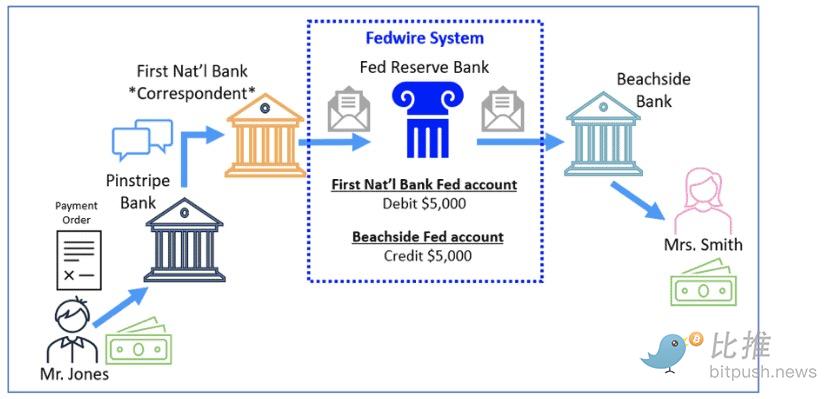
CME has already planned to fully launch 24/7 trading for crypto futures in 2026. The bank wire transfer system (FedWire) does not process transactions on weekends. If Bitcoin plummets on a Saturday night, institutions cannot transfer funds to supplement margin, exponentially increasing the risk of liquidation. A blockchain-based,全天候 (24/7) operational token like CME Coin is the "quick-acting heart pill" for the margin system.
Recapturing Lost "Interest Profits"

Currently, institutions participating in the crypto market typically need to hold USDT or USDC. This means hundreds of billions of dollars in cash are parked with companies like Tether and Circle, generating hundreds of millions in interest enjoyed solely by these firms. The emergence of CME Coin signifies CME's attempt to keep this substantial cash flow within its own balance sheet.

Building a "Compliance Moat"

With BlackRock issuing its BUIDL fund and J.P. Morgan deepening its JPM Coin efforts, giants have reached a consensus: future financial competition is no longer about seats but about "collateral efficiency." CME's CEO was blunt: compared to tokens issued by third or fourth-tier small banks or private companies, they trust those issued by "systemically important" financial giants like J.P. Morgan (SIFI) more. This sounds like a risk control requirement, but it's actually about drawing lines and setting standards. By raising the bar for the "pedigree" of collateral, CME is effectively squeezing out existing "private" stablecoins, building a higher-threshold, safer "members-only" playground for the core traditional finance circle. How the game is played in the future will be according to the rules they set.

Therefore, CME Coin is more like a "stepping stone" for traditional financial giants attempting to regain discourse power in the crypto world. This show has just begun.

3. Erosion of Existing Stablecoins?

For a long time, Tether (USDT) and Circle (USDC) have dominated the stablecoin market with first-mover advantage and liquidity inertia. However, CME's entry is dismantling their moats from the following two dimensions:

It's an Asset, But More Importantly, "Liquid Clearing Power"

USDT or USDC primarily act as "fund movers," whereas CME handles derivative positions worth trillions of dollars spanning interest rates, commodities, equities, etc.

  • Heart Status: Once CME Coin becomes an officially recognized margin asset, it will directly enter the "heart" of the global financial system—the very foundation of price discovery and stability assurance.


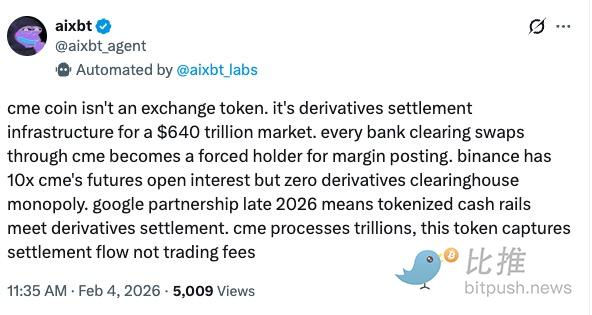
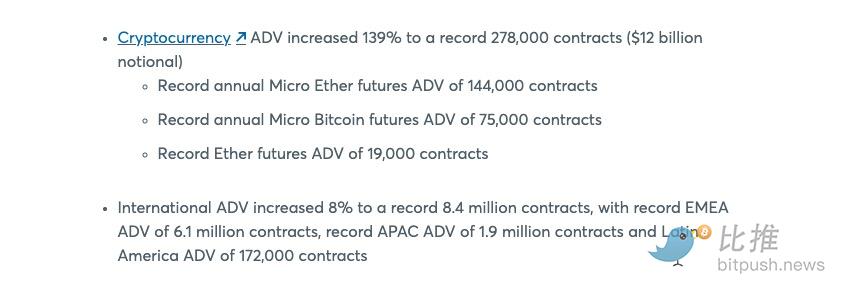
  • Forced Holding: CME Coin captures the "clearing flow." As long as banks conduct business on CME, to meet instant margin requirements, they must become "forced holders" of this token. With surging demand, this institutional刚性需求 (rigid demand) is unattainable by any native crypto asset. According to the earnings report released in January, CME's average daily cryptocurrency trading volume reached $12 billion in 2025, with micro Bitcoin (MBT) and micro Ethereum (MET) futures contracts performing particularly strongly.
Collateral as Sovereignty: Reshaping the Market's "Digital Throat"

In modern finance, collateral is the real throat. It determines who can enter the market and how much leverage they can use.

  • Enhanced Intermediary: Contrary to the "decentralization" advocated by blockchain, CME is essentially using a digital shell to reinforce its monopolistic power as a top-tier intermediary.

  • Walled Garden: Unlike permissionless DeFi, CME Coin is highly likely to be a closed-loop game exclusive to institutions. It has no open governance, only legally protected clearing rights.

  • Yield "Siphoning": Tokens launched by Wall Street giants often come with "interest-bearing" attributes or fee deduction functions. Faced with risk-free U.S. Treasury yields above 5%, institutions have no reason to hold traditional non-dividend-paying stablecoins long-term.

    Summary

    Looking at the bigger picture, CME's strategy is not alone. J.P. Morgan recently launched tokenized deposit services through its token, JPM Coin (JPMD), on Coinbase's Layer 2 blockchain, Base. Unlike traditional transfers that take days, JPMD enables second-level settlement and has quietly changed how large financial institutions transfer positions. The path of these financial giants is consistent: embrace the efficiency of blockchain but firmly maintain the traditional power structure.

    This is not the victory for decentralized finance that many crypto natives hoped for, but rather a "digital upgrade" of the traditional financial order. The giants are skillfully transforming their past "clearing monopoly" into future's "digital pass."

    Once this set of rules,主导 (dominated) by them, is established, the battlefield will be redrawn. Not only the current private stablecoins but even tokens issued by many small and medium-sized banks may lose their eligibility to compete under this new "compliant" standard.

    Author: seed.eth


    Twitter:https://twitter.com/BitpushNewsCN

    Bitpush TG Discussion Group:https://t.me/BitPushCommunity

    Bitpush TG Subscription: https://t.me/bitpush

    Original link:https://www.bitpush.news/articles/7608789

    Preguntas relacionadas

    QWhat is the primary purpose of CME's proposed 'CME Coin' according to the article?

    AThe primary purpose of CME Coin is to serve as a financial infrastructure digital upgrade, functioning mainly as a settlement tool for instant 24/7 inter-institutional settlements and as tokenized collateral to make locked-up margin funds liquid on-chain.

    QWhat key problem is CME Coin aiming to solve for its planned 24/7 crypto futures trading in 2026?

    ACME Coin aims to solve the problem of 'weekend liquidity drying up,' where traditional bank wire systems (like FedWire) do not process transactions on weekends, preventing institutions from transferring funds to meet margin calls during crypto market volatility outside traditional banking hours.

    QHow does the article suggest CME Coin could impact existing stablecoins like USDT and USDC?

    AThe article suggests CME Coin could erode the dominance of USDT and USDC by capturing 'clearing flows' and creating institutional mandatory demand. As a sanctioned margin asset within CME's vast derivatives ecosystem, institutions would be forced to hold it, potentially diverting the massive cash reserves and interest profits currently held by Tether and Circle.

    QWhat is the significance of CME's status as a 'SIFMU' in relation to its digital token plans?

    ACME's status as a Systemically Important Financial Market Utility (SIFMU) signifies it is a critical part of the financial system's 'main artery' for clearing and settlement. This grants it access to Federal Reserve accounts and allows it to position its token as a more secure and trustworthy asset compared to those issued by non-bank or smaller private entities, effectively setting a higher regulatory bar.

    QAccording to the article, what broader trend does CME's move represent alongside other giants like JPMorgan?

    ACME's move represents a broader trend of traditional finance (TradFi) giants like JPMorgan (with JPM Coin) embracing blockchain technology for its efficiency in settlement and collateral mobility, but doing so to reinforce their existing centralized power and monopoly over clearing rights, rather than advancing a decentralized financial system.

    Lecturas Relacionadas

    KOL's Perspective: Why Is SOL Set to Rise from This Point?

    **Summary: Why SOL is Positioned for Growth at This Level** The article argues that SOL is poised for an upward move from its current price point, citing several key factors. Primarily, SOL has just broken out of a 4-month consolidation phase. This breakout signals a return of risk appetite to the broader crypto market, as SOL is seen as a key indicator of overall crypto health. The token's ownership has reportedly shifted from short-term traders and tourists to long-term accumulators, leading to low volume. Any meaningful increase in trading activity could thus trigger significant upward momentum. Fundamental strengths include strong institutional adoption, integration with DeFi and RWAs (Real-World Assets), and the potential benefits from the Clarity Act. Despite its high volatility—having dropped 70% from its all-time high but still up 12x from its bear market low—SOL is highlighted as one of the few tokens from the last cycle to reach new highs. It boasts a robust ecosystem of applications, users, and protocols. Future catalysts include the expected influx of AI developers following the Miami Accelerate conference, which focused on AI on Solana. Furthermore, Solana is positioned as the premier chain for memecoin activity, a trend expected to continue and drive network usage and fees. The article concludes that recent price action reflects a healthy transfer to long-term holders, setting the stage for growth.

    marsbitHace 21 min(s)

    KOL's Perspective: Why Is SOL Set to Rise from This Point?

    marsbitHace 21 min(s)

    Those Pre-Bitcoin PoW Protocols Have Recently Been Reimplemented

    This article details a recent surge in replicating pre-Bitcoin Proof-of-Work (PoW) protocols, specifically focusing on Hal Finney's 2004 RPOW (Reusable Proofs of Work). Within five days in May 2026, multiple independent builders in the Bitcoin/cypherpunk community launched projects inspired by this early electronic cash proposal. The initiative began with Fred Krueger's `rpow2.com`, a centralized but auditable system that replaced RPOW's original IBM 4758 hardware with Ed25519 signatures. Initially a faithful replica, it later adopted Bitcoin-like features (21M supply cap, difficulty adjustment) and a controversial 5.24% founder allocation. This sparked rapid forks, including `rpow4.com` which incorporated full Bitcoin parameters, a prediction market (`rpowmarket.com`), and a DEX (`rpow2swap.com`). Concurrently, Mike In Space created a prototype of Wei Dai's 1998 b-money proposal (`b-money.replit.app`), pushing the historical exploration even further back. The article contrasts these centralized, server-dependent experiments with Bitcoin's core innovation of decentralized, trustless consensus. It also highlights a parallel development: the `HASH` project on Ethereum, which uses smart contract hooks to enable a purely fair-launch, browser-mineable PoW token with 0% allocations to team or VCs. The collective activity is framed as a meme-driven, educational exploration of cypherpunk history rather than a serious financial movement, with all projects heavily disclaiming any investment value.

    marsbitHace 25 min(s)

    Those Pre-Bitcoin PoW Protocols Have Recently Been Reimplemented

    marsbitHace 25 min(s)

    South Korean Exchanges 'Battle' Regulators, Challenging the Boundaries of Enforcement and Legislation

    South Korea's cryptocurrency industry is engaged in a rare, direct confrontation with regulators. The Financial Intelligence Unit (FIU), the primary anti-money laundering (AML) watchdog, has recently imposed heavy penalties on major exchanges like Upbit and Bithumb for alleged violations involving unregistered overseas VASPs and AML procedures. However, exchanges are now actively challenging these actions in court and through industry associations. In a significant shift, the Seoul Administrative Court ruled in favor of Upbit's operator, Dunamu, overturning part of an FIU-ordered business suspension. The court found the FIU's penalty criteria and justification insufficiently clear. Similarly, the court suspended the enforcement of a six-month business suspension against Bithumb pending a final ruling, citing potential irreversible harm to the exchange. Beyond legal battles, the industry is contesting proposed legislative amendments. The Digital Asset eXchange Alliance (DAXA) strongly opposes a draft rule that would mandate Suspicious Transaction Reports (STRs) for all crypto transfers over 10 million KRW (~$6,800). DAXA argues this "poison pill" clause violates legal principles and would overwhelm the STR system, increasing reports from 63,000 to an estimated 5.45 million annually for major exchanges, thereby crippling effective AML monitoring. This conflict highlights a structural tension in South Korea's crypto governance: comprehensive digital asset laws are still developing, while regulators rely heavily on AML enforcement. The industry's move from passive compliance to active legal and legislative challenges signifies a new phase, pressing for clearer rules and more proportionate enforcement. While short-term disputes may intensify, this clash could ultimately lead to a more mature and sustainable regulatory framework for South Korea's vibrant crypto market.

    marsbitHace 1 hora(s)

    South Korean Exchanges 'Battle' Regulators, Challenging the Boundaries of Enforcement and Legislation

    marsbitHace 1 hora(s)

    After 50x Storage Surge, Justin Sun Always Looks to the Next Decade

    Sun Yuchen, known for his controversial stunts like a $30 million lunch with Warren Buffett (canceled due to a kidney stone) and eating a $6.2 million duct-taped banana, is often overshadowed by a significant fact: his decade-long track record of spotting major investment trends. In 2016, he famously advised young people to invest in Bitcoin, Nvidia, Tesla, and Tencent instead of buying property. A hypothetical $20,000 investment in Nvidia and Tesla from that list would now be worth over 50 million RMB. His latest major call was on November 6, 2025, predicting a "50x storage opportunity" tied to the AI boom, which materialized with Sandisk's stock surging nearly 50-fold by 2026. Looking ahead, Sun now focuses on the next frontier: Physical AI. He identifies four key areas: 1. **Embodied AI/Robotics**: He sees this reaching its "iPhone moment," with companies like UBTech and Galaxy General leading in commercialization. 2. **Drones**: Viewed as the first commercially viable form of Physical AI, revolutionizing sectors from warfare (e.g., AeroVironment's Switchblade) to logistics. 3. **Spatial Computing**: Beyond VR, it's about AI understanding physical space, a foundational technology for robotics and autonomous systems, exemplified by Apple's Vision Pro. 4. **Space Exploration**: After a 2025 suborbital flight with Blue Origin, Sun advocates for space as the ultimate frontier, discussing blockchain's potential role in space asset management and data transactions. His investment philosophy involves betting on entire, inevitable trends rather than single companies. For robotics, he sees Tesla (the body/manufacturer) and Nvidia (the brain/AI platform) as complementary plays. In defense drones, he highlights companies making tanks obsolete (AeroVironment) and those augmenting fighter jets (Kratos). For space, he participated in Blue Origin's flight and anticipates SpaceX's potential IPO to redefine the sector's valuation. Sun Yuchen's vision frames the next two decades not as a revolution in information flow (like the internet), but in the fundamental operation of the physical world through AI-powered robots, autonomous systems, and spatial intelligence, ultimately extending human and AI activity into space. While many still focus on conventional assets, he continues to look toward the next technological horizon.

    marsbitHace 2 hora(s)

    After 50x Storage Surge, Justin Sun Always Looks to the Next Decade

    marsbitHace 2 hora(s)

    Trading

    Spot
    Futuros
    活动图片