Interview with the Founder of an AI-Focused Investment Fund: Forget the False Narrative of 100x Returns, What Crypto x AI Assets Are Worth Watching?

marsbitPublicado a 2026-05-26Actualizado a 2026-05-26

Resumen

Interview with Austin Barack, founder of AI-focused fund Relayer Capital. He emphasizes prioritizing real value over hype, especially in the Crypto x AI sector. Key assets discussed include: * **Venice:** A private AI platform where user data isn't shared with model providers. Its unique two-token model (VVV and DM) provides sustainable, capped user incentives for computation. Rapid user growth (3M) and token usage (15x in months) suggest significant upside. * **Grass:** Sells high-quality, specialized web-scraped datasets to AI labs for model training. With ~$50M+ ARR and triple-digit growth, its ~$400M valuation is seen as undervalued. * **NEAR:** Praised for its superior cross-chain swap infrastructure via intents, positioning it as crucial infrastructure for AI agents and decentralized applications. * **Akash:** A decentralized GPU compute marketplace gaining traction, with visible usage on platforms like OpenRouter. * **Investment Framework:** Shift from generic "buyback-and-burn" narratives to analyzing the "net token value flow"—whether token holders genuinely capture value from the underlying business. Markets are consolidating around a smaller set of quality projects with strong fundamentals like Venice, Grass, and NEAR, making targeted investments more effective.

Organized & Compiled: Deep Tide TechFlow
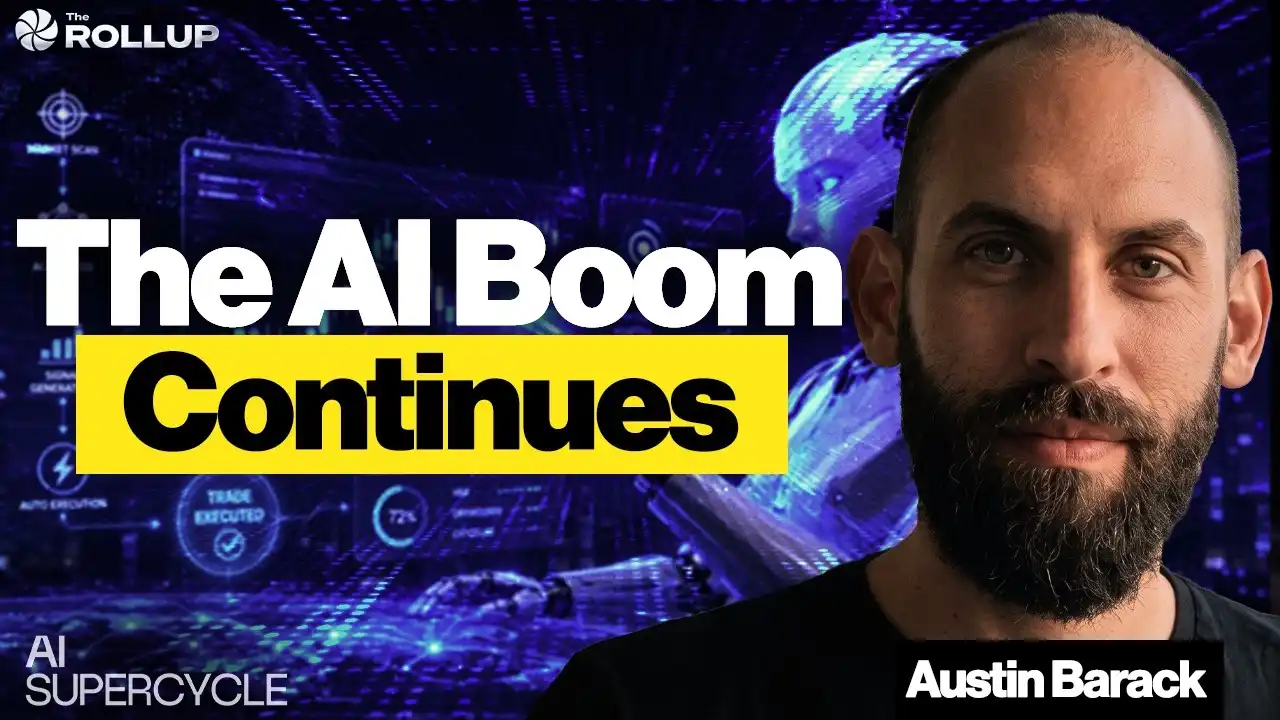
Guest: Austin Barack, Founder of Relayer Capital (a digital asset investment fund focused on the AI sector)

Host: Andy

Podcast Source: The Rollup

Original Title: Austin Barack: My AI Bull Thesis (...And What I'm Holding)

Broadcast Date: May 23, 2026

Key Summary

This episode of AI Supercycle invited Austin Barack, founder of Relayer Capital, to discuss Venice, Grass, NEAR, Akash, and the broader Crypto x AI asset framework. Austin's core viewpoint is that AI is scaling user data to levels unimaginable for past internet products, making privacy AI, data supply, inference computing power, decentralized training, and Agent infrastructure key sectors. He believes there is a clear misalignment between the revenue growth, user growth, and valuation of Venice and Grass, and that NEAR's positioning in cross-chain Intents and Agent infrastructure is also undervalued. Regarding the broader crypto market, Austin emphasizes that investors should start from the perspective of "net Token value flow" rather than mechanically looking at buyback and burn mechanisms, truly assessing whether Token holders are capturing the value created by the business.

Excerpts of Notable Points

The True Value of Venice and Privacy AI

  • "In AI, privacy is more important than in any other scenario. Because you're sharing health data, financial data, you'll connect all your files, and you'll share your entire life in ways never done before."
  • "This isn't 10 times more data than social media; it's 100 times more data."
  • "What's really cool about Venice is that it's not just about using AI in a private environment; it does this without sacrificing the user experience at all, even improving it."
  • "Tokens can become a very important part, significantly enhancing the experience, but for most users, they don't need to understand Tokens to find the product useful."

VVV, DM, and Venice's Economic Model

  • "The role of DM is: for every 1 DM Token you own, you get $1 worth of free inference compute credit per day on the Venice platform. You can think of it as a kind of perpetual right, equivalent to getting $365 of compute credit per year."
  • "Its credit expires if unused; it doesn't accumulate over time. If you only used 50 cents one day, it doesn't become $1.50 the next day; it resets to $1."
  • "If all DM is locked and used for inference compute, then Venice's maximum cost is $38,000 per day, an annualized cost of about $10 million, and this cost will not exceed that figure."
  • "I think DM should be valued more like a corporate bond, rather than using a high discount rate to suppress its value."

Grass and AI Data Demand

  • "Grass collects datasets and then sells these datasets to cutting-edge AI labs that need data to train new models."
  • "This isn't random web crawling; it has to be very specialized, very specific datasets, and of high quality."
  • "The scale of investment into models is huge, and Grass benefits from this trend. The more invested in models, the greater the demand for data."
  • "According to recently disclosed data, the project's ARR is about $50 million. Currently, its valuation is about $400 million. For a project growing this fast, valuing it at just 5x revenue seems completely unreasonable to me."

NEAR, Akash, and the AI Stack

  • "NEAR Intents is very practical and arguably one of the best cross-chain Swap experiences available now. Also, it plays a very important role in the Agent space."
  • "I think NEAR is doing very well on the Intents side. They're also doing many other things, like private intents and other elements around AI usage; it's one of the few L1s that has truly found its unique positioning."
  • "Akash. They started with a decentralized CPU marketplace early on and later pivoted to the GPU market."
  • "The main areas I'm focused on include: decentralized training, inference and compute marketplaces, Agent infrastructure, data, and consumer-facing model usage applications."

Token Value Capture and Market Divergence

  • "Hyperliquid is first and foremost a very successful business model, so people like its Token, and buybacks are just one way it transfers value to Token holders. If it wasn't a well-functioning business to begin with, then even with a buyback mechanism, the Token price wouldn't naturally rise."
  • "The core issue isn't what the mechanism is called, but whether Token holders can maximally capture the value generated by what you're building."
  • "Every project and each mechanism needs specific analysis. But the core question is: Are Token holders able to benefit from the value the system is generating?"
  • "Investors can choose from a smaller pool of quality projects. Now, capital flows are concentrating into projects like Venice, HYPE, Grass, AERO, NEAR, and Zcash."
  • "For investors seeking 5 to 10x, or even 3x returns, it's easier to succeed now than before. While you might still achieve a 100x return eventually, I think there's a set of projects doing very interesting things right now, and these are the assets I would watch and invest in."

Venice Privacy Overview

Host Andy: I used Venice for the first time not long ago. I typed into Venice: "Is this really private?" It replied: "Yes, the inference process is private," then explained a bunch. I replied: "That's so cool." It immediately responded: "Yes, it is pretty cool, isn't it? Using Venice, you can..."

So the first time using Venice, there's an interesting moment: you suddenly realize that all the chat content you've ever entered into typical AI providers, while not necessarily public, the data flows to large providers. The most private diaries, trade secrets, plans, etc., are all handed over to them.

From a high-level perspective, regarding market structure, investment logic, founding team, how do you view private AI and Venice?

Austin:

Venice is interesting because it has gone through many different stages of iteration. I first came across the project last January. I was closely following Virtuals and aixbt at the time, and a large portion of Venice's early airdrop went to holders of tokens in those ecosystems, so that's where I first saw it.

It was already an interesting product at that time. It's crazy that even though only about 16 months have passed, AI was far from being as ubiquitous as it is today, and it hadn't become an indispensable part of everyone's daily life yet. During this period, whether it's Claude, ChatGPT, or other services, AI started out as a replacement for Google search. People would say: "I don't use Google to search for certain questions anymore; I go directly to an AI platform to ask an LLM." But now it's entered into creation, task solving, even the stage where you have an entire team and a bunch of Agents helping you work.

AI Data Usage is 100x Greater Than Before

Austin:

I think people are gradually realizing that privacy in AI is more important than in any other scenario. Because you're sharing health data, financial data, you connect all your files, you share your entire life in ways never done before.

In the past, when people talked about privacy, it was more in the context of social media, like whether my account is public or private, whether Facebook knows too much about me. But AI isn't just 10 times more data; it's 100 times more data.

The really cool thing about Venice is that it doesn't just let you use AI in a private environment; it does so without sacrificing the user experience at all, even improving it. Because you're not tied to one specific model. For example, if you use ChatGPT, you're just following OpenAI's model upgrades; if you use Anthropic, you follow Anthropic's different model evolutions; or you use Gemini, open-source models, each with its own boundaries.

In Venice, you can choose the most suitable model for each task, and you can also choose which models you want to use. So it has a high degree of customization. They first created a very, very good consumer product, and most users don't know what Tokens are.

Tokens then add an interesting element on top of that. I'm very bullish on what they're doing. The key here is, I think crypto consumer products will evolve into a form where Tokens can become a very important part, significantly enhancing the experience, but for most users, they don't need to understand Tokens to find the product useful.

Host Andy: This indeed seems like a breakthrough form for consumer products: there's Crypto underneath, but users don't need to understand it first. But it also brings an interesting Token structure. Some compare it to Luna: staking VVV yields DM Tokens, then the inference credit forms some sort of debt structure.

3 Million Users

Host Andy: So how should one understand the VVV Token and DM Token within Venice's current flywheel? Also, could you talk about Venice's revenue side? Because they are indeed doing some buybacks, but the scale isn't particularly large. How do these two Tokens actually work? Why isn't it like Luna?

Austin:

They just announced having 3 million users, and growth is very fast. They added about 1 million users in the last 3 months, whereas the previous 1 million users took about 7 months. So growth has been accelerating.

The VVV and DM Token Flywheel

Austin:

They have two Tokens. The first is VVV. Protocol revenue is used to burn VVV. Users can also stake VVV to get free membership. But the most interesting part is that users can stake and lock VVV to mint a Token called DM. You can also buy DM on the open market, but the core mechanism is staking VVV and minting DM.

The role of DM is: for every 1 DM Token you own, you get $1 worth of free inference compute credit per day on the Venice platform. You can think of it as a kind of perpetual right, equivalent to getting $365 of compute credit per year.

But its credit expires if unused; it doesn't accumulate over time. If you only used 50 cents one day, it doesn't become $1.50 the next day; it resets to $1. I think this creates a very interesting mechanism, similar to a tool for customer acquisition at near cost. This is different from Luna. Luna went to an extreme state, issuing an insane number of Tokens, leading to stablecoin scale in the tens or hundreds of billions. Venice is very clear on this: they keep the potential cost within a defined range.

Currently, the amount of DM that can be minted per Venice Token gradually decreases as the amount of DM in circulation increases, which effectively sets a hard cap of about 38,000 DM. Under current conditions, if all DM is locked and used for inference compute, then Venice's maximum cost is $38,000 per day, an annualized cost of about $10 million, and this cost will not exceed that figure.

Currently, about 10,000 DM are used for inference compute per day, corresponding to an annualized cost of about $3.5 million. This cost is offset by their business revenue. They offer Pro and Premium subscription services, ranging from $18 to $68 per month, or even higher. At the same time, when users use the platform, they also purchase Tokens or additional credits to use models.

Notably, their daily Token usage has grown from the initial few billion to recently about 70 billion, a roughly 15x increase over the past few months. So the difference here from Luna, I think, is that there is a maximum potential cost for the company, and DM users, while using DM, also use subscription services. If they need more than $1 credit per Token per day, they also buy other credits. This cost is easily covered by business revenue, and business revenue already far exceeds it.

DM Should Be Priced Like a Corporate Bond

Austin:

On the other hand, the coolest thing about DM is that it guarantees you future access to compute resources. The market currently values it with about a 20% discount rate, with a price around $1,800.

I think this type of asset should be priced more like a corporate bond, for example using an 8% to 12% discount rate. Using a 10% discount rate, its price would be roughly $3,650. For example, when I first started paying attention to it, the price was in the $200 range.

Host Andy: I was also thinking, how can an asset that generates $365 worth of rights per year be worth only $200? Unless the market believes Venice simply cannot sustain this mechanism.

Austin:

Exactly. So at that price point, it was almost a no-brainer investment opportunity for me. Even now, I still think there's room for upside.

However, looking beyond DM at Venice's overall economic situation, the numbers are very impressive. And its growth model is completely different from most projects we see in the crypto industry. It's more like the growth rate only possible in the AI field, which is why it's so attractive.

Is Venice at $20 Still Undervalued?

Host Andy: So you're convinced that Venice's VVV asset price is now around $20. Do you think a valuation range of $1.5 to $2 billion is still significantly undervalued for VVV?

Austin:

Yes. When I first bought in January, it was around $2.5. At that time, their daily token volume was only a few billion. Now it's about 15 times that.

Back then, their daily token transaction volume was only a few billion, and now it's grown 15 times that. Their user base grew from 1.5 million to the current 3 million. By my estimates, their revenue is at least 3 times what it was then.

Currently, Venice's valuation is roughly 20 to 30 times its annual revenue, and this is a company still growing at 20% per month. From this perspective, I think its valuation remains very low. You could even compare it to OpenRouter. OpenRouter's valuation is similar to Venice's, but its revenue scale might be slightly lower, and its growth speed might not be as fast as Venice's.

The key difference is that Venice has direct customer resources. It's not a pure backend infrastructure service provider, but a platform that users actively use every day. Personally, currently, the only way I use AI is through Venice.

So, I think its potential is still huge. Of course, this is just my personal opinion and not any investment advice.

How Grass Makes Money

Host Andy: I'm not very familiar with Grass yet. You've mentioned this project multiple times before, and it seems poised for rapid growth now. Of course, its price might have pulled back today. I heard its annualized revenue has exceeded $50 million, and growth is accelerating, reaching triple-digit growth rates. Could you briefly explain Grass's core profit model? How does it make money? And why is it so attractive?

Austin:

Grass collects datasets and then sells these datasets to cutting-edge AI labs that need data to train new models. These labs are generating new models at a very fast pace, but to generate these new models, they need more data. And this isn't random internet crawling; it has to be very specialized, very specific datasets, and of high quality.

This is the role Grass plays, because the scale of investment into building these models is huge, and Grass becomes a beneficiary of this trend. The more invested in models, the greater the demand for data.

Grass's Triple-Digit Growth

Austin:

The Grass team has been building for many years. I remember in some quarter last year, they did about $3 million in revenue. By the end of the year, they were doing $12 million or close to $13 million per quarter. By my estimates, they are growing even faster now. In the next month to a month and a half, they will hold a Token holder call, and we'll get more information.

But this is a project showing triple-digit growth. According to recently disclosed data, the project's ARR is about $50 million. However, I expect it might now be close to $80 million. Currently, its valuation is about $400 million. So, for a project growing this fast, valuing it at just 5x revenue seems completely unreasonable to me; it's a prime candidate for a revaluation.

Host Andy: Is there any working relationship between Grass and Venice?

Austin:

Currently, no. Venice typically doesn't build its own models. So no relationship for now. Who knows in the future. But I see them as two different sides of the same equation. One question is: How do you use AI, and how do you use it privately? Another question is: How are models built in the first place? Grass and Venice are addressing these two sides respectively.

Is Grass's $400M Valuation Too Cheap?

Host Andy: So Grass is trading at about 5x revenue. Some things in the crypto industry trade at 20, 30, 40, 50x revenue. Do you think the ~$400 million range is kind of a no-brainer?

Austin:

Yes. I think it's important to note that the crypto industry also has other things trading at relatively low multiples, but they don't have growth. People come to crypto because they want to invest in growth.

So I think many low-multiple cases might not hold up because there's no capital flow there. But a case like Grass is one of the best examples of extremely fast growth. I think that alone makes it worth paying attention to, let alone the fact that it seems quite cheap to me.

NEAR Cross-Chain Swap

Host Andy: So do you have an investment thesis for NEAR? Are you following NEAR?

Austin:

I've been following NEAR. Even without the AI component, NEAR is an interesting project. Because it's the underlying infrastructure for a lot of cross-chain Swaps. Last October, November, when people were moving in and out of Zcash, NEAR gained a lot of attention in that regard.

NEAR Intents is very practical and arguably one of the best cross-chain Swap experiences available now. Also, it plays a very important role in the Agent space. In my view, NEAR is one of the most suitable infrastructures for carrying cross-chain Swaps, able to avoid many dependencies issues other projects have.

They are growing fast in this area. Now if you're an L1, I think you need to satisfy one of several directions: either you are a vertically integrated app experience, or you're 10x better at something, or you're very, very strong in a certain class of applications.

I think NEAR is doing very well on the Intents side. They're also doing many other things, like private intents and other elements around AI usage; it's one of the few L1s that has truly found its unique positioning.

This reminds me of NBA player categories. Now there are many new L1s and L2s on the market; they're like promising rookies. Over time, some will become superstars, and some will fade away. But there's another category of players, "role players," who perform exceptionally well in their specific roles. For example, OKC's Lu Dort or Alex Caruso.

That's how NEAR feels to me. It's not LeBron James, but it's very important because it's very strong at what it does.

Akash GPU Market Update

Host Andy: Another project that has been constantly undervalued, and Robbie always emphasizes to me, is Akash. Too bad he's not here today. Akash got into distributed inference, distributed models, decentralized training very early, right?

This sounds like the first wave of Crypto AI narrative. After that, we went through those fake Agent projects with Meme Tokens. Now, we seem to have entered the next wave of decentralized inference and model training, but this time the products are much stronger. Have you looked at what Akash is doing? Do you have an investment view on this project?

Austin:

I have indeed looked at Akash. They started with a decentralized CPU marketplace early on and later pivoted to the GPU market. Now, you can actually see how much data is flowing through OpenRouter. A significant portion of that data goes through Akash, i.e., Akash ML, which is very cool. And this data is public; anyone can see it.

However, I must admit, Akash isn't one of the projects I follow most closely. But for a team that's been around for a long time, constantly iterating, it's cool to see them finally finding real product-market fit, and that fit seems to be accelerating.

AI Stack Breakdown

Host Andy: There's a project called Gitlab, with a small market cap on Base, but the number of tokens produced daily performs strongly. Now there's a batch of highly speculative AI Tokens on Base, and there are many small sub-sectors within this puzzle that need to be understood.

I want to ask from a broader perspective: Within this AI stack, are there certain parts most suitable for achieving massive growth after integrating with blockchain? We've already seen Venice providing private inference and uncensorable ChatGPT; NEAR as infrastructure for an Agent marketplace; Akash has Akash ML; Grass focuses on datasets.

In your view, within the AI stack, what are the key sectors or components most likely to be replaced by blockchain technology, or most suitable for on-chain use?

Austin:

I think first is the privacy context, including private use of large language models (LLMs) and uncensorable use. Then comes the data collection needed to train models, which is what Grass is doing.

Next is inference compute and compute marketplaces; you mentioned Akash. We also see other inference marketplaces emerging. There's another project building around DM, also offering other services allowing users to sell idle compute, called AnC. That's an interesting project I've been watching. While it doesn't have a Token live yet, I think they're already doing some very cool things, especially regarding integration with Venice and DM.

I think another important direction is decentralized model training. The question is how to build open-source models while retaining model ownership and monetization ability through private weights. Several teams are currently exploring this space. For example, I think Pluralis is one of the most interesting projects. Nous Research is also doing some very interesting work around Hermes. Additionally, there's Prime Intellect and a few other teams working in this area.

So the main areas I'm focused on include: decentralized training, inference and compute marketplaces, Agent infrastructure, data, and consumer-facing model usage applications.

Net Token Value Flow Framework

Host Andy: Recently you've been emphasizing another point: we need new ways to understand Token models and economics. You've been a strong supporter of projects like Aerodrome and Hyperliquid.

I want to ask a broader question to conclude, outside the AI context: How do you view net Token value flow? That is, using a credit (income) and debit (expense) approach, using a plus-minus table to analyze a crypto asset's value. What kind of shift in thinking do you think is happening across the industry when analyzing Token economics? What is your current framework? Do you agree that investors should understand the net Token value flow of an asset as if looking at a plus-minus table?

Austin:

I think there are several different ways to look at this, and it's not a one-size-fits-all thing.

We can start with high-level mechanisms like buyback and burn. Hyperliquid made this mechanism very popular, and people say, "Look how well Hyperliquid is doing; it has buyback and burn." But for every Hyperliquid, there are nine other Tokens also trying to adopt the same buyback and burn mechanism, and their price performance ends up being very poor.

What's the lesson here? The lesson is that Hyperliquid is first and foremost a very successful business model, so people like its Token, and buybacks are just one way it transfers value to Token holders. If it wasn't a well-functioning business to begin with, then even with a buyback mechanism, the Token price wouldn't naturally rise.

This is the first point I think people often confuse.

The second point is, are you actually creating value for Token holders. Whether you adopt buyback and burn, buyback and distribute, reinvest funds into the business, or put funds in a bank account to enhance balance sheet flexibility, the core question is: Can Token holders maximally capture the value generated by what you're building.

For example, Hyperliquid does it, Aerodrome does it. As for Grass, many people wish it would do more buybacks, but clearly, all its contracts are with the foundation, all revenue goes into the foundation's bank account, and these assets are controlled by Token holders.

So, I think there are many different ways to understand this matter.

Buyback and Burn Only Works in Some Cases

Austin:

Then there's the issue of Token liquidity. Take Hyperliquid as an example. Theoretically, it has a maximum unlock amount per month, but in reality, maybe only two to three hundred thousand Tokens get unlocked. However, buying volume from ETFs, DAT, and the assistance fund is much higher. Therefore, naturally, there are more buyers than sellers.

Look at Aerodrome. If you lock AERO as veAERO, then after they expand to the Ethereum mainnet in July, veAERO will be renamed sAERO. Holders not only earn the platform's full revenue but can also direct Token emissions to the liquidity pools most in need of liquidity while also generating the most revenue.

Some might say that if the value of Token emissions in a certain cycle exceeds the value of revenue, then that cycle is net negative. But I think this view is completely wrong.

The correct way to analyze it is: How much revenue did the system generate in this cycle? How much did the Token circulating supply increase, but actually wasn't sold? For example, Aerodrome recently renamed one of its mechanisms the Momentum Fund, whose essence is similar to the foundation continuously doing buybacks. Additionally, many people who earn AERO choose to lock and stake it as veAERO to earn more revenue. Moreover, some people are just confident in the Token's future and never planned to sell in the first place.

From this perspective, every cycle, that is, every week, the amount of Tokens actually flowing to the open market is far less than the revenue scale the platform generates in the same cycle.

Coupled with some recent new launches, like Atlas, Aura, and other projects, Aerodrome's revenue has increased significantly now. Here, when I mention revenue, I mean the earnings Token holders get from the platform, which have clearly exceeded the value actually emitted out.

So, every project and each mechanism needs specific analysis. But the core question is: Are Token holders able to benefit from the value the system is generating? That's the key point of analysis. Building on this, you can continue deeper analysis from this perspective.

Two New Groups in Digital Asset Markets

Host Andy: I think the entire industry is moving towards a similar mental model, even though this model is very detailed. Now two types of things seem to be emerging: one is those companies with revenue, with fundamentals; the other is more narrative-driven, niche, but technically very useful projects, like Zcash, Venice, NEAR—assets related to AI privacy. Additionally, there are purely on-chain business projects, while the middle ground doesn't seem to have much happening currently.

Austin:

I agree with you. An interesting point about this market is that the set of Tokens truly worth watching has become smaller. Because now people have a clearer understanding of which projects truly have market appeal, which are real and not just hype. Now maybe only 10 to 20 Tokens have very strong fundamentals.

Therefore, we see these Tokens clearly outperforming the market. Because for the first time in a long while, this is the situation: investors can choose from a smaller pool of quality projects. Now, capital flows are concentrating into projects like Venice, HYPE, Grass, AERO, NEAR, and Zcash.

Zcash is another project focused on privacy. Some people now worry that Bitcoin might become increasingly influenced by Michael Saylor (that's another topic), while Zcash represents Bitcoin's original spirit, and its structure is also very similar to Bitcoin.

Although Zcash doesn't have revenue in the current context, it's still an interesting asset. Because the higher its price, the greater its actual utility. The higher the price, the more likely it is to become consolidated, forming stronger consensus and community value around it.

So, I think we're at a very interesting stage now: it's easier to choose the right Tokens. It just requires more focused research to discern which projects are real and which are just false hype.

For investors seeking 5 to 10x, or even 3x returns, it's easier to succeed at this point in time than before. While you might still achieve a 100x return eventually, I think there's a set of projects doing very interesting things right now, and these are the assets I would watch and invest in.


Preguntas relacionadas

QAccording to Austin Barack, what is the unique value proposition of Venice in the privacy AI space?

AAccording to Austin Barack, Venice's unique value lies in providing a private AI environment that handles 100 times more sensitive user data than traditional internet products, without sacrificing user experience. It allows users to choose the most suitable model for each task, offering high customizability. Most users find the product useful without needing to understand the underlying crypto tokens.

QHow does the DM token function within the Venice ecosystem, and how does Austin suggest it should be valued?

AEach DM token entitles the holder to $1 worth of free daily inference computing on the Venice platform, like a perpetual right. The daily allowance does not accumulate. Austin suggests that DM should be valued more like a corporate bond, using an 8-12% discount rate (implying a price around $3,650), rather than the higher discount rate the market was applying.

QWhat is Grass's core business model and why does Austin believe its valuation is currently attractive?

AGrass collects high-quality, specialized datasets and sells them to cutting-edge AI labs that need data to train new models. Austin believes its valuation is attractive because, with an estimated ARR of around $50-80 million and rapid triple-digit growth, it trades at only about 4-5x revenue, which he considers unreasonably low for such a fast-growing project in the crypto space.

QWhat key areas within the AI stack does Austin Barack identify as being well-suited for blockchain integration and growth?

AAustin identifies several key areas: 1) Privacy and uncensorable use of LLMs (e.g., Venice), 2) Data collection for training (e.g., Grass), 3) Inference computing and compute markets (e.g., Akash), 4) Decentralized model training (e.g., Pluralis, Nous Research), and 5) Agent infrastructure and consumer-facing applications for model usage.

QWhat is Austin's core framework for analyzing token value capture, beyond just looking at mechanisms like buyback-and-burn?

AAustin's core framework focuses on whether token holders are able to maximally capture the value created by the project. The key question is: 'Are token holders benefiting from the value the system is generating?' This involves analyzing net token value flows, understanding real sell pressure versus income generated, and assessing whether the underlying business is successful, rather than just the presence of a specific tokenomic mechanism.

Lecturas Relacionadas

Will Ethereum's Native Privacy Proposal EIP-8182 Absorb Liquidity from Other Privacy Coins?

The article discusses Ethereum Improvement Proposal (EIP) 8182, titled "Private ETH and ERC-20 Transfers," a draft proposal to integrate native privacy directly into the Ethereum protocol layer (L1). Currently, Ethereum transactions are fully transparent, and existing privacy solutions like Tornado Cash are third-party dApps with limitations: small anonymity sets (mixing pools), lack of interoperability, and regulatory vulnerability. EIP-8182 aims to create a large, unified "shared shielded pool" and zero-knowledge proof (ZK) precompiles within the core protocol. Key features include a massive, shared anonymity pool for all users and dApps, significantly enhancing privacy strength; native support for private transfers of ETH and any ERC-20 token; a decentralized system contract architecture without admin controls or fees; and the use of ZK proofs to validate transactions without revealing specific details. If implemented, this upgrade could position Ethereum as the world's largest privacy-focused blockchain. By offering a built-in, highly private environment with a vast user base and liquidity, it might attract institutional and individual users, potentially drawing liquidity away from dedicated privacy coins like Zcash and Monero, or even users seeking privacy on Bitcoin. The integration could transform Ethereum from a transparent public ledger into a dominant privacy-centric platform, with potential future enhancements like fully homomorphic encryption (FHE) for compliance capabilities.

marsbitHace 6 min(s)

Will Ethereum's Native Privacy Proposal EIP-8182 Absorb Liquidity from Other Privacy Coins?

marsbitHace 6 min(s)

Investors Frantically Snap Up AI Firms with 'No Profits': A High-Stakes Gamble on 'the Right to Define the Future'

"Investors are pouring billions into Chinese AI startups with no profits, betting on the future of the industry. A state-backed fund is reportedly in talks to lead DeepSeek's funding at a $45B valuation, just weeks after it was valued at $10B. Along with companies like Zhipu AI, MiniMax, and Kimi (backed by Meituan and Alibaba), their combined valuation exceeds $140B. This isn't a typical venture capital play. Investors are paying for 'future definition rights'—a chance to set the standards for the next tech era. Morgan Stanley notes a 6-12 month window for this scarcity premium before more AI companies go public. Despite massive losses, these companies show strong growth. Zhipu AI's API revenue grew 60x, Kimi's annual recurring revenue doubled to $200M in a month, and MiniMax turned its gross margin positive, with over 70% of revenue from overseas. Their valuations vastly exceed profitable firms like iFlytek. Crucially, technical progress underpins this growth. DeepSeek's latest model boasts costs just 1% of a leading competitor's, while Zhipu AI has raised API prices due to high demand. However, gaps with top global models remain. Tech giants like Tencent and Alibaba, investing heavily while describing their own AI efforts as 'leaky boats,' are also investing in these startups as a hedge. Key risks loom: the closing scarcity window, computing power bottlenecks limiting growth, and the sustainability of DeepSeek's cost-advantage model. With state capital now a major player, the success of these companies has become a strategic national concern. The next year will test if their soaring valuations can be justified by future profits."

marsbitHace 56 min(s)

Investors Frantically Snap Up AI Firms with 'No Profits': A High-Stakes Gamble on 'the Right to Define the Future'

marsbitHace 56 min(s)

SEC Slams the Brakes at the Last Minute, Halting "Tokenized U.S. Stocks"

On May 22, the U.S. SEC postponed the release of a key "innovation exemption" draft that would have permitted crypto-native platforms to issue and trade tokenized U.S. stocks on decentralized venues without full traditional exchange compliance. This would have legalized a "third-party token" model used overseas, where platforms issue tokens tracking stock prices without the underlying company's involvement, raising unresolved questions about shareholder rights, dividends, and sanctions enforcement. Meanwhile, the SEC had already approved a different, compliant path for tokenization led by Nasdaq and NYSE. Their model integrates tokenized stocks into existing settlement systems (like DTCC), preserving all shareholder rights. This creates a fundamental conflict: crypto platforms seek a permissionless, 24/7 on-chain parallel market, while traditional exchanges advocate for an upgraded, regulated version of the current system. Intense lobbying from traditional exchange groups like the World Federation of Exchanges argued the exemption would create an unfair regulatory advantage and dilute investor protection. Even some compliant crypto firms favored delay. Internally, SEC commissioners were divided on the scope and pace of the exemption. The delay highlights a critical policy crossroads. With significant trading volume already occurring overseas, the SEC's decision will determine whether the U.S. embraces a dual-track system for tokenized equities or sidelines itself from an emerging global infrastructure. The core unresolved question remains the legal status and rights of holders of third-party tokenized stocks. The SEC paused because the draft framework risked creating a major new asset class with profound, unanswered legal implications.

marsbitHace 1 hora(s)

SEC Slams the Brakes at the Last Minute, Halting "Tokenized U.S. Stocks"

marsbitHace 1 hora(s)

Is a Super IPO Wave Coming? Will It Drain and Crash the U.S. Stock Market?

The article discusses concerns about a potential "super IPO wave" hitting the U.S. stock market, with major companies like SpaceX, OpenAI, and Anthropic preparing to go public. While these large IPOs could collectively raise hundreds of billions, raising fears of a market "blood drain," analysis suggests the impact may be limited. Key points include: * Historical data shows IPO waves often coincide with strong market returns, as they typically occur during periods of high investor demand. * Model estimates suggest even the largest IPOs might only cause a market dip of around 1%. They are more likely to trigger a routine market pullback rather than end a bull market. * The current demand side remains supportive due to high household cash balances, strong corporate earnings growth, continued stock fund inflows, and robust share buyback announcements. * The main risk lies in concentrated investor positions, particularly in large-cap tech stocks, which are at elevated levels. A shift in funds towards new issuances could pressure these crowded sectors. * Recent fund flows show strength concentrated in U.S. and tech stocks, while other regions like Europe and Japan are experiencing outflows. The conclusion is that the IPO wave itself is unlikely to crash the market unless it coincides with a weakening in underlying demand factors like earnings or fund inflows into U.S. equities. The focus should be on whether demand can continue to absorb the new supply.

marsbitHace 1 hora(s)

Is a Super IPO Wave Coming? Will It Drain and Crash the U.S. Stock Market?

marsbitHace 1 hora(s)

Vitalik is Personally 'Dismantling' the Ethereum Foundation

Vitalik Buterin recently published an extensive article addressing core concerns about Ethereum's future direction and the role of the Ethereum Foundation (EF). He clarifies that the EF is not his personal domain nor the central authority of Ethereum; it operates as just one node within the broader ecosystem. The board makes collective decisions, with significant operational work led by Aya Miyaguchi, allowing Vitalik to focus on technical matters. The article critiques the perception that the EF should act like a conventional, fast-moving tech company. Buterin warns that merely chasing higher TPS, lower latency, or better marketing—like other chains—risks diluting Ethereum's foundational values. He draws a parallel to Google's evolution away from its "Don't be evil" ethos. Instead, the EF's renewed mandate is to focus on preserving and strengthening Ethereum's core principles, summarized as CROPS: **C**ensorship-resistance, **R**esistance to capture, **O**pen source, **P**rivacy, and **S**ecurity. The foundation will concentrate its limited resources (holding only ~0.16% of ETH) on these long-term, non-commercializable fundamentals, while ecosystem growth, applications, and market-facing activities should be driven by external teams and capital. Buterin outlines key technical priorities aligned with this vision: 1) Advancing formal verification to mathematically prove the absence of bugs; 2) Enhancing consensus security to maintain operation without reliance on social coordination during outages; and 3) Reducing dependency on intermediaries (like RPCs) to strengthen user sovereignty and privacy. He acknowledges ETH as Ethereum's most valuable asset, crucial for security, but stresses that promoting its value is a task for the wider ecosystem, not the EF. Ultimately, Buterin's message is a strategic refocus: the EF will become a smaller, more focused entity guarding Ethereum's essential, harder-to-achieve properties, ensuring it remains distinct not just in performance but in its commitment to decentralization, resistance, and security.

marsbitHace 1 hora(s)

Vitalik is Personally 'Dismantling' the Ethereum Foundation

marsbitHace 1 hora(s)

Trading

Spot
Futuros

Artículos destacados

Qué es GROK AI

Grok AI: Revolucionando la Tecnología Conversacional en la Era Web3 Introducción En el paisaje de rápida evolución de la inteligencia artificial, Grok AI se destaca como un proyecto notable que une los dominios de la tecnología avanzada y la interacción del usuario. Desarrollado por xAI, una empresa liderada por el renombrado empresario Elon Musk, Grok AI busca redefinir la forma en que interactuamos con la inteligencia artificial. A medida que el movimiento Web3 continúa floreciendo, Grok AI tiene como objetivo aprovechar el poder de la IA conversacional para responder consultas complejas, proporcionando a los usuarios una experiencia que no solo es informativa, sino también entretenida. ¿Qué es Grok AI? Grok AI es un sofisticado chatbot de IA conversacional diseñado para interactuar dinámicamente con los usuarios. A diferencia de muchos sistemas de IA tradicionales, Grok AI abraza una gama más amplia de consultas, incluyendo aquellas que normalmente se consideran inapropiadas o fuera de las respuestas estándar. Los objetivos centrales del proyecto incluyen: Razonamiento Confiable: Grok AI enfatiza el razonamiento de sentido común para proporcionar respuestas lógicas basadas en la comprensión contextual. Supervisión Escalable: La integración de asistencia de herramientas asegura que las interacciones de los usuarios sean monitoreadas y optimizadas para la calidad. Verificación Formal: La seguridad es primordial; Grok AI incorpora métodos de verificación formal para mejorar la confiabilidad de sus resultados. Comprensión de Largo Contexto: El modelo de IA sobresale en retener y recordar un extenso historial de conversaciones, facilitando discusiones significativas y contextualizadas. Robustez Adversarial: Al enfocarse en mejorar sus defensas contra entradas manipuladas o maliciosas, Grok AI busca mantener la integridad de las interacciones de los usuarios. En esencia, Grok AI no es solo un dispositivo de recuperación de información; es un compañero conversacional inmersivo que fomenta un diálogo dinámico. Creador de Grok AI La mente detrás de Grok AI no es otra que Elon Musk, una persona sinónimo de innovación en varios campos, incluyendo la automoción, los viajes espaciales y la tecnología. Bajo el paraguas de xAI, una empresa enfocada en avanzar la tecnología de IA de maneras beneficiosas, la visión de Musk busca remodelar la comprensión de las interacciones de IA. El liderazgo y la ética fundacional están profundamente influenciados por el compromiso de Musk de empujar los límites tecnológicos. Inversores de Grok AI Si bien los detalles específicos sobre los inversores que respaldan a Grok AI son limitados, se reconoce públicamente que xAI, el incubador del proyecto, está fundado y apoyado principalmente por el propio Elon Musk. Las empresas y participaciones anteriores de Musk proporcionan un respaldo robusto, fortaleciendo aún más la credibilidad y el potencial de crecimiento de Grok AI. Sin embargo, hasta ahora, la información sobre fundaciones de inversión adicionales u organizaciones que apoyan a Grok AI no está fácilmente accesible, marcando un área para una posible exploración futura. ¿Cómo Funciona Grok AI? La mecánica operativa de Grok AI es tan innovadora como su marco conceptual. El proyecto integra varias tecnologías de vanguardia que facilitan sus funcionalidades únicas: Infraestructura Robusta: Grok AI está construido utilizando Kubernetes para la orquestación de contenedores, Rust para rendimiento y seguridad, y JAX para computación numérica de alto rendimiento. Este trío asegura que el chatbot opere de manera eficiente, escale efectivamente y sirva a los usuarios de manera oportuna. Acceso a Conocimiento en Tiempo Real: Una de las características distintivas de Grok AI es su capacidad para acceder a datos en tiempo real a través de la plataforma X—anteriormente conocida como Twitter. Esta capacidad otorga a la IA acceso a la información más reciente, permitiéndole proporcionar respuestas y recomendaciones oportunas que otros modelos de IA podrían pasar por alto. Dos Modos de Interacción: Grok AI ofrece a los usuarios una elección entre “Modo Divertido” y “Modo Regular”. El Modo Divertido permite un estilo de interacción más lúdico y humorístico, mientras que el Modo Regular se centra en ofrecer respuestas precisas y exactas. Esta versatilidad asegura una experiencia personalizada que se adapta a diversas preferencias de los usuarios. En esencia, Grok AI une rendimiento con compromiso, creando una experiencia que es tanto enriquecedora como entretenida. Cronología de Grok AI El viaje de Grok AI está marcado por hitos cruciales que reflejan sus etapas de desarrollo y despliegue: Desarrollo Inicial: La fase fundamental de Grok AI tuvo lugar durante aproximadamente dos meses, durante los cuales se realizó el entrenamiento inicial y el ajuste del modelo. Lanzamiento Beta de Grok-2: En un avance significativo, se anunció la beta de Grok-2. Este lanzamiento introdujo dos versiones del chatbot—Grok-2 y Grok-2 mini—cada una equipada con capacidades para chatear, programar y razonar. Acceso Público: Tras su desarrollo beta, Grok AI se volvió disponible para los usuarios de la plataforma X. Aquellos con cuentas verificadas por un número de teléfono y activas durante al menos siete días pueden acceder a una versión limitada, haciendo que la tecnología esté disponible para un público más amplio. Esta cronología encapsula el crecimiento sistemático de Grok AI desde su inicio hasta el compromiso público, enfatizando su compromiso con la mejora continua y la interacción del usuario. Características Clave de Grok AI Grok AI abarca varias características clave que contribuyen a su identidad innovadora: Integración de Conocimiento en Tiempo Real: El acceso a información actual y relevante diferencia a Grok AI de muchos modelos estáticos, permitiendo una experiencia de usuario atractiva y precisa. Estilos de Interacción Versátiles: Al ofrecer modos de interacción distintos, Grok AI se adapta a diversas preferencias de los usuarios, invitando a la creatividad y la personalización en la conversación con la IA. Avanzada Infraestructura Tecnológica: La utilización de Kubernetes, Rust y JAX proporciona al proyecto un marco sólido para asegurar confiabilidad y rendimiento óptimo. Consideración de Discurso Ético: La inclusión de una función generadora de imágenes muestra el espíritu innovador del proyecto. Sin embargo, también plantea consideraciones éticas en torno a los derechos de autor y la representación respetuosa de figuras reconocibles—una discusión en curso dentro de la comunidad de IA. Conclusión Como una entidad pionera en el ámbito de la IA conversacional, Grok AI encapsula el potencial de experiencias transformadoras para los usuarios en la era digital. Desarrollado por xAI y guiado por el enfoque visionario de Elon Musk, Grok AI integra conocimiento en tiempo real con capacidades avanzadas de interacción. Busca empujar los límites de lo que la inteligencia artificial puede lograr mientras mantiene un enfoque en consideraciones éticas y la seguridad del usuario. Grok AI no solo encarna el avance tecnológico, sino que también representa un nuevo paradigma de conversación en el paisaje Web3, prometiendo involucrar a los usuarios con tanto conocimiento hábil como interacción lúdica. A medida que el proyecto continúa evolucionando, se erige como un testimonio de lo que la intersección de la tecnología, la creatividad y la interacción similar a la humana puede lograr.

381 Vistas totalesPublicado en 2024.12.26Actualizado en 2024.12.26

Qué es GROK AI

Qué es ERC AI

Euruka Tech: Una Visión General de $erc ai y sus Ambiciones en Web3 Introducción En el paisaje en rápida evolución de la tecnología blockchain y las aplicaciones descentralizadas, nuevos proyectos emergen con frecuencia, cada uno con objetivos y metodologías únicas. Uno de estos proyectos es Euruka Tech, que opera en el amplio dominio de las criptomonedas y Web3. El enfoque principal de Euruka Tech, particularmente su token $erc ai, es presentar soluciones innovadoras diseñadas para aprovechar las crecientes capacidades de la tecnología descentralizada. Este artículo tiene como objetivo proporcionar una visión general completa de Euruka Tech, una exploración de sus objetivos, funcionalidad, la identidad de su creador, posibles inversores y su importancia dentro del contexto más amplio de Web3. ¿Qué es Euruka Tech, $erc ai? Euruka Tech se caracteriza como un proyecto que aprovecha las herramientas y funcionalidades ofrecidas por el entorno Web3, centrándose en integrar inteligencia artificial dentro de sus operaciones. Aunque los detalles específicos sobre el marco del proyecto son algo elusivos, está diseñado para mejorar la participación del usuario y automatizar procesos en el espacio cripto. El proyecto tiene como objetivo crear un ecosistema descentralizado que no solo facilite transacciones, sino que también incorpore funcionalidades predictivas a través de inteligencia artificial, de ahí la designación de su token, $erc ai. El objetivo es proporcionar una plataforma intuitiva que facilite interacciones más inteligentes y un procesamiento eficiente de transacciones dentro de la creciente esfera de Web3. ¿Quién es el Creador de Euruka Tech, $erc ai? En la actualidad, la información sobre el creador o el equipo fundador detrás de Euruka Tech permanece no especificada y algo opaca. Esta ausencia de datos genera preocupaciones, ya que el conocimiento del trasfondo del equipo es a menudo esencial para establecer credibilidad dentro del sector blockchain. Por lo tanto, hemos categorizado esta información como desconocida hasta que se disponga de detalles concretos en el dominio público. ¿Quiénes son los Inversores de Euruka Tech, $erc ai? De manera similar, la identificación de inversores u organizaciones de respaldo para el proyecto Euruka Tech no se proporciona fácilmente a través de la investigación disponible. Un aspecto que es crucial para los posibles interesados o usuarios que consideren involucrarse con Euruka Tech es la garantía que proviene de asociaciones financieras establecidas o respaldo de firmas de inversión de renombre. Sin divulgaciones sobre afiliaciones de inversión, es difícil sacar conclusiones completas sobre la seguridad financiera o la longevidad del proyecto. De acuerdo con la información encontrada, esta sección también se encuentra en estado de desconocido. ¿Cómo Funciona Euruka Tech, $erc ai? A pesar de la falta de especificaciones técnicas detalladas para Euruka Tech, es esencial considerar sus ambiciones innovadoras. El proyecto busca aprovechar el poder computacional de la inteligencia artificial para automatizar y mejorar la experiencia del usuario dentro del entorno de las criptomonedas. Al integrar IA con tecnología blockchain, Euruka Tech tiene como objetivo proporcionar características como operaciones automatizadas, evaluaciones de riesgo e interfaces de usuario personalizadas. La esencia innovadora de Euruka Tech radica en su objetivo de crear una conexión fluida entre los usuarios y las vastas posibilidades que presentan las redes descentralizadas. A través de la utilización de algoritmos de aprendizaje automático e IA, busca minimizar los desafíos de los usuarios primerizos y optimizar las experiencias transaccionales dentro del marco de Web3. Esta simbiosis entre IA y blockchain subraya la importancia del token $erc ai, que actúa como un puente entre las interfaces de usuario tradicionales y las capacidades avanzadas de las tecnologías descentralizadas. Cronología de Euruka Tech, $erc ai Desafortunadamente, como resultado de la información limitada disponible sobre Euruka Tech, no podemos presentar una cronología detallada de los principales desarrollos o hitos en el viaje del proyecto. Esta cronología, típicamente invaluable para trazar la evolución de un proyecto y entender su trayectoria de crecimiento, no está actualmente disponible. A medida que la información sobre eventos notables, asociaciones o adiciones funcionales se haga evidente, las actualizaciones seguramente mejorarán la visibilidad de Euruka Tech en la esfera cripto. Aclaración sobre Otros Proyectos “Eureka” Es importante señalar que múltiples proyectos y empresas comparten una nomenclatura similar con “Eureka”. La investigación ha identificado iniciativas como un agente de IA de NVIDIA Research, que se centra en enseñar a los robots tareas complejas utilizando métodos generativos, así como Eureka Labs y Eureka AI, que mejoran la experiencia del usuario en educación y análisis de servicio al cliente, respectivamente. Sin embargo, estos proyectos son distintos de Euruka Tech y no deben confundirse con sus objetivos o funcionalidades. Conclusión Euruka Tech, junto con su token $erc ai, representa un jugador prometedor pero actualmente oscuro dentro del paisaje de Web3. Si bien los detalles sobre su creador e inversores permanecen no revelados, la ambición central de combinar inteligencia artificial con tecnología blockchain se presenta como un punto focal de interés. Los enfoques únicos del proyecto para fomentar la participación del usuario a través de la automatización avanzada podrían destacarlo a medida que el ecosistema Web3 progresa. A medida que el mercado cripto continúa evolucionando, los interesados deben mantener un ojo atento a los avances en torno a Euruka Tech, ya que el desarrollo de innovaciones documentadas, asociaciones o una hoja de ruta definida podría presentar oportunidades significativas en el futuro cercano. Tal como está, esperamos más información sustancial que podría revelar el potencial de Euruka Tech y su posición en el competitivo paisaje cripto.

335 Vistas totalesPublicado en 2025.01.02Actualizado en 2025.01.02

Qué es ERC AI

Qué es DUOLINGO AI

DUOLINGO AI: Integrando el Aprendizaje de Idiomas con Web3 e Innovación en IA En una era donde la tecnología redefine la educación, la integración de la inteligencia artificial (IA) y las redes blockchain anuncia una nueva frontera para el aprendizaje de idiomas. Entra DUOLINGO AI y su criptomoneda asociada, $DUOLINGO AI. Este proyecto aspira a fusionar la capacidad educativa de las principales plataformas de aprendizaje de idiomas con los beneficios de la tecnología descentralizada Web3. Este artículo profundiza en los aspectos clave de DUOLINGO AI, explorando sus objetivos, marco tecnológico, desarrollo histórico y potencial futuro, mientras mantiene claridad entre el recurso educativo original y esta iniciativa independiente de criptomoneda. Visión General de DUOLINGO AI En su esencia, DUOLINGO AI busca establecer un entorno descentralizado donde los aprendices puedan ganar recompensas criptográficas por alcanzar hitos educativos en la competencia lingüística. Al aplicar contratos inteligentes, el proyecto tiene como objetivo automatizar los procesos de verificación de habilidades y asignación de tokens, adhiriéndose a los principios de Web3 que enfatizan la transparencia y la propiedad del usuario. El modelo se aparta de los enfoques tradicionales para la adquisición de idiomas al apoyarse en gran medida en una estructura de gobernanza impulsada por la comunidad, permitiendo a los poseedores de tokens sugerir mejoras al contenido del curso y a las distribuciones de recompensas. Algunos de los objetivos notables de DUOLINGO AI incluyen: Aprendizaje Gamificado: El proyecto integra logros en blockchain y tokens no fungibles (NFTs) para representar niveles de competencia lingüística, fomentando la motivación a través de recompensas digitales atractivas. Creación de Contenido Descentralizada: Abre avenidas para que educadores y entusiastas de los idiomas contribuyan con sus cursos, facilitando un modelo de reparto de ingresos que beneficia a todos los contribuyentes. Personalización Impulsada por IA: Al emplear modelos avanzados de aprendizaje automático, DUOLINGO AI personaliza las lecciones para adaptarse al progreso de aprendizaje individual, similar a las características adaptativas que se encuentran en plataformas establecidas. Creadores del Proyecto y Gobernanza A partir de abril de 2025, el equipo detrás de $DUOLINGO AI permanece seudónimo, una práctica frecuente en el paisaje descentralizado de criptomonedas. Esta anonimidad está destinada a promover el crecimiento colectivo y la participación de los interesados en lugar de centrarse en desarrolladores individuales. El contrato inteligente desplegado en la blockchain de Solana anota la dirección de la billetera del desarrollador, lo que significa el compromiso con la transparencia en las transacciones a pesar de que la identidad de los creadores sea desconocida. Según su hoja de ruta, DUOLINGO AI aspira a evolucionar hacia una Organización Autónoma Descentralizada (DAO). Esta estructura de gobernanza permite a los poseedores de tokens votar sobre cuestiones críticas como implementaciones de características y asignaciones del tesoro. Este modelo se alinea con la ética del empoderamiento comunitario que se encuentra en diversas aplicaciones descentralizadas, enfatizando la importancia de la toma de decisiones colectiva. Inversores y Asociaciones Estratégicas Actualmente, no hay inversores institucionales o capitalistas de riesgo identificables públicamente vinculados a $DUOLINGO AI. En cambio, la liquidez del proyecto proviene principalmente de intercambios descentralizados (DEXs), marcando un contraste marcado con las estrategias de financiamiento de las empresas de tecnología educativa tradicionales. Este modelo de base indica un enfoque impulsado por la comunidad, reflejando el compromiso del proyecto con la descentralización. En su libro blanco, DUOLINGO AI menciona la formación de colaboraciones con “plataformas de educación blockchain” no especificadas, destinadas a enriquecer su oferta de cursos. Si bien aún no se han divulgado asociaciones específicas, estos esfuerzos colaborativos sugieren una estrategia para fusionar la innovación blockchain con iniciativas educativas, ampliando el acceso y la participación de los usuarios a través de diversas avenidas de aprendizaje. Arquitectura Tecnológica Integración de IA DUOLINGO AI incorpora dos componentes principales impulsados por IA para mejorar su oferta educativa: Motor de Aprendizaje Adaptativo: Este sofisticado motor aprende de las interacciones de los usuarios, similar a los modelos propietarios de las principales plataformas educativas. Ajusta dinámicamente la dificultad de las lecciones para abordar desafíos específicos de los aprendices, reforzando áreas débiles a través de ejercicios dirigidos. Agentes Conversacionales: Al emplear chatbots impulsados por GPT-4, DUOLINGO AI proporciona una plataforma para que los usuarios participen en conversaciones simuladas, fomentando una experiencia de aprendizaje de idiomas más interactiva y práctica. Infraestructura Blockchain Construido sobre la blockchain de Solana, $DUOLINGO AI utiliza un marco tecnológico integral que incluye: Contratos Inteligentes de Verificación de Habilidades: Esta característica otorga automáticamente tokens a los usuarios que superan con éxito las pruebas de competencia, reforzando la estructura de incentivos para resultados de aprendizaje genuinos. Insignias NFT: Estos tokens digitales significan varios hitos que los aprendices logran, como completar una sección de su curso o dominar habilidades específicas, permitiéndoles intercambiar o mostrar sus logros digitalmente. Gobernanza DAO: Los miembros de la comunidad con tokens pueden participar en la gobernanza votando sobre propuestas clave, facilitando una cultura participativa que fomenta la innovación en las ofertas de cursos y características de la plataforma. Línea de Tiempo Histórica 2022–2023: Conceptualización Los cimientos de DUOLINGO AI comienzan con la creación de un libro blanco, destacando la sinergia entre los avances en IA en el aprendizaje de idiomas y el potencial descentralizado de la tecnología blockchain. 2024: Lanzamiento Beta Un lanzamiento beta limitado introduce ofertas en idiomas populares, recompensando a los primeros usuarios con incentivos en tokens como parte de la estrategia de participación comunitaria del proyecto. 2025: Transición a DAO En abril, se produce un lanzamiento completo de la red principal con la circulación de tokens, lo que provoca discusiones comunitarias sobre posibles expansiones a idiomas asiáticos y otros desarrollos de cursos. Desafíos y Direcciones Futuras Obstáculos Técnicos A pesar de sus ambiciosos objetivos, DUOLINGO AI enfrenta desafíos significativos. La escalabilidad sigue siendo una preocupación constante, particularmente en equilibrar los costos asociados con el procesamiento de IA y mantener una red descentralizada y receptiva. Además, garantizar la creación y moderación de contenido de calidad en medio de una oferta descentralizada plantea complejidades en el mantenimiento de estándares educativos. Oportunidades Estratégicas Mirando hacia adelante, DUOLINGO AI tiene el potencial de aprovechar asociaciones de micro-certificación con instituciones académicas, proporcionando validaciones verificadas en blockchain de habilidades lingüísticas. Además, la expansión entre cadenas podría permitir que el proyecto acceda a bases de usuarios más amplias y a ecosistemas blockchain adicionales, mejorando su interoperabilidad y alcance. Conclusión DUOLINGO AI representa una fusión innovadora de inteligencia artificial y tecnología blockchain, presentando una alternativa centrada en la comunidad a los sistemas tradicionales de aprendizaje de idiomas. Si bien su desarrollo seudónimo y su modelo económico emergente traen ciertos riesgos, el compromiso del proyecto con el aprendizaje gamificado, la educación personalizada y la gobernanza descentralizada ilumina un camino hacia adelante para la tecnología educativa en el ámbito de Web3. A medida que la IA continúa avanzando y el ecosistema blockchain evoluciona, iniciativas como DUOLINGO AI podrían redefinir cómo los usuarios se involucran con la educación lingüística, empoderando comunidades y recompensando la participación a través de mecanismos de aprendizaje innovadores.

375 Vistas totalesPublicado en 2025.04.11Actualizado en 2025.04.11

Qué es DUOLINGO AI

Discusiones

Bienvenido a la comunidad de HTX. Aquí puedes mantenerte informado sobre los últimos desarrollos de la plataforma y acceder a análisis profesionales del mercado. A continuación se presentan las opiniones de los usuarios sobre el precio de AI (AI).

活动图片