Interview with Strategy CEO: Beyond the 32 BTC Selling Controversy, 6 Trillion AI Agents Are Bitcoin's Ultimate Endgame

链捕手Publicado a 2026-06-23Actualizado a 2026-06-23

Resumen

Interview with Strategy CEO Phong Le: The company's sale of 32 BTC sparked market reactions, but Le emphasizes their long-term focus on Bitcoin. He explains the sale was a small test to demonstrate liquidity to creditors and internal processes, not a reaction to "death spiral" fears. The decision-making process involves the board and rigorous financial modeling, moving away from a founder-centric model. Le highlights the strategic option of "doing nothing," holding their 845,000 BTC reserve, as a key lesson from the 2022 bear market. He expresses unwavering belief in Bitcoin's underlying value proposition for global financial sovereignty. Looking ahead, Le is most excited about AI's role. He reveals their AI-aided development of the STRC (Strategy Preferred Stock) product and envisions a future with trillions of AI agents conducting commerce on decentralized networks, with Bitcoin as the foundational store of value. Le advocates for inclusivity in Bitcoin adoption, welcoming all methods from self-custody to ETFs. Regarding STRC trading below its $100 face value, he attributes it to temporary reserve drawdowns for bond buybacks and expects it to stabilize with replenished reserves and the start of dividend payments. He also confirms the company did sell BTC before May 31st, as disclosed in their filings.

Author|Coinage

Compiler| WuBlockchain

Market Reaction and Long-Term Logic: The Short Term is a Voting Machine, the Long Term is a Weighing Machine

Zack Guzman: The sale of these 32 bitcoins has drawn global attention. Facing the various market reactions, what's the one point you most want to clarify?

Phong Le: There's an old saying on Wall Street: 'In the short run, the market is a voting machine, but in the long run, it is a weighing machine.' We are not seeking votes on 'how we increase bitcoin per share,' we are just transparently providing KPIs and a long-term perspective. There will always be short-term overreactions, but I won't spend much time reading every comment on X (Twitter). We make decisions considering the daily, annual, and long-term lens, and the long-term lens is the most important.

We focus on whether we are continuously creating value for different classes of shareholders, such as common stockholders, preferred stock holders, debt holders, etc., while also driving the development of the Bitcoin ecosystem itself. This isn't even our first time selling bitcoin; we sold about $2.5 million worth of bitcoin in 2022 and bought back later. This time we similarly sold 32 bitcoins (approx. $2.5 million), bought about $100 million the week before, and bought about $1.5 billion the week before that. We voluntarily disclose this information through 8-K filings every week. As the world's largest corporate holder of bitcoin, bearing the positive and negative market feedback is part of the responsibility that comes with our transparency.

Proving Liquidity to the Market: Dispelling the "Death Spiral" Narrative

Zack Guzman: Some see this sale as 'vaccinating' the market. Others compare you to Terra, worried that STRC (Strategy Preferred Stock, i.e., the Stretch preferred stock product) might trigger a 'death spiral' of cascading sales if leveraged by other DeFi protocols. Was this a concern you heard before selling?

Phong Le: That was not a driving factor at all. We are not worried about DeFi protocols built on STRC causing a cascading collapse because roughly 80% of STRC is held by retail investors, a significant portion is held by long-term institutional holders, and DeFi protocols hold a very small percentage, less than 10%.

When we say 'vaccinating the market,' it has two main meanings: First, our debt holders (digital credit and bond holders) want confirmation that, given almost 100% of our assets are bitcoin, we have the ability and willingness to mobilize these assets if needed for dividend payments or other purposes. At the same time, rating agencies want to see that we won't sell bitcoin arbitrarily. So we made one small sale to prove to creditors that we *can* sell, and to prove to rating agencies that we have discipline. Second, it tests our internal business processes. We disclosed custodian information but not the specific bitcoin addresses. Once we move bitcoin from cold storage to a hot wallet, countless people in the market will be watching, trying to guess which are our wallets. We wanted to see how the entire sales process operates in a real environment and how the market reacts. Hopefully, the market won't make a fuss when we sell a few million dollars worth of bitcoin in the future.

Farewell to the Black Box: Michael Saylor and Strategy's Decision-Making Mechanism

Zack Guzman: We've seen all sorts of experiments in the crypto space, and frankly, we've reported on founders with highly concentrated power like SBF and Do Kwon. But Strategy is different. How was a decision like 'selling 32 bitcoins' actually made internally?

Phong Le: As a well-known public company on Nasdaq, Michael Saylor no longer holds a majority stake. We have 8 board members, common stockholders, preferred stockholders, and debt holders, and to some extent we are also responsible to the broader crypto community.

On a macro level, we discuss the 'optionality' of capital with the board every quarter during earnings calls — we can issue stock, preferred stock, convertible notes, buy and sell bitcoin, or buy back bonds. Only after reaching consensus at this level do we move to the execution layer. On a micro level, we run extremely complex financial models every month, analyzing the impact of different actions on equity quality and credit quality; every week, Michael and I discuss targets for the week; every morning, we confirm daily instructions with the treasury team, investor relations team, and traders. We even use sentiment analysis via Grok on X, website traffic, and Strategy App usage data to aid decisions. This is by no means a spur-of-the-moment decision, but the rigorous approach expected of a data analytics company.

Funding Mechanisms and the Highest Philosophy: "Doing Nothing"

Zack Guzman: Besides bitcoin, if STRC remains below par, what other funding mechanisms might you utilize in the future?

Phong Le: We have many options: issuing more stock (our stock trades $2.7 billion daily, one of the most liquid stocks globally), issuing other preferred stock, or issuing more convertible debt. The market is also very open to us. But I want to emphasize one point: we currently hold 845,000 bitcoins, and we can completely choose the option of 'doing nothing.' This was precisely our core strategy during the 2022 bear market: we repaid some senior secured notes and bitcoin-backed debt, and then just sat quietly on this massive bitcoin treasury. As bitcoin recovers, the company's valuation and bitcoin per share naturally rise. In a bear market, the most dangerous temptation is often the urge to 'do something,' like panic selling on a large scale, but we would never do that. 'Doing nothing' is an extremely important strategic option for us.

Facing Volatility and Conviction: Great Companies Have All Experienced "Near-Death" Moments

Zack Guzman: When you choose to 'do nothing,' watching unrealized losses accumulate to billions of dollars on paper, what is your personal feeling like?

Phong Le: People sometimes forget that this company, once called MicroStrategy, was founded by Michael Saylor in 1989, went public in 1998, and we only added bitcoin to the balance sheet in 2020. From 1989 to 2020, for 31 years, our Executive Chairman has extensive experience leading the company through countless ups and downs, which is the foundation of the company's resilience and strength. I have been CFO since 2015 and took over as CEO in 2022, also weathering 11 years of storms. Michael's hair has turned a lot whiter, and so has mine.

Look at Amazon—it couldn't be what it is today without going through several near-death experiences and severe volatility; Tesla also had its 'funding secured' tweet storm. 2022 was indeed a difficult period, but it forged resilience for those who persevered. Why am I unwavering? Because I believe in the underlying logic. I believe bitcoin can create sovereignty and freedom for people globally, believe it's a better way to move money on digital rails, and a procedurally superior scarce asset. Just like Jeff Bezos believed Amazon could create real value for hundreds of millions of consumers, as long as you believe in the underlying logic, all other fluctuations will resolve themselves.

The Evolution of AI: From Creating STRC to 6 Trillion Agents Trading on Mars

Zack Guzman: Rumors say the inspiration for the STRC product came from exploring internal AI tools. What other long-term plans do you have regarding the intersection of AI and finance?

Phong Le: Yes. When generative AI first appeared, people thought it could only write meeting minutes. But we found it could help us design revolutionary products that would normally take months or be outright rejected by lawyers and banks. AI helped us find applicable case law and financial KPIs, shortening STRC's development cycle from three years to eight months.

But this is just the beginning. What's more exciting is agentic AI. Internally, we are deploying agents to automatically summarize information, repair code (self-healing code), etc. Ultimately, the world will evolve from 6 billion humans to 6 trillion autonomous decision-making agents—imagine SpaceX deploying one million humanoid robots on Mars and the moon. When they engage in commercial interactions and value exchange, they absolutely will not use traditional financial networks like Visa, Mastercard, or SWIFT, but will use decentralized crypto rails and seek high-yield products with bitcoin as the underlying store of value. This is an immeasurably huge positive for the crypto world and bitcoin.

Bridging the Divide: Crypto Fundamentalism vs. Capital Markets

Zack Guzman: There's always been a sense of division in the crypto world: one camp is the 'fundamentalists' who only believe in bitcoin, another camp deeply understands the need to connect with traditional capital markets. How does Strategy balance these two?

Phong Le: When I deeply engaged with bitcoin, I wanted to promote it to everyone around me, but I never required them to pass an IQ test or loyalty test, nor did I ask about their religion, nationality, sexual orientation, or professional background. If bitcoin is to win the world, it must allow as many people as possible to gain exposure in various ways. Whether through self-custody with a hardware wallet, buying on Coinbase, holding Strategy stock, holding STRC, or through DeFi protocols, ETFs—all are good ways to spread bitcoin. Our philosophy is: 'Spread Bitcoin with love.'

Can STRC Return to its $100 Par Value?

Zack Guzman: Will STRC compete with USDC/USDT for the stablecoin market? What's your roadmap for it returning to its $100 par value?

Phong Le: STRC is only 10 months old, while bitcoin is 18. It's still in its infancy, and we are constantly learning and improving. Our goal is for it to trade between $99 and $101. Recently, we used our dollar reserves to buy back $1.5 billion in convertible bonds, which depleted reserves and temporarily put pressure on the STRC price. Next, we will replenish reserves, and coupled with the semi-monthly dividend payment mechanism starting June 30th, it will gradually return to par value. The product is extremely overcollateralized; paying dividends is not a problem at all and won't keep me up at night.

Polymarket Dispute Settled

Zack Guzman: There was a huge controversy on Polymarket about whether you 'sold bitcoin before May 31st.' Did you really sell?

Phong Le: I followed the whole process. I can state clearly: We did sell bitcoin the week before May 31st and truthfully recorded it in the 8-K filing released at 8 AM the following Monday. As for how prediction markets interpret contracts, that's their business, but I know very clearly what the company actually did internally.

Criptos en tendencia

Preguntas relacionadas

QWhat were the main two reasons Phong Le gave for selling 32 bitcoins?

AHe stated two main reasons: first, to prove to creditors that they could and would liquidate bitcoin if necessary, and to demonstrate discipline to ratings agencies. Second, to test their internal operational process for selling bitcoin in a real-world scenario and observe the market's reaction.

QHow did Phong Le describe Strategy's decision-making process regarding actions like selling bitcoin?

AHe described it as a rigorous, multi-layered process. It involves quarterly board discussions on financial 'optionality,' monthly complex financial modeling, weekly goal-setting between him and Michael Saylor, and daily coordination with teams using a variety of data sources. It is not a centralized, impulsive decision.

QWhat is the 'highest-order philosophy' Phong Le mentioned as a crucial strategic option for the company?

AHe emphasized that 'doing nothing' is an extremely important strategic option. He pointed to their strategy during the 2022 bear market, where they repaid some debt and then simply held onto their large bitcoin treasury, allowing market recovery to naturally increase the company's value.

QAccording to the interview, what is the long-term vision connecting AI agents to Bitcoin's future?

APhong Le envisions a future with trillions of autonomous AI agents. He believes that when these agents (like robots on Mars or the Moon) engage in commerce and value exchange, they will use decentralized crypto rails for transactions and seek high-yield products with Bitcoin as the underlying store of value, which would be immensely beneficial for Bitcoin.

QWhat is Strategy's stated goal for the trading price of its STRC product?

ATheir goal is for STRC to trade between $99 and $101. They plan to replenish their dollar reserves (which were used for a bond buyback) and the initiation of its semi-monthly dividend payments starting June 30th should help it return to its target price level.

Lecturas Relacionadas

After Missing the 20x, I've Found a 'Dumb' Method for AI Investing

**Missing the 20x Opportunity: A Simple 'Dumb' Approach to AI Investing** The AI boom, driving NVIDIA's revenue from $60B to $216B in two years, creates immense investment pressure. However, like the internet bubble of 2000, the largest AI opportunities likely lie ahead, perhaps after a correction. Instead of rushing in now or waiting paralyzed for a crash, the author proposes a third way: building a "knowledge warehouse" by systematically mapping the AI industry to be ready when opportunities arise. The core of the strategy is understanding AI's four-layer value chain: 1. **Compute Infrastructure (The "Engine"):** This foundational layer, where all money eventually flows, includes: a) **Chip Design:** NVIDIA's dominance via its CUDA ecosystem, b) **Chip Manufacturing/Packaging/Memory:** TSMC's near-monopoly in advanced manufacturing and SK Hynix's lead in High Bandwidth Memory (HBM), c) **Optical Interconnects:** Essential for large-scale AI clusters (e.g., Lumentum, Coherent), d) **Cooling & Power:** Critical for high-density AI data centers (e.g., Vertiv), e) **Servers/Data Centers & Cloud Platforms:** The physical and virtual wholesale providers. 2. **Models & Tools (The "OS"):** The competitive layer of foundation models (OpenAI, Anthropic, Google, Meta, xAI), now generating real revenue. A key shift is the center of gravity moving from **Training** models to **Inference** (running models), which demands different chip characteristics and could challenge NVIDIA's monopoly. 3. **Middleware & Platform ("The Glue"):** Connects models and applications (e.g., Scale AI, Hugging Face). This layer could explode if applications take off. 4. **Vertical Applications ("The Cash Register"):** Where AI meets end-users (e.g., enterprise AI, coding tools, medical AI, robotics). A critical cross-cutting constraint is **Energy**, as AI's massive power consumption drives investment in nuclear and other energy infrastructure. The author identifies four key questions for further research: 1) How will the shift from Training to Inference reshape the competitive landscape? 2) With tech giants spending over $600B on capex, where is the ROI from AI applications? 3) What are the under-the-radar opportunities in the "second" and "third" circles of the value chain (e.g., cooling, specialty foundries)? 4) How will geopolitics (e.g., U.S.-China chip restrictions) bifurcate the supply chain? The conclusion is that missed opportunities stem from insufficient research, not slow timing. By methodically studying each layer—its business models, competition, and valuations—investors can build the "killer intuition" needed to act decisively when the market presents its chance.

marsbitHace 4 min(s)

After Missing the 20x, I've Found a 'Dumb' Method for AI Investing

marsbitHace 4 min(s)

Rented Faith: How Much of the Bitcoin ETF Inflows Is Real Money?

"Rented Conviction: How Much of Bitcoin ETF Flows Is Real Money" The weekly inflows into Bitcoin ETFs are often interpreted as a gauge of institutional belief. However, a significant portion of this activity is driven by a hidden arbitrage trade, not directional conviction. The core mechanism is a cash-and-carry arbitrage: traders buy spot Bitcoin (often via ETFs) while simultaneously shorting CME futures to lock in the price difference, or "basis." This delta-neutral trade is essentially an interest rate play. In weekly data, about half the fluctuation in ETF flows can be explained by new short positions added by leveraged funds (hedge funds), with a correlation of 0.70. Bitcoin's price movement in a given week shows no statistical power in predicting these flows. While this arbitrage trade drives weekly *volatility*, it is not the main component of the cumulative *stock*. Of the total ~$55 billion in net ETF inflows, the current net arbitrage position is only about $1 billion. The remainder is steady, directional buying averaging ~$400 million per week, which constitutes the vast majority of the accumulated "mountain" over two years. Thus, ETF flow data overstates the *volatility* of conviction, not its *level*. This arbitrage trade has been unwinding for nearly two years. Leveraged fund short positions peaked at ~$14 billion in late 2024 and have since declined to ~$4.5 billion. When the basis compresses to unprofitable levels, ETF inflows and short positions retreat together. Recent outflows should not be mistaken for a loss of faith but rather the routine unwinding of this rate trade. For Ethereum ETFs, the pattern is weaker. Accounting for staking yield makes the basis often negative, so neither strong conviction buying nor robust arbitrage supports its flows. To interpret ETF flows correctly, monitor the CME basis versus T-bill rates and leveraged fund net shorts. They reveal how much of the next "demand" headline is real. The real, patient buy-and-hold demand is what constitutes the enduring bulk of ETF assets.

marsbitHace 52 min(s)

Rented Faith: How Much of the Bitcoin ETF Inflows Is Real Money?

marsbitHace 52 min(s)

Soaring Over Tenfold Within the Year: The Frenzy Over SK Hynix Leveraged Products

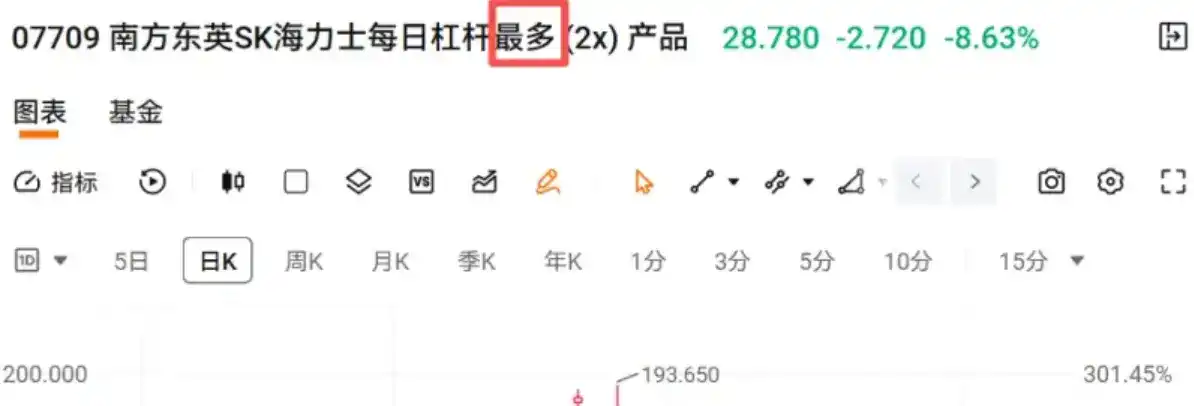
South China Morning Post The leveraged ETF tracking SK Hynix has surged over tenfold year-to-date, fueled by intense market speculation on the memory chip sector. By June 22, the value of the 'South Korea 2x Long SK Hynix ETF' listed in Hong Kong had skyrocketed by more than 1,061% since the start of the year, while its asset size exploded over twenty times from the end of last year. The rally is driven by AI-driven demand for high-bandwidth memory (HBM), with SK Hynix recently sampling its next-generation HBM4E product. However, industry professionals warn of significant risks. Leveraged ETFs magnify both gains and losses. During a recent market correction, while the underlying SK Hynix stock fell 19.1%, its double-leveraged ETF dropped nearly 38%. Korean regulators noted that such products could theoretically lose 60% in a single day. Additionally, these ETFs face risks like time decay in volatile markets, liquidity spirals during mass redemptions, and extreme price dislocations from market-making failures, as seen in early June when an ETF moved opposite to its underlying stock. The trading is predominantly driven by retail investors, with institutional capital largely absent due to the products' high volatility. Analysts caution that with the semiconductor sector at elevated valuations and facing geopolitical and supply chain uncertainties, leveraged ETFs pose a substantial threat of amplified losses for uninformed investors.

marsbitHace 1 hora(s)

Soaring Over Tenfold Within the Year: The Frenzy Over SK Hynix Leveraged Products

marsbitHace 1 hora(s)

Trading

Spot
Futuros

Artículos destacados

Qué es BITCOIN

Entendiendo HarryPotterObamaSonic10Inu (ERC-20) y Su Posición en el Espacio Cripto En los últimos años, el mercado de criptomonedas ha sido testigo de un aumento en la popularidad de las monedas meme, capturando el interés no solo de los comerciantes, sino también de aquellos que buscan compromiso comunitario y valor de entretenimiento. Entre estos tokens únicos se encuentra HarryPotterObamaSonic10Inu (ERC-20), un proyecto intrigante que mezcla referencias culturales en el tejido de las criptomonedas. Este artículo profundiza en los aspectos clave de HarryPotterObamaSonic10Inu, explorando sus mecanismos, ethos impulsado por la comunidad y su relación con el paisaje cripto más amplio. ¿Qué es HarryPotterObamaSonic10Inu (ERC-20)? Como su nombre sugiere, HarryPotterObamaSonic10Inu es una moneda meme construida sobre la blockchain de Ethereum, clasificada bajo el estándar ERC-20. A diferencia de las criptomonedas tradicionales que pueden enfatizar la utilidad práctica o el potencial de inversión, este token prospera en el valor de entretenimiento y la fuerza de su comunidad. El proyecto tiene como objetivo fomentar un entorno donde los usuarios comprometidos puedan reunirse, compartir ideas y participar en actividades inspiradas por diversos fenómenos culturales. Una característica notable de HarryPotterObamaSonic10Inu es su cero impuestos en las transacciones. Este atractivo elemento tiene como objetivo incentivar el comercio y la participación comunitaria, sin cargos adicionales que puedan disuadir a los comerciantes de pequeña escala. El suministro total de la moneda está establecido en mil millones de tokens, una cifra que marca su intención de mantener una circulación sustancial dentro de la comunidad. Creador de HarryPotterObamaSonic10Inu (ERC-20) Los orígenes de HarryPotterObamaSonic10Inu están algo envueltos en misterio; los detalles sobre el creador siguen siendo desconocidos. El desarrollo de este token carece de un equipo identificable o de un plan explícito, lo cual no es inusual dentro del sector de monedas meme. En cambio, el proyecto ha surgido de manera orgánica, con su progreso muy dependiente del entusiasmo y la participación de su comunidad. Inversores de HarryPotterObamaSonic10Inu (ERC-20) En cuanto a inversiones externas y respaldo, HarryPotterObamaSonic10Inu también sigue siendo ambiguo. El token no lista ninguna fundación de inversión conocida o apoyo organizacional significativo. En cambio, la savia del proyecto es su comunidad de base, que informa su crecimiento y sostenibilidad a través de la acción colectiva y el compromiso en el espacio cripto. ¿Cómo Funciona HarryPotterObamaSonic10Inu (ERC-20)? Como una moneda meme, HarryPotterObamaSonic10Inu opera principalmente fuera de los marcos tradicionales que a menudo rigen el valor de los activos. Hay varios aspectos distintivos que definen cómo funciona el proyecto: Transacciones Sin Impuestos: Sin tarifas impositivas en las transacciones, los usuarios pueden comprar y vender el token libremente sin preocuparse por costos ocultos. Compromiso Comunitario: El proyecto prospera en la interacción comunitaria, aprovechando plataformas de redes sociales para crear entusiasmo y facilitar la participación. Las discusiones, el intercambio de contenido y el compromiso son elementos cruciales que ayudan a expandir su alcance y fomentar la lealtad entre los seguidores. Sin Utilidad Práctica: Cabe señalar que HarryPotterObamaSonic10Inu no ofrece utilidad concreta dentro del ecosistema financiero. Más bien, se clasifica como un token principalmente para actividades de entretenimiento y comunitarias. Referencia Cultural: El token incorpora astutamente elementos de la cultura popular para atraer interés, conectando con entusiastas de los memes y seguidores de las criptomonedas por igual. HarryPotterObamaSonic10Inu ejemplifica cómo las monedas meme operan de manera diferente a los proyectos de criptomonedas más tradicionales, ingresando al mercado como construcciones sociales innovadoras en lugar de activos utilitarios. Cronología de HarryPotterObamaSonic10Inu (ERC-20) La historia de HarryPotterObamaSonic10Inu está marcada por varios hitos notables: Creación: El token surgió de un meme viral, capturando la imaginación de muchos entusiastas de las criptomonedas. Las fechas específicas de creación no están disponibles, subrayando su ascenso orgánico. Listado en Exchanges: HarryPotterObamaSonic10Inu ha llegado a varios exchanges, permitiendo un acceso y comercio más fácil por parte de la comunidad. Iniciativas de Compromiso Comunitario: Actividades continuas destinadas a mejorar la interacción comunitaria, incluyendo concursos, campañas en redes sociales y generación de contenido por parte de fanáticos y defensores. Planes de Expansión Futuros: La hoja de ruta del proyecto incluye el lanzamiento de una colección de NFT, mercancía y un sitio de comercio electrónico relacionado con sus temas culturales, involucrando aún más a la comunidad e intentando añadir más dimensiones a su ecosistema. Puntos Clave Sobre HarryPotterObamaSonic10Inu (ERC-20) Naturaleza Impulsada por la Comunidad: El proyecto prioriza la participación colectiva y la creatividad, asegurando que la involucración de los usuarios esté a la vanguardia de su desarrollo. Clasificación como Moneda Meme: Representa la epítome de las criptomonedas basadas en el entretenimiento, diferenciándose de los vehículos de inversión tradicionales. Sin Afiliación Directa con Bitcoin: A pesar de la similitud en el nombre del ticker, HarryPotterObamaSonic10Inu es distinto y no tiene relación con Bitcoin u otras criptomonedas establecidas. Enfoque en la Colaboración: HarryPotterObamaSonic10Inu está diseñado para crear un espacio para la colaboración y el intercambio de historias entre sus poseedores, proporcionando una vía para la creatividad y el vínculo comunitario. Perspectivas Futuras: La ambición de expandirse más allá de su premisa inicial hacia NFTs y mercancías describe un camino para que el proyecto potencialmente ingrese a avenidas más tradicionales dentro de la cultura digital. A medida que las monedas meme continúan capturando la imaginación de la comunidad de criptomonedas, HarryPotterObamaSonic10Inu (ERC-20) se destaca debido a sus lazos culturales y su enfoque centrado en la comunidad. Si bien puede no encajar en el molde típico de un token impulsado por la utilidad, su esencia radica en la alegría y la camaradería fomentadas entre sus seguidores, destacando la naturaleza en evolución de las criptomonedas en una era cada vez más digital. A medida que el proyecto continúa desarrollándose, será importante observar cómo las dinámicas comunitarias influyen en su trayectoria en el cambiante paisaje de la tecnología blockchain.

1.8k Vistas totalesPublicado en 2024.04.01Actualizado en 2024.12.03

Qué es BITCOIN

Cómo comprar BTC

¡Bienvenido a HTX.com! Hemos hecho que comprar Bitcoin (BTC) sea simple y conveniente. Sigue nuestra guía paso a paso para iniciar tu viaje de criptos.Paso 1: crea tu cuenta HTXUtiliza tu correo electrónico o número de teléfono para registrarte y obtener una cuenta gratuita en HTX. Experimenta un proceso de registro sin complicaciones y desbloquea todas las funciones.Obtener mi cuentaPaso 2: ve a Comprar cripto y elige tu método de pagoTarjeta de crédito/débito: usa tu Visa o Mastercard para comprar Bitcoin (BTC) al instante.Saldo: utiliza fondos del saldo de tu cuenta HTX para tradear sin problemas.Terceros: hemos agregado métodos de pago populares como Google Pay y Apple Pay para mejorar la comodidad.P2P: tradear directamente con otros usuarios en HTX.Over-the-Counter (OTC): ofrecemos servicios personalizados y tipos de cambio competitivos para los traders.Paso 3: guarda tu Bitcoin (BTC)Después de comprar tu Bitcoin (BTC), guárdalo en tu cuenta HTX. Alternativamente, puedes enviarlo a otro lugar mediante transferencia blockchain o utilizarlo para tradear otras criptomonedas.Paso 4: tradear Bitcoin (BTC)Tradear fácilmente con Bitcoin (BTC) en HTX's mercado spot. Simplemente accede a tu cuenta, selecciona tu par de trading, ejecuta tus trades y monitorea en tiempo real. Ofrecemos una experiencia fácil de usar tanto para principiantes como para traders experimentados.

5.2k Vistas totalesPublicado en 2024.12.12Actualizado en 2026.06.02

Cómo comprar BTC

Qué es $BITCOIN

ORO DIGITAL ($BITCOIN): Un Análisis Integral Introducción al ORO DIGITAL ($BITCOIN) ORO DIGITAL ($BITCOIN) es un proyecto basado en blockchain que opera en la red Solana, cuyo objetivo es combinar las características de los metales preciosos tradicionales con la innovación de las tecnologías descentralizadas. Aunque comparte un nombre con Bitcoin, a menudo referido como “oro digital” debido a su percepción como un refugio de valor, ORO DIGITAL es un token separado diseñado para crear un ecosistema único dentro del paisaje Web3. Su meta es posicionarse como un activo digital alternativo viable, aunque los detalles sobre sus aplicaciones y funcionalidades aún están en desarrollo. ¿Qué es ORO DIGITAL ($BITCOIN)? ORO DIGITAL ($BITCOIN) es un token de criptomoneda diseñado explícitamente para su uso en la blockchain de Solana. A diferencia de Bitcoin, que proporciona un papel de almacenamiento de valor ampliamente reconocido, este token parece centrarse en aplicaciones y características más amplias. Aspectos notables incluyen: Infraestructura Blockchain: El token está construido sobre la blockchain de Solana, conocida por su capacidad para manejar transacciones de alta velocidad y bajo costo. Dinámicas de Suministro: ORO DIGITAL tiene un suministro máximo limitado a 100 cuatrillones de tokens (100P $BITCOIN), aunque los detalles sobre su suministro circulante no se han divulgado actualmente. Utilidad: Si bien las funcionalidades precisas no están delineadas explícitamente, hay indicios de que el token podría ser utilizado para diversas aplicaciones, potencialmente involucrando aplicaciones descentralizadas (dApps) o estrategias de tokenización de activos. ¿Quién es el Creador de ORO DIGITAL ($BITCOIN)? En la actualidad, la identidad de los creadores y el equipo de desarrollo detrás de ORO DIGITAL ($BITCOIN) sigue siendo desconocida. Esta situación es típica entre muchos proyectos innovadores dentro del espacio blockchain, particularmente aquellos alineados con las finanzas descentralizadas y fenómenos de monedas meme. Si bien tal anonimato puede fomentar una cultura impulsada por la comunidad, intensifica las preocupaciones sobre la gobernanza y la responsabilidad. ¿Quiénes son los Inversores de ORO DIGITAL ($BITCOIN)? La información disponible indica que ORO DIGITAL ($BITCOIN) no tiene patrocinadores institucionales conocidos ni inversiones destacadas de capital de riesgo. El proyecto parece operar en un modelo de peer-to-peer centrado en el apoyo y la adopción de la comunidad en lugar de rutas de financiamiento tradicionales. Su actividad y liquidez se sitúan principalmente en intercambios descentralizados (DEX), como PumpSwap, en lugar de plataformas de trading centralizadas establecidas, lo que resalta aún más su enfoque de base. Cómo Funciona ORO DIGITAL ($BITCOIN) Los mecanismos operativos de ORO DIGITAL ($BITCOIN) pueden elaborarse en función de su diseño blockchain y atributos de red: Mecanismo de Consenso: Al aprovechar el único proof-of-history (PoH) de Solana combinado con un modelo de proof-of-stake (PoS), el proyecto asegura una validación de transacciones eficiente que contribuye al alto rendimiento de la red. Tokenómica: Si bien los mecanismos deflacionarios específicos no se han detallado extensamente, el vasto suministro máximo de tokens implica que podría atender microtransacciones o casos de uso nicho que aún están por definirse. Interoperabilidad: Existe el potencial de integración con el ecosistema más amplio de Solana, incluyendo varias plataformas de finanzas descentralizadas (DeFi). Sin embargo, los detalles sobre integraciones específicas permanecen no especificados. Cronología de Eventos Clave Aquí hay una cronología que destaca hitos significativos relacionados con ORO DIGITAL ($BITCOIN): 2023: El despliegue inicial del token ocurre en la blockchain de Solana, marcado por su dirección de contrato. 2024: ORO DIGITAL gana visibilidad al estar disponible para trading en intercambios descentralizados como PumpSwap, permitiendo a los usuarios comerciar contra SOL. 2025: El proyecto presencia actividad de trading esporádica y potencial interés en compromisos liderados por la comunidad, aunque no se han documentado asociaciones notables o avances técnicos hasta el momento. Análisis Crítico Fortalezas Escalabilidad: La infraestructura subyacente de Solana soporta altos volúmenes de transacciones, lo que podría mejorar la utilidad de $BITCOIN en varios escenarios de transacción. Accesibilidad: El potencial bajo precio de trading por token podría atraer a inversores minoristas, facilitando una participación más amplia debido a oportunidades de propiedad fraccionada. Riesgos Falta de Transparencia: La ausencia de patrocinadores, desarrolladores o un proceso de auditoría conocidos públicamente puede generar escepticismo sobre la sostenibilidad y confiabilidad del proyecto. Volatilidad del Mercado: La actividad de trading depende en gran medida del comportamiento especulativo, lo que puede resultar en una volatilidad de precios significativa y en incertidumbre para los inversores. Conclusión ORO DIGITAL ($BITCOIN) surge como un proyecto intrigante pero ambiguo dentro del ecosistema de Solana en rápida evolución. Si bien intenta aprovechar la narrativa del “oro digital”, su alejamiento del papel establecido de Bitcoin como refugio de valor subraya la necesidad de una diferenciación más clara de su utilidad y estructura de gobernanza previstas. La aceptación y adopción futura dependerán probablemente de abordar la actual opacidad y de definir sus estrategias operativas y económicas de manera más explícita. Nota: Este informe abarca información sintetizada disponible hasta octubre de 2023, y pueden haber ocurrido desarrollos más allá del período de investigación.

96 Vistas totalesPublicado en 2025.05.13Actualizado en 2025.05.13

Qué es $BITCOIN

Discusiones

Bienvenido a la comunidad de HTX. Aquí puedes mantenerte informado sobre los últimos desarrollos de la plataforma y acceder a análisis profesionales del mercado. A continuación se presentan las opiniones de los usuarios sobre el precio de BTC (BTC).

活动图片