Interactive Brokers Enables Stablecoin Funding With USDC Deposits

TheNewsCryptoPublicado a 2026-01-16Actualizado a 2026-01-16

Resumen

Interactive Brokers now allows clients to fund brokerage accounts using USDC stablecoins, enabling faster settlements and 24/7 access to deposits. The service, launched in partnership with Zero Hash, supports transfers on Ethereum, Solana, and Base networks. Deposits are automatically converted to USD upon receipt, streamlining the process and reducing costs, particularly for international clients who face delays and fees with traditional wire transfers. The firm plans to expand support to include RLUSD and PYUSD next week. This move is part of Interactive Brokers' broader strategy to integrate cryptocurrency services, reflecting the growing adoption of stablecoins as financial infrastructure.

Interactive Brokers has further bolstered its services related to cryptocurrencies, with the company now allowing its clients to use stablecoins to fund their brokerage accounts, ensuring faster settlements and 24/7 access for account funding. As soon as the stablecoins are received, the transfer will be automatically settled in USD, allowing clients to fund their trading accounts.

Interactive Brokers announced on Thursday that it teamed up with cryptocurrency infrastructure company zerohash in a partnership that aims to enable the funding of stablecoin accounts on the Ethereum, Solana, and Base networks. The new system will enable clients to make their USDC deposits at any hour of the day, and such deposits will be credited in USD when they are received.

This upgrade will improve brokerage funding, especially in cases involving global clients, who often suffer from delays or high fees when transacting via fiat wires.

24/7 funding replaces wire-transfer friction

Interactive Brokers positioned stablecoins as a response to a historical bottleneck in access to the global capital markets. In conventional cross-border deposits, funding access is organized through bank processing windows or cut-off times that incur fees charged by third-party institutions.

Stablecoins upset the applecart. With USDC, the transaction settlement happens on-chain, so their customers can transmit their money at any given time with near-instant verification and start trading in minutes, not days.

“Stablecoin funding gives international investors the speed and flexibility necessary to thrive under today’s market conditions,” said CEO Milan Galik. He further added that it gives traders the benefit of being able to transfer their funds as well as trade as soon as possible, thereby lowering transaction costs compared to the usual wire route.

Since Interactive Brokers immediately converts USDC to USD when received, it prevents customers from maintaining balances of stablecoins within the brokerage. This ensures that the funding mechanism remains straightforward and that it is easier to align it with conventional account settlement systems.

More stablecoins incoming next week

Interactive Brokers also said it plans to expand beyond USDC shortly. Support for Ripple USD (RLUSD) and PayPal USD (PYUSD) is expected to roll out next week, giving clients more funding options depending on the networks and issuers they prefer.

The brokerage first introduced stablecoin funding for retail investors in December, when it allowed certain account types to deposit USDC. The new expansion broadens the stablecoin rails and strengthens the firm’s infrastructure by adding multi-chain support.

Interactive Brokers has also explored launching its own stablecoin in the past, according to earlier reporting, suggesting long-term interest in tokenized settlement as part of its financial product strategy.

Crypto trading expansion continues

Interactive Brokers ventured into cryptocurrency trading in the year 2021 by combining digital assets with its vast platforms. It started by supporting well-known cryptocurrencies such as Bitcoin and Ethereum. Later, it added more cryptocurrencies to the list.

In 2025, the brokerage added other assets such as Solana (SOL) and XRP, reflecting growing client demands for broader exposure. The upgrade to its stablecoin funding now complements those services with better means for clients to get money onto the platform.

Stablecoin growth supports adoption

The timing also coincides with the wider trend. Throughout 2025, stablecoins increased sharply as governments, banks, fintech firms, and payment platforms began exploring tokenized dollars for faster settlement and cross-border transfers.

Stablecoin market capitalization surpassed $300 billion in October, driven by strong growth in major issues such as Tether (USDT) and Circle’s USDC, as well as newer products like Ethena’s yield-bearing USDe. As of Friday, the stablecoin sector sits above $310 billion, according to DeFi data aggregator DeFiLlama.

Now that Interactive Brokers offers stablecoin funding, the brokerage industry keeps chugging along toward these blockchain-based settlement rails, with the indication that more and more, stablecoins act as financial infrastructure, not just crypto-native tooling.

Highlighted Crypto News:

Cake Wallet Expands Privacy Stack With Default Zcash Shielding

TagsCryptoSolanaStablecoinTradFiUSDC

Preguntas relacionadas

QWhat is the main announcement made by Interactive Brokers regarding account funding?

AInteractive Brokers announced that it now allows clients to fund their brokerage accounts using stablecoins, specifically USDC deposits, which are automatically converted to USD upon receipt for faster settlements and 24/7 access.

QWhich cryptocurrency infrastructure company did Interactive Brokers partner with to enable stablecoin funding?

AInteractive Brokers partnered with the cryptocurrency infrastructure company Zero Hash to enable stablecoin funding on the Ethereum, Solana, and Base networks.

QWhat are the benefits of using stablecoins for funding according to Interactive Brokers' CEO?

AAccording to CEO Milan Galik, stablecoin funding provides international investors with the speed and flexibility needed to thrive in today's market conditions, allowing near-instant transfers and lower transaction costs compared to traditional wire transfers.

QWhich additional stablecoins will Interactive Brokers support starting next week?

AInteractive Brokers plans to expand support to include Ripple USD (RLUSD) and PayPal USD (PYUSD) starting next week, offering clients more funding options based on their preferred networks and issuers.

QHow has the stablecoin market performed recently according to the article?

AThe stablecoin market capitalization surpassed $300 billion in October and has grown to over $310 billion, driven by strong growth in major issuers like Tether (USDT) and Circle's USDC, as well as newer products such as Ethena's yield-bearing USDe.

Lecturas Relacionadas

TechFlow Intelligence Bureau: Anthropic IPO Odds Exceed 80%, Iran Closes Strait of Hormuz Again, Triggering Oil Price Volatility

**Market Digest** **AI & Tech:** Anthropic is widely expected to announce an IPO before November 2026, raising questions about balancing its trillion-dollar valuation ambitions with its core "AI safety" mission. Brands are increasingly adopting AI-generated virtual influencers for marketing. Cloudflare introduced temporary accounts for AI agents to ease automation workflows. **Infrastructure & Hardware:** Google's IPv6 traffic surpassed 50%, marking a major internet milestone. Goldman Sachs warned that massive projected AI capital expenditure ($5.3T) is approaching credit saturation limits, potentially curbing the "AI arms race." **Space & Robotics:** SpaceX's IPO saw a historic $370M retail buying frenzy in three days. Hyundai Motor Group plans to acquire full ownership of Boston Dynamics. Elon Musk speculated about future "septillion-dollar" investments in antimatter for interstellar travel. **Energy & Geopolitics:** Iran's military announced another closure of the strategic Strait of Hormuz, accusing Israel of violating a ceasefire, causing oil market volatility. However, ship-tracking data indicated some traffic continued. Concurrently, Iran resumed crude loadings at Kharg Island, potentially releasing up to 20 million barrels to the market. **Finance & Macro:** A European CLO (collateralized loan obligation) experienced its first post-2008-crisis-era equity tranche default, raising alarms in credit markets. Nomura warned that new Federal Reserve Chair Wash's perceived hawkish debut speech could signal a significant policy shift. **The Undercurrent:** Seemingly disparate events—the Strait of Hormuz tension, the European CLO default, and warnings on AI spending—point to a tightening of global liquidity and rising marginal costs across energy, credit, and tech investment. Meanwhile, capital continues chasing grand narratives like space exploration and advanced AI, highlighting a divergence where old-world leverage frays as new-world stories grow more ambitious.

marsbitHace 30 min(s)

TechFlow Intelligence Bureau: Anthropic IPO Odds Exceed 80%, Iran Closes Strait of Hormuz Again, Triggering Oil Price Volatility

marsbitHace 30 min(s)

The Hunter Becomes the Hunted: The Most Profitable MEV Bot Gets Hacked

A well-known and highly profitable Ethereum MEV Bot, Jaredfromsubway.eth, suffered a sophisticated on-chain attack this Saturday, losing over $7.5 million. Analysis by Blockaid and others reveals this was not a conventional phishing or smart contract exploit, but a targeted "counter-MEV honeypot attack." The attacker meticulously laid a trap over several weeks, deploying 66 fake token contracts and liquidity pools disguised as major assets like WETH and USDC. These pools created the illusion of arbitrage opportunities. The MEV Bot's automated system detected these signals, executed trades, and in the process, granted approval permissions to attacker-controlled contracts. These approvals were not revoked, creating a persistent vulnerability. The attacker then exploited this in a single transaction, draining the bot's ETH, USDC, and USDT holdings. Jaredfromsubway.eth is notorious as one of Ethereum's most active and profitable MEV Bots, primarily known for executing "sandwich attacks" to profit from transaction slippage. Estimates suggest it has earned tens of millions in MEV revenue. The incident highlights escalating crypto security threats, demonstrating that even top-tier automated "predators" are vulnerable to novel, logic-based attacks designed to exploit their own operational rules. Following the hack, an unverified X account impersonating Jaredfromsubway.eth emerged, falsely offering a bounty for the return of funds, prompting developer warnings for users to stay vigilant.

marsbitHace 1 hora(s)

The Hunter Becomes the Hunted: The Most Profitable MEV Bot Gets Hacked

marsbitHace 1 hora(s)

The Reality of Payments in Latin America Is Not What You Think

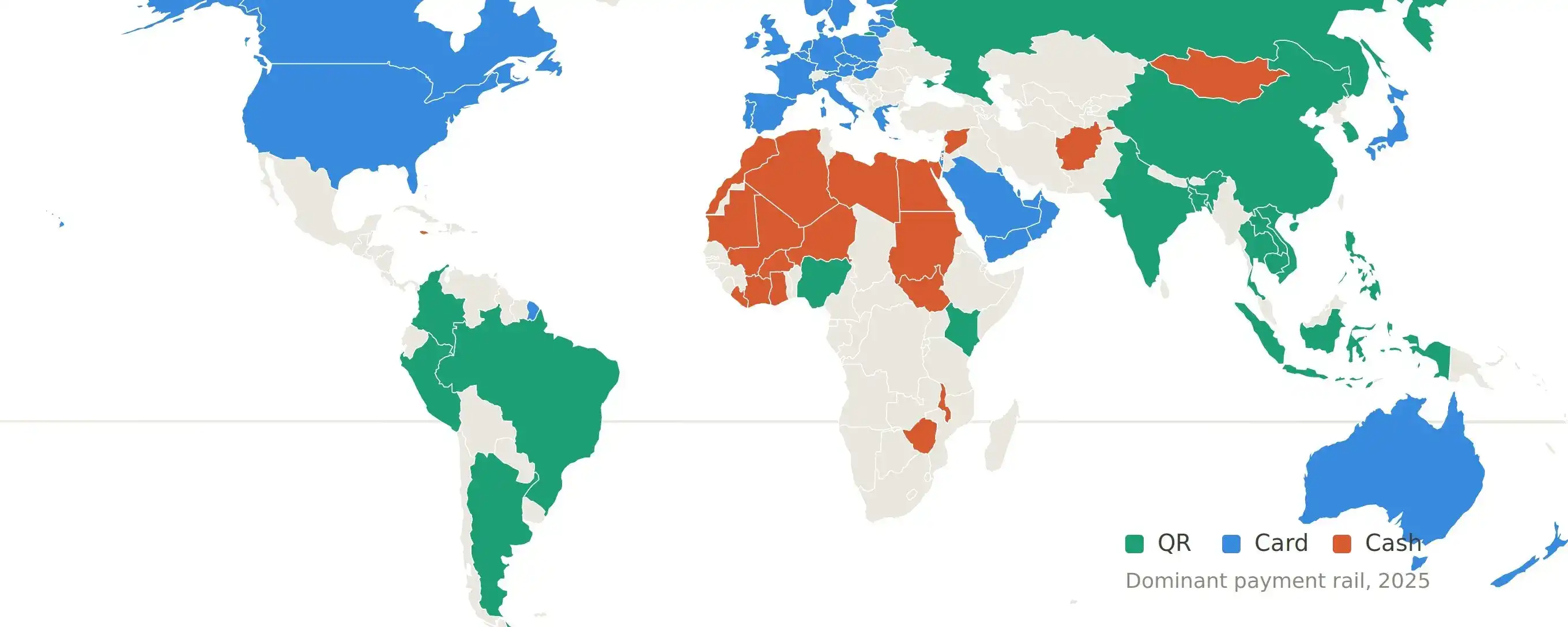
The payment landscape in Latin America is undergoing a fundamental shift, driven by on-the-ground realities that challenge common perceptions. Based on over 500 hours of field research across the region, key insights emerge. Firstly, QR code payments, like Brazil's Pix, are becoming the dominant payment method in most emerging markets, overtaking cards. However, these domestic instant payment systems lack international interoperability, creating a significant gap for cross-border users. Secondly, the narrative around crypto cards is often misunderstood; their primary volume comes from high-net-worth professionals using them for salary conversions (e.g., USDT to local currency via Pix), not retail micro-payments. Competition in payments is shifting from customer acquisition to controlling the settlement layer, leading fintechs to acquire banking licenses for efficiency. Thirdly, treating "Latin America" as a single market is a mistake. Countries like Argentina, Brazil, and Mexico have distinct economic realities, user segments, and regulatory approaches. Brazil alone has at least five distinct user segments with different financial flows. Overlooked markets like Guatemala, Honduras, and El Salvador (the "forgotten five") offer high remittance volumes with lower competitive density. Finally, regulation in Latin America is often ahead of the US, with clearer frameworks for digital assets and a pragmatic approach from regulators focused on safety rather than obstruction. The margin on stablecoin forex is rapidly compressing toward zero, meaning future winners will be those building value-added services on top of the infrastructure, not just the cheapest exchange.

marsbitHace 2 hora(s)

The Reality of Payments in Latin America Is Not What You Think

marsbitHace 2 hora(s)

Trading

Spot
Futuros
活动图片