A slice of a deceased person's brain can now play the piano!
Recently, a French research team directly connected post-mortem human brain tissue to a robotic hand, enabling it to learn to mimic human piano playing.
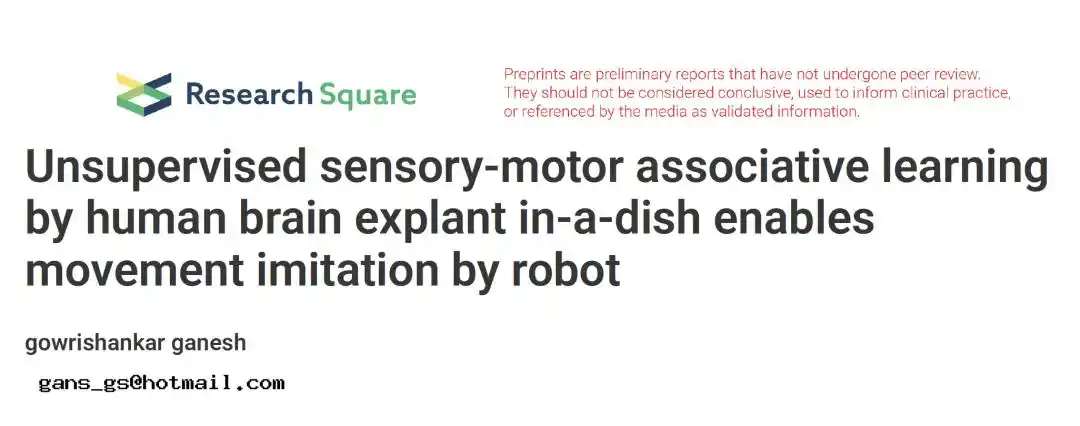
They extracted viable brain tissue from deceased humans, placed it in a petri dish, and connected it to electrodes, a microphone, and a bionic robotic hand.
After training, when a human pressed a piano key, the brain tissue could "hear" the note and then control the robotic hand to produce the same sound.
And there's video proof.
To be fair, the original discussion of this research was actually about a rather serious AI issue:
Can we use the natural learning ability and ultra-high energy efficiency of biological neurons to create a new type of hybrid AI system?
But when keywords like "post-mortem human brain," "brain slice," "robotic prosthesis," and "hybrid AI" are put together, it's hard not to think of cyberpunk.
After the research was announced, it quickly sparked discussion.
Some bloggers specifically analyzed the experiment video, believing that while this type of work naturally comes with ethical controversies and a certain "creepiness," the intersection of neuroscience and AI could also advance cognitive science, neurological diseases, and even medical research.
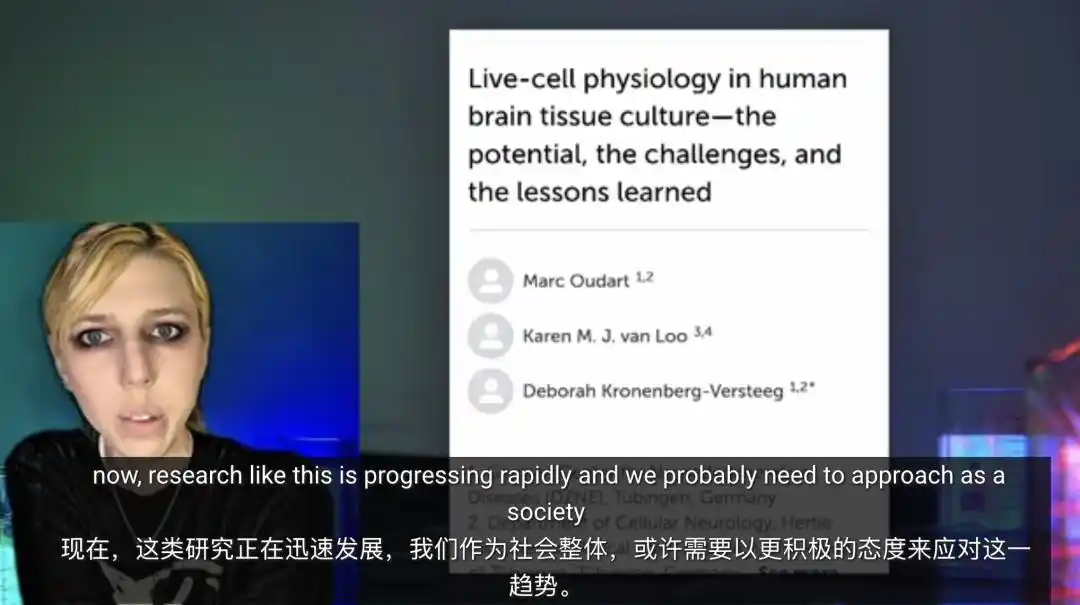
Many netizens, following this experiment, have already speculated wildly about future super individuals, mechanical prosthetics, and even philosophical questions like what consciousness truly depends on.
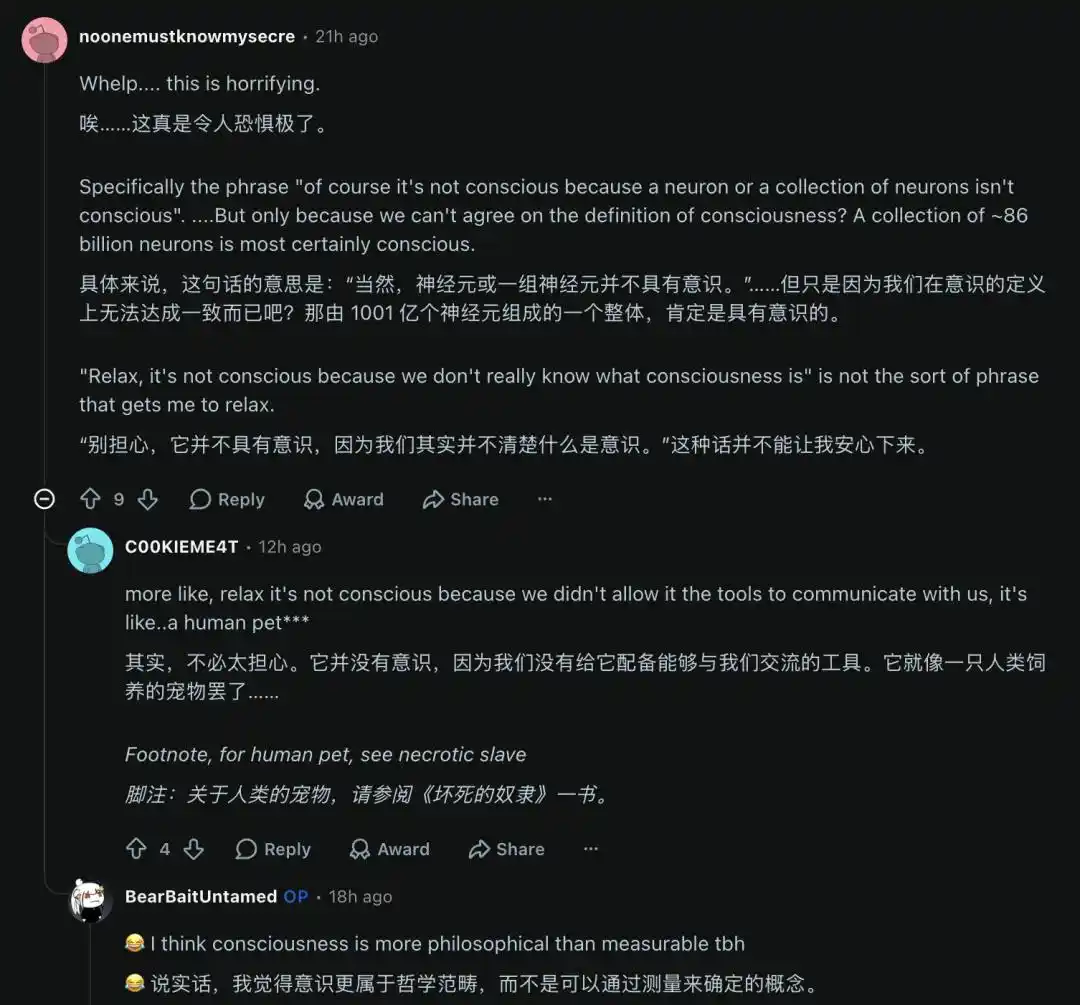
However, let's not jump to discussing "brain in a vat" just yet.
Because the truly interesting part of this research might not be that a deceased brain suddenly started playing the piano.
Rather, it's that the researchers, for the first time, placed a piece of real adult brain tissue into a closed-loop system capable of sensing, acting, and relearning.
So, how exactly did they do it?
The human brain is inherently a more efficient computing system
To better understand what this research is specifically about, let's add some necessary context.
As mentioned above, compared to the human brain, current artificial neural networks running on AI chips are, in a sense, still a very "inefficient" learning system.
The most obvious is energy consumption. An adult human brain consumes only about 20 watts. The world's most powerful supercomputers already consume tens of megawatts.
It can be said that producing the same token, the human brain is far more economical than AI.
Secondly, in terms of learning efficiency, the human brain possesses a capability that AI lacks: the ability to learn from small samples and generalize rapidly.
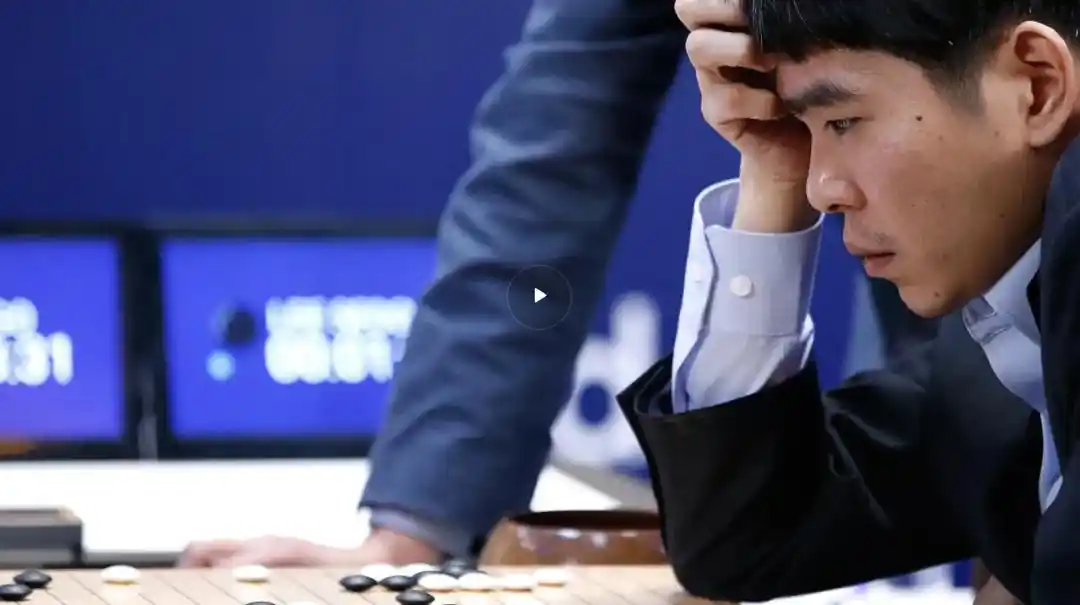
For example, AlphaGo needed to train on over 150,000 games to defeat Lee Sedol.
Calculated as practicing 8 hours a day, this is equivalent to a person practicing continuously for over 100 years, far exceeding the training volume any human Go player has ever experienced.
As for language models like GPT-3, the amount of data required for its training is equivalent to a human reading 5 e-books a day for 250 consecutive years.
So, while today's AI is powerful, many of its capabilities essentially still rely on being "forged" by massive data and computing power.
In contrast, humans often need only very limited experience to learn new movements, concepts, and associations.
Therefore, in recent years, an increasingly prominent direction has emerged:
Since artificial neural networks imitate the brain, can we simply connect real neurons into a computing system?
This is the so-called hybrid AI system.
Previously, researchers mainly experimented with two-dimensional cultured neurons and brain organoids, but the former struggled to form stable neural plasticity, while the neural circuits of the latter were relatively immature and showed significant individual variations.
Hence, this French team opted for a different material: post-mortem adult human brain tissue explants, or OPABs.
Its biggest difference is that this is not a brain model regrown from stem cells, but is actually derived from adult human brains, thus retaining mature cell types, tissue structure, and partial neural connections.
The team had previously proven that such brain slices could maintain neural activity in vitro after receiving oxygen and glucose.
The real question then becomes: After leaving the human body, can it still continue to learn?
And so, the researchers decided to give it a "hand" and an "ear."
Equipping the brain slice with a "hand" and an "ear"
Overall, this "brain slice playing piano" system is not complex.
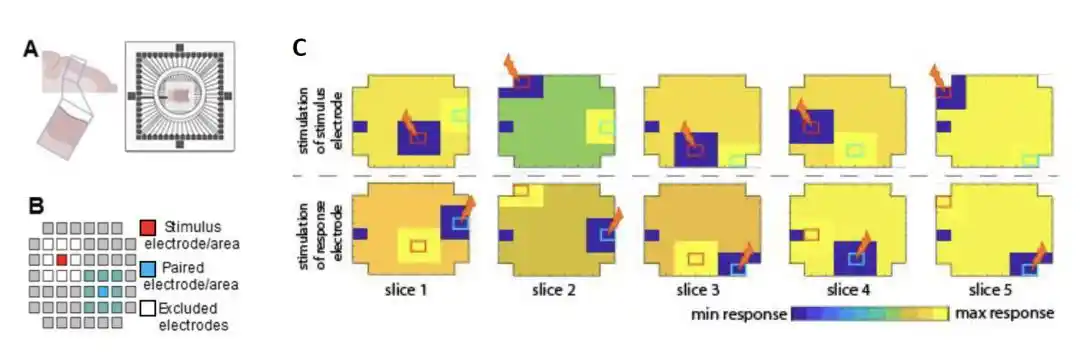
In the experimental setup, the researchers first placed the OPAB on a microelectrode array. Then, they randomly selected three electrodes as "motor electrodes," each connected to three fingers of the robotic hand.
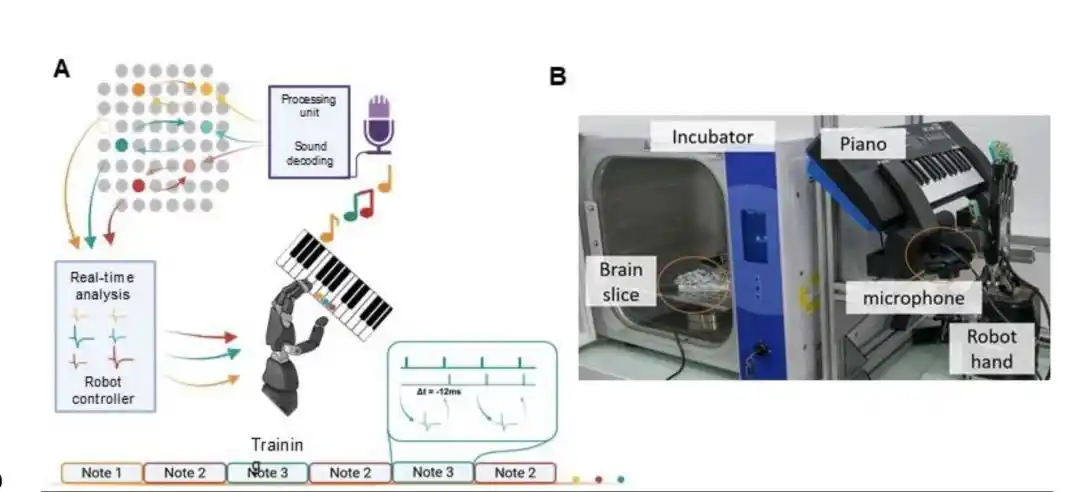
The three fingers correspond to three notes on the electronic piano: LA, TI, and DO.
Once a motor electrode is activated, the corresponding finger bends, pressing the piano key. This effectively gives the brain slice a "hand."
Next, it's about giving it an "ear." After the robotic hand presses a key, a nearby microphone captures the sound.
A sound decoder identifies whether it's LA, TI, or DO, and then stimulates the three corresponding "sensory electrodes" on the brain slice.
Thus, a complete closed-loop is formed: the brain slice generates motor signals → the robotic hand presses a key → the microphone hears the sound → the sound is converted back into electrical stimulation → sent back to the brain slice.
From the brain slice's perspective, this is much like a baby first learning about its own body.
When a baby is born, it doesn't know what happens when a specific muscle contracts. It constantly moves its hands and kicks its legs randomly, then observes the consequences of these actions through sight, touch, and hearing.
This process has a vivid name in robotics: Motor Babbling.
What the researchers did was essentially move this process into a petri dish.
Bidirectional neural plasticity
Specifically, during the training phase, the system would randomly stimulate one of the motor electrodes.
After the stimulation, a finger of the robotic hand would bend, pressing a piano key. Immediately after, the microphone would hear this note and convert it into stimulation, sending it back to the corresponding sensory electrode.
For example, stimulate electrode A. The index finger bends, pressing LA. The microphone hears LA, and the sensory electrode corresponding to LA is stimulated again.
An action, immediately followed by a sensory result, repeated 300 times a day for three consecutive days, allowing the brain slice to form muscle memory.
It's worth noting that throughout this process, there was no "you're correct," "you're wrong," or reward function.
The researchers merely repeatedly made two events occur consecutively in time. The rest was left to the neurons themselves.
And this is possible due to the brain's most fundamental learning mechanism—
Neural plasticity.
Simply put, connections between neurons that are frequently activated together gradually strengthen. Thus, after repeated training, the brain slice slowly begins to associate:
"This finger" with "this sound."
But more crucially, this connection is not one-way. That is, the brain slice can not only learn: "If I move this finger, I hear this sound."
But also, conversely, "If I hear this sound, I activate this finger."
Thus, the whole affair evolved from a simple association between action and sensation into the learning system actively imitating.
To test this hypothesis, during the formal test, the human experimenter began randomly playing LA, TI, and DO.
This time, they did not stimulate the motor electrodes first. Instead, the microphone directly fed the human-played notes into the brain slice.
If the earlier association was truly learned, then after "hearing" LA, the brain slice should inversely activate the motor region previously associated with LA, causing the robotic hand to press LA, thus completing an imitation.
The result... it actually happened.
The study used a total of 30 OPABs from 3 donors, with 16 entering the main test.
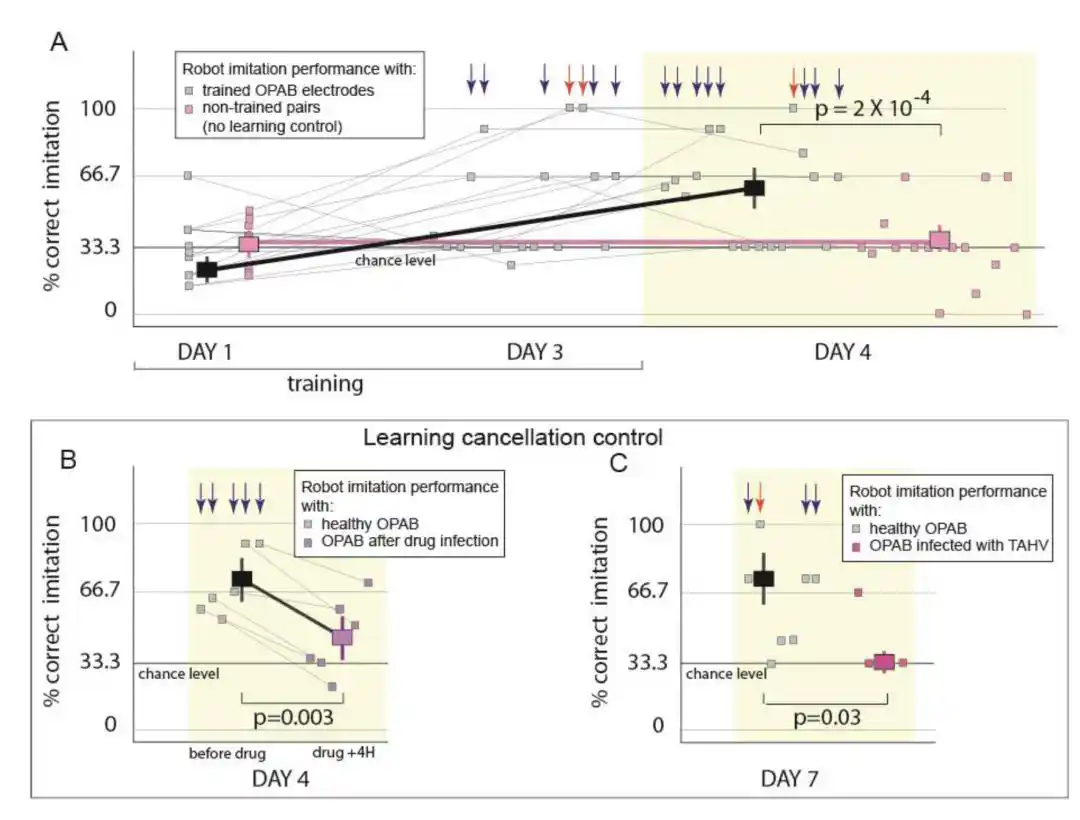
On the first day of training, the system's average imitation accuracy was only 31.22%. Since there were only three notes, the accuracy of purely random guessing would be 33.3%.
In other words, initially, the brain slice learned nothing.
But after three days of training, the average accuracy on the 4th day had risen to 58.5%. Among the 16 samples, 3 OPABs could correctly imitate all three notes 100% of the time.
Another 7 could stably learn two of them. Ultimately, 62.5% of the OPABs successfully learned at least two notes.
One detail must be emphasized here. This 62.5% was not the best result obtained by researchers carefully selecting electrodes.
On the contrary, to prove that this association was not simply leveraging pre-existing connections within the brain slice but was formed through training, the researchers deliberately randomly selected the motor and sensory electrodes.
Furthermore, to rule out the influence of software and hardware modules, the research team conducted several control experiments.
The results showed: after switching to untrained electrodes, accuracy dropped back to random levels; when synaptic transmission was blocked with drugs, or when infected with the Tahyna virus which disrupts neural activity, the previously formed imitation ability also significantly declined.
That is to say, what truly carries this set of sensory-motor associations are the altered neural connections within the brain tissue itself, not an external program.
Moreover, this "memory" could be maintained for quite a long time.
Among the 5 OPABs tracked long-term, 4 still retained the learning results 17 days after training ended, with two of them still able to correctly imitate all three notes 100% of the time.
Of course, this is still far from a "brain computer."
The entire experiment involved only three sets of finger-note associations, the brain slice was about 5 mm in diameter, and sound recognition and robotic hand control still relied on traditional AI modules.
Therefore, more accurately, it does not mean a piece of post-mortem brain tissue suddenly "learned to play the piano," but rather that a piece of still-viable adult brain tissue, within an artificially constructed sensory-motor closed-loop, formed new associations that previously did not exist and utilized these associations to complete imitation.
Truly, learning knows no bounds.
Reference link[1]https://www.researchsquare.com/article/rs-9638576/v1
This article is from the WeChat public account "Qubit," author: Focus on Cutting-edge Technology