Since the beginning of the year, losses of cryptocurrency holders from violent attacks have reached over $30 million. According to a Chainalysis report, the highest number of incidents were recorded in France.
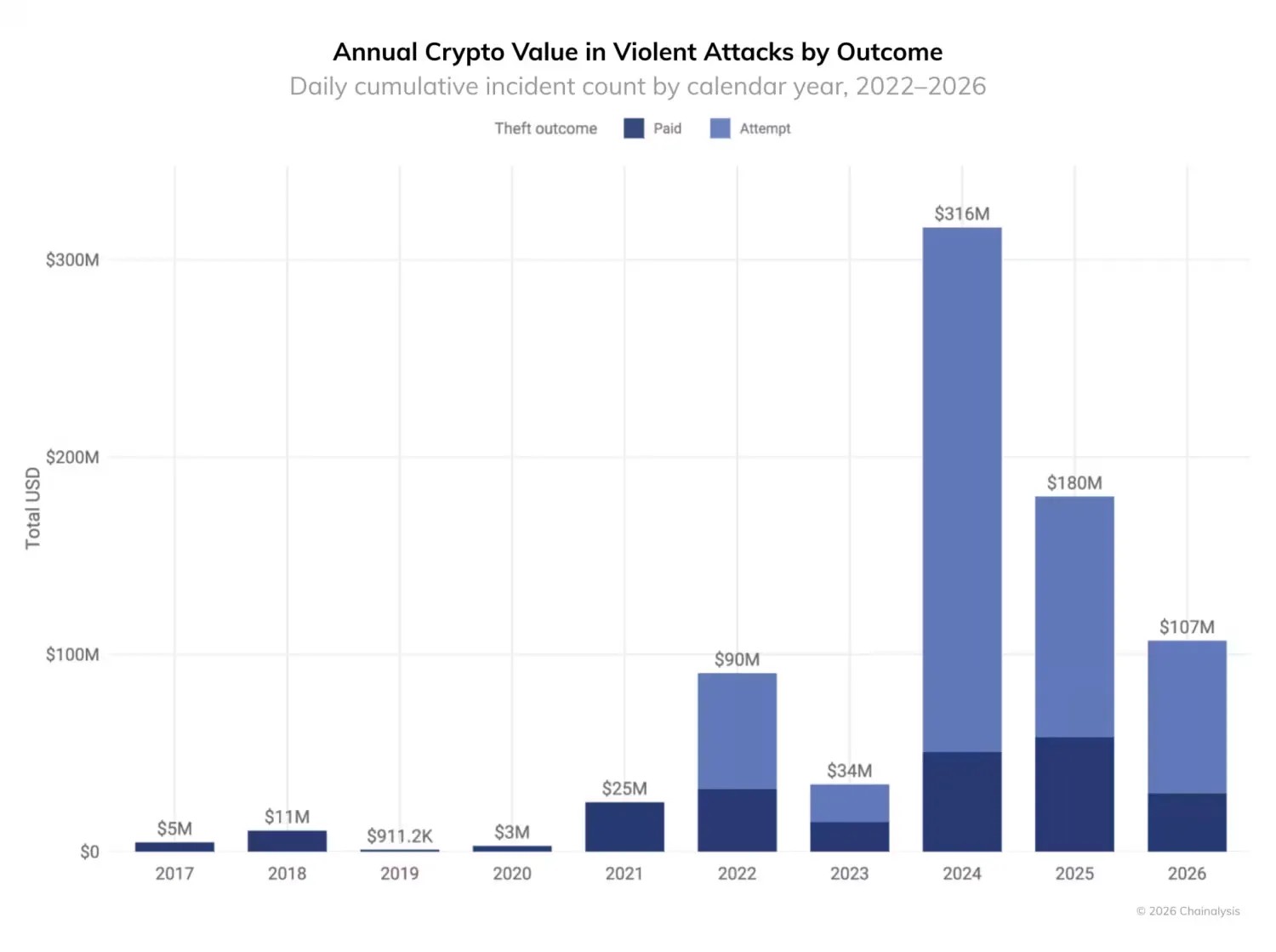
In 2025, the volume of funds stolen in wrench-attacks reached a record $58 million. If this pace continues, 2026 risks becoming the worst year on record.
Moreover, considering extortion attempts, blocked transactions, as well as funds later frozen or returned, the estimates are even higher:
- $316 million in 2024;
- $180 million in 2025;
- $107 million by mid-2026.
Chainalysis considers even these figures underestimated, as only known cases are included in the statistics.
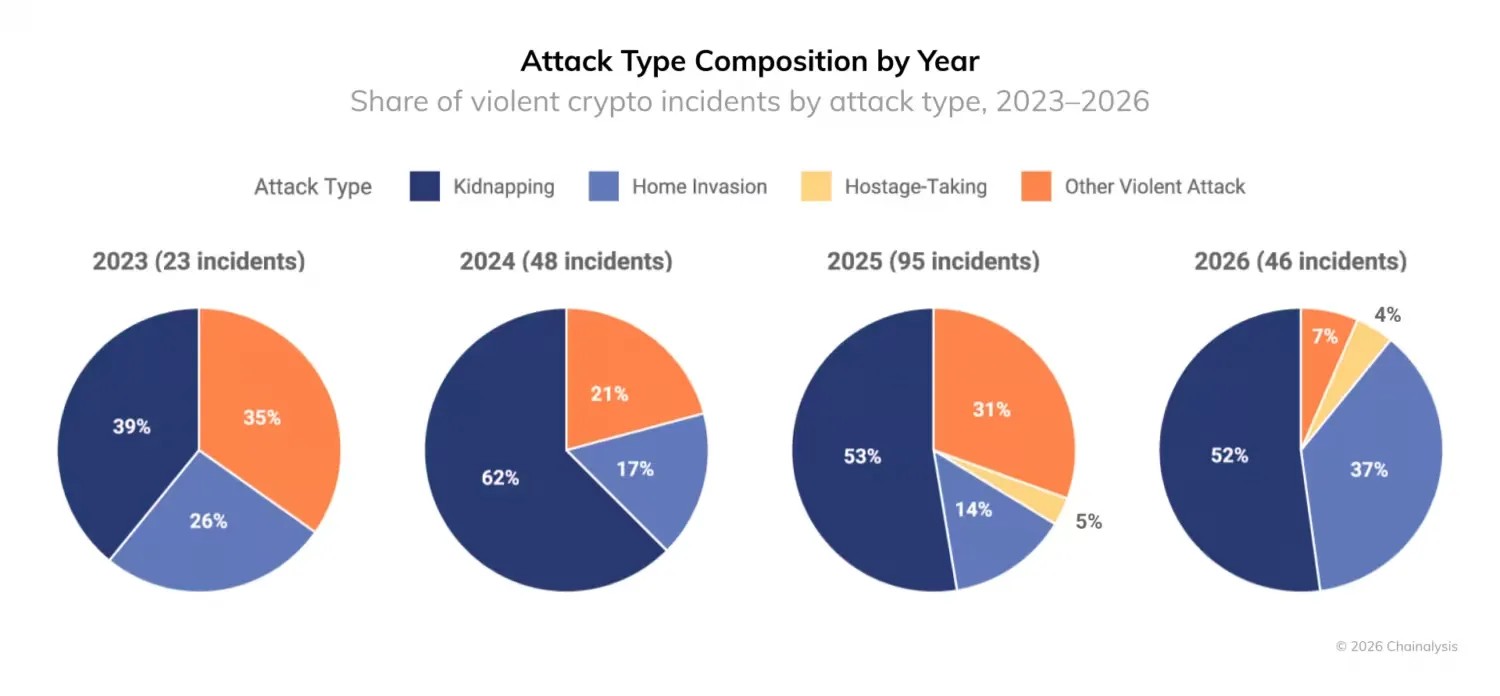
By the end of June 2026, analysts documented 46 violent crypto incidents worldwide (40 during the same period in 2025). The proportion of successful attacks fell to 26% compared to 49% a year earlier and 67% in 2024.
Thefts resulted from 12 out of 46 episodes in 2026, 47 out of 95 in 2025, and 32 out of 48 in 2024.
Analysts linked the decline in the proportion of "successful" cases to an increase in the number of more chaotic, less targeted attacks. The structure of attacks has also shifted: the share of home raids increased to 37%, while kidnappings accounted for 52%.
Since 2023, the USA, Brazil, and Thailand have led in the total number of such incidents, but France is in first place by a significant margin.
In 2025, 19 incidents were recorded in the country; by mid-2026, this number had already reached 30.
Chainalysis cited data leaks in France as the primary reason for the surge in violence. In 2024, media reported that an employee of the tax service in the Paris region allegedly stole and sold dossiers of wealthy cryptocurrency holders — containing names, addresses, phone numbers, and other personal information.
Another shift is the increase in attacks on relatives and acquaintances of cryptocurrency holders. In early 2026, such cases accounted for about 25-30% of all incidents, compared to nearly zero in 2021. In France, the share of attacks on investors' close circle exceeded 40%.
On-chain analysis revealed varying levels of preparation among attackers: some immediately withdrew funds to centralized exchanges, while others used DEXs, bridges, and money laundering services. In the most complex cases, researchers noted signs of connections to broader criminal networks.
It is worth recalling that in the second quarter of 2026, analysts counted 83 crypto protocol hacks — the highest number of incidents in the history of observations. The total damage amounted to $755.3 million.