Identity, Recourse, Attribution: Decoding the Three Breakthrough Points of the Next-Generation AI Agent Economy

深潮Publicado a 2025-12-22Actualizado a 2025-12-22

Resumen

Identity, Recourse, Attribution: Decoding the Three Breakthrough Points of the Next-Generation AI Agent Economy As AI agents begin to handle transactions, new standards like OpenAI's ACP and Google's AP2 are emerging to facilitate payments, while protocols like x402 enable machine-to-machine micropayments. However, these systems lack the trust infrastructure—identity verification, fraud detection, and dispute resolution—that underpins traditional commerce. This creates a critical gap: while blockchain enables fast, irreversible settlements, agents operate without mechanisms for recourse when errors occur. The solution requires building new layers for the agent economy: a "Know Your Agent" (KYA) identity system to establish persistent, verifiable credentials; a recourse mechanism to handle disputes and provide insurance-like protection; and an attribution layer to track influence on purchasing decisions. Established players like card networks and AI labs are unlikely to lead this effort due to misaligned incentives, creating opportunities for startups. The development of agent commerce will unfold in three stages: as an interface (current stage), executing under human supervision (where trust layers become critical), and fully autonomous transactions. Startups that build identity, recourse, and attribution infrastructure will enable the transition to an economy where agents transact freely and securely at scale.

Written by: Decentralised.co

Compiled by: AididaoJP, Foresight News

In the article "Internet Pricing," we once argued: when metered payments are frictionless, machines will automatically pay. Humans have not fully embraced micropayments because monitoring the metering process consumes energy and mental effort. But machines are different; they only see 1s and 0s. Mental capacity or task switching does not affect their execution ability. If breaking down to sub-cent levels makes the process more efficient, they will do it, unlike humans.

We ended the last article with a question: what happens when an agent messes up? It doesn't matter if the agent's intent is correct. The key point is, it's impossible to supervise the agent step by step.

This leaves us in a dilemma: the new technology fails to inherit a major advantage of the old infrastructure, such as the ability to reverse payments when things go wrong. This is precisely the issue this article will explore. We will discuss what is needed for agents to achieve autonomy, who is building the foundation for this, and why new startups are emerging at the intersection of blockchain payment channels and autonomous agents.

Emerging Standards

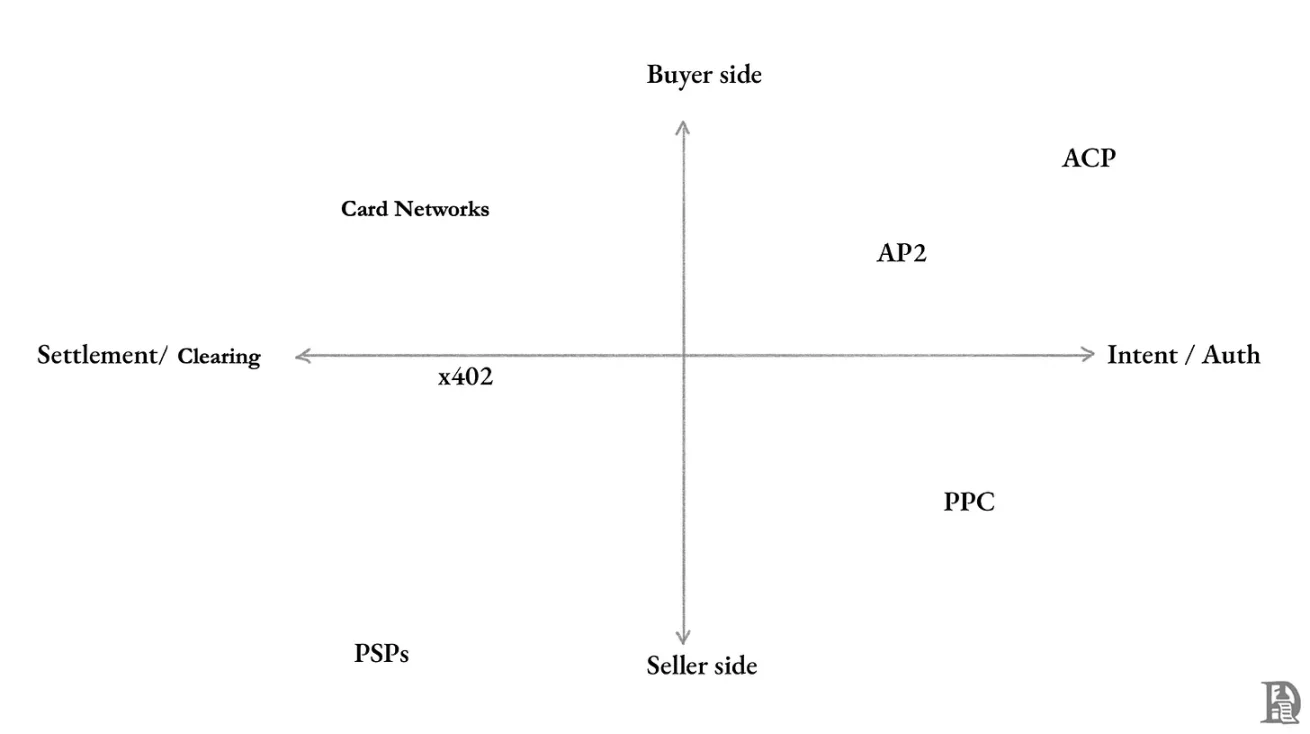
Any commercial activity involves three parties: the buyer, the seller, and the intermediary that enables the transaction. The intermediary can be a platform or marketplace like Amazon, or a card network like Visa that processes payments.
Buyer

Consumer applications are typically responsible for handling funds or transactions and take a cut. But what happens when the consumer is an AI acting on our behalf? Several emerging standards are currently seeking answers.

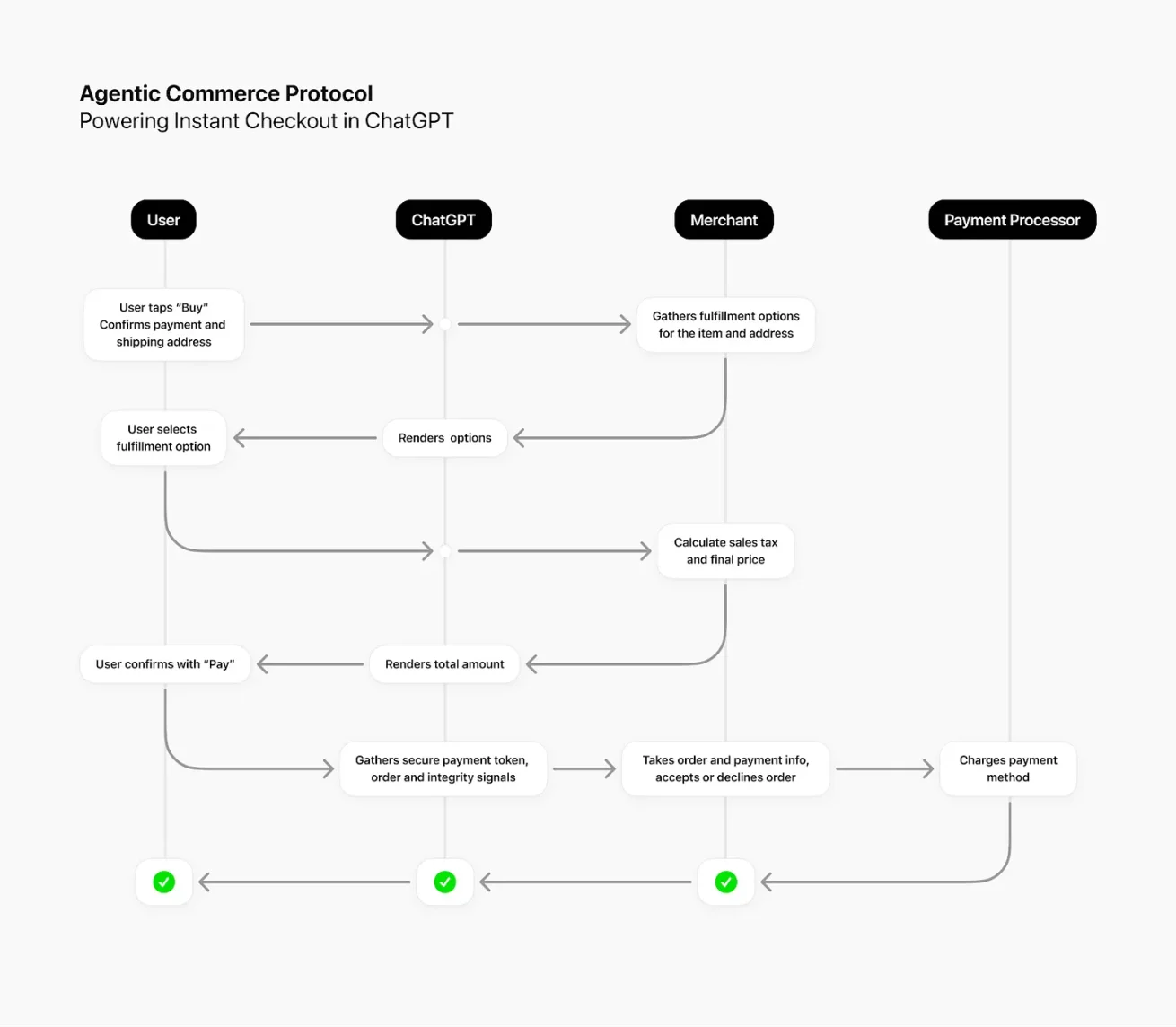
ChatGPT has 700 million active users, all trying to obtain information or services through AI. Although we are not yet directly buying and selling goods through agent interfaces, it is common to use it to "discover" goods. Whether buying running shoes or finding a hotel in El Calafate, I use AI for price comparison. It would be much more convenient to be able to purchase directly within the same interface. This is precisely the purpose of OpenAI's collaboration with Stripe to launch the Autonomous Commercial Protocol (ACP).
Source: OpenAI

This is currently the most direct way for agents to handle funds: the user is in control throughout. After the user places an order, ChatGPT sends the necessary information to the merchant's backend via ACP. The merchant then decides to accept or reject the order, processes the payment through their existing payment service provider, and handles shipping and customer service as usual.

Think of ACP commerce like this: you authorize an intern with a fixed budget, but you have the final say on which product/service to choose, from which merchant, and complete the payment.

OpenAI and Stripe have ACP, while Google has introduced the Agent Payment Protocol (AP2). Before diving into AP2, let's take a step back. Google wants to solve the "interoperability" problem. Currently, AI agents operate in silos: Gemini doesn't talk to Claude, and ChatGPT doesn't know what's happening in Perplexity.

Ideally, when tasks become complex and require collaboration, we want these agents to communicate using a common language. To this end, Google developed A2A (Agent-to-Agent Protocol), allowing different agents to communicate and coordinate.

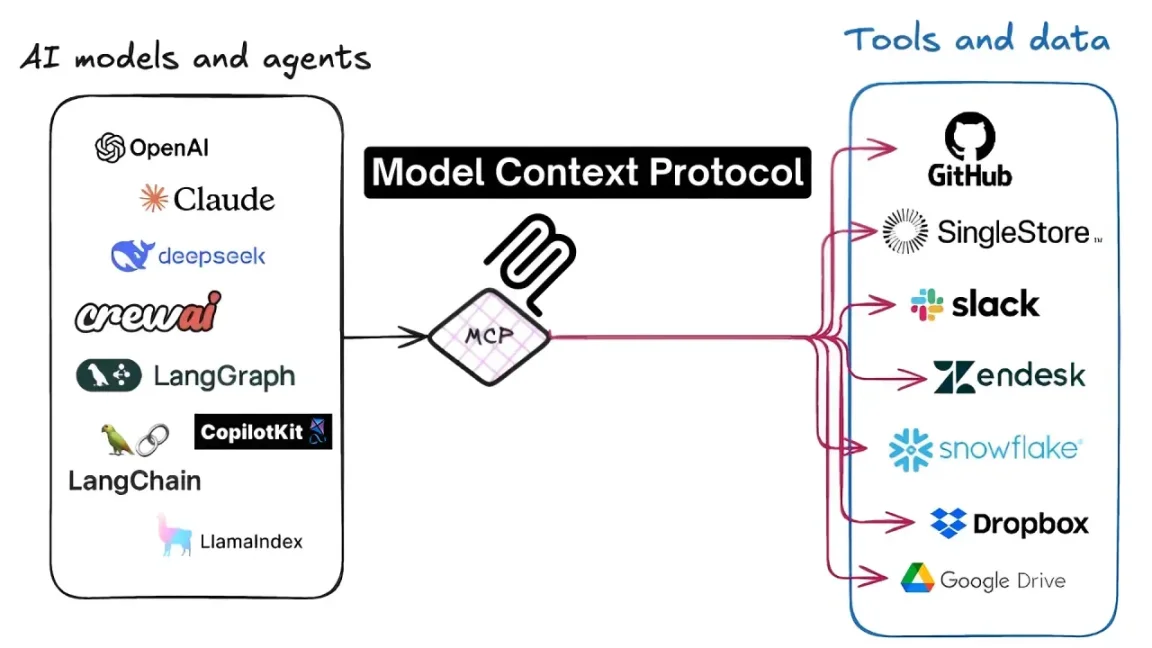
But being able to talk is not enough. Agents also need to be able to use tools, access APIs, and services. The Model Context Protocol (MCP) allows agents to use tools like Google Calendar, Notion, Figma, etc.
Source: Level Up Coding

MCP defines a universal language. As long as they all "speak" MCP, agents can use any tool without additional custom code. The protocol was created by Anthropic, but the specification is open and is being rapidly adopted by various companies. An MCP server is essentially a translation layer placed in front of a company's existing API, exposing the service in a standardized format to any MCP-compatible agent.

Back to AP2, it can be simply understood as: MCP gives agents the ability to obtain data, files, and tools; A2A gives them a voice to talk to each other; and AP2 gives them a wallet, allowing them to spend money safely.

All these protocols place the user at the control center, with agents having limited spending permissions. This solves the distribution and process problems, but none have yet solved: what to do when the agent makes a mistake?

Seller

The story isn't just happening on the buyer's side. New standards are also emerging on the seller's side, focusing on how machines pay for access to APIs, data, and content.

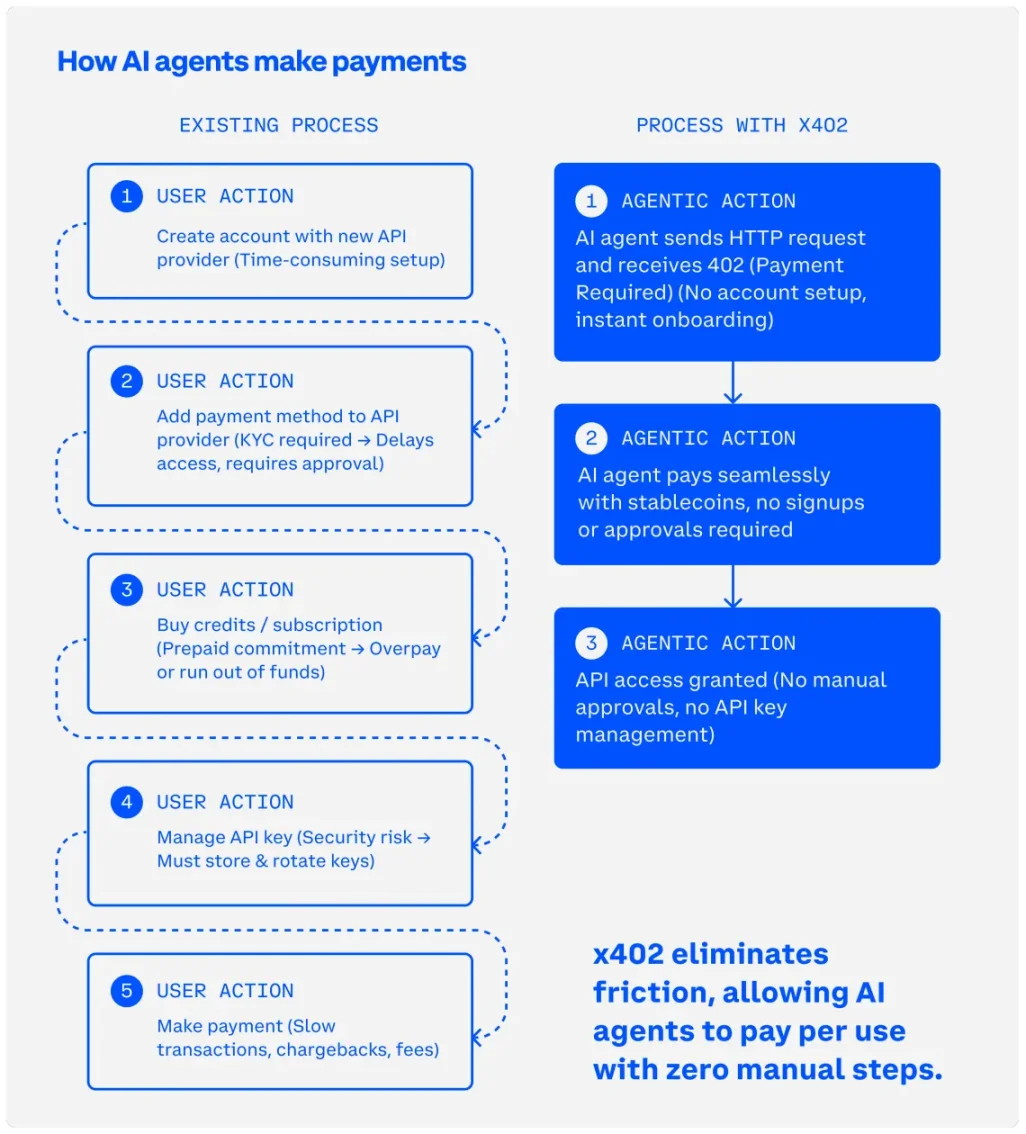
Currently, the most talked about is the x402 standard, an open protocol developed by Coinbase. It revives the HTTP status code 402—"Payment Required"—which was defined as early as 1997 but never used. x402 brings this status code back to life by combining it with stablecoin payments, making micropayments economically viable to settle.

x402 turns HTTP requests into paid requests. Whenever payment is required, the server makes the request. Since the agent has a preset budget, it pays the server and obtains the data within the same flow. This makes "pay-per-request" or "pay-per-call" feasible in machine-to-machine transactions.

With x402, agents can pay precisely for what they need at the moment. For example, spending 2 cents to read a paid article, or paying a fraction of a cent for an API call. Transactions settle on-chain in seconds, without the need to establish long-term relationships.
Source: Coinbase's x402 Paper

Cloudflare has borrowed this concept to build a more specific "Pay for Crawl" system. It also uses HTTP 402 underneath, but the key is Cloudflare's market dominance, with 20% of global web traffic passing through its network, giving it significant influence.

"Pay for Crawl" leverages Cloudflare's edge network to require payment before providing content to AI crawlers. This turns access to content into enforced metering. Publishers are facing plummeting traffic because people no longer click through to websites from search engines but instead read AI-generated summaries. Through this system, publishers can charge AI labs directly each time a crawler accesses their content.

Card networks are also trying to extend existing payment channels to handle agent transactions. Visa has launched an MCP server and an Agent Acceptance Toolkit. Mastercard has a project called "Agent Payments." Both are in early pilot stages, but they are important because Visa and Mastercard already have global distribution networks, issuer relationships, and extensive merchant acceptance networks. The basic idea is: register the agent, set spending controls, and allow the agent to initiate transactions on the existing human credit card payment network.

An Urgent Need to Fill the Trust Gap

All the above standards assume that payments will proceed smoothly and the results will meet expectations. ACP and AP2 involve humans at the checkout stage, providing some security. The x402 variants handle machine-to-machine data access, where risks are typically lower. Card networks extend their familiar protection mechanisms, but at the cost of slow settlement and high fees.

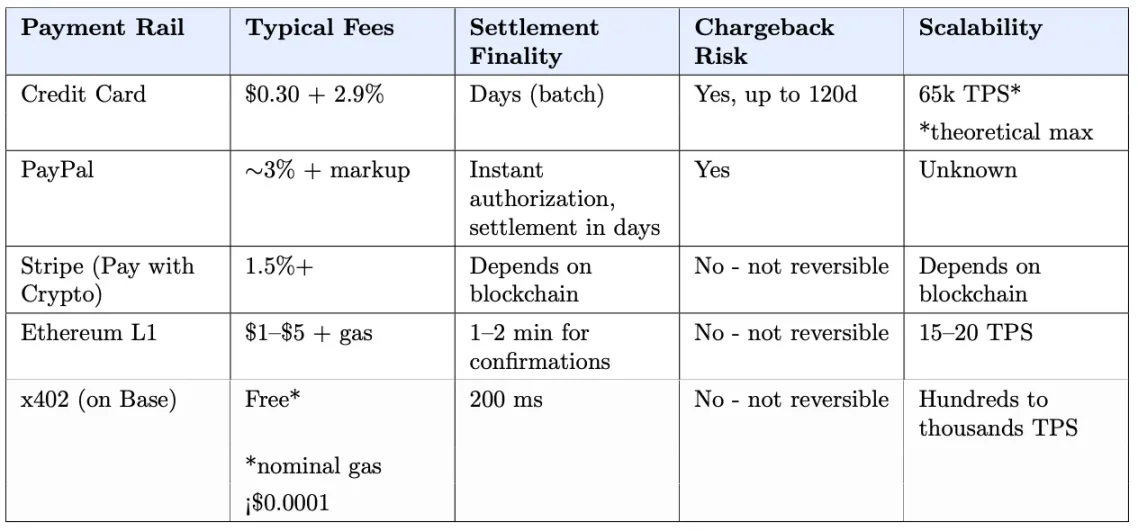
Achieving large-scale micropayments requires speed as the primary goal. Card payment networks take days to settle, and merchants pay a few percent of the transaction amount in fees. Cryptocurrency channels settle in seconds, costing less than a cent. But this efficiency comes with irreversibility; cryptocurrency payments cannot be reversed once completed.

Traditional commerce has built an entire infrastructure around "things that can go wrong." When something goes wrong with a credit card purchase, you have a process to follow: contact the bank, initiate a dispute, the card network investigates and temporarily withholds funds, and finally rules for a refund or supports the merchant. In 2025, there were 261 million disputed transactions, totaling $34 billion.

However, agents running on stablecoin channels have none of these protections.

The problem becomes more complex when agents start collaborating. When hundreds or thousands of multi-agent workflows intertwine, clarifying responsibility can become a nightmare.

Card networks will not take on this risk, at least not under their current profit model. Visa and Mastercard's agent projects still charge standard interchange fees, and settlement still takes days. They could move to instant stablecoin settlement, but that would mean abandoning the dispute handling system that forms the basis of their fees.

The dispute resolution mechanism in traditional finance was not inherent. The first credit card (Diners Club) appeared around 1950, but consumers waited another 24 years to gain the right to dispute transactions. The modern infrastructure we take for granted today was built gradually as problems emerged.

Autonomous agent commerce does not have this much time to waste. API requests already account for 60% of the dynamic HTTP traffic handled by Cloudflare. Bots and automated traffic already account for nearly half of web traffic. ChatGPT's 700 million users can already checkout directly on Etsy through ACP, and Shopify integration is coming soon. The transaction volume already exists, users have the potential need to handle tasks through agents, and it's only a matter of time before agents are used for commercial activities.

Therefore, we face a choice: do we let traditional financial infrastructure continue its slow settlement, or do we consciously build trust infrastructure to match fast blockchain settlement? The former will limit the potential of agents, while the latter is an opportunity and an inevitable extension of the development of autonomous agent commerce.

So, how exactly should it be done?

Unsurprisingly, this involves both pre-transaction and post-transaction parts.
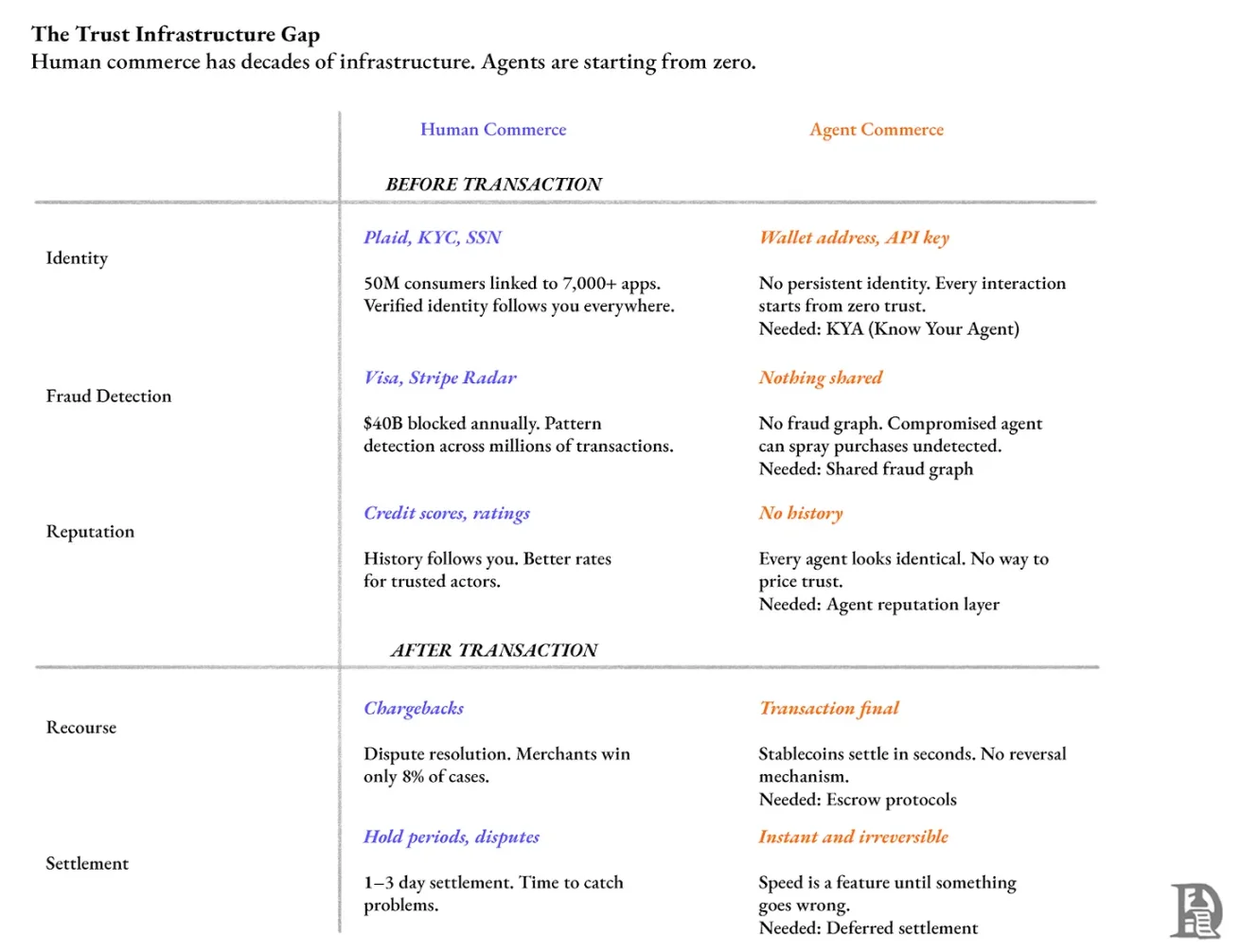
Pre-Transaction: Should the agent transaction be allowed?

This depends on three points: identifying the counterparty, fraud detection, and using reputation scores to determine pricing and access permissions.

In the US, Plaid connects nearly half of all bank accounts, processing millions of account verifications daily. When you verify your identity on Venmo, you are using Plaid.

Currently, any agent interacting with APIs, scraping web pages, or initiating payments lacks equivalent identity verification. The server sees only a vague ID (like a wallet address or API key), not knowing who the caller is. Without a universal identity across services, there is no way to accumulate reputation, and every interaction starts from "zero trust."

In 2024, US adults lost approximately $47 billion due to identity fraud.

We need a "Know Your Agent" (KYA) layer, similar to how Plaid provides identity infrastructure for fintech. It should issue persistent and revocable credentials, binding the agent to the human or organization behind it.

Card networks spent decades building systems that can identify suspicious patterns from millions of transactions. They understand normal human consumption behavior and can flag anomalies in real-time. If an agent is compromised and makes unauthorized purchases from multiple merchants, there is currently no shared fraud graph to detect it.

Visa claims that after investing $11 billion in security between 2019-24, its systems prevented $40 billion in fraud attempts. Stripe processes over $1.4 trillion in payments annually and uses this to train its Radar anti-fraud system. During Black Friday and Cyber Monday 2024, Radar prevented 20.9 million fraudulent transactions worth $917 million.

Agent transactions currently lack such a fraud detection layer. When an agent makes an x402 payment, there is no shared system to flag abnormal behavior, such as a surge in spending or abnormal frequency.

Without persistent identity and reputation, every agent interaction starts from zero. Reputation is deeply embedded in human commerce: the ads you see are based on browsing history, your Uber rating affects driver acceptance, and your credit score follows you to every financial institution. The same should be true for agents.

Post-Transaction: What to do if something goes wrong?

Chargebacks are how card networks handle disputes: after a customer disputes a transaction through their bank, funds are withdrawn from the merchant. But this is also often abused. In 2023, chargebacks cost merchants approximately $117.47 billion in losses. For every $1 lost to a chargeback, merchants typically bear an additional $3.75-$4.61 in other costs (including fees, loss of goods, and administrative overhead).
Source: Coinbase's x402 Paper

Merchants win only 8.1% of disputes they actively contest. 84% of customers believe it is easier to initiate a chargeback directly with their bank than to seek a refund from the merchant.

Agent-initiated stablecoin transactions settle in seconds and are currently irreversible. Cloudflare has proposed a delayed settlement extension to x402, allowing a "waiting period" to be set before funds are finally transferred.

Developers are already building prototypes of this infrastructure. At the ETHGlobal Buenos Aires hackathon, a team created Private-Escrow x402. Their escrow scheme is: the buyer pre-funds a smart contract, and when paying, signs a "payment intent" off-chain. A coordinator batches hundreds of such signatures into a single settlement transaction, reducing Gas fees by 28 times.

But this is just a basic component; it still needs to be productized.

Who will build all this?

This reminds me of the era when telecom operators dominated the industry. They owned the billing relationship for every mobile user but missed out on the value created by smartphones. App distribution and mobile advertising created hundreds of billions of dollars in revenue, which could have been captured by the operators.

Card networks now face a similar situation. What Visa and Mastercard built over decades is precisely the trust infrastructure lacking in the autonomous agent economy. But their business model relies entirely on interchange fees, and these fees exist precisely because they control the payment channels. They spent huge sums maintaining this facility, funded by a few percent of the transaction volume. Providing consumer protection for stablecoin transactions would mean subsidizing a competitor's payment channel with their own revenue.

If the card networks don't do it, the next candidates are AI labs like OpenAI, Google, and Anthropic. They all want their agents to be widely used. But operating a centralized identity registry means they must take responsibility when agents misbehave. They don't want to become the arbitration court for your "wrong hotel booking."

They would prefer a third party to build the identity and recourse infrastructure for them to plug into directly, just like they plug into payments or search engines today.

Cloudflare is in a unique position. They already handle massive web traffic, already run bot detection, and their "AI Audit" tool allows publishers to track crawler access. The technical leap from "identifying bots" to "verifying agent identity and reputation" is not huge.

But Cloudflare has always positioned itself as neutral infrastructure. Once it starts issuing trust scores or adjudicating disputes, it becomes more like a regulatory body—that's a different business and implies different responsibilities.

Three Entry Points for Startups

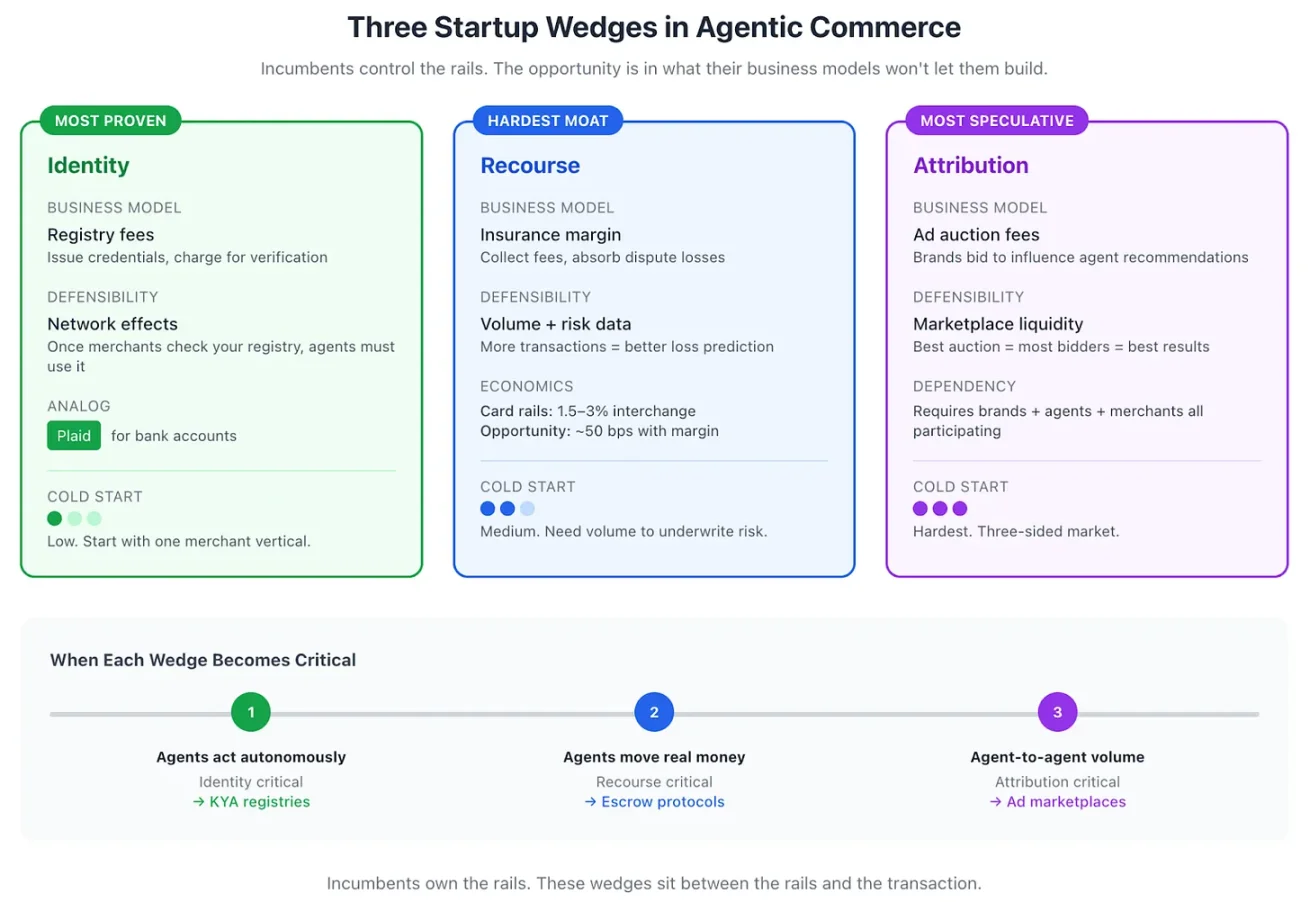
You can't beat OpenAI on model quality, nor can you surpass Cloudflare on traffic. You have to find parts of the tech stack that their business models (at least currently) don't allow them to touch, but where value still exists. I see three entry points: Identity, Recourse, and Attribution.

Agent Identity is the most straightforward. The registry model is proven. Although Plaid is a classic case, it's apt: they did identity verification for bank accounts. A startup could do the same for agents: issue credentials, accumulate reputation, and allow merchants to check reputation scores before accepting payment. Its moat comes from network effects: once enough merchants check through your registry, agents will be forced to maintain a good reputation record.

Recourse Mechanism is harder because it requires taking on risk. Think of it as insurance: charge a small fee per transaction and cover the loss when things go wrong. Scale is key. Card interchange rates are 1.5%-3%, which includes the cost of dispute handling. Stablecoin channel costs are much lower, so a recourse layer could provide comparable protection at a 0.5% fee and still be profitable.

Attribution Mechanism is the most forward-looking but will inevitably emerge. When agents start influencing purchasing decisions, brands will pay to influence the recommended content. Auction mechanisms can be designed. But it has a "cold start" problem, requiring brands, agents, and merchants to participate in a market together for it to work, unlike the first two entry points.

The importance of these three entry points changes with the stage of agent economic development:

  • Identity becomes critical when agents no longer require human approval for each transaction.

  • Recourse is essential when agents start handling real money.

  • Attribution will only start when the volume of transactions between agents is sufficient to support an advertising market.

This leads to the actual development trajectory:
Source—Chart generated using Claude

Startups Will Build Part of the Agent Economy Infrastructure

The development of agents can be divided into three stages:

  • As an interaction interface

  • Executing under human supervision

  • Autonomously transacting with each other
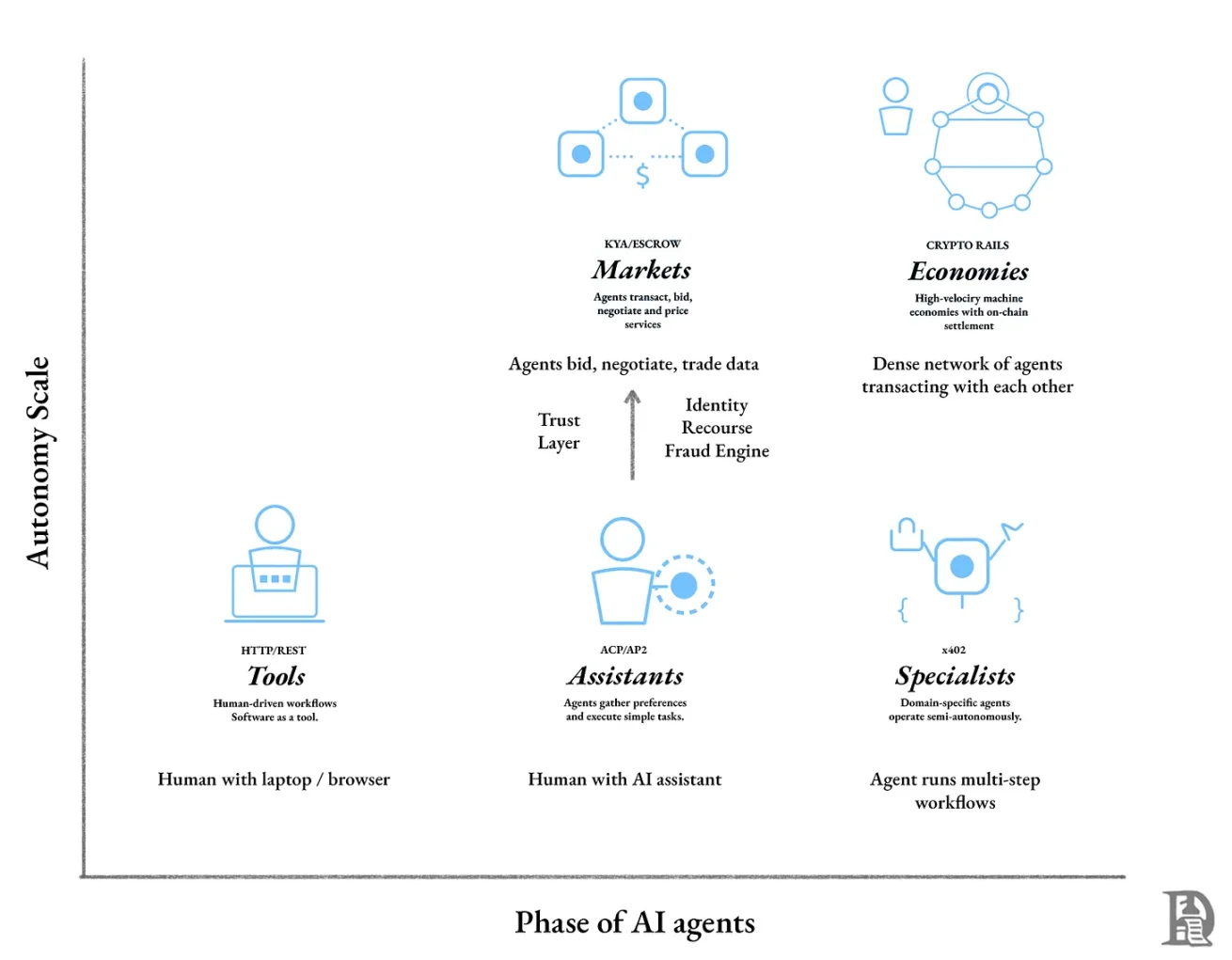
We are in the first stage. ChatGPT's Etsy checkout integration is a good example: we browse products in the chat interface (though not exclusively), the agent recommends options, but the human makes the final decision. Trust is entirely borrowed from existing facilities.

This stage belongs to the existing giants because it's a distribution game for争夺 the user entry point. Value accumulates with the players who own the interface where purchase decisions are made.

The second stage is marked by agents gaining more autonomy. Agents no longer just suggest itineraries but directly book flights, rent cars, and reserve hotels. We give goals or constraints, the agent executes, and we accept the results.

At this point, the trust layer becomes indispensable. Without a recourse mechanism, users will not authorize agents; without identity verification, merchants will not accept agent payments.

This is precisely the opportunity for startups. Existing giants may lack sufficient incentive to build trust facilities for stablecoin channels because they already have huge growth potential in the current stage (which they still dominate). OpenAI's revenue this year reached $13 billion. In comparison, Tether's profit in the first ten months of 2025 alone was $10 billion, with even higher annual profit expected.

The identity, recourse, and attribution layers will be built by new companies dedicated to solving the specific problems at the boundary of agent capabilities and user authorization.

The third stage is autonomous agent commerce. Your agent no longer needs to ask for routine decisions; it can negotiate with other agents, bid for computing resources, participate in advertising auctions, and continuously settle thousands of small transactions. Stablecoins, due to the volume, speed, and granularity required for machine-to-machine transactions, will become the default settlement layer.

The competitive focus at this stage will no longer be the best model or the fastest blockchain, but who builds the most trusted infrastructure: the "passport" for agents, the "court" for adjudicating disputes, the "credit system" that allows transactions beyond balances. These institutions for software services will determine which agents can participate in the economy and under what conditions.

Conclusion

We have laid the pipes for agents to "spend money," but we haven't built the mechanisms to verify "whether they should spend." HTTP 402 slept for thirty years and finally woke up because micropayments became feasible. The technical problems are solved. But the trust facilities that underpin human commerce, such as identity verification, fraud detection, and dispute resolution, still lack their agent counterparts. We solved the easy part. It will take time for agents to do business with each other with confidence.


Preguntas relacionadas

QWhat are the three key areas (breakthrough points) for the next-generation AI agent economy as discussed in the article?

AThe three key breakthrough points are Identity, Recourse, and Attribution.

QWhich protocol, developed by Coinbase, revives the HTTP 402 status code to enable machine-to-machine micropayments?

AThe protocol is called x402.

QWhat is the main limitation of using stablecoin channels for AI agent payments that creates a 'trust gap'?

AThe main limitation is that stablecoin payments are fast and irreversible, offering no built-in consumer protections like chargebacks or dispute resolution when transactions go wrong.

QAccording to the article, what are the three potential entry points for startups to build infrastructure for the agent economy?

AThe three potential entry points for startups are building solutions for Agent Identity, Recourse mechanisms, and Attribution systems.

QWhat is the role of the Model Context Protocol (MCP) in the AI agent ecosystem?

AThe Model Context Protocol (MCP) provides a common language that allows AI agents to use various tools and access APIs (like Google Calendar, Notion, Figma) in a standardized format, without needing custom code for each service.

Lecturas Relacionadas

Polymarket's "2028 Presidential Election" Volume King Is... LeBron James???

An article from Odaily Planet Daily, authored by Azuma, discusses a peculiar phenomenon observed on the prediction market platform Polymarket regarding the "2028 US Presidential Election" event. Despite having a real-time probability of less than 1%, unlikely candidates such as NBA star LeBron James (with $48.41 million in trading volume), celebrity Kim Kardashian ($33.84 million), and even ineligible figures like Elon Musk ($23.14 million) and New York City Mayor Zohran Mamdani ($18.39 million) account for approximately 70% of the total trading volume. In contrast, high-probability candidates like Vice President JD Vance ($10.58 million), California Governor Gavin Newsom ($15.71 million), and Secretary of State Marco Rubio ($9.32 million) have significantly lower trading activity. The article explains that this counterintuitive trend is not driven by irrational speculation but by rational strategies. Polymarket offers a 4% annualized holding reward for certain markets, including the 2028 election, to maintain long-term pricing accuracy. This yield exceeds the current 5-year US Treasury rate (3.98%), attracting large investors ("whales") to hold "NO" shares on low-probability candidates for risk-free returns. Additionally, some users utilize a platform feature that allows converting a set of "NO" shares into corresponding "YES" shares for better liquidity or pricing efficiency, rather than directly buying "YES" shares for their preferred candidates. Thus, the seemingly absurd trading activity is strategically motivated.

marsbitHace 1 hora(s)

Polymarket's "2028 Presidential Election" Volume King Is... LeBron James???

marsbitHace 1 hora(s)

Trading

Spot
Futuros

Artículos destacados

Qué es GROK AI

Grok AI: Revolucionando la Tecnología Conversacional en la Era Web3 Introducción En el paisaje de rápida evolución de la inteligencia artificial, Grok AI se destaca como un proyecto notable que une los dominios de la tecnología avanzada y la interacción del usuario. Desarrollado por xAI, una empresa liderada por el renombrado empresario Elon Musk, Grok AI busca redefinir la forma en que interactuamos con la inteligencia artificial. A medida que el movimiento Web3 continúa floreciendo, Grok AI tiene como objetivo aprovechar el poder de la IA conversacional para responder consultas complejas, proporcionando a los usuarios una experiencia que no solo es informativa, sino también entretenida. ¿Qué es Grok AI? Grok AI es un sofisticado chatbot de IA conversacional diseñado para interactuar dinámicamente con los usuarios. A diferencia de muchos sistemas de IA tradicionales, Grok AI abraza una gama más amplia de consultas, incluyendo aquellas que normalmente se consideran inapropiadas o fuera de las respuestas estándar. Los objetivos centrales del proyecto incluyen: Razonamiento Confiable: Grok AI enfatiza el razonamiento de sentido común para proporcionar respuestas lógicas basadas en la comprensión contextual. Supervisión Escalable: La integración de asistencia de herramientas asegura que las interacciones de los usuarios sean monitoreadas y optimizadas para la calidad. Verificación Formal: La seguridad es primordial; Grok AI incorpora métodos de verificación formal para mejorar la confiabilidad de sus resultados. Comprensión de Largo Contexto: El modelo de IA sobresale en retener y recordar un extenso historial de conversaciones, facilitando discusiones significativas y contextualizadas. Robustez Adversarial: Al enfocarse en mejorar sus defensas contra entradas manipuladas o maliciosas, Grok AI busca mantener la integridad de las interacciones de los usuarios. En esencia, Grok AI no es solo un dispositivo de recuperación de información; es un compañero conversacional inmersivo que fomenta un diálogo dinámico. Creador de Grok AI La mente detrás de Grok AI no es otra que Elon Musk, una persona sinónimo de innovación en varios campos, incluyendo la automoción, los viajes espaciales y la tecnología. Bajo el paraguas de xAI, una empresa enfocada en avanzar la tecnología de IA de maneras beneficiosas, la visión de Musk busca remodelar la comprensión de las interacciones de IA. El liderazgo y la ética fundacional están profundamente influenciados por el compromiso de Musk de empujar los límites tecnológicos. Inversores de Grok AI Si bien los detalles específicos sobre los inversores que respaldan a Grok AI son limitados, se reconoce públicamente que xAI, el incubador del proyecto, está fundado y apoyado principalmente por el propio Elon Musk. Las empresas y participaciones anteriores de Musk proporcionan un respaldo robusto, fortaleciendo aún más la credibilidad y el potencial de crecimiento de Grok AI. Sin embargo, hasta ahora, la información sobre fundaciones de inversión adicionales u organizaciones que apoyan a Grok AI no está fácilmente accesible, marcando un área para una posible exploración futura. ¿Cómo Funciona Grok AI? La mecánica operativa de Grok AI es tan innovadora como su marco conceptual. El proyecto integra varias tecnologías de vanguardia que facilitan sus funcionalidades únicas: Infraestructura Robusta: Grok AI está construido utilizando Kubernetes para la orquestación de contenedores, Rust para rendimiento y seguridad, y JAX para computación numérica de alto rendimiento. Este trío asegura que el chatbot opere de manera eficiente, escale efectivamente y sirva a los usuarios de manera oportuna. Acceso a Conocimiento en Tiempo Real: Una de las características distintivas de Grok AI es su capacidad para acceder a datos en tiempo real a través de la plataforma X—anteriormente conocida como Twitter. Esta capacidad otorga a la IA acceso a la información más reciente, permitiéndole proporcionar respuestas y recomendaciones oportunas que otros modelos de IA podrían pasar por alto. Dos Modos de Interacción: Grok AI ofrece a los usuarios una elección entre “Modo Divertido” y “Modo Regular”. El Modo Divertido permite un estilo de interacción más lúdico y humorístico, mientras que el Modo Regular se centra en ofrecer respuestas precisas y exactas. Esta versatilidad asegura una experiencia personalizada que se adapta a diversas preferencias de los usuarios. En esencia, Grok AI une rendimiento con compromiso, creando una experiencia que es tanto enriquecedora como entretenida. Cronología de Grok AI El viaje de Grok AI está marcado por hitos cruciales que reflejan sus etapas de desarrollo y despliegue: Desarrollo Inicial: La fase fundamental de Grok AI tuvo lugar durante aproximadamente dos meses, durante los cuales se realizó el entrenamiento inicial y el ajuste del modelo. Lanzamiento Beta de Grok-2: En un avance significativo, se anunció la beta de Grok-2. Este lanzamiento introdujo dos versiones del chatbot—Grok-2 y Grok-2 mini—cada una equipada con capacidades para chatear, programar y razonar. Acceso Público: Tras su desarrollo beta, Grok AI se volvió disponible para los usuarios de la plataforma X. Aquellos con cuentas verificadas por un número de teléfono y activas durante al menos siete días pueden acceder a una versión limitada, haciendo que la tecnología esté disponible para un público más amplio. Esta cronología encapsula el crecimiento sistemático de Grok AI desde su inicio hasta el compromiso público, enfatizando su compromiso con la mejora continua y la interacción del usuario. Características Clave de Grok AI Grok AI abarca varias características clave que contribuyen a su identidad innovadora: Integración de Conocimiento en Tiempo Real: El acceso a información actual y relevante diferencia a Grok AI de muchos modelos estáticos, permitiendo una experiencia de usuario atractiva y precisa. Estilos de Interacción Versátiles: Al ofrecer modos de interacción distintos, Grok AI se adapta a diversas preferencias de los usuarios, invitando a la creatividad y la personalización en la conversación con la IA. Avanzada Infraestructura Tecnológica: La utilización de Kubernetes, Rust y JAX proporciona al proyecto un marco sólido para asegurar confiabilidad y rendimiento óptimo. Consideración de Discurso Ético: La inclusión de una función generadora de imágenes muestra el espíritu innovador del proyecto. Sin embargo, también plantea consideraciones éticas en torno a los derechos de autor y la representación respetuosa de figuras reconocibles—una discusión en curso dentro de la comunidad de IA. Conclusión Como una entidad pionera en el ámbito de la IA conversacional, Grok AI encapsula el potencial de experiencias transformadoras para los usuarios en la era digital. Desarrollado por xAI y guiado por el enfoque visionario de Elon Musk, Grok AI integra conocimiento en tiempo real con capacidades avanzadas de interacción. Busca empujar los límites de lo que la inteligencia artificial puede lograr mientras mantiene un enfoque en consideraciones éticas y la seguridad del usuario. Grok AI no solo encarna el avance tecnológico, sino que también representa un nuevo paradigma de conversación en el paisaje Web3, prometiendo involucrar a los usuarios con tanto conocimiento hábil como interacción lúdica. A medida que el proyecto continúa evolucionando, se erige como un testimonio de lo que la intersección de la tecnología, la creatividad y la interacción similar a la humana puede lograr.

263 Vistas totalesPublicado en 2024.12.26Actualizado en 2024.12.26

Qué es GROK AI

Qué es ERC AI

Euruka Tech: Una Visión General de $erc ai y sus Ambiciones en Web3 Introducción En el paisaje en rápida evolución de la tecnología blockchain y las aplicaciones descentralizadas, nuevos proyectos emergen con frecuencia, cada uno con objetivos y metodologías únicas. Uno de estos proyectos es Euruka Tech, que opera en el amplio dominio de las criptomonedas y Web3. El enfoque principal de Euruka Tech, particularmente su token $erc ai, es presentar soluciones innovadoras diseñadas para aprovechar las crecientes capacidades de la tecnología descentralizada. Este artículo tiene como objetivo proporcionar una visión general completa de Euruka Tech, una exploración de sus objetivos, funcionalidad, la identidad de su creador, posibles inversores y su importancia dentro del contexto más amplio de Web3. ¿Qué es Euruka Tech, $erc ai? Euruka Tech se caracteriza como un proyecto que aprovecha las herramientas y funcionalidades ofrecidas por el entorno Web3, centrándose en integrar inteligencia artificial dentro de sus operaciones. Aunque los detalles específicos sobre el marco del proyecto son algo elusivos, está diseñado para mejorar la participación del usuario y automatizar procesos en el espacio cripto. El proyecto tiene como objetivo crear un ecosistema descentralizado que no solo facilite transacciones, sino que también incorpore funcionalidades predictivas a través de inteligencia artificial, de ahí la designación de su token, $erc ai. El objetivo es proporcionar una plataforma intuitiva que facilite interacciones más inteligentes y un procesamiento eficiente de transacciones dentro de la creciente esfera de Web3. ¿Quién es el Creador de Euruka Tech, $erc ai? En la actualidad, la información sobre el creador o el equipo fundador detrás de Euruka Tech permanece no especificada y algo opaca. Esta ausencia de datos genera preocupaciones, ya que el conocimiento del trasfondo del equipo es a menudo esencial para establecer credibilidad dentro del sector blockchain. Por lo tanto, hemos categorizado esta información como desconocida hasta que se disponga de detalles concretos en el dominio público. ¿Quiénes son los Inversores de Euruka Tech, $erc ai? De manera similar, la identificación de inversores u organizaciones de respaldo para el proyecto Euruka Tech no se proporciona fácilmente a través de la investigación disponible. Un aspecto que es crucial para los posibles interesados o usuarios que consideren involucrarse con Euruka Tech es la garantía que proviene de asociaciones financieras establecidas o respaldo de firmas de inversión de renombre. Sin divulgaciones sobre afiliaciones de inversión, es difícil sacar conclusiones completas sobre la seguridad financiera o la longevidad del proyecto. De acuerdo con la información encontrada, esta sección también se encuentra en estado de desconocido. ¿Cómo Funciona Euruka Tech, $erc ai? A pesar de la falta de especificaciones técnicas detalladas para Euruka Tech, es esencial considerar sus ambiciones innovadoras. El proyecto busca aprovechar el poder computacional de la inteligencia artificial para automatizar y mejorar la experiencia del usuario dentro del entorno de las criptomonedas. Al integrar IA con tecnología blockchain, Euruka Tech tiene como objetivo proporcionar características como operaciones automatizadas, evaluaciones de riesgo e interfaces de usuario personalizadas. La esencia innovadora de Euruka Tech radica en su objetivo de crear una conexión fluida entre los usuarios y las vastas posibilidades que presentan las redes descentralizadas. A través de la utilización de algoritmos de aprendizaje automático e IA, busca minimizar los desafíos de los usuarios primerizos y optimizar las experiencias transaccionales dentro del marco de Web3. Esta simbiosis entre IA y blockchain subraya la importancia del token $erc ai, que actúa como un puente entre las interfaces de usuario tradicionales y las capacidades avanzadas de las tecnologías descentralizadas. Cronología de Euruka Tech, $erc ai Desafortunadamente, como resultado de la información limitada disponible sobre Euruka Tech, no podemos presentar una cronología detallada de los principales desarrollos o hitos en el viaje del proyecto. Esta cronología, típicamente invaluable para trazar la evolución de un proyecto y entender su trayectoria de crecimiento, no está actualmente disponible. A medida que la información sobre eventos notables, asociaciones o adiciones funcionales se haga evidente, las actualizaciones seguramente mejorarán la visibilidad de Euruka Tech en la esfera cripto. Aclaración sobre Otros Proyectos “Eureka” Es importante señalar que múltiples proyectos y empresas comparten una nomenclatura similar con “Eureka”. La investigación ha identificado iniciativas como un agente de IA de NVIDIA Research, que se centra en enseñar a los robots tareas complejas utilizando métodos generativos, así como Eureka Labs y Eureka AI, que mejoran la experiencia del usuario en educación y análisis de servicio al cliente, respectivamente. Sin embargo, estos proyectos son distintos de Euruka Tech y no deben confundirse con sus objetivos o funcionalidades. Conclusión Euruka Tech, junto con su token $erc ai, representa un jugador prometedor pero actualmente oscuro dentro del paisaje de Web3. Si bien los detalles sobre su creador e inversores permanecen no revelados, la ambición central de combinar inteligencia artificial con tecnología blockchain se presenta como un punto focal de interés. Los enfoques únicos del proyecto para fomentar la participación del usuario a través de la automatización avanzada podrían destacarlo a medida que el ecosistema Web3 progresa. A medida que el mercado cripto continúa evolucionando, los interesados deben mantener un ojo atento a los avances en torno a Euruka Tech, ya que el desarrollo de innovaciones documentadas, asociaciones o una hoja de ruta definida podría presentar oportunidades significativas en el futuro cercano. Tal como está, esperamos más información sustancial que podría revelar el potencial de Euruka Tech y su posición en el competitivo paisaje cripto.

256 Vistas totalesPublicado en 2025.01.02Actualizado en 2025.01.02

Qué es ERC AI

Qué es DUOLINGO AI

DUOLINGO AI: Integrando el Aprendizaje de Idiomas con Web3 e Innovación en IA En una era donde la tecnología redefine la educación, la integración de la inteligencia artificial (IA) y las redes blockchain anuncia una nueva frontera para el aprendizaje de idiomas. Entra DUOLINGO AI y su criptomoneda asociada, $DUOLINGO AI. Este proyecto aspira a fusionar la capacidad educativa de las principales plataformas de aprendizaje de idiomas con los beneficios de la tecnología descentralizada Web3. Este artículo profundiza en los aspectos clave de DUOLINGO AI, explorando sus objetivos, marco tecnológico, desarrollo histórico y potencial futuro, mientras mantiene claridad entre el recurso educativo original y esta iniciativa independiente de criptomoneda. Visión General de DUOLINGO AI En su esencia, DUOLINGO AI busca establecer un entorno descentralizado donde los aprendices puedan ganar recompensas criptográficas por alcanzar hitos educativos en la competencia lingüística. Al aplicar contratos inteligentes, el proyecto tiene como objetivo automatizar los procesos de verificación de habilidades y asignación de tokens, adhiriéndose a los principios de Web3 que enfatizan la transparencia y la propiedad del usuario. El modelo se aparta de los enfoques tradicionales para la adquisición de idiomas al apoyarse en gran medida en una estructura de gobernanza impulsada por la comunidad, permitiendo a los poseedores de tokens sugerir mejoras al contenido del curso y a las distribuciones de recompensas. Algunos de los objetivos notables de DUOLINGO AI incluyen: Aprendizaje Gamificado: El proyecto integra logros en blockchain y tokens no fungibles (NFTs) para representar niveles de competencia lingüística, fomentando la motivación a través de recompensas digitales atractivas. Creación de Contenido Descentralizada: Abre avenidas para que educadores y entusiastas de los idiomas contribuyan con sus cursos, facilitando un modelo de reparto de ingresos que beneficia a todos los contribuyentes. Personalización Impulsada por IA: Al emplear modelos avanzados de aprendizaje automático, DUOLINGO AI personaliza las lecciones para adaptarse al progreso de aprendizaje individual, similar a las características adaptativas que se encuentran en plataformas establecidas. Creadores del Proyecto y Gobernanza A partir de abril de 2025, el equipo detrás de $DUOLINGO AI permanece seudónimo, una práctica frecuente en el paisaje descentralizado de criptomonedas. Esta anonimidad está destinada a promover el crecimiento colectivo y la participación de los interesados en lugar de centrarse en desarrolladores individuales. El contrato inteligente desplegado en la blockchain de Solana anota la dirección de la billetera del desarrollador, lo que significa el compromiso con la transparencia en las transacciones a pesar de que la identidad de los creadores sea desconocida. Según su hoja de ruta, DUOLINGO AI aspira a evolucionar hacia una Organización Autónoma Descentralizada (DAO). Esta estructura de gobernanza permite a los poseedores de tokens votar sobre cuestiones críticas como implementaciones de características y asignaciones del tesoro. Este modelo se alinea con la ética del empoderamiento comunitario que se encuentra en diversas aplicaciones descentralizadas, enfatizando la importancia de la toma de decisiones colectiva. Inversores y Asociaciones Estratégicas Actualmente, no hay inversores institucionales o capitalistas de riesgo identificables públicamente vinculados a $DUOLINGO AI. En cambio, la liquidez del proyecto proviene principalmente de intercambios descentralizados (DEXs), marcando un contraste marcado con las estrategias de financiamiento de las empresas de tecnología educativa tradicionales. Este modelo de base indica un enfoque impulsado por la comunidad, reflejando el compromiso del proyecto con la descentralización. En su libro blanco, DUOLINGO AI menciona la formación de colaboraciones con “plataformas de educación blockchain” no especificadas, destinadas a enriquecer su oferta de cursos. Si bien aún no se han divulgado asociaciones específicas, estos esfuerzos colaborativos sugieren una estrategia para fusionar la innovación blockchain con iniciativas educativas, ampliando el acceso y la participación de los usuarios a través de diversas avenidas de aprendizaje. Arquitectura Tecnológica Integración de IA DUOLINGO AI incorpora dos componentes principales impulsados por IA para mejorar su oferta educativa: Motor de Aprendizaje Adaptativo: Este sofisticado motor aprende de las interacciones de los usuarios, similar a los modelos propietarios de las principales plataformas educativas. Ajusta dinámicamente la dificultad de las lecciones para abordar desafíos específicos de los aprendices, reforzando áreas débiles a través de ejercicios dirigidos. Agentes Conversacionales: Al emplear chatbots impulsados por GPT-4, DUOLINGO AI proporciona una plataforma para que los usuarios participen en conversaciones simuladas, fomentando una experiencia de aprendizaje de idiomas más interactiva y práctica. Infraestructura Blockchain Construido sobre la blockchain de Solana, $DUOLINGO AI utiliza un marco tecnológico integral que incluye: Contratos Inteligentes de Verificación de Habilidades: Esta característica otorga automáticamente tokens a los usuarios que superan con éxito las pruebas de competencia, reforzando la estructura de incentivos para resultados de aprendizaje genuinos. Insignias NFT: Estos tokens digitales significan varios hitos que los aprendices logran, como completar una sección de su curso o dominar habilidades específicas, permitiéndoles intercambiar o mostrar sus logros digitalmente. Gobernanza DAO: Los miembros de la comunidad con tokens pueden participar en la gobernanza votando sobre propuestas clave, facilitando una cultura participativa que fomenta la innovación en las ofertas de cursos y características de la plataforma. Línea de Tiempo Histórica 2022–2023: Conceptualización Los cimientos de DUOLINGO AI comienzan con la creación de un libro blanco, destacando la sinergia entre los avances en IA en el aprendizaje de idiomas y el potencial descentralizado de la tecnología blockchain. 2024: Lanzamiento Beta Un lanzamiento beta limitado introduce ofertas en idiomas populares, recompensando a los primeros usuarios con incentivos en tokens como parte de la estrategia de participación comunitaria del proyecto. 2025: Transición a DAO En abril, se produce un lanzamiento completo de la red principal con la circulación de tokens, lo que provoca discusiones comunitarias sobre posibles expansiones a idiomas asiáticos y otros desarrollos de cursos. Desafíos y Direcciones Futuras Obstáculos Técnicos A pesar de sus ambiciosos objetivos, DUOLINGO AI enfrenta desafíos significativos. La escalabilidad sigue siendo una preocupación constante, particularmente en equilibrar los costos asociados con el procesamiento de IA y mantener una red descentralizada y receptiva. Además, garantizar la creación y moderación de contenido de calidad en medio de una oferta descentralizada plantea complejidades en el mantenimiento de estándares educativos. Oportunidades Estratégicas Mirando hacia adelante, DUOLINGO AI tiene el potencial de aprovechar asociaciones de micro-certificación con instituciones académicas, proporcionando validaciones verificadas en blockchain de habilidades lingüísticas. Además, la expansión entre cadenas podría permitir que el proyecto acceda a bases de usuarios más amplias y a ecosistemas blockchain adicionales, mejorando su interoperabilidad y alcance. Conclusión DUOLINGO AI representa una fusión innovadora de inteligencia artificial y tecnología blockchain, presentando una alternativa centrada en la comunidad a los sistemas tradicionales de aprendizaje de idiomas. Si bien su desarrollo seudónimo y su modelo económico emergente traen ciertos riesgos, el compromiso del proyecto con el aprendizaje gamificado, la educación personalizada y la gobernanza descentralizada ilumina un camino hacia adelante para la tecnología educativa en el ámbito de Web3. A medida que la IA continúa avanzando y el ecosistema blockchain evoluciona, iniciativas como DUOLINGO AI podrían redefinir cómo los usuarios se involucran con la educación lingüística, empoderando comunidades y recompensando la participación a través de mecanismos de aprendizaje innovadores.

251 Vistas totalesPublicado en 2025.04.11Actualizado en 2025.04.11

Qué es DUOLINGO AI

Discusiones

Bienvenido a la comunidad de HTX. Aquí puedes mantenerte informado sobre los últimos desarrollos de la plataforma y acceder a análisis profesionales del mercado. A continuación se presentan las opiniones de los usuarios sobre el precio de AI (AI).

活动图片