Hyperliquid Launches D.C. Policy Center Backed By $28 Million In HYPE Tokens

bitcoinistPublicado a 2026-02-19Actualizado a 2026-02-19

Resumen

Hyperliquid has announced the creation of the Hyperliquid Policy Center (HPC), a new Washington, D.C.-based organization backed by a $28.7 million allocation of HYPE tokens. The center will be led by Jake Chervinsky, former executive of the Blockchain Association and Variant, and aims to advocate for clearer federal regulations for decentralized finance (DeFi). HPC will focus on educating lawmakers and regulators about DeFi protocols and pushing for a legal framework for perpetual derivatives, which are popular in crypto but face regulatory uncertainty in the U.S. The initiative also includes key hires from legal and policy backgrounds to support its mission.

Hyperliquid (HYPE) announced on Wednesday that its Foundation will back the creation of the Hyperliquid Policy Center (HPC), a new Washington, D.C.-based organization designed to advocate for clearer federal rules governing decentralized finance (DeFi).

Jake Chervinsky To Lead Hyperliquid Policy Center

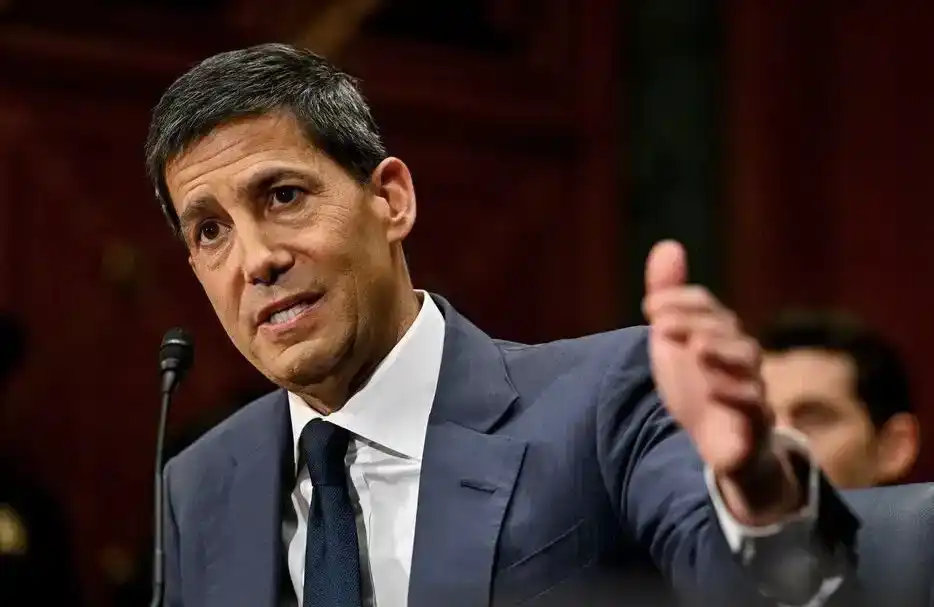
The new center will be led by Jake Chervinsky, who previously held senior roles at the Blockchain Association, one of the industry’s leading trade groups, and at venture capital firm Variant.

As HPC’s inaugural CEO, he is expected to lead efforts to engage lawmakers and regulators at a time when digital asset policy is shifting away from previous roadblocks that hampered the sector’s growth in the United States.

In comments to Fortune, Chervinsky said the United States is at a pivotal juncture in determining how decentralized finance should be integrated into the country’s financial framework.

The center’s mission will be to help members of Congress and federal agencies better understand how DeFi protocols function and to offer technical expertise as regulators craft rules that can accommodate the technology, the executive asserted.

He emphasized that much of today’s financial regulatory system was designed for an earlier, analog era. In his view, those frameworks are poorly suited to decentralized protocols, which enable users to trade digital assets on automated platforms that operate without centralized intermediaries.

HPC Backs Perpetuals Framework

Among the center’s top priorities will be establishing a legal structure for perpetual derivatives, commonly known as “perps.” These instruments, which do not have expiration dates, are widely traded on offshore crypto exchanges and account for a significant share of global digital asset activity.

Chervinsky contends that perpetuals offer advantages over traditional options and futures contracts because they are simpler and provide more direct exposure to underlying assets. Despite their popularity abroad, they have yet to gain a foothold in mainstream US finance, in part due to regulatory uncertainty.

To fund the initiative, the foundation affiliated with Hyperliquid is contributing 1 million HYPE tokens. At current prices of $28.75 per token, that allocation is valued at approximately $28.7 million.

The 1D chart shows HYPE testing the $28 support on Wednesday. Source: HYPEUSDT on TradingView.com

In addition to Jake Chervinsky’s role in the new venture, the founding team includes Policy Counsel Brad Bourque, formerly an associate at Sullivan & Cromwell LLP, and Policy Director Salah Ghazzal, who previously served as Policy Lead at Variant.

The Hyperliquid Policy Center is also building out its leadership bench and is currently recruiting for key roles, including Chief of Staff, Head of Communications, and Head of Government Relations.

Featured image from OpenArt, chart from TradingView.com

Preguntas relacionadas

QWhat is the Hyperliquid Policy Center (HPC) and what is its primary mission?

AThe Hyperliquid Policy Center (HPC) is a new Washington, D.C.-based organization backed by the Hyperliquid Foundation. Its primary mission is to advocate for clearer federal rules governing decentralized finance (DeFi) by helping members of Congress and federal agencies better understand how DeFi protocols function and offering technical expertise to regulators.

QWho is leading the Hyperliquid Policy Center and what is his background?

AJake Chervinsky is leading the Hyperliquid Policy Center as its inaugural CEO. He previously held senior roles at the Blockchain Association, a leading industry trade group, and at the venture capital firm Variant.

QWhat is one of the top regulatory priorities for the HPC, and why is it important?

AOne of the top priorities for the HPC is establishing a legal structure for perpetual derivatives ('perps'). These instruments are widely traded on offshore crypto exchanges and represent a significant share of global digital asset activity, but they have yet to gain a foothold in mainstream US finance due to regulatory uncertainty.

QHow is the Hyperliquid Foundation funding the new policy center, and what is the value of the contribution?

AThe Hyperliquid Foundation is funding the initiative by contributing 1 million HYPE tokens. At the current price of $28.75 per token, this allocation is valued at approximately $28.7 million.

QBesides Jake Chervinsky, who else is on the founding team of the Hyperliquid Policy Center?

AThe founding team also includes Policy Counsel Brad Bourque, formerly an associate at Sullivan & Cromwell LLP, and Policy Director Salah Ghazzal, who previously served as Policy Lead at Variant.

Lecturas Relacionadas

Lowering Expectations for BTC's Next Bull Market

The author, Alex Xu, explains his decision to significantly reduce his Bitcoin holdings (from full to ~30% of his portfolio) during the current bull cycle, citing a lowered long-term outlook for BTC's price appreciation in the next cycle. He outlines six key reasons for this reduced expectation: 1. **Diminished Growth Drivers:** The narrative of exponential user adoption has largely played out with institutional ETF adoption. The next major growth phase—adoption by sovereign national reserves or central banks—seems unlikely in the near future. 2. **Personal Opportunity Cost:** More attractive investment opportunities have emerged in other assets, such as undervalued companies. 3. **Industry-Wide Contraction:** The broader crypto industry is struggling, with most Web3 business models (SocialFi, GameFi, DePIN) failing. This overall萧条 (depression) reduces the fundamental demand and consensus for Bitcoin. 4. **Strain on Major Buyer:** MicroStrategy, a major corporate buyer of BTC, faces rising financing expenses for its debt, which could slow its purchasing rate and create significant marginal pressure on the market. 5. **Increased Competition from Gold:** The emergence of "tokenized gold" has closed the functional gap (portability, divisibility) between physical gold and Bitcoin, offering a strong competitor in the non-sovereign store-of-value space. 6. **Security Budget Concerns:** The block reward halving continues to exacerbate the long-standing issue of funding Bitcoin's network security, with new fee source explorations like Ordinals and L2s largely failing. The author's decision to hold a significant (though reduced) position reflects a cautious, not bearish, outlook. He remains open to increasing his exposure if the fundamental reasons for his skepticism change or if new positive catalysts emerge.

marsbitHace 28 min(s)

Lowering Expectations for BTC's Next Bull Market

marsbitHace 28 min(s)

Can Iran 'Control' the Strait of Hormuz?

Iran has announced a comprehensive plan to assert control over the strategic Strait of Hormuz, a critical global oil shipping chokepoint. The proposed measures include requiring all vessels to obtain Iranian permission for passage, imposing fees for security, environmental protection, and navigation management—preferably paid in Iranian rials—and absolutely banning Israeli ships. Vessels from countries deemed hostile by Iran’s top security bodies may also be barred. Analysts suggest Iran’s motives are multifaceted: increasing pressure on the U.S. and Israel by leveraging control over oil transit to influence global prices and inflation; creating a new revenue stream, potentially exceeding $7.7 billion annually, to counter Western sanctions and support postwar reconstruction; and using transit permissions as bargaining chips in future negotiations, notably with the U.S. However, the plan faces significant practical and diplomatic challenges. Enforcing comprehensive interception and fee collection in the busy waterway, patrolled by international military forces, would be difficult. The U.S. has already countering with a blockade of Iranian ports and threats to intercept any ship paying fees, potentially strangling Iran’s oil exports and fee revenue. Broad international opposition, led by European and Gulf states, and legal controversies further complicate implementation. The proposal may ultimately serve more as a negotiating tactic than a feasible policy, with its execution remaining highly uncertain.

marsbitHace 1 hora(s)

Can Iran 'Control' the Strait of Hormuz?

marsbitHace 1 hora(s)

Trading

Spot
Futuros
活动图片