How Will $12 Trillion in Pension Funds Passively Flood into Bitcoin?

marsbitPublicado a 2026-04-09Actualizado a 2026-04-09

Resumen

A proposed U.S. Department of Labor rule could open the door for cryptocurrency investments, particularly Bitcoin, within the $12 trillion 401(k) pension market. The rule creates a "safe harbor" provision, protecting plan fiduciaries from personal liability if they follow a specific due diligence process covering performance, fees, liquidity, and other factors. This addresses the key legal barrier that had previously discouraged pension managers from including crypto due to litigation risks under the Employee Retirement Income Security Act (ERISA). The primary mechanism for adoption is expected to be through target-date funds, the default investment option for most employees. This means individuals could automatically have 1-3% of their retirement savings allocated to Bitcoin without actively choosing it. Even a small allocation of 0.1% would represent $12 billion, a significant inflow of passive, long-term capital into the crypto asset class. While this regulatory shift is a major milestone, risks remain. The volatility of Bitcoin poses a threat to retirement savings, and the legal safety net provided by the new rule is untested in court. The first lawsuit following a major market downturn will be crucial in determining its ultimate effectiveness. The rule is currently in a public comment period, and full implementation could take years.

Written by: Thejaswini M A

Compiled by: Chopper, Foresight News

Any default option will eventually become the choice for the majority. This is known as the "default effect" in behavioral economics.

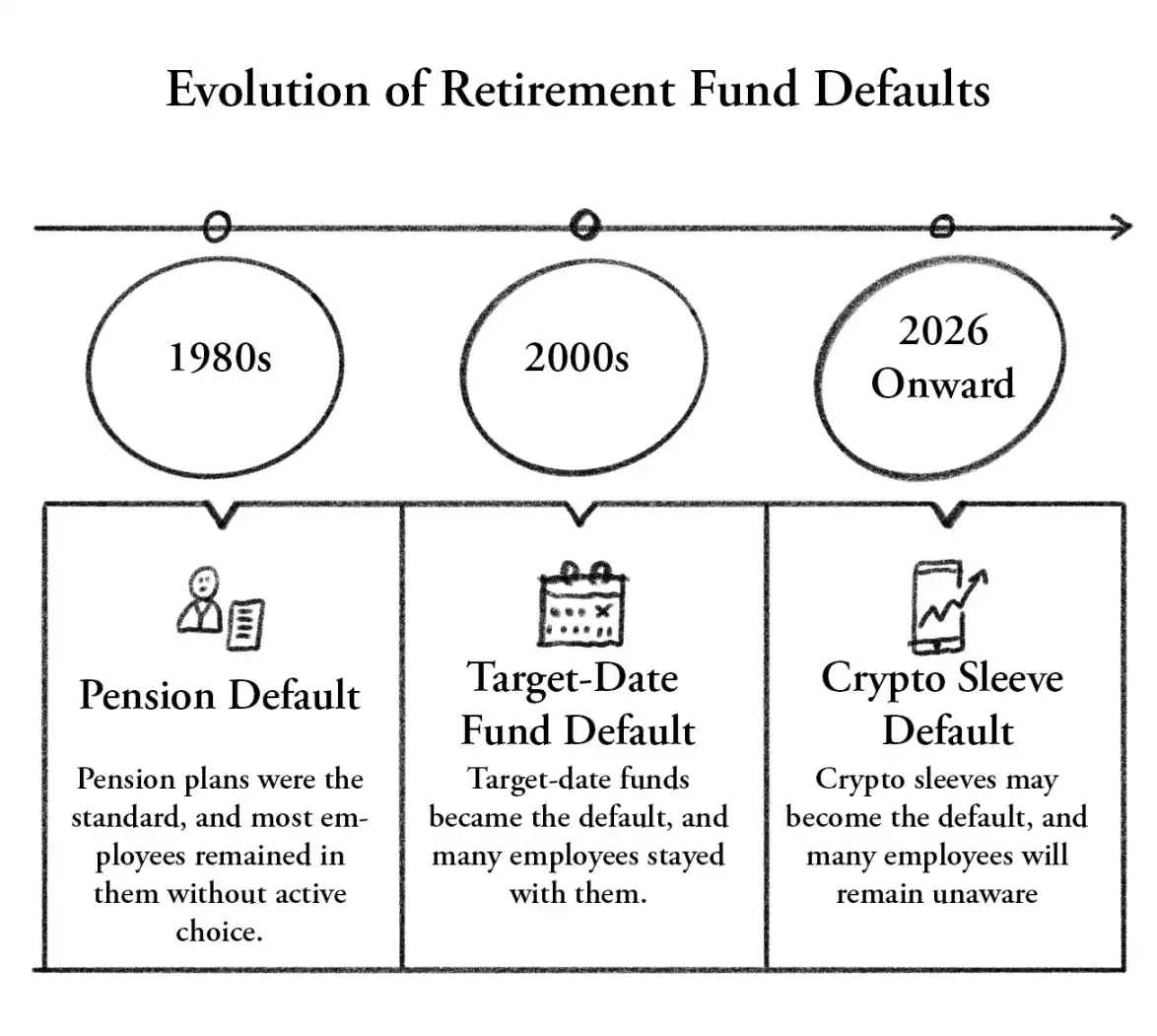
The history of the entire U.S. pension system is a history of default options. In the 1980s, the default option shifted from traditional pensions to 401(k) plans, which most employees passively accepted without fully understanding what they were giving up. In the early 2000s, target-date funds became the default option for the vast majority of pension plans, and tens of millions of people ended up holding these funds without ever actively choosing them.

Each shift in the default option involved the transfer of massive amounts of capital and ultimately changed the way a generation retired. Most of those affected didn't realize it until they checked their statements later.

A new default option is set to emerge in the coming years. Right now, it doesn't look like a default option; it looks more like a proposed rule from the Department of Labor, currently undergoing a 60-day public comment period. It is carefully worded, emphasizing fiduciary duty and compliance with the Employee Retirement Income Security Act (ERISA). They often start as options, gradually become popular, and eventually become the default.

On March 30, the U.S. Department of Labor issued a rule that, for the first time, opened the door to cryptocurrencies for the $12 trillion U.S. 401(k) pension market. Indiana had already legislated in March, requiring state pension plans to offer at least one cryptocurrency investment option by July 2027; the Wisconsin pension system already holds $321 million in Bitcoin ETFs; Michigan has allocated $45 million to Bitcoin and Ethereum ETFs. Florida and New Jersey are also advancing similar policies.

First, let's look at how cryptocurrencies were previously kept out.

The Wall Blocking Cryptocurrencies

Before this rule, cryptocurrencies were not explicitly banned by law from entering 401(k) plans. The real barrier was more effective than a ban.

Under the Employee Retirement Income Security Act (ERISA), which regulates pension plans, fiduciaries are personally liable for investment decisions that lose money. It's not the company or the fund that is held accountable, but the individual who made the decision.

Since 2016, there have been over 500 lawsuits alleging ERISA violations; since 2020, related settlements have exceeded $1 billion. Pension plan managers have seen their peers sued over excessive fees, poor index fund choices, and issues with mutual fund share classes. These lawsuits are endless, come from unexpected angles, and target individuals directly.

Consider the incentive structure this creates: You manage a pension plan, you buy Bitcoin, and then Bitcoin crashes 50%. A plaintiff's lawyer sends a letter, and you spend three years defending yourself in discovery.

Conversely, if you don't* add Bitcoin, even if it goes to $200,000, no one will sue you for it.

The rational choice was always: stay away from crypto. And almost everyone did.

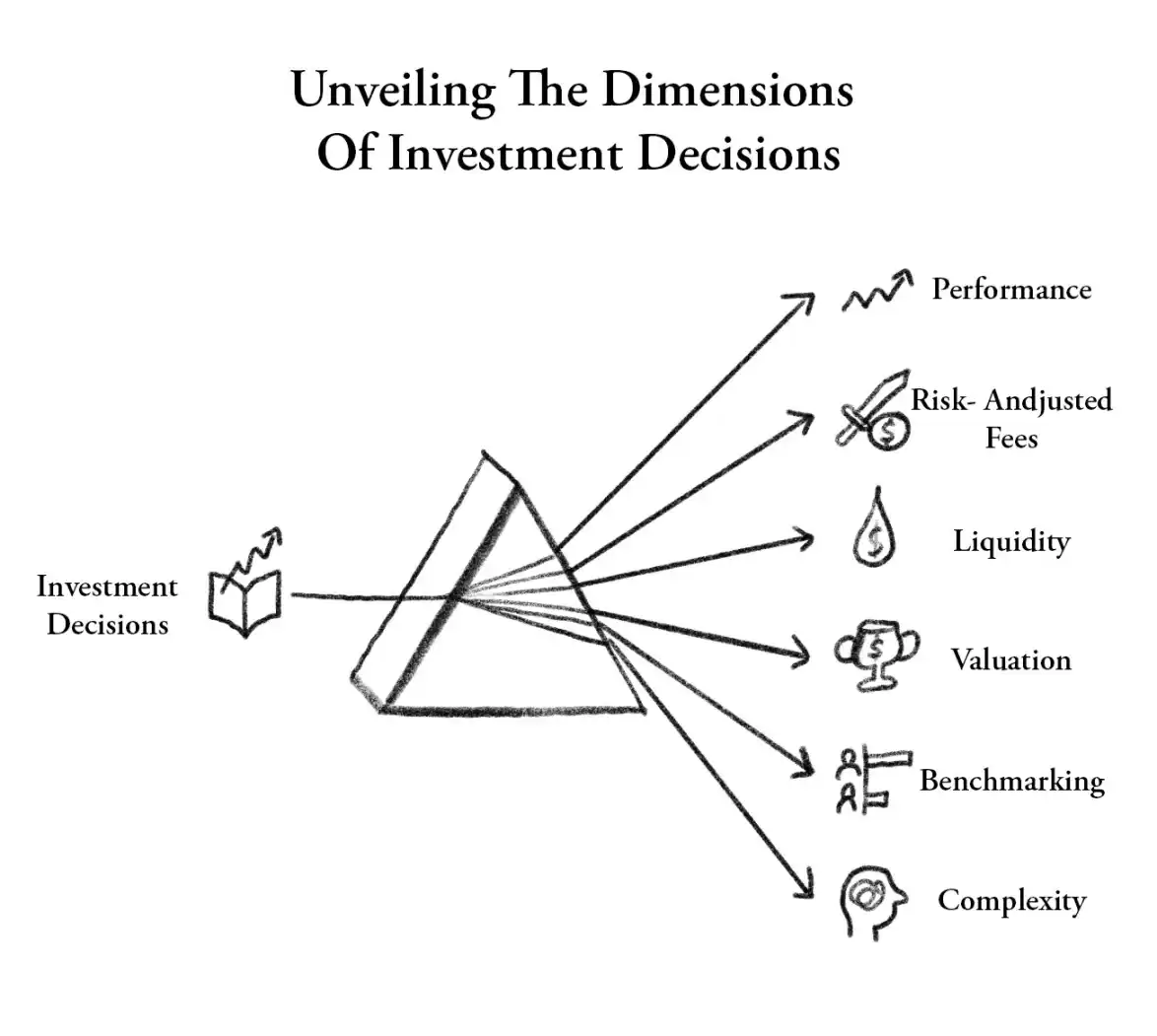
The Biden administration's Labor Department in 2022 went further, explicitly stating that fiduciaries must exercise "extreme care" before touching digital assets. That guidance has now been withdrawn and replaced with a six-factor safe harbor rule: as long as a fiduciary follows a written process reviewing performance, fees, liquidity, valuation, benchmarks, and complexity, they will be deemed to have fulfilled their prudent duty under ERISA. As long as the process is compliant, even if the asset price falls, they are protected from personal liability.
Don't mistake the rule change for a shift in market fundamentals. For the average investor, crypto's volatility remains the same. This rule really protects the fund managers. It corrects the imbalanced legal risk that marginalized crypto for a decade, finally allowing fiduciaries to feel safe saying yes.

The Conduit: Target-Date Funds

The Labor Department itself anticipates that the primary access point will be target-date funds. This is crucial for understanding the practical impact on the average saver.

Most people, upon starting a job, are defaulted into a target-date fund. You just pick the fund closest to your expected retirement year, say the 2045 fund, and it automatically adjusts its stock/bond allocation as you age, becoming more conservative closer to the target date. The vast majority of people who hold these funds never look at them a second time.

If crypto assets are allocated through target-date funds, investors won't actively go out and buy Bitcoin. Their retirement portfolio will automatically allocate 1%–3% to Bitcoin, managed and automatically rebalanced by a professional institution.

Just as many people have gold in their 401(k) without knowing it. That's how gold entered the pension system—through the same vehicle, the same logic, without asking the actual owners of the money.

Fidelity led the charge in 2022, offering plan sponsors the option to include Bitcoin in their investment menu even before the Biden administration's guidance. At the time, Fidelity allowed plan sponsors to include digital asset investments in their portfolio, with participants to invest up to 20% of their account balance in Bitcoin. What has been missing is the legal assurance for plan sponsors to feel comfortable allocating to Bitcoin without assuming personal liability. That assurance is now being formulated.

$12 Trillion

U.S. 401(k) plans hold about $12 trillion. Even a 1% allocation would mean roughly $120 billion flowing into digital assets, more than the total value locked in all of DeFi. Even just 0.1% would be $12 billion, on par with the top five Bitcoin ETFs.

Every previous wave of institutional crypto adoption came from active decisions: ETF buyers actively buying, MicroStrategy actively holding, banks actively building custody products. Those decisions can be reversed: a CFO can sell the treasury position, ETF investors can redeem.

The 401(k) channel is structurally different, something the industry has been waiting for since the spot ETF listings. Pension money is passive money, held for 30-year horizons. It doesn't panic sell on crashes, isn't swayed by the fear and greed index, and doesn't care what oil did last week.

As Morgan Stanley's Amy Oldenburg points out, currently about 80% of crypto ETF trading comes from self-directed investors, not advisor-recommended allocations. The 401(k) market is almost entirely driven by professional advisors. The DOL's new rule opens up a channel that was previously structurally difficult to access because the people controlling the gate bore excessive personal risk.

This has been a point crypto has emphasized for years: the real wave of adoption won't come from traders or tech early adopters, but when the infrastructure of ordinary people's savings systems automatically turns towards crypto. Target-date funds are that infrastructure.

Risks and Concerns

A 50% drop in a trading account is just a bad quarter. A 50% drop in a 55-year-old teacher's retirement account is a different matter entirely.

Bitcoin has drawn down over 80% in past bear markets, around 50% in this cycle, which some interpret as "maturity." But losing half your retirement savings doesn't feel any better because it's called "progress."

TD Cowen's Jaret Seiberg writes that he remains skeptical that fiduciaries will move until courts confirm the safe harbor truly protects against lawsuits. ERISA is a process-based law, but its ultimate interpretation lies with the courts.

The safe harbor might hold on paper, but if a target-date fund with crypto allocation drops 40% in a bear market, triggering the first wave of lawsuits, whether it holds up is an open question.

The comment period for the rule ends on June 1st. The Labor Department can modify the rule, withdraw it, or simply push it forward. Even if the final version is unchanged, moving from a proposed rule to actual money in pension accounts involves compliance teams, investment committees, recordkeeper system integrations, and fiduciary reviews. This will take months, more likely years.

Indiana's July 2027 deadline is a hard mandate, while the federal rule is a soft permission—their implementation timelines will be starkly different.

In the 1980s, stocks entered pensions through mutual fund; in the early 2000s, international stocks entered through target-date funds; followed by REITs, TIPS, commodities. Their arrival wasn't because retirement savers asked for them.
Cryptocurrency is now at that inflection point. Spot ETFs are the product, the DOL rule is the regulatory配套, Fidelity/Schwab/Morgan Stanley are the distribution channels, the CLARITY Act writes the asset classification into statute law, providing the legal basis for prudent examination by fiduciaries.

All the pieces are in place, except the last one.

Someday in the future, a pension plan manager adds Bitcoin to a target-date fund. Bitcoin crashes 60%. A retiree loses a chunk of their savings. Lawyers file a lawsuit.

At that moment, the only question that matters is: Will the judge agree that the safe harbor protected the person who made that decision.

Right now, nobody knows the answer. The Labor Department believes it will. TD Cowen believes it could take years to find out.

Until the first case is heard and adjudicated, every pension plan manager in America is being asked to trust a piece of paper that has never been tested in court.


Preguntas relacionadas

QWhat is the 'default effect' in behavioral economics and how does it relate to the US pension system?

AThe 'default effect' is a concept in behavioral economics where the default option becomes the choice for the majority of people. The history of the US pension system is a history of default options, such as the shift from traditional pensions to 401(k) plans and then to target-date funds, with most employees passively accepting these changes without fully understanding the implications.

QWhat was the primary legal barrier that previously prevented cryptocurrency from being included in 401(k) plans?

AThe primary barrier was not an explicit legal ban, but the fiduciary liability under the Employee Retirement Income Security Act (ERISA). Plan fiduciaries could be held personally liable for investment losses, creating a strong incentive to avoid volatile assets like cryptocurrency, as they could face lawsuits for poor performance.

QWhat is the new 'six-factor safe harbor' rule proposed by the US Department of Labor, and what does it change?

AThe new 'six-factor safe harbor' rule states that a fiduciary will be deemed to have satisfied their prudence duties under ERISA if they follow a documented process reviewing six factors: expected return, fees, liquidity, valuation, blockchain analytics, and regulatory compliance. This protects them from personal liability if the asset's price falls, as long as the process was followed.

QThrough which primary investment vehicle is cryptocurrency expected to enter the 401(k) market, and what is its significance?

ACryptocurrency is expected to enter primarily through target-date funds. This is significant because most employees are automatically enrolled in these funds and never actively manage them. Investors would not be actively buying bitcoin; their retirement portfolios would be automatically allocated 1-3% in bitcoin, managed and rebalanced by professional institutions.

QWhat is the potential financial impact on the cryptocurrency market if US 401(k) plans begin to allocate a small portion of their assets?

AThe US 401(k) market is worth approximately $12 trillion. An allocation of just 1% would channel about $120 billion into digital assets, which is more than the total value locked in all of DeFi. Even a 0.1% allocation would be $12 billion, equivalent to the size of a top-five Bitcoin ETF, representing a massive influx of passive, long-term capital.

Lecturas Relacionadas

North Korean Hackers Loot $500 Million in a Single Month, Becoming the Top Threat to Crypto Security

North Korean hackers, particularly the notorious Lazarus Group and its subgroup TraderTraitor, have stolen over $500 million from cryptocurrency DeFi platforms in less than three weeks, bringing their total theft for the year to over $700 million. Recent major attacks on Drift Protocol and KelpDAO, resulting in losses of approximately $286 million and $290 million respectively, highlight a strategic shift: instead of targeting core smart contracts, attackers are now exploiting vulnerabilities in peripheral infrastructure. For instance, the KelpDAO attack involved compromising downstream RPC infrastructure used by LayerZero's decentralized validation network (DVN), allowing manipulation without breaching core cryptography. This sophisticated approach mirrors advanced corporate cyber-espionage. Additionally, North Korea has systematically infiltrated the global crypto workforce, with an estimated 100 operatives using fake identities to gain employment at blockchain companies, enabling long-term access to sensitive systems and facilitating large-scale thefts. According to Chainalysis, North Korean-linked hackers stole a record $2 billion in 2025, accounting for 60% of all global crypto theft that year. Their total historical crypto theft has reached $6.75 billion. Post-theft, they employ specialized money laundering methods, heavily relying on Chinese OTC brokers and cross-chain mixing services rather than standard decentralized exchanges. Security experts, while acknowledging the increased sophistication, emphasize that many attacks still exploit fundamental weaknesses like poor access controls and centralized operational risks. Strengthening private key management, limiting privileged access, and enhancing coordination among exchanges, analysts, and law enforcement immediately after an attack are critical to improving defense and fund recovery chances. The industry's challenge now extends beyond secure smart contracts to safeguarding operational security at the infrastructure level.

marsbitHace 34 min(s)

North Korean Hackers Loot $500 Million in a Single Month, Becoming the Top Threat to Crypto Security

marsbitHace 34 min(s)

Circle CEO's Seoul Visit: No Korean Won Stablecoin Issuance, But Met All Major Korean Banks

Circle CEO Jeremy Allaire's recent activities in Seoul indicate a strategic shift for the company, moving away from issuing a Korean won-backed stablecoin and instead focusing on embedding itself as a key infrastructure provider within Korea’s financial and crypto ecosystem. Despite Korea accounting for nearly 30% of global crypto trading volume—with a market characterized by high retail participation and altcoin dominance—Circle has chosen not to compete for the role of stablecoin issuer. Instead, Allaire met with major Korean banks (including Shinhan, KB, and Woori), financial groups, leading exchanges (Upbit, Bithumb, Coinone), and tech firms like Kakao. This approach reflects a broader industry transition: the core of stablecoin competition is shifting from issuance rights to systemic positioning. With Korean regulators still debating whether banks or tech companies should issue stablecoins, Circle is avoiding regulatory uncertainty by strengthening its role as a service and technology partner. The company is deepening integration with trading platforms, building connections, and promoting stablecoin infrastructure. This positions Circle to benefit regardless of which entity eventually issues a won stablecoin. Allaire also noted the potential for a Chinese yuan stablecoin in the next 3–5 years, underscoring a regional trend of stablecoins becoming more regulated and integrated with traditional finance. Ultimately, Circle’s strategy highlights that future influence in the stablecoin market will belong not necessarily to the issuers, but to the foundational infrastructure layers that enable cross-system transactions.

marsbitHace 1 hora(s)

Circle CEO's Seoul Visit: No Korean Won Stablecoin Issuance, But Met All Major Korean Banks

marsbitHace 1 hora(s)

SpaceX Ties Up with Cursor: A High-Stakes AI Gambit of 'Lock First, Acquire Later'

SpaceX has secured an option to acquire AI programming company Cursor for $60 billion, with an alternative clause requiring a $10 billion collaboration fee if the acquisition does not proceed. This structure is not merely a potential acquisition but a strategic move to control core access points in the AI era. The deal is designed as a flexible, dual-path arrangement, allowing SpaceX to either fully acquire Cursor or maintain a binding partnership through high-cost collaboration. This "option-style" approach minimizes immediate regulatory and integration risks while ensuring long-term alignment between the two companies. At its core, the transaction exchanges critical AI-era resources: SpaceX provides its Colossus supercomputing cluster—one of the world’s most powerful AI training infrastructures—while Cursor contributes its AI-native developer environment and strong product adoption. This synergy connects compute power, models, and application layers, forming a closed-loop AI capability stack. Cursor, founded in 2022, has achieved rapid growth with over $1 billion in annual revenue and widespread enterprise adoption. Its value lies in transforming software development through AI agents capable of coding, debugging, and system design—positioning it as a gateway to future software production. For SpaceX, this move is part of a broader strategy to evolve from a aerospace company into an AI infrastructure empire, integrating xAI, supercomputing, and chip manufacturing. Controlling Cursor fills a gap in its developer tooling layer, strengthening its AI narrative ahead of a potential IPO. The deal reflects a shift in AI competition from model superiority to ecosystem and entry-point control. With programming tools as a key battleground, securing developer loyalty becomes crucial for dominating the software production landscape. Risks include questions around Cursor’s valuation, technical integration challenges, and potential regulatory scrutiny. Nevertheless, the deal underscores a strategic bet: controlling both compute and software development access may redefine power dynamics in the AI-driven future.

marsbitHace 1 hora(s)

SpaceX Ties Up with Cursor: A High-Stakes AI Gambit of 'Lock First, Acquire Later'

marsbitHace 1 hora(s)

Trading

Spot
Futuros

Artículos destacados

Qué es BITCOIN

Entendiendo HarryPotterObamaSonic10Inu (ERC-20) y Su Posición en el Espacio Cripto En los últimos años, el mercado de criptomonedas ha sido testigo de un aumento en la popularidad de las monedas meme, capturando el interés no solo de los comerciantes, sino también de aquellos que buscan compromiso comunitario y valor de entretenimiento. Entre estos tokens únicos se encuentra HarryPotterObamaSonic10Inu (ERC-20), un proyecto intrigante que mezcla referencias culturales en el tejido de las criptomonedas. Este artículo profundiza en los aspectos clave de HarryPotterObamaSonic10Inu, explorando sus mecanismos, ethos impulsado por la comunidad y su relación con el paisaje cripto más amplio. ¿Qué es HarryPotterObamaSonic10Inu (ERC-20)? Como su nombre sugiere, HarryPotterObamaSonic10Inu es una moneda meme construida sobre la blockchain de Ethereum, clasificada bajo el estándar ERC-20. A diferencia de las criptomonedas tradicionales que pueden enfatizar la utilidad práctica o el potencial de inversión, este token prospera en el valor de entretenimiento y la fuerza de su comunidad. El proyecto tiene como objetivo fomentar un entorno donde los usuarios comprometidos puedan reunirse, compartir ideas y participar en actividades inspiradas por diversos fenómenos culturales. Una característica notable de HarryPotterObamaSonic10Inu es su cero impuestos en las transacciones. Este atractivo elemento tiene como objetivo incentivar el comercio y la participación comunitaria, sin cargos adicionales que puedan disuadir a los comerciantes de pequeña escala. El suministro total de la moneda está establecido en mil millones de tokens, una cifra que marca su intención de mantener una circulación sustancial dentro de la comunidad. Creador de HarryPotterObamaSonic10Inu (ERC-20) Los orígenes de HarryPotterObamaSonic10Inu están algo envueltos en misterio; los detalles sobre el creador siguen siendo desconocidos. El desarrollo de este token carece de un equipo identificable o de un plan explícito, lo cual no es inusual dentro del sector de monedas meme. En cambio, el proyecto ha surgido de manera orgánica, con su progreso muy dependiente del entusiasmo y la participación de su comunidad. Inversores de HarryPotterObamaSonic10Inu (ERC-20) En cuanto a inversiones externas y respaldo, HarryPotterObamaSonic10Inu también sigue siendo ambiguo. El token no lista ninguna fundación de inversión conocida o apoyo organizacional significativo. En cambio, la savia del proyecto es su comunidad de base, que informa su crecimiento y sostenibilidad a través de la acción colectiva y el compromiso en el espacio cripto. ¿Cómo Funciona HarryPotterObamaSonic10Inu (ERC-20)? Como una moneda meme, HarryPotterObamaSonic10Inu opera principalmente fuera de los marcos tradicionales que a menudo rigen el valor de los activos. Hay varios aspectos distintivos que definen cómo funciona el proyecto: Transacciones Sin Impuestos: Sin tarifas impositivas en las transacciones, los usuarios pueden comprar y vender el token libremente sin preocuparse por costos ocultos. Compromiso Comunitario: El proyecto prospera en la interacción comunitaria, aprovechando plataformas de redes sociales para crear entusiasmo y facilitar la participación. Las discusiones, el intercambio de contenido y el compromiso son elementos cruciales que ayudan a expandir su alcance y fomentar la lealtad entre los seguidores. Sin Utilidad Práctica: Cabe señalar que HarryPotterObamaSonic10Inu no ofrece utilidad concreta dentro del ecosistema financiero. Más bien, se clasifica como un token principalmente para actividades de entretenimiento y comunitarias. Referencia Cultural: El token incorpora astutamente elementos de la cultura popular para atraer interés, conectando con entusiastas de los memes y seguidores de las criptomonedas por igual. HarryPotterObamaSonic10Inu ejemplifica cómo las monedas meme operan de manera diferente a los proyectos de criptomonedas más tradicionales, ingresando al mercado como construcciones sociales innovadoras en lugar de activos utilitarios. Cronología de HarryPotterObamaSonic10Inu (ERC-20) La historia de HarryPotterObamaSonic10Inu está marcada por varios hitos notables: Creación: El token surgió de un meme viral, capturando la imaginación de muchos entusiastas de las criptomonedas. Las fechas específicas de creación no están disponibles, subrayando su ascenso orgánico. Listado en Exchanges: HarryPotterObamaSonic10Inu ha llegado a varios exchanges, permitiendo un acceso y comercio más fácil por parte de la comunidad. Iniciativas de Compromiso Comunitario: Actividades continuas destinadas a mejorar la interacción comunitaria, incluyendo concursos, campañas en redes sociales y generación de contenido por parte de fanáticos y defensores. Planes de Expansión Futuros: La hoja de ruta del proyecto incluye el lanzamiento de una colección de NFT, mercancía y un sitio de comercio electrónico relacionado con sus temas culturales, involucrando aún más a la comunidad e intentando añadir más dimensiones a su ecosistema. Puntos Clave Sobre HarryPotterObamaSonic10Inu (ERC-20) Naturaleza Impulsada por la Comunidad: El proyecto prioriza la participación colectiva y la creatividad, asegurando que la involucración de los usuarios esté a la vanguardia de su desarrollo. Clasificación como Moneda Meme: Representa la epítome de las criptomonedas basadas en el entretenimiento, diferenciándose de los vehículos de inversión tradicionales. Sin Afiliación Directa con Bitcoin: A pesar de la similitud en el nombre del ticker, HarryPotterObamaSonic10Inu es distinto y no tiene relación con Bitcoin u otras criptomonedas establecidas. Enfoque en la Colaboración: HarryPotterObamaSonic10Inu está diseñado para crear un espacio para la colaboración y el intercambio de historias entre sus poseedores, proporcionando una vía para la creatividad y el vínculo comunitario. Perspectivas Futuras: La ambición de expandirse más allá de su premisa inicial hacia NFTs y mercancías describe un camino para que el proyecto potencialmente ingrese a avenidas más tradicionales dentro de la cultura digital. A medida que las monedas meme continúan capturando la imaginación de la comunidad de criptomonedas, HarryPotterObamaSonic10Inu (ERC-20) se destaca debido a sus lazos culturales y su enfoque centrado en la comunidad. Si bien puede no encajar en el molde típico de un token impulsado por la utilidad, su esencia radica en la alegría y la camaradería fomentadas entre sus seguidores, destacando la naturaleza en evolución de las criptomonedas en una era cada vez más digital. A medida que el proyecto continúa desarrollándose, será importante observar cómo las dinámicas comunitarias influyen en su trayectoria en el cambiante paisaje de la tecnología blockchain.

1.3k Vistas totalesPublicado en 2024.04.01Actualizado en 2024.12.03

Qué es BITCOIN

Cómo comprar BTC

¡Bienvenido a HTX.com! Hemos hecho que comprar Bitcoin (BTC) sea simple y conveniente. Sigue nuestra guía paso a paso para iniciar tu viaje de criptos.Paso 1: crea tu cuenta HTXUtiliza tu correo electrónico o número de teléfono para registrarte y obtener una cuenta gratuita en HTX. Experimenta un proceso de registro sin complicaciones y desbloquea todas las funciones.Obtener mi cuentaPaso 2: ve a Comprar cripto y elige tu método de pagoTarjeta de crédito/débito: usa tu Visa o Mastercard para comprar Bitcoin (BTC) al instante.Saldo: utiliza fondos del saldo de tu cuenta HTX para tradear sin problemas.Terceros: hemos agregado métodos de pago populares como Google Pay y Apple Pay para mejorar la comodidad.P2P: tradear directamente con otros usuarios en HTX.Over-the-Counter (OTC): ofrecemos servicios personalizados y tipos de cambio competitivos para los traders.Paso 3: guarda tu Bitcoin (BTC)Después de comprar tu Bitcoin (BTC), guárdalo en tu cuenta HTX. Alternativamente, puedes enviarlo a otro lugar mediante transferencia blockchain o utilizarlo para tradear otras criptomonedas.Paso 4: tradear Bitcoin (BTC)Tradear fácilmente con Bitcoin (BTC) en HTX's mercado spot. Simplemente accede a tu cuenta, selecciona tu par de trading, ejecuta tus trades y monitorea en tiempo real. Ofrecemos una experiencia fácil de usar tanto para principiantes como para traders experimentados.

4.7k Vistas totalesPublicado en 2024.12.12Actualizado en 2025.03.21

Cómo comprar BTC

Qué es $BITCOIN

ORO DIGITAL ($BITCOIN): Un Análisis Integral Introducción al ORO DIGITAL ($BITCOIN) ORO DIGITAL ($BITCOIN) es un proyecto basado en blockchain que opera en la red Solana, cuyo objetivo es combinar las características de los metales preciosos tradicionales con la innovación de las tecnologías descentralizadas. Aunque comparte un nombre con Bitcoin, a menudo referido como “oro digital” debido a su percepción como un refugio de valor, ORO DIGITAL es un token separado diseñado para crear un ecosistema único dentro del paisaje Web3. Su meta es posicionarse como un activo digital alternativo viable, aunque los detalles sobre sus aplicaciones y funcionalidades aún están en desarrollo. ¿Qué es ORO DIGITAL ($BITCOIN)? ORO DIGITAL ($BITCOIN) es un token de criptomoneda diseñado explícitamente para su uso en la blockchain de Solana. A diferencia de Bitcoin, que proporciona un papel de almacenamiento de valor ampliamente reconocido, este token parece centrarse en aplicaciones y características más amplias. Aspectos notables incluyen: Infraestructura Blockchain: El token está construido sobre la blockchain de Solana, conocida por su capacidad para manejar transacciones de alta velocidad y bajo costo. Dinámicas de Suministro: ORO DIGITAL tiene un suministro máximo limitado a 100 cuatrillones de tokens (100P $BITCOIN), aunque los detalles sobre su suministro circulante no se han divulgado actualmente. Utilidad: Si bien las funcionalidades precisas no están delineadas explícitamente, hay indicios de que el token podría ser utilizado para diversas aplicaciones, potencialmente involucrando aplicaciones descentralizadas (dApps) o estrategias de tokenización de activos. ¿Quién es el Creador de ORO DIGITAL ($BITCOIN)? En la actualidad, la identidad de los creadores y el equipo de desarrollo detrás de ORO DIGITAL ($BITCOIN) sigue siendo desconocida. Esta situación es típica entre muchos proyectos innovadores dentro del espacio blockchain, particularmente aquellos alineados con las finanzas descentralizadas y fenómenos de monedas meme. Si bien tal anonimato puede fomentar una cultura impulsada por la comunidad, intensifica las preocupaciones sobre la gobernanza y la responsabilidad. ¿Quiénes son los Inversores de ORO DIGITAL ($BITCOIN)? La información disponible indica que ORO DIGITAL ($BITCOIN) no tiene patrocinadores institucionales conocidos ni inversiones destacadas de capital de riesgo. El proyecto parece operar en un modelo de peer-to-peer centrado en el apoyo y la adopción de la comunidad en lugar de rutas de financiamiento tradicionales. Su actividad y liquidez se sitúan principalmente en intercambios descentralizados (DEX), como PumpSwap, en lugar de plataformas de trading centralizadas establecidas, lo que resalta aún más su enfoque de base. Cómo Funciona ORO DIGITAL ($BITCOIN) Los mecanismos operativos de ORO DIGITAL ($BITCOIN) pueden elaborarse en función de su diseño blockchain y atributos de red: Mecanismo de Consenso: Al aprovechar el único proof-of-history (PoH) de Solana combinado con un modelo de proof-of-stake (PoS), el proyecto asegura una validación de transacciones eficiente que contribuye al alto rendimiento de la red. Tokenómica: Si bien los mecanismos deflacionarios específicos no se han detallado extensamente, el vasto suministro máximo de tokens implica que podría atender microtransacciones o casos de uso nicho que aún están por definirse. Interoperabilidad: Existe el potencial de integración con el ecosistema más amplio de Solana, incluyendo varias plataformas de finanzas descentralizadas (DeFi). Sin embargo, los detalles sobre integraciones específicas permanecen no especificados. Cronología de Eventos Clave Aquí hay una cronología que destaca hitos significativos relacionados con ORO DIGITAL ($BITCOIN): 2023: El despliegue inicial del token ocurre en la blockchain de Solana, marcado por su dirección de contrato. 2024: ORO DIGITAL gana visibilidad al estar disponible para trading en intercambios descentralizados como PumpSwap, permitiendo a los usuarios comerciar contra SOL. 2025: El proyecto presencia actividad de trading esporádica y potencial interés en compromisos liderados por la comunidad, aunque no se han documentado asociaciones notables o avances técnicos hasta el momento. Análisis Crítico Fortalezas Escalabilidad: La infraestructura subyacente de Solana soporta altos volúmenes de transacciones, lo que podría mejorar la utilidad de $BITCOIN en varios escenarios de transacción. Accesibilidad: El potencial bajo precio de trading por token podría atraer a inversores minoristas, facilitando una participación más amplia debido a oportunidades de propiedad fraccionada. Riesgos Falta de Transparencia: La ausencia de patrocinadores, desarrolladores o un proceso de auditoría conocidos públicamente puede generar escepticismo sobre la sostenibilidad y confiabilidad del proyecto. Volatilidad del Mercado: La actividad de trading depende en gran medida del comportamiento especulativo, lo que puede resultar en una volatilidad de precios significativa y en incertidumbre para los inversores. Conclusión ORO DIGITAL ($BITCOIN) surge como un proyecto intrigante pero ambiguo dentro del ecosistema de Solana en rápida evolución. Si bien intenta aprovechar la narrativa del “oro digital”, su alejamiento del papel establecido de Bitcoin como refugio de valor subraya la necesidad de una diferenciación más clara de su utilidad y estructura de gobernanza previstas. La aceptación y adopción futura dependerán probablemente de abordar la actual opacidad y de definir sus estrategias operativas y económicas de manera más explícita. Nota: Este informe abarca información sintetizada disponible hasta octubre de 2023, y pueden haber ocurrido desarrollos más allá del período de investigación.

83 Vistas totalesPublicado en 2025.05.13Actualizado en 2025.05.13

Qué es $BITCOIN

Discusiones

Bienvenido a la comunidad de HTX. Aquí puedes mantenerte informado sobre los últimos desarrollos de la plataforma y acceder a análisis profesionales del mercado. A continuación se presentan las opiniones de los usuarios sobre el precio de BTC (BTC).

活动图片