The U.S. Semiconductor Industry Association (SIA) recently released a report stating that semiconductors are crucial to the U.S. economy and national security, underpinning applications ranging from smartphones and artificial intelligence (AI) infrastructure to medical devices, automobiles, manufacturing equipment, and defense systems.
For decades, a highly interconnected global supply chain has helped U.S. chip companies reduce costs while steadily improving performance. However, recent new challenges have exposed vulnerable links in the global upstream supply chain that supports the U.S. chip ecosystem, highlighting the urgency of taking immediate action to build a trusted, reliable supply chain and reduce strategic dependencies.
In the report, SIA outlines key material and equipment categories used in U.S. semiconductor production, identifies weak links in the supply chain facing disruption risks, and summarizes key actions needed to strengthen the U.S. semiconductor supply chain.
Key Findings:
1. The semiconductor supply chain is multi-layered and geographically highly dispersed.
The semiconductor manufacturing process takes months, requiring the procurement of various materials, equipment, and components from multi-tier suppliers worldwide. Although about 95% of the roughly $27 billion worth of equipment and materials consumed by U.S. semiconductor companies come from suppliers headquartered in the U.S., Europe, and Japan, the actual production and manufacturing of these inputs is spread across the globe.
2. The equipment and materials needed to produce semiconductors in the U.S. rely on fragile links hidden deep in the upstream global supply chain.
Many tier 1 inputs used in semiconductor production themselves depend on underlying raw materials and system sub-components facing high supply disruption risks. These vulnerable links, buried deep upstream in the supply chain, exacerbate risks faced by the U.S. and its partner countries' semiconductor ecosystems.
3. Ensuring semiconductor supply chain security requires a range of mitigation strategies.
To build a stronger semiconductor supply chain supporting the U.S. semiconductor ecosystem, coordinated action between government and industry is needed, along with cooperation with like-minded global partners and allies. The U.S. government and industry should commit to implementing the following strategies:
Expand domestic production and strategic reserves. While relocating all materials and equipment needed for semiconductor production domestically is neither practical nor cost-effective, establishing or enhancing domestic production capacity for several critical inputs is a viable and crucial near-term strategy. For other inputs, establishing new domestic capacity in the U.S. may take a decade or more, followed by additional time to qualify materials for semiconductor production. The government should work closely with industry to identify and prioritize targets for localization and strategic reserves.
Build and maintain supply chains among allies. The supply chain supporting the U.S. semiconductor ecosystem is inherently global. Maintaining and strengthening robust trade relations with allies and partner countries/regions, while investing in complementary supply chain capabilities, is essential to enhancing the resilience of the U.S. semiconductor ecosystem.
Reduce reliance on untrustworthy sources of rare earths and critical minerals. Recent export restrictions on critical minerals and rare earth elements highlight the urgent need to establish new mining and processing capabilities in the U.S. and partner countries/regions. Coordinated policies (e.g., long-term off-take agreements) are crucial for sustaining demand for new critical mineral capacity.
Increase R&D investment. The U.S. and partner governments should increase and sustain funding for research and development in materials science, chemistry, and engineering to develop next-generation semiconductor materials and recycling process technologies.
Building a trustworthy and reliable supply chain to support the U.S. semiconductor ecosystem requires ongoing coordination and cooperation among governments, industry, and international partners.
The conclusions of this report will help reduce future supply chain disruption risks, solidify key supply chain partnerships, and strengthen U.S. leadership in chips over the long term.
Introduction
Semiconductors are foundational building blocks and key enabling technologies for various industries and emerging technologies driving the U.S. economy. Whether it's cutting-edge logic chips, analog and mixed-signal chips, compound semiconductor devices, or memory devices, their production often takes months, involves multiple cross-border shipments, and relies on a multi-tiered, precisely coordinated supply chain of highly specialized materials and equipment. Ensuring timely and sufficient supply of these categories of supplies is essential to meet the demands of an industry whose global sales are projected to exceed $1.5 trillion by 2026.
As noted in the U.S. Department of Commerce's 2023 report, 'Assessment of the U.S. Microelectronics Industrial Base,' semiconductor manufacturing 'requires hundreds of different materials of extremely high quality,' and 'maintaining a robust domestic semiconductor manufacturing base is inseparable from a strong materials supply chain capable of withstanding regional or specific firm-level shocks.' In recent years, the global supply chain supporting the semiconductor industry has been frequently disrupted by factors including natural disasters, the COVID-19 pandemic, supply-demand imbalances, and government measures (see Figure 1). As companies invest in building domestic U.S. semiconductor manufacturing capacity, growing concerns have emerged about critical weaknesses in the upstream supply chain that could hinder expansion efforts and cause project delays.
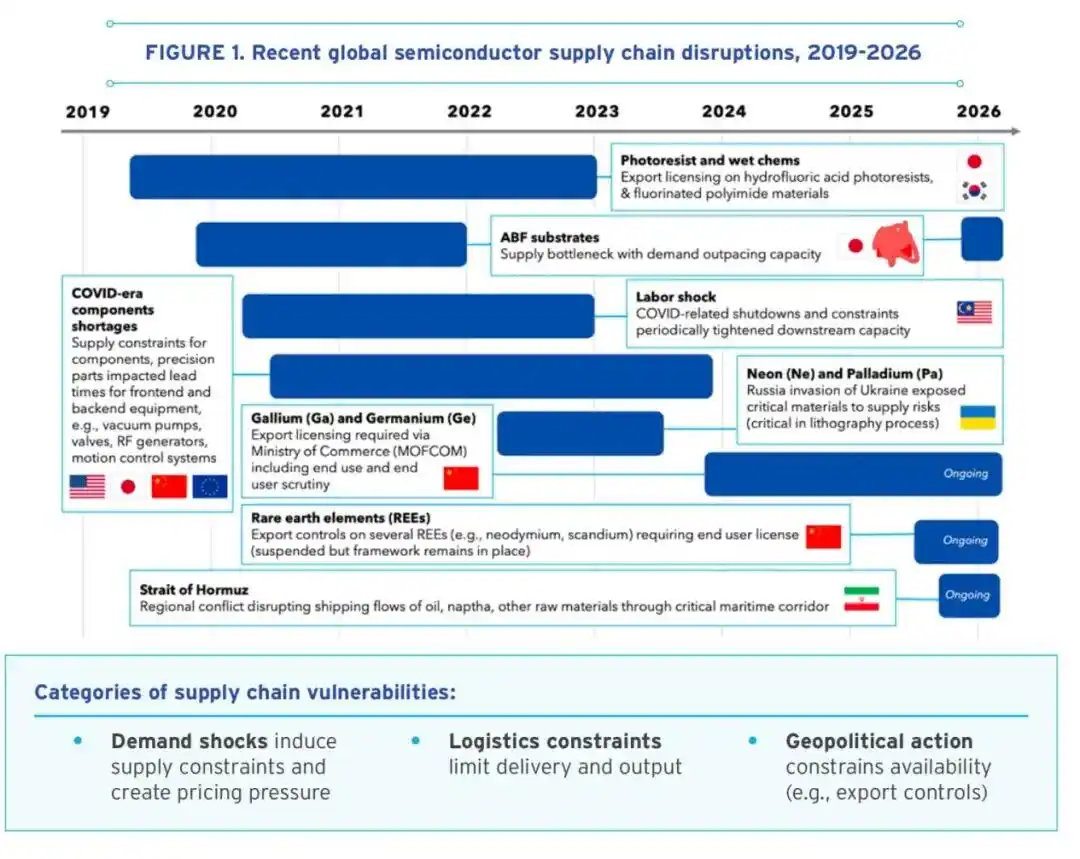
Some supply vulnerabilities (like rare earth issues) are widely known; however, other seemingly lower-risk material dependencies may harbor vulnerabilities deep within upstream supply chains, often only becoming apparent when a disruption occurs. To address deep-seated vulnerabilities in the global supply chain supporting the U.S. semiconductor industry, industry leaders and policymakers must first identify which supply chain dependencies pose the greatest risks.
To this end, the U.S. Semiconductor Industry Association (SIA) collaborated with procurement, supply chain, and strategy leaders from companies across the semiconductor ecosystem—including chip manufacturers, fabless design companies, backend packaging firms, equipment makers, and material suppliers—to conduct a non-exhaustive mapping of the upstream supply chain supporting the chip industry, aiming to answer the following questions:
Which upstream input elements pose severe vulnerabilities to the U.S. semiconductor ecosystem, and why?
Which materials and equipment used in semiconductor production themselves rely on vulnerable supply chains?
What measures can government and industry stakeholders take to mitigate these vulnerabilities and build a more resilient supply chain to support the U.S. semiconductor ecosystem?
Quantifying Vulnerability
Supply chain dependency refers to the suppliers, materials, equipment, and services that semiconductor industry participants rely on to support their design and manufacturing operations. 'Vulnerability' refers to weak links in these networks of suppliers and input elements that face higher risks of supply chain disruption, malicious exploitation, and/or policy shocks. While every material and equipment input required for chip design and manufacturing constitutes a supply chain dependency, not all dependencies are vulnerabilities, and not all vulnerabilities are high-risk.
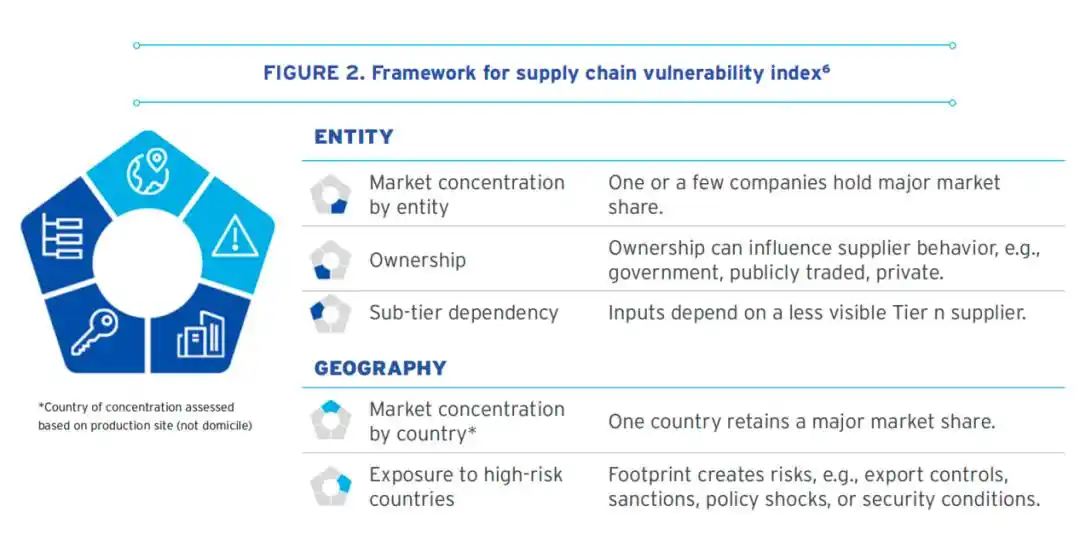
To assess dependencies that pose severe risks to the supply chain supporting the U.S. semiconductor ecosystem, we developed a systematic and quantifiable 'Vulnerability Index' (see Figure 2). This index comprehensively considers five distinct vulnerability factors. For each supply chain input element analyzed, we assessed its production geographic concentration and dependency level. Additionally, we evaluated the supplier networks for each input, considering supplier concentration for specific products, ownership structure of key suppliers, and sub-tier supplier dependencies. We scored each input based on these five factors and aggregated them into a composite index.
Assessing U.S. Dependence on the Global Supply Chain
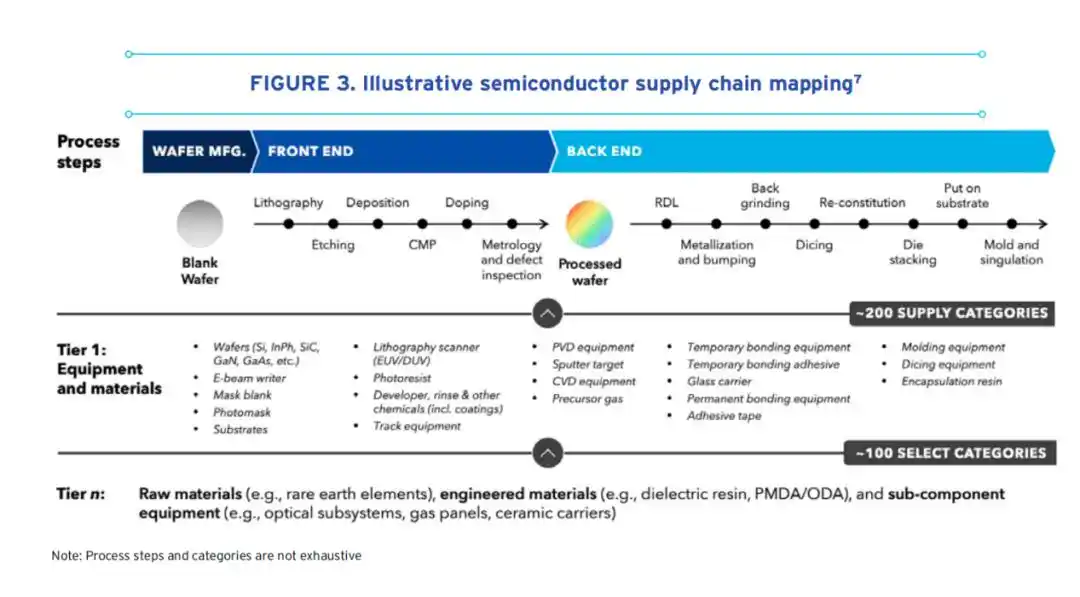
Overall, semiconductor manufacturing includes 'front-end' fabrication processes performed on wafer surfaces (involving material addition and removal) and 'back-end' processes that package bare dies into finished chips. Semiconductor manufacturers collaborate with over a thousand 'tier 1' suppliers to directly procure raw materials like bare wafers, specialty gases, photoresist chemicals, etc., and manufacturing equipment like lithography and deposition tools. These tier 1 suppliers, which directly provide materials, components, and manufacturing equipment to semiconductor companies, each have intricate 'sub-tier' networks involving intermediate product and raw material suppliers.
For this analysis, we identified a list of 200 critical tier 1 equipment and material inputs (covering front-end and back-end semiconductor processes) and another list of 100 categories of raw materials, engineered materials, and sub-components/equipment categories as sub-tier (or 'Tier-n') inputs (see Figure 3). Subsequently, we conducted detailed supply chain mapping for these inputs, examining not only supplier headquarters locations but, more importantly, the actual geographic production locations of these inputs.
In the semiconductor field, supply chain mapping is often based on supplier headquarters location, which can obscure actual supply dependencies. Adding this analytical step—assessing where materials and equipment are actually produced—is crucial for revealing unknown supply dependencies and determining which dependencies may constitute serious vulnerabilities. Collecting data for such analysis presents many challenges, requiring both in-depth research and data mining, as well as validation and stress testing with industry experts familiar with detailed manufacturing processes and procurement landscapes (see Appendix).
Understanding Tier 1 Semiconductor Supply Chains
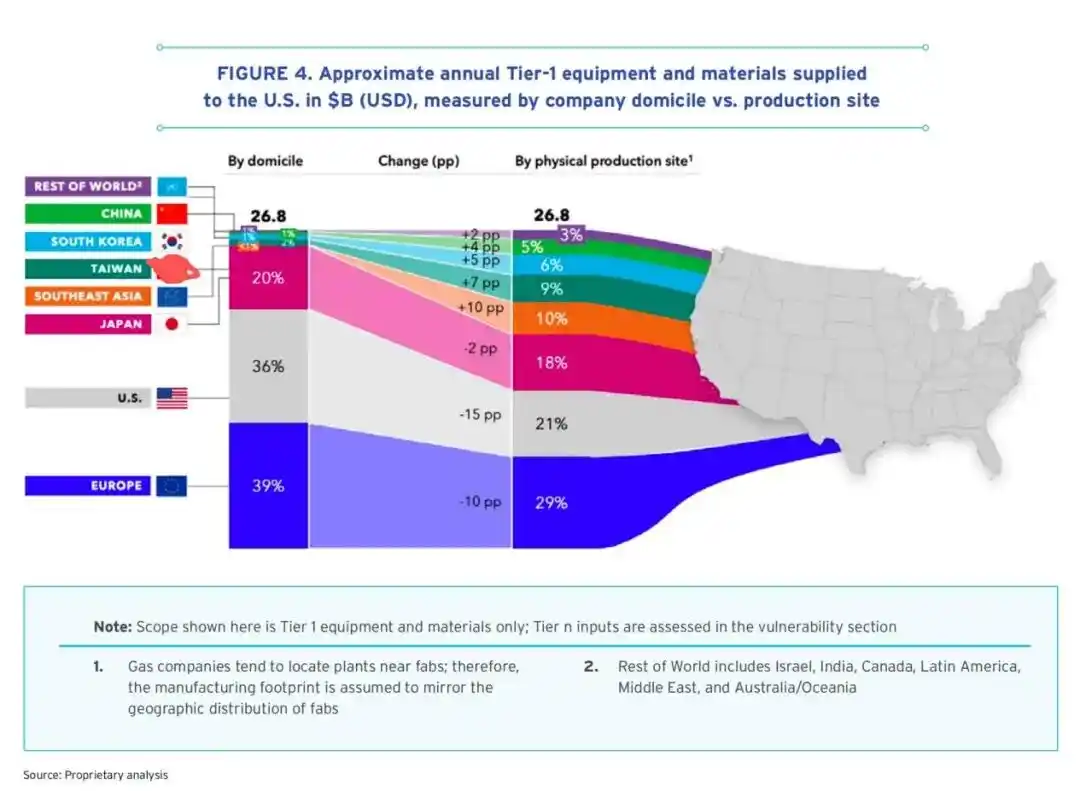
Based on the analysis of tier 1 supply inputs, the total annual consumption of equipment and materials by the U.S. semiconductor ecosystem is approximately $27 billion; 95% of this supply comes from suppliers headquartered in the U.S., Europe, or Japan (see Figure 4). The remaining roughly 5% of supply primarily comes from companies headquartered in South Korea, Taiwan (China), mainland China, Southeast Asia, and Israel.
However, these tier 1 suppliers often rely on production chains outside their headquarters locations. Therefore, to more accurately understand tier 1 supply chain vulnerabilities, it is necessary to assess the actual production locations of materials and equipment imported by U.S. semiconductor manufacturers. To this end, we analyzed public records (e.g., supplier websites, financial reports), databases (e.g., analyst reports), and regional sales data to estimate market share based on actual production or assembly locations.
From the perspective of production or assembly locations, the resilience picture of the U.S. semiconductor supply chain for tier 1 inputs and equipment becomes more complex (see Figure 4). The U.S. semiconductor industry's dependence on tier 1 inputs and equipment from the U.S., Europe, and Japan decreases from 95% of total demand to 68%; meanwhile, dependence on supply from mainland China, Israel, Southeast Asia, South Korea, and Taiwan (China) significantly increases from 5% to 32%. For example, U.S.-headquartered semiconductor manufacturing equipment suppliers assemble physical vapor deposition (PVD) equipment and etching equipment in Singapore and the UK, respectively.
Similarly, U.S. material suppliers produce photoresists and ultra-high purity gases needed by semiconductor manufacturers at chemical plants in Japan, Taiwan, and South Korea. In contrast, bulk gases like hydrogen and argon are typically produced by European companies, but their production often occurs via air separation units near semiconductor wafer fab sites within the U.S.
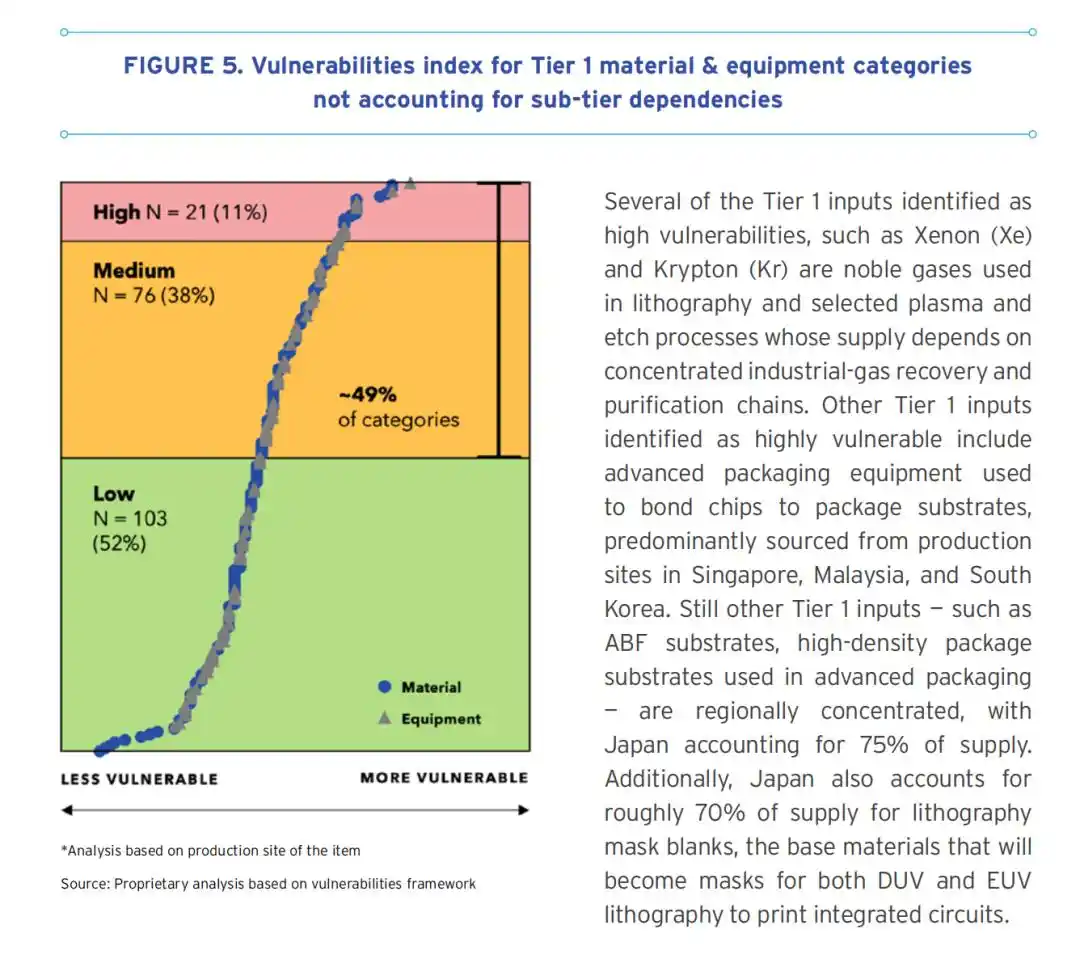
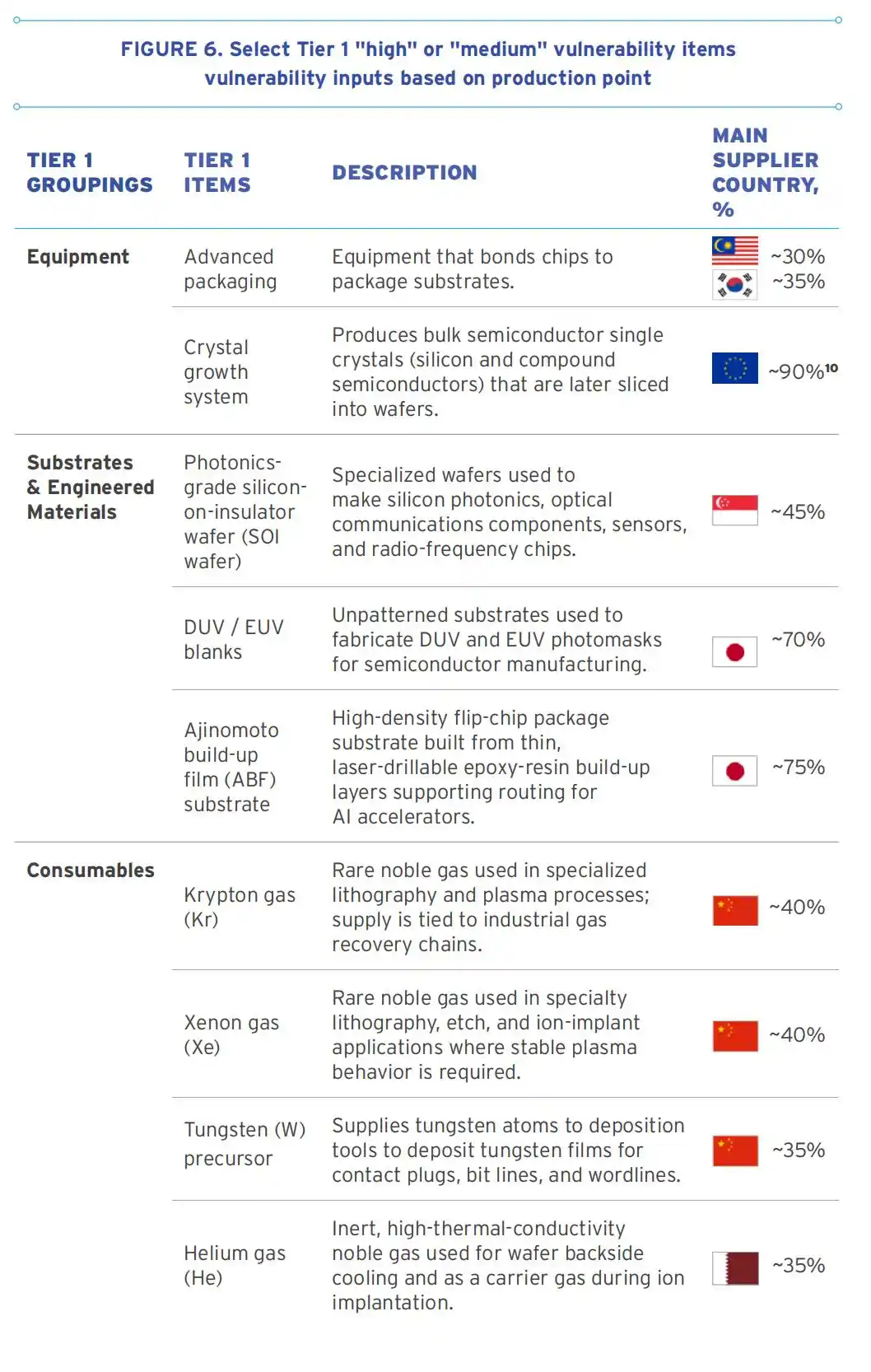
When we apply the Vulnerability Index to assess the U.S. semiconductor industry's tier 1 supply chain dependencies, we find about half of the analyzed categories fall into 'High' (11%) or 'Medium' (38%) vulnerability levels (see Figure 5). These categories are highly vulnerable for various reasons: some are concentrated in a few production regions, some depend on a very small number of certified suppliers, and others face risks due to production site locations.
Digging Deeper – Hidden Vulnerabilities
Semiconductor manufacturers and semiconductor equipment manufacturers typically do not procure raw materials directly from mineral producers but from specialized material suppliers; these suppliers further process minerals into high-precision chemicals, materials, or components (e.g., batteries and motors for machine tools). As mentioned, companies supplying 'tier 1' inputs required for semiconductor production each rely on 'sub-tier' networks of intermediate product and raw material suppliers. These sub-tier (or 'Tier-n') supply chains also face disruption risks, which can in turn affect the stability of 'tier 1' supply. For example, China has taken measures to restrict the global supply of upstream critical materials (like gallium, germanium, graphite, tungsten, rare earths), which are important inputs for many tier 1 materials and equipment the semiconductor industry relies on. This supply chain influence may extend beyond critical minerals to other materials, components, and production equipment where China seeks to accelerate domestic substitution.
Given the complexity and multi-tiered nature of semiconductor supply chains, disruption risks accumulate as one moves upstream. To identify potential deep-seated vulnerabilities hidden in the supply chain supporting the U.S. semiconductor industry, we conducted detailed mapping and analysis for nearly 100 selected upstream 'Tier-n' inputs, covering base materials (e.g., rare earth elements), engineered materials (e.g., photoacid generators, resins), and sub-components (e.g., optical elements, ceramic substrates), and performed corresponding vulnerability assessments for these upstream inputs. This analysis helps us better understand tier 1 supplier procurement patterns and identify dependencies on high-risk supply chains.
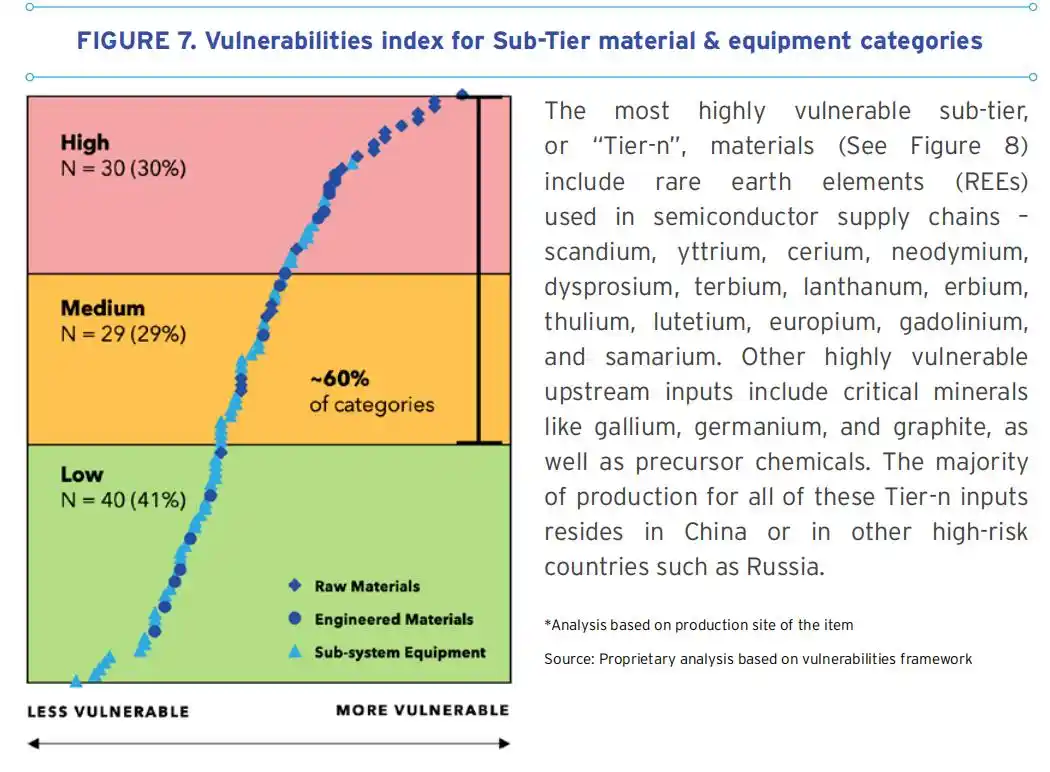
Among the upstream inputs we analyzed, nearly one-third were categorized as having 'High' vulnerability (see Figure 7).
China's Export Controls on Critical Minerals
In 2023, the Chinese government imposed export restrictions on key semiconductor raw materials including gallium, germanium, and graphite, which were upgraded to export bans the following year. In April 2025, China imposed export controls on seven medium and heavy rare earth elements used in magnet production and advanced manufacturing. In October of the same year, controls were further expanded to cover more types of rare earths, mining and smelting equipment, and rare earth-related technologies.
Recent trade data also shows how these upstream restrictions create ripple effects through trusted supply chains. According to Chinese customs data, as of June 2026, China's exports of certain restricted critical minerals (including gallium, dysprosium, terbium, and yttrium) to Japan remained at zero or trace levels. Given the important role Japanese suppliers play in supplying semiconductor materials, components, and manufacturing equipment to the U.S., prolonged restrictions on these raw materials could pose further downstream supply risks for the U.S. semiconductor industry.
Rare earth elements (REEs) and critical minerals are widely used across various tiers (including tier 1 suppliers and sub-tier suppliers) in a range of materials and equipment. Neodymium, dysprosium, samarium, and terbium are used to make permanent magnets, which are essential for semiconductor manufacturing equipment like wafer handling robots and sputtering equipment. Metallic scandium is added to aluminum alloys to make RF and BAW filters supporting 5G, Wi-Fi, and other wireless communication technologies, and is also a key material for making MEMS actuators and sensors. Gallium and germanium are used as silicon-alternative substrate precursors in power semiconductors and photonics, respectively; graphite is used for hot zone components in crystal growth furnaces.
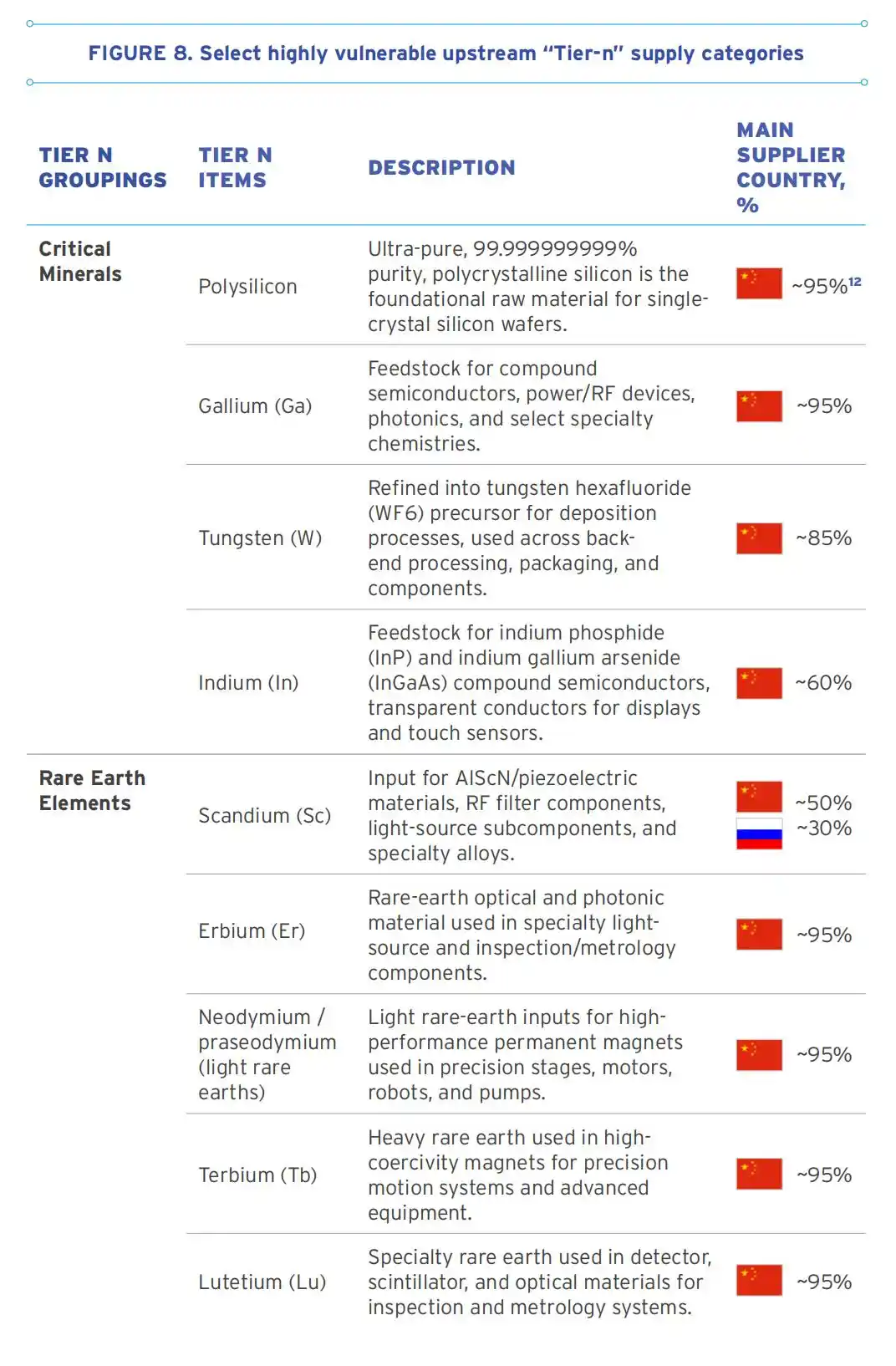
Polysilicon is another vulnerable upstream input in the semiconductor supply chain. By purity, polysilicon is mainly divided into solar-grade and electronic-grade. China is the world's largest producer of polysilicon, accounting for over 90% of total capacity, almost all of which is solar-grade. Electronic-grade polysilicon, used in semiconductor manufacturing, requires extremely high purity (99.999999999%). Although about 85% of the electronic-grade polysilicon market is held by a few producers in the U.S., Europe, and Japan, these suppliers must rely on large-scale production of solar-grade polysilicon to achieve the economies of scale and capacity utilization needed to produce semiconductor-grade ultra-high-purity polysilicon. The rapid expansion of China's solar-grade polysilicon capacity and improvements in electronic-grade polysilicon production process technology are bringing increasing competitive pressure, posing growing risks to existing qualified suppliers.
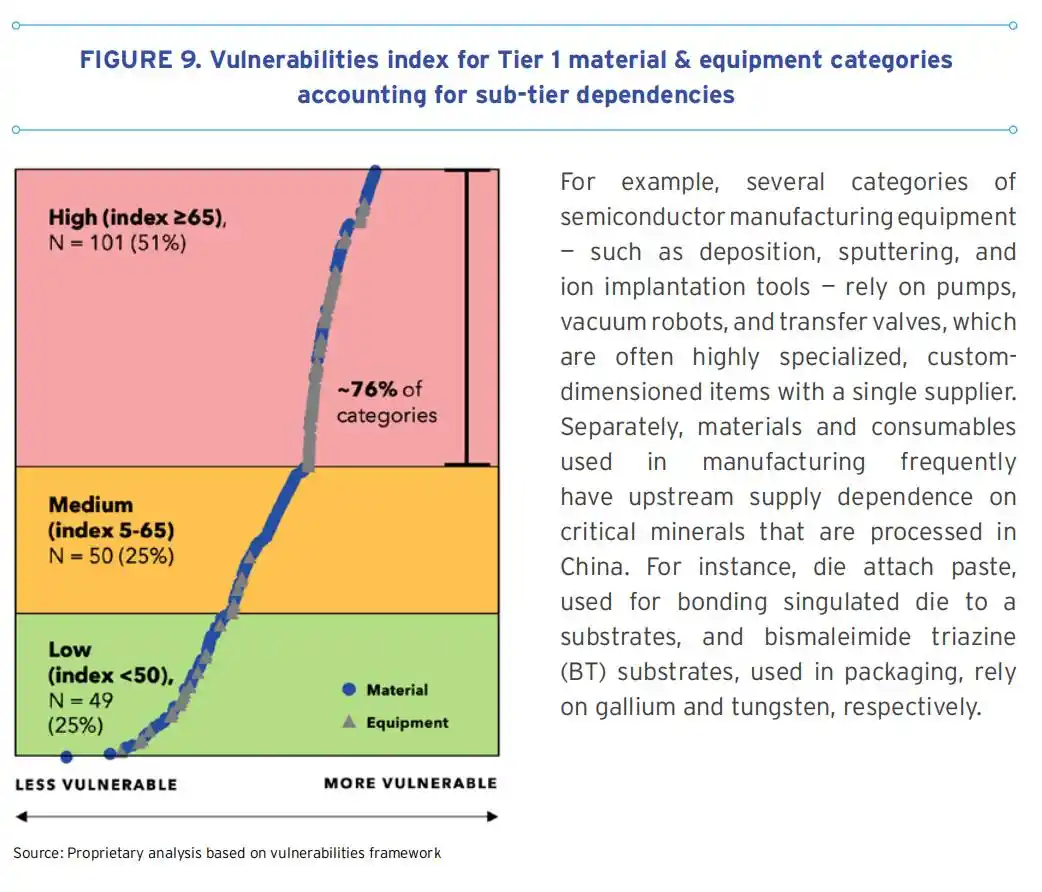
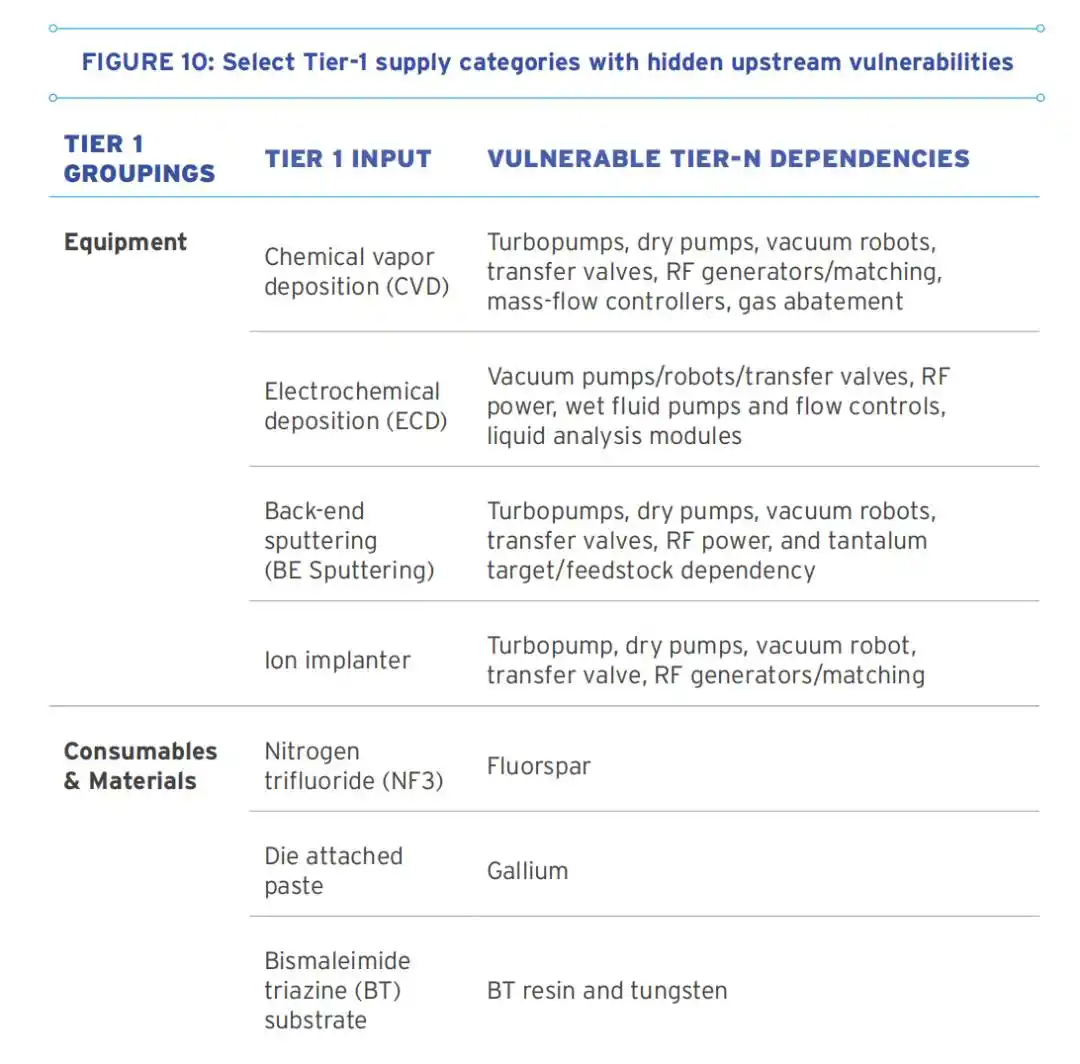
Notably, in our preliminary analysis, some tier 1 materials and equipment assessed as having 'Low' or 'Medium' vulnerability actually had hidden vulnerabilities—namely, dependencies on upstream 'Tier-n' base materials classified as having 'High' vulnerability. According to initial assessments, only 21 tier 1 inputs were considered 'High' risk in our Vulnerability Index. However, when sub-tier dependencies are taken into account, over three-quarters of the tier 1 supply categories we analyzed were linked to at least one 'Tier-n' input rated as highly vulnerable, and over half depended on two or more 'Tier-n' inputs identified as highly vulnerable in our analysis (see Figures 9 and 10).
Securing U.S. Supply Chains – Mitigation Strategies and Recommendations
Given this situation, what should the resilience of the global supply chain for the U.S. semiconductor industry look like? And how do we achieve this goal? For categories of semiconductor materials or equipment assessed as having 'Medium' or 'High' vulnerability, we focused on exploring corresponding mitigation strategies to enhance resilience and reduce supply disruption risk. While increasing domestic capacity for these materials and equipment is desirable, attempting to reduce vulnerability through a simple 'one-size-fits-all' approach of scaling domestic production is neither practical, cost-effective, nor even feasible. Building a resilient supply chain for the U.S. semiconductor industrial ecosystem requires a comprehensive adoption of the mitigation measures and policy responses described below.
Expand Domestic Supply and Strategic Reserves
Depending on the specific supply chain category, increasing U.S. domestic production capacity may take a decade or more to achieve substantial supply volumes. Even after new capacity becomes operational, qualifying new upstream suppliers into the semiconductor-grade supply chain and certifying new materials often takes an additional three to four years. However, for certain critical inputs in the semiconductor supply chain, establishing or expanding domestic capacity is a practical and crucial near-term strategy. As mentioned earlier, the vast majority of Ajinomoto Build-up Film (ABF) substrates and photoresists come from Japan. Investing in domestic U.S. capacity to support domestic wafer and chip manufacturing would enhance the resilience of the U.S. semiconductor supply chain. For example, while domestic advanced wafer production capacity is increasing, the new capacity remains insufficient to meet domestic chip manufacturing demand. Sputtering targets (where the U.S. already has manufacturing presence) are another area suitable for expanding domestic capacity to enhance supply resilience.
The U.S. government should consider targeted incentives for equipment and materials companies to encourage investment in domestic production capacity for high-priority inputs. As outlined in a previous SIA report, a viable approach is for the federal government to collaborate with state governments and industry to establish special economic zones or technology parks, incentivizing local suppliers to cluster near semiconductor manufacturing hubs. For other critical materials, subsystems, and components, establishing strategic inventories (i.e., reserves) can help fill supply gaps while awaiting new suppliers to come online. Semiconductor manufacturers already use excess inventory to guard against supply disruptions, often stocking up to 12 months' worth when conditions allow (e.g., rare earth magnets, neon gas, motors, and motor components). Tungsten sputtering targets used in physical vapor deposition processes are also suitable materials for strategic reserves. However, not all inputs can be stockpiled, often due to material shelf-life limitations. For instance, metallic scandium is particularly difficult to stockpile due to its rapid oxidation and shelf life of only 9 to 15 months.
In other cases, regulatory restrictions also limit semiconductor companies' ability to stockpile critical raw materials. Take several fluorine-containing gases (F-gases) crucial for semiconductor manufacturing, which are controlled by U.S. and global environmental regulations, preventing companies from purchasing and building multi-year buffer reserves. The fluorinated gases used by wafer fabs in plasma processes, dry etching, and cleaning of chemical vapor deposition equipment are derived from fluorite, with over 60% of global fluorite supply coming from Chinese mines. The U.S. government could consider establishing exemptions to current environmental regulations to allow semiconductor manufacturers to import and stockpile such gases (e.g., halocarbons). Similarly, the U.S. could collaborate with allies (e.g., Mexico, which has large fluorite deposits) to increase production of related minerals. Furthermore, the U.S. could use tax or other fiscal incentives to encourage stockpiling of such supplies.
Invest in and Secure Supply from Trusted Allies
It is neither practical, economical, nor feasible to relocate all production of materials and equipment needed to support domestic U.S. semiconductor manufacturing capability back to the U.S. To promote shared economic growth and security, the U.S. must work with partners and allies to diversify critical supply chains and collaborate on future technologies. Therefore, a key strategy for securing vulnerable supply links, in addition to building domestic supply capabilities, is to maintain solid relations with allies and partner supplier countries and invest in their industrial capabilities. Japan, Taiwan (China), Malaysia, Singapore, South Korea, and some European partners (e.g., Germany, France, Italy, the Netherlands, the UK) are important production locations for key engineered materials and parts for semiconductor manufacturing equipment. These producers rely on sourcing critical mineral raw materials from other regions (including Australia, Canada, India, and Mexico); these countries/regions possess mining and refining capabilities for critical minerals needed for semiconductor production. Additionally, collaboration with Vietnam and Indonesia—including through public-private partnerships to build local refining and processing infrastructure—can help increase processing capacity outside high-risk regions and ensure supply chain resilience.
Invest in R&D for Materials Science and Recycling Technologies
Sustained government support for fundamental and applied research in areas like materials science, chemistry, and engineering can help mitigate upstream supply chain vulnerabilities by developing new technologies and achieving 'innovative breakthroughs' for existing challenges. For example, the Department of Energy-funded 'Mineral to Materials Supply Chain Facility' (METALLIC) project (involving nine U.S. national laboratories) holds promise for opening new extraction and processing methods for mineral production. Another example is the advanced materials research grants provided by the Commerce Department's CHIPS Program Office. Funding research on recycling technologies also helps recover useful materials from electronic waste and other discarded electronic products. For instance, emerging wafer recycling technologies for silicon carbide (SiC) substrates can reduce substrate consumption per device by up to 10 times. Increasing investment in storage method research to extend shelf life can also help increase buffer stock levels for critical materials.
Government support should take multiple forms, including allocating public funds to support research on new materials, processing techniques, and measurement technologies at national laboratories and universities, as well as assisting private enterprises in scaling up electronic waste recycling to recover critical minerals and materials. As new technologies emerge, government plays a key role in establishing policy frameworks aimed at facilitating technology transfer and licensing from upstream research projects to companies responsible for commercialization. For a long time, the U.S. National Science Foundation, the War Department (now the Department of Defense), and the Department of Energy have supported fundamental and applied research in semiconductors, materials science, and other related microelectronics science and engineering fields. Sustained funding for research institutions is crucial to ensure that next-generation semiconductor materials and recycling process technologies can be developed and commercialized domestically in the U.S.
Prioritize Addressing Rare Earth and Critical Mineral Dependencies
The federal government should pay particular attention to the high dependence of U.S. and allied suppliers on rare earth elements and other critical minerals affected by export controls. There is an urgent need to establish new mining and processing capabilities to supply critical minerals widely used in semiconductor manufacturing (see Figure 8). In addition to enhancing domestic mining and refining capabilities where feasible, mitigating these vulnerabilities also requires coordinated efforts by the U.S. government with other governments to support raw material extraction and processing projects already underway in places like Australia, Canada, Japan, Mexico, and South Korea (e.g., refining and separation cooperation, oxide-to-metal conversion recycling, and qualification). Coordinated policies (such as long-term off-take agreements) are essential to ensure sufficient demand to support new critical mineral production capacity. Multilateral efforts such as the State Department-led 'Pax Silica' initiative, the U.S.-EU Action Plan on Critical Minerals Supply Chain Resilience, and the G7 Leaders' Statement on Securing Critical Minerals Supply Chains are important initiatives.
Conclusion
This report reveals the complexity of the upstream supply chain supporting the U.S. semiconductor industrial base and the hidden vulnerabilities that, if unaddressed, could hinder U.S. efforts to enhance resilience. Given the strategic importance of the semiconductor industry to the U.S. economy and national security, strengthening the resilience of the global supply chain supporting the domestic chip ecosystem is inevitably a top priority for both industry and policymakers.
Developing a comprehensive strategy must take a long-term view, adopt tailored measures for the inherent characteristics and challenges of each supply link, and, given the global nature of the supply chain supporting U.S. semiconductor firms, involve cooperation with like-minded governments to jointly build trustworthy and resilient supply chains. With steadfast commitment to these efforts, the U.S. semiconductor ecosystem and its diverse customer base stand to become stronger, more resilient, and more competitive over the next decade.
This article is from the WeChat public account 'Semiconductor Industry Watch' (ID: icbank), author: SIA