Hot Interaction Collection | StandX Launches Mainnet Points Event; "Trump Game" Waitlist Application (December 12)

Odaily星球日报Publicado a 2025-12-12Actualizado a 2025-12-12

Resumen

Hot Interaction Roundup: StandX Launches Mainnet Points Event; "Trump Game" Waitlist Opens (Dec 12) StandX, a decentralized finance project co-founded by former Binance Futures core members, has launched a points event on its mainnet. Users can earn points by depositing DUSD into Perps Wallet or Vaults, or by active trading. Binance Wallet users receive a 10% points boost until January 7, 2026. Points are retroactive for all transactions since mainnet launch. Trump Billionaires Club, a mobile game targeting Trump supporters, has opened its waitlist. The 3D board game, similar to Monopoly, offers potential rewards worth around $1 million in TRUMP tokens. Currently, pre-registration is limited to U.S. residents. Citrea, a Bitcoin ZK Rollup protocol secured by zero-knowledge proofs and verified on Bitcoin via BitVM, has raised $16.7 million across two funding rounds. Users can interact by completing specific tasks on its community platform.

Original | Odaily Planet Daily (@OdailyChina)

Author | Asher (@Asher_ 0210)

StandX: Decentralized Finance Perpetual Contracts DEX

Project Introduction

StandX is a decentralized finance project founded by former core members of the Binance Futures team, focusing on the combination of synthetic stablecoins and perpetual contracts DEX.

  • Founding Background: The core team includes former Binance Futures head Aaron Gong and former Binance Futures director Justin, who left Binance in 2024 to start a business in the emerging on-chain field;
  • Project Positioning: StandX aims to integrate an Ethena-like synthetic stablecoin mechanism with a Hyperliquid-like decentralized contract trading model to form a complete financial ecosystem;
  • Vision Goal: The team believes that stablecoins and decentralized contracts are two key tracks in the blockchain industry. StandX hopes to combine them through innovative design to provide users with efficient, secure, and transparent trading and stable value storage solutions.

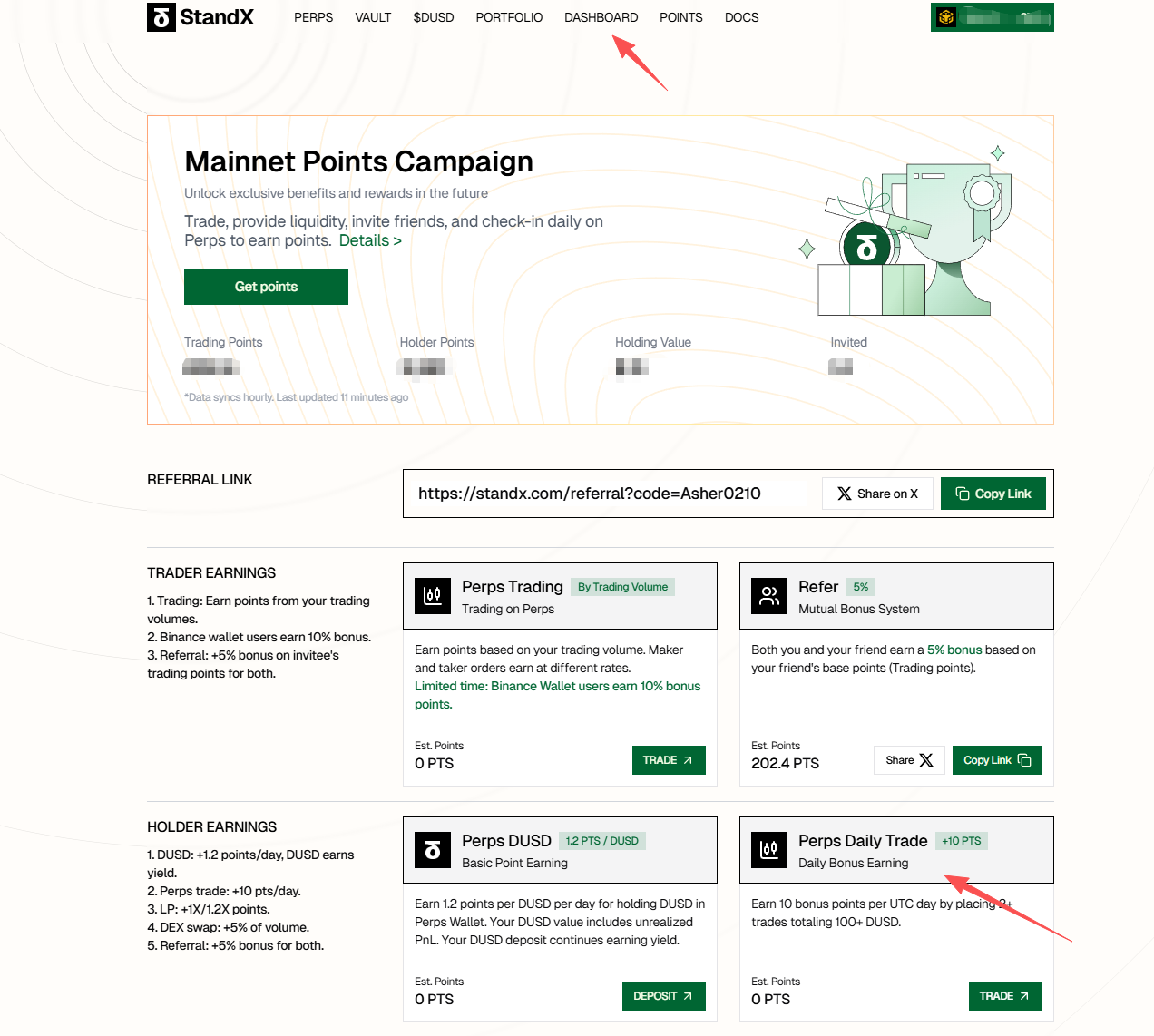
On December 10, StandX announced on the X platform that the trading points event has been launched on the mainnet. Users can earn points by depositing DUSD into the Perps Wallet, Vaults, or actively participating in trading. This event is in cooperation with Binance Wallet. Users using Binance Wallet's keyless extension wallet will receive a 10% points bonus, which lasts for 4 weeks until January 7, 2026. Additionally, points will be retroactive, rewarding all past transactions since the mainnet launch.

Interaction Tutorial

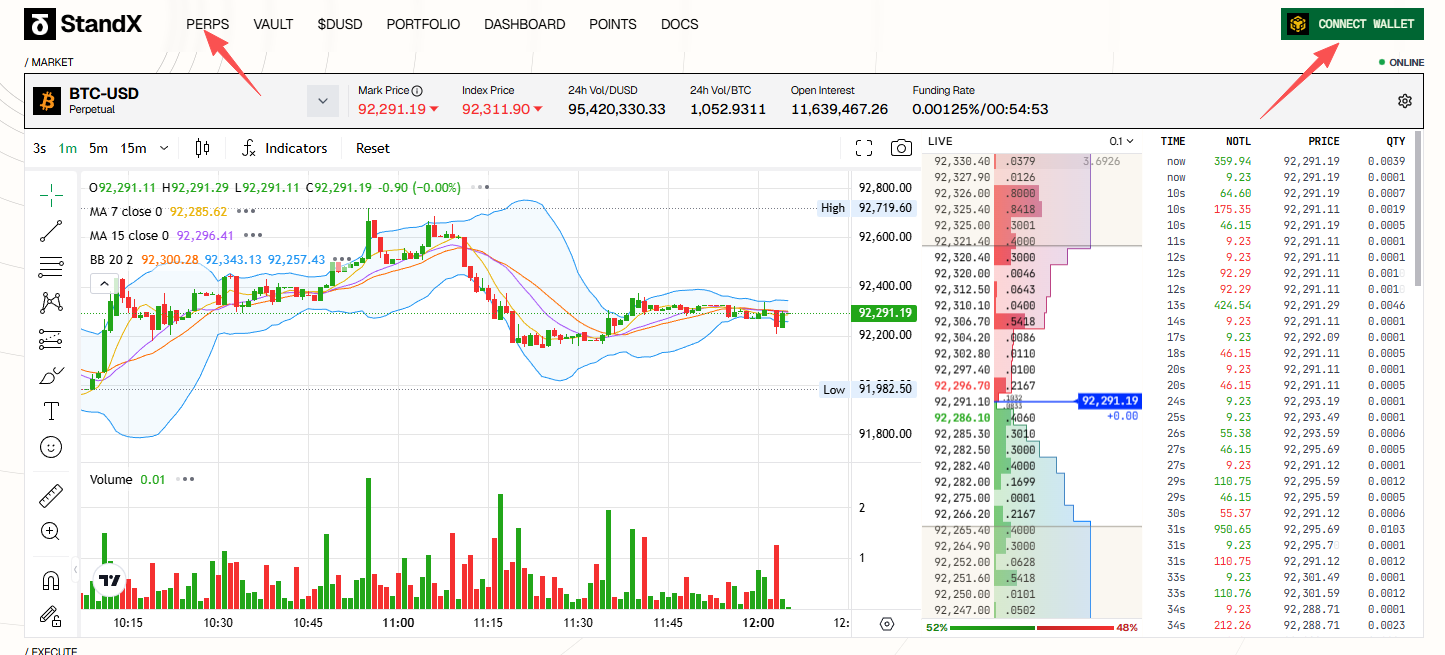
STEP 1. Go to the interaction website (Link: https://standx.com/), connect your Web3 wallet, click on "PERPS" at the top to enter the on-chain contract interface.
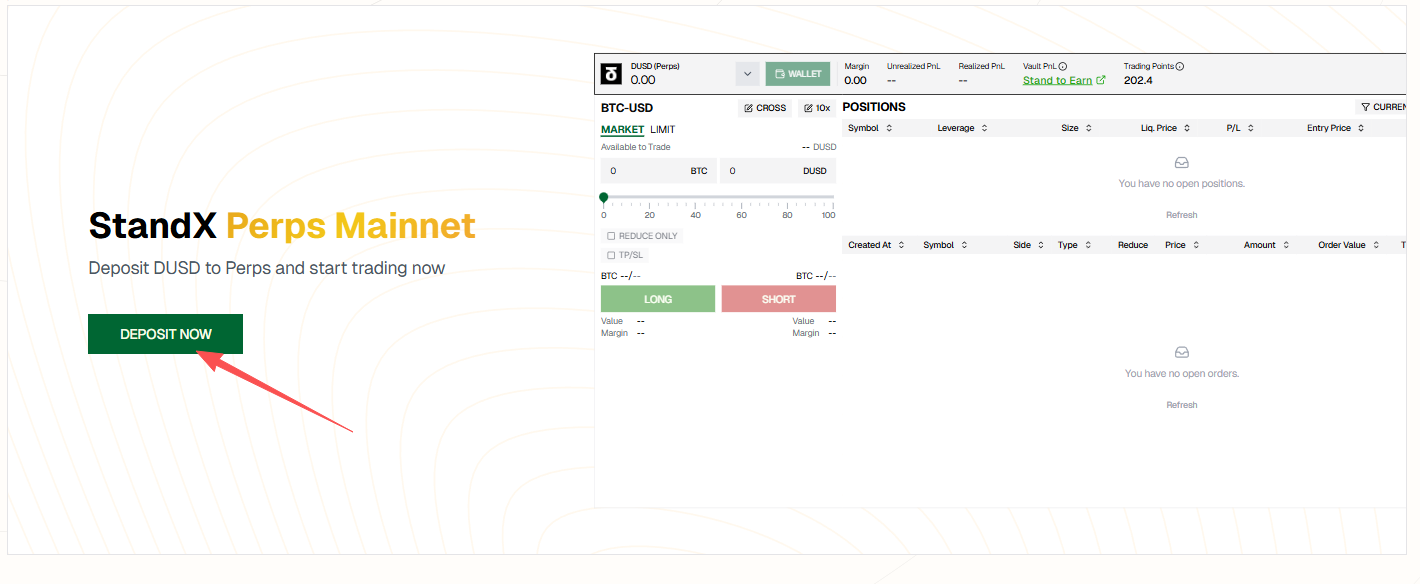
STEP 2. Click "DEPOSIT NOW" below to deposit USDT, USDC, or DUSD from your wallet into the built-in wallet (USDT and USDC will be automatically converted to DUSD), then you can start trading.
STEP 3. Click "DASHBOARD" at the top to view your personal trading points. Also, participate in the daily trading tasks to earn points.
Trump Billionaires Club: Mobile Game for Trump Fans

Project Introduction
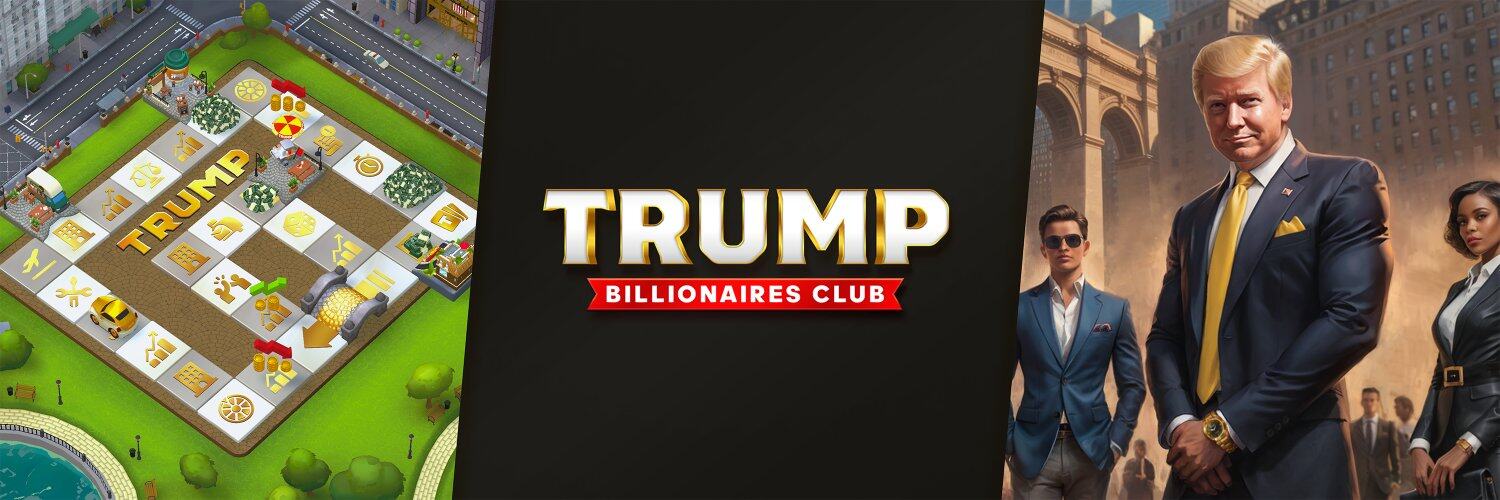
On December 11, the TRUMP Meme token team announced on the X platform that they will launch a mobile game for Trump fans called Trump Billionaires Club, which has currently launched a preview page and opened a waitlist. The project team stated that the game will set up a TRUMP token reward mechanism, and participating users may receive rewards worth approximately $1 million.
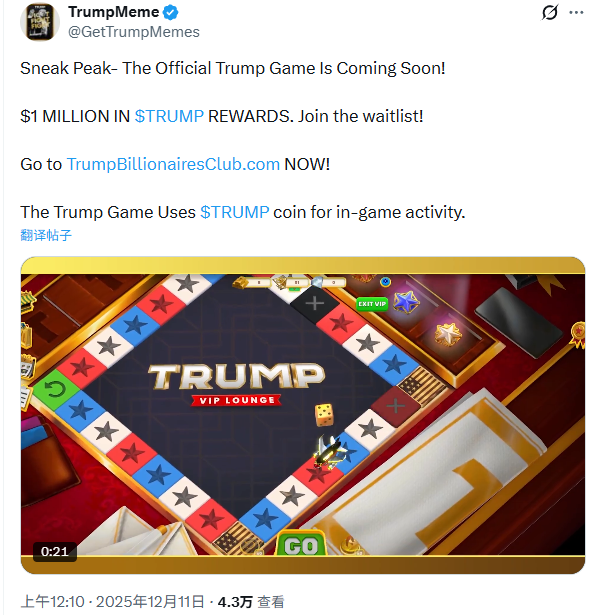
According to official information, Trump Billionaires Club is a 3D board strategy game, similar to Monopoly, where players build a business empire by rolling dice, negotiating deals, and making decisions. The game supports mobile (both iOS and Android) and web versions, and even ordinary people can easily get started without any exposure to crypto elements.

Interaction Tutorial

Go to the game's official website (Link: https://www.trumpbillionairesclub.com/) and complete the waitlist application.
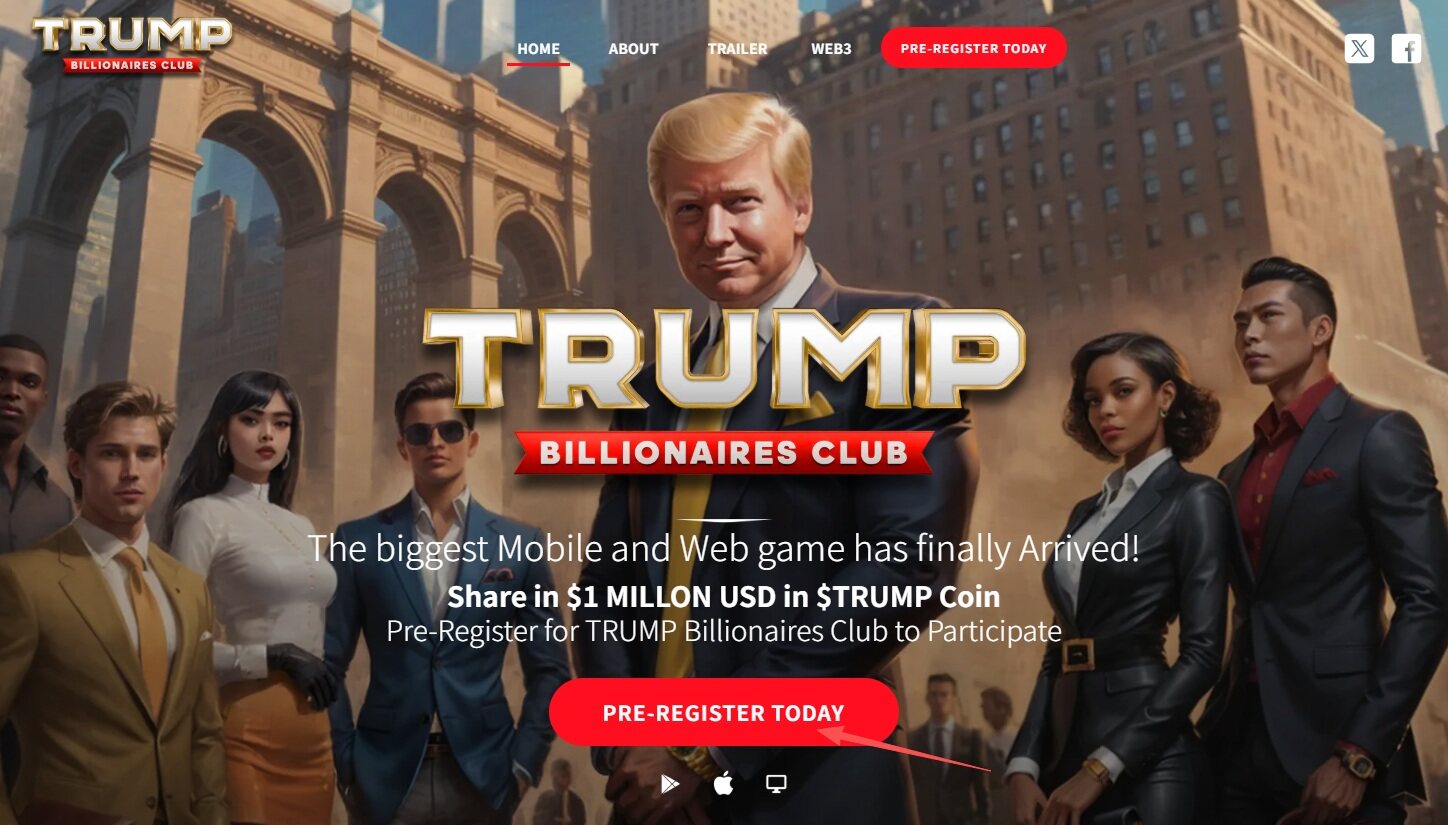
It is worth mentioning that the game terms of Trump Billionaires Club state that the pre-registration reward event is only for US residents, so at this stage, it is recommended to only participate in pre-registration and not blindly "grind the leaderboard".

Citrea: Bitcoin ZK Rollup Protocol

Project Introduction
Citrea is a ZK rollup for Bitcoin and an execution layer based on Bitcoin. Every transaction on Citrea is secured by zero-knowledge proofs and verified on Bitcoin through BitVM.

According to ROOTDATA, Citrea has completed two rounds of financing, totaling $16.7 million. The specific information is as follows:

  • In February 2024, Citrea announced the completion of a $2.7 million seed round led by Galaxy Ventures, with participation from Delphi Ventures, Taproot Wizards co-founder Eric Wall, modular blockchain Avail co-founder Anurag Arjun, and others;
  • At the end of October 2024, Citrea announced the completion of a $14 million Series A round led by Peter Thiel's Founders Fund, with participation from angel investors like Erik Voorhees and Balaji Srinivasan.

Interaction Tutorial

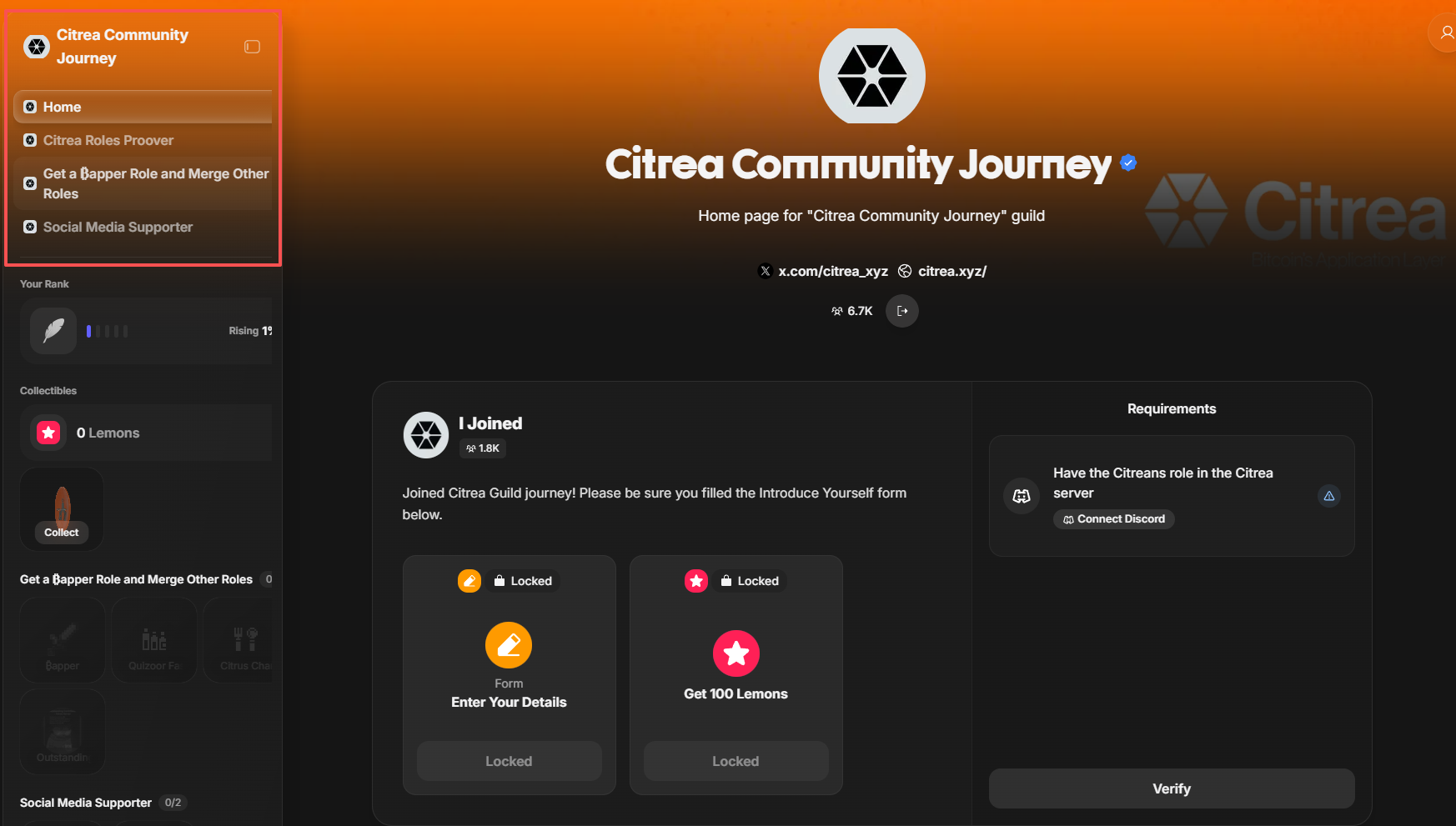
Go to the interaction website (Link: https://guild.xyz/citrea-community-journey/) and log in to your personal account. The tasks require meeting conditions including a specific Discord role, being a testnet user, and being an NFT holder.
Related Content

Interaction Tutorial: 9 High-Financing Hot Projects with Open Testnets

Airdrop Hunter Benefits: A List of 9 Early Hot Projects with "Daily Check-in" Features

Early埋伏: 10 Early Hot Projects with Open Whitelist Applications

Preguntas relacionadas

QWhat is StandX and what are its main features?

AStandX is a decentralized finance project founded by former core members of the Binance futures team, focusing on the combination of synthetic stablecoins and a perpetual contracts DEX. It aims to merge Ethena-like synthetic stablecoin mechanisms with Hyperliquid-style decentralized contract trading to create a comprehensive financial ecosystem.

QHow can users earn points in StandX's mainnet points event?

AUsers can earn points by depositing DUSD into the Perps Wallet or Vaults, or by actively participating in trading. Those using Binance Wallet's keyless extension wallet receive a 10% points bonus for 4 weeks until January 7, 2026. Points are retroactively rewarded for all transactions since the mainnet launch.

QWhat is Trump Billionaires Club and who is it targeted towards?

ATrump Billionaires Club is a mobile game targeted towards fans of Donald Trump. It is a 3D board strategy game similar to Monopoly, where players build business empires through dice rolls, negotiations, and decisions. The game offers TRUMP token-related incentives and is accessible on mobile and web platforms.

QWhat is Citrea and how does it relate to Bitcoin?

ACitrea is a Bitcoin ZK Rollup protocol and an execution layer built on Bitcoin. It secures every transaction with zero-knowledge proofs and verifies them on Bitcoin through BitVM. It has raised $16.7 million in funding across two rounds, led by investors like Galaxy Ventures and Founders Fund.

QWhat caution is advised for users interested in Trump Billionaires Club's pre-registration?

AThe pre-registration reward activity for Trump Billionaires Club is limited to U.S. residents only. Users are advised to only participate in pre-registration at this stage and avoid blindly competing on the leaderboard due to these restrictions.

Lecturas Relacionadas

Fei-Fei Li's Team Clarifies the Concept of 'World Models', Sora Merely a Renderer

"World Models" has become a widely used yet confusing term in AI. To address this, a team led by Fei-Fei Li and World Labs proposed a functional taxonomy based on the Partially Observable Markov Decision Process framework. This taxonomy categorizes systems called "world models" into three distinct projections: Renderers, Simulators, and Planners. Renderers, like OpenAI's Sora and other video generation models, focus on producing photorealistic visual outputs for human perception. They prioritize visual fidelity over physical accuracy. Simulators, such as NVIDIA Omniverse, aim to compute precise future environmental states for computational tasks like engineering analysis or digital twins. Planners, like Vision-Language-Action models, take in observations and goals to output executable actions for robots or agents. The article clarifies that most current "world models," including Sora, are primarily Renderers. They generate convincing visuals but lack the core ability to simulate state transitions based on actions, a key requirement for a true world model in classic reinforcement learning definitions. This conceptual confusion has practical implications, leading to potential misalignment in technology selection, investment, and public understanding of AI capabilities. Clear categorization is crucial. It helps enterprises avoid costly mistakes (e.g., using a renderer for robot training), allows investors to accurately assess markets, and enables researchers to build comparable benchmarks. While future systems may integrate these functions, recognizing current boundaries is essential for honest assessment and progress.

marsbitHace 13 min(s)

Fei-Fei Li's Team Clarifies the Concept of 'World Models', Sora Merely a Renderer

marsbitHace 13 min(s)

Bloomberg Uncovered: How Do China's Wealthy Circumvent the Annual $50,000 Limit to Transfer Assets?

**Summary: How Wealthy Chinese Circumvent $50,000 Annual Foreign Exchange Limits** Despite China's strict capital controls, including an annual $50,000 per person foreign exchange quota, an estimated $150 billion in funds still leaves the country annually via various gray and underground channels. This report outlines the evolution of China's "capital wall" and the methods used to bypass it. **The Evolving Capital Controls:** * **Foundation (1994):** The system of "current account convertibility with strict capital account controls" was established. * **Quota Set (2007):** The $50,000 individual annual forex purchase limit was formalized. * **Crackdown Begins (2015-2017):** Following market volatility, enforcement tightened. Banks were required to scrutinize transactions, and channels like using UnionPay cards for Hong Kong insurance premiums or buying overseas property were blocked. * **Digital & Legal Upgrades (2024-2026):** Enhanced algorithms now flag suspicious patterns (e.g., "smurfing"). The Common Reporting Standard (CRS) provides Chinese tax authorities with data on citizens' offshore accounts. Unlicensed cross-border brokers have been targeted. **Five Primary Methods for Moving Capital:** 1. **Underground Banking / "Hawala" (Duiqiao):** The largest-scale method. No money crosses borders. Clients pay RMB to a domestic account; an overseas associate deposits equivalent foreign currency into the client's offshore account. Risks include high fees, account freezes, and legal penalties. 2. **"Smurfing" or "Ant Moving":** Using multiple individuals' $50,000 quotas to pool funds for one offshore recipient. Increasingly detected by anti-money laundering algorithms. 3. **Trade Invoice Manipulation:** Businesses over-invoice imports or under-invoice exports via offshore shell companies, creating a pretext to transfer excess funds abroad under the guise of trade. 4. **Channel Migration:** After a crackdown on internet brokers, funds flow toward more compliant but costly channels like major banks' cross-border wealth management services or Qualified Domestic Institutional Investor (QDII) quotas. 5. **Structural Arrangements:** High-net-worth individuals use complex, high-cost legal structures involving offshore trusts, insurance, and investment migration programs to transfer asset ownership. **Regulatory Response: Focusing on People, Not Just Money** The current strategy extends oversight from enterprises to **individual residents**. Tools like CRS allow retroactive visibility into offshore assets. Cryptocurrencies, once seen as a potential loophole, are now actively monitored and prosecuted as an illegal channel. The underlying driver remains: with significant wealth concentrated among millions of affluent households seeking diversification amid domestic economic shifts, the incentive to move assets offshore persists despite regulatory barriers.

marsbitHace 33 min(s)

Bloomberg Uncovered: How Do China's Wealthy Circumvent the Annual $50,000 Limit to Transfer Assets?

marsbitHace 33 min(s)

Ethereum's Ballmer Moment: As Everyone Is Bearish, the Circulating Supply Is Disappearing

"Ethereum's Ballmer Moment: Circulation Shrinks Amid Bearish Sentiment" Amid widespread bearish sentiment, with prominent figures like Bankless founder David Hoffman selling ETH and young developers flocking to Solana, some argue Ethereum is entering its "Ballmer era"—akin to Microsoft's perceived stagnation under Steve Ballmer. While surface-level criticisms about slow protocol development, cautious leadership, and competitive pressure are valid, underlying fundamentals tell a different story. Approximately 30% of ETH is staked, major holders like BitMine are accumulating, and spot ETFs continue to absorb supply. Regulatory clarity, including the SEC/CFTC's March ruling on staking rewards and the potential passage of the CLARITY Act, is transforming crypto from a regulatory threat into a legitimized framework. This institutionalization, alongside a shrinking circulating supply (with net issuance around 0.23% annually), creates significant buy-side pressure independent of fee-based value capture. The broader crypto total addressable market is expanding through regulated stablecoins, tokenized assets, and institutional adoption. While public chains face competition from permissioned alternatives, the winning model appears to be permissioned assets settling on public chains like Ethereum and Solana. The author advocates a non-maximalist, barbell strategy: holding ETH for its institutional role and supply squeeze, SOL for consumer/throughput trends, BTC as a macro hedge, and a basket of next-gen L1s. Key bullish drivers for ETH include rapid circulation shrinkage, potential Q2 staked ETF approvals, regulatory tailwinds solidifying its role as a default settlement layer, and the optionality of an eventual "Satya moment" leadership shift. Despite bearish consensus, the current setup—where crypto is "not hot" and regulatory groundwork is being laid—presents a compelling investment opportunity. The crypto cycle's focus may have shifted to AI, but blockchain infrastructure is gaining a legal and institutional foothold precisely while attention is elsewhere.

marsbitHace 33 min(s)

Ethereum's Ballmer Moment: As Everyone Is Bearish, the Circulating Supply Is Disappearing

marsbitHace 33 min(s)

Trading

Spot
Futuros

Artículos destacados

Cómo comprar HOT

¡Bienvenido a HTX.com! Hemos hecho que comprar Holo (HOT) sea simple y conveniente. Sigue nuestra guía paso a paso para iniciar tu viaje de criptos.Paso 1: crea tu cuenta HTXUtiliza tu correo electrónico o número de teléfono para registrarte y obtener una cuenta gratuita en HTX. Experimenta un proceso de registro sin complicaciones y desbloquea todas las funciones.Obtener mi cuentaPaso 2: ve a Comprar cripto y elige tu método de pagoTarjeta de crédito/débito: usa tu Visa o Mastercard para comprar Holo (HOT) al instante.Saldo: utiliza fondos del saldo de tu cuenta HTX para tradear sin problemas.Terceros: hemos agregado métodos de pago populares como Google Pay y Apple Pay para mejorar la comodidad.P2P: tradear directamente con otros usuarios en HTX.Over-the-Counter (OTC): ofrecemos servicios personalizados y tipos de cambio competitivos para los traders.Paso 3: guarda tu Holo (HOT)Después de comprar tu Holo (HOT), guárdalo en tu cuenta HTX. Alternativamente, puedes enviarlo a otro lugar mediante transferencia blockchain o utilizarlo para tradear otras criptomonedas.Paso 4: tradear Holo (HOT)Tradear fácilmente con Holo (HOT) en HTX's mercado spot. Simplemente accede a tu cuenta, selecciona tu par de trading, ejecuta tus trades y monitorea en tiempo real. Ofrecemos una experiencia fácil de usar tanto para principiantes como para traders experimentados.

92 Vistas totalesPublicado en 2024.12.11Actualizado en 2026.06.02

Cómo comprar HOT

Qué es HOLO

Entendiendo HOLO: El Futuro de las Aplicaciones Descentralizadas Introducción a HOLO, $holo En el paisaje en rápida evolución de las criptomonedas y las tecnologías descentralizadas, HOLO, también conocido como Holo, ha emergido como un jugador notable. Este proyecto innovador facilita el desarrollo de aplicaciones descentralizadas (DApps) a través de su arquitectura subyacente conocida como Holochain. Con la visión de crear un puente entre el internet centralizado que conocemos hoy y el ecosistema descentralizado del futuro, HOLO tiene como objetivo hacer que las DApps sean accesibles para el usuario cotidiano sin los obstáculos de instalaciones complejas y habilidades técnicas. ¿Qué es HOLO, $holo? En su núcleo, HOLO es una plataforma distribuida diseñada para alojar DApps construidas sobre Holochain. A diferencia de las plataformas de blockchain tradicionales, Holochain adopta un enfoque único al permitir que cada aplicación funcione bajo su propio conjunto de reglas. El mandato de HOLO es conectar estas aplicaciones Holochain (hApps) con los usuarios a través de tecnologías web familiares. El objetivo principal de HOLO es democratizar el acceso y uso de las DApps al permitir que los usuarios accedan a estas aplicaciones directamente a través de navegadores web estándar. Esta accesibilidad es clave para reducir la fricción para los usuarios promedio de internet, permitiéndoles utilizar aplicaciones de próxima generación sin necesidad de navegar por las complejidades a menudo asociadas con las criptomonedas y el uso de DApps. Creador de HOLO, $holo HOLO surge de la visión de sus creadores, Arthur Brock y Eric Harris-Braun. Ambos son desarrolladores experimentados y codificadores de contratos, y comenzaron el proyecto en diciembre de 2016 como parte del Proyecto MetaCurrency. Esta iniciativa se centró inicialmente en desarrollar herramientas y tecnologías destinadas a fomentar una economía de igual a igual. Sus antecedentes en codificación y emprendimientos los posicionaron de manera única para abordar los desafíos del desarrollo y alojamiento de aplicaciones descentralizadas. Inversores de HOLO, $holo Si bien los detalles específicos sobre inversores individuales en HOLO no están fácilmente disponibles, es evidente que el proyecto ha recibido un respaldo y atención significativos de la comunidad de criptomonedas en general. Su enfoque innovador para alojar aplicaciones descentralizadas, junto con una comunidad de apoyo, ha alimentado el interés y la inversión en el proyecto. ¿Cómo funciona HOLO, $holo? HOLO opera creando un extenso ecosistema en el que los anfitriones contribuyen con almacenamiento y poder de procesamiento para las DApps basadas en Holochain. Al convertir sus dispositivos o incluso hardware dedicado como HoloPorts en nodos de alojamiento, los individuos pueden monetizar efectivamente los recursos no utilizados de sus computadoras. Los componentes funcionales clave de HOLO incluyen: Proveedor de Aplicaciones: Estas entidades compran créditos de alojamiento de HOLO, que se mantienen en una cuenta de reserva. Este mecanismo permite a los desarrolladores de DApp asegurar los recursos necesarios para ejecutar sus aplicaciones. Anfitrión: Individuos u organizaciones que eligen alojar DApps generan registros de servicio firmados a medida que responden a las solicitudes de los usuarios. Este proceso asegura que todas las interacciones en la red sean rastreadas y autenticadas. Prueba de Servicio: Un elemento crucial de la integridad operativa de HOLO, los anfitriones envían facturas a los proveedores de aplicaciones, que luego validan el servicio proporcionado. Tras la validación, los anfitriones reciben compensación en forma de créditos de alojamiento. HoloFuel: Sirviendo como el token nativo de la red Holo, HoloFuel está diseñado para microtransacciones. Este token facilita el extenso rendimiento de transacciones necesario para que la plataforma soporte miles de millones de transacciones simultáneas sin problemas. La sinergia combinada de estos componentes asegura un entorno de alojamiento robusto y descentralizado, impulsando la utilidad y el alcance de las aplicaciones Holochain. Cronología de HOLO, $holo El viaje de HOLO ha estado marcado por varios hitos desde su inicio: Diciembre de 2016: La creación de HOLO por Arthur Brock y Eric Harris-Braun como parte del Proyecto MetaCurrency. 2018: La emisión de un token ERC20, conocido como HoloToken (HOT), que sirvió como un “IOU” que es canjeable por HoloFuel al lanzamiento del proyecto. Desarrollo Continuo: Avances continuos, pruebas y optimización de la red Holo y HoloFuel, asegurando que el proyecto permanezca a la vanguardia de la tecnología de alojamiento de aplicaciones descentralizadas. Características Únicas de HOLO, $holo HOLO se destaca en el abarrotado campo de las criptomonedas y plataformas descentralizadas debido a sus características distintivas y el marco innovador en el que opera: Alojamiento de Igual a Igual: HOLO abre la puerta para que cualquiera se convierta en anfitrión de DApps simplemente utilizando sus computadoras. Esta democratización del alojamiento es similar a cómo plataformas como Airbnb interrumpieron la industria hotelera tradicional al empoderar a los individuos para participar en la economía. Marco Holochain: Central a las innovaciones de HOLO está el marco Holochain en sí. Posicionado como una tecnología de próxima generación, Holochain cuenta con escalabilidad sin igual, velocidades de transacción rápidas, eficiencia energética excepcional y rentabilidad en comparación con las tecnologías de blockchain convencionales. HoloFuel para Microtransacciones: HoloFuel está meticulosamente diseñado para acomodar microtransacciones, permitiendo que la red Holo gestione de manera eficiente miles de millones de transacciones simultáneamente. Esta capacidad es fundamental para la adopción generalizada, permitiendo a los desarrolladores crear aplicaciones que sean económicamente viables a gran escala. Conclusión HOLO representa un avance significativo en el panorama de las aplicaciones descentralizadas y la tecnología blockchain. Con su infraestructura robusta, enfoque amigable para el usuario y el innovador marco Holochain, HOLO está preparado para desempeñar un papel crucial en el futuro de la web. Si mejorará las experiencias cotidianas de internet o redefinirá cómo los desarrolladores y usuarios interactúan con las aplicaciones digitales sigue siendo una incógnita, pero su progreso hasta ahora vale la pena seguirlo a medida que el mundo continúa avanzando hacia una economía digital descentralizada. A medida que el proyecto evoluciona, sus desarrollos continuos y el compromiso de la comunidad serán componentes cruciales de su éxito, estableciendo potencialmente a HOLO como una plataforma principal para aplicaciones descentralizadas. Con el creciente interés en torno a las tecnologías descentralizadas, la importancia e impacto de proyectos como HOLO solo aumentarán en los años venideros.

93 Vistas totalesPublicado en 2024.12.26Actualizado en 2024.12.26

Qué es HOLO

Discusiones

Bienvenido a la comunidad de HTX. Aquí puedes mantenerte informado sobre los últimos desarrollos de la plataforma y acceder a análisis profesionales del mercado. A continuación se presentan las opiniones de los usuarios sobre el precio de HOT (HOT).

活动图片