Hot Interaction Collection | Cascade Early Access Application; OpenMind Adds Badge Tasks (December 17)

Odaily星球日报Publicado a 2025-12-17Actualizado a 2025-12-17

Resumen

Hot Interaction Roundup: Cascade Early Access and OpenMind Badge Tasks (Dec 17) Cascade, a crypto brokerage platform, is now accepting early access applications. It offers 24/7 trading of U.S. stocks and crypto perpetual contracts with a single margin account. Users can apply via X (Twitter) and Google email, and join the Discord to claim OG roles. OpenMind, founded by a Stanford professor, is building a universal OS and decentralized network for smart machines. It recently added new badge tasks: users can sign up with Google, verify with World Coin for a Personhood badge, and connect a Backpack wallet for another badge. Altius, a modular execution stack developer, launched a Web3 knowledge quiz with Open Academy. Participants can complete three course levels and social tasks for a chance to win limited edition boxes or OA tokens. The event runs until December 23.

Original | Odaily Planet Daily (@OdailyChina)

Author | Asher (@Asher_ 0210)
Cascade: 24/7 US Stock Trading + Cryptocurrency Perpetual Contract Trading

Project Introduction

Cascade is an encrypted brokerage firm, offering a brokerage-style trading application that operates 24/7, supporting perpetual contract trading for cryptocurrencies, US stocks, and private assets. Users can directly link their bank accounts to complete perpetual trading, portfolio-based lending, and asset transfers within a single margin account.

According to ROOTDATA data, Citrea completed a $15 million financing round, receiving investments from Polychain, Coinbase Ventures, and others.

Interaction Tutorial

STEP 1. Go to the official website (Link: https://cascade.xyz/join), fill in your personal X account and Google email to complete the early access application (limited-time task).
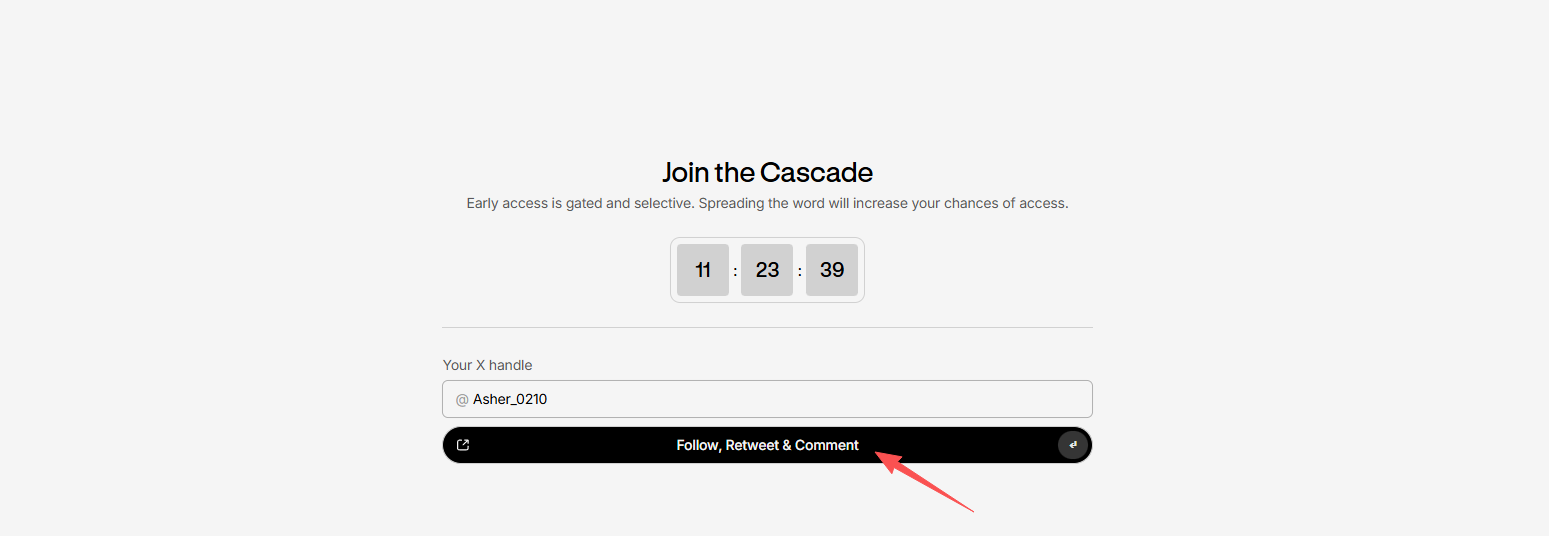
STEP 2. Join the official Discord community (Link: https://discord.com/invite/cascade-xyz) and claim the OG role (limited-time task).

OpenMind: Building a Universal Operating System and Decentralized Collaboration Network for Intelligent Machines

Project Introduction

OpenMind, founded by Stanford University Professor Jan Liphardt, is dedicated to building a universal operating system and decentralized collaboration network for intelligent machines, enabling robots from different manufacturers and of different forms to securely trust each other, share information, and collaborate globally.

In early August this year, OpenMind announced the completion of a $20 million financing round, led by Pantera Capital, with participation from Ribbit, Sequoia, Coinbase Ventures, DCG, Lightspeed Faction, Anagram, Pi Network Ventures, Topology, Primitive Ventures, Amber Group, and several other institutions and renowned angel investors.

Interaction Tutorial

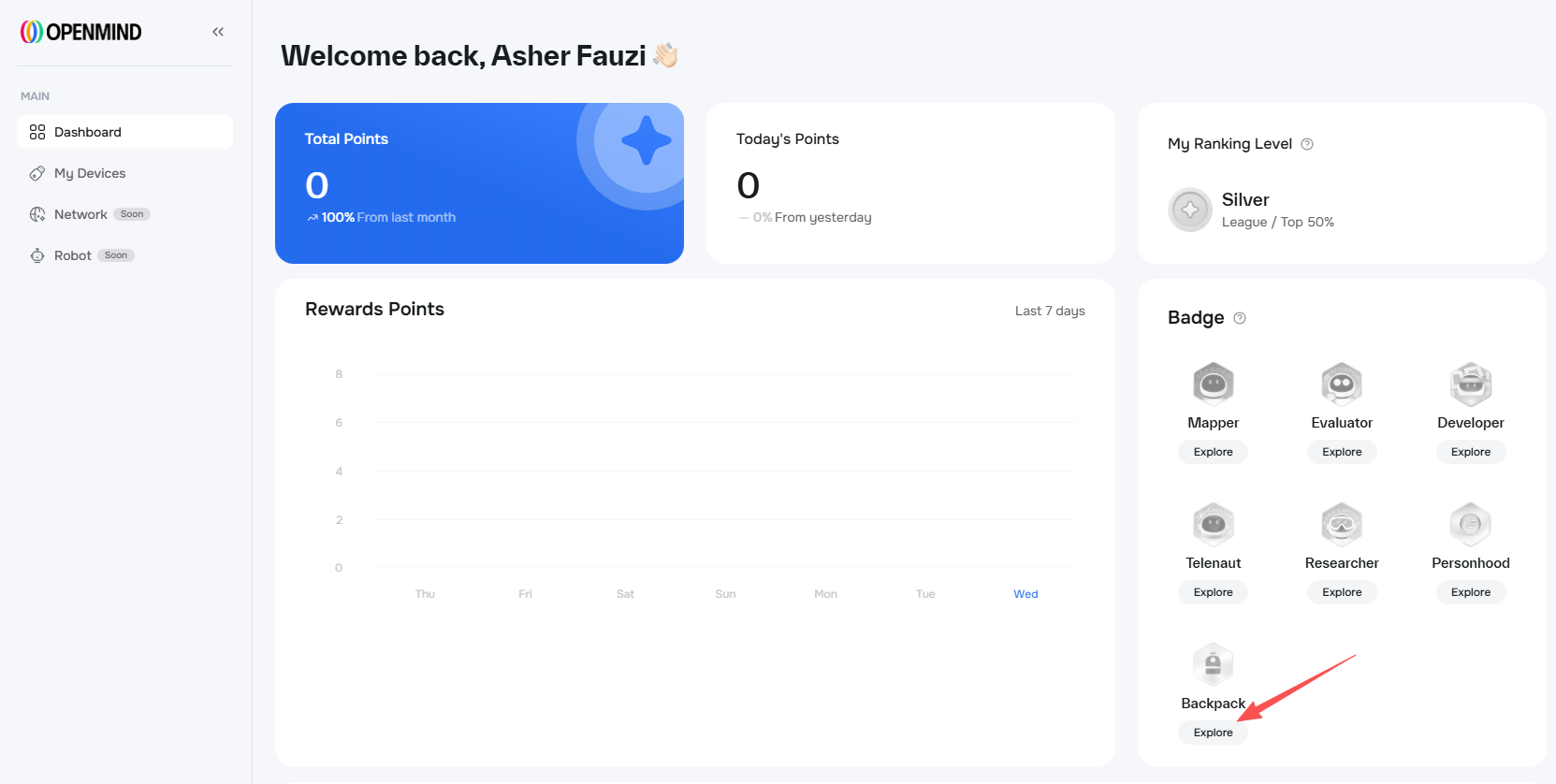
STEP 1. Go to the interaction website (Link: https://fabric.openmind.org/sign-in) and register using your Google email.
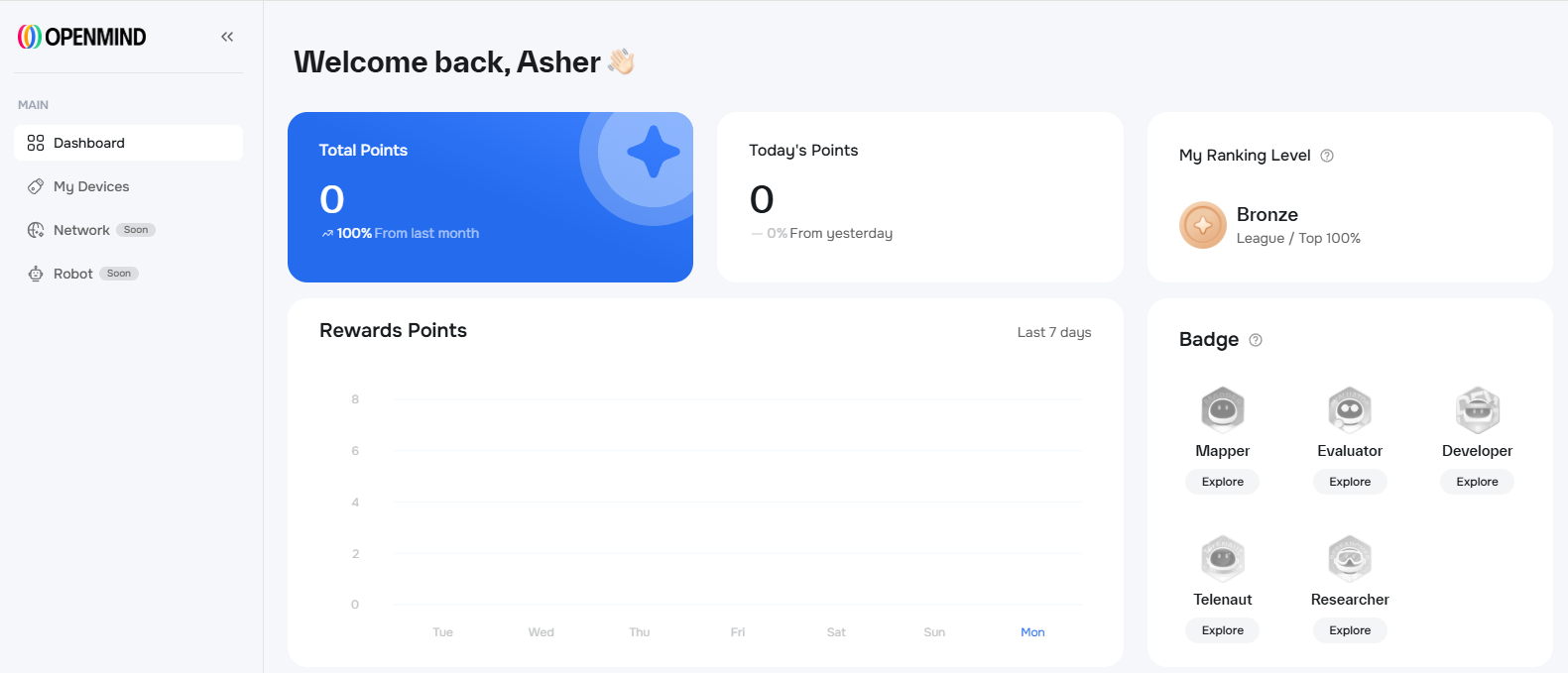
STEP 2. After installing the World Coin software on your phone, click "Personhood" and follow the process to register and receive the badge.
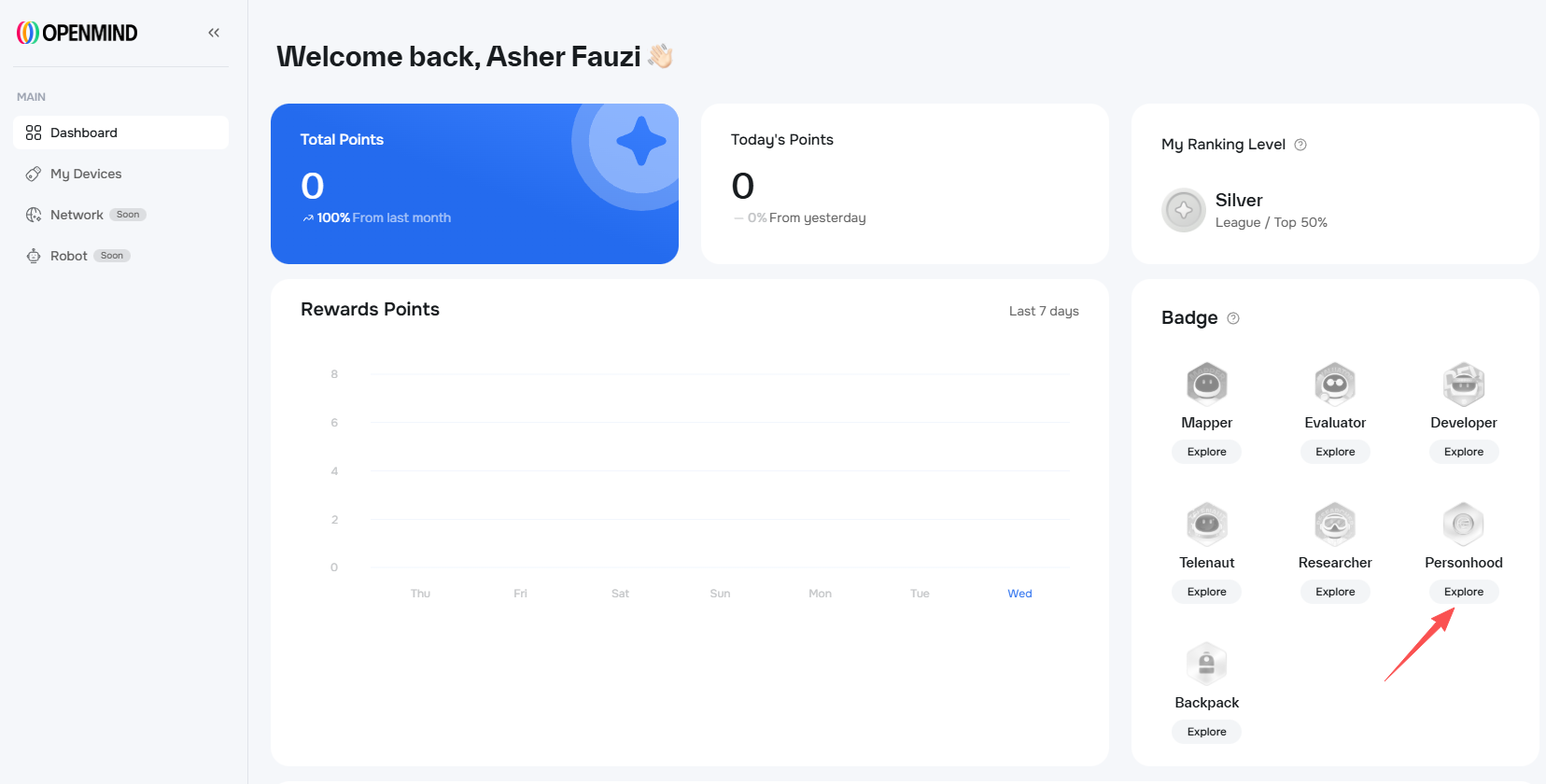
STEP 3. After installing the Backpack software on your phone and registering your personal wallet, click "Backpack", scan the QR code to connect, and receive the badge.
Altius: Committed to Developing a Virtual Machine-Agnostic Modular Execution Stack

Project Introduction

Altius is a set of high-performance on-chain execution infrastructure for the future, co-founded by former Hudson River Trading software engineer Anit Chakraborty and former Amber Group managing partner Annabelle Huang. It is committed to developing a virtual machine (VM)-agnostic modular execution stack.

In mid-February this year, Altius announced the completion of an $11 million Pre-Seed funding round, led by Founders Fund and Pantera, with participation from Archetype, Reforge, DCG, and others.

Interaction Tutorial

On December 13th, Altius, in collaboration with Open Academy, launched a Web3 knowledge test activity. 5 users can win limited edition Altius gift boxes, and 200 users can each receive 200 OA tokens. The deadline is December 23rd.

STEP 1. Go to the interaction website (Link: https://www.altiuslabs.xyz/blog/altius-x-open-academy-educational-course) and click the location shown below to jump to the Telegram link.
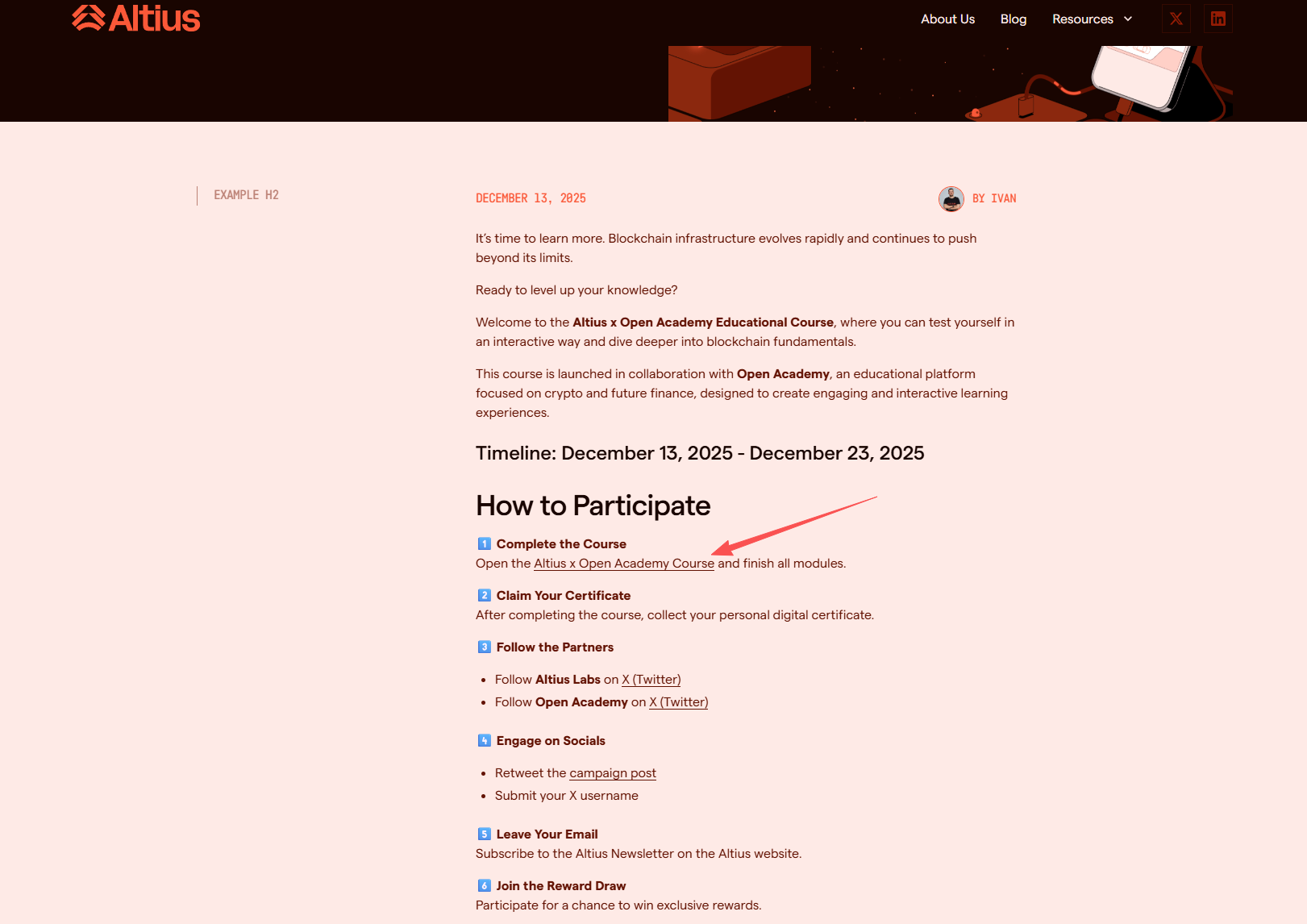
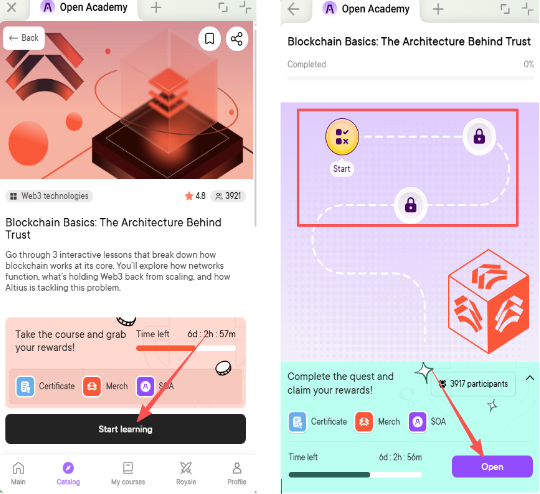
STEP 2. After entering the TG mini-app, click "Start learning". Complete the 3-level course tasks as prompted, then click "Open" below and complete the social tasks in order.
Criptos en tendencia

Preguntas relacionadas

QWhat is Cascade and what services does it offer?

ACascade is a crypto brokerage firm that provides a 24/7 trading application. It supports perpetual contract trading for cryptocurrencies, US stocks, and private assets. Users can link their bank accounts and perform perpetual trading, portfolio-based lending, and asset transfers within a single margin account.

QHow can users apply for early access to Cascade?

AUsers can apply for early access by visiting the official website (https://cascade.xyz/join), providing their X (Twitter) account and Google email address. This is a limited-time task.

QWhat is the main goal of the OpenMind project and who founded it?

AOpenMind aims to build a universal operating system for intelligent machines and a decentralized collaboration network, enabling robots from different manufacturers to securely share information and work together globally. It was founded by Stanford University professor Jan Liphardt.

QWhat are the steps to earn a badge on OpenMind platform?

ATo earn a badge on OpenMind, users must first register on the interaction website (https://fabric.openmind.org/sign-in) using a Google email. Then, they can obtain a badge by either: 1) Installing the World Coin app, clicking 'Personhood', and completing the registration process, or 2) Installing and registering a Backpack wallet, then clicking 'Backpack' and scanning a QR code to connect.

QWhat is the purpose of the Altius project and what recent activity did it announce?

AAltius is developing a virtual machine (VM)-agnostic modular execution stack for high-performance on-chain execution infrastructure. Recently, on December 13th, it launched a Web3 knowledge test activity in collaboration with Open Academy, offering prizes like limited edition gift boxes and OA tokens, which runs until December 23rd.

Lecturas Relacionadas

After Three Consecutive Quarters of Decline, Can the Crypto Market Find a Window for Stabilization in Q3?

The cryptocurrency market has just concluded its worst-performing quarter since 2022, with total capitalization dropping 12.6% to $2.1 trillion. All core metrics indicate capital is leaving the sector, not just rotating within it. Bitcoin fell 14.2% and Ethereum dropped 25.4% in Q2, breaking their previous correlation with US tech stocks. A key driver is the reversal in US spot Bitcoin ETF flows, which saw a net outflow of approximately $4.67 billion in Q2, including a record monthly outflow near $4.5 billion in June. While recent data suggests long-term holders are accumulating again, sustained ETF outflows mean continued selling pressure. Market focus is now singularly on the Federal Reserve. The upcoming July FOMC meeting is seen as the most critical event for Q3. A dovish signal could support Bitcoin reclaiming a $68,000-$84,000 range, while a hawkish stance might establish a new trading band around $50,000-$56,000. Additionally, regulatory uncertainty persists, with the progress of the crucial *CLARITY Act* stalling in the Senate, reducing its perceived 2026 passage probability to 40-45%. Despite the broad downturn, a few sectors showed growth. Prediction markets saw nominal volume surge 48.7% year-over-year to $113.8 billion, and tokenized collectibles transaction volume rose 143% quarterly to $1.4 billion. The Real-World Asset (RWA) tokenization sector also continued steady growth, now representing ~$28.1 billion in on-chain value. The market's foundation for an extreme crash appears limited, with Bitcoin price hovering near its 200-week moving average. However, the trading paradigm has shifted from narrative-driven speculation to decisions based on price action, policy developments, and interest rate expectations, making a broad sentiment-driven rally unlikely in the near term.

marsbitHace 54 min(s)

After Three Consecutive Quarters of Decline, Can the Crypto Market Find a Window for Stabilization in Q3?

marsbitHace 54 min(s)

BIT Trading Moment: BTC Still Suppressed by Weekly 200 EMA, Rejection May Restart Decline; Storage and Semiconductors that Surged Last Night Begin Falling in Evening Trading

**Crypto & Stock Market Wrap: Bitcoin Tests Resistance, Stocks Retreat After AI Surge** Bitcoin consolidates around $66,000, facing key resistance near $68,000—an area seen as a major psychological and technical hurdle where previous rallies have failed. Analysts note the cryptocurrency is caught between its 200-week moving average (~$63,333) and 200-week EMA (~$68,328). A clear break above $68k is needed to signal a stronger bullish trend, while a rejection could lead to a retest of $63k support. Market sentiment remains cautious, with low futures open interest pointing to a low-liquidity rebound rather than a full bull market. Bitcoin spot ETFs saw another $203 million inflow. US stock futures pointed lower after a strong Tuesday session led by a massive rebound in semiconductors and memory stocks. The rally was fueled by renewed optimism about AI-driven hardware demand, with Micron, SanDisk, and SK Hynix surging. However, those gains reversed in pre-market trading. Super Micro Computer (SMCI) soared over 20% after hours on strong guidance and a record backlog. Other standouts included Rocket Lab and nuclear energy plays Oklo and X-Energy. Rising oil prices (Brent above $91) and climbing Treasury yields (10-year near 4.64%), however, are reigniting inflation concerns and acting as a headwind for equities. In Asia, markets were mixed. South Korea's KOSPI pared early gains to close slightly higher as semiconductor stocks like SK Hynix gave back initial surges. Japan's Nikkei edged lower as the yen hit a fresh 38-year low against the dollar, raising fears of potential market intervention. Key events to watch include the Samsung Galaxy launch, AMD's AI event, and a slew of major tech earnings from Alphabet, Tesla, and IBM after the close on Wednesday, followed by the ECB meeting and Intel's earnings on Thursday.

marsbitHace 1 hora(s)

BIT Trading Moment: BTC Still Suppressed by Weekly 200 EMA, Rejection May Restart Decline; Storage and Semiconductors that Surged Last Night Begin Falling in Evening Trading

marsbitHace 1 hora(s)

Former CFTC Chairman, Circle President Tarbert: Preaching Long-Termism While Cashing Out $30 Million Himself

Former CFTC Chairman and Circle President Heath Tarbert has consistently advocated for a long-term vision in public, urging patience from investors as Circle’s stock price has fallen significantly from its peak. However, it has been revealed that since Circle’s IPO, Tarbert has continuously sold his CRCL shares through pre-arranged trading plans, cashing out approximately $30 million, without making any public market purchases. This contrast between his public messaging and personal actions has drawn criticism. Tarbert joined Circle in July 2023 as Chief Legal Officer, leveraging his regulatory experience to help guide the company through its IPO and expansion. Despite promoting stablecoins as long-term infrastructure, he established a 10b5-1 trading plan just before Circle went public, leading to substantial stock sales over the following year. In March 2026, he initiated another plan to sell more shares. His career trajectory highlights a pattern of moving between high-level regulatory roles and influential positions in the financial sector. After resigning as CFTC Chairman in early 2021, he joined Citadel Securities as Chief Legal Officer just 27 days later, during a period of intense regulatory scrutiny for the firm. He later joined Circle, aiding its efforts to navigate regulatory challenges for its public listing. While Tarbert's expertise in policy and compliance is valuable to companies like Circle, his actions—advocating long-term confidence while personally divesting—raise questions about the alignment between his public statements and his private financial decisions, leaving investors who followed his advice to bear the market risks.

marsbitHace 1 hora(s)

Former CFTC Chairman, Circle President Tarbert: Preaching Long-Termism While Cashing Out $30 Million Himself

marsbitHace 1 hora(s)

Gate Research Institute: The 'Wall Street-ization' Wave of Crypto Financial Products – Competition or Integration?

The article titled "Gate Research Institute: Are Crypto Financial Products Sparking a 'Wall Street' Wave—Competition or Convergence?" explores the evolving relationship between the crypto ecosystem and traditional finance (TradFi). The piece begins by reflecting on Bitcoin's original 2009 vision of decentralization, disintermediation, and moving away from banks. It then contrasts this with the 2024 landscape, where key crypto assets like Bitcoin are increasingly held through Wall Street products like ETFs issued by giants like BlackRock. The article questions whether this signifies that TradFi is systematically taking over the rights to issue, price, custody, and distribute crypto financial assets. The core argument is that this is not a zero-sum takeover but rather a bidirectional convergence where each side addresses the other's weaknesses. Crypto offers 24/7 global markets, programmable settlement, and open access but lacks compliant channels, institutional-grade custody, deep fiat liquidity, and mainstream distribution. TradFi possesses these but is constrained by legacy systems, limited operating hours, and slow settlement. Two primary convergence paths are highlighted: * **Path A (CEX to TradFi):** Exemplified by Gate, which has progressed from offering tokenized stocks and CFDs to providing direct, real stock trading (US, Hong Kong, South Korea) within its platform, using USDT. * **Path B (TradFi to Crypto):** Exemplified by Robinhood, which has integrated crypto trading, acquired exchanges like Bitstamp, and is moving traditional assets like stocks onto the blockchain via tokenization and its own Layer 2. Both paths are ultimately competing to become the next-generation, unified financial account—a "super account" where users can seamlessly trade cryptocurrencies, stocks, ETFs, RWA (Real World Assets), and tokenized treasury products in one interface. The growth of RWA and tokenized treasuries (e.g., BlackRock's BUIDL) is presented as the asset-layer fusion, providing stable, yield-bearing assets on-chain and acting as a bridge between the two worlds. In conclusion, the "Wall Street-ization" of crypto is framed as a mutual transformation. Decentralized ideals persist in the protocol layer, while at the application layer, a more efficient, global, and accessible unified capital market is emerging from this convergence. The future competition lies not between crypto exchanges and stockbrokers, but between platforms vying to offer the most comprehensive asset coverage, liquidity, and user experience within a single account.

marsbitHace 1 hora(s)

Gate Research Institute: The 'Wall Street-ization' Wave of Crypto Financial Products – Competition or Integration?

marsbitHace 1 hora(s)

Trading

Spot

Artículos destacados

Cómo comprar HOT

¡Bienvenido a HTX.com! Hemos hecho que comprar Holo (HOT) sea simple y conveniente. Sigue nuestra guía paso a paso para iniciar tu viaje de criptos.Paso 1: crea tu cuenta HTXUtiliza tu correo electrónico o número de teléfono para registrarte y obtener una cuenta gratuita en HTX. Experimenta un proceso de registro sin complicaciones y desbloquea todas las funciones.Obtener mi cuentaPaso 2: ve a Comprar cripto y elige tu método de pagoTarjeta de crédito/débito: usa tu Visa o Mastercard para comprar Holo (HOT) al instante.Saldo: utiliza fondos del saldo de tu cuenta HTX para tradear sin problemas.Terceros: hemos agregado métodos de pago populares como Google Pay y Apple Pay para mejorar la comodidad.P2P: tradear directamente con otros usuarios en HTX.Over-the-Counter (OTC): ofrecemos servicios personalizados y tipos de cambio competitivos para los traders.Paso 3: guarda tu Holo (HOT)Después de comprar tu Holo (HOT), guárdalo en tu cuenta HTX. Alternativamente, puedes enviarlo a otro lugar mediante transferencia blockchain o utilizarlo para tradear otras criptomonedas.Paso 4: tradear Holo (HOT)Tradear fácilmente con Holo (HOT) en HTX's mercado spot. Simplemente accede a tu cuenta, selecciona tu par de trading, ejecuta tus trades y monitorea en tiempo real. Ofrecemos una experiencia fácil de usar tanto para principiantes como para traders experimentados.

112 Vistas totalesPublicado en 2024.12.11Actualizado en 2026.06.02

Cómo comprar HOT

Qué es HOLO

Entendiendo HOLO: El Futuro de las Aplicaciones Descentralizadas Introducción a HOLO, $holo En el paisaje en rápida evolución de las criptomonedas y las tecnologías descentralizadas, HOLO, también conocido como Holo, ha emergido como un jugador notable. Este proyecto innovador facilita el desarrollo de aplicaciones descentralizadas (DApps) a través de su arquitectura subyacente conocida como Holochain. Con la visión de crear un puente entre el internet centralizado que conocemos hoy y el ecosistema descentralizado del futuro, HOLO tiene como objetivo hacer que las DApps sean accesibles para el usuario cotidiano sin los obstáculos de instalaciones complejas y habilidades técnicas. ¿Qué es HOLO, $holo? En su núcleo, HOLO es una plataforma distribuida diseñada para alojar DApps construidas sobre Holochain. A diferencia de las plataformas de blockchain tradicionales, Holochain adopta un enfoque único al permitir que cada aplicación funcione bajo su propio conjunto de reglas. El mandato de HOLO es conectar estas aplicaciones Holochain (hApps) con los usuarios a través de tecnologías web familiares. El objetivo principal de HOLO es democratizar el acceso y uso de las DApps al permitir que los usuarios accedan a estas aplicaciones directamente a través de navegadores web estándar. Esta accesibilidad es clave para reducir la fricción para los usuarios promedio de internet, permitiéndoles utilizar aplicaciones de próxima generación sin necesidad de navegar por las complejidades a menudo asociadas con las criptomonedas y el uso de DApps. Creador de HOLO, $holo HOLO surge de la visión de sus creadores, Arthur Brock y Eric Harris-Braun. Ambos son desarrolladores experimentados y codificadores de contratos, y comenzaron el proyecto en diciembre de 2016 como parte del Proyecto MetaCurrency. Esta iniciativa se centró inicialmente en desarrollar herramientas y tecnologías destinadas a fomentar una economía de igual a igual. Sus antecedentes en codificación y emprendimientos los posicionaron de manera única para abordar los desafíos del desarrollo y alojamiento de aplicaciones descentralizadas. Inversores de HOLO, $holo Si bien los detalles específicos sobre inversores individuales en HOLO no están fácilmente disponibles, es evidente que el proyecto ha recibido un respaldo y atención significativos de la comunidad de criptomonedas en general. Su enfoque innovador para alojar aplicaciones descentralizadas, junto con una comunidad de apoyo, ha alimentado el interés y la inversión en el proyecto. ¿Cómo funciona HOLO, $holo? HOLO opera creando un extenso ecosistema en el que los anfitriones contribuyen con almacenamiento y poder de procesamiento para las DApps basadas en Holochain. Al convertir sus dispositivos o incluso hardware dedicado como HoloPorts en nodos de alojamiento, los individuos pueden monetizar efectivamente los recursos no utilizados de sus computadoras. Los componentes funcionales clave de HOLO incluyen: Proveedor de Aplicaciones: Estas entidades compran créditos de alojamiento de HOLO, que se mantienen en una cuenta de reserva. Este mecanismo permite a los desarrolladores de DApp asegurar los recursos necesarios para ejecutar sus aplicaciones. Anfitrión: Individuos u organizaciones que eligen alojar DApps generan registros de servicio firmados a medida que responden a las solicitudes de los usuarios. Este proceso asegura que todas las interacciones en la red sean rastreadas y autenticadas. Prueba de Servicio: Un elemento crucial de la integridad operativa de HOLO, los anfitriones envían facturas a los proveedores de aplicaciones, que luego validan el servicio proporcionado. Tras la validación, los anfitriones reciben compensación en forma de créditos de alojamiento. HoloFuel: Sirviendo como el token nativo de la red Holo, HoloFuel está diseñado para microtransacciones. Este token facilita el extenso rendimiento de transacciones necesario para que la plataforma soporte miles de millones de transacciones simultáneas sin problemas. La sinergia combinada de estos componentes asegura un entorno de alojamiento robusto y descentralizado, impulsando la utilidad y el alcance de las aplicaciones Holochain. Cronología de HOLO, $holo El viaje de HOLO ha estado marcado por varios hitos desde su inicio: Diciembre de 2016: La creación de HOLO por Arthur Brock y Eric Harris-Braun como parte del Proyecto MetaCurrency. 2018: La emisión de un token ERC20, conocido como HoloToken (HOT), que sirvió como un “IOU” que es canjeable por HoloFuel al lanzamiento del proyecto. Desarrollo Continuo: Avances continuos, pruebas y optimización de la red Holo y HoloFuel, asegurando que el proyecto permanezca a la vanguardia de la tecnología de alojamiento de aplicaciones descentralizadas. Características Únicas de HOLO, $holo HOLO se destaca en el abarrotado campo de las criptomonedas y plataformas descentralizadas debido a sus características distintivas y el marco innovador en el que opera: Alojamiento de Igual a Igual: HOLO abre la puerta para que cualquiera se convierta en anfitrión de DApps simplemente utilizando sus computadoras. Esta democratización del alojamiento es similar a cómo plataformas como Airbnb interrumpieron la industria hotelera tradicional al empoderar a los individuos para participar en la economía. Marco Holochain: Central a las innovaciones de HOLO está el marco Holochain en sí. Posicionado como una tecnología de próxima generación, Holochain cuenta con escalabilidad sin igual, velocidades de transacción rápidas, eficiencia energética excepcional y rentabilidad en comparación con las tecnologías de blockchain convencionales. HoloFuel para Microtransacciones: HoloFuel está meticulosamente diseñado para acomodar microtransacciones, permitiendo que la red Holo gestione de manera eficiente miles de millones de transacciones simultáneamente. Esta capacidad es fundamental para la adopción generalizada, permitiendo a los desarrolladores crear aplicaciones que sean económicamente viables a gran escala. Conclusión HOLO representa un avance significativo en el panorama de las aplicaciones descentralizadas y la tecnología blockchain. Con su infraestructura robusta, enfoque amigable para el usuario y el innovador marco Holochain, HOLO está preparado para desempeñar un papel crucial en el futuro de la web. Si mejorará las experiencias cotidianas de internet o redefinirá cómo los desarrolladores y usuarios interactúan con las aplicaciones digitales sigue siendo una incógnita, pero su progreso hasta ahora vale la pena seguirlo a medida que el mundo continúa avanzando hacia una economía digital descentralizada. A medida que el proyecto evoluciona, sus desarrollos continuos y el compromiso de la comunidad serán componentes cruciales de su éxito, estableciendo potencialmente a HOLO como una plataforma principal para aplicaciones descentralizadas. Con el creciente interés en torno a las tecnologías descentralizadas, la importancia e impacto de proyectos como HOLO solo aumentarán en los años venideros.

113 Vistas totalesPublicado en 2024.12.26Actualizado en 2024.12.26

Qué es HOLO

Discusiones

Bienvenido a la comunidad de HTX. Aquí puedes mantenerte informado sobre los últimos desarrollos de la plataforma y acceder a análisis profesionales del mercado. A continuación se presentan las opiniones de los usuarios sobre el precio de HOT (HOT).

活动图片














