Hong Kong Proposes New Rules To Allow Crypto Investments For Insurers – Report

bitcoinistPublicado a 2025-12-23Actualizado a 2025-12-23

Resumen

Hong Kong's Insurance Authority has proposed new rules to allow insurers to invest in cryptocurrencies and stablecoins, as part of the city's broader strategy to become a global digital asset hub. The proposal, subject to public consultation from February to April 2026, would impose a 100% risk charge on crypto assets, requiring insurers to hold reserves equal to their crypto investments. Stablecoins would be treated differently, with risk charges based on the fiat currency they are pegged to. The move aims to support the insurance industry and economic development. Separately, the Hong Kong Monetary Authority is expected to issue its first stablecoin licenses in early 2026, though mainland China's strict stance against stablecoins may complicate applications involving Chinese institutions or the yuan.

Hong Kong is reportedly exploring new rules that would allow insurance companies to invest in cryptocurrencies and the infrastructure sector as part of its efforts to become a leading hub for digital assets and support broader economic development.

Hong Kong Eyes Crypto Investments For Insurers

On Monday, Bloomberg reported that the Hong Kong Insurance Authority has proposed a set of new rules that could channel insurance capital into digital assets, including cryptocurrencies and stablecoins.

Hong Kong financial authorities have been actively working to develop a comprehensive framework that supports the expansion of the digital assets industry, part of its strategy to become a leading crypto hub in the world.

According to the December 4 presentation reviewed by Bloomberg, the insurance regulator would impose a 100% risk charge on crypto assets, requiring insurers to hold reserves equal to the value of their crypto investments.

Meanwhile, stablecoin investments would be approached differently under the new proposal, with risk charges based on the fiat currency the Hong Kong-regulated token is pegged to.

The Insurance Authority proposal, which could still change in the coming months, will reportedly be open for public consultation from February through April 2026, followed by legislative submissions.

The regulator told Bloomberg that it initiated the review of the risk-based capital regime this year with the main goal of supporting the insurance industry and broader economic development.

Notably, the insurance authority website states that there were 158 authorized insurers in Hong Kong as of June 2025. Moreover, the total gross premiums of the Hong Kong insurance industry were HK$635 billion, worth approximately $82 billion, in 2024.

“We are at the stage of gauging industry feedback and will also put the proposals for public consultation in due course,” a spokesperson for the regulator told the news media outlet.

The proposed insurer framework also addresses new infrastructure rules as the city seeks new growth. The regulator is reportedly planning capital incentives for investments in Hong Kong or on the mainland, as well as for projects listed or issued in the financial hub.

HK’s Stablecoin Landscape

As Bloomberg noted, the Hong Kong Monetary Authority (HKMA) is expected to grant the first batch of stablecoin issuer licenses at the start of 2026. However, some industry players believe that the regulator’s timeline could be delayed.

As reported by Bitcoinist, the People’s Bank of China (PBOC) and other top financial regulators recently affirmed that stablecoins do not qualify as legal tender in the mainland, as they don’t meet regulatory requirements and risk of being used for illegal activities.

Following the pronouncement, multiple analysts suggested that the PBOC’s recent declarations not only sank hopes that Beijing might have softened its stance on cryptocurrencies but also would affect Hong Kong’s efforts to become a hub for the stablecoin industry.

Earlier this year, the HKMA enacted the Stablecoins Ordinance, which directs any individual or entity seeking to issue a fiat-referenced stablecoin (FRS) in Hong Kong, or any Hong Kong Dollar-pegged token, to obtain a license from the regulator.

Multiple companies have applied for the license, with more than 30 applications filed this year, according to local news outlets. The list of applicants includes logistics technology firm Reitar Logtech and the overseas arm of Chinese mainland financial technology giant Ant Group.

According to the founding director of the Law, Innovation, Technology and Entrepreneurship Lab at the University of Hong Kong’s Faculty of Law, Brian Tang, Beijing’s stance means that applicants for Hong Kong’s stablecoin licenses would need to reconsider if the application submitted to the HKMA touches mainland China issuers and users.

A spokesperson stated that the HKMA was reviewing the applications and aimed to begin with a reduced number of licenses. However, they noted that even if Hong Kong proceeds with the original approval schedule, projects that involve the yuan or mainland Chinese institutions would likely be delayed.
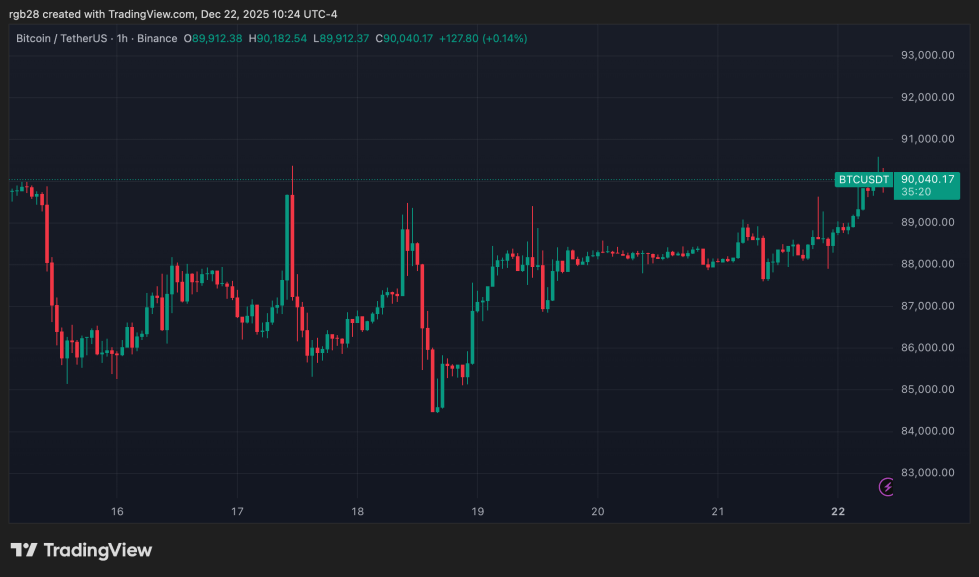
Bitcoin (BTC) trades at $90,040 in the one-week chart. Source: BTCUSDT on TradingView


Preguntas relacionadas

QWhat is the main purpose of Hong Kong's proposed new rules for insurance companies?

AThe main purpose is to allow insurance companies to invest in cryptocurrencies and the infrastructure sector as part of Hong Kong's strategy to become a leading hub for digital assets and support broader economic development.

QWhat specific risk charge would be imposed on crypto assets under the proposed rules?

AA 100% risk charge would be imposed, requiring insurers to hold reserves equal to the full value of their crypto investments.

QHow will the risk charge for stablecoin investments be determined according to the proposal?

AThe risk charge for stablecoins will be based on the fiat currency that the Hong Kong-regulated token is pegged to.

QWhen is the Hong Kong Insurance Authority's proposal expected to be open for public consultation?

AThe proposal is expected to be open for public consultation from February through April 2026.

QWhat potential impact did analysts suggest the PBOC's declaration on stablecoins would have on Hong Kong?

AAnalysts suggested that the PBOC's declaration, which states stablecoins are not legal tender, would affect Hong Kong's efforts to become a hub for the stablecoin industry and means license applicants must reconsider if their application involves mainland China issuers and users.

Lecturas Relacionadas

380,000 Apps Exposed, 2,000+ Apps Leaked Secrets: AI Programming Turns 'Intranet' into Public Internet

Israeli cybersecurity firm RedAccess uncovered a severe data exposure trend linked to "vibe coding" or AI-powered software development tools. Their research found approximately 38,000 publicly accessible web applications built with platforms like Lovable, Base44, Netlify, and Replit. Of these, an estimated 2,000 apps exposed sensitive corporate and personal data, including medical records, financial information, internal strategic documents, and customer chat logs. In some cases, access even granted administrative privileges. The core issue stems from default privacy settings that make applications public by default, combined with a lack of built-in security controls (like authentication) in the AI-generated code. This allows employees without security expertise—"citizen developers"—to easily create and deploy applications that bypass standard corporate security reviews. The exposed apps, often indexed by search engines, are trivially discoverable. While some platform providers (Replit, Lovable, Wix/Base44) argue that security configuration is the user's responsibility and question the validity of some findings, security researchers confirm the widespread reality of such exposures. This pattern, also noted in prior studies, highlights a critical security gap as AI democratizes app creation, potentially leading to massive, unintentional data leaks.

marsbitHace 31 min(s)

380,000 Apps Exposed, 2,000+ Apps Leaked Secrets: AI Programming Turns 'Intranet' into Public Internet

marsbitHace 31 min(s)

Attracting Global Capital, Asia's New 'Super Cycle' Is Unfolding

Investors are turning to Asia as the next frontier for global equity growth, with a new "super cycle" unfolding across the region. Driven by the AI revolution, Asian markets, particularly South Korea, have seen significant rallies. According to Morgan Stanley analysis, the underlying drivers of Asia's industrial cycle are shifting from traditional sectors like real estate and manufacturing to massive investments in AI infrastructure, energy security and transition, and supply chain resilience. Fixed asset investment in Asia is projected to grow from around $11 trillion in 2025 to $16 trillion by 2030, with a 7% annual growth rate from 2026-2030. The AI wave is a primary catalyst, driving immense capital expenditure for chips, servers, data centers, and power systems. Asia is central to this hardware supply chain. In China, AI investment is focused on building a full-system domestic capability, with the local AI chip market potentially reaching $86 billion by 2030. Beyond AI, China's export story is expanding from EVs and batteries to robotics. The country already captures about half of new global industrial robot demand and over 90% of humanoid robot shipments. This growth phase mirrors the early stages of China's EV export boom. Simultaneously, energy security investments, spurred by AI's massive power needs, are rising, with China benefiting from its leadership in solar, batteries, and EVs. Regional defense spending is also increasing structurally, supporting demand for advanced manufacturing. The main beneficiaries are China, South Korea, and Japan, positioned in core supply chain areas. However, risks remain, including potential overcapacity, profit margin pressures from competition, persistent technological restrictions, geopolitical friction, and workforce displacement due to AI-driven automation. Market volatility is also expected to increase as investor expectations diverge on the realization of these capital investment and export themes.

marsbitHace 32 min(s)

Attracting Global Capital, Asia's New 'Super Cycle' Is Unfolding

marsbitHace 32 min(s)

Funding Weekly Report | 14 Public Funding Events, Kalshi Completes $10B New Funding Round at $220B Valuation Led by Coatue Management

Weekly Funding Roundup: 14 Deals and $10.49B+ in Total Funding, Led by Kalshi's $1B Round Last week (5.4-5.10) saw 14 notable funding events in the global blockchain ecosystem, raising over $10.49 billion in total. Key highlights include Kalshi, a prediction market platform, securing a $1 billion round led by Coatue Management, reaching a $22 billion valuation. The platform now boasts ~2 million MAUs and $178B in annualized trading volume. In DeFi, regulated on-chain reinsurer OnRe raised $5 million in Series A funding, and Bitcoin-backed credit protocol Saturn Credit completed a $2 million seed round. For Infrastructure & Tools, OpenTrade raised $17 million to expand its stablecoin yield infrastructure, and RWA platform Balcony secured $12.7 million to deploy its property settlement service in the US. Centralized Finance saw one deal: AI-driven trading platform Stockcoin.ai completed a seed round led by Amber Group. In the prediction market sector alongside Kalshi, AI-powered platform Elastics raised $2 million. Other notable deals include SC Ventures' strategic investment in crypto market maker GSR and Centrifuge securing a "seven-figure" investment from Coinbase to become a core RWA partner for Base. On the investor side, Haun Ventures raised a new $1 billion fund targeting crypto and AI, and Multi Investment raised ~$616 million to focus on blockchain and Web3 investments.

marsbitHace 1 hora(s)

Funding Weekly Report | 14 Public Funding Events, Kalshi Completes $10B New Funding Round at $220B Valuation Led by Coatue Management

marsbitHace 1 hora(s)

Trading

Spot
Futuros
活动图片




