Hong Kong Crypto Scam Shock: Woman Loses Nearly $1 Million As AI Fraud Surges

bitcoinistPublicado a 2026-04-19Actualizado a 2026-04-19

Resumen

Hong Kong Crypto Scam Shock: Woman Loses Nearly $1 Million As AI Fraud Surges A Hong Kong woman lost HK$7.7 million (approximately $982,000) after being lured into a fraudulent cryptocurrency investment platform. The scam began on Telegram, where a person posing as an investment expert promoted an AI-powered trading strategy with guaranteed returns. After making 17 transfers of USDT and Ethereum, the victim was unable to withdraw her funds. Hong Kong Police have reported a significant surge in such online investment fraud, with over 80 cases recorded in a single week, totaling losses of nearly HK$80 million. Authorities warn that scammers are increasingly using sophisticated tactics, including promises of "AI trading" and "guaranteed profits," to appear credible. This follows a similar incident last month where a retiree lost HK$6.6 million in a multi-stage scam. Police urge the public to be cautious of unsolicited investment advice and to verify platforms through the official CyberDefender service before transferring any money. They emphasize that no legitimate investment can guarantee returns. Investigations are ongoing.

Her withdrawal requests kept getting denied. That was the moment a Hong Kong woman realized the crypto investment platform she had been using for weeks was fake — and that her money was gone.

Scam Built On Fake Promises

The woman had made 17 separate transfers of USDT and Ethereum to the fraudulent platform, losing nearly HK$7.7 million, roughly $982,000.

It started on Telegram, where someone posing as an investment expert approached her and pitched a trading strategy powered by artificial intelligence.

The promised returns were guaranteed. The platform looked convincing. She transferred the funds. When she tried to take her money out, nothing came through.

Hong Kong Police have since confirmed the case as part of a wider surge in online investment fraud hitting the city.

Based on reports from authorities, over 80 such cases were recorded in a single week, with combined losses topping HK$80 million — close to $10 million.

Different Types Of Scam

According to Vectra, AI scams now fall into seven distinct categories, with deepfake video, voice cloning, and AI-driven BEC among the biggest threats to enterprises. This framework spans both consumer- and enterprise-focused attacks.
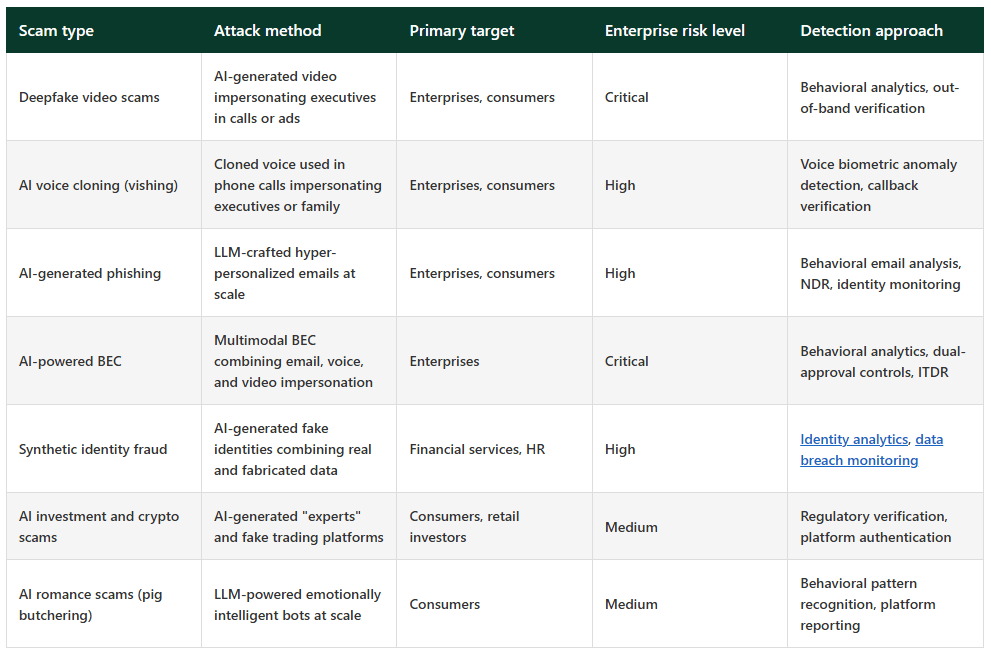
Types of AI scams. Source: Vectra

A Pattern Repeating Itself

This is not the first case of its kind, and it is not the last. Just last month, a 66-year-old retiree lost HK$6.6 million to a multi-stage scheme that played out over six months.

In that case, scammers first posed as investment advisors to win the victim’s trust, then came back later with a fake “recovery” offer — squeezing even more money out of someone who had already been burned.

Officials say the playbook is getting more sophisticated. Fraudsters are now borrowing the language of technology to add credibility to their pitches.

BTCUSD now trading at $76,179. Chart: TradingView

Terms like “AI trading” and “guaranteed profits” are being used to draw people in, according to the Hong Kong Police Force.

The artificial intelligence angle makes the pitch harder to dismiss, especially for victims who may not be familiar with how such systems actually work.

Authorities Push Public To Verify Before Transferring

Police are urging residents to be cautious with unsolicited investment advice, whether it arrives through social media, messaging apps, or anywhere else.

They are also encouraging people to use the official CyberDefender platform to check whether an investment site or service carries signs of fraud before sending any funds.

One warning is worth repeating: no legitimate investment guarantees returns. Reports indicate that every recent case in this wave involved that exact promise.

The woman who lost nearly $1 million, the retiree who lost HK$6.6 million — both were told their money was safe and the profits were certain. Neither turned out to be true.

Investigations into the cases are ongoing.

Featured image from The Verge, chart from TradingView

Preguntas relacionadas

QHow much money did the Hong Kong woman lose in the crypto scam?

AShe lost nearly HK$7.7 million, which is roughly $982,000.

QWhat was the initial point of contact where the victim was approached by the scammer?

AThe scammer first approached her on the messaging app Telegram, posing as an investment expert.

QAccording to Vectra, what are some of the biggest AI scam threats to enterprises?

AThe biggest threats include deepfake video, voice cloning, and AI-driven Business Email Compromise (BEC).

QWhat tool are Hong Kong authorities encouraging the public to use to verify investment sites?

AThey are encouraging people to use the official CyberDefender platform to check for signs of fraud.

QWhat common promise was made in every recent case of this fraud wave, according to reports?

AEvery recent case involved the promise of guaranteed returns, which is a sign of a scam as no legitimate investment can guarantee profits.

Lecturas Relacionadas

Jensen Huang's CMU Speech: In the AI Era, Don't Just Watch, Build

Jensen Huang, CEO of NVIDIA and a first-generation immigrant, delivered the commencement address to Carnegie Mellon University's class of 2026. He shared his personal journey from a humble background to founding NVIDIA, emphasizing resilience, learning from failure, and the responsibility that comes with leadership. Huang framed the present moment as the dawn of the AI revolution, a shift he believes is more profound than previous computing waves. He described AI as fundamentally resetting computing—moving from human-written software to machines that understand, reason, and use tools. This will create a new industry for generating intelligence and transform every sector. While acknowledging AI's potential to automate tasks and displace some jobs, Huang distinguished between the *tasks* of a job and its core *purpose*. He argued AI will augment human capability, not replace humans. The real risk, he stated, is not AI itself, but people being left behind by those who effectively use AI. He presented AI as a generational opportunity for massive infrastructure investment—in chip factories, data centers, energy grids, and advanced manufacturing—that could re-industrialize nations like the U.S. and bridge the digital divide by making computing and intelligent tools accessible to all. Huang called for a balanced approach: advancing AI safely and responsibly, establishing prudent policies, ensuring broad access, and encouraging universal participation. He urged the graduates not to fear the future but to engage with optimism and ambition, reminding them of CMU's motto, "My heart is in the work." His core message was clear: this is their moment to actively build and shape the AI-powered future, not merely observe it.

marsbitHace 50 min(s)

Jensen Huang's CMU Speech: In the AI Era, Don't Just Watch, Build

marsbitHace 50 min(s)

The Era Has Arrived Where Human Writers Must Prove They Are Not Machines

The article describes an era where AI-generated content is flooding the market, forcing human authors to prove they are not machines. It begins with the example of dozens of AI-written, error-ridden biographies of Henry Kissinger appearing on Amazon within hours of his death, a pattern repeated for other deceased celebrities and even living experts who find fraudulent books under their names. This spam content has exploded, with monthly new book releases on platforms like Amazon reaching 300,000 by late 2025. The issue spans genres, from suspiciously high proportions of AI-written teen romance and self-help books to dangerous, AI-generated foraging guides containing lethal advice. The platforms' automated review systems, designed to catch plagiarism and banned words, are ill-equipped to detect AI-generated text that avoids these pitfalls while being nonsensical or fraudulent. The problem has infiltrated traditional publishing. A major publisher, Hachette, had to recall a bestselling horror novel after AI detection tools suggested 78% of its content was machine-generated. An acclaimed European philosophy book was later revealed to be entirely written by AI under a fake author persona. In response, authors are fighting back. At the 2026 London Book Fair, 10,000 writers published a blank book titled "Don't Steal This Book" containing only their signatures—using emptiness as a protest weapon in an age of AI overproduction. Initiatives like the "Human Author Certification" program have emerged, ironically placing the burden on humans to prove their work is not machine-made. The article warns of a vicious cycle: AI-generated low-quality books pollute the data used to train future AI models, leading to "model collapse" and an ever-worsening flood of digital waste, eroding trust in publishing and devaluing human creativity.

marsbitHace 1 hora(s)

The Era Has Arrived Where Human Writers Must Prove They Are Not Machines

marsbitHace 1 hora(s)

Trading

Spot
Futuros
活动图片