HIVE tests investor appetite for AI-Bitcoin infrastructure in Andean markets

cointelegraphPublicado a 2025-12-11Actualizado a 2025-12-11

Resumen

HIVE Digital Technologies has become the first Bitcoin and AI infrastructure company to list on a Latin American exchange, debuting on the Colombian Stock Exchange under the ticker HIVECO. This listing provides access to investors across the Andean market system, which includes Colombia, Peru, and Chile. The move reflects the sector’s expansion as Bitcoin mining and high-performance computing (HPC) companies seek broader capital market opportunities. HIVE, which already trades in North America and Europe, has existing operations in Latin America, including hydroelectric-powered data centers in Paraguay. The company, like other major Bitcoin miners, has been diversifying into AI and HPC due to compressed mining margins following the 2024 Bitcoin halving, rising costs, and falling revenues. This strategic shift highlights the growing importance of diversification in the current challenging mining economy.

HIVE Digital Technologies has debuted on the Colombian Stock Exchange under the ticker HIVECO, becoming the first Bitcoin and AI infrastructure company to trade publicly on a Latin American exchange. The move marks another sign of the sector’s expansion as Bitcoin miners and high-performance computing (HPC) companies push deeper into global capital markets.

Announced on Thursday, the listing makes HIVE available to investors across the Andean market system, which links the exchanges of Colombia, Peru and Chile.

For a region traditionally dominated by energy and natural-resources issuers, the addition of a digital infrastructure company offers exposure to a growing sector that sits at the intersection of high-performance computing, renewable power and Bitcoin (BTC).

Colombia’s exchange is one of the Andean marketplace’s most institutionally connected platforms, giving HIVE access to a broader, more integrated investor base than is typical elsewhere in Latin America.

Source: HIVE Digital Technologies

HIVE shares are already traded in North America and Europe, including on the TSX Venture Exchange, the Nasdaq and the Frankfurt Stock Exchange.

On the Nasdaq, HIVE shares slipped more than 1% on Thursday, though they remain up for the year.

Related: Bitcoin miners gambled on AI last year, and it paid off

HIVE’s Latin American footprint grows as Bitcoin mining economics tighten

HIVE already has an operational footprint in Latin America, having developed Tier I data centers in Paraguay powered entirely by hydroelectricity. The company began expanding its presence there in late 2024 and completed the acquisition of its Yguazú site in March of this year, as previously reported by Cointelegraph.

HIVE was among the early Bitcoin miners to pivot toward AI and high-performance computing as mining economics tightened and demand for GPU infrastructure surged.

Other major public miners, including Core Scientific, Hut 8, Riot Platforms, TeraWulf and Marathon Holdings have also expanded into AI and HPC workloads in varying degrees.
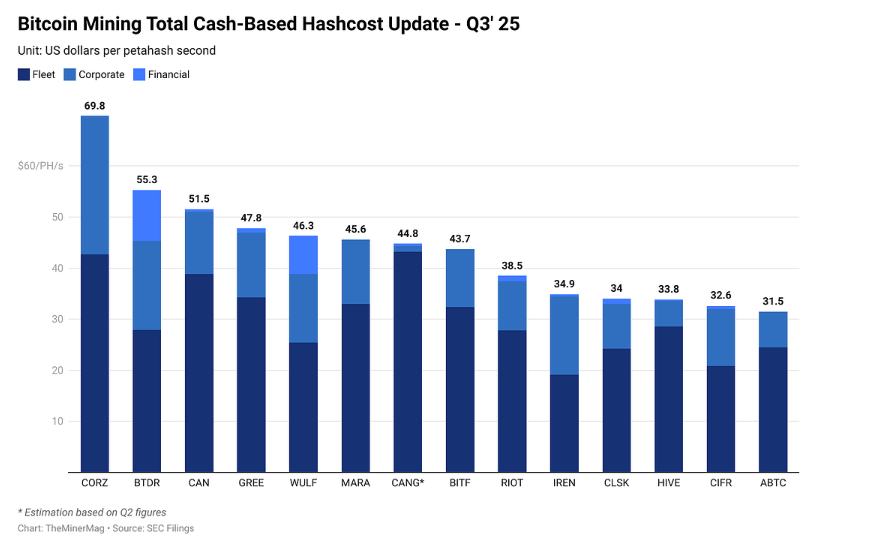
Current mining costs for public Bitcoin miners. Source: TheMinerMag

While these companies remain active in Bitcoin mining, the sector is operating in one of its toughest environments to date. Industry research describes current miner margins as historically compressed, with revenue at “structural lows” amid falling hash price and rising operating costs.

Much of the pressure stems from the 2024 Bitcoin halving, which reduced block rewards to 3.125 BTC and effectively halved mining revenue. Higher electricity costs and ongoing equipment expenses have added further strain, making diversification into AI and HPC increasingly important for many miners.

Related: Thirteen years after the first halving, Bitcoin mining looks very different in 2025

Criptos en tendencia

Lecturas Relacionadas

Blood Loss of $55 Million Selling 3,588 BTC, Strategy Becomes a Literal Scumbag

On July 6th, Strategy (formerly MicroStrategy) disclosed in an SEC filing that it sold 3,588 Bitcoin (BTC) between June 29th and July 5th for approximately $216 million, at an average price of ~$60,200. This marked the company's largest net sale since initiating its Bitcoin strategy in 2020 and its first institutionalized reduction of its core holding. The sale resulted in a realized loss of about $54.8 million, as the selling price was below its average cost basis of ~$75,476 per BTC. The proceeds were used to pay preferred stock dividends and replenish USD reserves. This move follows a new "Digital Credit Capital Framework" approved on June 29th, authorizing the sale of up to $1.25 billion in Bitcoin. The sale consumes roughly 17% of this authorized amount in its first week. Strategy's foundational narrative, built by founder Michael Saylor, was a commitment to "never sell" Bitcoin. The recent institutionalized selling framework and these substantial sales represent a significant shift from that original promise. While the amount sold is only 0.4% of Strategy's total holdings of 843,775 BTC, the action challenges the premium at which its stock (MSTR) trades relative to its Bitcoin holdings. Investors had priced in the "never sell" narrative. The company now faces a contradiction: it sells Bitcoin at a loss to pay dividends on the preferred stock it issued to fund Bitcoin purchases. Saylor has framed selling as a tool for future strategic purchases, but each sale erodes the credibility of the original commitment, potentially threatening the premium valuation of MSTR shares.

Foresight NewsHace 1 hora(s)

Blood Loss of $55 Million Selling 3,588 BTC, Strategy Becomes a Literal Scumbag

Foresight NewsHace 1 hora(s)

JP Morgan Tokenized Fund Surges 250% in TVL in One Month, Institutional Funds Are Treating Ethereum as the Default Underlying Layer

JPMorgan's tokenized money market fund, JLTXX, has seen its on-chain total value locked (TVL) surge approximately 250% in a month, reaching nearly $700 million from an initial $200 million since its launch seven weeks ago. The fund, which invests in short-term U.S. Treasuries and repos, operates exclusively on the public Ethereum mainnet, signaling growing institutional acceptance of Ethereum as a foundational layer for compliant financial products. A key driver of this growth is its inclusion as reserve assets for stablecoins like USDG, meeting requirements under U.S. stablecoin legislation. Simultaneously, despite a significant price decline—ETH has fallen over 50% from its 2025 high—institutional accumulation continues. BitMine Immersion Technologies, led by Tom Lee, purchased an additional $73 million worth of ETH last week, bringing its holdings to roughly 4.8% of Ethereum's circulating supply. The article highlights a divergence: while the tokenization of real-world assets and stablecoin reserves is driving long-term institutional adoption of Ethereum's infrastructure, short-term price action remains pressured by market sentiment and ETF outflows. This suggests that institutional on-chain activity, though a positive fundamental development, may not serve as a reliable signal for near-term price bottoms.

marsbitHace 1 hora(s)

JP Morgan Tokenized Fund Surges 250% in TVL in One Month, Institutional Funds Are Treating Ethereum as the Default Underlying Layer

marsbitHace 1 hora(s)

Dialogue with Yihui Capital, SoundAI Technology, Ling Universe, and Zhongbo Jili: Opportunities and Challenges in the AI Smart Hardware Track

On June 28, 2026, an event titled "New Opportunities in AI Hardware: The Battle for Interactive Entry Points Begins" was held in Beijing. It featured a report from ITJuzi and discussions with experts from SoundAI, Ling Universe, One Reed Capital, and Zhongbo Juli on the opportunities and challenges in China's AI hardware sector. Key report findings highlight the sector's intense activity: 327 out of 431 startups founded post-2023 have secured funding, with 179 investments in H1 2026 alone. The landscape is dominated by embodied intelligent robots, while wearable tech like smart rings and AI glasses shows rapid growth. Geographically, Shenzhen leads, leveraging its superior hardware supply chain, followed by Beijing and Shanghai. The overarching trend is for companies to focus on micro-innovations within specific scenarios rather than reinventing foundational technology. Industry leaders shared several critical insights: 1. **Balancing Innovation & Market Readiness**: Entrepreneurs face the "hammer looking for a nail" dilemma. Success requires balancing technical capability with user acceptance, cost control, and incremental design improvements rather than chasing disruptive innovation. 2. **Competitive Landscape**: The future interactive entry point may not be a single super-device but a mix of universal terminals and specialized, scenario-specific hardware. While large companies have ecosystem advantages, startups can win by deeply targeting vertical markets and specific user groups. 3. **Core Challenges & Business Models**: Key hurdles include deep understanding of AI models and navigating non-transparent hardware supply chains. Viable business models may involve selling hardware at cost and generating revenue through software subscriptions, but this requires tight control over both hardware BOM and model inference costs. 4. **The Road to Commercialization**: The ultimate test is market validation—achieving sales growth and sustainable cash flow. Companies must find the right application scenario, use edge computing effectively, and close the loop from technology to commercial success. 5. **The Future of Interaction**: Proactive, context-aware interaction is the next frontier, though it's currently limited by issues like model hallucinations and environmental perception. The near-term focus should be on identifying target users and creating a coherent experience in specific domains, such as health wearables. In summary, to succeed in the competitive AI hardware arena, companies must strategically choose their niche, build a team with the right geographical advantages (e.g., leveraging Shenzhen's supply chain), and most importantly, execute a flawless commercialization strategy that translates technology into market-accepted products and sustainable business growth.

marsbitHace 1 hora(s)

Dialogue with Yihui Capital, SoundAI Technology, Ling Universe, and Zhongbo Jili: Opportunities and Challenges in the AI Smart Hardware Track

marsbitHace 1 hora(s)

Trading

Spot

Artículos destacados

Cómo comprar HIVE

¡Bienvenido a HTX.com! Hemos hecho que comprar Hive (HIVE) sea simple y conveniente. Sigue nuestra guía paso a paso para iniciar tu viaje de criptos.Paso 1: crea tu cuenta HTXUtiliza tu correo electrónico o número de teléfono para registrarte y obtener una cuenta gratuita en HTX. Experimenta un proceso de registro sin complicaciones y desbloquea todas las funciones.Obtener mi cuentaPaso 2: ve a Comprar cripto y elige tu método de pagoTarjeta de crédito/débito: usa tu Visa o Mastercard para comprar Hive (HIVE) al instante.Saldo: utiliza fondos del saldo de tu cuenta HTX para tradear sin problemas.Terceros: hemos agregado métodos de pago populares como Google Pay y Apple Pay para mejorar la comodidad.P2P: tradear directamente con otros usuarios en HTX.Over-the-Counter (OTC): ofrecemos servicios personalizados y tipos de cambio competitivos para los traders.Paso 3: guarda tu Hive (HIVE)Después de comprar tu Hive (HIVE), guárdalo en tu cuenta HTX. Alternativamente, puedes enviarlo a otro lugar mediante transferencia blockchain o utilizarlo para tradear otras criptomonedas.Paso 4: tradear Hive (HIVE)Tradear fácilmente con Hive (HIVE) en HTX's mercado spot. Simplemente accede a tu cuenta, selecciona tu par de trading, ejecuta tus trades y monitorea en tiempo real. Ofrecemos una experiencia fácil de usar tanto para principiantes como para traders experimentados.

82 Vistas totalesPublicado en 2024.12.13Actualizado en 2026.06.02

Cómo comprar HIVE

Discusiones

Bienvenido a la comunidad de HTX. Aquí puedes mantenerte informado sobre los últimos desarrollos de la plataforma y acceder a análisis profesionales del mercado. A continuación se presentan las opiniones de los usuarios sobre el precio de HIVE (HIVE).

活动图片