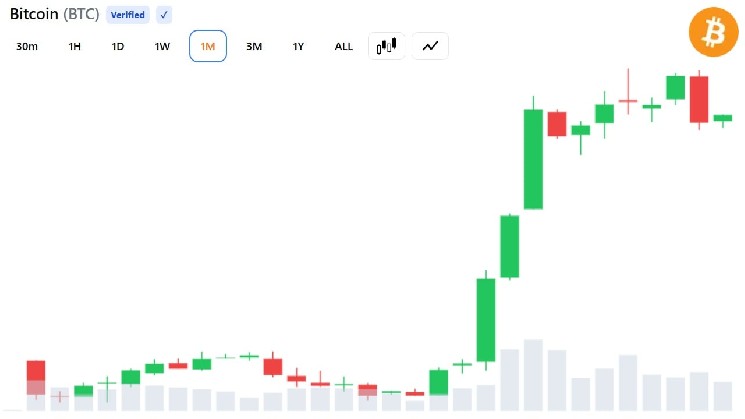
On-chain analytics platform Onchain Lens detected a large transfer of 2152 BTC leaving Coinbase Prime within just one hour, valued at approximately $140 million.
The funds ultimately arrived at an unknown wallet.
Although BlackRock has not publicly confirmed this transaction as its own operation, on-chain analysts point out that factors such as the wallet's historical behavior, the scale of the funds, and the transfer path highly align with the custody patterns of large institutions. Therefore, the market widely interprets this as an asset transfer related to a BlackRock address.
Following the news, industry discussion quickly intensified.
The reason is simple—compared to institutional buying, Bitcoin being withdrawn from an exchange often garners more market attention.
In the on-chain world, the location of a wallet is, in itself, a form of market language.
From "Buying" to "Withdrawing": Institutional Funds Are Changing Market Observation Logic
Over the past few years, the crypto market was accustomed to focusing on two metrics: trading volume and price.
However, with the advent of spot ETFs, institutional capital has begun to emerge as a significant variable influencing the market, gradually shifting the focus of observation.
For large asset management institutions, Bitcoin typically does not remain on trading platforms for extended periods.
After completing purchases, assets are transferred to professional custody wallets for ETF asset management, long-term allocation, or risk isolation. Therefore, BTC outflows from institutional trading platforms like Coinbase Prime often imply a reduced probability of these assets re-entering the circulating market in the short term.
In other words, a withdrawal action does not necessarily represent new buying pressure, but it may signal a reduction in readily tradable market supply.
This is why every significant movement in large institutional wallets becomes a key subject for on-chain analysis.
ETFs Continue Attracting Capital: BlackRock Is Building a Longer-Term Bitcoin Allocation System
This on-chain transfer is not an isolated event.
Recently, BlackRock's spot Bitcoin ETF—iShares Bitcoin Trust (IBIT)—has consistently maintained net capital inflows.
Public data shows that IBIT's assets under management have now surpassed $20 billion, making it one of the world's fastest-growing Bitcoin ETFs.
The operational mechanism of ETFs dictates that when investors continuously subscribe to fund shares, the fund manager needs to acquire a corresponding amount of Bitcoin as the underlying asset.
Therefore, every capital inflow into an ETF may correspond to actual BTC procurement and custody demands.
Notably, institutional logic for holding Bitcoin is also undergoing changes.
In the early days, it leaned more towards trading and tactical allocation, whereas now, Bitcoin is increasingly viewed as a tool for long-term asset allocation.
Whether it's pension funds, family offices, or large asset management institutions, they are beginning to experiment with incorporating digital assets into longer-term investment portfolios.
For them, Bitcoin is no longer just a high-volatility asset but an emerging asset class with long-term allocation value.

Exchange Inventory Declines: The Market Supply-Demand Dynamic Is Quietly Shifting
Why does the market pay such close attention to institutional withdrawals?
The answer is not complex.
Because Bitcoin is an asset with a fixed supply.
When more and more BTC leaves exchanges and enters cold wallets, the liquidity available for immediate market trading decreases.
Analysts commonly refer to this process as a Supply Shock.
Historical data shows that during multiple bull market cycles, a sustained decline in BTC held on exchanges often coincides with an increase in the proportion of long-term holders.
While an absolute causal relationship doesn't exist, the market typically views this as a medium- to long-term positive signal.
Of course, this does not mean the price will necessarily rise.
Short-term movements are still influenced by multiple factors including macroeconomic conditions, US dollar liquidity, Federal Reserve policy, and market sentiment.
However, from a longer time dimension, when new demand persistently increases while the circulating supply gradually diminishes, the supply-demand structure can indeed change.
This is also a crucial reason why, following sustained institutional capital inflows, the market pays extra attention to changes in exchange inventories.
Why Is On-Chain Data Increasingly Becoming a "Microscope" for Institutional Behavior?
In the past, it was difficult for traditional financial markets to observe the position changes of large institutions in real-time.
One of the greatest features of blockchain is the public transparency of fund flows.
Now, on-chain analytics platforms like Arkham, Onchain Lens, and Lookonchain can continuously track large institutional capital through methods such as wallet labeling, transaction paths, fund sources, and historical behavior modeling.
Although it's impossible to confirm the true entity behind every transaction with 100% certainty, on-chain analysis has become a vital reference tool for judging institutional fund flows.
Especially in the ETF era, the market is increasingly accustomed to combining ETF fund flows, exchange balance changes, and on-chain wallet transfers to construct a more complete picture of capital movements.
Compared to simply watching price fluctuations, fund flows are becoming an important dimension for understanding the market.
What's Truly Worth Noting Is Not the $140 Million, but the Changing Logic of Institutional Investment
Ultimately, this transfer of approximately $140 million worth of BTC is not enough to single-handedly determine market direction.
What's truly worth attention is that it once again reflects an increasingly evident trend—institutions are participating in the Bitcoin market in ways different from retail investors.
For institutions, price volatility is important, but asset allocation is more critical.
They focus more on long-term holding, risk management, custody security, and portfolio diversification rather than short-term trading opportunities.
Simultaneously, as ETFs continually attract traditional capital, the participant structure of the crypto market is also changing.
An increasing amount of long-term capital is replacing high-frequency speculative funds, becoming a significant component of the market.
This change will not happen in a single day and does not necessarily imply that prices will continuously rise.
However, what is certain is that the Bitcoin market is undergoing a structural evolution driven by institutional capital.
From One On-Chain Transfer, Seeing a New Phase in the Bitcoin Market
On-chain data shows that 2152 BTC left Coinbase Prime, prompting the market to refocus on BlackRock's Bitcoin strategy.
As of now, the specific purpose of this transfer has not been officially confirmed. Therefore, it cannot be simplistically equated to new buying pressure, nor can it directly imply future price trends.
However, from the continuous capital attraction of ETFs and increasing institutional custody demands to changes in exchange inventories and the strengthening trend of long-term holding, these signals collectively sketch an increasingly clear market portrait.
In the future, Bitcoin prices will still be influenced by multiple factors such as the macroeconomic environment, regulatory policies, and market sentiment.
But for the entire industry, a more significant question worthy of ongoing observation has emerged: As more and more Bitcoin enters long-term custody systems, is the market transitioning from being "trading-driven" to becoming "allocation-driven"?
Perhaps, this is the truly thought-provoking aspect behind this $140 million on-chain transfer that warrants repeated reflection from the market.