Grayscale Files Spot BNB ETF Application With US SEC — Report

bitcoinistPublicado a 2026-01-24Actualizado a 2026-01-24

Resumen

Grayscale has filed an application with the U.S. SEC to launch a spot exchange-traded fund (ETF) for BNB, the native token of the Binance ecosystem. The proposed ETF, to be listed under the ticker GBNB on Nasdaq if approved, would allow U.S. investors to gain exposure to BNB without directly holding the asset. This move follows a similar earlier application by VanEck and reflects Grayscale's continued expansion into crypto-linked investment products. Former Binance CEO Changpeng Zhao welcomed the filing as a step toward making the U.S. a hub for crypto. Bloomberg ETF analyst James Seyffart suggested that approval could imply the SEC views BNB as a commodity rather than a security. At the time of reporting, BNB was trading around $890, down nearly 5% over the past week.

In an interesting development, Grayscale has applied to the United States Securities and Exchange Committee to launch a spot exchange-traded fund (ETF) linked to BNB, the Binance Ecosystem’s native token. This move marks a power play by the asset management firm to further establish itself in the cryptocurrency space.

Grayscale Looks To Add To List Of Crypto-Linked ETFs

On Friday, January 23, Grayscale filed an S-1 registration statement with the SEC to launch a spot BNB exchange-traded fund in the US. According to the SEC filing, the proposed Grayscale ETF would hold the Binance ecosystem’s native token directly and issue shares designed to track the token’s market value.

This Grayscale investment product, if approved, would offer US investors exposure to the BNB token without having to own or hold the asset themselves. The asset manager’s registration statement also revealed that the exchange-traded fund would trade on the Nasdaq exchange under the ticker symbol GBNB, subject to regulatory approval.
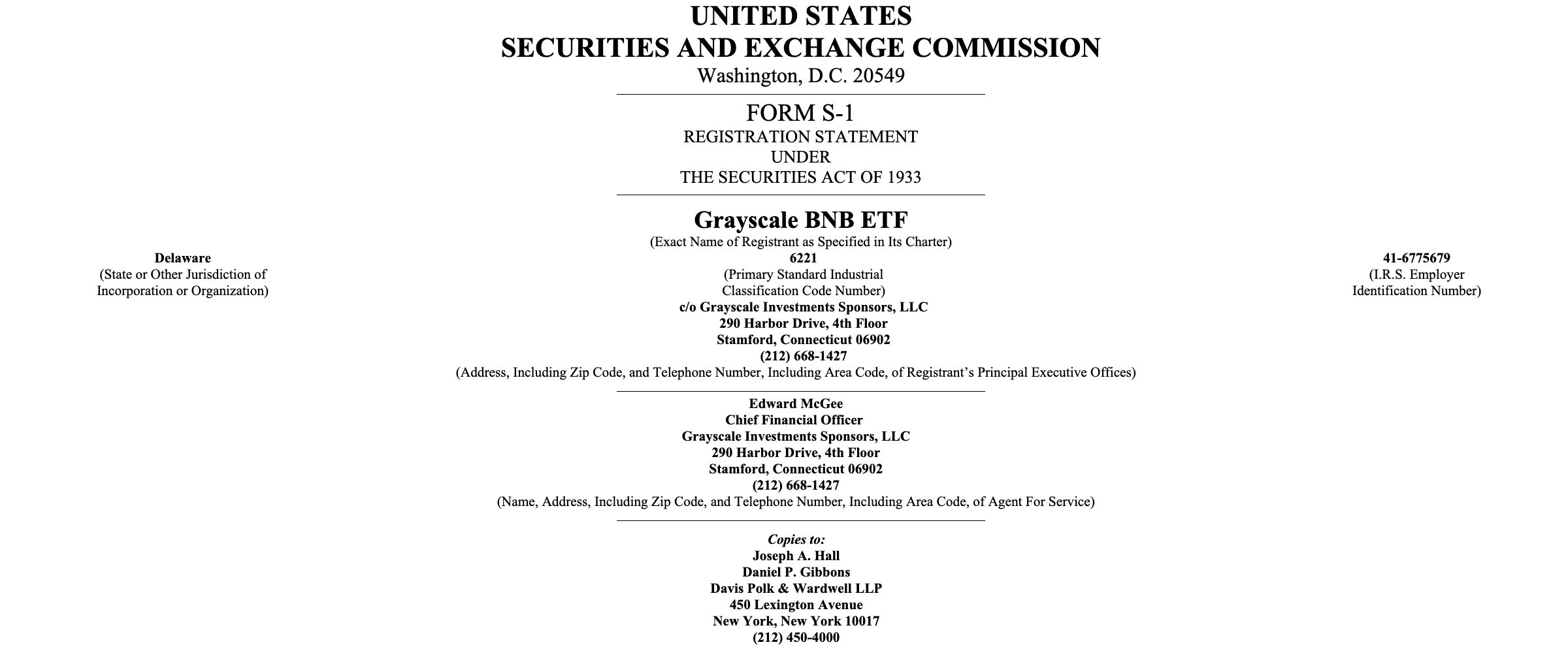
Source: SEC

It is worth mentioning that Grayscale is not the first asset manager to file for a spot BNB ETF, as VanEck applied as far back as April 2025. However, this latest filing reflects the firm’s resolve to expand its list of crypto-linked investment products, especially after the successful launch of the Bitcoin and Ethereum ETFs.

It was always only a matter of time before BNB, the fourth-largest cryptocurrency by market capitalization, received extra attention from institutions focused on exchange-traded products. As such, this move by Grayscale has caught the attention of the cryptocurrency market, including former Binance CEO Changpeng ‘CZ’ Zhao.

In a Friday post on the social media platform X, CZ said that Grayscale’s submission of its S-1 filing to the SEC represents a small step toward making the United States the capital of crypto. “A small step in helping to make America the Capital of Crypto, by giving access to the 3rd largest crypto,” the Binance co-founder wrote on Friday.

Meanwhile, Bloomberg ETF expert James Seyffart concurred that a spot ETF approval could mean that the BNB token will be classified as a commodity rather than a security. This is because the approval of an exchange-traded fund is often an indication that the SEC views the underlying asset as a commodity rather than as a security.

BNB Price At A Glance

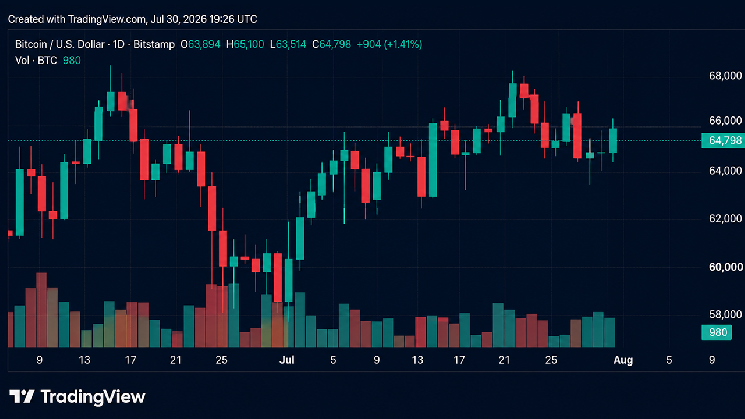
After making a play for $900 on Friday afternoon, the price of BNB now stands at around $890. According to data from CoinGecko, the fourth-largest cryptocurrency is down by nearly 5% in the past seven days.

The price of BNB on the daily timeframe | Source: BNBUSDT chart on TradingView


Preguntas relacionadas

QWhat type of ETF application has Grayscale filed with the SEC, and for which cryptocurrency?

AGrayscale has filed an application for a spot exchange-traded fund (ETF) linked to BNB, the native token of the Binance ecosystem.

QOn which exchange and under what ticker symbol would the proposed Grayscale BNB ETF trade, if approved?

AIf approved, the ETF would trade on the Nasdaq exchange under the ticker symbol GBNB.

QAccording to the article, who was the first asset manager to file for a spot BNB ETF, and when did they do it?

AVanEck was the first asset manager to file for a spot BNB ETF, applying back in April 2025.

QWhat did Bloomberg ETF expert James Seyffart suggest an ETF approval could mean for the classification of BNB?

AJames Seyffart suggested that an ETF approval could mean the BNB token would be classified as a commodity rather than a security.

QWhat was the price of BNB and its 7-day performance at the time the article was written?

AThe price of BNB was around $890, and it was down by nearly 5% over the past seven days.

Lecturas Relacionadas

Uncovering the Truth About Agent Commerce, Payments, and Infrastructure

Decoding Agent Commerce, Payments, and Infrastructure: The Reality Over the past year, I've been building infrastructure for the Agent economy, engaging with major players like Stripe, Visa, Coinbase, Google, and dozens of startups. A clear conclusion emerges: true, large-scale demand does not yet exist. Startups face structural challenges. Data points illustrate this gap. Stripe's Agent commerce platform has over 1,000 merchants but only single-digit transacting agents. Visa's Agent payment token requires 9-month KYC and a $250M revenue threshold, accessible only to giants like Amazon. On-chain analysis reveals actual daily Agent transaction volume is around $17k, half of which are test transactions. The article analyzes four potential markets: **1. Agent-to-Merchant (A2M):** Current AI shopping UX is often inferior to traditional e-commerce for visual, comparison-heavy purchases (clothing, electronics). Chat interfaces are a step back. Real merchant interest is defensive "Agent Engine Optimization," fearing future obsolescence, not current demand. Potential exists in high-frequency, low-decision purchases (e.g., food delivery) or simplifying terrible UX (complex checkouts, non-native shoppers), but these require massive consumer distribution channels dominated by giants like DoorDash and Amazon. **2. Agent-to-API (A2A):** Developers already have subscriptions and billing for core APIs (compute, data). The argument for micro-payments via crypto for sub-dollar API calls is addressed by pre-paid balances today. The deeper issue is supplier resistance; major SaaS firms rely on enterprise contracts, not fractional cent pricing. Opportunity lies in the long tail of niche services, but this is a smaller market catering to developers, a historically low-paying group. **3. Agent-to-Agent (A2A):** This remains a theoretical long-term vision with near-zero current transaction volume. It involves unique challenges: discovery, trust, negotiation, dispute resolution. When it materializes, it will require a fundamentally new settlement infrastructure for high-speed, variable-value, multi-party transactions. It's a real long-term bet, but not the current market. **4. Agent-to-Finance (A2F):** This is the only category with existing, paying demand. Integrating AI into financial workflows (trading, portfolio management) is a natural evolution and enables new capabilities like autonomous rebalancing. However, competition favors incumbents with regulatory licenses, compliance infrastructure, and existing client relationships. **The Real Issue:** Why is infrastructure still being built? Incumbents can afford long-term bets, and payment companies see every problem as a nail for their payment hammer. However, payment is just one piece. The core challenge is *coordination*—orchestrating work between Agents and humans, verifying outcomes, and settling results. Payment is part of settlement, which is part of coordination. Companies that solve the coordination problem will subsume payments, not the other way around. Startups lack the infinite runway of giants and must find today's real market, which, after a year of exploration, lies outside these four categories—in an area with real, growing, and underserved activity.

marsbitHace 4 hora(s)

Uncovering the Truth About Agent Commerce, Payments, and Infrastructure

marsbitHace 4 hora(s)

Trading

Spot
Futuros
活动图片