Goldman Sachs Acquires NEOS for $2.25 Billion: Bitcoin Officially Enters the 'Income Era'

marsbitPublicado a 2026-08-13Actualizado a 2026-08-13

Resumen

Goldman Sachs acquired NEOS Investments for up to $2.25 billion, bringing a key product—the NEOS Bitcoin High Income ETF (BTCI)—into its portfolio. BTCI, with over $1.1 billion in assets, employs a covered call strategy on Bitcoin ETP holdings to generate high-yield monthly income, touting a 27% annualized yield. This yield stems from selling call options, capitalizing on Bitcoin's high volatility for premium income. However, the strategy carries significant risks: it caps upside potential during bull markets, has underperformed Bitcoin spot returns (with a -2% annualized return since late 2024), suffers from substantial net asset value erosion (near 50% peak-to-trough), and its distributions are largely classified as return of capital. The fund's true forward yield is closer to 7.8%, far below its advertised rate. The acquisition is part of Goldman's strategic push into the booming derivatives-based income ETF market, following its purchase of Innovator Capital. It targets investors, particularly retirees, seeking reliable monthly cash flow over high growth. This move signifies a rapid financialization of Bitcoin, transforming it from a tradable asset into an income-generating one within traditional finance. Yet, it raises questions about Bitcoin's core identity, as large-scale adoption of such strategies could permanently alter its market volatility and decentralized ethos.

Author: Xiaobing

Wall Street has finally found a way to tame Bitcoin—turning it into a goose that lays golden eggs.

On August 12, Goldman Sachs announced its acquisition of NEOS Investments for up to $2.25 billion in cash and equity. NEOS, a four-year-old firm managing $30 billion in assets, specializes in options strategy ETFs. The deal is expected to close in the first quarter of 2027, and NEOS co-founders Troy Cates and Garrett Paolella will join Goldman Sachs Asset Management as partners.

What Goldman Sachs gains from this transaction, aside from 19 option income ETFs, is a particular prize: BTCI, or NEOS Bitcoin High Income ETF. This “income fund” for Bitcoin boasts over $1.1 billion in assets under management and claims an annualized yield of 27%.

Where Does the 27% Annualized Return Come From?

First, let's dissect the mechanics behind this enticing number.

The operation of BTCI is not complicated: the fund holds spot Bitcoin ETPs (such as shares of the VanEck Bitcoin ETF) and sells covered call options against these holdings. The premiums paid by the option buyers become the source of the fund's monthly dividends.

For example. Assume Bitcoin's current price is $64,000. BTCI sells a call option expiring in one month with a strike price of $70,000 and receives a premium of $2,000. If Bitcoin doesn't rise above $70,000 by expiration, the option expires worthless, and the $2,000 is pure profit—this is the “income.” If Bitcoin rises to $80,000, the option is exercised, and BTCI must sell at $70,000; the extra $10,000 in profit goes to the option buyer. The $2,000 premium received cannot cover the lost $10,000 in potential gains.

This strategy is nothing new in the stock market. JPMorgan's JEPI, managing over $39 billion, uses the same logic to collect “rent” by selling options on the S&P 500. NEOS's own largest products, SPYI and QQQI, do the same on the S&P 500 and Nasdaq 100, respectively, collectively attracting over $10 billion.

However, applying this to Bitcoin naturally yields higher returns. The reason is simple: Bitcoin's implied volatility far exceeds that of stock indices. While the S&P 500 typically has annualized volatility of 15%-20%, Bitcoin's easily doubles or even triples that. Higher volatility means more expensive option premiums, allowing the fund to harvest more “rent.” This is the underlying logic behind BTCI's claimed 27% annualized yield. What it's selling is not Bitcoin's appreciation potential, but the violent price swings of Bitcoin itself.

A more straightforward analogy: Holding BTCI is like running an insurance company for Bitcoin. You collect premiums every month and are happy. But if Bitcoin suddenly surges, sorry, the policy is triggered, and the gains go to someone else.

The Price of 27%: Four Hidden Blades

But on the other side of the 27% high yield lie four hidden blades.

The First Blade: Capped Upside. Every call option contract is a pre-sale of future gains. If Bitcoin rises from $60,000 to $100,000, a spot holder profits 67%; a BTCI holder may only capture a small portion of the gain plus the option premium. In a bull market, this strategy is destined to significantly underperform spot holdings.

Data has already proven this. Since its launch in October 2024, BTCI's annualized average return is -2%. During the same period, Bitcoin experienced a full bull run from $70,000 to a historic high of $126,000, before retreating to around $64,000. BTCI sold off the juiciest profits of the bull market yet still bore the brunt of the decline in the bear market.

The Second Blade: Persistent Erosion of Net Asset Value. This is the most easily overlooked risk. BTCI's maximum drawdown reached 48.42%. As of the end of June 2026, its net asset value has fallen by nearly half from its peak. As the fund's NAV continuously shrinks, the same dividend amount corresponds to a “falsely inflated” yield. Over the past 12 months, the cumulative dividend per share was $12.37, corresponding to a share price of $29.53, superficially yielding over 40%. But this is like a person whose weight is constantly decreasing—you can't say they're healthy just because they're still eating every day.

A more crucial detail: BTCI's monthly dividend has decreased from $1.04 in January 2026 to a recent $0.65. Annualizing the latest dividend payment gives a forward-looking yield of about 7.8%, far below the publicly advertised 27%.

The Third Blade: The Illusion of Return of Capital. According to its 19a-1 notice, a large portion of BTCI's monthly dividend is classified as “Return of Capital.” This means most of the money the fund pays you is not actual “income” but rather a return of your own invested principal. Tax-wise, this lowers your cost basis, meaning you'll pay higher capital gains taxes when you eventually sell. It's moving money from your left hand to your right, with a management fee skimmed off in the middle.

The Fourth Blade: The 0.99% Management Fee. In an environment of persistent NAV decline, the erosion effect of this fee is amplified. If the fund's NAV falls 20% in a year, a 0.99% management fee means you pay nearly an extra percentage point in “ground rent” on top of your losses. For comparison, BlackRock's newly launched competitor BITA charges only 0.65%, and directly holding spot Bitcoin via IBIT costs just 0.25%.

Goldman Sachs' Empire Puzzle

To understand this acquisition, one must look beyond Bitcoin.

Over the past nine months, Goldman Sachs Asset Management has completed two ETF mergers totaling over $4.2 billion: In December 2025, it acquired Innovator Capital Management for $2 billion, gaining its 159 buffer/defined outcome ETFs and $31 billion in assets (the deal closed in April 2026); now, it's spending $2.25 billion to swallow NEOS's 19 option income ETFs and $30 billion in assets.

Putting these two acquisitions together, Goldman Sachs Asset Management's total ETF assets exceed $130 billion, propelling it to become the world's eighth-largest actively managed ETF issuer. More importantly, these acquisitions precisely cover the two core strategies of derivative income ETFs: Innovator focuses on downside protection (buffer), while NEOS focuses on income enhancement.

Behind this is an exploding market. By the end of 2025, total assets in U.S. derivative income funds had surpassed $140 billion, with the category seeing $40 billion in net inflows in the first seven months of 2026 alone. A VettaFi survey in August 2026 showed that 36% of financial advisors ranked “creating reliable income for clients” as their top priority, exceeding “long-term growth” (29%) and “managing volatility” (23%).

Goldman Sachs sees a structural trend: in an environment of high interest rates and increased market volatility, “receiving cash every month” is more attractive to retirement accounts and conservative investors than “possibly gaining 30% next year.” The buyer profile for such products is very clear: people aged 55 and above, living on retirement funds, with a physiological-level dependence on “money hitting the account every month.” They don't care if Bitcoin can reach $150,000; they care whether this month's pension supplement arrives on time.

Goldman Sachs CEO David Solomon referred to NEOS as a “highly complementary” acquisition in the announcement. Goldman's own Goldman Sachs Bitcoin Premium Income ETF is already in line at the SEC, with coverage designed between 40% and 100%. But launching a new fund from scratch involves a long cold-start period, high compliance costs, and time-consuming market education. Spending $2.25 billion to directly buy a mature team with a $1.1 billion Bitcoin income fund is simple arithmetic given the competitive pace of the ETF industry.

When Bitcoin Learns to Pay Dividends

Stepping back, what's happening carries a certain historical significance.

In January 2024, spot Bitcoin ETFs were approved, bringing Bitcoin through the first door of traditional finance as a “tradable asset.” Just two and a half years later, Wall Street is already transforming Bitcoin into an “income-generating asset.” This pace is at least a decade faster than the evolution from the GLD gold ETF to a derivatives ecosystem.

But there's a fundamental difference between Bitcoin and gold: Gold's volatility is around 15% annually, while Bitcoin's often exceeds 50%. This means Bitcoin, as the underlying asset for a covered call strategy, can naturally provide higher option premiums but also inherently carries greater NAV volatility and strategy failure risk.

High volatility is a double-edged sword. It makes the numbers on the income ETF's marketing materials look exceptionally good and makes the path dependency effect particularly deadly. If Bitcoin surges sharply before option expiration, the fund misses the gains and cannot recover; if it crashes, the premium income is far from enough to cover the principal loss. BTCI's nearly 50% drop from its peak provides a textbook case.

There's a structural question worth pondering: As Bitcoin's volatility is extracted on a large scale for commercialization, will the volatility itself decrease as a result?

Sellers in a covered call strategy are shorting volatility. As more capital flows into products like BTCI and BITA, the scale of sold call options continues to swell. The counterparties to these options (typically market makers) need to perform delta hedging, selling when Bitcoin rises and buying when it falls. This hedging behavior inherently acts to suppress volatility. If the AUM of this category continues to grow at its current speed, the microstructure of the Bitcoin market could be permanently altered.

For the Bitcoin community, this financial engineering transformation raises a deeper identity question. If more and more Bitcoin is locked in covered call strategies, priced and hedged by Wall Street market makers, is Bitcoin still the decentralized, “digital gold” meant to hedge against fiat debasement? Or is it becoming just another raw material for volatility on Wall Street, like natural gas or the VIX index, processed into various structured products and stuffed into pension fund portfolios?


Criptos en tendencia

Preguntas relacionadas

QWhat is the primary strategy of the NEOS Bitcoin High Income ETF (BTCI) that Goldman Sachs acquired, and how does it generate its advertised yield?

AThe primary strategy of BTCI is a covered call strategy. The fund holds spot Bitcoin ETPs (like VanEck's Bitcoin ETF) and sells call options on this underlying Bitcoin position. The premiums collected from selling these options are distributed as monthly dividends, which is the source of its advertised yield. It essentially generates income by 'renting out' its potential for large price gains in exchange for steady premium payments.

QWhat are two significant risks associated with BTCI's covered call strategy for Bitcoin, as highlighted in the article?

ATwo significant risks are: 1) **Capped Upside**: The fund sells away most of its potential for large price appreciation. In a strong bull market, the fund will significantly underperform direct Bitcoin holdings, as evidenced by its -2% annualized return during Bitcoin's run from $70k to $126k and back to ~$64k. 2) **Continuous NAV Erosion**: The fund's Net Asset Value has declined significantly (peak-to-trough drawdown of 48.42%). As the NAV falls, the same dividend amount translates to a misleadingly high yield percentage, and the actual forward-looking yield can be much lower than advertised (e.g., ~7.8% vs. 27% based on recent payouts).

QBeyond Bitcoin, what broader strategic goal is Goldman Sachs achieving with its acquisitions of Innovator Capital Management and NEOS Investments?

AGoldman Sachs is building a dominant position in the rapidly growing derivatives-based income ETF market. The acquisition of Innovator (offering buffer/protection ETFs) and NEOS (offering covered call/income ETFs) allows Goldman's asset management arm to cover the two core strategies in this space. The goal is to cater to the structural investor trend, especially among retirees, who prioritize reliable monthly income over long-term growth potential, thereby amassing over $130 billion in ETF assets.

QHow might the growth of covered call ETFs like BTCI potentially impact the underlying Bitcoin market's price behavior according to the article?

AThe article suggests the growth of covered call ETFs could permanently alter Bitcoin's market microstructure by dampening its volatility. Since these funds systematically sell call options, their counterparties (market makers) must conduct delta hedging—selling Bitcoin when its price rises and buying when it falls to manage their risk. This large-scale, automated hedging activity could act as a stabilizing force, potentially reducing Bitcoin's characteristic high volatility over time as the assets under management in these strategies grow.

QWhat philosophical or identity conflict for Bitcoin does the article raise as a result of its financial engineering into products like BTCI?

AThe article raises a conflict regarding Bitcoin's core identity. It questions whether Bitcoin, as it is packaged into structured income products managed by Wall Street firms, remains the decentralized 'digital gold' designed as a hedge against fiat currency debasement. Alternatively, it might be transforming into a mere raw material for volatility—similar to natural gas or the VIX index—that is processed into structured products to fill the portfolios of pension funds, potentially distancing it from its original anti-establishment ethos.

Lecturas Relacionadas

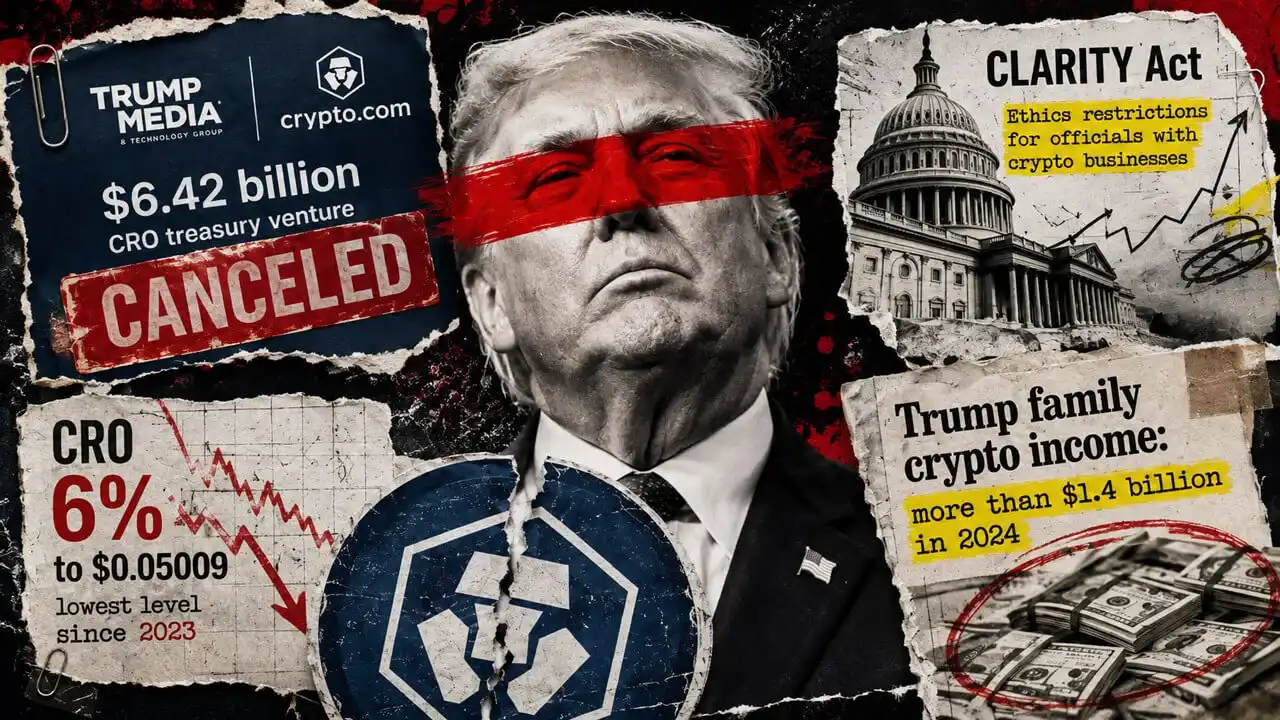
Crypto.com and Trump Media "Break Up": $6.42 Billion Vault Plan Fails, CRO Loses Its Largest Backstop Buyer

Crypto.com, Trump Media (DJT), and Yorkville Acquisition Corp. have officially terminated their planned $64.2 billion merger to create the "Trump Media Group CRO Strategy," a publicly-listed CRO treasury company. Announced in August 2025 during the peak of Digital Asset Treasury (DAT) hype, the deal was promoted as a massive vote of confidence, with Crypto.com's CEO Kris Marszalek once stating the entity would "forever" buy CRO. The termination, citing changing market conditions and business priorities, also ends related plans for ETF services and integrating a prediction market into Truth Social. Following the news, CRO's price fell below $0.05, hitting its lowest point since October 2023. The token is down approximately 95% from its 2021 all-time high. The collapse of this high-profile deal raises critical questions about the DAT model, suggesting it creates artificial, unsustainable demand rather than being driven by genuine token utility or adoption. This sentiment is reinforced by recent reports that Strategy, the largest Bitcoin treasury company, has been selling BTC, breaking its "never sell" narrative. For CRO holders, the failed merger adds to existing concerns, including recent reductions in Crypto.com card benefits and executive departures, forcing a broader reassessment of the exchange's fundamentals beyond a single abandoned transaction.

marsbitHace 6 min(s)

Crypto.com and Trump Media "Break Up": $6.42 Billion Vault Plan Fails, CRO Loses Its Largest Backstop Buyer

marsbitHace 6 min(s)

Hash Global Research Report: Bitcoin Hasn't Risen Yet, Why Are We Starting to Think the Bear Market Might Be Over?

Hash Global Research Report: Why We Think the Bear Market Might Be Ending Even Before Bitcoin Rises Over the past six months, AI has dominated market attention, causing a significant shakeout in crypto. Bitcoin has tested the $58-60K support three times since February, with volatility hitting multi-year lows. Despite stagnant prices, key underlying dynamics are shifting. The forces that drove the market down are weakening: macro tightening fears are easing as US inflation and jobs data cool, the perceived systemic risk from large holders like MicroStrategy selling is diminishing as they shore up finances, and institutional outflows have stopped. Simultaneously, on-chain data shows a rare concentration of over 240,000 BTC (approx. 12% of supply) accumulated in the $61-65K range, forming a new, consolidated base reminiscent of historical bottoms. Meanwhile, the AI trade is cooling, potentially redirecting capital towards undervalued crypto assets, as seen in July's relative outperformance. The current phase, where AI money hesitates and crypto veterans await a final dip, creates a "no-man's-land" investment opportunity—a potential entry point before a new consensus forms. While a definitive upturn isn't guaranteed, the confluence of weakening bearish pressures, improved on-chain structure, and a possible capital rotation suggests the window for positioning for the next cycle is opening.

marsbitHace 16 min(s)

Hash Global Research Report: Bitcoin Hasn't Risen Yet, Why Are We Starting to Think the Bear Market Might Be Over?

marsbitHace 16 min(s)

Explosion in Deep Sea Robots, the Hardest Series A Round Emerges

Deep-sea robotics startup Deepsea Zhiren has secured over 5 billion yuan in its Series A funding, a landmark deal backed by prominent investors including GGV Capital, Dachen Capital, Genesis Capital, Everbright Capital, China Life Insurance Investment, CETC Investment, and the energy tech fund managed by Cathay Capital with TotalEnergies as the cornerstone LP. Existing investors also participated significantly. The company, founded by industry veteran Ma Yiming, specializes in developing heavy-duty work-class ROVs for extreme deep-sea environments up to 6,000 meters, used in oil and gas, offshore wind, and subsea cable operations. Its product line includes models like "Taurus" (1,000m), "Phoenix 600" (3,000m), and "Singularity" (6,000m). A key achievement is securing multi-million dollar orders from UAE's telecom giant Etisalat, marking a breakthrough for Chinese-made deep-sea robotics in the international market. Deepsea Zhiren differentiates itself through full-stack in-house R&D—from pressure-resistant structures to control systems and AI—and a modular hardware approach. It has built a comprehensive internal standard system aligned with top global offshore specifications. The company is now advancing its "Deep Matrix" initiative, an unmanned, AI-powered, multi-robot cluster system designed for permanent seabed operations. This system aims to drastically reduce reliance on support vessels and human operators, potentially cutting costs in offshore oil field operations by billions over their lifecycle. The funding round signals strong market confidence in the deep-sea tech sector, recently highlighted in China's national policy. With the global subsea services market valued at around 1.5 trillion yuan and growing over 20% annually, Deepsea Zhiren aims to redefine deep-sea development through integrated hardware and embodied AI systems, positioning itself as a global pioneer in ocean robotics.

marsbitHace 44 min(s)

Explosion in Deep Sea Robots, the Hardest Series A Round Emerges

marsbitHace 44 min(s)

Trading

Spot

Artículos destacados

Qué es BITCOIN

Entendiendo HarryPotterObamaSonic10Inu (ERC-20) y Su Posición en el Espacio Cripto En los últimos años, el mercado de criptomonedas ha sido testigo de un aumento en la popularidad de las monedas meme, capturando el interés no solo de los comerciantes, sino también de aquellos que buscan compromiso comunitario y valor de entretenimiento. Entre estos tokens únicos se encuentra HarryPotterObamaSonic10Inu (ERC-20), un proyecto intrigante que mezcla referencias culturales en el tejido de las criptomonedas. Este artículo profundiza en los aspectos clave de HarryPotterObamaSonic10Inu, explorando sus mecanismos, ethos impulsado por la comunidad y su relación con el paisaje cripto más amplio. ¿Qué es HarryPotterObamaSonic10Inu (ERC-20)? Como su nombre sugiere, HarryPotterObamaSonic10Inu es una moneda meme construida sobre la blockchain de Ethereum, clasificada bajo el estándar ERC-20. A diferencia de las criptomonedas tradicionales que pueden enfatizar la utilidad práctica o el potencial de inversión, este token prospera en el valor de entretenimiento y la fuerza de su comunidad. El proyecto tiene como objetivo fomentar un entorno donde los usuarios comprometidos puedan reunirse, compartir ideas y participar en actividades inspiradas por diversos fenómenos culturales. Una característica notable de HarryPotterObamaSonic10Inu es su cero impuestos en las transacciones. Este atractivo elemento tiene como objetivo incentivar el comercio y la participación comunitaria, sin cargos adicionales que puedan disuadir a los comerciantes de pequeña escala. El suministro total de la moneda está establecido en mil millones de tokens, una cifra que marca su intención de mantener una circulación sustancial dentro de la comunidad. Creador de HarryPotterObamaSonic10Inu (ERC-20) Los orígenes de HarryPotterObamaSonic10Inu están algo envueltos en misterio; los detalles sobre el creador siguen siendo desconocidos. El desarrollo de este token carece de un equipo identificable o de un plan explícito, lo cual no es inusual dentro del sector de monedas meme. En cambio, el proyecto ha surgido de manera orgánica, con su progreso muy dependiente del entusiasmo y la participación de su comunidad. Inversores de HarryPotterObamaSonic10Inu (ERC-20) En cuanto a inversiones externas y respaldo, HarryPotterObamaSonic10Inu también sigue siendo ambiguo. El token no lista ninguna fundación de inversión conocida o apoyo organizacional significativo. En cambio, la savia del proyecto es su comunidad de base, que informa su crecimiento y sostenibilidad a través de la acción colectiva y el compromiso en el espacio cripto. ¿Cómo Funciona HarryPotterObamaSonic10Inu (ERC-20)? Como una moneda meme, HarryPotterObamaSonic10Inu opera principalmente fuera de los marcos tradicionales que a menudo rigen el valor de los activos. Hay varios aspectos distintivos que definen cómo funciona el proyecto: Transacciones Sin Impuestos: Sin tarifas impositivas en las transacciones, los usuarios pueden comprar y vender el token libremente sin preocuparse por costos ocultos. Compromiso Comunitario: El proyecto prospera en la interacción comunitaria, aprovechando plataformas de redes sociales para crear entusiasmo y facilitar la participación. Las discusiones, el intercambio de contenido y el compromiso son elementos cruciales que ayudan a expandir su alcance y fomentar la lealtad entre los seguidores. Sin Utilidad Práctica: Cabe señalar que HarryPotterObamaSonic10Inu no ofrece utilidad concreta dentro del ecosistema financiero. Más bien, se clasifica como un token principalmente para actividades de entretenimiento y comunitarias. Referencia Cultural: El token incorpora astutamente elementos de la cultura popular para atraer interés, conectando con entusiastas de los memes y seguidores de las criptomonedas por igual. HarryPotterObamaSonic10Inu ejemplifica cómo las monedas meme operan de manera diferente a los proyectos de criptomonedas más tradicionales, ingresando al mercado como construcciones sociales innovadoras en lugar de activos utilitarios. Cronología de HarryPotterObamaSonic10Inu (ERC-20) La historia de HarryPotterObamaSonic10Inu está marcada por varios hitos notables: Creación: El token surgió de un meme viral, capturando la imaginación de muchos entusiastas de las criptomonedas. Las fechas específicas de creación no están disponibles, subrayando su ascenso orgánico. Listado en Exchanges: HarryPotterObamaSonic10Inu ha llegado a varios exchanges, permitiendo un acceso y comercio más fácil por parte de la comunidad. Iniciativas de Compromiso Comunitario: Actividades continuas destinadas a mejorar la interacción comunitaria, incluyendo concursos, campañas en redes sociales y generación de contenido por parte de fanáticos y defensores. Planes de Expansión Futuros: La hoja de ruta del proyecto incluye el lanzamiento de una colección de NFT, mercancía y un sitio de comercio electrónico relacionado con sus temas culturales, involucrando aún más a la comunidad e intentando añadir más dimensiones a su ecosistema. Puntos Clave Sobre HarryPotterObamaSonic10Inu (ERC-20) Naturaleza Impulsada por la Comunidad: El proyecto prioriza la participación colectiva y la creatividad, asegurando que la involucración de los usuarios esté a la vanguardia de su desarrollo. Clasificación como Moneda Meme: Representa la epítome de las criptomonedas basadas en el entretenimiento, diferenciándose de los vehículos de inversión tradicionales. Sin Afiliación Directa con Bitcoin: A pesar de la similitud en el nombre del ticker, HarryPotterObamaSonic10Inu es distinto y no tiene relación con Bitcoin u otras criptomonedas establecidas. Enfoque en la Colaboración: HarryPotterObamaSonic10Inu está diseñado para crear un espacio para la colaboración y el intercambio de historias entre sus poseedores, proporcionando una vía para la creatividad y el vínculo comunitario. Perspectivas Futuras: La ambición de expandirse más allá de su premisa inicial hacia NFTs y mercancías describe un camino para que el proyecto potencialmente ingrese a avenidas más tradicionales dentro de la cultura digital. A medida que las monedas meme continúan capturando la imaginación de la comunidad de criptomonedas, HarryPotterObamaSonic10Inu (ERC-20) se destaca debido a sus lazos culturales y su enfoque centrado en la comunidad. Si bien puede no encajar en el molde típico de un token impulsado por la utilidad, su esencia radica en la alegría y la camaradería fomentadas entre sus seguidores, destacando la naturaleza en evolución de las criptomonedas en una era cada vez más digital. A medida que el proyecto continúa desarrollándose, será importante observar cómo las dinámicas comunitarias influyen en su trayectoria en el cambiante paisaje de la tecnología blockchain.

2.8k Vistas totalesPublicado en 2024.04.01Actualizado en 2024.12.03

Qué es BITCOIN

Cómo comprar BTC

¡Bienvenido a HTX.com! Hemos hecho que comprar Bitcoin (BTC) sea simple y conveniente. Sigue nuestra guía paso a paso para iniciar tu viaje de criptos.Paso 1: crea tu cuenta HTXUtiliza tu correo electrónico o número de teléfono para registrarte y obtener una cuenta gratuita en HTX. Experimenta un proceso de registro sin complicaciones y desbloquea todas las funciones.Obtener mi cuentaPaso 2: ve a Comprar cripto y elige tu método de pagoTarjeta de crédito/débito: usa tu Visa o Mastercard para comprar Bitcoin (BTC) al instante.Saldo: utiliza fondos del saldo de tu cuenta HTX para tradear sin problemas.Terceros: hemos agregado métodos de pago populares como Google Pay y Apple Pay para mejorar la comodidad.P2P: tradear directamente con otros usuarios en HTX.Over-the-Counter (OTC): ofrecemos servicios personalizados y tipos de cambio competitivos para los traders.Paso 3: guarda tu Bitcoin (BTC)Después de comprar tu Bitcoin (BTC), guárdalo en tu cuenta HTX. Alternativamente, puedes enviarlo a otro lugar mediante transferencia blockchain o utilizarlo para tradear otras criptomonedas.Paso 4: tradear Bitcoin (BTC)Tradear fácilmente con Bitcoin (BTC) en HTX's mercado spot. Simplemente accede a tu cuenta, selecciona tu par de trading, ejecuta tus trades y monitorea en tiempo real. Ofrecemos una experiencia fácil de usar tanto para principiantes como para traders experimentados.

6.0k Vistas totalesPublicado en 2024.12.12Actualizado en 2026.06.02

Cómo comprar BTC

Qué es $BITCOIN

ORO DIGITAL ($BITCOIN): Un Análisis Integral Introducción al ORO DIGITAL ($BITCOIN) ORO DIGITAL ($BITCOIN) es un proyecto basado en blockchain que opera en la red Solana, cuyo objetivo es combinar las características de los metales preciosos tradicionales con la innovación de las tecnologías descentralizadas. Aunque comparte un nombre con Bitcoin, a menudo referido como “oro digital” debido a su percepción como un refugio de valor, ORO DIGITAL es un token separado diseñado para crear un ecosistema único dentro del paisaje Web3. Su meta es posicionarse como un activo digital alternativo viable, aunque los detalles sobre sus aplicaciones y funcionalidades aún están en desarrollo. ¿Qué es ORO DIGITAL ($BITCOIN)? ORO DIGITAL ($BITCOIN) es un token de criptomoneda diseñado explícitamente para su uso en la blockchain de Solana. A diferencia de Bitcoin, que proporciona un papel de almacenamiento de valor ampliamente reconocido, este token parece centrarse en aplicaciones y características más amplias. Aspectos notables incluyen: Infraestructura Blockchain: El token está construido sobre la blockchain de Solana, conocida por su capacidad para manejar transacciones de alta velocidad y bajo costo. Dinámicas de Suministro: ORO DIGITAL tiene un suministro máximo limitado a 100 cuatrillones de tokens (100P $BITCOIN), aunque los detalles sobre su suministro circulante no se han divulgado actualmente. Utilidad: Si bien las funcionalidades precisas no están delineadas explícitamente, hay indicios de que el token podría ser utilizado para diversas aplicaciones, potencialmente involucrando aplicaciones descentralizadas (dApps) o estrategias de tokenización de activos. ¿Quién es el Creador de ORO DIGITAL ($BITCOIN)? En la actualidad, la identidad de los creadores y el equipo de desarrollo detrás de ORO DIGITAL ($BITCOIN) sigue siendo desconocida. Esta situación es típica entre muchos proyectos innovadores dentro del espacio blockchain, particularmente aquellos alineados con las finanzas descentralizadas y fenómenos de monedas meme. Si bien tal anonimato puede fomentar una cultura impulsada por la comunidad, intensifica las preocupaciones sobre la gobernanza y la responsabilidad. ¿Quiénes son los Inversores de ORO DIGITAL ($BITCOIN)? La información disponible indica que ORO DIGITAL ($BITCOIN) no tiene patrocinadores institucionales conocidos ni inversiones destacadas de capital de riesgo. El proyecto parece operar en un modelo de peer-to-peer centrado en el apoyo y la adopción de la comunidad en lugar de rutas de financiamiento tradicionales. Su actividad y liquidez se sitúan principalmente en intercambios descentralizados (DEX), como PumpSwap, en lugar de plataformas de trading centralizadas establecidas, lo que resalta aún más su enfoque de base. Cómo Funciona ORO DIGITAL ($BITCOIN) Los mecanismos operativos de ORO DIGITAL ($BITCOIN) pueden elaborarse en función de su diseño blockchain y atributos de red: Mecanismo de Consenso: Al aprovechar el único proof-of-history (PoH) de Solana combinado con un modelo de proof-of-stake (PoS), el proyecto asegura una validación de transacciones eficiente que contribuye al alto rendimiento de la red. Tokenómica: Si bien los mecanismos deflacionarios específicos no se han detallado extensamente, el vasto suministro máximo de tokens implica que podría atender microtransacciones o casos de uso nicho que aún están por definirse. Interoperabilidad: Existe el potencial de integración con el ecosistema más amplio de Solana, incluyendo varias plataformas de finanzas descentralizadas (DeFi). Sin embargo, los detalles sobre integraciones específicas permanecen no especificados. Cronología de Eventos Clave Aquí hay una cronología que destaca hitos significativos relacionados con ORO DIGITAL ($BITCOIN): 2023: El despliegue inicial del token ocurre en la blockchain de Solana, marcado por su dirección de contrato. 2024: ORO DIGITAL gana visibilidad al estar disponible para trading en intercambios descentralizados como PumpSwap, permitiendo a los usuarios comerciar contra SOL. 2025: El proyecto presencia actividad de trading esporádica y potencial interés en compromisos liderados por la comunidad, aunque no se han documentado asociaciones notables o avances técnicos hasta el momento. Análisis Crítico Fortalezas Escalabilidad: La infraestructura subyacente de Solana soporta altos volúmenes de transacciones, lo que podría mejorar la utilidad de $BITCOIN en varios escenarios de transacción. Accesibilidad: El potencial bajo precio de trading por token podría atraer a inversores minoristas, facilitando una participación más amplia debido a oportunidades de propiedad fraccionada. Riesgos Falta de Transparencia: La ausencia de patrocinadores, desarrolladores o un proceso de auditoría conocidos públicamente puede generar escepticismo sobre la sostenibilidad y confiabilidad del proyecto. Volatilidad del Mercado: La actividad de trading depende en gran medida del comportamiento especulativo, lo que puede resultar en una volatilidad de precios significativa y en incertidumbre para los inversores. Conclusión ORO DIGITAL ($BITCOIN) surge como un proyecto intrigante pero ambiguo dentro del ecosistema de Solana en rápida evolución. Si bien intenta aprovechar la narrativa del “oro digital”, su alejamiento del papel establecido de Bitcoin como refugio de valor subraya la necesidad de una diferenciación más clara de su utilidad y estructura de gobernanza previstas. La aceptación y adopción futura dependerán probablemente de abordar la actual opacidad y de definir sus estrategias operativas y económicas de manera más explícita. Nota: Este informe abarca información sintetizada disponible hasta octubre de 2023, y pueden haber ocurrido desarrollos más allá del período de investigación.

541 Vistas totalesPublicado en 2025.05.13Actualizado en 2025.05.13

Qué es $BITCOIN

Discusiones

Bienvenido a la comunidad de HTX. Aquí puedes mantenerte informado sobre los últimos desarrollos de la plataforma y acceder a análisis profesionales del mercado. A continuación se presentan las opiniones de los usuarios sobre el precio de BTC (BTC).

活动图片