The price of gold rose to approximately $4,434–$4,435 before sellers finally entered the game. By 1:00 PM Eastern Time (EDT) on Tuesday, August 11, the spot price of gold was $4,382.43, putting the market in wait-and-see mode for a breakout.
Disappointing Jobs Report Overturns Fed Expectations
The spark was the U.S. July jobs report. The economy lost 23,000 jobs, while economists had expected about 80,000 new jobs, and significant downward revisions made the previous months' figures substantially weaker.
This labor market miss quickly shifted expectations regarding Federal Reserve policy. Traders scaled back bets on another near-term rate hike, which led to a decline in Treasury yields and gave gold fresh arguments against interest-bearing assets.
Holding gold does not generate income, so rising yields are one of the most reliable factors pressuring the gold price. When yields fall, this disadvantage becomes less significant, and capital has fewer reasons to stay in bonds and cash.
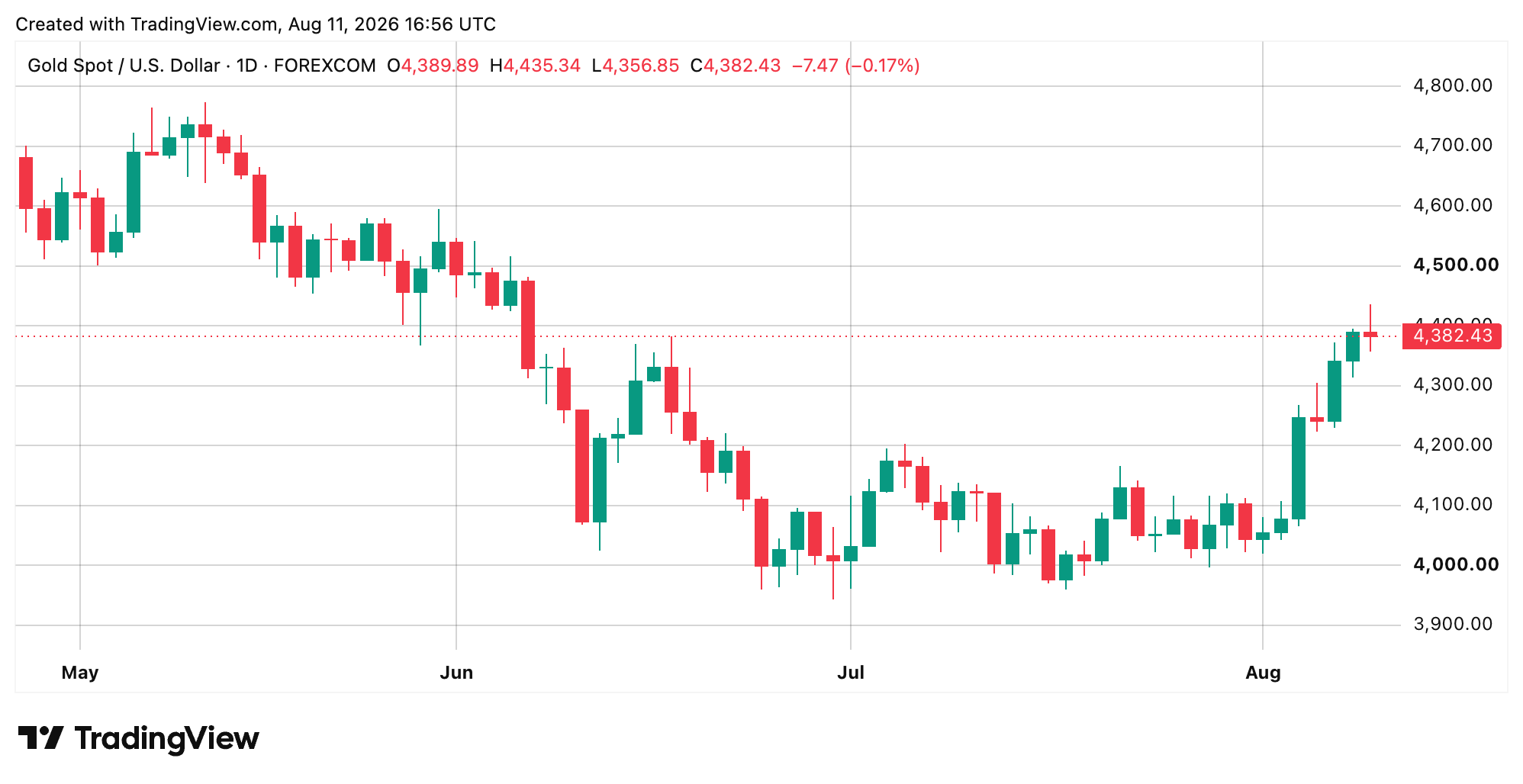
The price rise also allowed gold to decisively break through the 100-day moving average—a technical indicator that traders closely watch. Breaking this barrier attracted new buyers to the market after the price of gold had tumbled to $3,966 during the summer correction.
China Continues to Accumulate Gold
Another powerful supporting factor was China. In July, the People's Bank of China extended its gold-buying campaign to 21 consecutive months, purchasing about 20 metric tons, or roughly 640,000 ounces.
By the end of July, China's official gold reserves had grown to approximately 76.08 million ounces. Chinese gold-backed exchange-traded funds also attracted new investments, leading to increased investor demand in addition to the central bank's persistent accumulation.
Central banks value gold for its independence from other governments or currency issuers. This steady institutional demand has repeatedly provided support for prices, even when a strengthening U.S. dollar should have exerted more downward pressure on gold prices.
Geopolitical Risks Keep Buyers in the Market
Ongoing tensions between the U.S. and Iran added another reason to keep gold on hand, especially since a conflict in the Strait of Hormuz could disrupt global oil supplies and rekindle inflation fears.
As a result, gold finds itself in the familiar situation of dual pressures. Expensive oil could revive inflation and lead to tighter monetary policy, which would hurt the gold price, while geopolitical instability simultaneously sends safe-haven capital rushing straight to the metal. Gold advocate and economist Peter Schiff believes this trend will continue.
"Gold and silver prices rose today alongside a 5% rise in oil prices," Schiff wrote on social media platform X. "The metals are shedding the recently established negative correlation with oil. Gold and oil should rise together as inflation pushes the consumer price index and bond yields higher, while the U.S. economy weakens as jobs are cut."
In another post on X, Schiff continued:
"Gold is now above $4,400. Silver is approaching $66. The market is signaling something to you. Are you listening?"
Inflation Data Could Either Bolster or Derail the Rally
The next decisive moment will be the U.S. inflation data. A more moderate Consumer Price Index (CPI) could further weaken the case for Fed tightening and give gold another chance to turn the recent breakout zone into sustainable support.
Higher readings could quickly unravel this situation, pushing Treasury yields and the U.S. dollar higher. Traders are now watching the $4,500 level and gold's 200-day moving average to see whether this recovery will continue or become another failed breakout after a rapid rally.
end-content