Gold and Silver Experience 'Black Friday' as the Dollar Stages a Dramatic Comeback!

比推Publicado a 2026-01-31Actualizado a 2026-01-31

Resumen

Gold and silver experienced a historic crash on January 30, 2026, with silver plunging over 30% in its largest single-day drop ever, and gold fell more than 9%, marking its worst decline since the early 1980s. Meanwhile, the US dollar surged nearly 0.9%, its biggest gain since July of the previous year. The sell-off was triggered by the news that former Federal Reserve Governor Kevin Warsh, known for his hawkish stance, was nominated as the next Fed chair. This eased market concerns about the Fed's politicization and led to a rapid unwinding of dollar short positions. The precious metals market, already in extreme overbought territory with silver up 63% and gold 20% year-to-date, faced a liquidity crisis, accelerated by forced liquidations and profit-taking. Commodity currencies like the AUD and CHF were hit hard. Analysts are divided on whether this is a correction within a bull market or a sign of a broader reversal, with factors like geopolitical tensions and monetary policy shifts under the new Fed leadership being key to watch.

On the last trading day of January 2026, global financial markets witnessed a 'heart-stopping moment' for the history books.

On January 30th (Friday) Eastern Time, the precious metals market, which had been surging relentlessly and repeatedly hitting historic highs, was suddenly hit by a 'cold snap.' Spot silver recorded its largest single-day drop in history, plummeting over 30% at one point during the session; spot gold was not spared either, suffering a drop of over 9%, its worst single-day loss since the early 1980s. Meanwhile, the previously persistently weak U.S. Dollar Index (DXY) surged dramatically, posting its largest single-day gain since last July, rebounding about 0.9% in one day.
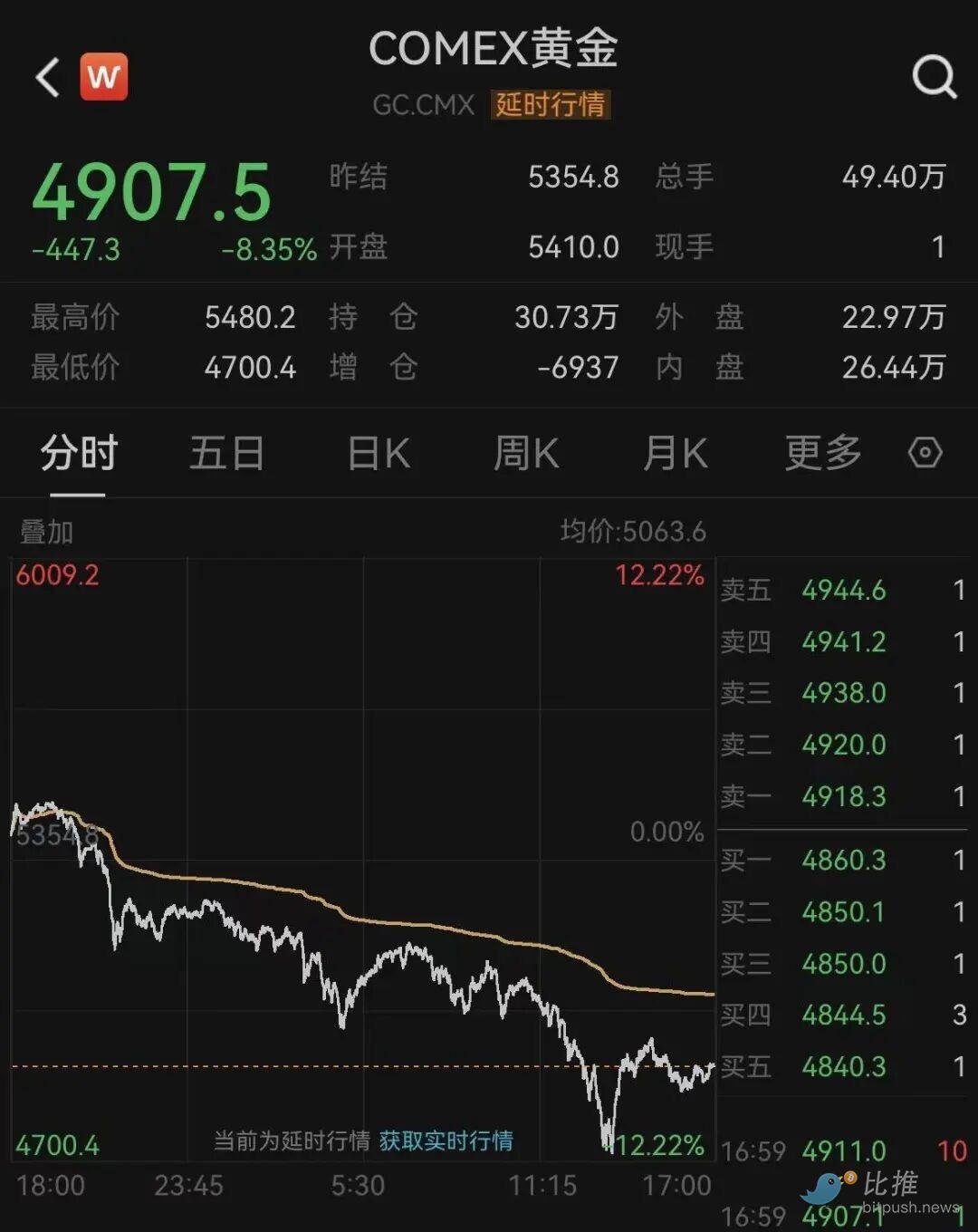
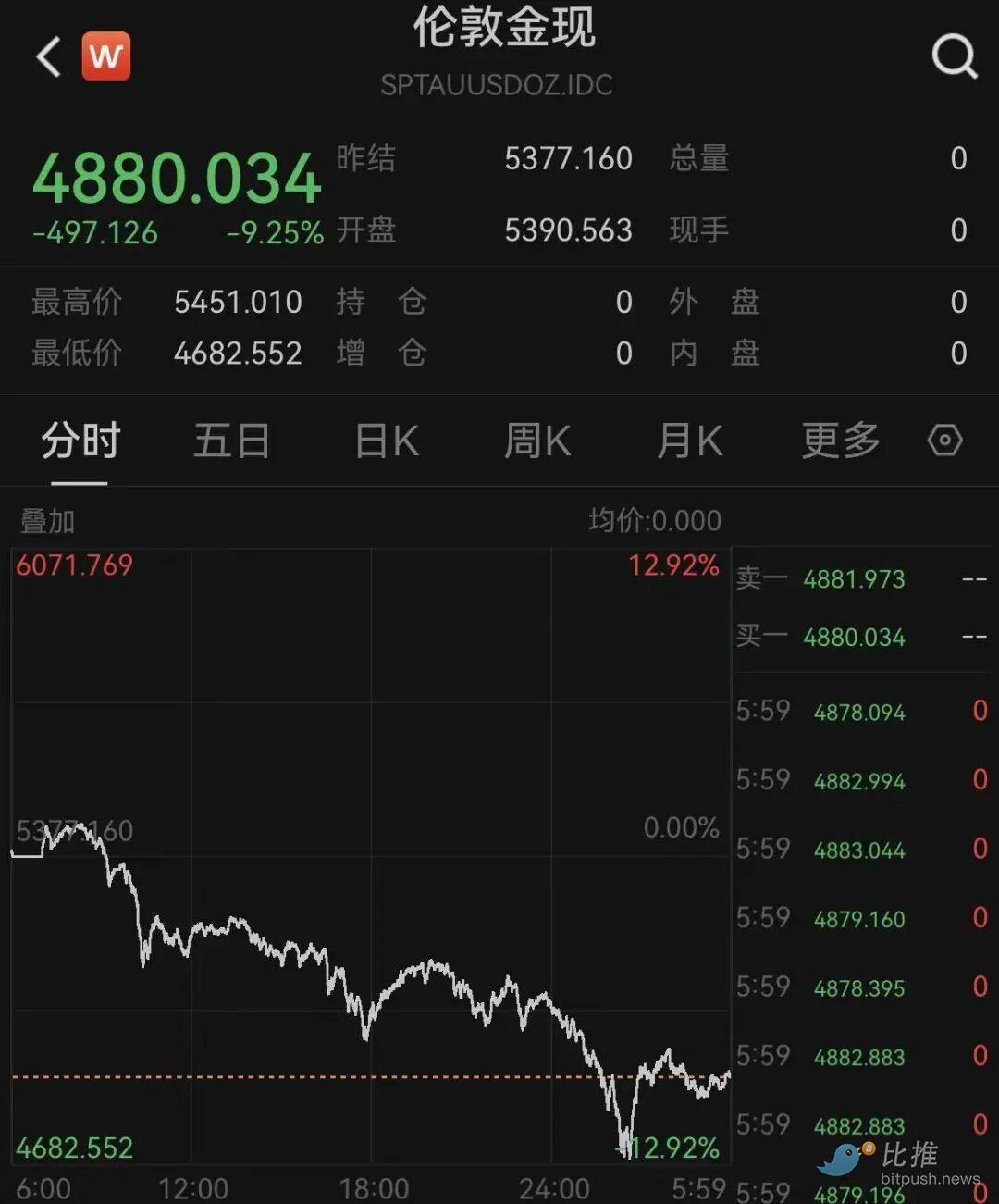
This global asset reshuffle not only wiped trillions of dollars in market value from the precious metals market but also marked the first major correction to the 'weak dollar, strong gold and silver' trading logic since Trump's return to the White House.

Policy 'Hurricane': Warsh Nomination Ignites Dollar Counterattack

The immediate trigger for this plunge in gold and silver was a major personnel decision by the Trump administration. News on Friday indicated that Trump had selected Kevin Warsh to serve as the next Chair of the Federal Reserve.

This decision sent multiple shockwaves through the market:

  • Defending Fed Independence: Previously, the market was highly concerned that Trump would choose a complete 'proxy' who would顺从 his will and favor aggressive interest rate cuts. This concern had directly contributed to the sustained decline of the dollar in January. Warsh, a former Federal Reserve Governor known for his academic rigor and vigilance against inflation, greatly alleviated Wall Street's fears of Fed 'politicization,' restoring market confidence in the Fed's independence.

  • Reshaping Rate Expectations: Warsh has historically shown clear 'hawkish' colors, with almost zero tolerance for inflation. Compared to the possibility of deep, aggressive rate cuts under previously speculated candidates, the market quickly adjusted its expectations to a 'more moderate and cautious' monetary policy. As non-interest-bearing assets, gold and silver saw their appeal plummet under the expectation that 'rates may remain high.'

  • Dollar Short Squeeze: The dollar index had fallen about 1.4% cumulatively in January, with short positions extremely crowded. The news of Warsh's nomination prompted a massive unwinding of dollar shorts, rapidly pushing the dollar index above 96.74, thereby dealing a heavy blow to dollar-denominated precious metals.

Liquidity Crisis in Overbought Territory

If the Warsh nomination was the 'spark,' then the extremely overbought condition of the gold and silver markets was the 'tinder.'

Before the crash on January 30th, spot gold had approached the $5,600 per ounce mark, while silver had reached a peak of $120 per ounce. Since the beginning of the year, silver's gains had reached as high as 63%, and gold's monthly gains were close to 20%. A Wall Street quant strategist stated: "This is no longer a gain explainable by fundamentals, but a typical speculative bubble driven by FOMO (Fear Of Missing Out)."

Multiple technical factors contributed to Friday's 'stampede-like' decline:

  1. RSI Peaking: Gold's Relative Strength Index (RSI) hit a 40-year peak before the crash (RSI near 90), indicating extreme overbought conditions.

  2. Forced Liquidations: The silver market, due to its high leverage, triggered large-scale programmed stop-losses after prices fell below key support levels. Estimates suggest the market capitalization of gold and silver shrunk by a staggering $7.4 trillion on Friday. Selling on this scale evolved into 'liquidity contraction,' forcing investors to sell the most liquid assets, gold and silver, to cover margins for other assets.

  3. Profit-Taking: Early entrants had a strong incentive to cash out when faced with signals of a policy shift.

The combination of a stronger dollar and plummeting gold and silver dealt a direct blow to commodity currencies among the G10.

  • Australian Dollar (AUD): Plunged over 2% intraday. As a leader in resource exports, the gold and silver crash directly hit its trade foundation, making it the 'hardest hit' among G10 currencies that day.

  • Swiss Franc (CHF): Fell about 1.5%. The gold price plunge completely severed the franc's safe-haven premium, causing funds to panic and flow back to the dollar, which was supported by hawkish expectations.

  • Swedish Krona (SEK): Plunged nearly 1.8% intraday.

Outlook: A 'Bull Market Correction' or a 'Termination Signal'?

Regarding the outlook, a research report from Citi provided a sober perspective for the market. Citi pointed out that half of the risk factors supporting gold (such as geopolitical tensions, U.S. debt concerns, AI uncertainty) could subside later in 2026.

  • Middle East & Russia-Ukraine Variables: As the Trump administration works towards achieving 'American-style stability' before the mid-term elections in mid-2026, if the Russia-Ukraine conflict and the Iran situation tend to ease, gold's safe-haven premium will further erode.

  • American-Style Gold Stability: Citi's mention of 'American-style gold stability' implies that if Warsh successfully takes office and stabilizes Fed credibility, the dollar will regain favor with international capital, forming medium-term negative pressure on gold prices.

However, some analysts hold dissenting views. Nanhua Futures pointed out that despite the short-term turmoil, demand for silver in new energy and industrial sectors remains strong, and a supply gap persists in the long term. This crash is more about 'deleveraging' and 'squeezing the bubble' rather than a complete reversal of fundamentals.

The January 30th crash in gold and silver served as a vivid risk management lesson for all investors. Even physical assets known as 'safe havens' can experience instant liquidity droughts in the face of extreme sentiment premiums and policy inflection points.

For investors, the core observation point now is:

If Kevin Warsh officially takes the helm of the Fed, will the focus of monetary policy in 2026 shift from 'supporting growth' to 'returning to monetary discipline'? This will determine whether the dollar index can completely break out of its year-long slump and whether gold and silver will enter a prolonged period of volatile consolidation.

Author: seed.eth


Twitter:https://twitter.com/BitpushNewsCN

Bitpush TG Discussion Group:https://t.me/BitPushCommunity

Bitpush TG Subscription: https://t.me/bitpush

Original link:https://www.bitpush.news/articles/7607526

Preguntas relacionadas

QWhat was the direct trigger for the sharp decline in gold and silver prices on January 30, 2026?

AThe direct trigger was the news that the Trump administration had selected Kevin Warsh, a former Fed governor known for his academic rigor and inflation vigilance, as the next Federal Reserve Chair.

QWhat was the single-day percentage drop for spot silver, and how significant was it?

ASpot silver experienced a single-day drop of over 30%, which was its largest single-day decline in history.

QHow did the U.S. Dollar Index (DXY) perform on that day, and what was the reason for its movement?

AThe U.S. Dollar Index (DXY) surged by approximately 0.9%, marking its largest single-day gain since the previous July. This was due to the relief over the perceived preservation of Fed independence with Warsh's nomination, which caused a massive short-covering rally.

QAccording to the article, what technical indicator for gold had reached an extreme level before the crash?

AGold's Relative Strength Index (RSI) had reached a 40-year peak, near 90, indicating it was extremely overbought.

QWhich G10 currency was the hardest hit by the combination of a stronger dollar and collapsing precious metals, and why?

AThe Australian Dollar (AUD) was the hardest hit, plummeting over 2%. As a leading resource export currency, the crash in precious metals directly damaged its trade foundation.

Lecturas Relacionadas

Only 153 Venture Capital Firms Invested in July: Is the Crypto VC Industry Experiencing a 'Mass Extinction'?

In July 2026, only 153 unique venture capital firms participated in disclosed crypto funding rounds, marking the lowest monthly count since November 2020. This figure represents an 87% decline from the peak of 1,177 firms in 2022. Overall, the first seven months of 2026 saw crypto projects raise approximately $11.78 billion across 481 rounds. This crypto VC contraction contrasts sharply with the broader venture capital landscape, where global VC investment reached a record $560.4 billion in H1 2026, heavily fueled by major AI company financings. This shift in capital allocation has drawn funds away from the crypto sector. Within crypto, funding is highly concentrated. Trading platforms, prediction markets, and payment sectors absorbed 53% of the total capital. While early-stage deals remain frequent, the largest sums flow to a few late-stage rounds and mergers & acquisitions, which surged to $7.23 billion in Q2 2026. The market is consolidating around top funds like a16z crypto and Dragonfly, which successfully raised new multi-billion dollar funds, while many smaller firms have retreated. Analysts describe this as a "great extinction" for crypto VCs, where capital is becoming more selective, favoring proven business models and assets over early-stage speculation. This raises the bar for project quality, funding efficiency, and viable exit paths.

marsbitHace 18 min(s)

Only 153 Venture Capital Firms Invested in July: Is the Crypto VC Industry Experiencing a 'Mass Extinction'?

marsbitHace 18 min(s)

Strategy's Loss in the Second Quarter Reaches $8.22 Billion Amid Bitcoin Decline

Strategy, the largest corporate holder of Bitcoin, reported a net loss of $8.22 billion for the second quarter. This loss was primarily driven by an $8.32 billion unrealized loss on its Bitcoin holdings due to a decline in the asset's price during the period. Despite these paper losses, the company increased its Bitcoin holdings to 843,775 BTC, a 25% growth since the start of the year. As part of a new monetization strategy, Strategy sold approximately $218.4 million worth of Bitcoin, mainly to fund dividends for preferred shareholders, with $216 million of that sold after Q2 ended. The company also built a $3.75 billion cash reserve, which it claims is sufficient to cover over two years of dividend and interest payments, aiming to insulate itself from Bitcoin's volatility while meeting obligations. Following the earnings release, Strategy's stock (MSTR) rose 4.7% in regular trading but corrected slightly after-hours. This pattern reflects how the company's accounting results are heavily tied to Bitcoin's price swings, even as its long-term strategy remains unchanged. The report indicates that Strategy is maintaining its core strategy of accumulating Bitcoin while building a financial buffer. This quarterly loss follows a recognizable pattern, with the company posting significant unrealized losses in previous quarters (e.g., $12.4 billion in Q4 2025 and ~$12.5 billion in Q1 2026) due to fair-value accounting. A key technical shift is its new monetization program, which introduces periodic selling pressure on the market, transitioning Strategy from a pure accumulator to a participant that occasionally adds supply. A critical question remains: how long can the cash reserve cover dividend obligations if a Bitcoin price downturn persists beyond two years?

cryptonews.ruHace 38 min(s)

Strategy's Loss in the Second Quarter Reaches $8.22 Billion Amid Bitcoin Decline

cryptonews.ruHace 38 min(s)

Will Terrorist Durov Ban Russian Officials?

Telegram founder Pavel Durov publicly reacted to being labeled a "terrorist" by Russian authorities, stating the designation came after he refused demands for mass surveillance and censorship on the platform. In a Telegram post, he highlighted that this status formally bans him from "publishing information online." Durov concluded with a statement widely circulated: Russian officials "clearly don't understand who can ban whom on the internet." This remark suggests Durov could potentially restrict official Russian government and officials' channels on Telegram, which continue to operate on the platform despite its formal blocking in Russia. The situation parallels previous, slow-moving state directives, like switching officials to domestic cars, contrasted with the current push to migrate all government communication to the Russian-made messenger MAX by 2030. However, reports indicate many officials still use Telegram via workarounds, fearing surveillance on MAX, while alternatives like BiP and KakaoTalk recently became inaccessible in Russia without a VPN. Durov has not specified any immediate actions against state channels. His statement is an initial response, with further developments depending on the authorities' reaction. The dynamic differs from 2020 when Russian regulators lifted a block on Telegram; now, Durov implies control from within the platform itself over the official accounts that persisted through that earlier blockade.

cryptonews.ruHace 38 min(s)

Will Terrorist Durov Ban Russian Officials?

cryptonews.ruHace 38 min(s)

DeepSeek V4 Official Version Arrives, New Capabilities Emerge, Value-for-Money King Enters the Fray

On July 31st, DeepSeek officially launched the public API beta for its DeepSeek-V4-Flash model. A key highlight is its performance on multiple Agent benchmark tests, reportedly nearing or even surpassing the level of the V4-Pro preview version from three months ago. Notably, the Flash model achieves this with significantly smaller scale (130B active parameters vs. Pro's 490B), suggesting that post-training optimization and data quality may be as crucial as raw model size. DeepSeek emphasized that the V4-Flash-0731 uses the same model architecture and size as its preview version, with improvements attributed solely to "re-trained post-training." The update also marks the official debut of DeepSeek's self-developed Agent framework, "Harness." The move signals DeepSeek's strategic push to position its cost-effective Flash model as a competitive base for Agent applications—scenarios requiring autonomous planning, tool usage, and complex task execution—where inference speed and cost are critical. By natively supporting OpenAI's Responses API format and adapting for code-generation scenarios, DeepSeek aims not just to be a cheaper alternative but to establish its own ecosystem in the Agent era. This release follows DeepSeek's record-breaking ~$50 billion fundraising round roughly two months prior, underscoring market confidence in its technology and commercialization prospects. The company is reportedly preparing for another funding round at a valuation of approximately $71 billion. The Flash model's advancement represents a step in fulfilling the high expectations that come with this valuation, setting the stage for the impending release of the V4-Pro official version and intensifying competition in the global Agent landscape.

marsbitHace 42 min(s)

DeepSeek V4 Official Version Arrives, New Capabilities Emerge, Value-for-Money King Enters the Fray

marsbitHace 42 min(s)

Trading

Spot
活动图片