Gemini Leaves For USA Market Dominance As MAXI Emerges As A Top Contender

bitcoinistPublicado a 2026-02-05Actualizado a 2026-02-05

Resumen

Gemini exchange is strategically withdrawing from secondary markets like Canada, the Netherlands, and France to focus on dominating the U.S. market and capturing institutional capital. This shift creates a divergence: regulated platforms target safety and compliance, while retail traders seek high-risk, high-reward opportunities on-chain. Maxi Doge ($MAXI) emerges as a meme token catering to this demand, offering gamified trading, leverage-like features, and staking rewards. Its presale has raised over $4.5M, reflecting strong retail interest as on-chain volumes grow. The project represents a cultural shift toward aggressive, community-driven trading amid increasing central exchange regulation.

The crypto regulatory map is changing fast. Gemini, the Winklevoss-led exchange, is accelerating its withdrawal from secondary jurisdictions to double down on the United States of America.

After leaving the Netherlands and France, they’ve just told Canadian users to close accounts by year-end. Is this a retreat? Hardly. It’s a cold calculation.

By cutting loose fragmented markets, Gemini is clearing the runway to become the primary gateway for the massive wave of U.S. institutional capital heading our way. The market is effectively splitting in two.

On one side, you have regulated giants like Gemini chasing safety and ‘slow’ institutional money. On the other? An insatiable retail hunger for high-variance plays. While institutions stick to the ‘boring’ infrastructure, retail liquidity is flowing aggressively on-chain, hunting for outsized returns.

As exchanges get ‘suit-ified,’ a vacuum for risk-on assets is opening up. New meme tokens are filling the gap, offering the volatility regulated giants can’t touch.

That explains why on-chain volumes are hitting fresh highs even as exchanges shrink their global footprints. It’s in this divergence that Maxi Doge ($MAXI) has surfaced, not just as a token, but as a vehicle for the aggressive trading culture traditional exchanges are regulating out of existence.

Institutional Safety Versus The Retail Hunger For Alpha

The narrative is defined by a tension between compliance and degeneracy. Gemini exiting Canada to focus on U.S. dominance might be great for Bitcoin’s long-term legitimacy, but frankly, it leaves a void for traders craving the raw energy of early crypto.

The ‘Leverage King’ culture of Maxi Doge targets that exact crowd, traders who see volatility as a feature, not a bug.

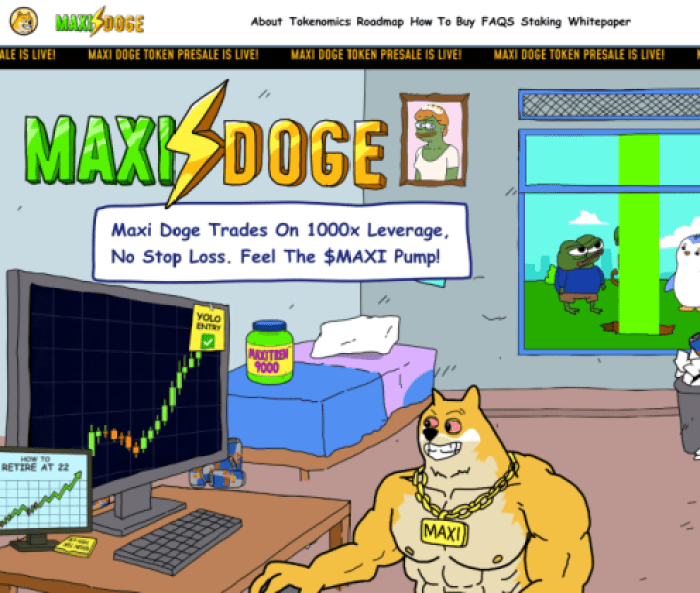
Maxi Doge isn’t just another static meme coin relying on a cute dog picture. It gamifies the experience, baking a 1000x leverage mentality right into the project. With planned features like Holder-Only Trading Competitions and a Maxi Fund treasury, community activity actually influences liquidity. It doesn’t avoid the mascot play altogether, though, instead leaning into a fitting, ‘gym-bro’ canine stack with muscles and chugging energy drinks.
It’s a feedback loop that mirrors a broader trend: utility-adjacent memes are simply outperforming pure speculative assets right now.

Smart money seems to be watching this setup. On-chain data from Etherscan highlights whale wallets scooping up purchases as high as $314K. It suggests high-net-worth players are hedging the institutional bets with high-upside meme plays.

That barbell strategy holding Bitcoin while hunting alpha is quickly becoming the standard for sophisticated portfolios.

BUY $MAXI ON ITS OFFICIAL PRESALE PAGE

Presale Metrics Signal A Shift In Risk Appetite

While Gemini sanitizes its platform for ETF issuers and pension funds, the speculative capital driving viral cycles is moving on-chain. The Maxi Doge presale proves the point. $MAXI has already raised over $4.5M. That figure signals massive demand, arguably because retail excitement on centralized exchanges is cooling off.

At the current price of $0.0002802, the token is sitting in a spot to capture entry-level liquidity before potential listing premiums hit. But there’s more to it than just price action. The project offers a dynamic APY staking model (rewards planned to be paid daily from a 5% pool). It encourages holding, ‘never skipping leg day,’ while the treasury builds out partnerships.

The contrast couldn’t be starker. Gemini offers safety and modest yields (wealth preservation). Maxi Doge offers a high-risk, high-reward arena (wealth creation).

For the retail trader priced out of owning a whole Bitcoin, the ‘lift, trade, repeat’ ethos of $MAXI just hits harder than regulatory compliance. The data backs it up, too: as centralized friction grows, decentralized volume explodes.

EXPLORE $MAXI ON ITS OFFICIAL PRESALE PAGE

This article is for informational purposes only and does not constitute financial advice. Cryptocurrency investments, especially in presale and meme tokens, carry high risks, including the potential loss of principal. Always conduct independent research.

Preguntas relacionadas

QWhy is Gemini withdrawing from secondary markets like Canada, the Netherlands, and France?

AGemini is withdrawing from these secondary jurisdictions to focus its resources and double down on the United States market, aiming to become the primary gateway for the massive wave of U.S. institutional capital entering the crypto space.

QWhat is the core difference between the strategy of regulated giants like Gemini and the on-chain retail activity described in the article?

ARegulated giants like Gemini are chasing safety and 'slow' institutional money, focusing on compliance and wealth preservation. In contrast, retail liquidity is flowing on-chain, aggressively hunting for high-variance, high-return assets that offer outsized gains, which regulated exchanges often cannot provide.

QWhat is the unique value proposition of Maxi Doge ($MAXI) according to the article?

AMaxi Doge ($MAXI) is not just a meme token; it gamifies the trading experience by baking a 1000x leverage mentality into the project. It offers features like Holder-Only Trading Competitions and a treasury fund, creating a feedback loop where community activity influences liquidity, targeting traders who see volatility as a feature.

QWhat does the article suggest about the current trend of 'smart money' or high-net-worth players in crypto?

AThe article suggests that smart money is employing a 'barbell strategy': they are hedging their institutional bets (like holding Bitcoin) with high-upside meme plays (like $MAXI), as indicated by whale wallets making large purchases to capture alpha while maintaining a base of safer assets.

QWhat does the success of the Maxi Doge presale (raising over $4.5M) indicate about the current market?

AThe successful presale indicates a massive demand and a shift in risk appetite, showing that speculative capital is moving on-chain as retail excitement on centralized exchanges cools off, and traders are seeking high-risk, high-reward opportunities in decentralized environments.

Lecturas Relacionadas

A 'Overlooked' Market Event: Joint US-Japan-South Korea Intervention, Rare US Treasury Involvement, and Bessent's Quiet 'Market Rescue'?

Summary: The United States, Japan, and South Korea executed their largest coordinated foreign exchange intervention in nearly 30 years. The action targeted depreciation pressure on the Japanese yen and South Korean won. This move is seen as a significant effort by the US to stabilize the financial markets of its key allies and prevent the spillover of risks. Key details: * Japan reportedly intervened on July 30 using approximately 8.45 trillion yen (about $52.8 billion). South Korean authorities also intervened that day, selling dollars to support the won. * Notably, the US Treasury Department intervened directly in yen markets for the first time in roughly 30 years. The New York Fed, reportedly acting on behalf of the Treasury, sold euros to buy yen via Goldman Sachs and Morgan Stanley on July 31. Analysts view the use of the euro-yen pair as a way to alleviate yen pressure without adding selling pressure to the US dollar. * Prior to the action, the New York Fed conducted "rate checks" on both USD/JPY and EUR/JPY, a newer signaling tool that falls between verbal and physical intervention. The intervention is interpreted as going beyond traditional currency stabilization. Analysts, such as Michael Hartnett of Bank of America, suggest it resembles a "Price Keeping Operation" for the AI era. The core US objectives are perceived to be: 1. Preventing rapid yen depreciation from triggering a sharp rise in Japanese government bond yields. 2. Containing financial stress from spreading across Asian markets like South Korea and Japan. 3. Reducing the risk of disorderly capital flows impacting the US bond market. This coordinated action underscores the importance of Japan and South Korea as critical partners in the US semiconductor and AI supply chain. Stabilizing their financial markets is seen as vital to mitigating risks to the broader tech industry and the US market itself. The intervention coincides with market pressures, including the KOSDAQ index hitting a low since October 2022. While seen as a move to control volatility, some analysts caution it may not fundamentally reverse existing market trends.

marsbitHace 5 min(s)

A 'Overlooked' Market Event: Joint US-Japan-South Korea Intervention, Rare US Treasury Involvement, and Bessent's Quiet 'Market Rescue'?

marsbitHace 5 min(s)

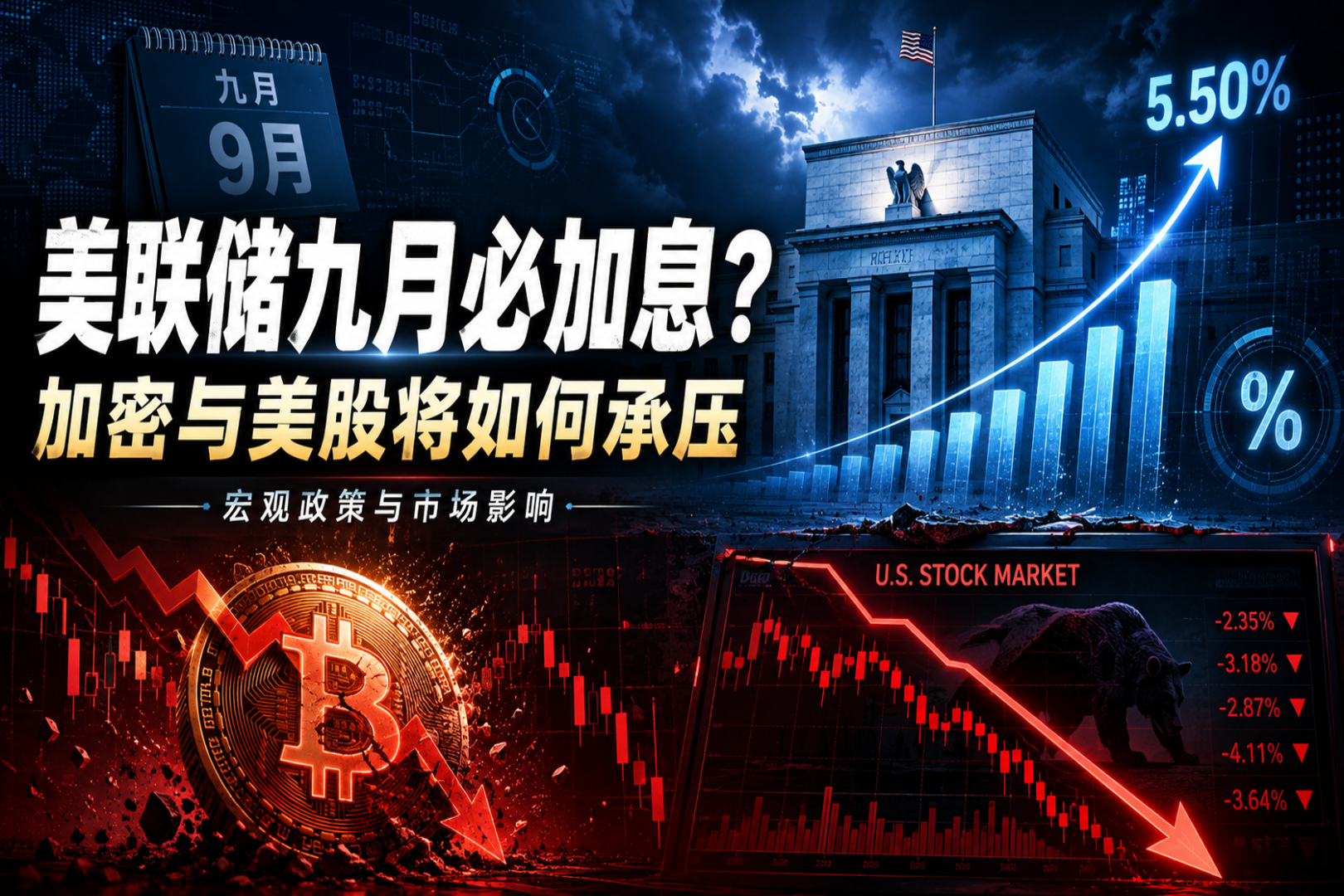
Will the Federal Reserve Definitely Raise Interest Rates in September? How Will Cryptocurrencies and US Stocks Bear the Pressure?

In early August 2024, market expectations for a September Federal Reserve rate hike surged dramatically, from below 50% to over 80%, driven by renewed inflation concerns. This shift followed a contentious July FOMC meeting where a 9-3 vote to hold rates revealed a growing hawkish faction advocating for an immediate hike, citing prolonged above-target inflation. The key catalyst is escalating conflict near the Strait of Hormuz, which has pushed oil prices up approximately 20% in July, threatening to reignite inflation. The next critical data point is the July CPI report on August 12th; a hot reading could solidify hike expectations. For crypto assets, particularly Bitcoin, this represents near-term pressure. Bitcoin continues to exhibit high-beta, risk-on characteristics, making it sensitive to tightening liquidity and higher opportunity costs. However, historical precedent suggests that if a hike is perceived as the cycle's end rather than its start, the negative impact may be brief, with markets quickly pivoting to anticipate future rate cuts. U.S. stocks, especially crypto-linked equities like Coinbase and high-valuation tech stocks, face amplified volatility. Higher rates increase discount rates in valuation models, pressuring growth stocks. This coincides with a pivotal tech earnings season where investor focus has shifted from massive AI capital expenditures to demonstrable revenue and cash flow generation. Companies with negative cash flows and weak growth narratives could see severe pressure if a September hike materializes, as financing costs would rise. Key indicators to watch include oil prices, upcoming inflation data, and Fed commentary at events like the Jackson Hole symposium.

Odaily星球日报Hace 5 min(s)

Will the Federal Reserve Definitely Raise Interest Rates in September? How Will Cryptocurrencies and US Stocks Bear the Pressure?

Odaily星球日报Hace 5 min(s)

From South Korea to the United States: Blue-Collar Jobs Are Becoming Increasingly Popular, Thanks to AI

AI is reshaping the labor market's value proposition. The traditional four-year college degree is losing its appeal as a guaranteed career path, while skilled blue-collar trades like electricians, welders, and plumbers are experiencing historic demand and wage premiums. This shift is driven by dual pressures: AI's displacement of certain white-collar roles and a booming need for physical infrastructure and data center construction. Data confirms the trend. In the U.S., vocational school revenue surged, and a significant portion of recent layoffs are AI-related. Surveys show a majority of Gen Z adults plan to pursue blue-collar work, citing better job security against AI automation. Vocational education interest has exploded recently. Experts cite a psychological shift as younger generations seek tangible, AI-resistant careers and avoid high student debt. In many cases, salaries for skilled trades now match or exceed those requiring a bachelor's degree. In South Korea, semiconductor vocational high schools boast near-total employment, with graduates securing high-paying roles at companies like Samsung. The shortage is structural, exacerbated by a retiring baby boomer workforce and massive infrastructure projects. Companies like JPMorgan Chase, Meta, and Lowe's are investing heavily in training programs. However, overcoming historical stigma and a "perception gap" around trade careers remains a key challenge to closing the talent gap.

marsbitHace 1 hora(s)

From South Korea to the United States: Blue-Collar Jobs Are Becoming Increasingly Popular, Thanks to AI

marsbitHace 1 hora(s)

Trading

Spot
活动图片