The player who enabled domestic vehicle-grade millimeter-wave radar SoC chips to go from non-existence to reality has finally stepped into the spotlight.
After more than four months of IPO guidance, the Shanghai Stock Exchange website disclosed the first public offering stock prospectus (filing draft) of Gateland Microelectronics Technology (Shanghai) Co., Ltd., which also means its IPO materials have been officially accepted by the Shanghai Stock Exchange.
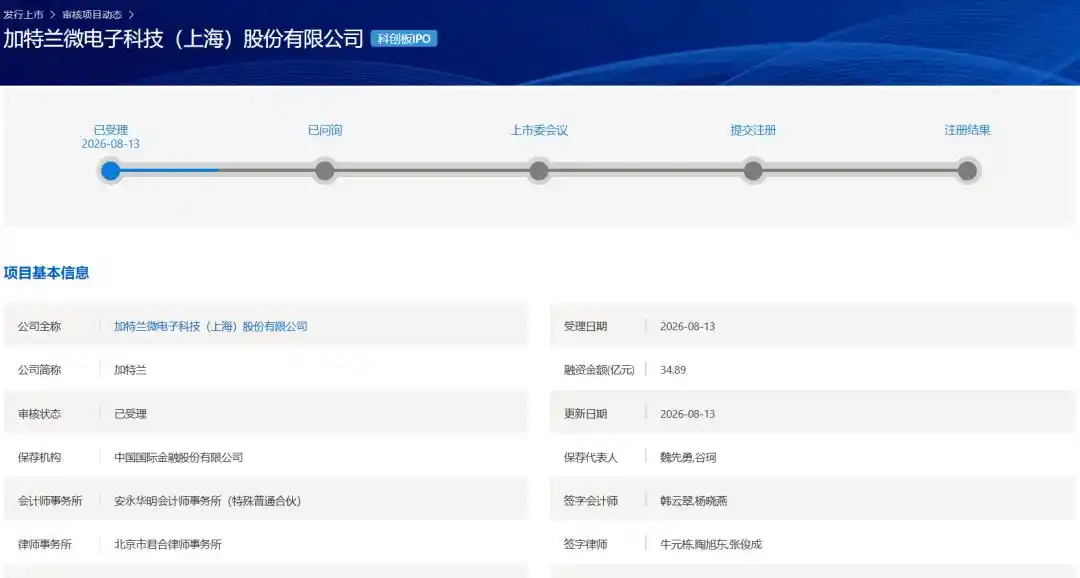
The next step is to enter the review and inquiry stage. Although there is still some distance from the formal listing, it has already reached the door of the capital market.
Perhaps many people have not heard of Gateland. This unicorn startup founded in 2014 mass-produced vehicle-grade millimeter-wave radar RF front-end chips in 2017, breaking the long-term monopoly of overseas giants in this field.
The car you drive most likely contains its millimeter-wave radar chips.
According to Gateland's official website and public data, in 2025, Gateland's market share in China's vehicle-mounted millimeter-wave radar field reached 31.1%, second only to Texas Instruments, ranking second in the domestic market; in the 4D millimeter-wave radar 4Tx4Rx SoC chip segment, it ranked first with a market share of 66%.
Zooming out to a global perspective, according to Yole statistics, Gateland ranks fourth globally in the global vehicle-mounted millimeter-wave radar chip market (including advanced driver assistance and in-cabin child detection applications), with a market share of about 4%.
01 Two Pioneers at the Helm
Ten years ago, the share of domestic SoC chips in China's millimeter-wave radar market was still zero, entirely reliant on imports.
These chips were monopolized by European, American, and Japanese giants like Texas Instruments, NXP, Infineon, and TI. Chinese automakers had to either buy imported chips or purchase complete radar units.
Now, in less than 10 years, a Chinese company has enabled more than 3 out of every 10 cars on Chinese roads equipped with millimeter-wave radar to use its own chips.
And this Chinese company is called Gateland.
Before discussing the company's substance, it is necessary to understand its founder—Chen Jiashu, a standard '80s generation, a Ph.D. in Electrical Engineering from UC Berkeley, who conducted cutting-edge research on CMOS RF and millimeter-wave integrated circuits at the Berkeley Wireless Research Center.
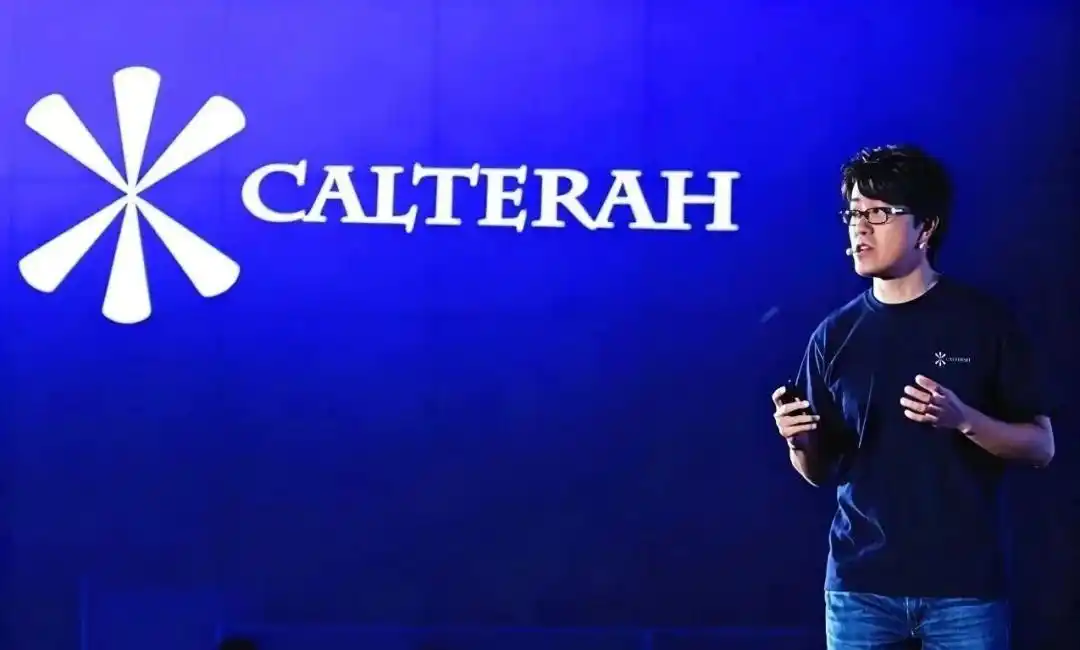
His advisor was Ali Niknejad—a leading figure in wireless integrated circuit academia and one of the pioneers in CMOS millimeter-wave circuits. Chen Jiashu worked with him on CMOS millimeter-wave integrated circuits and is now also a co-founder and technical advisor of Gateland.
During his Ph.D., he led a team in the U.S. to successfully develop the world's first 60GHz WiGig CMOS SoC chip. Because of this, he is also regarded as one of the pioneers in CMOS millimeter-wave integrated circuit design.
Gateland was founded in Shanghai in February 2014. In the year following its establishment, the world's first fully integrated 77GHz radar transceiver single-chip was successfully taped out. A key turning point occurred in 2017 when Gateland successfully mass-produced the world's first vehicle-grade CMOS process 77GHz millimeter-wave radar RF front-end chip. This broke the long-standing technological pattern based on GaAs and SiGe processes and shattered the status quo of millimeter-wave radar being technologically blockaded by international giants.
Prior to this, millimeter-wave radar chips had long been based on Gallium Arsenide (GaAs) and Silicon Germanium (SiGe) processes, which were costly and had low integration levels. Gateland integrated the RF front-end, digital signal processing, and even antennas into a single SoC (System-on-Chip), significantly reducing the module cost and development threshold for millimeter-wave radar.
This also enabled millimeter-wave radar, once a feature exclusive to luxury cars, to start entering ordinary family cars—BYD, Geely, and Xpeng all began adopting it. Chinese car owners experienced cost-effective intelligent driving for the first time.
Subsequently, in 2019, it launched the world's first 77/60GHz millimeter-wave radar AiP SoC chip, further enhancing system integration. It was precisely this "cost-reduction and efficiency-improvement" technological path that laid the groundwork for its subsequent entry into the "mass intelligent driving" supply chain of leading OEMs like BYD.
As of Q1 2026, in the vehicle-grade field, Gateland's millimeter-wave radar chips have cumulatively shipped over 30 million units. They have covered over 300 mass-produced models from well-known domestic OEMs including BYD, Geely, Changan, Chery, SAIC, FAW, Dongfeng, Leapmotor, Seres, NIO, and others.
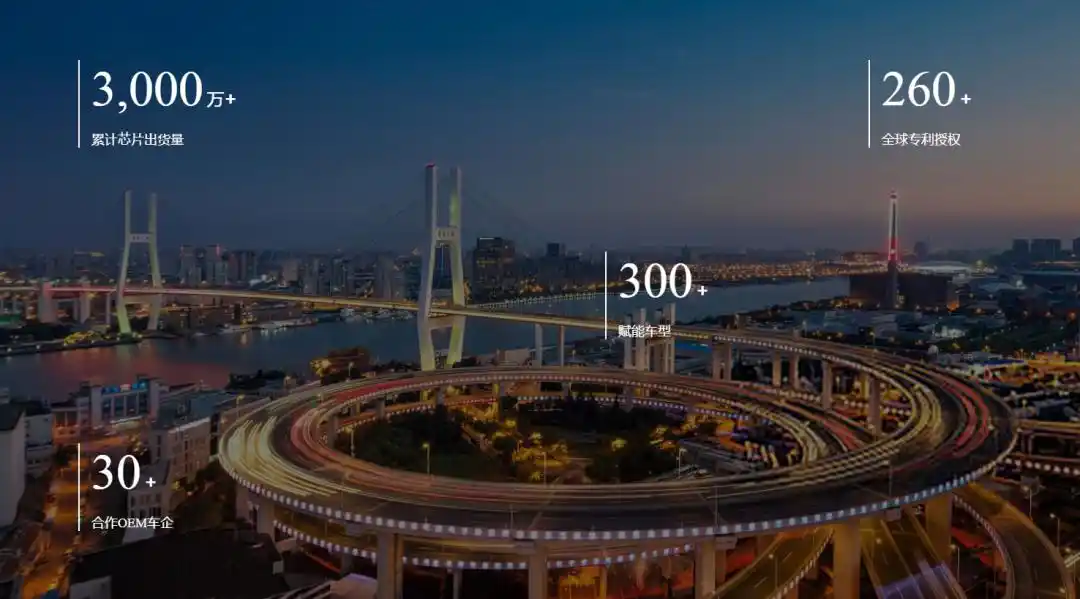
Not only that, Gateland has also taken the competition overseas, becoming the first domestic millimeter-wave radar chip supplier for two well-known European Tier 1 global platforms and entering the main vehicle models of overseas OEMs like Sweden's Volvo and America's Rivian.
As of 2025, its ranking in the global vehicle-mounted millimeter-wave radar chip market (including advanced driver assistance and in-cabin child detection applications) also reached fourth globally, with a market share of about 4%; according to the Shanghai Integrated Circuit Industry Association, the company's market share in the domestic vehicle-mounted millimeter-wave radar chip market reached 31.1% in 2025, second only to Texas Instruments, ranking second in the domestic market.
If viewed from a domestic backing perspective, Gateland is unequivocally number one.
Such achievements naturally attract the favor of capital. As early as 2015, the success of its first chip tape-out led to an angel round of financing from Silergy in November of the same year. From the latest disclosed prospectus (filing draft), Silergy currently remains a major shareholder holding 10.6405%.
As of now, Gateland has cumulatively completed 11 rounds of financing, with investors including the National Integrated Circuit Industry Investment Fund Phase II (Big Fund Phase II), CICC Capital, Walden International, Gopher Asset, GAC Capital, and Pudong Venture Capital Group.
The latest round was in March 2026, completing a 1.2 billion yuan Series E financing, with a post-investment valuation exceeding 10 billion yuan. Subsequently, Gateland submitted the filing for the first public offering of shares and listing guidance to the Shanghai Securities Regulatory Bureau, initiating an A-share IPO.
02 Revenue Soaring but Still in Loss
Let's look at Gateland's IPO filing draft.
According to its disclosure, Gateland plans to publicly issue no more than 9,424,550 shares this time, representing no less than 25% of the company's total share capital after this issuance. It intends to list on the Shanghai Stock Exchange Science and Technology Innovation Board, with CICC as the sponsor.
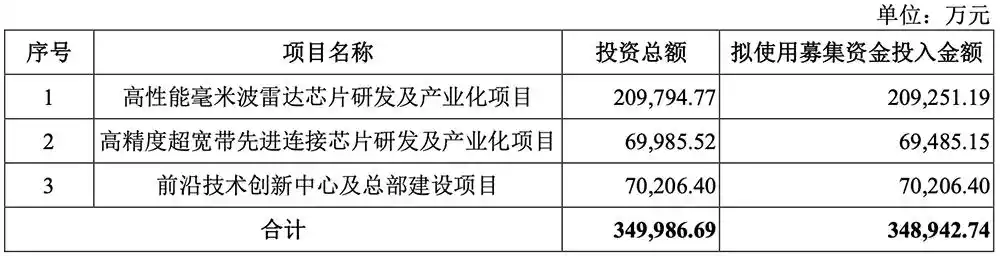
It plans to use the raised funds of 3,489,427,400 yuan, mainly for the high-performance millimeter-wave radar chip R&D and industrialization project, the high-precision ultra-wideband advanced connectivity chip R&D and industrialization project, and the frontier technology innovation center and headquarters construction project.
It's not hard to see that these are all R&D cost investments, which correspond to the financial characteristics presented in the IPO filing draft.
Like the vast majority of hard-tech chip company IPOs, despite impressive revenue growth rates—2.06 billion yuan, 3.03 billion yuan, and 6.32 billion yuan from 2023 to 2025 respectively, with a year-on-year increase of 108.44% in 2025, and a compound annual growth rate exceeding 75% over the past three years, demonstrating extremely strong market momentum.
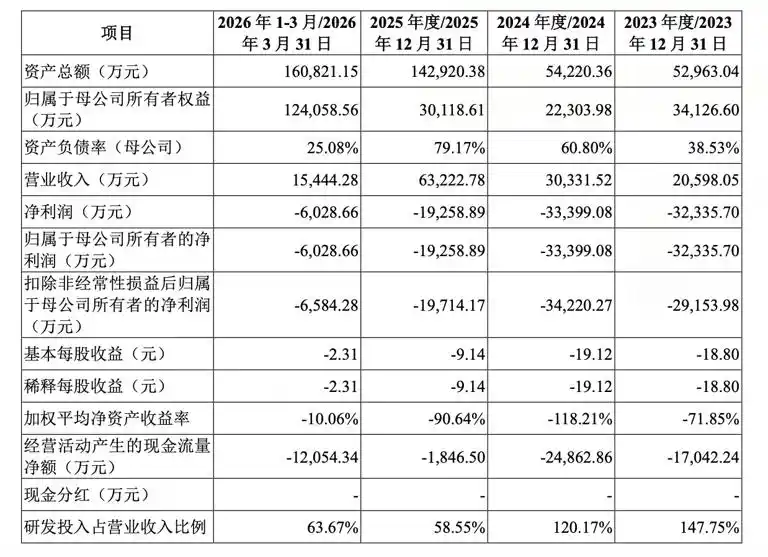
The net profit on the books remains in a loss position. During the reporting period, net profit attributable to the parent company was -323 million yuan, -334 million yuan, and -193 million yuan respectively, with a continued loss of approximately 60.2866 million yuan in Q1 2026.
This is the norm for hard-tech chip company IPOs: high R&D investment and gross margin still climbing.
The core reason for the continued losses lies in high-intensity R&D investment. In the past three years, the company's R&D expenses were 304 million yuan, 365 million yuan, and 370 million yuan, accounting for 147.75%, 120.17%, and 58.55% of operating revenue respectively. In Q1 2026, R&D expenses approached 100 million yuan, accounting for 63.67% of the同期 operating revenue.
The tape-out costs for vehicle-grade chips, functional safety certification, and investments in cybersecurity architecture are all "money-guzzlers" that erode profits. As of the end of March 2026, the company's accumulated uncovered losses amounted to 172 million yuan.
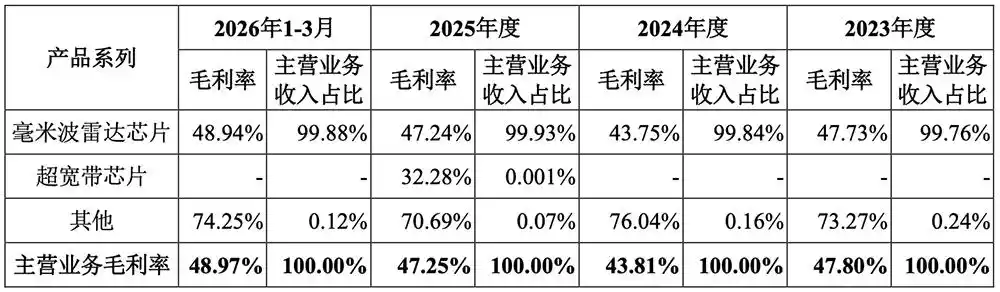
Fortunately, gross margins remain at a relatively high level. During the reporting period, its main business gross margins were 47.80%, 43.81%, 47.25%, and 48.97% respectively, significantly higher than the average comprehensive gross margin of comparable listed companies in the same industry.
And notably, its operating cash flow is approaching an inflection point. During the reporting period, net operating cash flow was -170 million, -249 million, and -18.46 million yuan respectively. It had narrowed significantly in 2025. Moreover, share-based payment expenses are about to peak. It stated, "Share-based payment expenses will reach their highest in 2026 and decrease significantly in 2027 and 2028."
This means that if its revenue exceeds 1 billion yuan and gross margin remains around 48%, Gateland is not far from the "first year of turning a profit."
However, it also frankly stated in the prospectus, "Since 2026, due to factors such as downstream OEMs introducing second suppliers, the sales revenue from the company's largest end customer has continued to face pressure."
But the market remains. According to founder Chen Jiashu, the current (2025) global demand for vehicle-mounted millimeter-wave radar is about 200 million units and is expected to exceed 300 million units by 2029.
Additionally, according to QYResearch's research, the global automotive radar millimeter-wave chip market size reached $7.845 billion in 2025 and is expected to grow to $19.7 billion by 2032.
The market is vast. Most importantly, against the backdrop of import substitution, there are still many stories to tell.
This article is from WeChat Official Account "SuperEV-Lab" (ID: SuperEV-Lab), author: Wang Lei.