FSB Seeks to Obtain Access to Client Data from Crypto Exchanges

cryptonews.ruPublicado a 2026-08-04Actualizado a 2026-08-04

Resumen

The Russian Federal Security Service (FSB) intends to compel cryptocurrency exchanges to provide client data access, similar to requirements for major banks and telecom operators. This information was revealed in a May presentation by an FSB official, as recently reported by The Bell. The FSB reportedly wants exchanges to install SORM surveillance equipment, enabling real-time, 24/7 remote monitoring of internet traffic, user metadata, payments, and social media links. In 2022, the FSB sought client data from exchanges without mandatory SORM installation but now considers them functionally akin to social networks and gaming platforms. Penalties for refusing SORM installation have increased to fines up to 10 million rubles. Furthermore, Roskomnadzor, the communications regulator, has stopped issuing or renewing licenses for telecom operators that fail to coordinate installation plans with the FSB. Previously, the FSB also proposed investigating illegal cryptocurrency transactions to shut down underground crypto exchanges, citing their potential use by criminals for money laundering.

This was discussed during a May presentation by FSB official representative Alexander Samoilov at the Conference of Russian Communication Operators (KROS). The publication The Bell, recognized by the Russian Ministry of Justice as a foreign agent, only recently drew attention to this presentation.

Using SORM, special services can obtain round-the-clock remote access to user information. The system allows for real-time monitoring and analysis of internet traffic, storage of user metadata and materials, as well as linking IP addresses, logins, social media pages, and payment data.
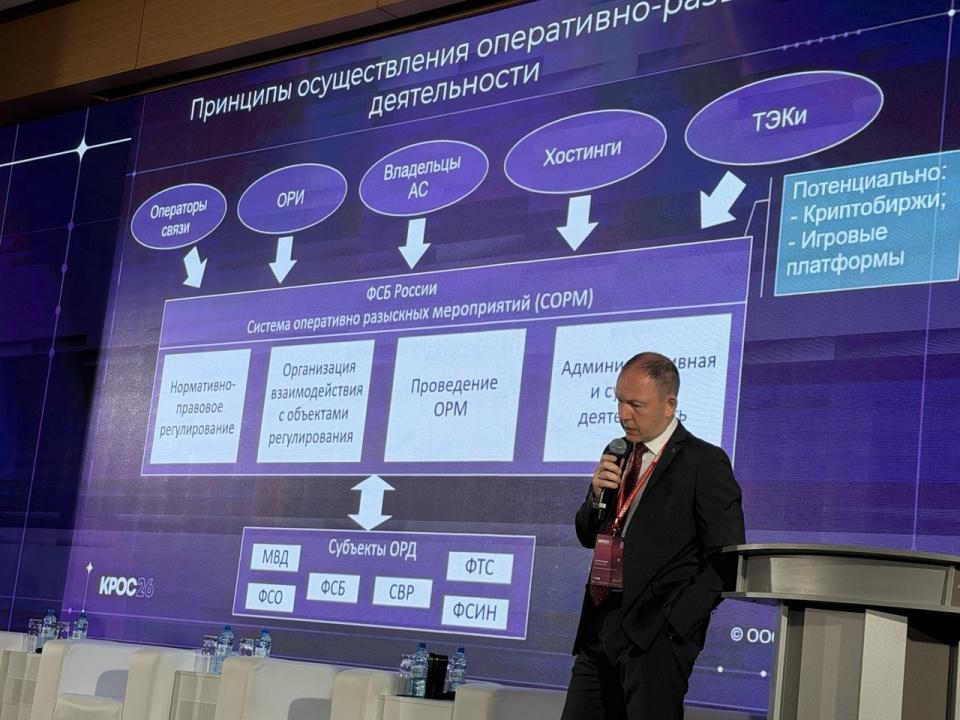
In 2022, the FSB already proposed obligating crypto exchanges to transfer client data, but without mandatory SORM installation. Judging by the presentation, the agency considers crypto exchanges and gaming platforms functionally similar to social networks. At the same time, the security forces want the proposed requirements to be complied with by the largest banks, which are already obligated to install SORM and provide access to client data.

In June, the maximum fine for refusal to install SORM equipment was increased to 10 million rubles. Roskomnadzor has stopped issuing and renewing communication licenses to communication operators who have not coordinated a plan for installing this system with the FSB.

Earlier, in the Russian Public Chamber, the FSB was proposed to investigate illegal cryptocurrency transactions in order to stop the underground operation of crypto exchanges. Such services can be used by fraudsters to legalize funds obtained through criminal means, explain government representatives their logic.

end-content
Criptos en tendencia

Preguntas relacionadas

QWhat agency wants to gain access to client data from crypto exchanges, and how did this information come to light?

AThe Russian Federal Security Service (FSB) wants this access. The information came to light from a May presentation by FSB official Alexander Samoilov at the Conference of Russian Communications Operators (KROS), which was recently noticed by the publication The Bell.

QWhat is SORM, and what capabilities does it provide to Russian security services?

ASORM is a system that allows Russian security services to obtain round-the-clock remote access to user information. It enables real-time monitoring and analysis of internet traffic, storage of user metadata and materials, and the linking of IP addresses, logins, social media pages, and payment data.

QHow does the FSB's current proposal regarding crypto exchanges differ from its 2022 suggestion?

AIn 2022, the FSB proposed obliging crypto exchanges to hand over client data but without mandatory installation of the SORM system. The current presentation suggests they now want crypto exchanges to install SORM, similar to the requirements for major banks.

QWhat are the consequences for Russian operators who refuse to install SORM equipment?

AThe maximum fine for refusing to install SORM equipment was increased to 10 million rubles in June. Furthermore, Roskomnadzor (Russia's communications regulator) has stopped issuing and renewing communications licenses for operators who have not coordinated an installation plan with the FSB.

QWhy have Russian authorities, according to the article, proposed investigating illegal cryptocurrency transactions?

AAuthorities propose investigating illegal crypto transactions to shut down the underground operation of crypto exchange services. They argue that such services can be used by fraudsters to launder money obtained through criminal means.

Lecturas Relacionadas

After Memes, Solana Foundation's 'Survival Roadmap'

**Title:** After Memes, Solana Foundation's "Survival Roadmap" **Summary:** Solana Foundation's recent hiring spree for senior roles in stablecoins, AI, Asian institutional growth, and DeFi signals a strategic pivot away from its meme-driven past. This move comes as the blockchain faces a 43% quarterly drop in real economic value and declining application revenue, despite maintaining high network activity. While meme platforms like Pump.fun still dominate fee generation, new demand is emerging in tokenized equities (with $5.8B volume in Q2, a 114% increase) and institutional adoption (7 global systemically important banks are now active on Solana). The foundation's new hires aim to bridge a critical gap: transforming this growing non-speculative demand into sustainable, fee-generating activity. The stablecoin lead seeks "step-change growth" for a sector lagging behind competitors. The Asia-focused roles aim to convert institutional interest into concrete pipelines, leveraging upcoming network upgrades for millisecond settlement. The AI ecosystem role is tied to new stablecoin payment channels for AI agents, a nascent but promising revenue stream. The core challenge is clear: reduce reliance on volatile meme trading income and successfully monetize the rising institutional and real-world asset activity. The success of this "survival roadmap" will be measured by whether projects from these new focus areas can break into Solana's top revenue rankings, displacing the current meme-centric leaders.

marsbitHace 13 min(s)

After Memes, Solana Foundation's 'Survival Roadmap'

marsbitHace 13 min(s)

Anchorage Unveils Plan to Protect Against Quantum Threats

Regulated crypto bank Anchorage Digital has presented a strategy for preparing institutional assets for the post-quantum era, including implementing hybrid protection for internal TLS connections. The bank highlights that for cryptocurrencies, the main quantum risk lies in digital signatures, as Shor's algorithm could theoretically derive a private key from a public one. To mitigate this, Anchorage uses Bitcoin addresses based on a hash of the public key, which keeps the key hidden until a transaction is sent, and practices minimal address reuse. Internally, the company has deployed post-quantum key encapsulation for employee devices on ChromeOS and is implementing post-quantum cryptography within its hardware security modules (HSMs). A key proposal is the "Post-Quantum Turnstile" mechanism, which uses STARK zero-knowledge proofs to allow users to migrate signing rights to a post-quantum key without exposing their old private or public key. This could help secure an estimated two-thirds of circulating coins that might otherwise become inaccessible if the network phases out classical signatures. Furthermore, Anchorage open-sourced its Rust implementation of the SQIsign digital signature scheme, which it claims offers signatures about seven times smaller than the Falcon algorithm. This comes amid warnings that around 6 million BTC in addresses with exposed public keys could be vulnerable to future quantum attacks.

cryptonews.ruHace 46 min(s)

Anchorage Unveils Plan to Protect Against Quantum Threats

cryptonews.ruHace 46 min(s)

Trading

Spot

Artículos destacados

Cómo comprar DATA

¡Bienvenido a HTX.com! Hemos hecho que comprar DATA Network (DATA) sea simple y conveniente. Sigue nuestra guía paso a paso para iniciar tu viaje de criptos.Paso 1: crea tu cuenta HTXUtiliza tu correo electrónico o número de teléfono para registrarte y obtener una cuenta gratuita en HTX. Experimenta un proceso de registro sin complicaciones y desbloquea todas las funciones.Obtener mi cuentaPaso 2: ve a Comprar cripto y elige tu método de pagoTarjeta de crédito/débito: usa tu Visa o Mastercard para comprar DATA Network (DATA) al instante.Saldo: utiliza fondos del saldo de tu cuenta HTX para tradear sin problemas.Terceros: hemos agregado métodos de pago populares como Google Pay y Apple Pay para mejorar la comodidad.P2P: tradear directamente con otros usuarios en HTX.Over-the-Counter (OTC): ofrecemos servicios personalizados y tipos de cambio competitivos para los traders.Paso 3: guarda tu DATA Network (DATA)Después de comprar tu DATA Network (DATA), guárdalo en tu cuenta HTX. Alternativamente, puedes enviarlo a otro lugar mediante transferencia blockchain o utilizarlo para tradear otras criptomonedas.Paso 4: tradear DATA Network (DATA)Tradear fácilmente con DATA Network (DATA) en HTX's mercado spot. Simplemente accede a tu cuenta, selecciona tu par de trading, ejecuta tus trades y monitorea en tiempo real. Ofrecemos una experiencia fácil de usar tanto para principiantes como para traders experimentados.

316 Vistas totalesPublicado en 2026.07.01Actualizado en 2026.07.01

Cómo comprar DATA

Discusiones

Bienvenido a la comunidad de HTX. Aquí puedes mantenerte informado sobre los últimos desarrollos de la plataforma y acceder a análisis profesionales del mercado. A continuación se presentan las opiniones de los usuarios sobre el precio de DATA (DATA).

活动图片