From 'The Big Short' to San Francisco: The Revelry and Dizziness Within the AI Bubble

marsbitPublicado a 2026-06-08Actualizado a 2026-06-08

Resumen

From "The Big Short" to San Francisco: The Frenzy and Dizziness in the AI Bubble The article captures the intense, frenetic atmosphere in San Francisco, the epicenter of the current AI boom. Drawing a parallel to the "smell of money" from *The Big Short*, the author observes a city gripped by a singular status game centered entirely on AI and technology. This manifests in a palpable, caffeine-fueled anxiety ("people are shaking"), rampant comparison using vanity metrics like funding rounds, and pervasive "Big Bubble Behavior." The piece explores the city's stark contrasts: its dystopian streets versus beautiful vistas, and the disconnect between the doomsday concerns of some AI researchers and the optimistic, growth-focused "GTM" teams. It critiques the obsession with "math genius" founders as the new ticket to outsized returns, akin to scouting sports prodigies. Referencing economic historian Carlota Perez's "frenzy phase" and Karl Polanyi's "double movement," the author frames the boom as a period where financial speculation detaches from fundamentals, with society potentially becoming subordinate to a new economic force driven by "geniuses in data centers." Ultimately, while acknowledging the unprecedented wealth creation and party-like energy, the article concludes with cautionary advice: when the music is playing, you should dance, but don't get drunk. The core reminder is to stay grounded, avoid distorted judgment, and maintain perspective amidst the euphoria.

Original Title: What's That Smell in San Francisco?

Original Author: Spencer Yen

Original Translation: Peggy, BlockBeats

Editor's Note: San Francisco is once again becoming the intersection of technological revolution and financial bubbles. AI companies, research labs, venture capital, outdoor advertisements, and gossip networks collectively shape a highly exhilarated urban atmosphere: some are propelled forward by valuations and equity packages, others immerse themselves in apocalyptic visions of AGI, and some view math competition prodigies as the gateway to the next generation of outsized returns.

Drawing from the line "I smell money" in *The Big Short*, the author records observations after moving from New York to San Francisco: the density of technology, wealth creation, and information asymmetry in this city are real, and so are the anxiety, comparisons, and Big Bubble Behavior. When AI becomes San Francisco's only status game, innovation, speculation, belief, and fear begin to blend, forming the most immediate on-the-ground sample of this wave of AI fever.

The interest of this article lies not in hastily judging when the bubble will burst, but in showing *how* the bubble happens: how people talk, compare, invest, become anxious, and seek their own place within the narrative of "the future is coming." The music is still playing, the party isn't over, but the author concludes with a reminder to himself and all those within it: you can dance, but don't get drunk.

Below is the original text:

One of my favorite movie scenes is the Jenga scene in *The Big Short*: Ryan Gosling's character pitching a trade to short the US housing market to Steve Carell's hedge fund team.

In that conference room, with an obnoxiously confident, jerk-like aura, he has three props: his sidekick Chris, his quant Jiang, and a Jenga tower printed with mortgage bond ratings. His opening line is also brilliant: Do you smell that? What is that? What's that smell? Perfume? No. Opportunity? No. It's money. I smell money.
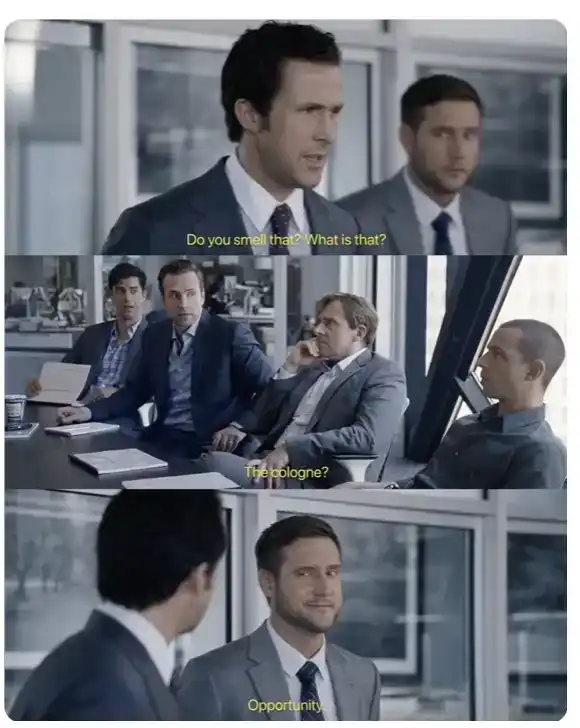
https://www.youtube.com/watch?v=YgF98vyn2fY

A few months ago, I moved from New York to San Francisco to join a friend's startup. Before moving, everyone told me: "You have to go to San Francisco," saying that's where everything is happening. So I've been grappling with this question: Is San Francisco really that important? Was I really missing something staying in New York?

My answer so far is: If you want to be at the center of this massive technological revolution and bubble, then this is indeed the place to be. The density here is real, the gossip networks are real, and consequently, the information asymmetry is also real.

During this time in San Francisco, I've accumulated some observations and thoughts. Here's what I've been 'smelling' in San Francisco:

1. People are trembling.

2. There's only one status game here.

3. A city that's always crying wolf.

4. Obsession with math prodigies.

What's struck me is how vastly different the human experience can be within the same city—walk on some streets and you'll feel like you're in hell; turn onto another and you'll see the bay, distant cypress trees, and beautiful scenery. The most techy, futuristic moments here are probably watching various autonomous vehicles roaming the city streets. Every time I see one of those new, friendly light-blue Waymo cars, I can't help but smile. Or, you might feel surveilled by Ava the AI BDR (AI Business Development Rep). I hate that ad. But credit where it's due, they successfully got me still talking about it with 'rage bait.' Every morning, right outside my apartment door, I see this monster:
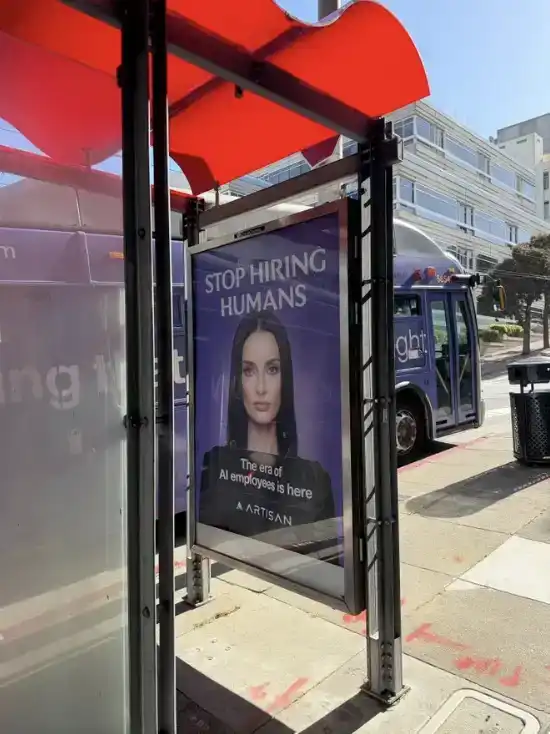
Why do people graffiti friend.com but not this garbage ad? Also, if you live nearby, let's grab ice cream sometime!

People in San Francisco are trembling

A few weeks ago, I was hanging out with my friend Jared (@imjaredz). He lives in New York but recently joined Cognition. We had lunch and coffee at the Cognition office. Nice vibe, good coffee, great rooftop. I asked him what he thought about the vibe in San Francisco.

"Have you noticed how people in San Francisco are all trembling?" I laughed, thinking: What? Trembling? Then I realized I had cold brew that morning, 300mg of caffeine, and was indeed a bit jittery. "Yeah, literally trembling. I'm not against people going full ADD, but next time you have a coffee chat, pay attention—see if they're trembling."

Bubbles and boom times bring this frenetic energy, as if if you don't 'make it' now, you'll never have another chance. I'm not immune either—after Jared's reminder, I noticed I seem to tremble sometimes too. That whole "grind to escape permanent pleb status" meme is overdone, but every meme gets popular because it captures a zeitgeist. If nightlife is a city's heartbeat, a thermometer for its culture, what does it say when a 'dog startup' 24-hour cafe becomes the de facto nocturnal grind haven?

Trembling is part of the process of technological revolution and financial bubbles. Forgive me, I used AI for part of this writing; if you want to kill me for that, I apologize in advance. But I was looking up Carlota Perez quotes, and I liked Gemini's summary of the 'Frenzy Phase':

Frenzy Phase: The peak of the installation period, where market psychology abandons fundamentals. Financial participants stop pursuing dividends and switch to capital gains, causing a decoupling of the 'paper economy' from the 'real economy.'
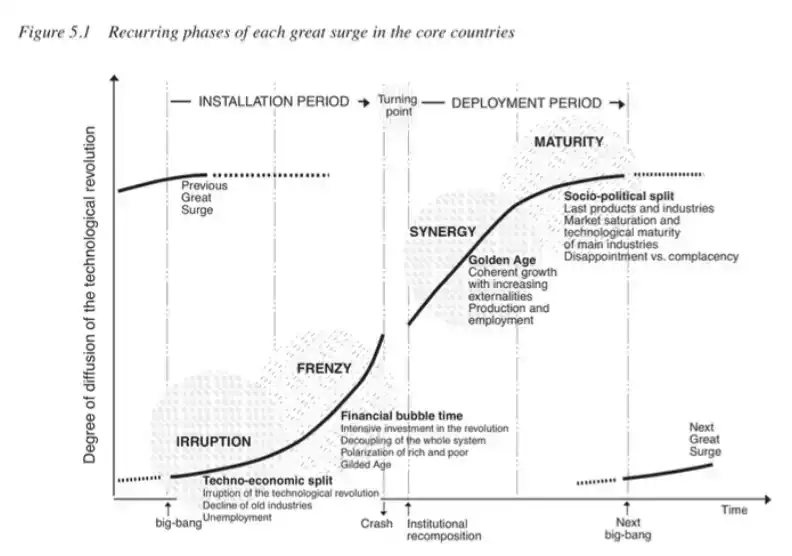
Source: https://stratechery.com/2021/the-death-and-birth-of-technological-revolutions/

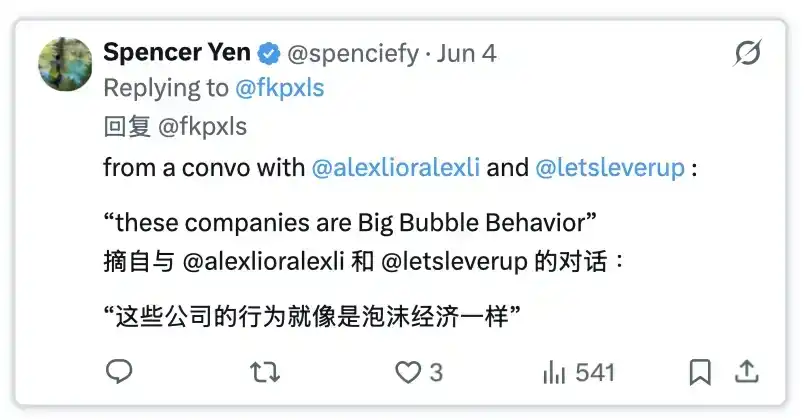
A friend of mine coined a term: "Big Bubble Behavior." It's a beautiful phrase, and I've been using it the past two weeks to label everything characteristic of the frenzy phase. Market euphoria sometimes makes people do irrational things. Trembling is Big Bubble Behavior. I've seen trays of lobster tails twice in my life: first at a crypto party on a Venetian Island mansion in Miami in 2021, and second at ClawCon in 2026.
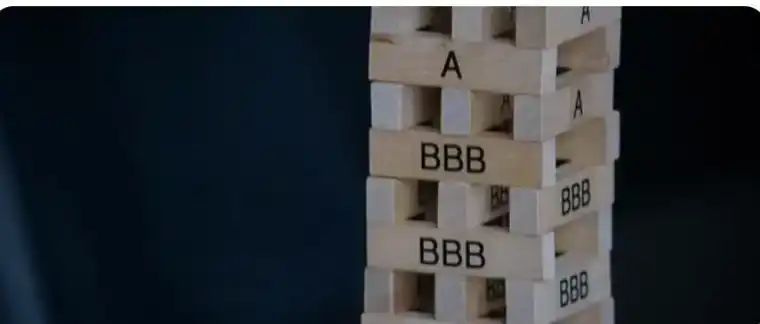
Big Bubble Behavior
There's only one status game in San Francisco
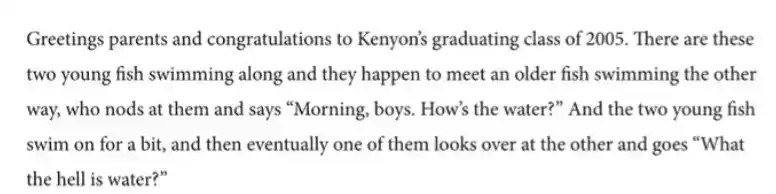
David Foster Wallace, *This is Water*: https://fs.blog/david-foster-wallace-this-is-water/

In San Francisco, this water is AI. Outdoor ads are everywhere—billboards, buses, bus stops, shared bikes, even the blue sky seems occupied by them.

My issue with San Francisco is this: there's only one dominant status game—tech. You go to dinner, or hang out in a park, and hear the same vocabulary. You also see all sorts of 'alpha farming' (hunting for informational edge) because those gossip networks really do exist. And I can't even get mad because I'm that person too. Don't hate the player, hate the game.

The problem is, when a city has only one dominant status game, it becomes far too easy to compare yourself to others.

We increasingly measure and compare each other by vanity metrics, like how much funding someone raised, or what letter in the alphabet your company's round is at. I truly hope someone raises a Series Z, because that would directly prove how absurd the private markets have become. You hear the gossip: which hot startup is getting chased by finance players, what crazy valuation level they're at. Then you can't help but start doing those disgusting, Blind-style back-of-the-envelope calculations: how much is so-and-so's equity package worth now.

I told a friend, if you saw the kind of reverse salary math, offer-optimizing math on Blind, you'd cringe so hard. Blind is that anonymous big-tech social network, famous for memes like: "Having a life crisis, my wife might leave me, but should I take Meta L6 or Google L9? TC: $969k." So why are we doing the same thing here now? Go touch grass. Or maybe that's just my cope.

In New York, there are at least 7 status games simultaneously. Finance, big law, music, fashion, celebrity circles, old-money family offices, media/news, sports, entertainment. Because the scope is so broad, some games are so distant they're almost inaccessible, making them interesting to talk about and learn. It scatters the attention of all ambitious people.

I enjoy asking law school friends which top firms are most prestigious and the subtle differences between them; I enjoy learning about the fashion and luxury world and what it takes to survive there; I enjoy understanding the cushy lives of quant elites and their garden leave arrangements.

San Francisco is creating unprecedented wealth, which brings a weird energy. A research friend mentioned people around them are already looking into buying land and diversifying into scarce resources. There's a feeling: you're either someone with lab equity, or you're not. There's also the joke that San Franciscans don't know how to spend money; this weird energy comes from massive new wealth being created, but people don't know what to do with it. First-time rich? Let the experienced rich kids teach you how to enjoy life.
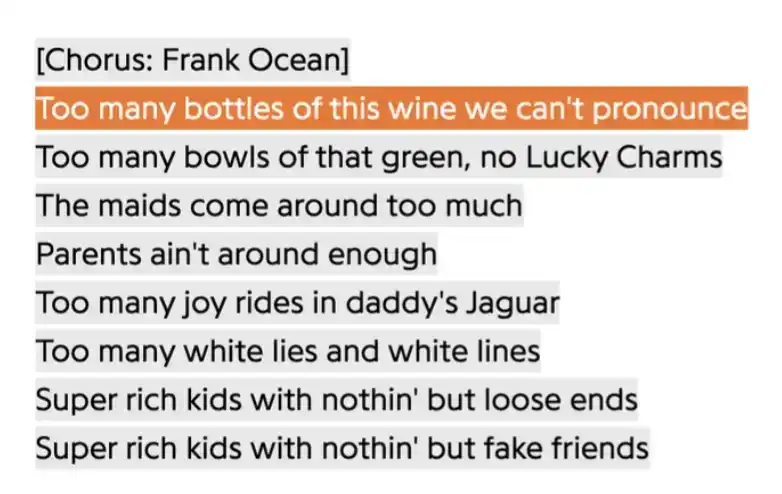
*Super Rich Kids* — Frank Ocean: https://www.youtube.com/watch?v=0XCQNpjWmRE

A city that's always crying wolf

My first impression of San Francisco was this doomer sentiment. Maybe the researchers in the labs truly see some 'second coming'; if so, their calls for slowdowns and safety emphasis make sense. But I have no real way of knowing. All I know is how doomerism makes *me* personally feel—not great!

I've already had several nihilistic conversations, roughly along the lines of: "If Mythos could wipe all this out in one go, or crack everything, then what are we even doing here building software?" And "Will AI ruin our lives?" And "AI will create massive inequality and cause society a lot of pain."

My one-sentence take is: humans will always find something else to do, work will migrate to higher levels of abstraction, and new things will become valuable.

We're terrible at predicting what future society will look like. I think those anti-capitalists I read in college were angry at the wrong things—imagine their reaction seeing humans derive joy from AI-generated fruit trash videos or 'Tung Tung Tung Sahur' in Italian brainrot.

"The problem isn't that AI makes content dumb, [sniff], it's that we enjoy this dumbness as a kind of sacred junk, a digital fetish object, [sniff], isn't it?"

From my friend Samir. His resume: not a researcher, but he has a 'fish guy.'
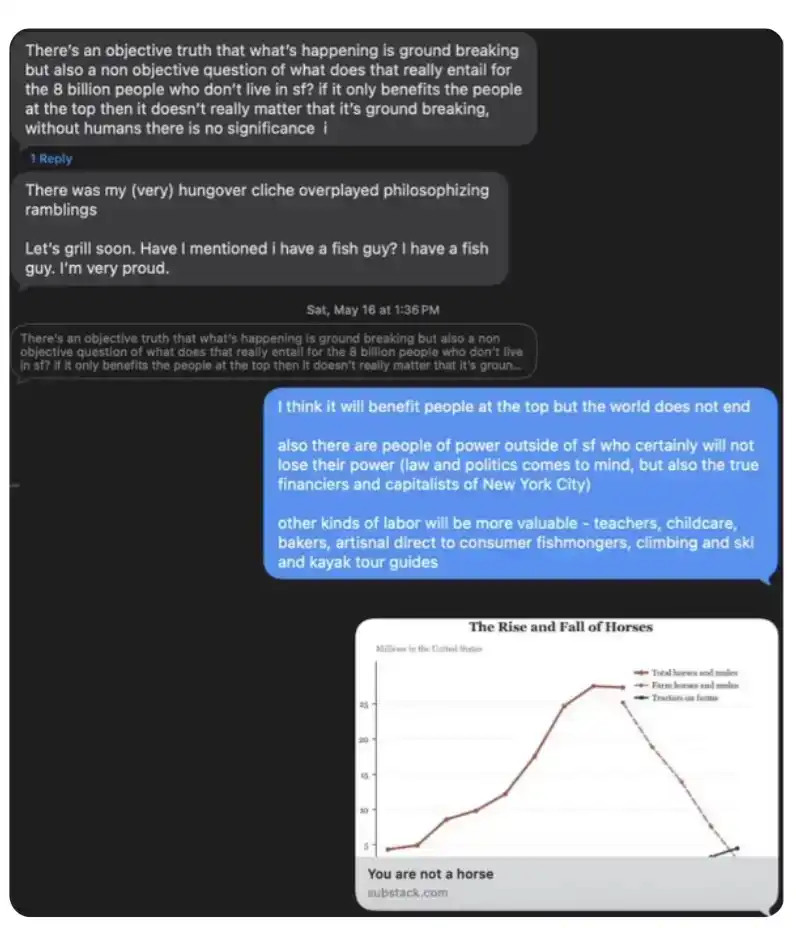
Anyone else have their own 'someone guy'? Please tell me.

A friend working at a lab pointed out that GTM (go-to-market/sales/growth) teams and research teams within the same company are having completely different lived experiences right now. That doomerism gets balanced out by: "Come hang with the GTM team, have a beer, touch grass." There's something interesting about the pessimism of the model creators versus the optimism of the people closest to deploying the technology. Time to get Forward Deployed!

Reality has a surprising amount of detail: https://johnsalvatier.org/blog/2017/reality-has-a-surprising-amount-of-detail

Six years ago, in college, I wrote about how AI reshapes social structures, titled *Polanyi and the Second Great Transformation* (No Pangram AI detection needed, pre-2023 Medium was like an organic pasture for human writing).

Let me explain the reference: Karl Polanyi was an Austro-Hungarian-born economic sociologist whose magnum opus is *The Great Transformation*. Written in 1944, it critiqued the rise of modern market capitalism in 19th-century Britain. So, the 'First Great Transformation' was the shift to capitalism, and my 21-year-old smart-aleck self called AI the 'Second' Great Transformation... you get it.

Polanyi's most famous concept is 'The Double Movement,' describing a historical push-and-pull phenomenon: on one hand, the free market's relentless expansion; on the other, society generates a counterforce trying to protect itself through regulation. The first movement is capitalist elites trying to expand free markets and commodify society; today, that's commodifying intelligence. The second, opposing movement is people reacting to market-driven destruction and trying to protect society; today, that's anti-AI, anti-data center rhetoric.

Here's my naive college-aged writing from 21:

Polanyi explains that the development of machinery for production led to the 'fictitious commodification' of labor (people) and land (nature). While the Fourth Industrial Revolution has already occurred within a market system, the advent of the mechanical mind presents a different threat: taking over jobs. As computers can perform more 'human' cognitive tasks with greater efficiency, many ordinary people may lose their jobs.

Polanyi wrote: "Nothing saved the common people of England from the impact of the Industrial Revolution. A blind faith in spontaneous progress had taken hold of the minds of men..."
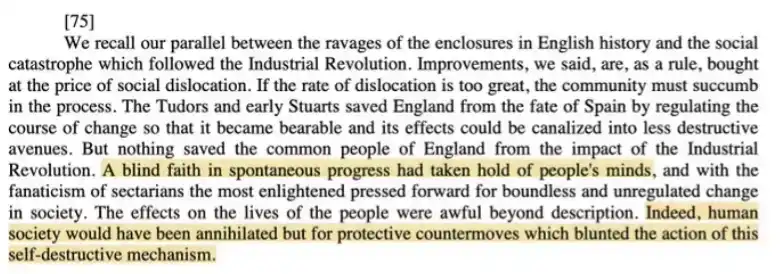
https://medium.com/@spenceryen/polanyi-and-the-second-great-transformation-6d6364b5d3c6

So on second thought, maybe the people constantly crying 'wolf' have a point. Blind faith in spontaneous progress might not end well. Polanyi's critique of market capitalism is that for most of human history, economic activity was subordinate to social, cultural, and religious institutions. But later, market capitalism inverted this relationship, subordinating society to the economy.

How do we ensure society isn't subordinated to a nation of geniuses in data centers? As Ben Thompson accurately pointed out in his article about Anthropic's Mythos, the punchline of *The Boy Who Cried Wolf* is that the wolf eventually does come.

But what would the capitalist in me say? Then invest in social, cultural, and religious institutions! If you have any good trade ideas, feel free to DM me your pitch deck.
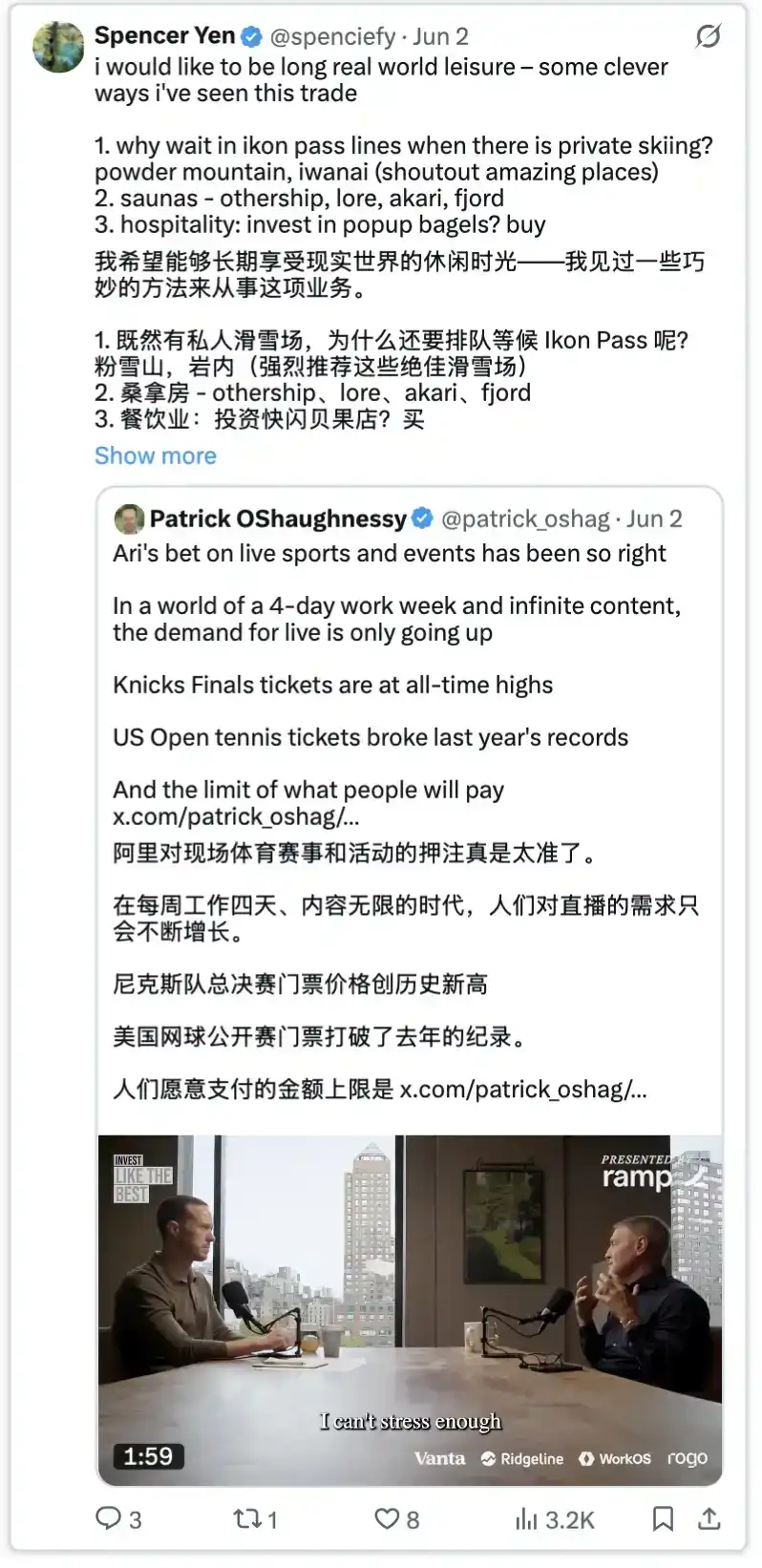
Obsession with math prodigies

Another favorite gag from that *Big Short* Jenga scene is when Ryan Gosling points to the Chinese guy beside him and says, "That's my quant." The vibe weirdly parallels a recent batch of hot founders being chased by investors—they're often prodigy kids who dominated math competitions from a young age.

Again, Ryan Gosling, responding to Steve Carell's skepticism:

"So you're saying if the default rate hits 8%, these bonds blow up, and we're at 4% now? If they go to 8%, that's the end of the world?" "Yeah, that's correct." "Why is nobody talking about this? You're absolutely certain of this math model?" "Look at him. That's my quant." "Your what?" "My quan-ti-ta-tive, my math specialist. Look at him. Don't you notice anything different about him? Look at his face." "That seems a little racist." "Look at his eyes. I'll give you a hint, his name is Yang! He's a national math champion in China, doesn't even speak English! So yes, I'm very certain of this math model."
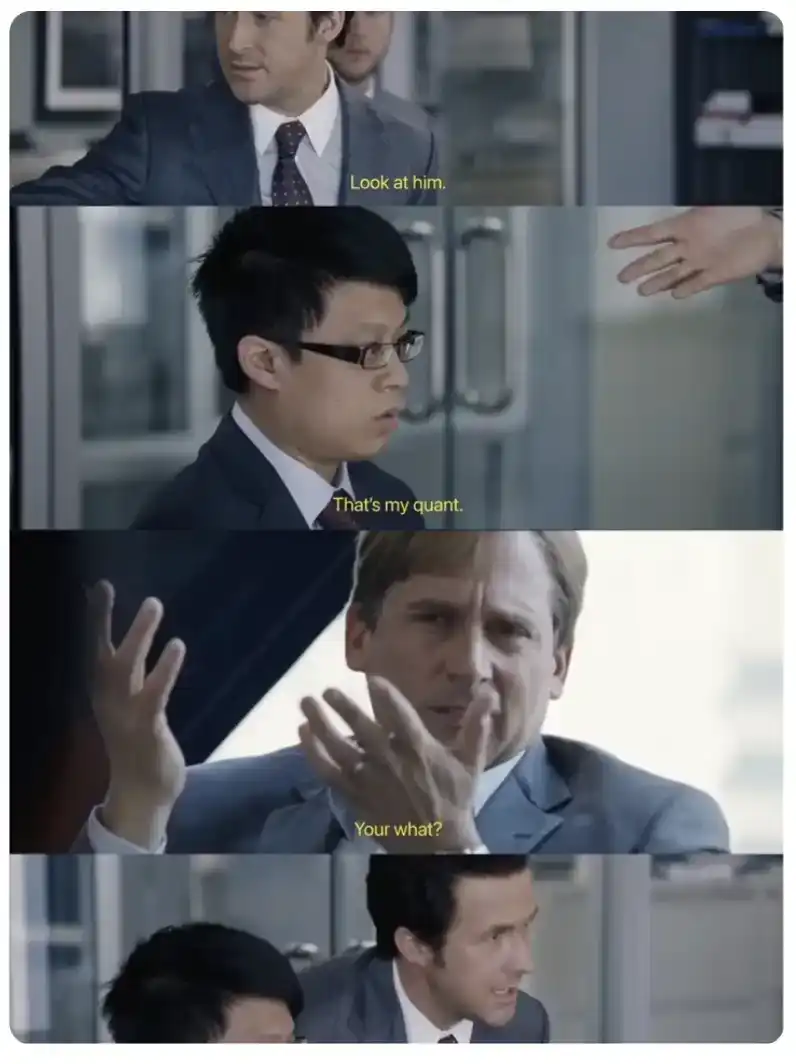
To some investors, the key predictive indicator for a fund's DPI (Distributed to Paid-In Capital, a measure of actual returns) seems to come from the founder's childhood—either they were a math competition prodigy as a kid, or they have some childhood trauma. Growing up in the Bay Area, my perception of my own math abilities was shattered early because my genius peers were all in the math competition circles. Now, they've mostly become quant traders or researchers at big model labs.

I distinctly remember a moment from seventh grade: my dad and I were flipping through sports channels on TV at home, and I saw my middle school classmate on ESPN2... he was competing in the Mathcounts competition. In that moment, I knew my path was over. I often joke that when I started playing the 'grind for college apps' game in ninth grade, I knew I couldn't compete with those Intel STS, RSI, AIME, USACO kids, so I had to find my own game.

I deeply admire many of these standout CEOs, founders, and researchers, and I have personally made a financial bet on one of them. But what I find funny is that an entire asset class and investor narrative has now formed around 'cultivating the smartest math competition kids and treating them as tickets to alpha.' When you think about it, it's not fundamentally different from scouts looking for the next Wemby (Victor Wembanyama). Though, I also want to believe in the Jalen Brunson story—hard work, persistence, and heart can win too.

Hyperliquid.

Party like it's 1999

https://x.com/elonmusk/status/1656326406618619910

A very wise investor once gave me two pieces of advice:

First, you will live through three bubbles in your lifetime.

The first bubble you experience, you'll be completely immersed in the euphoria. You have no experience, you attend the party, get swept up in the fervor.

The second bubble you experience, you remember what happened the first time, so you can exit with some wins, but you'll still get drawn in a bit.

The third bubble is your chance to create generational wealth—you've accumulated enough experience from the first two to know how to manage risk, emotions, and exit timing.
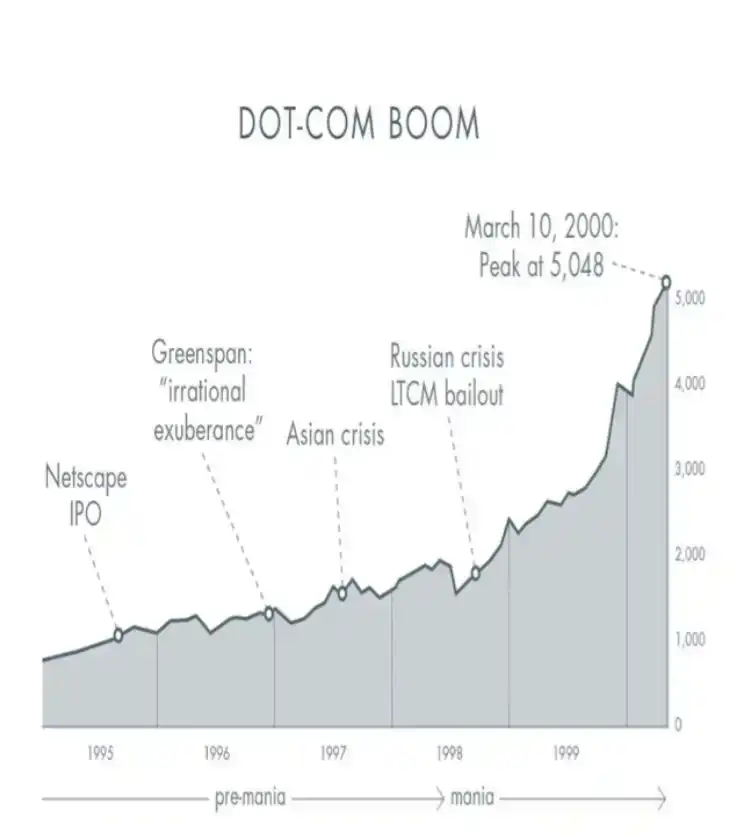
The second piece of advice is: When the music is playing, you dance, but don't get drunk.

Right now the music is deafening, maybe even about to blow the speakers. But bigger backup speakers are being manufactured, and this party clearly isn't over.

This is a reminder to myself, and to anyone who needs to hear it: remember to touch grass, cook your own meals, don't let Big Bubble Behavior warp your judgment. Borrowing wisdom from my friend Samir: Let's barbecue soon. Do you know a fish guy?
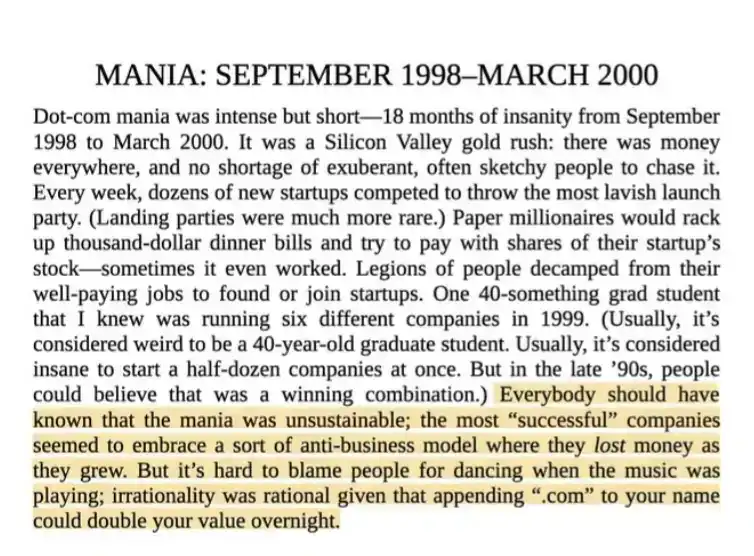
From Peter Thiel's *Zero to One*

Original link

Preguntas relacionadas

QWhat are some key characteristics of the 'Big Bubble Behavior' the author observes in San Francisco's current tech scene?

AThe author describes 'Big Bubble Behavior' as actions and energies characteristic of the 'Frenzy Phase' of a financial bubble. Key observations include: a jittery, manic energy among people (literally 'shaking'), a single dominant status game centered around tech and AI, rampant comparison through vanity metrics like funding rounds and equity packages, and conspicuous consumption (e.g., lobster tails at parties). It represents a period where market psychology abandons fundamentals for capital gains.

QAccording to the author, what is the main difference between the social 'status games' in San Francisco compared to New York?

AThe author states that in San Francisco, there is essentially only one dominant status game: technology/AI. This leads to intense, direct comparison among individuals based on tech-specific metrics like funding and valuation. In contrast, New York has at least seven different status games (e.g., finance, law, fashion, media, old money), which are diverse and distant enough from each other that they spread ambition and make social dynamics more varied and interesting to learn about.

QHow does the author interpret the prevalent 'doomerism' or apocalyptic anxiety about AI in San Francisco?

AThe author acknowledges the doomerism but offers a skeptical and somewhat optimistic personal view. While admitting lab researchers might have valid safety concerns, the author feels this outlook is personally unhelpful. The core belief is that humans will adapt, work will shift to higher levels of abstraction, and new things will become valuable. The author also references Karl Polanyi's theory of the 'Double Movement,' suggesting society might push back against market-driven AI commodification, and humorously suggests investing in 'society, culture, and religious institutions' as a counter-trade.

QWhat parallel does the author draw between the AI investment landscape and the film 'The Big Short'?

AThe author draws a parallel between the reverence for quantitative experts in 'The Big Short' and the current fascination with 'math prodigies' in AI investing. In the film, a math champion is presented as the ultimate authority for a financial model. Similarly, in today's AI scene, many sought-after founders are former math competition champions from childhood. The author notes that an entire 'asset class' has formed around identifying and betting on these 'math genius kids' as the next generation's ticket to outsized returns, akin to sports scouting.

QWhat two pieces of advice about navigating financial bubbles does the author share from a seasoned investor?

AThe two pieces of advice are: 1) You will experience three bubbles in your lifetime. The first, you naively ride in euphoria. The second, you participate with some experience. The third is your chance to build generational wealth, as you've learned to manage risk, emotion, and exits. 2) When the music is playing, you must dance. But don't get drunk. The author applies this to the current AI frenzy, noting the music is loud but cautioning against letting 'Big Bubble Behavior' distort judgment.

Lecturas Relacionadas

When AI Begins to Audit the World: From Claude Discovering the ZEC Vulnerability, Watching the Encryption Industry Enter the 'Recursive Security Era'

**When AI Audits the World: From Claude's Discovery of a ZEC Vulnerability, Viewing the Crypto Industry Entering a "Recursive Security Era"** This article examines a pivotal shift in the blockchain security landscape, triggered by the convergence of two events: Anthropic's research on AI's "Recursive Self-Improvement" and Claude Opus 4.8's discovery of a critical vulnerability in Zcash's code. Traditionally, crypto security has relied on human experts and automated tools for periodic audits. However, the article argues AI is transitioning from a mere tool to an active participant in understanding and analyzing complex systems. Claude's ability to identify a subtle flaw in Zcash's zero-knowledge proof system demonstrates AI's potential to dramatically lower the cost and time required for risk discovery. This goes beyond finding a single bug; it signals a change in the very mechanism of how vulnerabilities are found. The core thesis introduces the concept of "Recursive Security," drawing a parallel to Anthropic's "Recursive Self-Improvement." Just as AI can accelerate its own development through feedback loops, security systems are evolving towards a continuous cycle of analysis, risk identification, remediation, and re-analysis. Security is becoming a persistent, evolving capability integrated into a system's lifecycle, rather than a one-time pre-launch audit. This shift is particularly urgent for the crypto industry, where system complexity from Layer-2 networks, modular architectures, and ZK-proofs is growing faster than human analysis capacity. AI excels at the pattern recognition and contextual understanding needed to navigate this complexity. Importantly, the article cautions that AI augments both defenders and potential attackers, accelerating the entire threat landscape. The future competitive advantage may not lie in having zero vulnerabilities, but in having the fastest risk discovery, validation, and response capabilities. The Claude-Zcash incident is thus an early signal of an era where AI-driven, recursive security systems become essential for managing risk in an increasingly complex digital world.

marsbitHace 7 min(s)

When AI Begins to Audit the World: From Claude Discovering the ZEC Vulnerability, Watching the Encryption Industry Enter the 'Recursive Security Era'

marsbitHace 7 min(s)

From MSTR to STRC+: Where Is the Limit of the Strategy Universe?

From MSTR to STRC+: The Evolution and Limits of the Strategy Universe This article examines the transformation of Strategy (formerly MicroStrategy) from a simple "Bitcoin treasury" company into a complex financial engineering firm building a BTC-backed credit system. **Core Thesis:** Strategy's true significance lies not just in its massive BTC holdings (~844k BTC), but in its attempt to transform this static reserve into a multi-layered credit curve within traditional capital markets and, subsequently, into on-chain yield infrastructure. **The MSTR Flywheel:** The initial model was a reflexive loop: BTC price rises → MSTR stock rises → company raises capital (debt/equity) at a premium → buys more BTC → increases per-share BTC exposure → MSTR premium grows. This "amplified Bitcoin" equity (MSTR) thrives on bullish momentum but is vulnerable to tightening premiums and rising funding costs. **Building the Credit Curve:** Strategy's innovation is slicing its single BTC balance sheet into different risk/return profiles via specialized securities: * **MSTR:** High-volatility equity layer absorbing full BTC upside/downside. * **STRC:** Key product. A perpetual preferred stock designed as "short duration high yield credit," offering ~11.5% floating monthly dividends. It attracts fixed-income investors seeking yield without direct BTC exposure, funding Strategy's operations. * **STRD/STRK/STRF:** Other preferred/share classes with varying durations, conversion rights, and fixed dividends. **Risks of the STRC Model:** STRC's high yield is not risk-free. Its stability depends on: 1) Sufficient BTC asset coverage, 2) Strategy's continued ability to pay dividends, and 3) Market faith in the MSTR/STRC funding flywheel. Stress points include deep BTC price declines eroding the asset buffer, rising dividend costs if STRC trades below par, and a broken flywheel if MSTR's premium (mNAV) falls persistently. **On-Chain Expansion: STRC+:** Projects like **Saturn** and **Apyx** aim to package STRC's (and other DAT preferred stock) cash flows into on-chain stablecoin yield (e.g., sUSDat, apyUSD). They offer DeFi a new yield source distinct from trading fees or incentives—cash dividends from traditional securities. However, this introduces compounded risks: off-chain custody, issuer credit risk, BTC volatility, and protocol execution risk. **Conclusion: The Ultimate Boundary** Strategy's endgame is not infinite BTC accumulation. It is the market's long-term acceptance of a new credit system where BTC serves as collateral for tradable securities whose cash flows can power on-chain financial applications. Its "universe" expands if this BTC-native credit curve gains legitimacy, but contracts if these instruments are repriced purely as high-risk, yield-bearing credit assets without stablecoin mythology.

marsbitHace 26 min(s)

From MSTR to STRC+: Where Is the Limit of the Strategy Universe?

marsbitHace 26 min(s)

Founder of Baixing.com: My Fourteen Claude Code Usage Experiences

Founder of Baixing.com Shares 14 Personal Tips for Using Claude Code The author outlines his personal, non-universal strategies for maximizing Claude Code. Key points include: focusing deeply on one primary tool (Claude Code) rather than constant comparison; mastering essential shortcuts for the editor and command line; utilizing voice input like HoldSpeak; starting projects with a structured PROJECT.md file; defaulting to Claude agents for most tasks; and leveraging integrations with GitHub and Cloudflare for build, deployment, and infrastructure. He emphasizes a clear separation between human and machine work: manually maintain a core CLAUDE.md file, and understand AI-generated content by asking the AI, not reading its raw code. Efficient communication involves dragging files (screenshots, audio, documents) directly into the interface. For knowledge management, he recommends a centralized, Git-synced memory system based on ~/.claude/CLAUDE.md to ensure permanence and avoid scattered project memories. Other practices include writing and continuously refining "Skills," using the expensive but reliable ultracode for complex dynamic workflows, and employing Git documentation as handoff points between agents. The overarching philosophy is to treat Claude Code like a horse (or a person) with its own pathfinding abilities—setting goals and boundaries rather than micromanaging every turn.

链捕手Hace 33 min(s)

Founder of Baixing.com: My Fourteen Claude Code Usage Experiences

链捕手Hace 33 min(s)

Trading

Spot
Futuros

Artículos destacados

Qué es GROK AI

Grok AI: Revolucionando la Tecnología Conversacional en la Era Web3 Introducción En el paisaje de rápida evolución de la inteligencia artificial, Grok AI se destaca como un proyecto notable que une los dominios de la tecnología avanzada y la interacción del usuario. Desarrollado por xAI, una empresa liderada por el renombrado empresario Elon Musk, Grok AI busca redefinir la forma en que interactuamos con la inteligencia artificial. A medida que el movimiento Web3 continúa floreciendo, Grok AI tiene como objetivo aprovechar el poder de la IA conversacional para responder consultas complejas, proporcionando a los usuarios una experiencia que no solo es informativa, sino también entretenida. ¿Qué es Grok AI? Grok AI es un sofisticado chatbot de IA conversacional diseñado para interactuar dinámicamente con los usuarios. A diferencia de muchos sistemas de IA tradicionales, Grok AI abraza una gama más amplia de consultas, incluyendo aquellas que normalmente se consideran inapropiadas o fuera de las respuestas estándar. Los objetivos centrales del proyecto incluyen: Razonamiento Confiable: Grok AI enfatiza el razonamiento de sentido común para proporcionar respuestas lógicas basadas en la comprensión contextual. Supervisión Escalable: La integración de asistencia de herramientas asegura que las interacciones de los usuarios sean monitoreadas y optimizadas para la calidad. Verificación Formal: La seguridad es primordial; Grok AI incorpora métodos de verificación formal para mejorar la confiabilidad de sus resultados. Comprensión de Largo Contexto: El modelo de IA sobresale en retener y recordar un extenso historial de conversaciones, facilitando discusiones significativas y contextualizadas. Robustez Adversarial: Al enfocarse en mejorar sus defensas contra entradas manipuladas o maliciosas, Grok AI busca mantener la integridad de las interacciones de los usuarios. En esencia, Grok AI no es solo un dispositivo de recuperación de información; es un compañero conversacional inmersivo que fomenta un diálogo dinámico. Creador de Grok AI La mente detrás de Grok AI no es otra que Elon Musk, una persona sinónimo de innovación en varios campos, incluyendo la automoción, los viajes espaciales y la tecnología. Bajo el paraguas de xAI, una empresa enfocada en avanzar la tecnología de IA de maneras beneficiosas, la visión de Musk busca remodelar la comprensión de las interacciones de IA. El liderazgo y la ética fundacional están profundamente influenciados por el compromiso de Musk de empujar los límites tecnológicos. Inversores de Grok AI Si bien los detalles específicos sobre los inversores que respaldan a Grok AI son limitados, se reconoce públicamente que xAI, el incubador del proyecto, está fundado y apoyado principalmente por el propio Elon Musk. Las empresas y participaciones anteriores de Musk proporcionan un respaldo robusto, fortaleciendo aún más la credibilidad y el potencial de crecimiento de Grok AI. Sin embargo, hasta ahora, la información sobre fundaciones de inversión adicionales u organizaciones que apoyan a Grok AI no está fácilmente accesible, marcando un área para una posible exploración futura. ¿Cómo Funciona Grok AI? La mecánica operativa de Grok AI es tan innovadora como su marco conceptual. El proyecto integra varias tecnologías de vanguardia que facilitan sus funcionalidades únicas: Infraestructura Robusta: Grok AI está construido utilizando Kubernetes para la orquestación de contenedores, Rust para rendimiento y seguridad, y JAX para computación numérica de alto rendimiento. Este trío asegura que el chatbot opere de manera eficiente, escale efectivamente y sirva a los usuarios de manera oportuna. Acceso a Conocimiento en Tiempo Real: Una de las características distintivas de Grok AI es su capacidad para acceder a datos en tiempo real a través de la plataforma X—anteriormente conocida como Twitter. Esta capacidad otorga a la IA acceso a la información más reciente, permitiéndole proporcionar respuestas y recomendaciones oportunas que otros modelos de IA podrían pasar por alto. Dos Modos de Interacción: Grok AI ofrece a los usuarios una elección entre “Modo Divertido” y “Modo Regular”. El Modo Divertido permite un estilo de interacción más lúdico y humorístico, mientras que el Modo Regular se centra en ofrecer respuestas precisas y exactas. Esta versatilidad asegura una experiencia personalizada que se adapta a diversas preferencias de los usuarios. En esencia, Grok AI une rendimiento con compromiso, creando una experiencia que es tanto enriquecedora como entretenida. Cronología de Grok AI El viaje de Grok AI está marcado por hitos cruciales que reflejan sus etapas de desarrollo y despliegue: Desarrollo Inicial: La fase fundamental de Grok AI tuvo lugar durante aproximadamente dos meses, durante los cuales se realizó el entrenamiento inicial y el ajuste del modelo. Lanzamiento Beta de Grok-2: En un avance significativo, se anunció la beta de Grok-2. Este lanzamiento introdujo dos versiones del chatbot—Grok-2 y Grok-2 mini—cada una equipada con capacidades para chatear, programar y razonar. Acceso Público: Tras su desarrollo beta, Grok AI se volvió disponible para los usuarios de la plataforma X. Aquellos con cuentas verificadas por un número de teléfono y activas durante al menos siete días pueden acceder a una versión limitada, haciendo que la tecnología esté disponible para un público más amplio. Esta cronología encapsula el crecimiento sistemático de Grok AI desde su inicio hasta el compromiso público, enfatizando su compromiso con la mejora continua y la interacción del usuario. Características Clave de Grok AI Grok AI abarca varias características clave que contribuyen a su identidad innovadora: Integración de Conocimiento en Tiempo Real: El acceso a información actual y relevante diferencia a Grok AI de muchos modelos estáticos, permitiendo una experiencia de usuario atractiva y precisa. Estilos de Interacción Versátiles: Al ofrecer modos de interacción distintos, Grok AI se adapta a diversas preferencias de los usuarios, invitando a la creatividad y la personalización en la conversación con la IA. Avanzada Infraestructura Tecnológica: La utilización de Kubernetes, Rust y JAX proporciona al proyecto un marco sólido para asegurar confiabilidad y rendimiento óptimo. Consideración de Discurso Ético: La inclusión de una función generadora de imágenes muestra el espíritu innovador del proyecto. Sin embargo, también plantea consideraciones éticas en torno a los derechos de autor y la representación respetuosa de figuras reconocibles—una discusión en curso dentro de la comunidad de IA. Conclusión Como una entidad pionera en el ámbito de la IA conversacional, Grok AI encapsula el potencial de experiencias transformadoras para los usuarios en la era digital. Desarrollado por xAI y guiado por el enfoque visionario de Elon Musk, Grok AI integra conocimiento en tiempo real con capacidades avanzadas de interacción. Busca empujar los límites de lo que la inteligencia artificial puede lograr mientras mantiene un enfoque en consideraciones éticas y la seguridad del usuario. Grok AI no solo encarna el avance tecnológico, sino que también representa un nuevo paradigma de conversación en el paisaje Web3, prometiendo involucrar a los usuarios con tanto conocimiento hábil como interacción lúdica. A medida que el proyecto continúa evolucionando, se erige como un testimonio de lo que la intersección de la tecnología, la creatividad y la interacción similar a la humana puede lograr.

396 Vistas totalesPublicado en 2024.12.26Actualizado en 2024.12.26

Qué es GROK AI

Qué es ERC AI

Euruka Tech: Una Visión General de $erc ai y sus Ambiciones en Web3 Introducción En el paisaje en rápida evolución de la tecnología blockchain y las aplicaciones descentralizadas, nuevos proyectos emergen con frecuencia, cada uno con objetivos y metodologías únicas. Uno de estos proyectos es Euruka Tech, que opera en el amplio dominio de las criptomonedas y Web3. El enfoque principal de Euruka Tech, particularmente su token $erc ai, es presentar soluciones innovadoras diseñadas para aprovechar las crecientes capacidades de la tecnología descentralizada. Este artículo tiene como objetivo proporcionar una visión general completa de Euruka Tech, una exploración de sus objetivos, funcionalidad, la identidad de su creador, posibles inversores y su importancia dentro del contexto más amplio de Web3. ¿Qué es Euruka Tech, $erc ai? Euruka Tech se caracteriza como un proyecto que aprovecha las herramientas y funcionalidades ofrecidas por el entorno Web3, centrándose en integrar inteligencia artificial dentro de sus operaciones. Aunque los detalles específicos sobre el marco del proyecto son algo elusivos, está diseñado para mejorar la participación del usuario y automatizar procesos en el espacio cripto. El proyecto tiene como objetivo crear un ecosistema descentralizado que no solo facilite transacciones, sino que también incorpore funcionalidades predictivas a través de inteligencia artificial, de ahí la designación de su token, $erc ai. El objetivo es proporcionar una plataforma intuitiva que facilite interacciones más inteligentes y un procesamiento eficiente de transacciones dentro de la creciente esfera de Web3. ¿Quién es el Creador de Euruka Tech, $erc ai? En la actualidad, la información sobre el creador o el equipo fundador detrás de Euruka Tech permanece no especificada y algo opaca. Esta ausencia de datos genera preocupaciones, ya que el conocimiento del trasfondo del equipo es a menudo esencial para establecer credibilidad dentro del sector blockchain. Por lo tanto, hemos categorizado esta información como desconocida hasta que se disponga de detalles concretos en el dominio público. ¿Quiénes son los Inversores de Euruka Tech, $erc ai? De manera similar, la identificación de inversores u organizaciones de respaldo para el proyecto Euruka Tech no se proporciona fácilmente a través de la investigación disponible. Un aspecto que es crucial para los posibles interesados o usuarios que consideren involucrarse con Euruka Tech es la garantía que proviene de asociaciones financieras establecidas o respaldo de firmas de inversión de renombre. Sin divulgaciones sobre afiliaciones de inversión, es difícil sacar conclusiones completas sobre la seguridad financiera o la longevidad del proyecto. De acuerdo con la información encontrada, esta sección también se encuentra en estado de desconocido. ¿Cómo Funciona Euruka Tech, $erc ai? A pesar de la falta de especificaciones técnicas detalladas para Euruka Tech, es esencial considerar sus ambiciones innovadoras. El proyecto busca aprovechar el poder computacional de la inteligencia artificial para automatizar y mejorar la experiencia del usuario dentro del entorno de las criptomonedas. Al integrar IA con tecnología blockchain, Euruka Tech tiene como objetivo proporcionar características como operaciones automatizadas, evaluaciones de riesgo e interfaces de usuario personalizadas. La esencia innovadora de Euruka Tech radica en su objetivo de crear una conexión fluida entre los usuarios y las vastas posibilidades que presentan las redes descentralizadas. A través de la utilización de algoritmos de aprendizaje automático e IA, busca minimizar los desafíos de los usuarios primerizos y optimizar las experiencias transaccionales dentro del marco de Web3. Esta simbiosis entre IA y blockchain subraya la importancia del token $erc ai, que actúa como un puente entre las interfaces de usuario tradicionales y las capacidades avanzadas de las tecnologías descentralizadas. Cronología de Euruka Tech, $erc ai Desafortunadamente, como resultado de la información limitada disponible sobre Euruka Tech, no podemos presentar una cronología detallada de los principales desarrollos o hitos en el viaje del proyecto. Esta cronología, típicamente invaluable para trazar la evolución de un proyecto y entender su trayectoria de crecimiento, no está actualmente disponible. A medida que la información sobre eventos notables, asociaciones o adiciones funcionales se haga evidente, las actualizaciones seguramente mejorarán la visibilidad de Euruka Tech en la esfera cripto. Aclaración sobre Otros Proyectos “Eureka” Es importante señalar que múltiples proyectos y empresas comparten una nomenclatura similar con “Eureka”. La investigación ha identificado iniciativas como un agente de IA de NVIDIA Research, que se centra en enseñar a los robots tareas complejas utilizando métodos generativos, así como Eureka Labs y Eureka AI, que mejoran la experiencia del usuario en educación y análisis de servicio al cliente, respectivamente. Sin embargo, estos proyectos son distintos de Euruka Tech y no deben confundirse con sus objetivos o funcionalidades. Conclusión Euruka Tech, junto con su token $erc ai, representa un jugador prometedor pero actualmente oscuro dentro del paisaje de Web3. Si bien los detalles sobre su creador e inversores permanecen no revelados, la ambición central de combinar inteligencia artificial con tecnología blockchain se presenta como un punto focal de interés. Los enfoques únicos del proyecto para fomentar la participación del usuario a través de la automatización avanzada podrían destacarlo a medida que el ecosistema Web3 progresa. A medida que el mercado cripto continúa evolucionando, los interesados deben mantener un ojo atento a los avances en torno a Euruka Tech, ya que el desarrollo de innovaciones documentadas, asociaciones o una hoja de ruta definida podría presentar oportunidades significativas en el futuro cercano. Tal como está, esperamos más información sustancial que podría revelar el potencial de Euruka Tech y su posición en el competitivo paisaje cripto.

378 Vistas totalesPublicado en 2025.01.02Actualizado en 2025.01.02

Qué es ERC AI

Qué es DUOLINGO AI

DUOLINGO AI: Integrando el Aprendizaje de Idiomas con Web3 e Innovación en IA En una era donde la tecnología redefine la educación, la integración de la inteligencia artificial (IA) y las redes blockchain anuncia una nueva frontera para el aprendizaje de idiomas. Entra DUOLINGO AI y su criptomoneda asociada, $DUOLINGO AI. Este proyecto aspira a fusionar la capacidad educativa de las principales plataformas de aprendizaje de idiomas con los beneficios de la tecnología descentralizada Web3. Este artículo profundiza en los aspectos clave de DUOLINGO AI, explorando sus objetivos, marco tecnológico, desarrollo histórico y potencial futuro, mientras mantiene claridad entre el recurso educativo original y esta iniciativa independiente de criptomoneda. Visión General de DUOLINGO AI En su esencia, DUOLINGO AI busca establecer un entorno descentralizado donde los aprendices puedan ganar recompensas criptográficas por alcanzar hitos educativos en la competencia lingüística. Al aplicar contratos inteligentes, el proyecto tiene como objetivo automatizar los procesos de verificación de habilidades y asignación de tokens, adhiriéndose a los principios de Web3 que enfatizan la transparencia y la propiedad del usuario. El modelo se aparta de los enfoques tradicionales para la adquisición de idiomas al apoyarse en gran medida en una estructura de gobernanza impulsada por la comunidad, permitiendo a los poseedores de tokens sugerir mejoras al contenido del curso y a las distribuciones de recompensas. Algunos de los objetivos notables de DUOLINGO AI incluyen: Aprendizaje Gamificado: El proyecto integra logros en blockchain y tokens no fungibles (NFTs) para representar niveles de competencia lingüística, fomentando la motivación a través de recompensas digitales atractivas. Creación de Contenido Descentralizada: Abre avenidas para que educadores y entusiastas de los idiomas contribuyan con sus cursos, facilitando un modelo de reparto de ingresos que beneficia a todos los contribuyentes. Personalización Impulsada por IA: Al emplear modelos avanzados de aprendizaje automático, DUOLINGO AI personaliza las lecciones para adaptarse al progreso de aprendizaje individual, similar a las características adaptativas que se encuentran en plataformas establecidas. Creadores del Proyecto y Gobernanza A partir de abril de 2025, el equipo detrás de $DUOLINGO AI permanece seudónimo, una práctica frecuente en el paisaje descentralizado de criptomonedas. Esta anonimidad está destinada a promover el crecimiento colectivo y la participación de los interesados en lugar de centrarse en desarrolladores individuales. El contrato inteligente desplegado en la blockchain de Solana anota la dirección de la billetera del desarrollador, lo que significa el compromiso con la transparencia en las transacciones a pesar de que la identidad de los creadores sea desconocida. Según su hoja de ruta, DUOLINGO AI aspira a evolucionar hacia una Organización Autónoma Descentralizada (DAO). Esta estructura de gobernanza permite a los poseedores de tokens votar sobre cuestiones críticas como implementaciones de características y asignaciones del tesoro. Este modelo se alinea con la ética del empoderamiento comunitario que se encuentra en diversas aplicaciones descentralizadas, enfatizando la importancia de la toma de decisiones colectiva. Inversores y Asociaciones Estratégicas Actualmente, no hay inversores institucionales o capitalistas de riesgo identificables públicamente vinculados a $DUOLINGO AI. En cambio, la liquidez del proyecto proviene principalmente de intercambios descentralizados (DEXs), marcando un contraste marcado con las estrategias de financiamiento de las empresas de tecnología educativa tradicionales. Este modelo de base indica un enfoque impulsado por la comunidad, reflejando el compromiso del proyecto con la descentralización. En su libro blanco, DUOLINGO AI menciona la formación de colaboraciones con “plataformas de educación blockchain” no especificadas, destinadas a enriquecer su oferta de cursos. Si bien aún no se han divulgado asociaciones específicas, estos esfuerzos colaborativos sugieren una estrategia para fusionar la innovación blockchain con iniciativas educativas, ampliando el acceso y la participación de los usuarios a través de diversas avenidas de aprendizaje. Arquitectura Tecnológica Integración de IA DUOLINGO AI incorpora dos componentes principales impulsados por IA para mejorar su oferta educativa: Motor de Aprendizaje Adaptativo: Este sofisticado motor aprende de las interacciones de los usuarios, similar a los modelos propietarios de las principales plataformas educativas. Ajusta dinámicamente la dificultad de las lecciones para abordar desafíos específicos de los aprendices, reforzando áreas débiles a través de ejercicios dirigidos. Agentes Conversacionales: Al emplear chatbots impulsados por GPT-4, DUOLINGO AI proporciona una plataforma para que los usuarios participen en conversaciones simuladas, fomentando una experiencia de aprendizaje de idiomas más interactiva y práctica. Infraestructura Blockchain Construido sobre la blockchain de Solana, $DUOLINGO AI utiliza un marco tecnológico integral que incluye: Contratos Inteligentes de Verificación de Habilidades: Esta característica otorga automáticamente tokens a los usuarios que superan con éxito las pruebas de competencia, reforzando la estructura de incentivos para resultados de aprendizaje genuinos. Insignias NFT: Estos tokens digitales significan varios hitos que los aprendices logran, como completar una sección de su curso o dominar habilidades específicas, permitiéndoles intercambiar o mostrar sus logros digitalmente. Gobernanza DAO: Los miembros de la comunidad con tokens pueden participar en la gobernanza votando sobre propuestas clave, facilitando una cultura participativa que fomenta la innovación en las ofertas de cursos y características de la plataforma. Línea de Tiempo Histórica 2022–2023: Conceptualización Los cimientos de DUOLINGO AI comienzan con la creación de un libro blanco, destacando la sinergia entre los avances en IA en el aprendizaje de idiomas y el potencial descentralizado de la tecnología blockchain. 2024: Lanzamiento Beta Un lanzamiento beta limitado introduce ofertas en idiomas populares, recompensando a los primeros usuarios con incentivos en tokens como parte de la estrategia de participación comunitaria del proyecto. 2025: Transición a DAO En abril, se produce un lanzamiento completo de la red principal con la circulación de tokens, lo que provoca discusiones comunitarias sobre posibles expansiones a idiomas asiáticos y otros desarrollos de cursos. Desafíos y Direcciones Futuras Obstáculos Técnicos A pesar de sus ambiciosos objetivos, DUOLINGO AI enfrenta desafíos significativos. La escalabilidad sigue siendo una preocupación constante, particularmente en equilibrar los costos asociados con el procesamiento de IA y mantener una red descentralizada y receptiva. Además, garantizar la creación y moderación de contenido de calidad en medio de una oferta descentralizada plantea complejidades en el mantenimiento de estándares educativos. Oportunidades Estratégicas Mirando hacia adelante, DUOLINGO AI tiene el potencial de aprovechar asociaciones de micro-certificación con instituciones académicas, proporcionando validaciones verificadas en blockchain de habilidades lingüísticas. Además, la expansión entre cadenas podría permitir que el proyecto acceda a bases de usuarios más amplias y a ecosistemas blockchain adicionales, mejorando su interoperabilidad y alcance. Conclusión DUOLINGO AI representa una fusión innovadora de inteligencia artificial y tecnología blockchain, presentando una alternativa centrada en la comunidad a los sistemas tradicionales de aprendizaje de idiomas. Si bien su desarrollo seudónimo y su modelo económico emergente traen ciertos riesgos, el compromiso del proyecto con el aprendizaje gamificado, la educación personalizada y la gobernanza descentralizada ilumina un camino hacia adelante para la tecnología educativa en el ámbito de Web3. A medida que la IA continúa avanzando y el ecosistema blockchain evoluciona, iniciativas como DUOLINGO AI podrían redefinir cómo los usuarios se involucran con la educación lingüística, empoderando comunidades y recompensando la participación a través de mecanismos de aprendizaje innovadores.

421 Vistas totalesPublicado en 2025.04.11Actualizado en 2025.04.11

Qué es DUOLINGO AI

Discusiones

Bienvenido a la comunidad de HTX. Aquí puedes mantenerte informado sobre los últimos desarrollos de la plataforma y acceder a análisis profesionales del mercado. A continuación se presentan las opiniones de los usuarios sobre el precio de AI (AI).

活动图片













