From Libya to Iran: Nations in Blackout, Bitcoin Miners Uninterrupted

marsbitPublicado a 2026-02-02Actualizado a 2026-02-02

Resumen

From Libya to Iran: Nations in Darkness, Bitcoin Miners That Never Stop In the summer of 2025, Tehran and other parts of Iran faced extreme heat and severe power outages, forcing government offices and schools to shut down. Hospitals relied on diesel generators to keep life-saving equipment running. Yet, behind city walls, rows of Bitcoin mining machines continued operating at full capacity, almost never losing power. Similarly, in Libya, residents endure daily blackouts of 6 to 8 hours, while unauthorized mining farms in abandoned industrial sites run non-stop, using some of the world’s cheapest electricity—subsidized as low as $0.004 per kWh—to mine Bitcoin, often with outdated equipment smuggled into the country. This reflects one of the 21st century’s starkest energy paradoxes: in nations crippled by sanctions and civil conflict, electricity is no longer just a public service but a form of “exportable” hard currency. In Iran, mining was legalized in 2019 as a state strategy to bypass international financial sanctions. Miners were required to sell mined Bitcoin to the central bank. However, an estimated 85% of mining occurred illegally or semi-legally, often with ties to powerful entities. Despite temporary bans and crackdowns, mining rebounded quickly, draining the national grid and worsening public power shortages. Libya, fragmented since the fall of Gaddafi, lacks coherent regulation. Although cryptocurrency transactions and mining imports are officially banned, en...

On a summer night in Tehran, the heatwave felt like an airtight net, making it hard to breathe.

Amid the recurring power crises of recent years, the summer of 2025 became the most unbearable moment for this Iranian capital; that year, the city experienced one of the most extreme high temperatures in nearly half a century, with the mercury repeatedly breaking 40 degrees Celsius. Power rationing was enforced in 27 provinces, and numerous government offices and schools were shut down. In local hospitals, doctors had to rely on diesel generators to maintain power—if the blackout lasted too long, ventilators in the ICU could stop working.

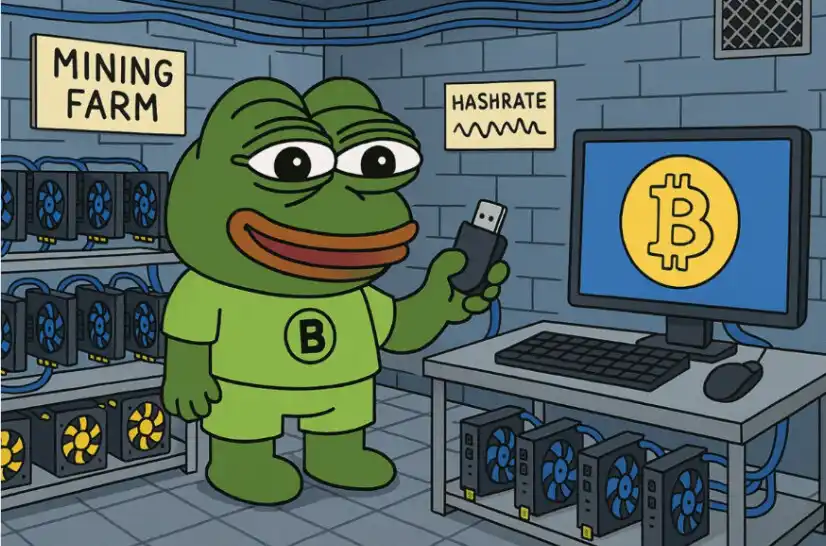
But on the city's outskirts, behind walls, another sound was sharper: the deafening roar of industrial fans, rows of Bitcoin miners running at full capacity; large and small LED indicators twinkled like a sea of stars in the dark, and here, the power almost never went out.

On the other side of the Mediterranean, in the North African nation of Libya, the same scene plays out daily. Residents in the eastern region have long grown accustomed to daily rotating blackouts of 6 to 8 hours; food in refrigerators often spoils, children do homework by candlelight. But in abandoned steel mills outside the city, smuggled-in old mining rigs run nonstop, converting the country's nearly free electricity into Bitcoin, which is then exchanged for dollars through cryptocurrency exchanges.

This is one of the most absurd energy stories of the 21st century: in two nations battered by sanctions and civil war, electricity is no longer just a public service but is treated as a form of "exportable" hard currency.
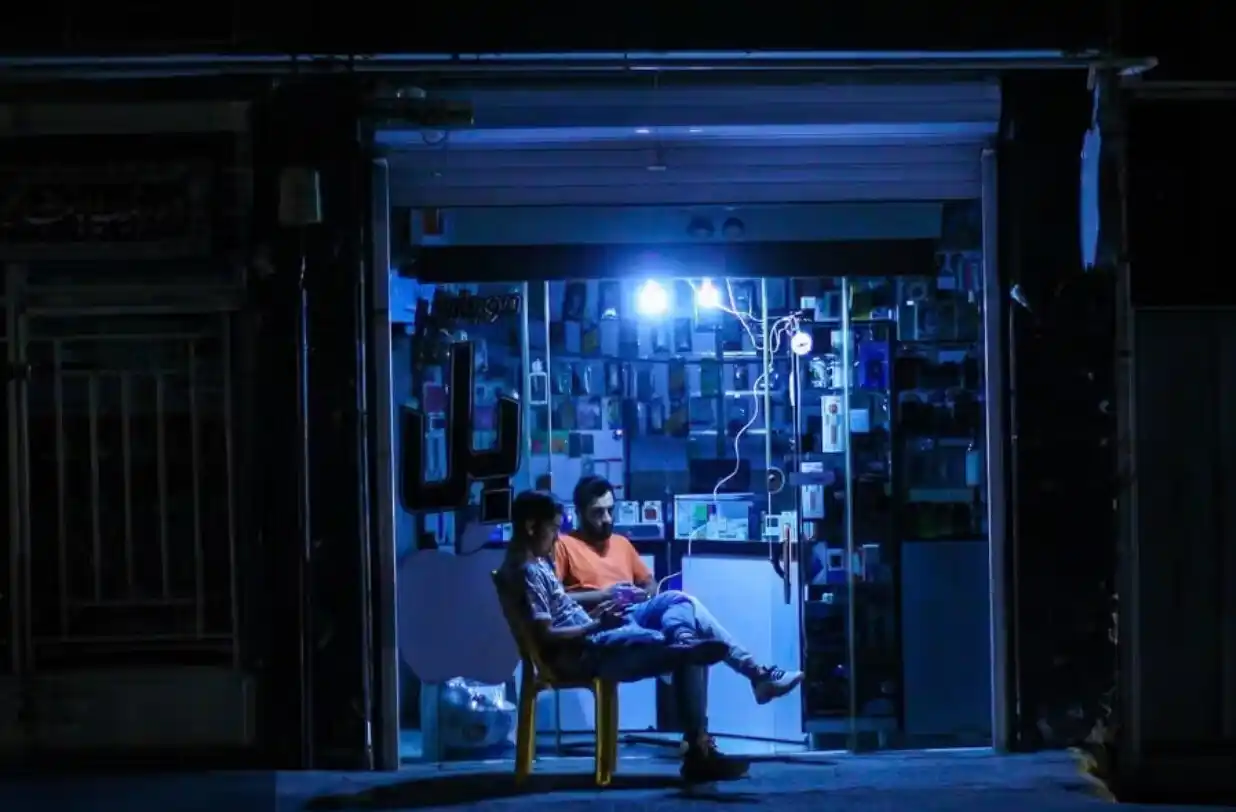
Image description: Two Iranian men sit outside their mobile phone shop, with only emergency lights on inside, as a power cut leaves the street in darkness.

Chapter One: Power Run: When Energy Becomes a Financial Tool
Bitcoin mining is, at its core, an energy arbitrage game. Anywhere in the world, if the electricity price is low enough, mining can be profitable. In Texas or Iceland, mine operators meticulously calculate the cost per kilowatt-hour; only the latest generation of efficient miners can survive the competition. But in Iran and Libya, the rules of the game are entirely different.

Iran's industrial electricity price is as low as $0.01 per kWh, Libya's is even more extreme—at approximately $0.004 per kWh, it is one of the lowest electricity prices in the world. Such low prices are possible due to massive government subsidies on fuel and artificially suppressed electricity tariffs. In a normal market, these prices wouldn't even cover the cost of generation.

But for miners, this is paradise. Even old mining rigs淘汰 from China or Kazakhstan—equipment long considered electronic waste in developed countries—can still turn an easy profit here. According to official data, in 2021, Libya's Bitcoin hash rate一度 accounted for about 0.6% of the global total, surpassing all other Arab and African countries and even some European economies.

This figure might seem small, but in Libya's context, it is absurd. This is a country of only 7 million people, with a grid loss rate as high as 40%, where daily rotating blackouts are the norm. At its peak, Bitcoin mining consumed about 2% of the country's total electricity generation, equivalent to 0.855 terawatt-hours (TWh) annually.

In Iran, the situation is even more extreme. The country possesses the world's fourth-largest oil reserves and second-largest natural gas reserves; theoretically, it should not lack power. But U.S. sanctions have cut off its access to advanced power generation equipment and technology, coupled with an aging grid and chaotic management, leaving Iran's power supply perpetually strained. The explosive growth of Bitcoin mining is pulling this taut string to its limit.

This is not ordinary industrial expansion. It is a run on a public resource—when electricity is treated as "hard currency" that can bypass the financial system, it no longer优先 flows to hospitals, schools, and residents, but to the mining rigs that can convert it into dollars.

Chapter Two: Two Countries, A Tale of Dual Mining

Iran: From "Exporting Energy" to "Exporting Hash Rate"
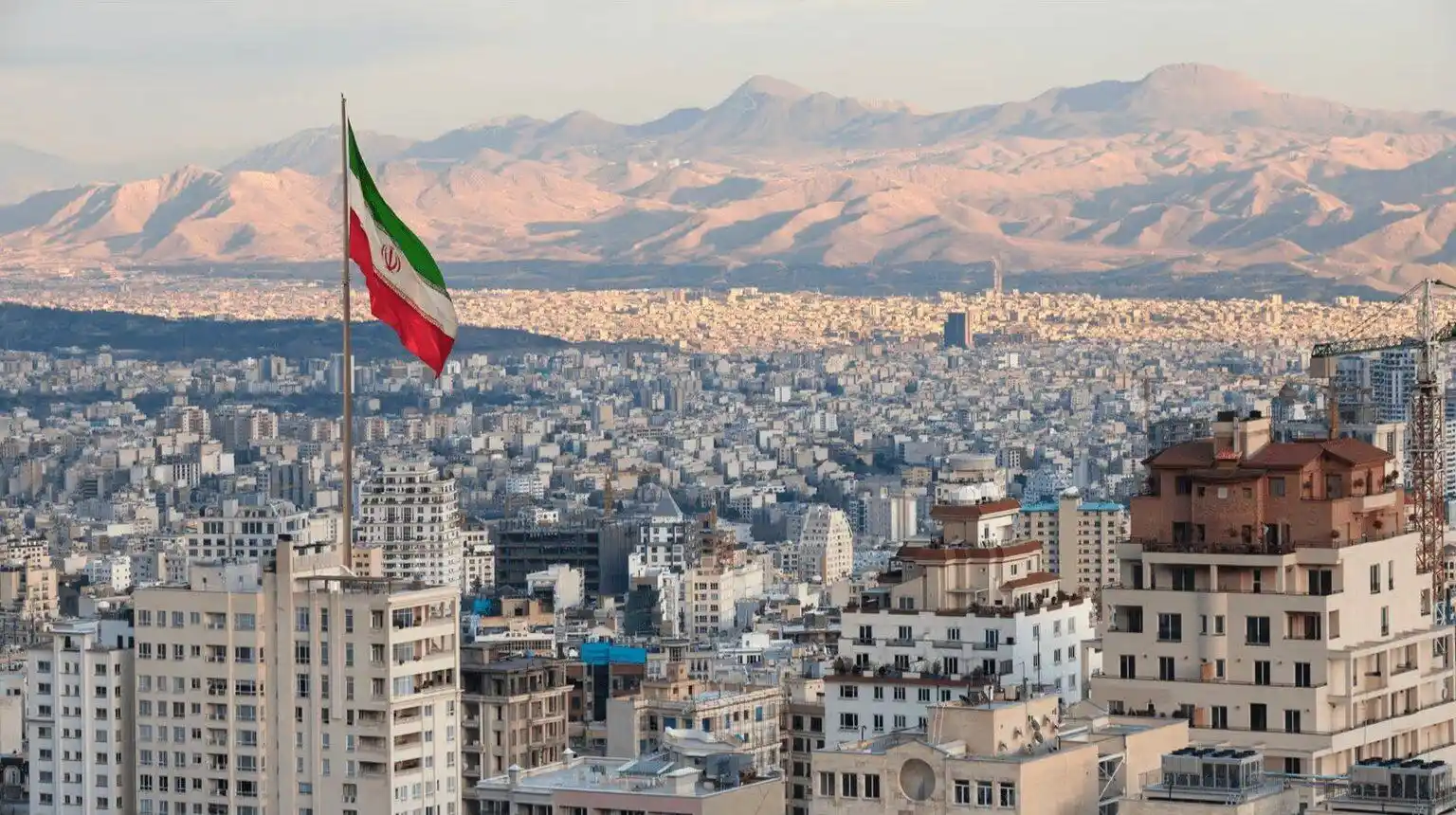
Under extreme sanction pressure, Iran chose to legalize Bitcoin mining, converting its cheap domestic electricity into globally tradable digital assets.

In 2018, the Trump administration withdrew from the Iran nuclear deal and reimposed "maximum pressure" sanctions. Iran was kicked out of the SWIFT international settlement system, unable to use dollars for international trade. Oil exports plummeted, foreign exchange dried up. In this context, Bitcoin mining恰好 provided a "energy monetization" side door: no need for SWIFT, no correspondent banks, just electricity, mining rigs, and a pipeline to sell the coins.

In 2019, the Iranian government formally recognized cryptocurrency mining as a legal industry and established a licensing system. The policy design seemed "modern": miners could apply for licenses, operate mines at preferential electricity rates, but had to sell the mined Bitcoin to the Central Bank of Iran.

In theory, this was a triple-win solution—the state exchanges cheap electricity for Bitcoin, then uses Bitcoin for foreign exchange or imports; miners get stable profits; grid load can be planned and regulated.

However, reality soon veered off course: Licenses existed, but the gray area was vast.

By 2021, then-President Rouhani publicly admitted that about 85% of Iran's mining activity was unlicensed; underground mines sprang up like mushrooms, from abandoned factories to mosque basements, from government office buildings to ordinary homes, mining rigs were everywhere. The deeper the electricity subsidy, the stronger the arbitrage motive; the looser the regulation, the more stealing electricity resembled a "default benefit."

Facing worsening power crises and illegal mining consuming over 2 gigawatts, the Iranian government announced a temporary ban on all cryptocurrency mining activities from May to September that year, for 4 months. This was the toughest nationwide ban since legalization in 2019.

During this period, the government organized large-scale raids: the Ministry of Energy, police, and local authorities stormed thousands of illegal mines, confiscating tens of thousands of mining machines in the second half of 2021 alone.

Yet after the ban ended, mining activity quickly rebounded. Many confiscated miners were put back into use, the scale of underground mines不减反增. This "crackdown" was seen by the public as a brief performance:表面上 cracking down on illegality, but in reality failing to address the deep-seated problems, instead allowing some well-connected mines to expand趁机.

More critically, multiple investigations and reports pointed out that entities closely linked to power structures had大规模介入 this industry, forming "privileged mines" enjoying independent power supply and law enforcement immunity.

When mines are backed by "untouchable hands," so-called crackdowns become political theater; and the public narrative is sharper: "We endure the darkness, just to keep the Bitcoin machines running."

Source: Financial Times

Libya: Cheap Power, Shadow Mining
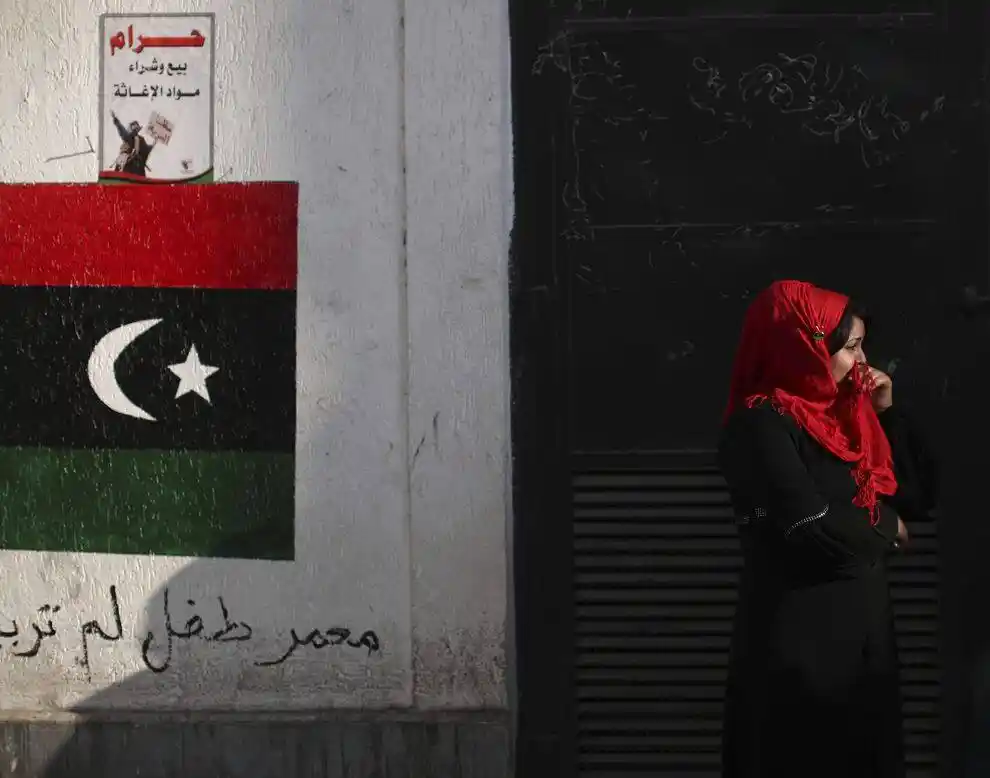
A wall graffiti in Libya condemns "buying and selling relief materials is illegal," reflecting public moral anger over unfair resource distribution—similar sentiments simmer quietly in the context of electricity subsidies being diverted for mining.

Libya's mining script is more like "wild growth in the absence of institutions."

Libya, this North African country (population approx. 7.3-7.5 million, area nearly 1.76 million sq km, the fourth largest country in Africa by area) on the southern Mediterranean coast, borders Egypt, Tunisia, Algeria, and others. Since the fall of Gaddafi's regime in 2011, the country has been mired in prolonged turmoil: recurring civil war, myriad armed factions, severely分裂 state institutions, creating a state of "managed fragmentation" (where violence levels are relatively controlled, but unified governance is absent).

What truly propelled Libya into a mining hotspot is its absurd electricity price structure. As one of Africa's largest oil producers, the Libyan government has long provided massive subsidies on electricity, keeping it at around $0.0040 per kWh—a price even lower than the fuel cost of generation. In a normal country, such subsidies are meant to safeguard people's livelihoods. But in Libya, it became a huge arbitrage opportunity.

Thus, a classic arbitrage model emerged:

  • Old mining rigs淘汰 in Europe and America can still be profitable in Libya;
  • Industrial zones, abandoned factories, warehouses are naturally suited to hide high electricity loads;
  • Equipment imports are restricted, but gray channels and smuggling keep machines coming in;

Although the Central Bank of Libya (CBL) declared virtual currency transactions illegal in 2018, and the Ministry of Economy banned the import of mining equipment in 2022, mining itself has not been explicitly prohibited by national law. Enforcement often relies on peripheral charges like "illegal electricity use" or "smuggling," and is ineffective in the reality of fragmented power, allowing the gray zone to persist and expand.

This state of "banned but not eradicated" is a typical manifestation of power fragmentation—decrees from the Central Bank and Ministry of Economy are often难以执行 in eastern Benghazi or southern regions. Local militias or armed groups sometimes even tacitly allow or protect mines, leading to wild growth in the gray zone.
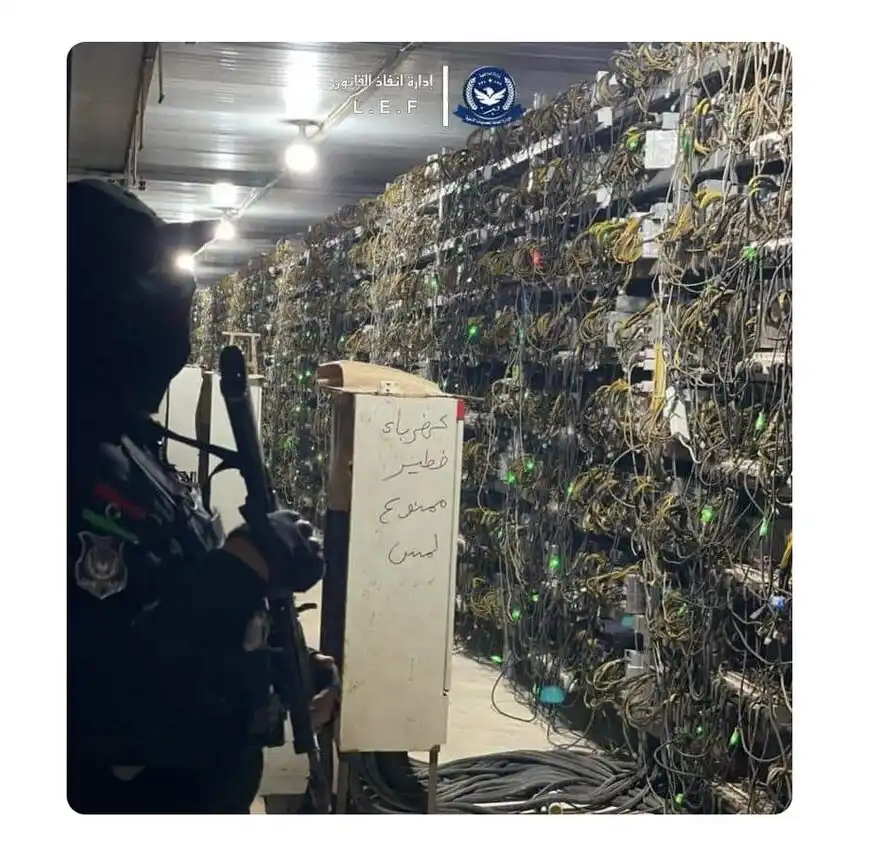
Source: @emad_badi

Even more absurd is that a significant portion of these mines are operated by foreigners. In November 2025, a Libyan prosecutor sentenced 9 people operating a mine inside the Zliten steel mill to three years in prison, confiscated equipment, and追缴 illegal proceeds. In previous raids, dozens of Asian nationals were arrested operating industrial-scale mines using old rigs淘汰 from China or Kazakhstan.

This old equipment早已无利可图 in developed countries, but in Libya, it's still a money printer. Because electricity is so cheap, even the least efficient miners can be profitable. This is why Libya has become the resurrection ground for the global "miner graveyard"—electronic waste淘汰 in Texas or Iceland finds a second life here.

Chapter Three: Collapsing Grids and Energy Privatization

Iran and Libya took two different paths: one tried to incorporate Bitcoin mining into the state apparatus, the other long let it drift in the shadows of the system. But the destination is the same—widening grid deficits, and the political consequences of resource allocation are beginning to show.

This is not merely a technical failure, but a result of political economy. Subsidized electricity creates the illusion that "electricity is cheap"; mining provides the temptation that "electricity can be monetized"; and the power structure determines who can cash in on this temptation.

When mining rigs share the same grid as hospitals, factories, and residents, the conflict is no longer abstract. Blackouts damage not just refrigerators and air conditioners, but also operating lights, blood bank refrigerators, and industrial production lines. Every blackout is a silent scrutiny of how public resources are allocated.

The problem is that the profits from mining are highly "portable." Electricity is local, its cost borne by society; Bitcoin is global, its value can be transferred instantly. The result is an extremely asymmetric structure: society bears the power consumption and blackouts, a few reap the cross-border mobile profits.

In countries with sound institutions and abundant energy, Bitcoin mining is usually discussed as an industrial activity; but in countries like Iran and Libya, the nature of the question itself changes.

Emerging Industry, or Resource Plunder?

Globally, Bitcoin mining is seen as an emerging industry, even a symbol of the "digital economy." But in the cases of Iran and Libya, it more closely resembles an experiment in the privatization of public resources.

If it were an industry, it should at least create jobs, pay taxes, accept regulation, and bring net benefits to society. But in these two countries, mining is highly automated, creating almost no jobs; a large number of mines are illegal or semi-legal, their tax contributions are limited, and even licensed mines lack transparency in where their profits flow.

Cheap electricity originally existed to safeguard people's livelihoods. In Iran, energy subsidies have been part of the "social contract" since the Islamic Revolution—the government uses oil revenues to subsidize electricity, and the people accept authoritarian rule. In Libya, electricity subsidies are also core to the welfare system inherited from the Gaddafi era.

But when these subsidies are used for Bitcoin mining, their nature fundamentally changes. Electricity is no longer a public service, but a means of production used by a few to create private wealth. Ordinary citizens not only do not benefit from it, but actually pay the price—more frequent blackouts, higher costs for diesel generators, and more fragile medical and educational services.

More importantly, mining does not bring real foreign exchange income to these countries. In theory, the Iranian government requires miners to sell Bitcoin to the central bank, but the actual implementation is questionable. In Libya, there is no such mechanism. Most Bitcoin is exchanged for dollars or other currencies on foreign exchanges, then流出 through underground banks or cryptocurrency channels. These funds neither enter the state treasury nor flow back into the real economy; they become the wealth of a few individuals.

In this sense, Bitcoin mining更像 a new form of "resource curse." It does not create wealth through production and innovation, but rather extracts public resources by leveraging price distortions and institutional loopholes. And those who pay the price are often the most vulnerable groups.

Conclusion: The True Cost of One Bitcoin

In a world of increasingly scarce resources, electricity is no longer just a tool to illuminate darkness, but a commodity that can be transformed, traded, and even plundered. When a nation "exports" electricity as "hard currency," it is essentially consuming the future meant for people's livelihoods and development.

The issue is not Bitcoin itself, but who controls the allocation of public resources. When this power lacks constraints, the so-called "industry" becomes just another form of plunder.

And those sitting in the darkness are still waiting for the lights to come back on.

"Not everything that is faced can be changed, but nothing can be changed until it is faced."

Preguntas relacionadas

QWhat is the core paradox highlighted in the article regarding electricity and Bitcoin mining in Iran and Libya?

AThe core paradox is that while the general population in Iran and Libya suffers from frequent and severe power outages, affecting hospitals, schools, and daily life, Bitcoin mining operations continue to run almost uninterrupted, consuming significant portions of the national power supply to generate a privately held, exportable digital asset.

QHow did the government of Iran attempt to regulate and benefit from Bitcoin mining, and what was the outcome?

AIn 2019, the Iranian government legalized cryptocurrency mining, established a licensing system, and required miners to sell their mined Bitcoin to the central bank. The intended outcome was a 'win-win' where the state could monetize its cheap electricity for foreign exchange. However, the reality was that an estimated 85% of mining remained unlicensed and illegal. A temporary ban and crackdowns failed to stop the activity, which rebounded afterward, with well-connected entities often operating with impunity.

QWhy is Libya, a country with a fragmented government and daily power cuts, an attractive location for Bitcoin mining?

ALibya is attractive due to its extremely low, heavily subsidized electricity price (approximately $0.004 per kWh), which is among the cheapest in the world. This makes it profitable to run even old, inefficient mining rigs that are obsolete in other countries. The lack of unified national governance and enforcement of bans allows mining to persist in a legal gray area, often protected by local militias.

QWhat is the fundamental economic and social problem created by Bitcoin mining in the context of these two nations?

AThe fundamental problem is the asymmetric distribution of costs and benefits. The cost of electricity (heavily subsidized by the state) and the social cost of frequent blackouts are borne by the public, affecting essential services like healthcare and education. Meanwhile, the profits from converting that electricity into Bitcoin are highly portable and are largely captured by a few private actors, often flowing out of the country without contributing to the national economy or tax base, resembling a form of resource掠夺 (plunder).

QAccording to the article, how does Bitcoin mining in Iran and Libya differ from how it is perceived in countries with robust institutions and ample energy?

AIn countries with robust institutions and ample energy, Bitcoin mining is typically discussed as an industrial activity or part of the digital economy. In Iran and Libya, however, it is less an industry and more a mechanism for the privatization and exploitation of a public resource. It creates few jobs, contributes little in taxes, operates largely outside of effective regulation, and ultimately functions as a form of resource extraction that benefits a privileged few at the expense of the broader population's well-being.

Lecturas Relacionadas

Trading

Spot
Futuros

Artículos destacados

Qué es BITCOIN

Entendiendo HarryPotterObamaSonic10Inu (ERC-20) y Su Posición en el Espacio Cripto En los últimos años, el mercado de criptomonedas ha sido testigo de un aumento en la popularidad de las monedas meme, capturando el interés no solo de los comerciantes, sino también de aquellos que buscan compromiso comunitario y valor de entretenimiento. Entre estos tokens únicos se encuentra HarryPotterObamaSonic10Inu (ERC-20), un proyecto intrigante que mezcla referencias culturales en el tejido de las criptomonedas. Este artículo profundiza en los aspectos clave de HarryPotterObamaSonic10Inu, explorando sus mecanismos, ethos impulsado por la comunidad y su relación con el paisaje cripto más amplio. ¿Qué es HarryPotterObamaSonic10Inu (ERC-20)? Como su nombre sugiere, HarryPotterObamaSonic10Inu es una moneda meme construida sobre la blockchain de Ethereum, clasificada bajo el estándar ERC-20. A diferencia de las criptomonedas tradicionales que pueden enfatizar la utilidad práctica o el potencial de inversión, este token prospera en el valor de entretenimiento y la fuerza de su comunidad. El proyecto tiene como objetivo fomentar un entorno donde los usuarios comprometidos puedan reunirse, compartir ideas y participar en actividades inspiradas por diversos fenómenos culturales. Una característica notable de HarryPotterObamaSonic10Inu es su cero impuestos en las transacciones. Este atractivo elemento tiene como objetivo incentivar el comercio y la participación comunitaria, sin cargos adicionales que puedan disuadir a los comerciantes de pequeña escala. El suministro total de la moneda está establecido en mil millones de tokens, una cifra que marca su intención de mantener una circulación sustancial dentro de la comunidad. Creador de HarryPotterObamaSonic10Inu (ERC-20) Los orígenes de HarryPotterObamaSonic10Inu están algo envueltos en misterio; los detalles sobre el creador siguen siendo desconocidos. El desarrollo de este token carece de un equipo identificable o de un plan explícito, lo cual no es inusual dentro del sector de monedas meme. En cambio, el proyecto ha surgido de manera orgánica, con su progreso muy dependiente del entusiasmo y la participación de su comunidad. Inversores de HarryPotterObamaSonic10Inu (ERC-20) En cuanto a inversiones externas y respaldo, HarryPotterObamaSonic10Inu también sigue siendo ambiguo. El token no lista ninguna fundación de inversión conocida o apoyo organizacional significativo. En cambio, la savia del proyecto es su comunidad de base, que informa su crecimiento y sostenibilidad a través de la acción colectiva y el compromiso en el espacio cripto. ¿Cómo Funciona HarryPotterObamaSonic10Inu (ERC-20)? Como una moneda meme, HarryPotterObamaSonic10Inu opera principalmente fuera de los marcos tradicionales que a menudo rigen el valor de los activos. Hay varios aspectos distintivos que definen cómo funciona el proyecto: Transacciones Sin Impuestos: Sin tarifas impositivas en las transacciones, los usuarios pueden comprar y vender el token libremente sin preocuparse por costos ocultos. Compromiso Comunitario: El proyecto prospera en la interacción comunitaria, aprovechando plataformas de redes sociales para crear entusiasmo y facilitar la participación. Las discusiones, el intercambio de contenido y el compromiso son elementos cruciales que ayudan a expandir su alcance y fomentar la lealtad entre los seguidores. Sin Utilidad Práctica: Cabe señalar que HarryPotterObamaSonic10Inu no ofrece utilidad concreta dentro del ecosistema financiero. Más bien, se clasifica como un token principalmente para actividades de entretenimiento y comunitarias. Referencia Cultural: El token incorpora astutamente elementos de la cultura popular para atraer interés, conectando con entusiastas de los memes y seguidores de las criptomonedas por igual. HarryPotterObamaSonic10Inu ejemplifica cómo las monedas meme operan de manera diferente a los proyectos de criptomonedas más tradicionales, ingresando al mercado como construcciones sociales innovadoras en lugar de activos utilitarios. Cronología de HarryPotterObamaSonic10Inu (ERC-20) La historia de HarryPotterObamaSonic10Inu está marcada por varios hitos notables: Creación: El token surgió de un meme viral, capturando la imaginación de muchos entusiastas de las criptomonedas. Las fechas específicas de creación no están disponibles, subrayando su ascenso orgánico. Listado en Exchanges: HarryPotterObamaSonic10Inu ha llegado a varios exchanges, permitiendo un acceso y comercio más fácil por parte de la comunidad. Iniciativas de Compromiso Comunitario: Actividades continuas destinadas a mejorar la interacción comunitaria, incluyendo concursos, campañas en redes sociales y generación de contenido por parte de fanáticos y defensores. Planes de Expansión Futuros: La hoja de ruta del proyecto incluye el lanzamiento de una colección de NFT, mercancía y un sitio de comercio electrónico relacionado con sus temas culturales, involucrando aún más a la comunidad e intentando añadir más dimensiones a su ecosistema. Puntos Clave Sobre HarryPotterObamaSonic10Inu (ERC-20) Naturaleza Impulsada por la Comunidad: El proyecto prioriza la participación colectiva y la creatividad, asegurando que la involucración de los usuarios esté a la vanguardia de su desarrollo. Clasificación como Moneda Meme: Representa la epítome de las criptomonedas basadas en el entretenimiento, diferenciándose de los vehículos de inversión tradicionales. Sin Afiliación Directa con Bitcoin: A pesar de la similitud en el nombre del ticker, HarryPotterObamaSonic10Inu es distinto y no tiene relación con Bitcoin u otras criptomonedas establecidas. Enfoque en la Colaboración: HarryPotterObamaSonic10Inu está diseñado para crear un espacio para la colaboración y el intercambio de historias entre sus poseedores, proporcionando una vía para la creatividad y el vínculo comunitario. Perspectivas Futuras: La ambición de expandirse más allá de su premisa inicial hacia NFTs y mercancías describe un camino para que el proyecto potencialmente ingrese a avenidas más tradicionales dentro de la cultura digital. A medida que las monedas meme continúan capturando la imaginación de la comunidad de criptomonedas, HarryPotterObamaSonic10Inu (ERC-20) se destaca debido a sus lazos culturales y su enfoque centrado en la comunidad. Si bien puede no encajar en el molde típico de un token impulsado por la utilidad, su esencia radica en la alegría y la camaradería fomentadas entre sus seguidores, destacando la naturaleza en evolución de las criptomonedas en una era cada vez más digital. A medida que el proyecto continúa desarrollándose, será importante observar cómo las dinámicas comunitarias influyen en su trayectoria en el cambiante paisaje de la tecnología blockchain.

1.3k Vistas totalesPublicado en 2024.04.01Actualizado en 2024.12.03

Qué es BITCOIN

Cómo comprar BTC

¡Bienvenido a HTX.com! Hemos hecho que comprar Bitcoin (BTC) sea simple y conveniente. Sigue nuestra guía paso a paso para iniciar tu viaje de criptos.Paso 1: crea tu cuenta HTXUtiliza tu correo electrónico o número de teléfono para registrarte y obtener una cuenta gratuita en HTX. Experimenta un proceso de registro sin complicaciones y desbloquea todas las funciones.Obtener mi cuentaPaso 2: ve a Comprar cripto y elige tu método de pagoTarjeta de crédito/débito: usa tu Visa o Mastercard para comprar Bitcoin (BTC) al instante.Saldo: utiliza fondos del saldo de tu cuenta HTX para tradear sin problemas.Terceros: hemos agregado métodos de pago populares como Google Pay y Apple Pay para mejorar la comodidad.P2P: tradear directamente con otros usuarios en HTX.Over-the-Counter (OTC): ofrecemos servicios personalizados y tipos de cambio competitivos para los traders.Paso 3: guarda tu Bitcoin (BTC)Después de comprar tu Bitcoin (BTC), guárdalo en tu cuenta HTX. Alternativamente, puedes enviarlo a otro lugar mediante transferencia blockchain o utilizarlo para tradear otras criptomonedas.Paso 4: tradear Bitcoin (BTC)Tradear fácilmente con Bitcoin (BTC) en HTX's mercado spot. Simplemente accede a tu cuenta, selecciona tu par de trading, ejecuta tus trades y monitorea en tiempo real. Ofrecemos una experiencia fácil de usar tanto para principiantes como para traders experimentados.

4.7k Vistas totalesPublicado en 2024.12.12Actualizado en 2025.03.21

Cómo comprar BTC

Qué es $BITCOIN

ORO DIGITAL ($BITCOIN): Un Análisis Integral Introducción al ORO DIGITAL ($BITCOIN) ORO DIGITAL ($BITCOIN) es un proyecto basado en blockchain que opera en la red Solana, cuyo objetivo es combinar las características de los metales preciosos tradicionales con la innovación de las tecnologías descentralizadas. Aunque comparte un nombre con Bitcoin, a menudo referido como “oro digital” debido a su percepción como un refugio de valor, ORO DIGITAL es un token separado diseñado para crear un ecosistema único dentro del paisaje Web3. Su meta es posicionarse como un activo digital alternativo viable, aunque los detalles sobre sus aplicaciones y funcionalidades aún están en desarrollo. ¿Qué es ORO DIGITAL ($BITCOIN)? ORO DIGITAL ($BITCOIN) es un token de criptomoneda diseñado explícitamente para su uso en la blockchain de Solana. A diferencia de Bitcoin, que proporciona un papel de almacenamiento de valor ampliamente reconocido, este token parece centrarse en aplicaciones y características más amplias. Aspectos notables incluyen: Infraestructura Blockchain: El token está construido sobre la blockchain de Solana, conocida por su capacidad para manejar transacciones de alta velocidad y bajo costo. Dinámicas de Suministro: ORO DIGITAL tiene un suministro máximo limitado a 100 cuatrillones de tokens (100P $BITCOIN), aunque los detalles sobre su suministro circulante no se han divulgado actualmente. Utilidad: Si bien las funcionalidades precisas no están delineadas explícitamente, hay indicios de que el token podría ser utilizado para diversas aplicaciones, potencialmente involucrando aplicaciones descentralizadas (dApps) o estrategias de tokenización de activos. ¿Quién es el Creador de ORO DIGITAL ($BITCOIN)? En la actualidad, la identidad de los creadores y el equipo de desarrollo detrás de ORO DIGITAL ($BITCOIN) sigue siendo desconocida. Esta situación es típica entre muchos proyectos innovadores dentro del espacio blockchain, particularmente aquellos alineados con las finanzas descentralizadas y fenómenos de monedas meme. Si bien tal anonimato puede fomentar una cultura impulsada por la comunidad, intensifica las preocupaciones sobre la gobernanza y la responsabilidad. ¿Quiénes son los Inversores de ORO DIGITAL ($BITCOIN)? La información disponible indica que ORO DIGITAL ($BITCOIN) no tiene patrocinadores institucionales conocidos ni inversiones destacadas de capital de riesgo. El proyecto parece operar en un modelo de peer-to-peer centrado en el apoyo y la adopción de la comunidad en lugar de rutas de financiamiento tradicionales. Su actividad y liquidez se sitúan principalmente en intercambios descentralizados (DEX), como PumpSwap, en lugar de plataformas de trading centralizadas establecidas, lo que resalta aún más su enfoque de base. Cómo Funciona ORO DIGITAL ($BITCOIN) Los mecanismos operativos de ORO DIGITAL ($BITCOIN) pueden elaborarse en función de su diseño blockchain y atributos de red: Mecanismo de Consenso: Al aprovechar el único proof-of-history (PoH) de Solana combinado con un modelo de proof-of-stake (PoS), el proyecto asegura una validación de transacciones eficiente que contribuye al alto rendimiento de la red. Tokenómica: Si bien los mecanismos deflacionarios específicos no se han detallado extensamente, el vasto suministro máximo de tokens implica que podría atender microtransacciones o casos de uso nicho que aún están por definirse. Interoperabilidad: Existe el potencial de integración con el ecosistema más amplio de Solana, incluyendo varias plataformas de finanzas descentralizadas (DeFi). Sin embargo, los detalles sobre integraciones específicas permanecen no especificados. Cronología de Eventos Clave Aquí hay una cronología que destaca hitos significativos relacionados con ORO DIGITAL ($BITCOIN): 2023: El despliegue inicial del token ocurre en la blockchain de Solana, marcado por su dirección de contrato. 2024: ORO DIGITAL gana visibilidad al estar disponible para trading en intercambios descentralizados como PumpSwap, permitiendo a los usuarios comerciar contra SOL. 2025: El proyecto presencia actividad de trading esporádica y potencial interés en compromisos liderados por la comunidad, aunque no se han documentado asociaciones notables o avances técnicos hasta el momento. Análisis Crítico Fortalezas Escalabilidad: La infraestructura subyacente de Solana soporta altos volúmenes de transacciones, lo que podría mejorar la utilidad de $BITCOIN en varios escenarios de transacción. Accesibilidad: El potencial bajo precio de trading por token podría atraer a inversores minoristas, facilitando una participación más amplia debido a oportunidades de propiedad fraccionada. Riesgos Falta de Transparencia: La ausencia de patrocinadores, desarrolladores o un proceso de auditoría conocidos públicamente puede generar escepticismo sobre la sostenibilidad y confiabilidad del proyecto. Volatilidad del Mercado: La actividad de trading depende en gran medida del comportamiento especulativo, lo que puede resultar en una volatilidad de precios significativa y en incertidumbre para los inversores. Conclusión ORO DIGITAL ($BITCOIN) surge como un proyecto intrigante pero ambiguo dentro del ecosistema de Solana en rápida evolución. Si bien intenta aprovechar la narrativa del “oro digital”, su alejamiento del papel establecido de Bitcoin como refugio de valor subraya la necesidad de una diferenciación más clara de su utilidad y estructura de gobernanza previstas. La aceptación y adopción futura dependerán probablemente de abordar la actual opacidad y de definir sus estrategias operativas y económicas de manera más explícita. Nota: Este informe abarca información sintetizada disponible hasta octubre de 2023, y pueden haber ocurrido desarrollos más allá del período de investigación.

83 Vistas totalesPublicado en 2025.05.13Actualizado en 2025.05.13

Qué es $BITCOIN

Discusiones

Bienvenido a la comunidad de HTX. Aquí puedes mantenerte informado sobre los últimos desarrollos de la plataforma y acceder a análisis profesionales del mercado. A continuación se presentan las opiniones de los usuarios sobre el precio de BTC (BTC).

活动图片














